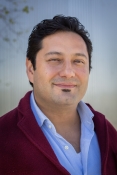
Thomas K. Uchida is an Associate Professor in the Department of Mechanical Engineering at the University of Ottawa, a position he has held since May 2024. Prior to this promotion, he served as an Assistant Professor at the same institution from October 2018 to May 2024. Before joining the University of Ottawa, Dr. Uchida was an Engineering Research Associate (April 2015-August 2018) and Simbios Distinguished Postdoctoral Fellow (July 2012-April 2015) in the Department of Bioengineering at Stanford University. Dr. Uchida's research focuses on the modeling and simulation of dynamic systems, with particular emphasis on human movement biomechanics. His work spans multiple areas including: Simulation-guided design of assistive devices for improving mobility Modelling musculotendon dynamics and energy expenditure Parameter identification and model reduction methods Impact and contact dynamics Development of computational tools for biomechanical analysis He is a co-author of the book "Biomechanics of Movement: The Science of Sports, Robotics, and Rehabilitation" published by MIT Press, and actively contributes to the development of OpenSim, an open-source software platform for modeling musculoskeletal systems and generating simulations of human and animal movement. His work on OpenSim was featured on the cover of PLoS Computational Biology. Dr. Uchida's recent publications demonstrate strong activity in biomechanics, robotics, and computational modeling. His work bridges engineering principles with biological applications, particularly in understanding human movement mechanics. Key trends include applying machine learning to gait analysis, developing enhanced spine models, analyzing human balance stability with time delays, and advancing musculoskeletal simulation techniques. As an academic advisor, Dr. Uchida currently supervises seven graduate students: Firas Baklouti (expected completion August 2025) Shahin Sharafi Kazem Alambeigi Jiawei Gao Yuzhen Yan Manuel Lucas De Oliveira Blake Scott Miller Dr. Uchida collaborates with research teams focused on biomechanics and movement science. His work with OpenSim places him within an international community of researchers developing computational tools for biomechanical analysis, connecting mechanical engineering with biomedical applications in sports, robotics, and rehabilitation.