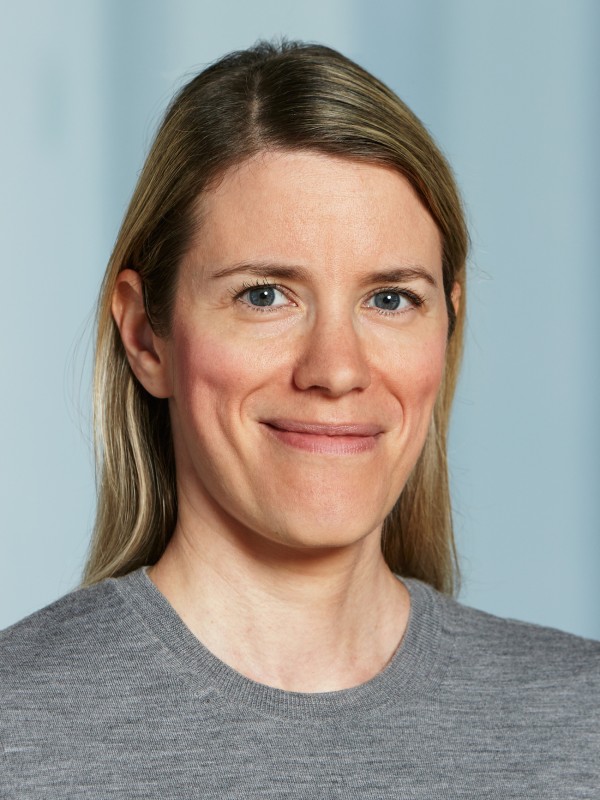
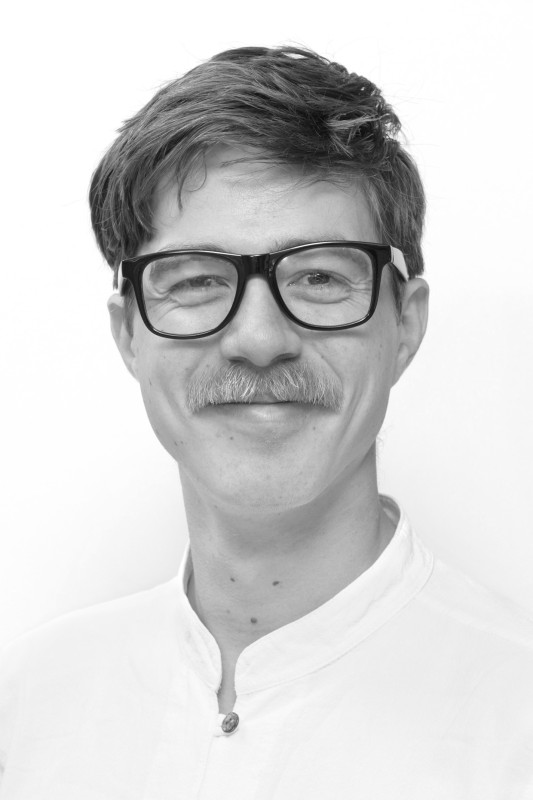
Olga Sorkine-Hornung is a Professor of Computer Science at ETH Zurich and head of the Institute of Visual Computing. She leads the Interactive Geometry Lab, focusing on theoretical and practical advancements in digital content creation, geometry processing, and shape modeling. Current position: ETH Zurich, Department of Computer Science Previous roles: Courant Institute (NYU), Technical University of Berlin Education: BSc and PhD from Tel Aviv University, postdoc at TU Berlin Her research spans shape representation, digital fabrication, computer animation, and fundamental geometry processing. Key contributions include Laplacian surface editing, as-rigid-as-possible deformation, and generalized winding numbers. She works on applications in VR, AR, and autonomous systems. Awards include Test of Time Awards (2024), ACM Fellow (2020), ERC Consolidator Grant (2020), and EUROGRAPHICS Young Researcher Award (2008). She has supervised numerous students and co-developed software libraries like libigl and Instant Meshes . Co-chair roles for SIGGRAPH, Eurographics, and Pacific Graphics Editorial board member for ACM Transactions on Graphics and other journals Keynote speaker at VMV, CVPR, and SIAM conferences Her work bridges mathematical rigor with practical implementation, advancing computer graphics and geometry processing through intuitive algorithms that maintain surface detail while enabling efficient computation.
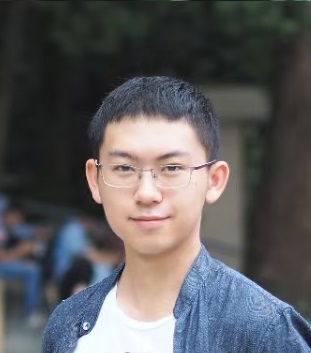
April Yi Wang is a tenure-track Assistant Professor in the Department of Computer Science at ETH Zürich, where she directs the Programming, Education, and Computer-Human Interaction Lab (PEACH Lab). She is a core faculty member at the Institute for Intelligent Interactive Systems and associated with the ETH AI Center. Wang is also an active member of ETH HCI and Swiss CHI communities, contributing significantly to human-computer interaction and educational technology research. Dr. Wang's educational background includes: Ph.D. in Information Science from University of Michigan (2023), advised by Steve Oney and Christopher Brooks M.Sc. in Computer Science from Simon Fraser University (2018), advised by Parmit Chilana B.Eng in Computer Science from Zhejiang University (2016) Dr. Wang's research focuses on human-centered approaches to programming and data science. Her work reimagines programming as a form of literature that communicates with both machines and people, exploring creative representations like text, shapes, animations, and everyday objects. She investigates how to make programming more natural and intuitive through literate programming environments, with applications in professional and educational contexts. Her research spans human-computer interaction, educational technology, and AI-assisted programming tools. Analysis of Dr. Wang's recent publications reveals a strong focus on AI-enhanced educational tools, particularly for programming and data literacy. Her work increasingly integrates large language models to scaffold learning while maintaining user agency. There's a clear trajectory toward developing situated learning approaches that connect abstract concepts to real-world contexts through augmented reality and tangible interfaces. Her research bridges HCI, education, and AI to create more accessible and engaging technical learning experiences. Dr. Wang has received numerous prestigious awards including: 2023 Gary M. Olson Award and Honourable Mention Award at ACM CHI 2022 Rising Stars in EECS and Heidelberg Laureate Forum Young Researcher 2020 Best Short Paper Award at IEEE VL/HCC and Honourable Mention at ACM CHI 2019 Best Paper Award at ACM CSCW Dr. Wang actively mentors students through thesis projects at ETH Zürich, supervising numerous bachelor's and master's students on topics ranging from AI-assisted programming to data literacy tools. Her lab, PEACH Lab, has secured funding including the recent innovedum funding for the Coducate project. She serves on program committees for major conferences including CHI and UIST, and regularly reviews for top HCI and education journals. The PEACH Lab, directed by Dr. Wang, focuses on creating expressive, intelligent, and human-centered systems that make technical topics more accessible. The lab explores textual, visual, and embodied representations for programming, with emphasis on enhancing communication, collaboration, and learning. Current research directions include balancing automation with user agency, supporting diverse learning needs, and developing tools for interdisciplinary technical communication.
Prof. Dr. Günther Dissertori is a Full Professor and Rector of ETH Zurich, where he oversees teaching and academic affairs. His academic journey began at the University of Innsbruck, followed by a doctoral position at CERN, and he joined ETH Zurich as an Assistant Professor in 2001 before becoming a Full Professor in 2007. Academic Role: Full Professor of Particle Physics Institutional Leadership: Rector of ETH Zurich (since 2022) Contact: guenther.dissertori@sl.ethz.ch Research Interests: Dissertori's work spans Particle Physics and Experimental Physics , notably contributing to the CMS experiment at CERN, which was instrumental in the Higgs boson discovery. His group also developed cost-effective PET devices, leading to the spin-off Positrigo AG . Research keywords include Detector Development , Medical Imaging , and Quantum Physics . Teaching Excellence: Recognized with multiple Golden Owl awards (2005–2020) and the Credit Suisse Award for Best Teaching (2013), Dissertori is celebrated for his pedagogical impact in the Department of Particle Physics. Scientific Contributions: His publications include advancements in CMOS technology, quantum dynamics, and medical applications, reflecting interdisciplinary expertise in high-speed electronics, environmental science, and architectural history.
Prof. Olga Sorkine Hornung is a Full Professor of Computer Science at ETH Zürich, leading the Interactive Geometry Lab. She holds a BSc and PhD from Tel Aviv University (2000 and 2006) and conducted postdoctoral research at Technical University Berlin. Her research focuses on computer graphics, geometric modeling, and geometry processing, with applications in shape editing, digital fabrication, and animation. She has received numerous accolades, including the ACM Fellowship (2020), ERC Consolidator Grant (2020), and the Golden Owl Teaching Award (2021). Her work bridges theoretical foundations and practical algorithms, addressing challenges in parameterization, surface compression, and interactive design tools. Her research interests span: Computer Graphics & Visualization Geometric Modeling & Processing 3D Content Creation & Digital Fabrication Garment Design & Simulation Human Motion Analysis & Animation Awards and grants include: 2024: Best Paper Honorable Mention (EUROGRAPHICS) 2023: Member of Swiss Academy of Engineering Sciences (SATW) 2020: ERC Consolidator Grant 2017: Rössler Prize (ETH Zurich) Her lab focuses on developing novel methods for interactive geometry processing, with recent advancements in garment modeling (e.g., AIpparel, Rags2Riches) and motion retargeting systems like WalkTheDog. She actively collaborates on interdisciplinary projects, including biomedical applications and sustainable fashion technology.
Giovanni De Micheli is a Full Professor at École Polytechnique Fédérale de Lausanne (EPFL), holding appointments in both the School of Computer and Communication Sciences (IC) and the School of Engineering (STI). He is affiliated with the Integrated Systems Laboratory (LSI) and serves as Scientific Director of EcoCloud. His primary office is located in INF 341 building at EPFL's Lausanne campus where he conducts research and teaching activities. Professor De Micheli's research spans multiple domains in electronic design automation and integrated circuit design. His primary interests include: Integrated Circuit Design and Hardware Synthesis Logic Optimization and Boolean Methods Nanoelectronics and 2D Electronics Quantum Computing and Emerging Technologies Low-Power Electronics and Energy-Efficient Systems Electronic Design Automation for Novel Computing Paradigms His recent publications demonstrate a strong focus on advancing logic synthesis techniques for both conventional and emerging technologies. Professor De Micheli's work bridges theoretical foundations with practical applications, particularly in adapting traditional EDA methods to novel computing paradigms like quantum computing and superconducting electronics. His research group has made significant contributions to the development of efficient algorithms for circuit optimization across multiple technology domains, with particular emphasis on area, power, and delay optimization while maintaining functional correctness. Professor De Micheli has supervised numerous doctoral students throughout his career at EPFL, mentoring over 40 PhD candidates whose research spans various aspects of electronic design automation, circuit design, and emerging technologies. His students have gone on to make significant contributions in both academia and industry. As Scientific Director of EcoCloud, Professor De Micheli leads research initiatives focused on energy-efficient computing systems and sustainable cloud infrastructure. His laboratory, the Integrated Systems Laboratory, serves as a hub for interdisciplinary research connecting computer science, electrical engineering, and materials science, with particular focus on next-generation computing technologies.
Dr. Michael Mühlebach is a Lecturer at the Department of Information Technology and Electrical Engineering, ETH Zurich, and affiliated with the Max Planck Institute for Intelligent Systems in Tübingen, Germany. He holds a Bachelor's (2010) and Master's (2013) from ETH Zurich, recognized with awards for academic excellence in Robotics, Systems, and Control. His research focuses on multibody dynamics, nonlinear system control, and model predictive control, with applications in robotics and aerospace systems. His work spans theoretical advancements in variational integrators and practical implementations in systems like the Cubli (a reaction wheel-based 3D inverted pendulum) and flying platforms for ducted fan actuation. Publications highlight contributions to model predictive control schemes with stability guarantees, nonlinear analysis, and distributed event-based state estimation. Key awards include the Outstanding D-MAVT Bachelor Award and Willi-Studer Prize. His research integrates control theory with real-world applications, emphasizing both foundational mathematics and engineering implementations. No grants or lab affiliations are explicitly listed in the provided text.
Babak Falsafi is a Full Professor at the School of Computer and Communication Sciences (IC) at EPFL, leading the Parallel Systems Architecture Laboratory (PARSA). He is a renowned expert in computer architecture, datacenter systems, and cloud-native server design. His research focuses on post-Moore era computing, emphasizing heterogeneous architectures, energy efficiency, and scalable IT infrastructure. Falsafi is the founder of EcoCloud, an EC-sponsored industrial-academic consortium investigating sustainable information technology. He holds ACM and IEEE fellowships, a Sloan Research Fellowship, and has contributed to major projects like Optimus Prime (data transformation acceleration), AstriFlash (flash-based online service systems), and Midgard (virtual memory re-design). His work spans hardware-software co-design, memory systems, and security. Falsafi advises numerous PhD students and collaborates with industry partners such as Google and Cavium. Key achievements include pioneering scalable multiprocessor architectures, snoop filters in IBM BlueGene, and spatial memory streaming in ARM cores. His lab develops open-source tools like QFlex for server simulation. He frequently presents at top conferences (HPCA, ISCA, MICRO) and chairs workshops on post-Moore infrastructure. Teaching roles include leading courses in computer architecture and parallel systems across multiple EPFL departments (SIN, EDIC, SSC, SMA). His work addresses datacenter challenges like the 'data tax' and mitigating latency through specialized accelerators.
Marie Violay is an Associate Professor at the Laboratory of Experimental Rock Mechanics (LEMR) within the School of Architecture, Civil and Environmental Engineering (ENAC) at École Polytechnique Fédérale de Lausanne (EPFL). She also contributes to teaching and PhD program committees across multiple EPFL divisions. Specializes in rock mechanics, earthquake dynamics, and hydro-mechanical couplings Leads experimental studies on fluid-induced seismicity and reservoir deformation Research Focus : Investigates how pore fluid pressure variations affect rock strength, fault behavior, and permeability evolution. Her work spans from brittle fracture mechanics to ductile deformation processes under geothermal conditions, with applications to carbon storage, earthquake mitigation, and volcanic hazard assessment. Article Trends : Her recent publications examine stress biaxiality effects on fracture energy (2025), alteration impacts on geothermal reservoirs (2025), permeability changes in volcanic rocks (2024), and fundamental studies of water weakening mechanisms in sedimentary rocks (2024-2021). The work combines laboratory experiments, microstructural analysis, and numerical modeling. Labs & Collaborations : Coordinates the LEMR laboratory at EPFL. Collaborates with European Synchrotron Radiation Facility, Freie Universität Berlin, and industry partners like Emch&Berger AG. Leads PhD committee work in the EDME Doctoral School .
Farhad Rachidi-Haeri is a Titular Professor and Head of the Electromagnetic Compatibility (EMC) Group at EPFL. His expertise spans EMC research, lightning electromagnetics, time reversal techniques, and fault location in power systems. He has led the EMC Group since the 1980s, with funding from the Swiss National Science Foundation, European Union, and private sector collaborations. His work involves international partnerships with institutions like the University of Toronto and KTH. Education: PhD in Electrical Engineering from EPFL (1991), M.S. from EPFL (1986). Roles: President of Swiss National Committee of URSI (2012–2020), Editor-in-Chief of IEEE Transactions on EMC (2013–2015), and member of the Academy of Sciences of Bologna Institute (2019). Research Focus: Lightning interaction with infrastructure, electromagnetic field modeling, time reversal applications for fault detection, and high-frequency transient analysis. His work bridges theoretical physics and engineering, addressing challenges in power systems, lightning protection, and aerospace. Awards: IEEE EMC Technical Achievement Award (2005), Berger Award (2016), and Distinguished Honorary Professor at Tsinghua University (2024). Over 400 peer-reviewed papers and 500 conference contributions reflect his prolific research output. Labs/Teams: Leads the EMC Laboratory at EPFL, focusing on experimental and numerical studies of electromagnetic phenomena. Collaborates with global networks on projects like Laser Lightning Control and structural lightning protection for wind turbines.
Dr. Aytaç Kubilay is a Senior Researcher at the Chair of Building Physics, Department of Mechanical and Process Engineering, ETH Zurich. His research focuses on urban microclimate modeling, particularly wind-flow analysis, thermal comfort optimization, and vegetation-based climate mitigation strategies. Institution: ETH Zurich Department: Mechanical and Process Engineering Research Scope: Urban climate, CFD modeling, heat island mitigation Research interests include computational fluid dynamics (CFD) applications for urban environments, with emphasis on heat island effects, wind-driven rain analysis, and porous media heat transfer. His work combines numerical simulations and experimental validations to assess thermal comfort and climate adaptation strategies in cities. Recent publications analyze vegetation impacts on urban microclimates, including tree cooling potential, street-level thermal comfort dynamics, and high-rise building wind mitigation. Studies employ custom solvers like urbanMicroclimateFoam and OpenFOAM for integrated flow-heat-moisture modeling. Key collaborations include researchers from ETH Zurich (Jan Carmeliet, Dominique Derome) and international institutions, focusing on sustainable urban planning and climate resilience frameworks.
Christophe Ancey is an Associate Professor at the École Polytechnique Fédérale de Lausanne (EPFL), where he serves in the School of Architecture, Civil and Environmental Engineering (ENAC), specifically in the Institute of Civil Engineering (IIC) and the Environmental Hydraulics Laboratory (LHE). He also holds teaching appointments in SGC-Teaching and EDME-Teaching departments at EPFL. His office is located at GC A1 401, Station 18, 1015 Lausanne, Switzerland. Dr. Ancey holds both a PhD and engineering degree from Ecole Centrale de Paris and Grenoble National Polytechnic Institute. After completing his doctoral work (1994-1997) on rheology of granular flows under Pierre Evesque, he worked as a researcher at Cemagref before joining EPFL in 2004. He directs the Environmental Hydraulics Laboratory and serves as associate editor for Water Resources Research, a leading journal in hydrology. Dr. Ancey's research spans fluid dynamics, rheology, and hydraulics with emphasis on geophysical flows and natural hazards. His work focuses on three interconnected themes: rheology of concentrated suspensions (particularly granular flows in avalanches and mudflows), inverse problems in rheology (determining microscopic behavior from macroscopic measurements), and particle entrainment in turbulent suspensions (erosion and sediment transport processes). His recent publications (2022-2025) demonstrate continued innovation in sediment transport modeling, experimental techniques like PIV for complex flows, and integration of machine learning approaches. The research shows progression from fundamental fluid mechanics to practical applications in natural hazard assessment and river engineering, with particular attention to granular segregation, avalanche-obstacle interactions, and river morphodynamics. Associate Editor, Water Resources Research Co-founder of Toraval, an engineering consulting firm specializing in avalanche risk management Dr. Ancey teaches courses on Fluid Mechanics, Flood and Dam Break Waves, Hydrological Risks and Structures, and Similarity and Transport Phenomena in Fluids. He has supervised numerous PhD students whose work spans environmental hydraulics, granular flows, and sediment transport, with current students including Chen Yanan, Farazande Sofi, and Giboulot Axel Loïc among others.
Alexis Berne is an Associate Professor at the Environmental Remote Sensing Laboratory (LTE) within the School of Architecture, Civil and Environmental Engineering (ENAC) at École Polytechnique Fédérale de Lausanne (EPFL). He co-directs the SSIE-GE program and serves as a member of the CDS (Commission for Doctoral Studies) . His research spans radar meteorology, precipitation microphysics, polar precipitation, and geostatistics, with a focus on mountainous and polar regions. Current Positions Associate Professor, LTE, EPFL (2013–present) Co-Director, SSIE-GE, EPFL PhD Program Committee Member, EDCE-GE, EPFL Research Interests include the remote sensing of precipitation, particularly snowfall and ice production mechanisms, using radar and geostatistical methods. His work addresses atmospheric processes in extreme environments like Antarctica and the Swiss Alps, leveraging machine learning and numerical modeling for climate analysis. Teaching encompasses courses on remote sensing, atmospheric processes, and climate change, emphasizing interdisciplinary approaches and spatiotemporal variability. He advises current PhD students such as Heather Anne Corden and Gionata Ghiggi, alongside mentoring past students like Jacopo Grazioli and Timothy Hugh Raupach.
Frédéric Kaplan serves as Director of the College of Humanities at École Polytechnique Fédérale de Lausanne (EPFL), where he holds the Chair of Digital Humanities. He also serves as President of the Time Machine Organisation, a nonprofit entity comprising over 600 institutions. His academic appointments span multiple departments including the Digital Humanities Laboratory (DHLAB), School of Architecture (SAR), and School of Humanities (SODH), demonstrating his interdisciplinary leadership across EPFL's academic structure. Dr. Kaplan's research focuses on the intersection of computational methods and humanities, particularly in historical urban analysis, cultural heritage digitization, and the development of the Mirror World concept. His work bridges computational techniques with historical scholarship, creating new methodologies for analyzing historical documents, maps, and urban structures through advanced digital tools. His research has significant implications for how we understand and reconstruct historical urban environments and cultural heritage. His publication record reveals a strong emphasis on computational approaches to historical data, with recent work focusing on LLM applications for historical cadastre navigation, historical map analysis through deformation patterns, 4D city modeling, and language technology applications for historical document processing. This research trajectory demonstrates an evolving focus from basic digitization toward sophisticated analytical frameworks that extract deeper historical insights from digital representations. Kaplan has supervised numerous doctoral students whose work spans digital heritage applications, historical document analysis, computational cartography, and language technology. His research has been supported through multiple institutional frameworks at EPFL and has resulted in practical applications demonstrated through exhibitions at major institutions including the Venice Architecture Biennale, Grand Palais, Centre Pompidou in Paris, and the Museum of Modern Art in New York. He leads the Digital Humanities Laboratory (DHLAB) which serves as a nexus for computational approaches to humanities research. The lab focuses on developing methodologies for historical data analysis, creating digital tools for cultural heritage institutions, and exploring the theoretical implications of computational approaches to historical scholarship. The lab's work with the Time Machine Organisation represents one of the most ambitious efforts to create comprehensive digital reconstructions of historical urban environments.
Dr. Cooper Harshbarger is a Lecturer at the Department of Health Sciences and Technology at ETH Zurich , Switzerland. His research bridges biomechanics and acoustofluidics, focusing on spinal surgery and microscale cell manipulation technologies. Email: cooper.harshbarger@hest.ethz.ch Research Interests : Dr. Harshbarger specializes in biomechanical analysis of spinal structures and acoustofluidic device development . His work explores: Biomechanics of the lumbar spine and osteoligamentous complexes Acoustically-driven microfluidic systems for medical diagnostics Cell focusing/trapping technologies using sharp-edge acoustofluidics Scientific Contributions : Recent publications highlight his dual expertise in spinal fusion biomechanics and microscale fluid control , with applications in cancer diagnostics and cell manipulation. Key technologies include BAW-based systems and programmable acoustofluidic chips.
Dr. Igor V. Pivkin is a Full Professor at the Institute of Computing within the Faculty of Informatics at the Università della Svizzera italiana (USI) in Lugano, Switzerland. His academic journey includes degrees from Novosibirsk State University (B.Sc./M.Sc. Mathematics), Brown University (M.Sc. Computer Science and Ph.D. Applied Mathematics), and postdoctoral research at MIT's Department of Materials Science and Engineering. His research focuses on multiscale/multiphysics modeling , numerical methods , and large-scale simulations of biological and physical systems. Key areas include biophysics, cellular/molecular biomechanics, stochastic modeling, and coarse-grained molecular simulations. He leverages high-performance computing (HPC) and particle-based methods to address complex biological phenomena. His work spans diverse applications, from understanding cellular mechanosensitivity and biofilm engineering to modeling cancer cell behavior and red blood cell dynamics in the spleen. His contributions bridge computational science, biotechnology, and biomedical research. He has published extensively in top-tier journals, with recent work advancing automated biofilm analysis, deep learning for microbial classification, and systems biology approaches to metal bioleaching. His lab collaborates on interdisciplinary projects, emphasizing computational innovation for real-world biological challenges.