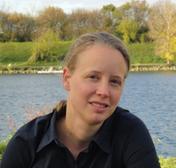
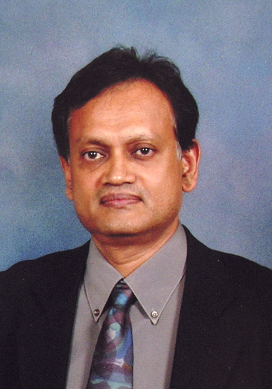
Katrin Rabitsch is an Associate Professor of Economics at Vienna University of Economics and Business (WU Vienna), affiliated with the Department of Economics. Her research focuses on International Macroeconomics/Finance, Quantitative Macroeconomics, Business Cycles, and Monetary Economics. She has published extensively in top journals like European Economic Review , Journal of International Economics , and Macroeconomic Dynamics . Her work explores topics such as monetary policy transmission channels, fiscal multipliers, macroprudential policies, and asset pricing dynamics. Notable recent contributions include analyzing nonlinear inflation dynamics, firm entry costs in asset pricing, and agent-based economic forecasting models. Rabitsch also engages in policy-oriented research, examining the effects of borrower heterogeneity on financial stability and the role of imperfect information in monetary policy design. Her teaching and research are supported by affiliations with institutions like the Department of Economics at WU Vienna. Rabitsch’s methodologies often involve advanced DSGE modeling, VAR analysis, and computational simulations to address complex macroeconomic questions.
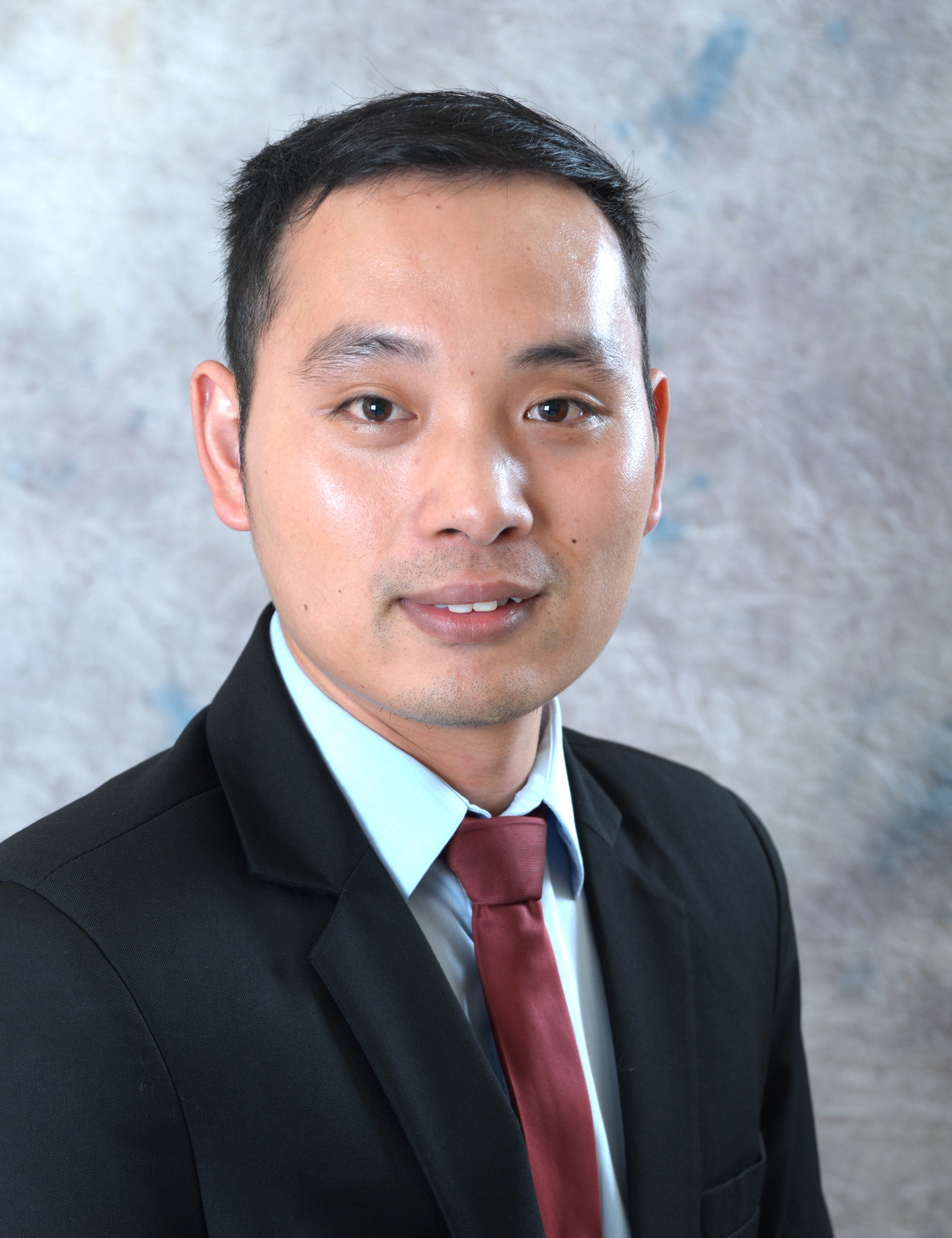
Dr. Huang Changjin is an Assistant Professor at the School of Mechanical & Aerospace Engineering, Nanyang Technological University (NTU), Singapore. He leads the C.J. Huang Research Group, focusing on interdisciplinary research at the intersection of mechanics, materials, and biology. His work emphasizes the mechanics and manufacturing of soft and living systems, with applications in bio-inspired engineering, biomechanics, and advanced materials. Dr. Huang holds a B.Eng. from the University of Science and Technology of China (2008), a Ph.D. from Pennsylvania State University (2014), and completed postdoctoral fellowships at Northwestern University (2014–2015) and Carnegie Mellon University (2016–2018) before joining NTU. His research explores cell mechanics, biofabrication, lipid membrane dynamics, and soft material manufacturing, with recent advancements in 3D printing, shape-morphing composites, and drug delivery systems. His group collaborates widely, addressing challenges in tissue engineering, nanomedicine, and plant immunity. Key research themes include membrane mechanics, bio-interface transport, and the development of in vitro systems for medical and engineering applications. Dr. Huang has mentored numerous students and postdocs, many of whom have transitioned to academic and industrial roles globally. He actively engages in academic activities, including invited talks at international conferences and editorial roles in journals. His lab facilities include advanced biological and mechanical testing equipment, enabling cutting-edge interdisciplinary research.
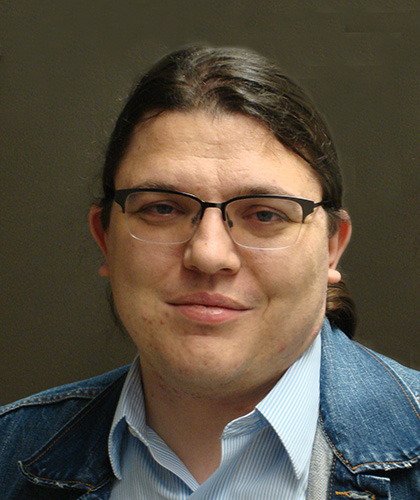
Philip Cardiff is a Professor in Computational Mechanics at the School of Mechanical and Materials Engineering, University College Dublin. He holds a BE (2008) and PhD (2012) in Mechanical Engineering from UCD. His research focuses on computational mechanics, machine learning, and their integration, with expertise in finite volume methods, fluid-solid interaction, and biomechanics. He leads the Bekaert University Technology Centre and contributes to editorial roles in the Journal of Open Source Software and OpenFOAM Journal . Cardiff has secured grants from ERC, I-Form, and the UCD Energy Institute, addressing challenges in offshore energy, advanced manufacturing, and cardiac xenotransplantation. Education: BE in Mechanical Engineering, University College Dublin (2008) PhD in Development of the Finite Volume Method for Hip Joint Analysis, University College Dublin (2012) Professional Diploma in University Teaching & Learning, University College Dublin Research Interests: Computational mechanics, finite volume methods, and machine learning integration Fluid-solid interaction, biomechanics, and materials science Applications in additive manufacturing, energy systems, and biomedical engineering Grants & Awards: ERC Consolidator Grant (2020–2025) Funded Investigator in I-Form and UCD Energy Institute Principal Investigator in UCD Centre for Biomedical Engineering Teaching & Leadership: Programme Director for MEngSc in Materials Science and Engineering (2018–2023) Coordinates modules in computational mechanics and advanced materials processing Advocates constructivist teaching approaches with active learning strategies Labs & Collaborations: UCD Centre for Mechanics Bekaert University Technology Centre MaREI and I-Form Research Centres
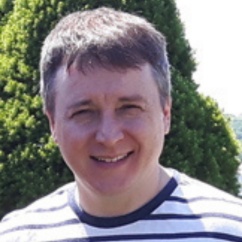
Giuseppe Vecchi is a Full Professor at the Department of Electronics and Telecommunications (DET) of Politecnico di Torino , Italy. He leads the Applied Electromagnetics research group and contributes to projects in computational electromagnetics, metamaterials, and biomedical applications of electromagnetic fields. He has been a IEEE Fellow since 2010 and serves on PhD college committees for Electrical, Electronic, and Communications Engineering. Research Interests : Antennas, Applied and Computational Electromagnetics, Metamaterials, Microwave Imaging for medical applications, Nuclear Fusion Reactor Physics. Scientific Leadership : Principal Investigator for projects like METEOR, MTSA, and RESOLVED-K, focusing on terahertz generation, metasurface antennas, and real-time temperature mapping in hyperthermia. Awards : IEEE Fellow (2010), recognizing his contributions to electromagnetic simulations and antenna design. Students : Supervises PhD candidates in advanced antenna engineering, computational electromagnetics, and biomedical applications, including Owais Khan, Francesco Lattanzio, and Sara Paknezhad Panahi. Patents : Holds multiple patents in antenna diagnostics, encrypted metasurface antennas, and microwave soil disinfection systems.
Michael Dumbser is a Full Professor at the University of Trento's Department of Civil, Environmental and Mechanical Engineering. His research focuses on computational fluid dynamics, numerical methods for hyperbolic conservation laws, and high-performance computing. He specializes in developing structure-preserving numerical schemes such as discontinuous Galerkin and finite volume methods for continuum mechanics, relativistic fluid dynamics, and multiphase flows. Teaching responsibilities include courses like Calcolo numerico e programmazione , High-Performance Computing for Multi-Functional Metamaterials , and Metodi numerici per l'ambiente . His work emphasizes thermodynamically compatible formulations and adaptive numerical methods for complex physical systems. Recent research trends involve hyperbolic reformulations of classical models (e.g., Navier-Stokes-Korteweg, Einstein equations), staggered semi-implicit schemes for incompressible flows, and GPU-accelerated algorithms. His publications span topics from geophysical fluid dynamics to relativistic astrophysics, with a focus on maintaining physical conservation principles in numerical implementations. No scientific awards are explicitly listed in the provided information. His advising record is not detailed here, though his courses suggest involvement in student mentorship. Research collaborations include projects on metamaterials and computational geophysics. Current initiatives include developing unified models for earthquake rupture dynamics, non-Newtonian fluid simulations, and adaptive mesh refinement techniques. His lab work involves high-performance computing frameworks like ExaHyPE for large-scale wave propagation studies.
Ben Goddard is a Professor in the School of Mathematics at the University of Edinburgh. His work bridges applied mathematics with real-world scientific challenges, emphasizing interdisciplinary collaboration across engineering, biology, chemistry, and physics. He earned his PhD at the University of Warwick, later completing his final year at TU Munich following his advisor. His research focuses on mathematical modeling, numerical methods, and asymptotic analysis applied to problems such as quantum chemistry, fluid dynamics, and biological systems. Education: Bachelor’s degree in Mathematics (undergraduate details unspecified) PhD in Mathematical Quantum Chemistry (University of Warwick/TU Munich) Research interests include: Dynamic density functional theory (DFT) for complex fluids and nanoparticles Interfacial phenomena and contact line dynamics Numerical optimization and pseudospectral methods Biological systems modeling (e.g., RNA transcription mechanics) Recent work explores applications like ouzo phase behavior, aerosol droplet stability, and opinion dynamics in social networks. His collaborations span diverse fields, including experimental biology at the Welcome Centre for Cell Biology. He advocates for mathematicians’ role in interdisciplinary problem-solving, emphasizing clear communication and adaptability. Advising and grants: While specific grant details are not listed, his projects reflect significant funding and team-based research. He actively promotes STEM engagement through activities like designing math-themed escape rooms with his spouse, a statistician. Labs/Teams: Collaborates extensively with Edinburgh’s Schools of Engineering, Biology, and Informatics, though no specific lab names are mentioned.
Dr. Ian Abel is an Associate Research Scientist at the Institute for Research in Electronics & Applied Physics (IREAP) at the University of Maryland, where he has been since 2018. His expertise spans fusion energy, plasma physics, and computational modeling. Abel holds a B.A. in Mathematics (2006) and M.S. in Applied Mathematics (2007) from the University of Cambridge, followed by a Ph.D. in Theoretical Physics from the University of Oxford (2012). His research focuses on magnetically confined fusion systems, particularly edge dynamics in tokamaks and innovative centrifugal mirror concepts. He has contributed to the development of gyrokinetic simulation tools like the GX code and the MaNTA transport model. Abel’s work also explores machine learning applications in plasma turbulence analysis and centrifugal mirror fusion reactor design for space propulsion. His research leverages advanced numerical methods, including GPU-native algorithms and adjoint-based optimization techniques for plasma equilibria. Key projects include the Centrifugal Mirror Fusion Experiment (CMFX), where he investigates plasma confinement and transport phenomena. His publications emphasize interdisciplinary approaches, integrating computational fluid dynamics, statistical physics, and high-performance computing to address challenges in fusion energy and plasma dynamics. While no specific awards are listed, his contributions to gyrokinetic turbulence modeling and centrifugal confinement systems are central to current fusion research.
Stephen Brooks is a Professor in the Faculty of Computer Science at Dalhousie University, actively contributing to research and education in computer graphics, visualization, and human-computer interaction. He is affiliated with the Human-Computer Interaction, Visualization & Graphics research cluster and currently supervises multiple graduate students on diverse projects. PhD in Computer Science, University of Cambridge (2004) MSc in Computer Science, University of British Columbia (2000) BSc, Brock University (1998) His research focuses on computer graphics and visualization, particularly non-photorealistic rendering, image editing, 3D geospatial systems, ocean visualization, and real-time rendering of natural phenomena. He has also worked in sound synthesis and motion editing. His recent publications show a strong emphasis on visual analytics, network flow visualization, and ocean science applications. His work spans interdisciplinary domains including environmental science, genomics, cybersecurity, and digital art. He has developed visualization tools for ocean science under a major CFREF-funded initiative and created novel methods for rendering stained glass, mixed media art, rivers, and ocean surfaces. His research integrates perception, automation, and user interaction to enhance visual analysis. Notable scientific contributions include work on tone mapping optimization, uncertainty visualization using chromatic aberration, semantic object clouds, and hybrid 2D/3D GIS. His publications appear in top venues such as IEEE TVCG, ACM Transactions, and SIGGRAPH. NSERC Discovery Grants Canada First Research Excellence Fund (CFREF) NSERC CREATE Mitacs Accelerate and Globalink CFI New Opportunities Grant Cyber Security Research and Development Grant He has supervised numerous PhD, Master’s, and undergraduate students in areas including ocean visualization, tone mapping, network security, VR, and geospatial analytics. He teaches courses in Game Design, Visualization, Computer Animation, and Network Computing, emphasizing project-based and interdisciplinary learning. He leads research in visual analytics for network data (FloVis), ocean science, and mixed reality collaboration. His lab develops interactive systems for data exploration in domains ranging from marine biology to cybersecurity. Future work includes expanding ocean-first climate visualization and enhancing mixed presence collaboration in immersive environments.
Gyeong Hwang is a Matthew Van Winkle Regents Professor of Chemical Engineering at The University of Texas at Austin. He leads the Hwang Research Group focused on computational materials discovery and design for energy and electronic applications. His work emphasizes multiscale modeling of nanostructured materials, with applications in energy storage/conversion, carbon capture, and semiconductor processing. Educational Qualifications: Ph.D., Chemical Engineering, California Institute of Technology (1999) M.S., Applied Physics, California Institute of Technology (1998) M.S., Chemical Engineering, Seoul National University (1993) B.S., Chemical Engineering, Seoul National University (1991) Research Interests: Hwang's research integrates first-principles modeling with experimental validation to address challenges in: - Surface chemistry and interfacial reactions - Nanostructured materials synthesis - Electrochemical device fabrication - CO₂ capture mechanisms His group develops computational tools for predicting material behaviors at atomic and continuum scales. Recent Publications Trends: Publications (2023-2025) focus on: - Solid-state battery interfaces - Plasma-enhanced material deposition - Ionic liquid interactions - Thermal/spatial transport phenomena - Electrochemical reaction mechanisms Awards: NSF CAREER Award (2005) Electrochemical Society's F.M. Becket Memorial Award (1999) Korean Chemical Engineering Service Award (2010) Advising & Grants: Leads interdisciplinary research funded by NSF, industry partnerships, and regents' endowments. Active in graduate student training through courses like ChE 379 (Molecular Simulation) and ChE 348 (Numerical Methods). Labs/Teams: The Hwang Research Group operates state-of-the-art computational facilities for quantum mechanics simulations and multiscale modeling. Collaborates with experimental groups globally on materials prototyping.
Anil N. Hirani is a Professor in the Department of Mathematics at the University of Illinois at Urbana-Champaign (UIUC), affiliated with the College of Liberal Arts & Sciences. He holds a PhD from the California Institute of Technology (2003) in Computer Science with minors in Mathematics and Control and Dynamical Systems. His academic journey includes roles as Assistant Professor (Computer Science, UIUC, 2005–2013) and Associate Professor (Mathematics, UIUC, 2013–2022) before becoming a full Professor in 2022. His research focuses on the interplay between geometry/topology and algorithms, with emphasis on structure-preserving discretizations of exterior calculus and differential geometry. Key areas include Discrete Exterior Calculus (DEC), numerical methods for PDEs, computational topology, and machine learning applications. He has organized workshops, such as the 2025 Discrete Exterior Calculus workshop at IMSI, and contributed to software like PyDEC. Education: PhD, Caltech (2003); MS in Computer Science (Stanford); Undergraduate degree in Computer Science (BITS Pilani, India). Awards include the NSF CAREER Award (2007–2012). Teaching includes courses on Differential Geometry (MATH 423), Vector and Tensor Analysis (MATH 481), and Computational Mathematics (MATH 490). He has advised numerous PhD students, notable among them Kaushik Kalyanaraman and Vaibhav Karve. Articles span DEC applications in fluid dynamics, cohomology computations, and machine learning. His work bridges theoretical foundations with practical applications in engineering and computer science.
David L. Darmofal is the Vice Chancellor for Undergraduate and Graduate Education and the Jerome C. Hunsaker Professor of Aeronautics and Astronautics at MIT. He leads the Aerospace Computational Science & Engineering (ACSEL) Lab and contributes to the MIT Center for Computational Science & Engineering (CCSE). His research focuses on computational methods for PDEs (especially fluid dynamics) and engineering education innovation. He holds a BS from the University of Michigan and SM/PhD from MIT, with postdoctoral work at the University of Michigan. Notable awards include the MacVicar Faculty Fellow (2004), Earll M. Murman Award (2011), and NSF CAREER Award (1998). Education: B.S.E., University of Michigan, 1989 S.M., MIT, 1991 Ph.D., MIT, 1993 Affiliations: MIT Schwarzman College of Computing Aerospace Computational Design Laboratory (ACSEL) His research emphasizes higher-order adaptive finite element methods, space-time mesh adaptation, and turbulence modeling. He teaches courses in computational methods and fluid dynamics. Recent projects include the Metris open-source meshing software and studies on sonic boom propagation. His work bridges computational science and engineering education, with a focus on evidence-based pedagogy. Awards & Recognition: Michael M. Byram Visiting Professorship (2021) Common Ground Excellence in Teaching Award (2024) AIAA Student Chapter Teaching Awards (2005, 2013) Bisplinghoff Fellow & Alumni Merit Award (2012) Advising & Grants: Over 130 peer-reviewed publications, leadership in MIT’s Common Ground initiative, and mentorship of postdocs/UROPs (e.g., Emily Williams, Lucien Rochery). Active in interdisciplinary collaborations, including DOE projects on physics-informed PDEs and NASA’s CFD Vision 2030 study.
K.K. Ang is an Associate Professor in the Department of Civil and Environmental Engineering at the National University of Singapore (NUS) Faculty of Engineering. He has been affiliated with NUS since 1987 and currently serves as Director of the Centre for IT and Applications (CITA Engineering) within the Faculty of Engineering. Qualifications: BEng (1st Class) from University of Singapore (1977) MEng from National University of Singapore (1980) PhD from University of New South Wales (1987) His research focuses on structural stability and vibration , smart adaptive structures , very large floating structures , computational mechanics , and meshless methods . Recent publications analyze carbon nanotube composites, high-speed rail dynamics, and offshore structural interactions. His awards include the NUS Teaching Excellence Award , Engineering Educator Award , and the IES/IStructE Best Structural Paper Award . He has taught courses in Computing, Structural Mechanics, Steel Design, and Finite Element Methods. Professor Ang is a Singapore-registered Professional Engineer (1991) and serves on the Singapore Structural Steel Society council. His work bridges structural engineering, IT applications, and advanced computational modeling.
Professor Tilak Chandratilleke is a faculty member in the School of Civil and Mechanical Engineering at Curtin University, part of the Faculty of Science and Engineering. He holds a PhD from the University of Cambridge and has extensive post-nominals including MIEAust, CPEng, and MASME. His research focuses on advanced thermal engineering, computational fluid dynamics (CFD), and heat transfer optimization. Key areas of interest include thermal energy storage systems, fluid flow in curved ducts, and thermal design for industrial applications. He also serves in the Office of the Provost, contributing to academic governance. Research Interests: - Computational Fluid Dynamics (CFD) modeling of complex thermal systems. - Heat and mass transfer in energy storage and manufacturing processes. - Design and analysis of heat exchangers and thermal recuperators. - Fluid dynamics in curved geometries and secondary vortex structures. - Applications in renewable energy systems and advanced manufacturing. Selected Publications (2022–2010): - Investigated high-temperature thermal energy storage using CaCO₃/Al₂O₃ reactors (2022). - Developed numerical models for metal hydride thermal storage systems (2021). - Analyzed boiling heat transfer in curved ducts and laser-assisted machining thermal effects (2020–2019). - Advanced CFD methodologies for convective boiling and turbulent flow modeling (2018–2016). - Pioneered studies on Dean vortices and microfluidic heat enhancement (2011–2010). Teaching: - Thermodynamics and Heat Transfer. - Fluid Mechanics and Engineering Applications. Labs/Teams: - Involved in Curtin’s thermal energy and advanced manufacturing research groups. - Collaborates with industry partners on renewable energy and thermal system optimization projects.
David Del Rey Fernández is Assistant Professor and Pratt & Whitney Canada Chair in Industrial Artificial Intelligence in the Department of Applied Mathematics at University of Waterloo. His research develops efficient numerical algorithms for solving partial differential equations on high-performance systems. He holds a PhD from University of Toronto and previously worked at NASA Langley Research Center. Research focuses on robust numerical methods, mesh adaptation, and machine learning acceleration. His work includes entropy-stable schemes, summation-by-parts methods, and discretizations for compressible flows. Recent publications address Lyapunov-consistent discretizations and scalable reduced-order modeling.
Prof. Dr.-Ing. H. Siegfried Stiehl is a retired Senior Professor (until Sept 2021) at the Department of Informatics, University of Hamburg. He previously held roles including Dean of the Faculty of Mathematics, Computer Science, and Natural Sciences (2001–2006), Vice President for Research (2007–2013), and Head of the Image Processing Research Group. His academic journey includes a PhD from TU Berlin (1980) and a Habilitation in Computer Vision (1987). Education: 1973: Ing. Degree in Ingenieur-Informatik, Fachhochschule Furtwangen 1976: Diploma in Computer Science, TU Berlin 1980: Dr.-Ing. Dissertation on medical image processing, TU Berlin Research focuses on Computer Vision , Computational Neuroscience , and Cognitive Science , with contributions to medical image registration, 3D landmark detection, and biomechanical modeling. Key projects include the EU-funded 'COVIRA' consortium (1989–1995) and leadership in the SFB 950 'Manuscript Cultures' project (2015–2019). His 110+ publications span biomedical image registration, elastic deformation algorithms, and real-time signal processing. Notable collaborations include work with institutions like the University of Pennsylvania, University of Birmingham, and Philips Research. Leadership roles include organizing scientific events, serving on editorial boards (e.g., Biological Cybernetics), and founding the Interdisciplinary Nanoscience Center Hamburg (INCH) in 2001. His research has addressed challenges in neurosurgical interventions, VLSI implementation of neural networks, and interdisciplinary education.