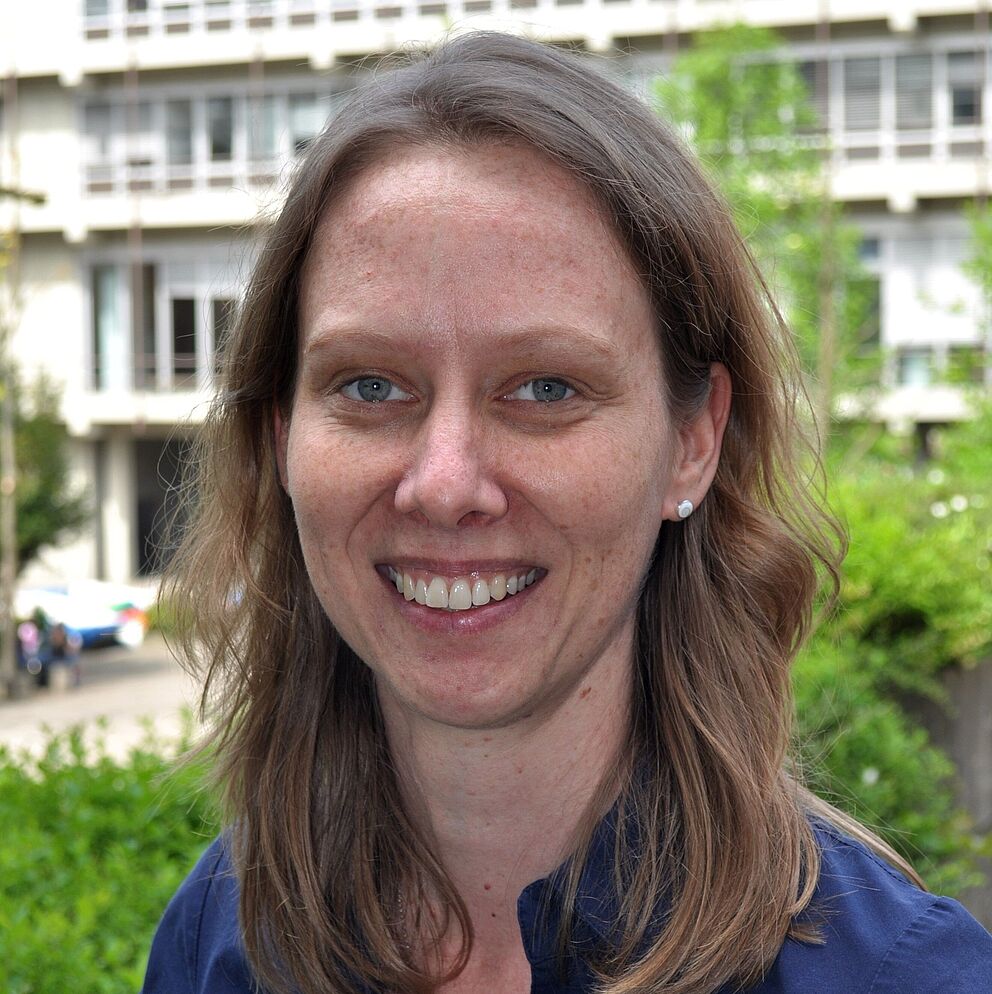
Rosario González Férez is a theoretical physicist affiliated with the University of Granada and a long-time collaborator with the CFEL-CMI group in Hamburg. She holds the Mildred Dresselhaus Guest Professorship and is a regular visitor, contributing to research on molecules in external fields. Fields of Interest : Theoretical physics, molecular alignment in external fields, laser-induced orientation, X-ray imaging techniques, quantum mechanics, macromolecular structure analysis. In 2014, she conducted long-term research in Hamburg thanks to the Dresselhaus fellowship. Currently, she partially supervises graduate students Evangelos Karamatskos and Linda Thesing . Scientific Contributions : Developed numerical simulation methods for nanoparticle injection systems (2025). Applied machine learning (normalizing flows) to molecular excited-state calculations (2025). Advanced laser-alignment techniques for single-particle X-ray imaging (2025).
Hubert Klahr is an apl. Prof. (Associate Professor) and Research Group Leader at the Max Planck Institute for Astronomy in Heidelberg, Germany. He leads multiple research groups focused on Planet Formation and Exoplanets, Star Formation, and the Theory of Planet and Star Formation within the Department of Planet and Star Formation. His research centers on computational physics applied to the formation of the solar system and exoplanets, with particular emphasis on turbulence in protoplanetary disks. Klahr employs multidimensional self-gravitating magneto hydro dynamical simulations of turbulent gas and embedded particles using massive parallel computers to investigate fundamental questions about solar system formation, star formation processes, and the role of turbulence in planet formation. His specific research interests include determining how Earth came to life, how massive and small stars form, the nature of turbulence in planet formation, the initial mass function of planets, planetary formation distances from stars, and the prevalence of Earth-sized planets in habitable zones. His recent publications (2024-2025) focus on advanced computational modeling of protoplanetary disks, planet-disk interactions, radiation hydrodynamics, and planetesimal formation mechanisms. Key research themes include vertical shear instability, three-temperature radiation hydrodynamics, spiral arm formation in disks, and dust evolution in protoplanetary environments. Prof. Klahr has engaged with the public through lectures such as 'Lucy: Eine Reise zu den Fossilien unseres Sonnensystems' (Lucy: A Journey to the Fossils of Our Solar System), where he discussed the Lucy mission to Trojan asteroids that serve as relics of the early solar system.
Prof. Dr.-Ing. André Brendike is a faculty member at the University of Applied Sciences Potsdam , affiliated with the Faculty of Civil and Environmental Engineering in the Civil Engineering Department . Holding the title of Professor of Statics , his work spans structural mechanics, dynamics, and finite element analysis with a focus on offshore wind energy systems and earthquake engineering. Education: Doctorate in Engineering Sciences (2012), TU Berlin B.Sc. / M.Sc. Civil Engineering (1999–2005), TU Berlin Research Interests: Prof. Brendike specializes in statics, dynamics, and numerical methods for structural analysis, particularly applied to offshore wind turbine foundations. His research addresses seismic risks in foundation design, fatigue and service life estimation for steel structures, and optimization of support systems for offshore wind farms. He integrates computational modeling (e.g., finite element method) with practical engineering challenges in renewable energy infrastructure. Publication Trends: His recent work highlights the intersection of wind energy and structural engineering, emphasizing offshore environments and seismic resilience. Key themes include foundation design methodologies, steel construction durability, and computational simulation of dynamic loads. Professional Roles: Professor of Statics (since 2018), University of Applied Sciences Potsdam Visiting Professor (2017–2018), Berlin School of Economics and Law Project Manager (2014), Structural Design, JÖRSS-BLUNCK-ORDMANN Research Assistant (2006–2012), TU Berlin
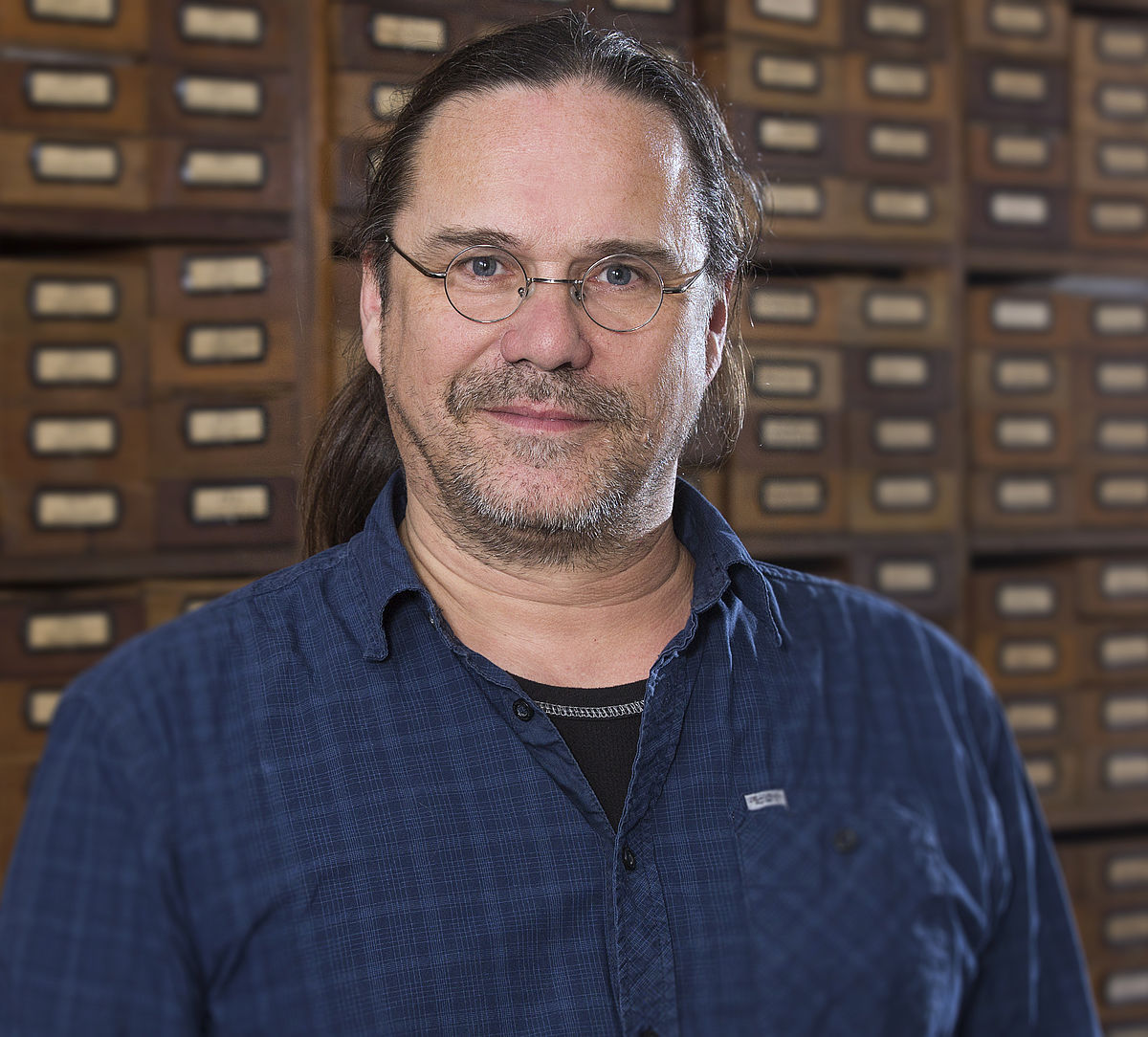
Damien Fournier is a Scientist at the Max Planck Institute for Solar System Research in the Department of Solar and Stellar Interiors. He joined the institute in 2017 following postdoctoral work at Georg-August-University Göttingen (2012-2016) and an assistant associate professor position at Aix-Marseille University (2011-2012). He holds a Ph.D. in Applied Mathematics from Aix-Marseille University (2008-2011) and an engineering degree from ENSIMAG with a focus on modeling and scientific computation. His research specializes in computational helioseismology , with dual focus areas: Forward modeling of wave propagation dynamics in solar interiors Inverse problem resolution for reconstructing interior perturbations from surface seismic measurements Secondary interests include Reynolds stress analysis, noise estimation methodologies, and Pinsker estimators for flow inversions. Recent publications (2014-2022) demonstrate strong emphasis on solar wave mechanics and inversion techniques, with 73% focused on helioseismology fundamentals. Dominant themes include: Solar Rossby wave dynamics under rotational effects (26% of recent works) Computational advancements in wave equation solutions and kernel development (33%) Meridional flow structure and convection zone dynamics (20%) He contributes to academic training through co-supervision of bachelor/master/PhD candidates. Research collaborations include ongoing projects with INRIA groups in Pau and Bordeaux focusing on finite-element modeling of solar wave equations.
Prof. Dr. Sabine Fechner is a Professor of Chemistry Education at the University of Paderborn, where she leads the Chemistry Education working group within the Faculty of Science, Department of Chemistry. Her office is located in Room J6.205 at Warburger Str. 100, 33098 Paderborn, and she can be reached at +49 5251 60-1880. Her research focuses on investigating teaching and learning processes in chemical contexts using empirical educational research methods. She evaluates learning environments that provide foundations for innovative chemistry teaching, with particular emphasis on transferring research findings into practical classroom applications. Her current research interests include: Digital media in chemistry education Education for sustainable development Virtual reality applications in chemistry laboratories Innovative teaching methods for chemistry education Prof. Fechner's recent publications show a clear trend toward integrating digital technologies with traditional chemistry education. Her work on virtual chemistry laboratories, particularly the 'VirtuChemLab' project, demonstrates how VR technology can create accessible and engaging learning experiences for students with varying levels of prior practical experience. This research spans chemistry education, educational technology, and science pedagogy. She actively supervises PhD students including Hendrik Peeters (Project manager VRLabTutor) and collaborates with multiple departments across the university. Her work has received significant funding, including approximately €957,000 for the VR@UPB project that brings together expertise from chemistry, computer science, and media studies. Prof. Fechner's working group maintains a school-oriented laboratory at the University of Paderborn where they develop and test educational programs. They organize teacher training courses, create open educational resources, and run numerous workshops for school students on topics ranging from catalysis to sustainable energy solutions.
Professor Thomas Pyttel is a faculty member at the Technical University of Central Hesse in the Department of Mechanical Engineering, Mechatronics and Materials Technology. He maintains an office in Building A2, Room 1.03 at the Friedberg campus (Wilhelm-Leuschner-Straße 13, D-61169 Friedberg) and holds office hours on Fridays from 1:00 p.m. to 2:00 p.m. during the Summer Semester 25. Professor Pyttel specializes in Engineering Mechanics , with research interests spanning Crash Simulation , Material Characterization , Material Modeling , and Finite Element Analysis . His work focuses on developing and validating simulation models for various applications including automotive safety systems, composite materials, and structural components. He directs the Materials Modeling Laboratory where experimental and numerical methods are developed for material characterization and failure prediction. Analysis of Professor Pyttel's publication record reveals a strong focus on computational mechanics applied to real-world engineering problems. His research trajectory shows consistent work in crashworthiness simulation, material modeling for polymers and composites, and the integration of manufacturing processes with structural performance prediction. The publications demonstrate expertise in developing constitutive models, failure criteria, and numerical methods for applications ranging from automotive safety to aerospace systems. Professor Pyttel has maintained a productive research career spanning several decades, with publications dating back to the 1990s through to recent years. His work shows particular strength in bridging the gap between theoretical mechanics, numerical simulation, and practical engineering applications.
Prof. Dr. Hardy Weisweiler is a full-time faculty member at the Technical University of Central Hesse, specializing in the Department of Mechanical Engineering, Mechatronics and Materials Technology. His expertise spans fluid mechanics, computational fluid dynamics (CFD), lightweight construction, finite element method (FEM), and hydrogen technology, with a focus on practical research and educational infrastructure development. Academic Affiliation: Technical University of Central Hesse (THM) Roles: Professor, Dean of the Faculty of Mechanical Engineering, Co-founder of the Computational Engineering Laboratory Research initiatives include the establishment of a state-of-the-art fluid mechanics laboratory with wind tunnel facilities, collaborations with Helmholtz Centre for Heavy Ion Research (GSI) and DLR-Göttingen, and numerous industrial partnerships (ABB, BMW, Siemens). His work emphasizes reducing errors in fluid dynamic design, improving energy efficiency, and advancing hydrogen storage systems. Key scientific awards include the VDI Prize (2006). Expert activities include reviewing funding lines (2013-2017), developing hydrogen refueling test benches, and providing technical consultancy on valve systems, turbine blade solidification, and vacuum coating technologies. Supervision of diploma theses with companies like Honeywell and Metzeler is highlighted.
Dr. Domenico Taraborrelli is a researcher at the Institute of Climate and Energy Systems (ICE) , Forschungszentrum Jülich GmbH, leading the Atmospheric Chemistry in the Earth System group. His work focuses on atmospheric oxidation capacity, organic aerosol formation, and chemistry-climate interactions, with a particular emphasis on multiphase chemical transformations and their impacts on air quality and climate. Position: Group Leader in Troposphere (ICE-3) Contact: +49 2461/61-6864 | Group Website Research Interests include atmospheric chemical kinetics, secondary organic aerosol formation, and feedback mechanisms between climate and air pollution. His studies integrate experimental data with global models (e.g., EMAC, ECHAM/MESSy) to quantify processes in cloud droplets, urban environments, and biogenic emissions. Recent publications highlight his expertise in ozone variability under climate change, aqueous-phase chemistry, and advanced modeling techniques for atmospheric chemical reactions. Key topics include nitrogen oxides, volatile organic compounds, and chlorine chemistry in diverse atmospheric conditions. Labs & Teams : Collaborates with the CAABA/MECCA model development team and contributes to the MESSy framework. His group operates within the Troposphere department, conducting chamber experiments (e.g., SAPHIR simulation chamber) and global simulations to study atmospheric composition changes.
André Hardtmann is a Research Associate and Senior Engineer at the Institute of Forming Technology within Dresden University of Technology . His work focuses on advanced forming process modeling, machine-process interactions, and hybrid composite development.
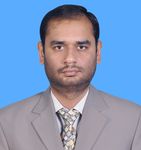
Eric Sonnendrücker is a full Professor at the Department of Mathematics , Technische Universität München (TUM) , affiliated with the School of Computation, Information and Technology . His research focuses on Numerical Analysis and Scientific Computing for partial differential equations, particularly in plasma physics and gyrokinetic simulations . He leads the research group on Numerische Methoden der Plasmaphysik and contributes to the Numerics of Partial Differential Equations group. His methodological work emphasizes structure-preserving discretization , geometric particle-in-cell (PIC) methods , and adaptive numerical schemes for high-dimensional systems. Collaborations span institutions like ETH Zürich , University of Oslo , and KIT , with applications in tokamak geometry and strong magnetic field modeling . Recent publications highlight advancements in energy-conserving time propagation , curvilinear coordinate PIC simulations , and gyrokinetic cross-code verification . His work bridges mathematical rigor with practical high-performance computing for fusion energy research.
Dr.-Ing. Abdul Razzaq Farooqi is a researcher at the University of Rostock , Faculty of Computer Science and Electrical Engineering, Institute of General Electrical Engineering. His work integrates computational electromagnetics with biomedical engineering to advance cartilage tissue engineering through electroactive hydrogels and electrical stimulation. Research Interests: Numerical simulation of electromagnetic fields Modeling and simulation of electroactive hydrogels for cartilage tissue engineering Computational bio-electromagnetics Across his recent publications (2019–2025), Farooqi has concentrated on electroactive hydrogels , electrical stimulation strategies , and computational biomechanics to enhance cartilage regeneration. Complementing this biomedical thrust, he has also contributed to electromagnetic focusing and chiral metamaterials in earlier works (2012). Scientific Awards: No awards explicitly mentioned in the provided text. Advising & Funding: No student names or specific grants are listed in the supplied material. Laboratories & Teams: Farooqi is affiliated with the Institute of General Electrical Engineering at the University of Rostock, where he conducts his computational and experimental investigations.
Dr. Holger Meyer is a faculty member at the University of Rostock's Faculty of Computer Science and Electrical Engineering, specifically in the Institute of Computer Science. He is based at the Konrad Zuse House on Albert-Einstein-Straße 22, Room 332, and can be reached at phone number 0381-498 7597 or via email at hme@informatik.uni-rostock.de. Dr. Meyer teaches a variety of database-related courses including Database Application Programming (Bachelor), Databases for Users (Bachelor), Databases III (Master), and Digital Libraries and Multimedia Information Retrieval (Master). He also supervises projects under KSWS/Project/NEidI. His research focuses on database systems, digital libraries, information retrieval, data science, and XML database technologies. Dr. Meyer has made significant contributions to the development of digital archive systems, particularly through the Hydra.PowerGraph System, which enables building digital archives with directed and typed hypergraphs. His work also extends to applying crowdsourcing techniques in cultural heritage projects like the Mecklenburg Field Name Archive and developing SQL-based approaches for machine learning and signal processing tasks. Dr. Meyer's recent publications (2017-2019) demonstrate a strong emphasis on practical applications of database technologies across diverse domains including environmental monitoring (particulate matter analysis), automotive engineering, digital humanities, and historical geography. His work bridges theoretical database concepts with real-world applications, particularly through SQL-based implementations of machine learning operations and signal processing techniques. Throughout his career, Dr. Meyer has collaborated extensively with colleagues at the University of Rostock, particularly with Professor Andreas Heuer, Meike Klettke, and other researchers in the database and information systems group. These collaborations have resulted in numerous publications in prestigious venues including Datenbank-Spektrum, LNI proceedings, and international conferences.
Markus Klein serves as Professor for Numerical Methods in Aerospace Engineering at Bundeswehr University Munich, holding a full professorship (Univ.-Prof.) within the Department of Aerospace Engineering. Based in Building 37, Room 037/1118, he maintains active contact through +49 89 6004-2122 and markus.klein@unibw.de. His research centers on advanced numerical simulation techniques for aerospace systems, with specialization in computational fluid dynamics and aerodynamic modeling. This work directly supports critical advancements in aircraft and spacecraft design through high-fidelity virtual prototyping and flow analysis. Klein's academic foundation includes the German engineering doctorate (Dr.-Ing.) and postdoctoral habilitation (habil.), reflecting deep expertise in applying mathematical methods to complex aerospace challenges. His position as chair of the Numerical Methods professorship underscores his leadership in computational aerospace research.
Dr. Ernst-Arndt Reinecke is Head of the Safety Research department at Forschungszentrum Jülich's Institute of Energy Technology (IEK-6). Holding a PhD from RWTH Aachen University (1999), he has dedicated his career to nuclear safety research with a specialized focus on hydrogen safety and containment phenomena during severe accidents in light water reactors. His leadership extends to international collaborations including founding membership in the International Association HySafe (2009) and participation in the European Hydrogen Safety Panel since 2018. Dr. Reinecke's research interests center on catalytic hydrogen recombiners, severe accident analysis, and hydrogen mitigation strategies in nuclear containment systems. His work bridges fundamental research with practical safety applications, particularly in developing passive safety systems that prevent hydrogen explosions during nuclear accidents. His expertise spans both experimental validation and computational modeling of hydrogen behavior under accident conditions. His extensive publication record reveals consistent focus on improving nuclear safety through better understanding of hydrogen behavior, development of passive autocatalytic recombiners (PARs), and validation of safety codes. Recent work emphasizes the application of nuclear hydrogen safety knowledge to emerging hydrogen technologies, demonstrating the transferability of nuclear safety expertise to broader energy applications. As department head, Dr. Reinecke leads numerous national and international projects including AMHYCO and SASPAM-SA, focusing on hydrogen safety in nuclear applications and small modular reactors. His team conducts experimental research using facilities like REKO and THAI to validate computational models for hydrogen behavior and mitigation.
Dr. Kaveh Haghighi Mood is a computational researcher at Forschungszentrum Jülich's Jülich Supercomputing Centre (JSC), specializing in high-performance computing with emphasis on GPU acceleration and scientific application enablement. His work bridges atmospheric science, materials simulation, and exascale computing through the Helmholtz Association research infrastructure. His research focuses on optimizing computational methods for next-generation supercomputers, particularly in three domains: GPU-accelerated atmospheric modeling through the MPTRAC framework for Lagrangian transport simulations Exascale benchmarking via the JUPITER suite for evaluating future supercomputing architectures Quantum Monte Carlo methods applied to electronic structure theory and materials science Recent publications demonstrate expertise in CUDA, OpenACC, and performance portability across diverse hardware platforms. Haghighi Mood's publication trends reveal an evolving focus from foundational quantum chemistry (2010-2019) toward GPU optimization and exascale readiness (2020-2025). His work increasingly addresses atmospheric science applications while maintaining strong connections to materials simulation, reflecting JSC's strategic emphasis on climate modeling and computational materials design. The interdisciplinary nature spans computer architecture, numerical methods, and domain-specific scientific computing.


.jpeg)