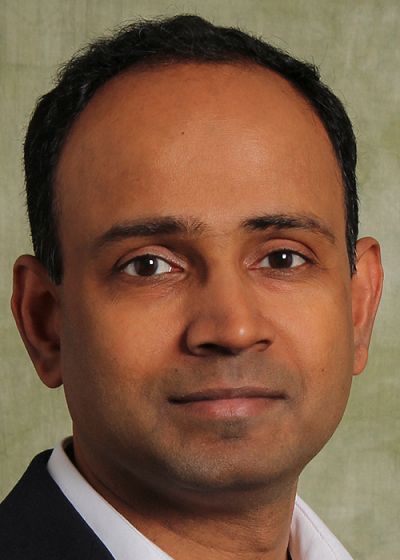
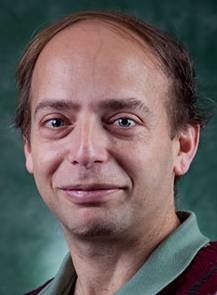
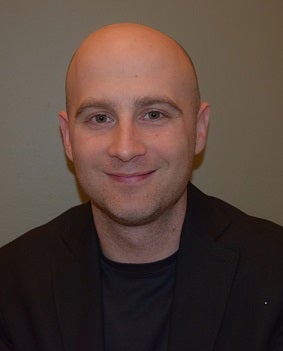
Kartik Gopalan is a Professor in the School of Computing at Binghamton University (State University of New York), serving as Interim Associate Dean for Research, Corporate Engagement, and Entrepreneurship within the Thomas J. Watson College of Engineering and Applied Science. He holds a PhD from Stony Brook University, an MS from IIT Madras, and a BE from Delhi Institute of Technology. Education - BE: Delhi Institute of Technology - MS: Indian Institute of Technology, Chennai - PhD: State University of New York at Stony Brook Research Interests His work focuses on experimental computer systems, including virtualization, cybersecurity, cloud computing, operating systems, and networks. Key projects include the OSNET Group's VirtuOSNet initiative, exploring advancements in virtual machine migration, hypervisor management, and privacy-preserving technologies. Notable contributions include Directvisor (bare-metal cloud virtualization), Span Virtualization (multi-hypervisor ecosystems), and privacy-preserving VMs. Professional Service - Associate Editor, IEEE Transactions on Parallel and Distributed Systems (2022–present) - Associate Editor, IEEE Transactions on Cloud Computing (2017–2024) - TPC roles at USENIX ATC, HPDC, and ICDCS Awards Recipient of the National Science Foundation CAREER Award (2013). Over 60 refereed publications and 8 U.S. patents reflect his research impact. Advising & Teams Mentor of numerous PhD/Masters students (e.g., Roja Eswaran, Mingjie Yan) and leads the OSNET Group, dedicated to advancing operating systems, networks, and cloud systems. His research bridges theoretical innovation with practical implementations in data center environments.
Dr. Seungbae Park is a SUNY Distinguished Professor in the Department of Mechanical Engineering at Binghamton University's Watson College of Engineering and Applied Science. He serves as Director of the Integrated Electronics Engineering Center (IEEC) and leads the Opto-Mechanics and Physical Reliability Laboratory. With over two decades of experience since joining Binghamton in 2002, Dr. Park has established himself as a leading expert in electronics packaging reliability. Dr. Park's educational background includes: BS and MS from Seoul National University PhD from Purdue University Dr. Park's research focuses on electronics packaging reliability, with particular expertise in micro/nanomechanics, optomechanics, and digital image correlation techniques. His work addresses critical challenges in electronic device reliability including thermal cycling, mechanical shock, moisture effects, and electromigration. He has pioneered methods for in-situ warpage measurement and deformation analysis of electronic packages using advanced optical techniques. Dr. Park's recent publications demonstrate a strong focus on emerging packaging technologies including 2.5D/3D integration, through-glass vias, and advanced thermal management solutions. His work increasingly incorporates machine learning approaches for process optimization and reliability prediction, reflecting the evolving nature of electronics packaging research. Dr. Park has received numerous prestigious honors: Elevated to SUNY Distinguished Professor Named IEEE Fellow for electronics packaging research Named ASME Fellow for three decades of electronics packaging innovations Outstanding poster award from ASME InterPACK 2013 Dr. Park has successfully advised over 30 PhD students and numerous Master's students, many of whom now work at leading technology companies including Apple, Intel, Samsung, and Google. His research has been supported by significant funding from industry partners such as IBM, Samsung, Intel, Analog Devices, and Corning, as well as government agencies including NASA and the Department of Energy. Dr. Park directs the Opto-Mechanics and Physical Reliability Laboratory, which features state-of-the-art equipment including a 3D printer, Digital Image Correlation system, high-speed camera, Wyko surface profiler, Bose tester, and nano-characterization system. The lab collaborates with the Integrated Electronics Engineering Center (IEEC) and the Center for Advanced Microelectronics Manufacturing (CAMM).
David J. Klotzkin is an Associate Professor in the Department of Electrical and Computer Engineering at Binghamton University, where he has been a faculty member since 2008. He is a Senior Member of the IEEE and has received notable awards, including the departmental research award in 2010 and the Chancellor's Award for Excellence in Teaching (2016-2017). His educational background includes a BS in Electrical Engineering from Rensselaer Polytechnic Institute (1988), an MS in Materials Science from Cornell University (1994), and a PhD in Electrical Engineering from the University of Michigan (1998). His research focuses on High-speed telecommunications lasers Free space modulating retroreflectors Integrated opto-electronic devices Quantum dot lasers and laser dynamics Photonic-band-gap devices Organic luminescent devices Microfluorescence detectors He has contributed to the development of innovative sensors, such as optical oxygen sensors and CMOS-based CO₂ sensors, and advanced fabrication techniques like interference lithography for photonic crystals. David has also pioneered a multidisciplinary STEM scholarship program for community college transfer students, emphasizing nanotechnology and microfabrication through hands-on research projects. His teaching portfolio includes courses such as EECE 506: Mathematical Methods in Electrical Engineering EECE 260: Electrical Circuits Advanced Semiconductor Lasers at both Binghamton and the University of Cincinnati David has advised numerous students, including those in the classes of 2014, 2015, and 2016. His work extends to collaboration with industry partners like IBM and the Naval Research Lab, and he has led the Klotzkin Lab, which explores cutting-edge optoelectronic and photonic systems. Key contributions include the Glaparex simulation tool, which optimizes distributed feedback lasers, and the development of microfluidic lab-on-a-chip sensors for biomedical applications.
Mahmoud Sayed Mahmoud Eid is a PhD Research Fellow in Engineering Sciences at the University of Agder. His research focuses on fault diagnosis in electric powertrains using AI-driven methods. He holds a B.S. in Mechatronics Engineering from Helwan University (2013) and an M.S. in Advanced Mechanical and Robotics Engineering from Ritsumeikan University, Japan (2019). Research Focus: Develops computational models for early fault detection in electric motors and inverters under noisy operational conditions. His methodologies integrate electromagnetic theory with machine learning for industrial applications in transportation and energy systems. Publications: His 6 most recent articles (2022-2025) focus on AI-enhanced diagnostics for power electronics and motor systems, demonstrating consistent innovation in signal processing and classifier design for industrial reliability.
Diletta Giuntini serves as Assistant Professor in the Mechanics of Materials section of the Department of Mechanical Engineering at Eindhoven University of Technology (TU/e), with affiliations to the Institute for Complex Molecular Systems (ICMS) and EIRES Research. She concurrently holds a position in the Eindhoven Young Academy of Engineering (2021-2025). Her academic foundation includes a BSc and MSc in Aerospace Engineering from the University of Pisa, Italy, followed by a PhD in Engineering Sciences through the joint UCSD-SDSU program (2016). Postdoctoral work at Hamburg University of Technology under a Humboldt Fellowship (2018) preceded her current TU/e appointment. Giuntini's research pioneers advanced ceramic processing via ultra-fast sintering and additive manufacturing, focusing on nano-architected multiscale materials. Her work on supercrystalline nanocomposites—nanoparticle assemblies mimicking atomic crystals—explores emergent mechanical properties through nanoscale structural tailoring, heavily incorporating biomimetic principles for innovative material design. Analysis of her 15 most recent publications reveals dominant themes: supercrystalline nanocomposite characterization via nanoindentation/fatigue/creep testing (73% of works), computational sintering optimization (13%), and biomimetic composite design (13%). This output demonstrates consistent integration of experimental validation with predictive modeling to enhance ceramic toughness and functional properties. Her scientific recognition includes: Acta Materialia Outstanding Reviewer Award (2019) TMS-AIME Champion H. Mathewson Award (2022) As Project Manager for ACROPOROUS (2021-2028), she leads research on sustainable ceramics and porous materials, while supervising 11 graduate students. Her teaching encompasses Advanced and Additive Manufacturing, Engineering Design, and Fracture Mechanics. She actively promotes diversity through initiatives like the Power Hour at the 2018 Gordon Research Seminar on Solid State Studies in Ceramics.
Evan F. Risko is a Professor and Associate Chair (Graduate Affairs) at the University of Waterloo. His research focuses on Distributed Cognition, Effort Perception, and applying cognitive psychology principles to improve education and training. He holds the Canada Research Chair in Embodied and Embedded Cognition and has received multiple awards including Early Career Awards from the Psychonomic Society, Canadian Society for Brain, and Outstanding Performance Awards from the Province of Ontario. His work is funded by NSERC, SSHRC, and other major grants. He leads the Cognition and Natural Behaviour Laboratory, exploring how humans integrate body and environment to enhance thinking. Recent studies examine lecture design, cognitive offloading effects, and metacognition in digital contexts. Education: B.A., M.A., Ph.D. from the University of Waterloo in Cognitive Psychology. His research bridges theoretical and applied domains, with a focus on optimizing learning through lecture video design, understanding effort perception, and mitigating cognitive biases. Scientific Awards: Canada Research Chair in Embodied and Embedded Cognition Early Career Award (Psychonomic Society) Early Career Award (Canadian Society for Brain, Behaviour, and Cognitive Science) 2014 & 2018 Outstanding Performance Awards (Province of Ontario) Advising & Grants: Supervises graduate students in cognitive science and education research. Major grants include NSERC Discovery Grants, SSHRC Insight Development Grants, and Canada Foundation for Innovation funds. His work on video lectures and cognitive offloading has implications for educational technology and workplace training. Labs & Teams: Director of the Cognition and Natural Behaviour Lab, collaborating on projects like 'Distributed Metacognition' and 'Effort Perception in Technology Use'. Current initiatives explore how external tools (e.g., smartphones) shape cognitive processes and learning efficacy.
Annette ten Teije is a Full Professor at Vrije Universiteit Amsterdam (VU Amsterdam) with appointments in the Faculty of Science, Artificial Intelligence department, the Network Institute, and the Knowledge Representation and Reasoning research group. Her academic career spans several decades with a strong focus on the intersection of artificial intelligence and healthcare applications. Professor ten Teije's research interests center around Knowledge Representation, particularly in medical contexts. Her work bridges multiple domains including Semantic Web technologies, Ontology development, Neuro-Symbolic AI systems, and Clinical Decision Support. She has made significant contributions to the formalization of clinical guidelines, handling multimorbidity in healthcare systems, and developing design patterns for hybrid AI systems. Her research integrates machine learning with symbolic reasoning to create explainable and reliable AI systems for healthcare applications. Analysis of Professor ten Teije's recent publications reveals a strong trajectory toward neuro-symbolic AI approaches that combine the strengths of neural networks and symbolic reasoning. Her work increasingly focuses on explainability in medical AI systems, with numerous publications on feature selection, interaction detection, and narrative-based understanding. She has developed frameworks for shared understanding in multi-agent systems and created design patterns specifically for medical decision-making contexts. Her research consistently bridges theoretical AI advances with practical healthcare applications. Professor ten Teije has supervised 5 PhD theses as indicated in her academic profile and teaches courses including "AI in Health" and "Machine Learning and Reasoning for Health" for the 2024-2025 academic year. Her academic contributions extend to editorial work, including serving as editor for conference proceedings and special issues on Knowledge Representation for Healthcare Processes.
Dr. Leo Saffin is a Research Fellow in the Department of Meteorology at the University of Reading, affiliated with the National Centre for Atmospheric Science (NCAS). He is a postdoctoral researcher working on the Huracan project, focusing on the dynamics of tropical cyclones transitioning to the extratropics and their interaction with midlatitude atmospheric flows. His research integrates atmospheric processes, numerical modeling, and computational methods to improve climate and weather prediction accuracy. His work spans eddy feedbacks in climate models, trade-wind cumulus dynamics, and reduced-precision computing for atmospheric parameterizations. He collaborates with John Methven, Pier Luigi Vidale, and Alex Baker on midlatitude dynamics and forecast error analysis. Saffin’s contributions bridge theoretical atmospheric science with practical model optimization, addressing challenges in numerical precision and parametrization techniques. Publications highlight his expertise in climate modeling uncertainties, mesoscale organization of clouds, and the role of diabatic processes in atmospheric circulation. His research emphasizes the interplay between small-scale phenomena and large-scale dynamics, with applications to improving weather forecast reliability and climate model fidelity.
Lizhi Shang is an Assistant Professor in the Department of Agricultural & Biological Engineering at Purdue University. His research focuses on Machine Systems Engineering, with an emphasis on hydraulic system innovation, AI-aided design of fluid power components, and advanced computational tribological analysis. He is affiliated with the Maha Fluid Power Research Center, a leading facility for fluid power research. His work integrates experimental and numerical methods to address challenges in hydraulic systems, such as thermal management, cavitation phenomena, and tribological interface performance. He collaborates with interdisciplinary teams to develop compact and efficient fluid power solutions for off-road machinery and aviation systems. Key research themes include axial piston machine optimization, electrohydraulic integration, and sustainable hydraulic technologies. Dr. Shang’s publications span topics like tribology test chamber design, thermal modeling of piston-cylinder interfaces, and cavitation scalability analysis. His research aims to enhance energy efficiency and reliability in fluid power systems across diverse applications.
Qun Li is a Professor of Computer Science at the College of William and Mary, leading the Edge Computing Laboratory. He holds an IEEE Fellow distinction and has served as Graduate Director (2010-2011). His research focuses on edge computing, operating systems, distributed systems, and security & privacy, with over 100 publications in top venues like ACM CCS, ICSE, and NSDI. Li has advised numerous PhD students, including Zhengrui Qin and Ed Novak, who now hold academic positions. He chairs conferences including ACM/IEEE Symposium on Edge Computing (SEC'22) and has editorial roles at IEEE Internet Computing and Transactions on Computers. Key awards include an NSF Career Award. His work emphasizes building prototype systems and addressing real-world challenges in edge computing and quantum networks. Education: PhD from Dartmouth College under Daniela Rus Research interests span edge computing architecture, secure deep learning, federated learning, and quantum computing applications. His Edge Computing Group explores scalable solutions for distributed systems and privacy-preserving technologies. Recent publications (2022-2024) focus on quantum networks, federated learning robustness, and privacy-preserving algorithms. A notable trend is integrating quantum computing with edge systems for enhanced security and efficiency. Awards: NSF Career Award (year unspecified), IEEE Fellow (year unspecified) Advised students have transitioned to academia and industry roles, reflecting Li's mentorship impact. Active in conference organization, he has led program committees for ACM SEC and IEEE ICDCS, while steering editorial boards in computer networks and systems. Current projects include quantum network routing and Byzantine-tolerant federated learning.
Prof. Dan M. Frangopol is the Fazlur R. Khan Endowed Chair of Structural Engineering and Architecture at Lehigh University's P.C. Rossin College of Engineering and Applied Science. He is a global leader in life-cycle civil engineering, focusing on probabilistic methods, infrastructure resilience, and sustainability. His research spans structural reliability, risk-based decision-making, and multi-hazard mitigation under climate change. Affiliations: Lehigh University (current), University of Colorado Boulder (23 years), and institutions in Romania and Belgium. Education: Dipl.-Ing. from Bucharest (1969), Doctor of Applied Sciences (summa cum laude) from University of Liège (1976), and multiple honorary doctorates. His research interests include life-cycle cost optimization, probabilistic mechanics, and infrastructure systems management. He pioneered the International Association for Bridge Maintenance and Safety (IABMAS) and the International Association for Life Cycle Civil Engineering (IALCCE). Key contributions include frameworks for resilient infrastructure under climate change and extreme events. Frangopol has authored/co-authored over 500 journal articles, 5 books, and 70 book chapters. He has supervised 50 PhD and 56 M.Sc. students, many of whom are now leading academics and practitioners. His awards include the inaugural Dan M. Frangopol Medal (2023), ASCE Noble Prize (2015, 2024), and multiple honorary memberships in national and international academies. He has advised numerous high-profile projects funded by NSF, FHWA, NASA, and others. His labs and initiatives include the Fazlur R. Khan Distinguished Lecture Series and the journal Structure and Infrastructure Engineering .
David Lo is an OUB Chair Professor and Director at the Information Systems and Technology Cluster , School of Computing and Information Systems , Singapore Management University . His research spans the intersection of Software Engineering , Cybersecurity , and Data Science , focusing on improving software quality, security, and developer productivity through socio-technical analysis and artifact evaluation. He has over 15 international Scientific Awards , including ACM Fellow (2023), IEEE Fellow (2022), and ASE Fellow (2021). His work has been funded by NRF , MOE , NCR , and AI Singapore . David leads the Software Analytics Research (SOAR) group and has mentored numerous PhD students , many of whom hold faculty positions or work in tech giants like Microsoft. He actively engages in service , chairing conferences like ICSE 2025 and ESEC/FSE 2024 , and serves on editorial boards of journals such as IEEE Transactions on Software Engineering . His recent keynotes address critical topics like AI for safer systems and LLM applications in software architecture , reflecting his vision for integrating AI into software engineering practices.
Fabrice Duval is a Researcher-Lecturer and Head of the Technical Research and Transfer Platform at CESI. He holds a Habilitation to supervise research from Rouen University (2016) and a PhD in Electrical Engineering from Université Paris-Saclay (2007). His research focuses on Industrial Performance Optimization, Electromagnetic Compatibility (EMC), and robotics-driven manufacturing systems. He leads the 'Engineering and Numerical Tools' research team and manages the CESI FabLab. His educational activities include teaching Electromagnetism, Electricity, and Embedded Systems to engineering students (1st/2nd years and masters). He has supervised numerous PhD theses, including those on EMC in electric vehicles, motor impedance modeling, and PEEC-based EMI analysis. His work emphasizes practical applications, such as the CoRoT project (2016-2021) improving flexible manufacturing systems with autonomous/collaborative robots. Key research themes include robotics task allocation (e.g., auction-based optimization), digital twin integration for resilient systems, and synthetic data for industrial object detection. His publications span peer-reviewed journals and conferences, addressing topics like magnetic shielding effectiveness in automotive applications and modular mobile manipulator coordination. Awards: While no specific honors are listed, his extensive supervision record and participation in high-impact projects reflect his academic standing. He actively organizes scientific events and contributes to industry-research partnerships. Lab involvement: As FabLab manager, he bridges academic research with hands-on innovation, fostering experimental prototyping in electromechanical systems and smart manufacturing technologies.
Prof. Tilmann Gneiting is a Professor of Computational Statistics at Karlsruhe Institute of Technology (KIT) and Head of the Computational Statistics Working Group at the Heidelberg Institute for Theoretical Studies (HITS). His research focuses on probabilistic forecasting, statistical evaluation of predictive models, and applications in environmental science, epidemiology, and renewable energy. He has held academic roles in mathematics and statistics departments across multiple institutions. His work emphasizes rigorous statistical methodology for forecasting systems, including ensemble models, uncertainty quantification, and validation frameworks. Notable contributions include developing scoring rules for probabilistic predictions, Bayesian model averaging techniques, and geostatistical methods for weather and climate modeling. Courses taught include Forecasting: Theory and Practice and Time Series Analysis . Prof. Gneiting’s research spans diverse areas such as earthquake forecasting, solar energy prediction, and pandemic modeling. He has contributed to R packages like ensembleMOS and ProbForecastGOP , advancing computational tools for statistical analysis. His work bridges theoretical statistics with practical applications in environmental and public health domains. Professional awards and recognitions are not explicitly listed in the provided texts. His advising and grants involve collaborations in interdisciplinary projects, though specific student names or grant details are not mentioned. He leads computational statistics teams at HITS and actively publishes in top-tier statistical and applied journals.
Panagiotis (Panos) Ch. Anastasopoulos is an Associate Professor and the Stephen E. Still Chair of Transportation Engineering in the Department of Civil, Structural and Environmental Engineering at the University at Buffalo, State University of New York. He also serves as Director of both the Stephen Still Institute for Sustainable Transportation & Logistics and the Engineering Statistics and Econometrics Application (ESEA) Research Laboratory within the School of Engineering and Applied Sciences. Dr. Anastasopoulos received his educational credentials from prestigious institutions: PhD in Civil Engineering from Purdue University (2009) MSc in Civil Engineering from Purdue University (2007) BS from Athens University of Economics & Business, Athens, Greece (2004) His research spans multiple cutting-edge domains in transportation engineering and statistical methods. Dr. Anastasopoulos specializes in statistical and econometric modeling of engineering problems, with particular expertise in infrastructure systems reliability, transportation safety, and crisis management. His work increasingly focuses on emerging technologies including autonomous and connected vehicle systems, advanced air mobility solutions, and the integration of human behavior with next-generation transportation technologies. He has made significant contributions to understanding public perceptions of emerging transportation modes like flying cars and autonomous vehicles, as well as developing innovative statistical methods for transportation data analysis. Analysis of Dr. Anastasopoulos' recent publications reveals a strong emphasis on applying sophisticated statistical and econometric methods to transportation safety challenges. His work frequently employs advanced modeling techniques including random parameters models, bivariate probit approaches, and hierarchical ordered probit analyses. There is a clear progression in his research toward addressing emerging transportation challenges including urban air mobility, autonomous vehicle integration, and the impact of public-private partnerships on transportation infrastructure safety. His highly cited work has appeared in top journals such as Analytic Methods in Accident Research, Accident Analysis and Prevention, and Transportation Research journals. Dr. Anastasopoulos has received significant recognition for his scholarly contributions: Named a Highly Cited Researcher by Web of Science for 2019, 2020, and 2021 Co-author of the widely used textbook "Statistical and Econometric Methods for Transportation Data Analysis" (3rd edition) As an academic leader, Dr. Anastasopoulos serves in multiple editorial capacities including Executive Associate Editor of Analytic Methods in Accident Research (ranked #1 journal in Safety Research and Transportation), Associate Editor for the ASCE Journal of Infrastructure Systems, and editorial board member for several other prominent transportation journals. His research has been supported by prestigious funding sources including the National Science Foundation's Innovation Corps Program, Federal Highway Administration, and New York State Department of Transportation. He has authored or co-authored over 160 papers, book chapters, and reports throughout his career. At the Engineering Statistics and Econometrics Application Research Laboratory (ESEA), which he founded and directs, Dr. Anastasopoulos leads a team that provides statistical and econometric consultation services to engineers and scientists. The lab focuses on developing solutions for partners throughout the School of Engineering and Applied Sciences at UB, with particular emphasis on transportation safety, infrastructure reliability, and emerging mobility technologies. The ESEA lab provides free consultation services to UB's engineering school and governmental agencies in New York State, and has worked on numerous projects including highway safety analysis, transportation data informatics, and infrastructure management systems.