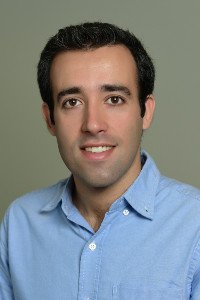
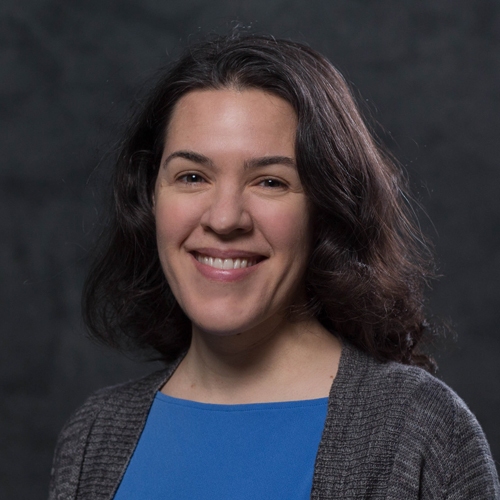
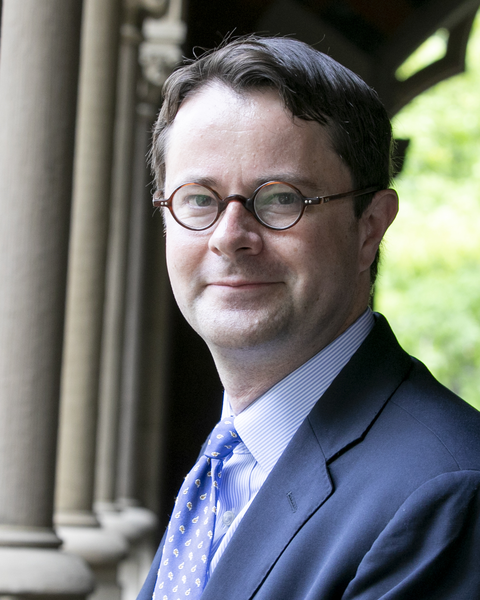
Prof. Dr. Tolga Ovatman is a faculty member at the Department of Computer Engineering, Istanbul Technical University , where he has been serving as Head of Department since 2024. His academic career spans roles from Research Assistant (2004-2012) to Associate Professor (2019-2023) and full Professor (2023-present). He previously held administrative roles such as Vice Dean (2018-2022) and Deputy Head of Department (2016-2018). PhD in Computer Engineering (2005-2011) MS in Computer Engineering (2003-2005) BSc from Hacettepe University (1999-2003) His research focuses on model checking , replicated state machines , cloud computing , and object-oriented software . Recent work addresses computation offloading in 6G networks , collaborative text editing data structures , and energy-efficient environmental monitoring systems . Key projects led include Design of a Multiplexed State Machine Storage System for Edge Computing (2022-2024) and Microservice Compatible Symphony Infrastructure Research (2020). He has supervised numerous theses on topics ranging from collaborative text editing to AI applications in watershed management . Publications span IEEE Transactions , Springer , and conferences like CSCE and CLOSER .
Vicki Galea is an Associate Professor (Part-Time) in the School of Rehabilitation Science within the Faculty of Health Sciences at McMaster University. With an extensive publication record spanning from 1989 to 2024, her work focuses on neurophysiology, motor control, and rehabilitation science, particularly in the areas of musculoskeletal disorders, cerebral palsy, and neck disorders. Dr. Galea's research interests center on understanding sensory and motor function in various patient populations. Her work explores neurophysiological mechanisms underlying movement disorders, pain perception, and rehabilitation outcomes. She has made significant contributions to understanding motor unit behavior in neurological conditions, sensory testing methodologies, and biomechanical assessment of movement patterns in both healthy and clinical populations. Her research bridges basic neurophysiology with clinical application, developing assessment tools that translate laboratory findings into practical clinical use. Analysis of her recent publications reveals a consistent focus on clinical assessment tools, particularly for neck disorders and upper limb function. Her work bridges basic neurophysiology with clinical rehabilitation, developing and validating assessment methods that can be used in clinical practice. There's a strong emphasis on understanding the relationship between sensory function, motor control, and pain in various conditions including arthritis, cerebral palsy, and chronic neck pain. Her publications span high-impact journals across rehabilitation science, neurophysiology, and orthopedics. Current Perception Threshold Test development and validation Motor unit estimation in neurological conditions Biomechanical analysis of movement disorders Cerebral palsy rehabilitation approaches Hand function in arthritis Dr. Galea has been actively involved in teaching, having instructed courses including 'Foundational Knowledge I' and 'Foundational Knowledge II' in the occupational therapy program. Her collaborative research network is extensive, with notable co-authors including Pierrynowski, McComas, MacDermid, and Gross across numerous publications. Her scholarly impact is evident through citations across multiple platforms, with her work being referenced on social media, included in clinical guidelines, and attracting readership on academic platforms like Mendeley.
Weiwei Hu is a Professor in the Department of Mathematics at the University of Georgia, specializing in applied mathematics with a focus on control theory and fluid dynamics. Her research bridges theoretical analysis and computational methods to address complex problems in partial differential equations and optimal control systems. She received her Ph.D. in Mathematics from Virginia Tech, establishing the foundation for her expertise in mathematical modeling and analysis. Her educational background directly informs her innovative approaches to fluid dynamics and control problems. Professor Hu's research spans approximation and mathematical control theory of partial differential equations, optimal control of transport and mixing via fluid flows, well-posedness and long-time behavior of mathematical fluid dynamics, data-driven optimal control for network dynamics, computational methods for model reduction, and reliability analysis of renewable systems. She develops advanced theoretical frameworks and numerical algorithms to solve boundary control problems in Stokes and Navier-Stokes flows, with applications in engineering and environmental systems. Her publication record from 2018-2023 reveals consistent advancement in fluid flow control, particularly in optimal mixing and transport phenomena. She has pioneered numerical methods for boundary control of fluid systems while expanding into data-driven approaches for network dynamics and renewable energy applications. Her collaborative work with institutions including Kansas State University, Missouri S&T, and Carnegie Mellon University demonstrates the interdisciplinary impact of her research. Her scientific contributions have been recognized with the prestigious Humboldt Research Fellowship for Experienced Researchers in 2024. Professor Hu has secured over $1.5 million in research funding as principal investigator from NSF, AFOSR, and DARPA, including a 2023-2026 AFOSR grant on hybrid control of semi-dissipative systems and multiple NSF collaborative projects addressing deep-learning-enabled optimization for power systems and computational methods for optimal transport. Her grant portfolio reflects leadership in securing competitive funding for high-impact mathematical research. She actively collaborates with researchers across the United States and Europe on interdisciplinary projects integrating PDE modeling, machine learning, and topology analysis for applications in MRI analysis and renewable energy systems, demonstrating strong leadership in collaborative mathematical research.
Alireza Khani is an Associate Professor in the Department of Civil, Environmental, and Geo-Engineering at the University of Minnesota's College of Engineering. His research focuses on modeling the impacts of emerging technologies on public transit systems and optimizing these systems for greater efficiency and reliability. Dr. Khani actively contributes to transportation research through numerous publications and substantial grant-funded projects. Dr. Khani's research interests center on transportation engineering with a particular emphasis on public transit systems. His work utilizes network modeling and optimization techniques to integrate public transit with autonomous mobility-on-demand services and electric fleets using renewable energy. His research spans urban mobility challenges, focusing on sustainable transportation solutions that address both passenger and freight transportation needs. His work increasingly incorporates machine learning techniques to analyze travel behavior and optimize transportation networks. His recent publications demonstrate a strong focus on electric bus systems, autonomous mobility-on-demand services, and optimization of transit networks. The research trends show progression from traditional transit modeling to integrating cutting-edge technologies like AI algorithms and autonomous vehicles. His work addresses critical transportation challenges including last-mile connectivity, rural transit solutions, and the transition to electric fleets, with growing emphasis on data-driven approaches to transportation planning. Dr. Khani actively mentors students and seeks undergraduate researchers for software development projects related to transportation systems. His research is supported by multiple substantial grants including projects funded by the National Science Foundation and the Minnesota Department of Transportation. Current projects include MobiliSlice: A Personalized Car-sharing System for Smart Urban Mobility , Estimating Likely Mode Shift and VMT Reduction Potential using TBI Data and AI Algorithms , and Transitioning to EV Fleets: Best Practices and A Decision Tool . Dr. Khani leads the UMN Transit research group, which focuses on developing mathematical, computational, and data analytic tools to evaluate and optimize transit systems. The group's research activities center on creating innovative solutions for modern transportation challenges, particularly those involving the integration of emerging technologies with traditional public transit infrastructure. The lab maintains strong connections with transportation agencies and actively contributes to practical solutions for real-world transit problems.
Barb Cutler is an Associate Professor in the Computer Science Department at Rensselaer Polytechnic Institute (RPI) and an affiliated faculty member at EMPAC (Experimental Media and Performing Arts Center). She specializes in computer graphics, interactive visualization, computational geometry, and open-source educational software. Previously, she was a student and Post-Doctoral Lecturer at MIT's Department of Electrical Engineering and Computer Science. Education: PhD in Electrical Engineering and Computer Science, MIT, August 2003 MEng in Electrical Engineering and Computer Science, MIT, June 1999 Research Interests: Her research spans computer graphics , interactive visualization , computational geometry , and the development of open-source educational tools . She has made significant contributions to architectural daylighting design, spatially augmented reality, and procedural modeling. Her work often integrates advanced visualization techniques with practical applications in education and architecture. Scientific Awards: NSF Early CAREER Award (2009) Rensselaer School of Science Outstanding Teaching Award (2017) Rensselaer Trustees' Outstanding Teacher Award (2019) Teaching & Advising: Barb Cutler has taught a wide range of courses including Data Structures, Advanced Computer Graphics, Interactive Visualization, and Computational Geometry. She has advised numerous PhD and MS students, many of whom have gone on to positions at leading companies and institutions. She is currently advising Evan Maicus, a PhD student in Computer Science. Lab & Projects: She leads the development of Submitty , an open-source homework submission, autograding, and TA grading system used widely in computer science education. Her lab focuses on innovative educational technologies and advanced visualization systems.
Gianluigi Ferrari is a Full Professor of Telecommunications at the Department of Engineering and Architecture, University of Parma, Italy. He has been at the University of Parma since 2002, following his Laurea and PhD degrees from the same institution in 1998 and 2002 respectively. Professor Ferrari serves as the coordinator of the Internet of Things (IoT) Lab since 2006, Vice-director of the Future Technology Lab (2020-), and President of the Degree Course in Computer, Electronics and Telecommunications Engineering (2021-). He has held visiting researcher positions at USC, CMU, KMITL, NATO in Brussels, and NCTU. Professor Ferrari's research focuses on complex networked communication systems with emphasis on signal processing and network communication. His work spans Internet of Things architectures, wireless sensor networks, vehicular communications, and edge computing systems. He has made significant contributions to IoT protocols, sensor network optimization, and vehicular communication systems, with applications in smart cities, healthcare monitoring, and intelligent transportation systems. His interdisciplinary approach bridges theoretical foundations with practical implementations in real-world scenarios. His recent publications demonstrate a strong trend toward privacy-preserving techniques in IoT systems, edge intelligence for real-time analytics, and optimization of communication protocols for emerging applications. The research spans healthcare monitoring with wearable devices, vehicular communications with federated learning approaches, and novel routing protocols for BLE mesh networks. His work consistently addresses the challenges of energy efficiency, security, and reliability in networked systems. best paper/technical awards at various international conferences Senior Member of the IEEE Editor-in-Chief of Future Internet (MDPI, 2023-) Editor of ICT Express (Elsevier, 2021-) Professor Ferrari participates in numerous research projects funded by public and private institutions with research grants exceeding €5 million. He has served on the editorial boards of multiple international journals and organized several workshops and special sessions at major conferences. His professional activities include serving as Technical Team Member in NATO Research Task Group HFM-260 (2015-2018) and member of the Scientific Council of ARTEMIS association (2019-) and CNIT (2020-). As director of the IoT Lab at the University of Parma, Professor Ferrari leads a research team focused on developing innovative solutions for Internet of Things applications. The lab investigates communication protocols, network architectures, and data processing techniques for various IoT domains including smart cities, healthcare, and intelligent transportation systems. The lab maintains strong collaborations with international research institutions and industry partners, facilitating technology transfer and practical implementation of research outcomes.
Dr. Gabriel Barros dos Santos is a Senior Lecturer in Structural Engineering at the University of Hertfordshire's School of Physics, Engineering & Computer Science. He specializes in metallic and composite structures, focusing on experimental testing, numerical modeling, and probabilistic assessments for sustainable design. He collaborates with BRE Trust and the Royal Academy of Engineering, contributes to standardization committees, and serves as an external examiner for UK universities. PhD in Structural Engineering, Imperial College London MSc in Materials and Structures, Federal University of Rio de Janeiro BEng in Civil Engineering, State University of Rio de Janeiro His research spans stainless steel and composite structures, with a focus on transverse loading, bolted connections, and design equation development. Recent work explores net-zero design through digital technologies. He has published extensively on structural collapse, nonlinear analysis, and sustainable construction. Key trends in his publications include structural reliability, finite element analysis, and design optimization for metallic and composite materials. His work has been cited over 150 times. Senior Fellow of the Higher Education Academy (SFHEA) Highly Commended Graduate Teaching Assistant at Imperial College Recipient of Royal Academy of Engineering Fellowship for net-zero built environment research He leads MSc Civil Engineering and BEng/MEng courses at Hertfordshire, advises on structural fire safety, and accepts PhD applications aligned with his expertise. His industry background includes offshore structure design for FPSO vessels.
Tyler VanderWeele is the John L. Loeb and Frances Lehman Loeb Professor of Epidemiology in the Departments of Epidemiology and Biostatistics at the Harvard T.H. Chan School of Public Health. He serves as Director of the Human Flourishing Program and Co-Director of the Initiative on Health, Spirituality, and Religion at Harvard University. His educational background includes: Ph.D. (Biostatistics) 2006, Harvard University A.M. (Biostatistics) 2005, Harvard University M.A. (Mathematics) 2005, University of Oxford M.A. (Finance and Applied Economics) 2002, Wharton School, University of Pennsylvania B.A. (Philosophy and Theology) 2000, University of Oxford B.A. (Mathematics) 2000, University of Oxford VanderWeele's research spans two interconnected domains: methodological work focused on distinguishing between association and causation in biomedical and social sciences, and psychosocial measurement theory; and empirical research encompassing psychiatric and social epidemiology, the science of happiness and flourishing, and the study of religion and health. His work integrates rigorous statistical methodology with substantive questions about human well-being across diverse populations and cultural contexts worldwide. His recent publications reveal a strong emphasis on cross-national analysis of human flourishing across 22 countries through the Global Flourishing Study. This research examines demographic variations and childhood predictors of numerous aspects of well-being including sense of mastery, physical pain, optimism, social trust, volunteering behavior, and religious beliefs. His methodological contributions include sensitivity analysis tools like E-values for unmeasured confounding, and frameworks for mediation and interaction analysis. Among his notable scientific recognitions is the 2017 Presidents' Award from the Committee of Presidents of Statistical Societies (COPSS), one of the highest honors in the field of statistics. VanderWeele has secured multiple NIH research grants as Principal Investigator, including R01CA222147 on mediation and interaction methods, R01AI104459 on longitudinal causal mediation analysis in HIV, and R01ES017876 on sufficient cause interactions. He has published over 500 peer-reviewed papers and authored influential books including Explanation in Causal Inference (2015), Modern Epidemiology (2021), Measuring Well-Being (2021), Handbook of Religion and Health (2023), and A Theology of Health (2024). He founded the journal Epidemiologic Methods with Eric Tchetgen Tchetgen to advance methodological research in epidemiology. His research group develops various tools and tutorials for sensitivity analysis, mediation analysis, and interaction analysis, making advanced statistical methods accessible to researchers worldwide.
Frank Pfenning is a Professor in the Department of Computer Science at Carnegie Mellon University's School of Computer Science. With decades of active research and service in programming languages and logic communities, he maintains a significant presence across major conferences including POPL, ICFP, and ESOP. His research spans foundational work in Programming Languages , Logic and Type Theory , Logical Frameworks , Automated Deduction , and Trustworthy Computing . Recent publications reveal a strong focus on session types, substructural logics, and their applications to concurrency and distributed systems. His work bridges theoretical foundations with practical implementations for reliable communication protocols. Analysis of his publication trends shows a consistent evolution from foundational type theory toward practical applications in concurrent and distributed systems. The integration of logical frameworks with session types represents a signature research trajectory, increasingly addressing real-world challenges in protocol verification and deadlock freedom. As an active community member, Pfenning has served on numerous program committees including POPL (2016-2025), ICFP (2015-2022), and ESOP. His mentoring activities include PLMW@POPL presentations, demonstrating commitment to training next-generation researchers. His technical contributions are primarily disseminated through premier venues in programming languages research. The absence of explicit grant information in available sources suggests focus on theoretical contributions rather than large-scale funded projects, though his sustained conference participation indicates stable institutional support.
Dr. Merve Uzuner is an Assistant Professor in the Department of Industrial Engineering at the Faculty of Engineering, Başkent University. She maintains an active research and teaching profile with significant contributions to simulation, optimization, and reliability engineering. Her research focuses on several critical areas: Simulation and modeling of complex production systems Optimization techniques including genetic and memetic algorithms Reliability engineering and system availability analysis Fuzzy logic applications in manufacturing environments Redundancy allocation problems with repairable components Dr. Uzuner's scholarly work demonstrates a consistent pattern of applying advanced analytical methods to solve real-world industrial problems. Her publications reveal a strong emphasis on combining simulation techniques with optimization algorithms to enhance system performance and reliability. She frequently addresses challenges related to uncertainty in production systems through fuzzy logic approaches. Her research has been published in reputable journals including the Journal of the Faculty of Engineering and Architecture of Gazi University, European Journal of Industrial Engineering, and Journal of Turkish Operations Management, as well as numerous conference proceedings from the Operations Research and Industrial Engineering National Congress. As an educator, Dr. Uzuner teaches core industrial engineering courses such as Introduction to Probability and Statistics, Simulation, Simulation Languages, and Statistical Analysis. Her teaching schedule shows active engagement with students across multiple courses including END 320, END 422, END 450, END 513, and END 588, demonstrating her commitment to both undergraduate and graduate education.
Mohammad Abdollahi Azgomi is a Professor of Computer Engineering at the School of Computer Engineering, Iran University of Science and Technology (IUST), where he has been serving since 2005, progressing from Assistant Professor to Associate Professor and finally to Professor in 2022. He holds multiple significant roles including Director of the Trustworthy Computing Laboratory (TwCL) since 2006, and previously served as Research Deputy of the School of Computer Engineering from 2020-2023. His academic career is complemented by extensive service on editorial boards, scientific committees, and as a PC member for numerous international conferences in security, cryptography, and computer science. Dr. Azgomi earned his Ph.D. in Computer Engineering (Software) from Sharif University of Technology in 2005 with a dissertation on 'High-Level Extensions for Stochastic Activity Networks: Theories, Tools and Applications,' supervised by Prof. Ali Movaghar. He also completed his M.S. (1996, with honors) and B.S. (1991) in Computer Engineering (Software) from the same institution, with his master's thesis focusing on 'Design and Implementation of Security Services for Computer Networks.' His research spans several interconnected domains centered around dependable and secure computing systems. Dr. Azgomi specializes in modeling and simulation techniques, particularly Petri Nets and Stochastic Activity Networks, for quantitative evaluation of system properties. His work significantly contributes to security and privacy frameworks, trust models, and dependable software design. He has pioneered approaches for evaluating cyber-physical systems security through game-theoretic models and developed frameworks for assessing software architecture quality attributes under uncertainty. Analysis of his recent publications reveals a strong research trajectory focusing on computational trust models, malware propagation dynamics in heterogeneous networks, and security evaluation of cyber-physical systems. His work demonstrates consistent application of formal methods like stochastic activity networks and Petri nets to solve complex security and dependability problems. There's a clear progression from foundational modeling techniques to sophisticated applications in cloud computing, web services security, and intrusion-tolerant systems. Best Researcher of the Year, School of Computer Engineering, IUST (2013, 2014, 2016, 2017) Best Paper Award at CSICC'12 for work on symbolic state space generation Best Paper Award at Innovations'09 for security protocol modeling Best Bachelor Thesis Supervisor (2009) Best Lecturer, IT Group, E-Learning Center (2008) Distinguished M.S. Graduate, Sharif University (1996) Dr. Azgomi has supervised an impressive number of doctoral students, with 14 Ph.D. graduates from IUST and 6 from other universities. His current teaching includes graduate courses on Dependable Software Systems and undergraduate Research Methods and Presentation. He serves on the editorial board of the CSI Journal on Computing Science and Information Technology and has been actively involved in numerous international conferences as program committee member and chair. The Trustworthy Computing Laboratory (TwCL), which Dr. Azgomi directs, focuses on rigorous engineering methodologies for evaluating dependability and security in information and communication technologies. The lab conducts research in formal methods, security modeling, dependable systems, and network security, with particular emphasis on Petri nets, stochastic activity networks, and quantitative evaluation techniques for security, privacy, and trust.
Andrew A. Houck is the Anthony H.P. Lee '79 P11 P14 Professor of Electrical and Computer Engineering at Princeton University's School of Engineering and Applied Science. He serves as Dean of the School and inaugural Co-director of the Princeton Quantum Initiative. Ph.D., Harvard University (2005) B.S.E., Electrical Engineering, Princeton University (2000) His research focuses on superconducting quantum computing and quantum simulation via circuit quantum electrodynamics (cQED). Key areas include photonic bandgap engineering , nonlinear quantum optics , and machine learning optimization for quantum systems. His lab investigates robust qubit architectures, decoherence mitigation, and many-body quantum physics in photonic crystals. Recent publications demonstrate expertise in superconducting circuit design, quantum control instrumentation (QICK platform), and photonic material engineering. Collaborative work spans quantum computing hardware, error correction protocols, and nonlinear microwave photonics. Honors : Presidential Early Career Award (2010), NSF Early Career Award (2010), Packard Fellow (2009), TR35 (2009), Sloan Research Fellow (2009), Blavatnik Award Finalist (2008) Houck advises numerous graduate students, including Matthew Bland , Jeronimo Martinez , and Paal Prestegaard . His lab partners with the Co-design Center for Quantum Advantage and Princeton's Interdisciplinary Quantum Science Network .
Elena Mattei is a Postdoctoral Research Fellow at Ca' Foscari University of Venice, holding dual affiliations with the Venice School of Management and the Department of Comparative Linguistic and Cultural Studies. She is actively engaged in the National Research Project DIETALY (Destination Italy in English Translation and Language over the Years) in collaboration with the Italian National Tourist Board, investigating early English tourism translation practices in Italy and 20th century promotional materials. Her educational background includes a PhD and Doctor Europaeus in Digital Humanities for English Studies (SSD: L-LIN/12) from the University of Verona with excellent grades. Previously, she earned a Bachelor's and Master's degree in Foreign Languages for Communication in Tourism and Commerce (LM-38; 110L/110), with semesters abroad at University of Massachusetts Boston and Universitaet Passau, and an internship at the travel agency One Food Abroad in Dublin. Mattei's research focuses on multimodal tourism discourse, particularly the collection, annotation and analysis of tourism multimodal corpora on social media. Her work integrates data-driven semiotics into social semiotics and Systemic Functional Linguistics, with the social mission of fostering multimodal literacy and promoting the design of counternarratives for social change, especially regarding environmental protection and informed social media use. She investigates how the capitalist, romantic gaze of the postmodern traveler may be leveraged to cultivate environmental awareness and promote sustainable behavior, with plans to create a Grammar of multimodal eco-discourse to support regenerative travel. Her publications demonstrate a consistent trajectory in multimodal analysis of tourism communication, with increasing focus on sustainability, environmental protection, and the application of computational methods. Recent work shows a shift toward practical applications of her theoretical framework for regenerative tourism and sustainable communication practices, with numerous forthcoming publications in high-impact journals and edited volumes. Finalist for the Paul Fortier Prize as Emerging Researcher in Digital Humanities at Digital Humanities 2023 Shortlisted for the ADHO Paul Fortier Prize as an emergent scholar in Digital Humanities Editorial member of scientific journals TRANS-KATA and Iperstoria (Class A) Peer reviewer for Routledge, Bloomsbury Academic, and several high-impact journals Mattei actively supervises Master's theses at the University of Verona on topics related to tourism discourse and multimodal communication. She has served as an Adjunct Professor at both the University of Verona and Ca' Foscari University of Venice, teaching courses in Digital Humanities, Business English, and English for International Business and Global Affairs. Her research is supported by the DIETALY project funded by MIUR (PRIN 2020), where she serves as a Postdoctoral Researcher under Professor Mirella Agorni. She has developed the Statistically Reliable Image (SRI) Tagging software for visual and multimodal manual annotation in collaboration with ISTI-CNR, and has co-organized international conferences including a multidisciplinary doctoral conference at the University of Verona in 2021. Her work bridges academia and industry through collaborations with Randstad Research and media appearances with La Repubblica discussing sustainable tourism trends.
Prof. Dr. Yaşar Güneri ŞAHİN serves as the Dean of the Faculty of Engineering and Computer Sciences at Izmir University of Economics, where he also holds a professorship in the Department of Software Engineering. With over two decades of experience in both academia and industry, he has established himself as a prominent figure in software engineering, real-time systems, and educational technologies. His academic journey began with a Bachelor's degree in Computer Engineering from Middle East Technical University in 1994, followed by a Master's in Computer Education from Gazi University in 1999, and culminated with a Ph.D. in Industrial Technology from Gazi University in 2005. Prior to joining Izmir University of Economics in 2008, he served as a faculty member at Yaşar University starting in 2005, and before that, he gained nearly a decade of industry experience in high-level management roles overseeing numerous software projects for both public and private sectors. Prof. ŞAHİN's research spans several interconnected domains with a strong emphasis on practical applications. His work in software engineering focuses on project management methodologies, team building models for educational contexts, and database systems. In real-time systems, he has made significant contributions to forest fire detection technologies using innovative approaches like animal-based biological sensors and radio-acoustic sounding systems. His educational technology research addresses challenges in nursing education, special education for individuals with autism, and internet resource utilization by university students. Notably, his interdisciplinary approach bridges computer science with healthcare applications, particularly in medical informatics where he has developed public health information systems and tools for medical data entry. His scholarly output demonstrates a consistent trajectory of innovation across multiple domains, with particular concentration in the period from 2007-2013. While his early work focused on foundational software engineering concepts and database systems, his research evolved to address pressing societal challenges including forest fire detection, healthcare information systems, and educational technologies. This evolution reflects his ability to identify emerging technological needs and apply software engineering principles to diverse real-world problems. His contributions have been recognized through multiple prestigious awards: TÜBİTAK Scientific Publication Awards (2008-2012) İzmir University of Economics Scientific Publication Awards (2008-2011) As an academic advisor, Prof. ŞAHİN has supervised doctoral and master's theses on diverse topics including heart failure management, triage algorithms for multiple injuries, and software project selection metrics for small and medium enterprises. His administrative leadership extends beyond his deanship to include serving on juries for national art, design, and architecture competitions, as well as evaluating research projects for TEYDEB and TÜBİTAK. His grant activities include serving as a project reviewer and monitor for various technology development initiatives including "Bulut," "ARAGES," "SADE," and "SWH-ATLANTIS." Prof. ŞAHİN maintains an active research laboratory environment focused on real-time systems and software engineering applications. His work often involves interdisciplinary collaboration, particularly with medical professionals on health informatics projects and with education specialists on technology-enhanced learning initiatives. Current research directions appear to focus on the intersection of software engineering principles with healthcare applications and environmental monitoring systems.
Alexandre Santos Francisco is Professor of Fluid Mechanics at Fluminense Federal University (Universidade Federal Fluminense) in Brazil, holding a PhD in Nuclear Engineering. He will soon serve as Visiting Professor at the ERC Advanced Grant project DyCon under Prof. Enrique Zuazua (FAU, University of Deusto, and Universidad Autónoma de Madrid), focusing on computational mathematics and porous media research. His academic credentials include: PhD in Nuclear Engineering (1994–2000), Federal University of Rio de Janeiro Master's Degree in Nuclear Engineering (1990–1993), Federal University of Rio de Janeiro Bachelor's Degree in Mechanical Engineering (1984–1990), Federal University of Rio de Janeiro Internship at Petrobras (1988) Francisco's research centers on porous media, computational mathematics, and computational fluid mechanics, with emphasis on numerical methods for heterogeneous media flows. His work bridges nuclear engineering safety, environmental contaminant transport, and industrial process optimization through advanced simulation techniques. Analysis of his 15 most recent publications reveals dominant trends in multiscale modeling for porous media, parallel computing implementations, and reliability assessment in nuclear systems. Key application areas include waste disposal simulation, steam generator integrity, and multiphase industrial processes, consistently integrating mathematical rigor with engineering challenges. No scientific awards are documented in the provided materials. While student advisement details are absent, his upcoming ERC Advanced Grant project DyCon involvement signifies active grant-funded research. The project will expand his work on mathematical control theory for complex systems under Prof. Zuazua's supervision. He collaborates internationally through the ERC DyCon project, leveraging expertise in numerical methods to address multiscale dynamics in porous media, with future work likely advancing computational techniques for energy and environmental applications.