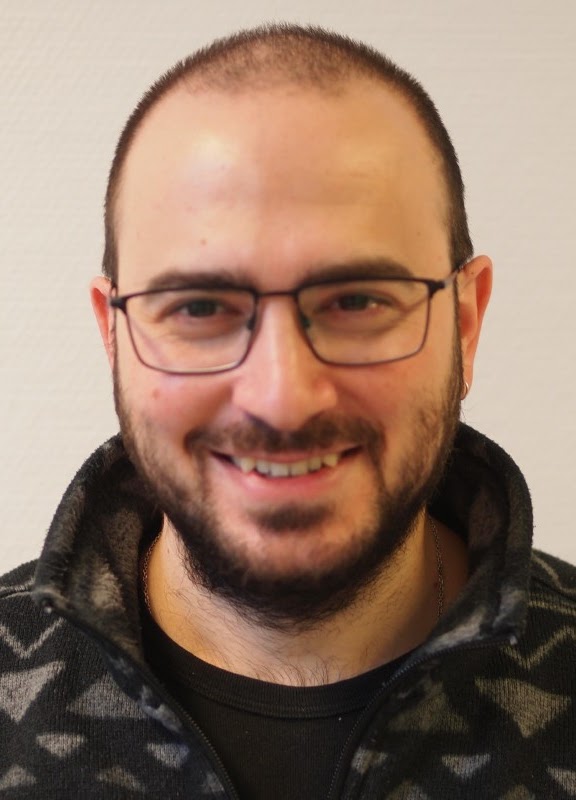
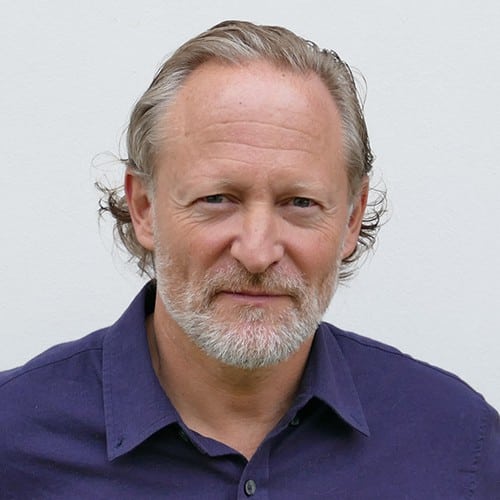
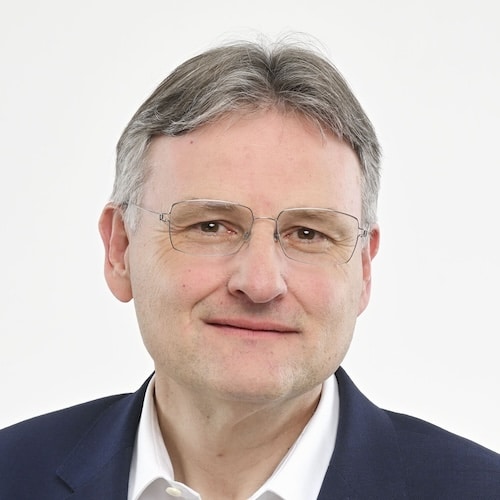
Juan C. Vasquez is a Professor at Aalborg University's Faculty of Engineering and Science, Department of Energy Technology, and Co-Director of the Center for Research on Microgrids (CROM). He holds a PhD in Automatic Control from the Technical University of Catalonia and has held academic positions at Aalborg University since 2011. His research focuses on microgrid control, renewable energy integration, power electronics, and smart grids. He has supervised numerous PhD and master’s students and leads projects funded by EU and national grants. Education: BS in Electronics Engineering (Autonomous University of Manizales, Colombia, 2004); PhD in Automatic Control (Technical University of Catalonia, Spain, 2009). Research interests include operation and control strategies for AC/DC microgrids, maritime microgrids, energy management systems, and IoT integration in smart grids. He has authored 648+ publications, including highly cited works, and received awards like the Young Investigator Award (2019) and Clarivate’s Highly Cited Researcher status since 2017. Key projects: EU-DREAM (Digital Services for Energy Transition), NEST (National Research Infrastructure), and ActRes (Resilience in Energy Systems). Collaborations include Virginia Tech and Ritsumeikan University.
Georgios Arvanitidis is an Associate Professor at the Technical University of Denmark (DTU) in the Department of Applied Mathematics and Computer Science, specifically within the Section for Cognitive Systems (CogSys). He has established himself as a leading researcher in geometric machine learning, focusing on the application of differential geometry principles to enhance machine learning models. His work bridges theoretical mathematics with practical applications in artificial intelligence, with particular emphasis on understanding the geometric structure of data manifolds and latent spaces. Dr. Arvanitidis completed his educational journey with a Bachelor's degree from the Department of Informatics at the Aristotle University of Thessaloniki, followed by a Master's degree in Computer Science from Saarland University supported by the Max Planck Institute for Informatics. He earned his PhD at DTU's Cognitive Systems section under the supervision of Søren Hauberg, with additional research experience at Philipp Hennig's Probabilistic Numerics group. Prior to his current position as associate professor, he was a PostDoc at the Max Planck Institute for Intelligent Systems working with Bernhard Schölkopf. Dr. Arvanitidis's research primarily focuses on differential geometry in machine learning , where he explores how geometric structures can enhance representation learning and statistical modeling. His work in generative models investigates how learning the geometry of data manifolds can improve deep learning architectures. In the domain of deep learning theory , he examines why deep learning models generalize effectively on unseen data, with particular attention to the curvature properties of loss landscapes. His research in approximate Bayesian inference applies geometric principles to improve uncertainty quantification in neural networks. Through his innovative approaches, Dr. Arvanitidis has established himself as a leading researcher in geometric machine learning, contributing to both theoretical foundations and practical applications across various domains including robotics and life sciences. The publication trends of Dr. Arvanitidis reveal a consistent and evolving focus on geometric approaches to machine learning problems. His recent work (2023-2025) demonstrates increasing sophistication in applying Riemannian geometry to deep learning architectures, with particular emphasis on latent space geometry, optimization on manifolds, and geometric interpretations of neural network behavior. A notable pattern is the progression from foundational work on geometric representations to more applied research in areas like robotics and causal inference. His publications span top-tier conferences including NeurIPS, ICML, ICLR, and AISTATS, reflecting the high impact of his research. The interdisciplinary nature of his work is evident in collaborations across mathematics, computer science, and robotics domains, with recent papers addressing challenges in multimodal sampling, safety guarantees for dynamical systems, and counterfactual explanations. Dr. Arvanitidis has received several notable scientific awards and recognitions: Sapere Aude starting grant from the Independent Research Fund Denmark (DFF) GADL funding i-Rase, Pathfinder, and EIC (European Innovation Council) funding Best reviewer award for NeurIPS 2019 Best reviewer award for NeurIPS 2018 Best student paper award at Robotics: Science and Systems (R:SS) 2021 Dr. Arvanitidis actively mentors PhD students and researchers, currently supervising Alejandro Valverde, Johanna Gegenfurtner, and Albert Kjøller Jacobsen. He has previously co-supervised Alison Pouplin's PhD and worked with research assistant Georgios Pantis. His group receives substantial funding through multiple prestigious grants including the Sapere Aude starting grant from the Independent Research Fund Denmark, as well as European Innovation Council funding. He has been instrumental in creating opportunities for students interested in geometric machine learning, offering BSc and MSc thesis projects focused on generative models, deep learning theory, and optimization techniques. Dr. Arvanitidis also contributes significantly to the academic community as a reviewer for top conferences including ICLR and TMLR, and as an area chair for NeurIPS, ICML, AISTATS, and UAI. He co-organized the Machine Learning Summer School 2020 in Tübingen, further demonstrating his commitment to education and community building. Dr. Arvanitidis leads a vibrant research group focused on geometric machine learning within the Cognitive Systems section at DTU. His team includes multiple PhD students working on cutting-edge research at the intersection of differential geometry and artificial intelligence. The group has developed notable software tools, including the "geometric_ml" GitHub repository with over 70 stars, which contains implementations for applying Riemannian geometry in machine learning. His research has practical applications in robotics, where geometric approaches enable more robust motion planning, as evidenced by his work on "Reactive Motion Generation on Learned Riemannian Manifolds" which received a best student paper award. Additionally, his methodologies have found applications in life sciences, as mentioned in his 2022 AISTATS paper. The collaborative nature of his work is evident through extensive partnerships with researchers at institutions including the Max Planck Institute for Intelligent Systems, University of Cambridge, and various European universities. His recent news items indicate active engagement with the academic community through talks, conference presentations, and ongoing supervision of new PhD students joining his group.
David Krakauer is President and William H. Miller Professor of Complex Systems at the Santa Fe Institute (SFI), a leading center for interdisciplinary research in complex adaptive systems. He leads SFI’s scientific vision and contributes actively to research on the evolution of intelligence, information processing, and problem-solving matter across biological and cultural domains. Research Interests: David’s work explores how life and intelligence emerge and evolve, focusing on the mechanisms of memory, communication, and computation in genetic, neural, social, and cultural systems. His research integrates mathematical modeling, computational frameworks, and empirical data to understand collective intelligence, niche construction, and the thermodynamic and evolutionary foundations of cognition. He investigates deep questions about the relationship between physical laws and information processing in living systems. Recent Research Trends: His recent publications analyze optimal learning rates in ecological niches, the outsourcing of memory through environmental modification, and theoretical visions for the future of complexity science. These works collectively emphasize the role of information efficiency, metabolic constraints, and collective computation in adaptive systems. Scientific Awards: Wired Magazine Smart List 2012 - One of 50 people who will change the world Entrepreneur Magazine Visionary Leader 2016 - Advancing global research and business Advising and Grants: While specific students are not listed, Krakauer has mentored numerous researchers through SFI programs, workshops, and collaborative projects. He has led major interdisciplinary initiatives, including those on the origins of life, AI and cognition, and complexity in law and regulation. His leadership in founding the Wisconsin Institute for Discovery and directing collective computation research indicates substantial grant acquisition and team leadership. Labs and Teams: He co-directed the Center for Complexity and Collective Computation at the University of Wisconsin–Madison and founded the Wisconsin Institute for Discovery. At SFI, he leads the Science Steering Committee and Science Board, shaping the institute’s research agenda through collaborative working groups and long-term projects in complexity science.
Michael Obersteiner is Professor and Director of the Environmental Change Institute (ECI) at the University of Oxford, where he leads interdisciplinary research on climate change, ecosystems, and sustainability. He previously served as Director of the Ecosystems Services and Management (ESM) Program at the International Institute for Applied Systems Analysis (IIASA), a position he held since 2011. His research focuses on biophysical and economic modeling of terrestrial ecosystems, forestry, agriculture, and integrated assessment, with strong applications in environmental policy. His work supports science-based decision-making for institutions including the European Commission, WWF, and OECD. He has published over 250 scientific papers and is recognized as a Highly Cited Researcher by Clarivate. The recent publications reflect a consistent focus on climate change mitigation, sustainable land use, carbon sequestration, and policy modeling. Key trends include the integration of economic and ecological models, scenario analysis for global change, and the role of land-based solutions in achieving climate targets. His work frequently bridges science and policy, emphasizing actionable insights. Highly Cited Researcher (Top 1% by citations, Clarivate) Professor Obersteiner has advised numerous national and international organizations, translating complex modeling outputs into policy recommendations. While specific grant details are not listed, his leadership of large-scale programs at IIASA and Oxford indicates substantial funding from public and international bodies. He has mentored researchers and led multidisciplinary teams, though formal student advisees are not named in the text. He has led major research units including the ESM Program at IIASA and now directs the Environmental Change Institute at Oxford, fostering collaborative, interdisciplinary teams focused on global environmental challenges.
Jes Frellsen is an Associate Professor at the Department of Applied Mathematics and Computer Science (DTU) since 2016. Previously, he held academic positions at the IT University of Copenhagen (2016-2019), postdoctoral roles at University of Cambridge (2013-2016) and University of Copenhagen (2011-2013). Education: PhD in Bioinformatics (2011), University of Copenhagen MSc in Bioinformatics (2007), University of Copenhagen BSc in Mathematics and Computer Science (2005), University of Copenhagen EAP Exchange at University of California, Santa Cruz (2004-2005) Research Focus Jes Frellsen specializes in statistical machine learning , particularly generative AI and deep generative models with applications in bioinformatics . His work integrates Bayesian inference , directional statistics , and Markov chain Monte Carlo methods to address challenges in macromolecular structure prediction and missing data imputation . Recent efforts explore uncertainty quantification in image segmentation and generative modeling for materials science. Advising & Collaborations He actively supervises PhD students and postdoctoral researchers in projects spanning news recommendation systems , medical imaging , and 3D structure generation . Collaborations include work with Zoubin Ghahramani (Cambridge) and Thomas Hamelryck (Copenhagen), with contributions to protein structure prediction and statistical methods in structural bioinformatics .
Knud Villy Christensen is an Associate Professor at the Department of Green Technology (IGT), University of Southern Denmark (SDU), and serves as Head of Section for SDU-Chemical Engineering. His research focuses on Chemical Engineering with emphasis on Membrane Technology , Biofuels , and Biowaste Valorization . He is actively involved in projects targeting sustainable energy and resource recovery from agricultural and industrial waste streams. His work spans Membrane Separation Technology (e.g., membrane distillation for food processing), Chemical Reactor Engineering , and Mathematical Modeling of unit operations. Recent publications highlight his expertise in green extraction of natural compounds biocascade approaches for biomass valorization biofuel production optimization Christensen has supervised numerous internships and projects at institutions like Fjernvarme Fyn, Carlsberg A/S, and Biogas Clean. His current projects include SUSTEPS (sustainable biofuel scaling) and ReCaP (phosphorus recycling). His research aligns with environmental sustainability and industrial process intensification.
Magdalena E. Musat is a Professor at the Department of Mathematical Sciences, University of Copenhagen, within the Faculty of Science. She holds a Ph.D. from the University of Illinois at Urbana-Champaign (2002) and has extensive teaching experience across institutions including the University of Copenhagen, University of Southern Denmark, and UC San Diego. Her research focuses on Functional Analysis, Operator Algebras, and their intersections with noncommutative probability, quantum information theory, and group theory. She has organized major conferences like the Harald Bohr Lectures and the ICM Satellite conference on Operator Algebras. Her academic contributions include over 15 publications in top journals such as Inventiones Mathematicae and Communications in Mathematical Physics. She has supervised numerous Ph.D. and Master’s students, including current advisee Rasmus Kløvgaard Stavenuiter. Her work explores topics like quantum channel factorization, Connes embedding problem, and non-commutative L_p-spaces. Musat serves as Head of Studies for the Master’s Program in Mathematics and co-organizes the Department Colloquium. Her teaching spans advanced courses on Functional Analysis, Operator Algebras, and Measure Theory. Professional activities include organizing masterclasses on Sofic Groups and Approximation Properties for Operator Algebras.
Asmus Skar Christiansen is an Associate Professor in Pavement Engineering at the Department of Environmental and Resource Engineering, Technical University of Denmark (DTU Sustain). He serves as Head of Study for the Nordic Master in Cold Climate Engineering programme and lectures on pavement engineering, Arctic road construction, and foundation design. His academic career at DTU spans from Postdoc researcher (2017-2019) to Assistant Professor (2020-2023) and current Associate Professor position since 2023. His research centers on pavement technology and geotechnics with specialization in: Development of advanced testing and modeling techniques for pavements Integration of modern sensing technologies in civil infrastructure Computational mechanics for soil-structure interaction Sustainable materials for cold climate engineering Recent work demonstrates a clear shift toward IoT-enabled monitoring systems and data-driven pavement assessment, with 80% of 2023-2025 publications focusing on sensor integration and machine learning applications. Notable scientific contributions include: Creation of open-source datasets (LiRA-CD, RIVA) for road condition modeling Development of thermomechanical models for heated pavements Innovations in waste soil reuse for infrastructure He actively supervises PhD candidates across multiple projects including GREENPIPE (self-sensing pipe systems) and urban pavement analysis, while maintaining industry consultancy through COWI A/S collaborations. Christiansen also contributes to sustainable infrastructure through DTU's alignment with UN SDG 9 (Industry, Innovation, and Infrastructure) and SDG 11 (Sustainable Cities).
Chris Valentin Nielsen is an Associate Professor in the Department of Civil and Mechanical Engineering at the Technical University of Denmark (DTU). His research focuses on metal forming, joining processes, and tribology, with expertise in formability, tool development, and numerical modeling. His work contributes to UN Sustainable Development Goals related to sustainable manufacturing. He supervises PhD students in projects such as sustainable busbars for electric vehicles and adjustable tool design for high-volume production. His research interests include metal forming (e.g., deep drawing, ironing), joining technologies (resistance welding, laser welding), and advanced manufacturing methods like additive manufacturing. He employs finite element modeling and experimental analysis to bridge fundamental and applied research. Collaborations span global institutions, addressing challenges in material behavior, process optimization, and tool durability. Recent publications explore topics such as dieless Nakajima testing for additive materials, punch design improvements, and asperity deformation mechanics. His work emphasizes sustainability, robust production systems, and eco-friendly lubrication solutions. Projects involve interdisciplinary teams, integrating numerical simulations with industrial applications to enhance manufacturing efficiency and material performance.
Andreas Kugi is the Scientific Director at the AIT Austrian Institute of Technology and a full professor of Complex Dynamical Systems at TU Wien (Vienna University of Technology) in the Faculty of Electrical Engineering and Information Technology, Institute of Automation and Control. He has held significant academic and leadership roles across Europe, including professorships at Saarland University and offers from TU Dresden and KIT. His research focuses on the modeling, control, and optimization of complex dynamical systems , with strong applications in mechatronics, robotics, and industrial automation . He has led major research centers such as the Christian Doppler Laboratory for Model-Based Process Control in the Steel Industry and the Center for Vision, Automation & Control at AIT. His work bridges theoretical control design and real-world industrial implementation. The recent publications reflect a consistent focus on nonlinear, hybrid, and distributed parameter systems , with applications in robotics, manufacturing, energy, and process industries. His research integrates advanced control theory with practical engineering challenges, emphasizing real-time optimization, robustness, and system efficiency. Scientific Awards: Mechatronic Systems Outstanding Investigator Award (IFAC, 2022) Goldene Stefan-Ehrenmedaille (OVE, 2023) 16 best paper awards Andreas Kugi has supervised over 50 completed PhD dissertations and has been deeply involved in research leadership, including serving as Editor-in-Chief of Control Engineering Practice (2010–2017) and Vice President of the OVE Austrian Electrotechnical Association (2017–2023). He has secured and led numerous research grants, particularly through industrial collaborations in automation and process control. He leads and contributes to major research initiatives, including the Center for Vision, Automation & Control at AIT and the Christian Doppler Laboratory , fostering interdisciplinary teams focused on industrial digitalization and smart systems.
Joe Alexandersen is an Associate Professor in the Department of Mechanical Engineering at the University of Southern Denmark (SDU), affiliated with the Institute of Mechanical and Electrical Engineering. His research spans structural optimization, heat transfer, fluid dynamics, and high-performance computing, with applications in heat sink design, microfluidic devices, and additive manufacturing. Research Interests Topology and shape optimization Conjugate heat transfer Navier-Stokes flow modeling Finite element methods High-performance computing Scientific Awards 2022 Fluids 2020 Best Paper Award 2017 DTU Young Researcher Award 2015 ISSMO/Springer Prize for Young Scientist Key Projects HiHeaT: Topology optimization for high heat flux components (2024–2027) Structural Analysis of Large Modular Vessels (2025–2027)
Xiao Chen is a Researcher at the Technical University of Denmark (DTU), specializing in advanced testing and digitalization of composite and offshore steel structures for wind energy systems. With a PhD from Nagoya University (2011), his work focuses on structural integrity, fatigue analysis, and Digital Twins for wind turbine blades. PhD in Engineering, Nagoya University (2011) Senior Researcher (2019–present) and Researcher (2017–2018) at DTU Associate Professor (2016–2017) and Assistant Professor (2013–2015) at Chinese Academy of Sciences His research explores nonlinear buckling, fracture mechanics, and Industry 4.0 technologies for structural health monitoring. Recent publications highlight AI-driven damage detection, thermographic analysis, and finite element modeling of composites. He leads projects like QualiDrone and AQUADA-GO, funded by EUDP and VILLUM FONDEN. Key article trends include composite fatigue , digital twins , drone-based inspection , and machine learning for structural monitoring. He received the 2022 Best Presentation Award at an international conference. Projects: Villum Experiment Project DiscoverBlaDE AQUADA-GO QualiDrone DARWIN RELIABLADE RELIfe
Morten Nielsen is a Professor in the Department of Mathematical Sciences at the Faculty of Engineering and Science, Aalborg University, Denmark. His research is centered on harmonic analysis, approximation theory, and sparse signal processing, with strong emphasis on modulation spaces, wavelet systems, and matrix-weighted function spaces. His research interests include: Harmonic and Functional Analysis Approximation Theory and Sparse Representations Wavelet and Time-Frequency Analysis Nonlinear Approximation in Banach Spaces Matrix-Weighted Function Spaces Applications in Signal and Image Processing The recent publications show a consistent focus on theoretical developments in function spaces, particularly α-modulation and Triebel-Lizorkin spaces, with applications to sparse representations and nonlinear approximation. His work often involves deep connections between operator theory, frame theory, and signal decomposition techniques. Although no specific scientific awards are listed, his extensive publication record in top-tier journals and book chapters in prestigious series such as Applied and Numerical Harmonic Analysis indicates significant recognition in the mathematical community. Morten Nielsen has been involved in multiple research projects, including 'Generalized Wavelet Systems', 'Sparse Representation of Data', and 'Muckenhoupt Matrix Weights', often in collaboration with researchers like Hrvoje Šikić. He has supervised at least one PhD student and continues to be actively involved in research, as evidenced by publications in 2025. His work is supported by ongoing research grants and collaborations across Europe. He leads and participates in research groups focused on harmonic analysis and approximation theory, contributing to both theoretical advancements and practical applications in data science and engineering.
Arsen Krikor Melikov is a Professor in the Department of Environmental and Resource Engineering at the Technical University of Denmark (DTU). His work spans fluid mechanics, indoor climate, ventilation, and heat-and-mass transfer, with a strong focus on human response to indoor environments and advanced air distribution systems. His research contributes significantly to indoor air quality, thermal comfort, and sustainable building technologies, aligning with several UN Sustainable Development Goals. He has led over 55 research projects funded by EU, national governments, and private industry. Recent publications reveal a consistent focus on personalized ventilation , thermal comfort optimization , chilled ceiling and beam systems , and infection control in healthcare and public spaces . His work bridges engineering innovation with occupant health and environmental sustainability. Notable scientific awards include: ASHRAE Fellow Award (2003) Distinguished Services Award, ASHRAE (2006) Rydberg Gould Medal (SCANVAC) Honorary Member, SHASE (Japan) and BULSHRAE (Bulgaria) Best Paper Awards in Building and Environment and HVAC&R Research Melikov has supervised over 140 graduate and postdoctoral students and served as principal investigator on numerous international projects. He is also an active editor for Building and Environment and participates in global standardization efforts. His collaborations span institutions like the University of Tokyo, National University of Singapore, and Tsinghua University. He leads research in creating healthy micro-environments, including bed-based ventilation systems to improve sleep and prevent infection spread, as highlighted in media coverage of DTU innovations.
Katja Hose is a Professor in the Department of Computer Science at Aalborg University's Technical Faculty of IT and Design. Her research focuses on Data, Knowledge and Web Engineering with specializations in AI for the People and Artificial Intelligence and Machine Learning. She maintains an active research profile with numerous publications and projects. Department of Computer Science Technical Faculty of IT and Design Aalborg University Research areas: Query Processing, Semantic Web, Linked Data, Knowledge Graphs Professor Hose's research interests center on knowledge representation, semantic web technologies, and AI applications. Her work spans from theoretical database systems to practical applications in healthcare, environmental assessment, and microbial data analysis. She has made significant contributions to knowledge graphs, large language models, and semantic search technologies, with particular emphasis on addressing hallucinations in AI systems and improving table search in semantic data lakes. Her recent publications demonstrate a strong trend toward integrating knowledge graphs with large language models, developing evaluation frameworks for AI hallucinations, and applying data science to diverse domains including healthcare and environmental sustainability. Her research bridges theoretical computer science with practical applications that address real-world challenges. NLP4KGC Best Paper Award (2023) ESWC 2023 Best Demo Award (2023) 2020 AMiner AI 2000 Most Influential Scholars AIME 2020 Best Paper Nomination (2020) ESWC 2019 Best Demo Award Nomination (2019) Professor Hose leads multiple significant research projects including ARISTOTLE (AI for clinical risk assessment), DarkScience (microbial data analysis), and the Poul Due Jensen Professorate in Big Data and AI. She has supervised numerous PhD students and collaborates extensively across disciplines, particularly in healthcare applications of AI and environmental assessment technologies. Her research has attracted substantial funding from sources like Villum Fonden and Danish E-infrastructure Cooperation. She is actively involved in several interdisciplinary research teams, including collaborations with microbiologists on microbial dark matter projects and with environmental scientists on digital environmental assessment systems. Her work on the ARISTOTLE project demonstrates strong connections between AI research and clinical applications, while her DarkScience project bridges computer science with microbiology.