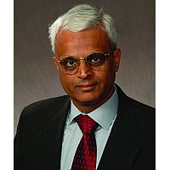
N.K. Anand is a Distinguished Professor of Mechanical Engineering at Texas A&M University, holding the James J. Cain III Regents Professorship. He leads research in advanced computational methods and thermal-hydraulic systems, with affiliations to Multidisciplinary Engineering and Nuclear Engineering programs. His work focuses on physics-informed machine learning, finite volume methods, and aerosol transport in nuclear reactor contexts. Education: PhD (Mechanical Engineering, Purdue University, 1983), M.S. (Kansas State University, 1979), and B.E. (Bangalore University, 1978). Awards include the ASME James Harry Potter Gold Medal (2020) and multiple teaching/administrative excellence awards from Texas A&M. Research emphasizes fluid dynamics modeling (e.g., PINNs for periodic flows, turbulent deposition studies), heat pipe systems, and nuclear reactor thermal-hydraulics. His Versatile Test Reactor (VTR) contributions include cartridge loop designs and aerosol transport experiments. Active in high-temperature reactor safety, with facilities studying pebble beds, helical coil exchangers, and HTGR upper plenum dynamics. Publications span physics-informed ML applications, finite volume techniques, and nuclear thermal systems. Grants supported development of advanced CFD tools and reactor safety infrastructure. His lab collaborates on international nuclear energy projects and emerging AI-driven simulation methodologies.
Luis F. Ayala H. is the Department Head and William A. Fustos Family Professor in the John and Willie Leone Family Department of Energy and Mineral Engineering at Penn State University. He holds dual summa cum laude degrees in Chemical and Petroleum Engineering from Universidad de Oriente (Venezuela), and M.S. and Ph.D. degrees from Penn State. His research focuses on computational fluid dynamics modeling of multiphase flow in unconventional reservoirs, hydrocarbon thermodynamics, and reservoir simulation. Education: Ph.D. (Petroleum and Natural Gas Engineering), Penn State University M.S. (Petroleum and Natural Gas Engineering), Penn State University Petroleum Engineering Degree, summa cum laude, Universidad de Oriente Chemical Engineering Degree, summa cum laude, Universidad de Oriente Research Interests: Advanced reservoir simulation, unconventional gas reservoir analysis (shale gas, tight sands), multiphase flow in porous media, hydrocarbon thermodynamics, and lattice Boltzmann methods. His work aims to improve predictive capabilities for unconventional reservoirs through quantitative modeling of multiphase transport dynamics. Key Awards: SPE Distinguished Member (2022) Fulbright-Colciencias Innovation Award (2016-2017) Howard B. Palmer Faculty Mentor Award (2022) Wilson Award for Excellence in Teaching (2008) Grants & Advising: He has led numerous research projects funded by industry and federal agencies, advising graduate students in energy systems and reservoir engineering. His administrative roles include service as executive editor for the SPE Journal and as an Administrative Fellow at Penn State’s Office of Research. Labs & Teams: His research group collaborates on projects involving advanced simulation tools for unconventional reservoirs, with a focus on multiphase flow dynamics and thermodynamic interplay in nano-pore systems.
Professor Anne Verhoef is a leading academic at the University of Reading, specializing in environmental and hydrological sciences. Her research focuses on soil-plant systems, climate change impacts, groundwater dynamics, and remote sensing applications in ecological modeling. She collaborates internationally on projects like GEWEX and AMMA, advancing understanding of global hydrological cycles and land-atmosphere interactions. Key Research Areas: Hydrological modeling and prediction Climate change adaptation in semi-arid regions Soil health and pedotransfer functions Evapotranspiration dynamics in tropical ecosystems Remote sensing for biodiversity and water resource assessments Her work integrates field observations, satellite data, and numerical models to address challenges in water resource management, flood mitigation, and sustainable agriculture. She has published widely in top journals such as Reviews of Geophysics , Water Resources Research , and Nature Reviews Earth & Environment . Professor Verhoef contributes to interdisciplinary initiatives, including climate adaptation strategies in transboundary regions and improving land surface models for global Earth system simulations. Her research emphasizes bridging gaps between observational data and predictive frameworks to inform policy and environmental decision-making.
Roberto Zanino is a Full Professor of Nuclear Engineering at the Department of Energy (DENERG) of the Polytechnic of Turin, Italy. He serves as Advisor to the Rector for relations with European and international university networks and for the UniTe project, Undergraduate Research Opportunities Coordinator, and Project management functions of PoliToArgentina. He is also Scientific Advisor for the Partnership Agreement with NEWCLEO. Dr. Zanino earned his Laurea cum laude in Nuclear Engineering from Politecnico di Torino in 1984 and his Ph.D. in Energetics in 1989. His academic progression includes Assistant Professor (1990-91), Associate Professor (1992-2000), and Professor (2001-present). He previously served as Director of Alta Scuola Politecnica (2007-2010) and Head of the Graduate Program in Energetics (2011-present). His research spans computational fluid dynamics, concentrated solar power, controlled thermonuclear fusion, Generation IV nuclear fission reactors, and plasma physics. His work focuses on thermal-hydraulic analysis of liquid metal systems, superconducting magnet design for fusion applications, and concentrated solar power optimization. His recent publications demonstrate strong expertise in coupling computational tools for nuclear applications, particularly in CFD-system code integration for liquid metal systems and fusion magnet analysis. Dr. Zanino has received recognition as an IEEE Senior Member (2012) and has supervised numerous doctoral students working on topics including thermal-hydraulic analysis of heavy liquid metal systems, superconducting magnet simulation for fusion applications, and concentrated solar power modeling. He has extensive international experience, having worked at Max-Planck-Institut für Plasmaphysik, Massachusetts Institute of Technology, and University of Illinois at Chicago. He is actively involved in major fusion projects including ITER, DTT (Divertor Tokamak Test facility), and EUROfusion. His teaching portfolio includes Computational Heat and Mass Transfer, Nuclear Fusion Reactor Engineering, Solar Thermal Technologies, and Computational Thermal Fluid Dynamics at both master's and doctoral levels.
Luigi Bruno is an Associate Professor of Machine Design at the Department of Mechanical, Energy and Management Engineering (DIMEG), University of Calabria. He has held this position since 2014, following 12 years as an Assistant Professor at the same institution and Visiting Professorships at IIT Gandhinagar (2012), University of Alabama at Birmingham (2013-2017), and Free University of Bozen-Bolzano (2021). 1999 : Master's in Mechanical Engineering, University of Calabria (110/110 cum laude) 2003 : PhD in Mechanical Engineering, University of Pisa His research interests span: Experimental Mechanics : Pioneering speckle interferometry for micro-displacement measurement and residual stress analysis. Materials Science : Elastic characterization of anisotropic materials, biomedical applications of soft substrates, and 3D-printed composites. Biomedical Engineering : Mechanical behavior of biological tissues, ocular biomechanics, and dental implant material testing. Recent research trends focus on: Integrating artificial muscles into rehabilitation devices Advancing full-field optical measurement via microCT/DVC Optimizing 3D printed polymer adhesion for industrial components Exploring neuronal biomechanics on soft surfaces Scientific contributions include: CS2007A00010 patent for dual-focus speckle interferometers Deputy Editor of Optics and Lasers in Engineering (2019-present) Guest Editor for special issues on optical methods in experimental mechanics and nanobiotechnology Academic leadership extends to coordinating Mechanical Engineering committees (2021-present), serving on editorial boards, and organizing international conferences like AIAS National Conference (2018). He has secured multiple MIUR research grants and industry collaborations with Alfagomma, 3DNA, and Ferrovie della Calabria. His laboratory, Mechanics of Materials and Structures , supports both research and teaching activities with advanced optical measurement systems and computational tools for mechanical design.
Satya Prakash Saraswat is a Postdoctoral Researcher at KTH Royal Institute of Technology's Nuclear Science and Engineering Unit in Stockholm, Sweden. He holds a Ph.D. from the Indian Institute of Technology Kanpur, with expertise in thermal-hydraulics, nuclear reactor safety, computational fluid dynamics (CFD), and system code development. His work spans fission and fusion reactor analysis, including contributions to the VALIDATIO project (University of Pisa) for fusion safety tools and the ATLAS project (Khalifa University) for advanced reactor safety enhancements. Research interests focus on computational modeling, AI integration in nuclear safety, and experimental validation of safety systems. He has developed skills in both experimental and numerical techniques, addressing challenges in multiphase flow, reactor core dynamics, and material compatibility. Key projects include validation of ASYST and SIMMER codes for condensation phenomena and lead-lithium interaction studies. Publications highlight advancements in burn-up wave characterization, code stability analysis (RELAP5/SIMMER), and thermal-hydraulic safety assessments for reactors like ESBWR and ITER systems. His work emphasizes enhancing safety tools through rigorous validation and innovative methodologies.
Joe Alexandersen is an Associate Professor in the Department of Mechanical Engineering at the University of Southern Denmark (SDU), affiliated with the Institute of Mechanical and Electrical Engineering. His research spans structural optimization, heat transfer, fluid dynamics, and high-performance computing, with applications in heat sink design, microfluidic devices, and additive manufacturing. Research Interests Topology and shape optimization Conjugate heat transfer Navier-Stokes flow modeling Finite element methods High-performance computing Scientific Awards 2022 Fluids 2020 Best Paper Award 2017 DTU Young Researcher Award 2015 ISSMO/Springer Prize for Young Scientist Key Projects HiHeaT: Topology optimization for high heat flux components (2024–2027) Structural Analysis of Large Modular Vessels (2025–2027)
Prof. Dr.-Ing. Katharina Schmitz serves as Institute Director and Vice Dean at the Institute for Fluid Power Drives and Systems, RWTH Aachen University. Her leadership within the Production Technology Cluster and extensive contributions to fluid power engineering establish her as a leading authority in mechanical engineering research and education. Her research spans fluid power systems, hydraulic component design, tribology, and physics-informed machine learning applications. She pioneers sustainable propulsion solutions through bio-hybrid fuels research while addressing fundamental challenges in polymer material behavior under hydraulic stresses. Current work focuses on carbon-neutral heavy-duty transportation, physics-based neural networks for lubrication modeling, and advanced control systems for electro-hydraulic actuators. Analysis of her 15 most recent publications reveals a dominant trend toward integrating physics-based modeling with deep learning to solve complex engineering problems. Her team consistently develops novel frameworks for cavitation prediction, flow rate determination, and material compatibility assessment - significantly advancing fluid power system reliability, efficiency, and digitalization. Scientific recognition includes: GfT Förderpreis 2023 for experimental and simulative investigation of partially hydrostatic relieved contacts in variable speed axial piston machines As head of the Institute for Fluid Power Drives and Systems, she leads cutting-edge research in sustainable fluid power technologies. The institute maintains strong industry partnerships while driving innovation in hydraulic component design, digital twins for condition monitoring, and next-generation propulsion systems through its position within RWTH Aachen's Production Technology Cluster.
Fregolent Annalisa is a Full Professor at the University of Rome La Sapienza, specializing in mechanical and structural engineering. Her research focuses on nonlinear dynamics, vibration analysis, and dynamic substructuring techniques. She has contributed significantly to advancing methodologies for joint identification, structural health monitoring, and the analysis of complex mechanical systems. Her work spans applications in aerospace, agricultural machinery, and noise reduction. Notable areas include the development of digital twins for hydraulic systems, experimental identification of pneumatic components, and the study of friction-induced vibrations using advanced substructuring techniques. She has published extensively on nonlinear modal coupling, contact acoustics, and error propagation in structural analysis. Key achievements include pioneering studies on configuration-dependent dynamics and the optimization of vibration transmission in mechanical linkages. Her research integrates experimental and numerical methods to address challenges in structural dynamics and mechanical system design. Research Highlights: Dynamic Substructuring Techniques Nonlinear Joint Identification Structural Health Monitoring Pneumatic and Hydraulic System Modeling Friction-Induced Vibration Analysis
Dr. Aydin K. Sunol is a Professor of Chemical, Biological and Materials Engineering at the University of South Florida's College of Engineering. With a distinguished career spanning several decades, he leads the Environmentally Friendly Engineered Systems (EFES) Lab and serves as principal investigator for numerous research projects funded by NASA, DOD, NSF, and industry partners. Education: PhD in Chemical Engineering, VPI & SU, Blacksburg, Virginia MEng in Industrial Engineering and Operational Research, VPI & SU, Blacksburg, Virginia Diploma in Chemical Engineering, University of Aston, Birmingham, England BS in Chemical Engineering, Bogazici University, Istanbul, Turkey Dr. Sunol's research focuses on green engineering and chemistry, sustainability in the chemical industry, systems engineering, and cleaner energy conversion processes. His work integrates global computational methods, machine learning, product prototyping, and experimentation across multiple temporal and spatial scales. Recent projects include developing nano-structured photo-catalysts, therapeutic particles, and energetic materials using environmentally friendly pathways, as well as creating efficient fuel conversion processes utilizing supercritical fluids. His research demonstrates a consistent trend toward sustainable solutions that address fundamental challenges in materials science, energy conversion, and environmental protection through innovative application of supercritical fluid technology and computational methods. Scientific Awards: USF Chemical and Biomedical Engineering Department Outstanding Teaching Award, 2018 University of South Florida Outstanding Undergraduate Teaching Award, 2002-2003 Engineering Professor of the Year, 1984 Outstanding Professor of Chemical Engineering, VPI & SU, 1981 Outstanding Technology Innovation Award, Aerospace Space System Conference, 2010 As an educator, Dr. Sunol has advised 18 PhD and 29 Master's students, developing innovative teaching methods and curricula including NSF-funded Web-based Teaching Modules and Design Course Series. His research has been supported by diverse funding sources including DOE, NSF, NATO, UNESCO, NAVY, NASA, and numerous industry partners. Dr. Sunol also serves as principal partner and CTO of Temptroll LLC and Accent Creations LLC, which develop self-heating and cooling products, demonstrating the practical application of his research. The EFES Lab, which Dr. Sunol directs, brings together interdisciplinary researchers including chemical engineers, mechanical engineers, and computer scientists to tackle complex challenges in sustainable engineering. Current team members include PhD candidates working on nano-structured materials, wastewater management systems, and temperature modulation products, continuing the lab's tradition of innovation in environmentally friendly engineered systems.
Alex Rashkovan is a Visiting Assistant Professor in the Department of Engineering Physics at McMaster University. His academic work focuses on computational fluid dynamics (CFD), nuclear reactor thermal hydraulics, and heat transfer, with a strong emphasis on modeling fluid behavior in reactor containment systems and experimental validation of CFD simulations. His research spans turbulent jet dynamics, stratified layer erosion, mixed convection, and vortex analysis, as evidenced by publications in journals such as Nuclear Engineering and Design , Physics of Fluids , and Progress in Nuclear Energy . Key trends in his scholarly activity include the optimization of gas-coolant channels, scaling considerations for reactor experiments, and the thermal and fluid dynamic analysis of complex geometries like wavy walls and rotating containers. His work often bridges numerical simulations with empirical validation to enhance reactor safety and efficiency.
IHE Delft Institute for Water EducationNetherlands
Dr. Yangxiao Zhou is an Associate Professor at the International Institute of Hydraulic and Environmental Engineering (IHE Delft) since 1998. He specializes in hydrology and water resources, focusing on groundwater monitoring, sustainability, and surface-water interactions. His career includes roles as a visiting scholar at TNO (Netherlands), lecturer at IHE, and team leader for the Sana'a University Support project in Yemen (1994–1995). He teaches postgraduate courses in groundwater hydraulics, hydrogeostatistics, and applied modeling using MODFLOW/SEAWAT. His research emphasizes groundwater sustainability strategies, managed aquifer recharge, and environmental impact assessments in regions like China, Mozambique, Vietnam, and Palestine. Education & Teaching: Dr. Zhou leads curriculum development for MSc programs and delivers international short courses on hydrology, groundwater modeling, and monitoring network design. His teaching spans analytical solutions for groundwater flow, Kriging methods, and contaminant transport modeling. Research Trends: Recent publications address groundwater irrigation dynamics in arid zones, climate change impacts on aquifers, and sustainable development in coastal regions. He employs numerical models (e.g., MODFLOW) to simulate aquifer behavior and policy frameworks for resource management. Grants & Projects: He has led large-scale projects on groundwater sustainability in Beijing, Vietnam’s Mekong Delta, and Gaza’s coastal aquifers. His work bridges academic research with practical solutions for water scarcity and environmental challenges.
Mads Røge Eldrup is an Assistant Professor at the Department of the Built Environment, Aalborg University, within the Faculty of Engineering and Science. His research focuses on coastal engineering, wave dynamics, and structural resilience of marine infrastructure. He leads the Ocean and Coastal Engineering Research Group and contributes to the BLUE – Marine & Maritime Research initiative. Research interests include breakwater stability, nonlinear wave modeling, physical model testing, and numerical simulation techniques. Key projects involve the RESCUER initiative (2024-2028) addressing resilient coastal solutions. He has authored/co-authored 46 publications since 2014, with recent work on NL-SORS wave decomposition, submerged bar dynamics, and rock armour stability. He actively participates in international conferences and workshops, including sessions on Smoothed Particle Hydrodynamics and nonlinear wavemaker theory. Collaborations span institutions globally, focusing on coastal resilience and hydraulic engineering challenges.
Nigel Johnston is a Reader (Associate Professor) in the Department of Mechanical Engineering at the University of Bath's Faculty of Engineering & Design. He serves as Director of the Foundry: Centre for Digital, Manufacturing & Design and actively supervises doctoral students in fluid power research. His research spans hydraulic fluid power systems with expertise in fluid-borne noise measurement/reduction, active noise control, numerical modeling of hydraulic components, unsteady turbulent flow, and pipeline dynamics. Key focus areas include efficient fluid power systems using digital switching valves, aircraft/automotive hydraulic systems, and pump condition monitoring. His work contributes to UN Sustainable Development Goals through energy efficiency research. Analysis of his recent publications reveals consistent focus on hydraulic component innovation, particularly piezoelectric actuation systems and digital displacement technology. His 2022-2024 output demonstrates strong industry collaboration with applications in aerospace, automotive, and renewable energy sectors. Johnston has supervised 18 PhD students to completion and regularly teaches industrial fluid power courses globally. He serves as Organiser and joint Editor for the Bath/ASME International Fluid Power and Motion Control Symposium. Current research includes EPSRC-funded projects on efficient fluid power systems and Innovate UK collaborations including HyFIVE (Hydrogen Storage) and KTP with Hydraulic System Products. His laboratory work centers on the Foundry research facility where novel energy-saving hydraulic technologies are developed.
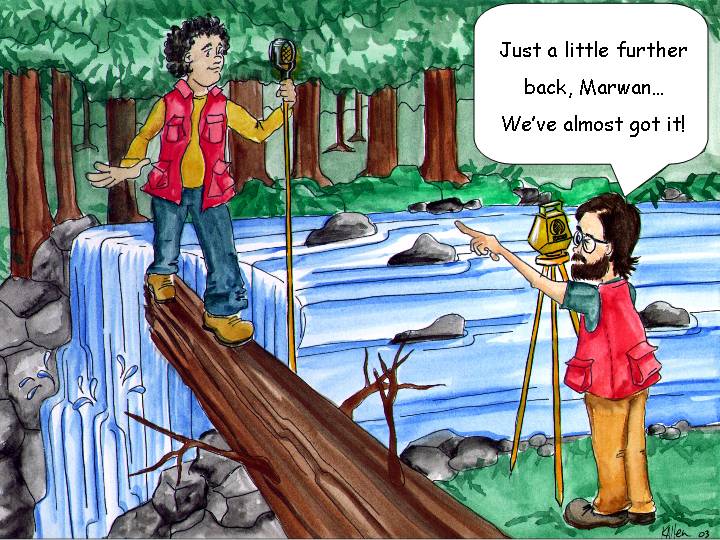
Marwan Hassan is a Professor in the Department of Geography within the Faculty of Arts at the University of British Columbia. His research focuses on geomorphology and hydrology, with extensive work on river systems, sediment transport, and landscape evolution. He maintains an active research program with numerous publications and collaborations across the globe, and leads the Hassan Lab which develops innovative tools like the LegoFlume for river science research. Education: PhD in Geography from The Hebrew University of Jerusalem (1989) MSc in Geography from The Hebrew University of Jerusalem BA in Geography from Ben Gurion University of the Negev Professor Hassan's research spans a wide range of topics in geomorphology and hydrology, including landscape evolution, hill-slope and channel interactions, channel stability and morphology, river sediment transport, stream ecology, and in-channel wood dynamics. His work addresses fundamental processes involving flow and sediment transport across multiple scales, from individual sediment grains to entire watersheds. His research extends beyond traditional fluvial geomorphology into urban hydrology, hyporheic flow, desert floods, water quality, and water resources management. A significant component of his research involves model development and experimental flume work to complement field observations, with a particular focus on step-pool streams as evidenced by his 18-year field observation study. Analysis of Professor Hassan's recent publications reveals a strong emphasis on sediment dynamics in gravel-bed rivers, with particular attention to the relationships between sediment supply timing, bedload transport, and channel morphology. His work combines experimental approaches in both field and laboratory settings with theoretical modeling to understand fundamental fluvial processes. His research has practical applications in river management, restoration, and understanding the impacts of major infrastructure like dams on river systems, as demonstrated by his studies on the Three Gorges Dam and Wenchuan Earthquake impacts. Professor Hassan leads an active research group at UBC that develops innovative methodologies for studying river systems. His lab's development of the LegoFlume represents a creative approach to experimental fluvial geomorphology. His collaborative work spans multiple countries and institutions, reflecting the global relevance of his research on river processes and management.