

Wenzhong Li is a Professor at the School of Computer Science, Nanjing University, where he leads research at the State Key Laboratory for Novel Software and Technology. His academic career spans over 15 years with significant contributions to AI-empowered distributed systems, big data mining, and networking applications. He teaches Computer Networks and guides graduate students in Distributed Computing Research. Professor Li's research focuses on cutting-edge areas including AI-Empowered Distributed Systems and Applications (MultiModal Large Models, Embodied Intelligence, Edge Computing), Big Data Mining (Time Series Analysis, Graph Computing, Social Networks Analysis), and AI-Based Distributed Resource Scheduling. His work bridges theoretical foundations with practical implementations in real-world systems. His recent publications demonstrate a strong trend toward integrating deep learning with graph theory and time series analysis, with applications in human activity recognition, network optimization, and multimodal systems. The research spans multiple disciplines including artificial intelligence, computer vision, networking, and data mining, with a particular emphasis on practical implementations for real-world problems. Best Paper Runner Up at KSEM 2023 for 'Learning-based Dichotomy Graph Sketch for Summarizing Graph Streams with High Accuracy' Best Paper Award at APNet 2018 for 'Toward Effective and Fair RDMA Resource Sharing' Professor Li has advised numerous PhD and Master's students who have gone on to prominent positions at institutions like Nanjing University, Huawei, Alibaba, Microsoft, and various international universities. His research is supported by substantial grants from the National Natural Science Foundation of China, Natural Science Foundation of Jiangsu Province, National Power Grid, and other major funding bodies, totaling multiple multi-year projects with significant budgets. He leads the AINet Group and is affiliated with the Sino-German Institute of Social Computing and MobileCloud research initiatives. His DISLAB provides the organizational framework for his research team, which includes dozens of graduate students and collaborators working on cutting-edge problems in AI, networking, and distributed systems.
جستجوی استاد راهنمای دانشگاهی
برای مسیر پژوهشیتان، استاد راهنما، استاد دانشگاه و پژوهشگر مناسب را پیدا کنید و با آنها ارتباط بگیرید.
نمایش ۱-۱۵ از ۱۲۶ استاد راهنما
اطلاعات پروفایلها از صفحات عمومی دانشگاهها گرفته شده و ممکن است بهروز نباشد.
Li Hailongمشاهده پروفایل
دانشگاهی
- Numerical and analytical modeling of subsurface multi-component, multiphase flows
- Environmental and ecological implications of coastal groundwater flow
- Aquifer parameter estimation
- +۳ مورد دیگر
Dr. Li Hailong is a Chair Professor at the School of Environmental Science and Engineering, Southern University of Science and Technology (SUSTech), Shenzhen. He holds a PhD in Hydrogeology from the University of Hong Kong (2003), an MSc (1991) and BSc (1988) in Applied Mathematics from Fudan University. His academic journey includes professorships at China University of Geosciences-Beijing (2009-2020) and Anshan Normal University (1999-2009). Recipient of 2010 NSFC Outstanding Young Scientist Grant 2022 Dayu Water Conservancy Science and Technology Award 2008 Chutian Professorship (Hubei Province's highest academic honor) Dr. Li's research focuses on multi-component, multi-phase subsurface flows in coastal zones and their ecological/environmental effects. His work spans aquifer parameter estimation, ecohydrology, marine groundwater discharge, and computational fluid dynamics. Recent projects involve submarine groundwater discharge (SGD) quantification in Bohai Sea and Jiaozhou Bay using radium/radon isotopes. His publications in top journals like Nature Geoscience , Geochimica et Cosmochimica Acta , and Water Resources Research have been cited 7,072 times (H-index 49). He has led 19 research projects, including 6 NSFC grants and 973 Program subprojects. Dr. Li serves on editorial boards of Advances in Water Resources and Water Science and Engineering , and was Associate Editor for Hydrogeology Journal (2012-2015).
Jian Lin is a Chair Professor in the Department of Ocean Science and Engineering at the Southern University of Science and Technology (SUSTech) , China. He is an internationally renowned geophysicist, member of the European Academy of Sciences , Academia Europaea , and Russian Academy of Natural Sciences . He has held distinguished positions at Woods Hole Oceanographic Institution (WHOI) and MIT/WHOI Joint Program in Oceanography , and is a leading expert in global oceanic plate tectonics, earthquake mechanics, and marine geophysics. Education: Ph.D. in Geophysics (1988), Brown University M.S. in Geophysics (1984), Brown University B.S. in Geophysics (1982), University of Science and Technology of China Research Focus: Prof. Lin's work spans computational geodynamics , marine geophysics , earthquake mechanics , and oceanic lithospheric evolution . His studies include mid-ocean ridges, subduction zones, hydrothermal systems, and tsunami dynamics. He has led over 20 international oceanographic expeditions and contributed to major discoveries such as the first hydrothermal vents on the Southwest Indian Ridge and high-resolution seismic imaging of the Mariana Trench. Scientific Recognition: Fellow, American Geophysical Union (AGU) Fellow, Geological Society of America (GSA) Fellow, American Association for the Advancement of Science (AAAS) Henry Bryant Bigelow Chair for Excellence in Oceanography Charles E. Culpeper Young Scientist Award Member (Academician), European Academy of Sciences Member (Academician), Russian Academy of Natural Sciences Member (Academician), Academia Europaea Advising & Mentorship: Prof. Lin has supervised numerous PhD and Master's students, including Shuqiao Zhong , Guanzhi Wang , and postdocs such as LaiYin Guo , Caicai Zha , and Yiming Luo . He has taught courses like Global Plate Tectonics , Intelligent Ocean Exploration , and Introduction to Oceanography . Laboratory & Leadership Roles: He has served as Chair of the InterRidge Program , an international initiative promoting deep-sea research. He has held editorial roles in top journals and served on advisory boards for major ocean science programs globally.
Qing Guoمشاهده پروفایل
دانشیار
Dr. Qing Guo is an Associate Professor in the Department of Chemistry at South University of Science and Technology (SUSTech), where he joined in April 2019 as a research group leader and doctoral supervisor. His research focuses on fundamental processes of energy-related catalytic reactions, with particular emphasis on surface photocatalysis and reaction mechanisms. Bachelor of Science: University of Science and Technology of China (2007) PhD: University of Chinese Academy of Sciences (2013) Research Assistant/Associate Fellow: Dalian Institute of Chemical Physics, Chinese Academy of Sciences (2013-2019) Associate Professor: SUSTech Department of Chemistry (2019-present) Dr. Guo's research interests center on surface catalysis mechanisms, particularly in energy-related photocatalytic reactions. He develops novel scientific instruments to investigate photocatalytic C-H bond activation of small alkane molecules, carbon chain growth, and the interaction mechanism between metal clusters and substrates. His work spans photocatalytic hydrogen production, alkane activation and conversion, biomass conversion, and single-atom catalysis. His innovative approach combines instrument development with fundamental surface science to address critical challenges in energy conversion. Analysis of Dr. Guo's recent publications reveals a strong focus on titanium dioxide-based photocatalysis, with particular attention to reaction mechanisms at the molecular level. His work systematically investigates the roles of surface oxygen species, photon energy effects, and reaction intermediates in hydrocarbon conversion processes. The research shows an increasing sophistication in both experimental techniques and theoretical understanding, with recent work extending to ammonia synthesis, electrocatalysis, and excitonic effects at molecule/metal oxide interfaces. Dr. Guo leads an active research group that has produced over 80 publications in high-impact journals including J. Am. Chem. Soc., JACS Au, Chem. Sci., and Adv. Mater. His work demonstrates significant contributions to understanding fundamental photocatalytic processes, with potential applications in green energy and sustainable chemical production. Dr. Guo serves as a doctoral supervisor and has mentored numerous graduate students, many of whom appear as co-authors on his publications. His research group has developed several large-scale research instruments, including a surface photochemical kinetics research device, an in situ catalytic mechanism research device, a surface scattering kinetics research device, and a device for preparing controllable size clusters. These instruments have enabled systematic investigation of important energy-related catalytic reactions. Dr. Guo's laboratory focuses on the development and application of advanced surface science techniques to study energy-related catalytic reactions. His team combines experimental surface science approaches with theoretical modeling to gain molecular-level understanding of photocatalytic processes. The group actively recruits postdoctoral researchers and research assistants with backgrounds in vacuum technology, optics, semiconductors, and surface chemistry.
Professor LIU Kaijun is a distinguished space plasma physicist currently serving as Professor and Deputy Head of Department at Southern University of Science and Technology (SUSTech) in Shenzhen, China. He previously held academic positions at Auburn University in Alabama, USA, where he was promoted from Assistant Professor (2012) to tenured Associate Professor (2017). His career includes significant research experience at Los Alamos National Laboratory and the Finnish Meteorological Institute following completion of his doctoral studies. 2007: Ph.D. in Space Plasma Physics, Cornell University 2002: M.S. in Space Physics, Peking University 1999: B.S. in Space Physics, Peking University Professor Liu specializes in theoretical and computational space plasma physics, with particular expertise in plasma instabilities and wave-particle interactions in Earth's radiation belts. His work also encompasses pickup ion dynamics in the heliosphere and solar wind-planet interactions. His research employs advanced computational techniques including particle-in-cell simulations and linear stability analysis to understand fundamental plasma processes. Analysis of Professor Liu's publication record from 2015-2018 reveals a consistent focus on electromagnetic wave phenomena in space plasmas, particularly examining Bernstein instabilities, Alfvén-cyclotron waves, and magnetosonic waves. His work demonstrates strong interdisciplinary connections between theoretical plasma physics, computational modeling, and spacecraft observations, with significant contributions to understanding radiation belt dynamics and heliospheric plasma processes. National-level Leading Talent (2019) Professor Liu has established a robust research program with extensive collaborations across international institutions including Los Alamos National Laboratory, NASA missions, and various universities. His work has been supported by research grants enabling advanced computational studies of space plasma phenomena. He advises graduate students in space physics and leads research projects investigating fundamental plasma processes relevant to space weather prediction and heliospheric physics. Professor Liu directs a computational plasma physics research group at SUSTech's Department of Earth and Space Sciences, utilizing high-performance computing resources to simulate complex plasma phenomena in Earth's magnetosphere and the heliosphere. His team collaborates with observational space physics groups to validate theoretical models against spacecraft measurements from missions including Van Allen Probes and THEMIS.
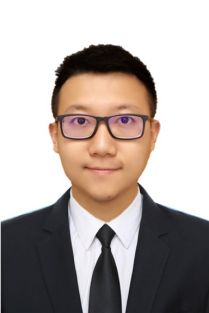
Shunxiang Caoمشاهده پروفایل
استادیار
Shunxiang Cao is an Assistant Professor at Tsinghua Shenzhen International Graduate School in China, where he has worked since July 2022. He earned his Ph.D. in Aerospace Engineering from Virginia Tech (United States) between August 2014 and August 2020 and completed his B.S. in Aerospace Engineering at Beihang University (China) from September 2010 to May 2014. Prior to his current role, he served as a Postdoctoral Scholar at the California Institute of Technology (United States) from November 2019 to May 2022. Teaches courses such as Advanced Numerical Analysis, Numerical Methods for PDEs, and Fluid-Structure Interaction simulations. Research Interests include fluid-structure interaction, computational fluid dynamics, shock/bubble dynamics, material failure analysis, embedded-boundary methods, resolvent-based optimization, Kalman inversion, high-intensity focused ultrasound, and digital twin technology. His work focuses on numerical modeling, optimization, and fluid-solid coupling mechanisms in diverse applications like underwater propulsion, energy storage membranes, and medical acoustics. Scientific Awards include the USNCCM16 Conference Award (2021), Graduate Fellowship at Virginia Tech (2014-2015), Merit Undergraduate Student in Beijing (2014), and Singapore Technology Engineering Fellowship (2010-2013).
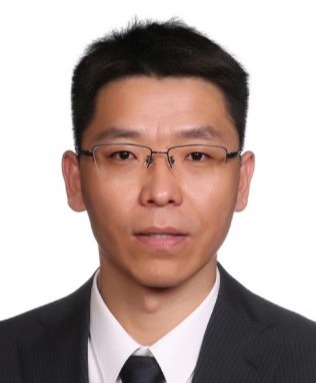
Cao Haishanمشاهده پروفایل
دانشیار
Cao Haishan is an Associate Professor at Tsinghua University, affiliated with the Department of Energy and Power Engineering in the School of Mechanical Engineering. His research focuses on cryogenic cooling systems, high heat flux thermal management, and the physics of amorphous ice formation and phase transitions. He leads a research group supported by the National Natural Science Foundation of China and industry partners including Huawei, Midea, and Lenovo. Ph.D., Mechanical Engineering, University of Twente, 2013 M.Sc., Chemical Engineering, Dalian Institute of Chemical Physics, Chinese Academy of Sciences, 2009 B.Sc., Chemical Engineering, Zhejiang University, 2006 Dr. Cao's research spans three major areas: cryogenic cooling (including micro cryocoolers and sorption systems), high heat flux electronic cooling (especially with non-condensable gases), and the formation and transformation of amorphous water ice. His work combines theoretical modeling, computational simulation, and experimental validation, often at micro and nano scales. He applies principles from thermodynamics, fluid dynamics, and materials science to solve engineering challenges in refrigeration and thermal control. The recent publications reflect a strong trend toward interdisciplinary research, integrating machine learning for heat transfer prediction, computational screening of MOFs for cryogenic switches, and fundamental studies of ice nucleation on various substrates. The articles span journals in physics, engineering, materials, and applied thermal sciences, indicating broad impact across multiple domains. Notable scientific awards include: Gustav and Ingrid Klipping Award (2016) Cryogenics Best Paper Award (2017) Annual Teaching Excellence Award, Tsinghua University (2023) Excellent Supervisor Award, Tsinghua University (2024) Multiple First Prize Advisor awards in national student contests on energy saving Dr. Cao has been principal investigator on several grants, including projects funded by the National Natural Science Foundation of China on amorphous ice lifetime and micro-cryocooling for semiconductor chips. He has also led industry-university collaborations with Huawei, Midea, and Lenovo. He advises graduate students and leads a research team focused on next-generation cooling technologies. He serves on editorial boards for Journal of Refrigeration , Vacuum and Cryogenics , and Energies , and has chaired sessions at major international conferences such as ICEC-ICMC and ACTS. His research group operates within the Institute of Thermophysics at Tsinghua University, leveraging facilities in the Lee Shau Kee Science and Technology Building. The team collaborates with national laboratories and international institutions, particularly maintaining ties with the University of Twente. Current efforts are directed toward ultra-low vibration cooling, efficient separation of non-condensable gases, and extending the stability of amorphous ice for cryobiological applications.
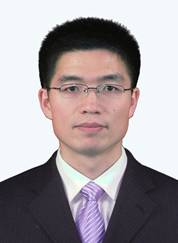
Yiguo Xue is a Professor and PhD Tutor at the Geotechnical and Structural Engineering Center, School of Civil Engineering, Shandong University. He has contributed extensively to tunnel engineering, subsea infrastructure, and slope stability analysis through advanced prediction models and numerical simulations. Research Interests: New tunnel geological condition prediction technologies Subsea tunnel and underground energy storage systems High slope stability evaluation Engineering exploration methods His recent work focuses on tunnel safety, subsea structural mechanics, and AI-driven hazard prediction models. Publications highlight his expertise in rockburst analysis, water inrush risk, and excavation optimization using machine learning and numerical frameworks. Scientific Awards: Recipient of China's Top 100 Most Influential Domestic Academic Paper Award (2008 paper on tunnel geological hazard forecasting) He has secured multiple national invention patents for tunnel monitoring devices (e.g., vibration sensors, collapse prediction systems) and developed specialized software for displacement prediction and rock classification.
Kuang Xingxingمشاهده پروفایل
دانشیار
Kuang Xingxing is an Associate Professor at the School of Environmental Science and Engineering, Southern University of Science and Technology . His research focuses on saturated-unsaturated flow, water-gas two-phase flow, solute transport modeling, and groundwater response to climate change. PhD in Hydrogeology (2012) from the University of Hong Kong M.Eng in Hydrology and Water Resources (2008) and B.Eng in Hydrology and Water Resources Engineering (2007) from China University of Geosciences (Beijing) His work improves parameter models for groundwater flow and solute transport, with studies published in leading journals like Water Resources Research and Geophysical Research Letters . He also investigates climate change impacts on Qinghai-Tibet Plateau groundwater systems. Recent publications highlight his contributions to two-phase flow mechanisms in aquifers, solute transport modeling in deltaic systems, and permeability-depth relationships in Earth’s crust. His research integrates laboratory experiments, numerical simulations, and field data. Scientific Awards : AXA Research Fund Post-Doctoral Fellowships (2014) Beijing Outstanding Graduate (2007) China University of Geosciences Outstanding Graduate (2007) SINOPEC Scholarship (2005) National Second Class Scholarship (2004) He serves as Associate Editor of Hydrogeology Journal and reviews for top journals. Teaching includes undergraduate courses in Hydraulics , Hydraulic Experiment , and Introduction to Earth Science .
LUO Yimingمشاهده پروفایل
دانشگاهی
Yiming Luo is a Research Assistant Professor at the Advanced Institute for Ocean Research , Southern University of Science and Technology (SUSTech), with a Ph.D. in Marine Geology from the Southern China Sea Institute of Oceanology, Chinese Academy of Sciences (2020) and a visiting student experience at the University of Rhode Island (2019–2020). He holds a B.S. in Marine Sciences from Sun Yat-Sen University and an exchange program at National Chung Cheng University , Taiwan. His research focuses on ridge-hotspot interaction , oceanic transform fault tectonics , and geodynamic numerical modeling , with over 15 publications on oceanic crustal evolution, mantle dynamics, and subduction zone processes. Recent work includes 3D geodynamic simulations of oceanic plateau formation and transform fault morphology. He has participated in Mariana Trench , South China Sea , and Makran Trench scientific expeditions. Scientific Awards: Pengcheng Kongque Plan Specially Appointed Talent (Shenzhen) Key Projects: China Postdoctoral Science Foundation (2022M711480, PI) National Natural Science Foundation of China (42406071, Lead PI) Guangdong Provincial Laboratory Talent Team Project (GML2019ZD0205) Research Trends: Subduction zone seismicity Oceanic plateau formation Ridge-hotspot interaction Transform fault morphology 3D geodynamic modeling Crustal thickness analysis
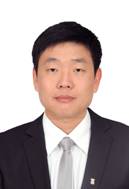
Professor Li Tian (b. 1982) is a full professor and PhD supervisor at the Department of Civil Engineering, School of Civil Engineering, Shandong University. He serves as Director of the Shandong Green Building Intelligent Construction Center and was selected into Shandong University's Youth Scholar Future Plan (2017-2022). His research focuses on seismic and wind resistance of civil infrastructure, with 38 SCI publications and 56 patents (26 inventions). Research Interests Structural Earthquake and Wind Resilience Vibration Control Systems Smart Material Applications Multi-hazard Structural Analysis Long-span Transmission Tower Dynamics Publications Overview His 15 most recent works (2018-2019) demonstrate expertise in seismic/wind vulnerability of power infrastructure, vibration control devices (particularly SMA-TMD systems), and multi-hazard structural analysis. Key contributions include probabilistic seismic demand modeling, bidirectional damping mechanisms, and collapse failure simulations. Scientific Awards Multiple Shandong Electric Power Science and Technology Progress Prizes (2018, 2015) Shandong University Teaching Awards (2017, 2012, 2014) National and Regional Academic Paper Prizes Academic Engagement He actively participates in structural engineering societies, serves on NSFC review panels, and acts as reviewer for over 30 journals including Engineering Structures and Earthquake Engineering and Engineering Vibration .
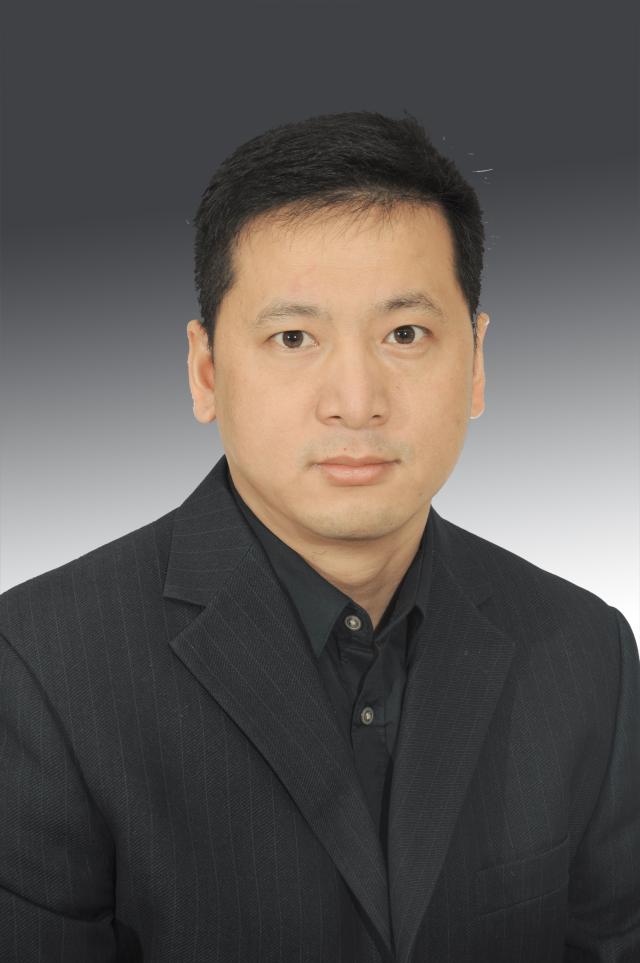
Shaowei Wang is a Professor in the Department of Engineering Mechanics at the School of Civil Engineering, Shandong University, China. He holds a Ph.D. in Mathematics (2007) from Shandong University and completed post-doctoral research in fluid mechanics (2009) at Peking University. His research focuses on heat and mass transfer in porous media , fluid mechanics , and mathematical methods in mechanics . His recent publications highlight advancements in electro-osmotic flows, oscillatory non-Newtonian fluid dynamics, and stability analysis of bioconvection in porous media. Key themes include modeling viscoelastic fluids (Oldroyd-B, Maxwell), fractional calculus applications, and microchannel transport phenomena. First Prize in Natural Science of the Ministry of Education (2015) Second Prize of Natural Science Award of Shandong Province (2015) Du Qinghua Young Scholar Award (2016) Wang serves as Director of Shandong Society of Mechanics and editorial board member of multiple journals. His work bridges theoretical fluid dynamics with practical applications in microfluidics and geophysical systems.
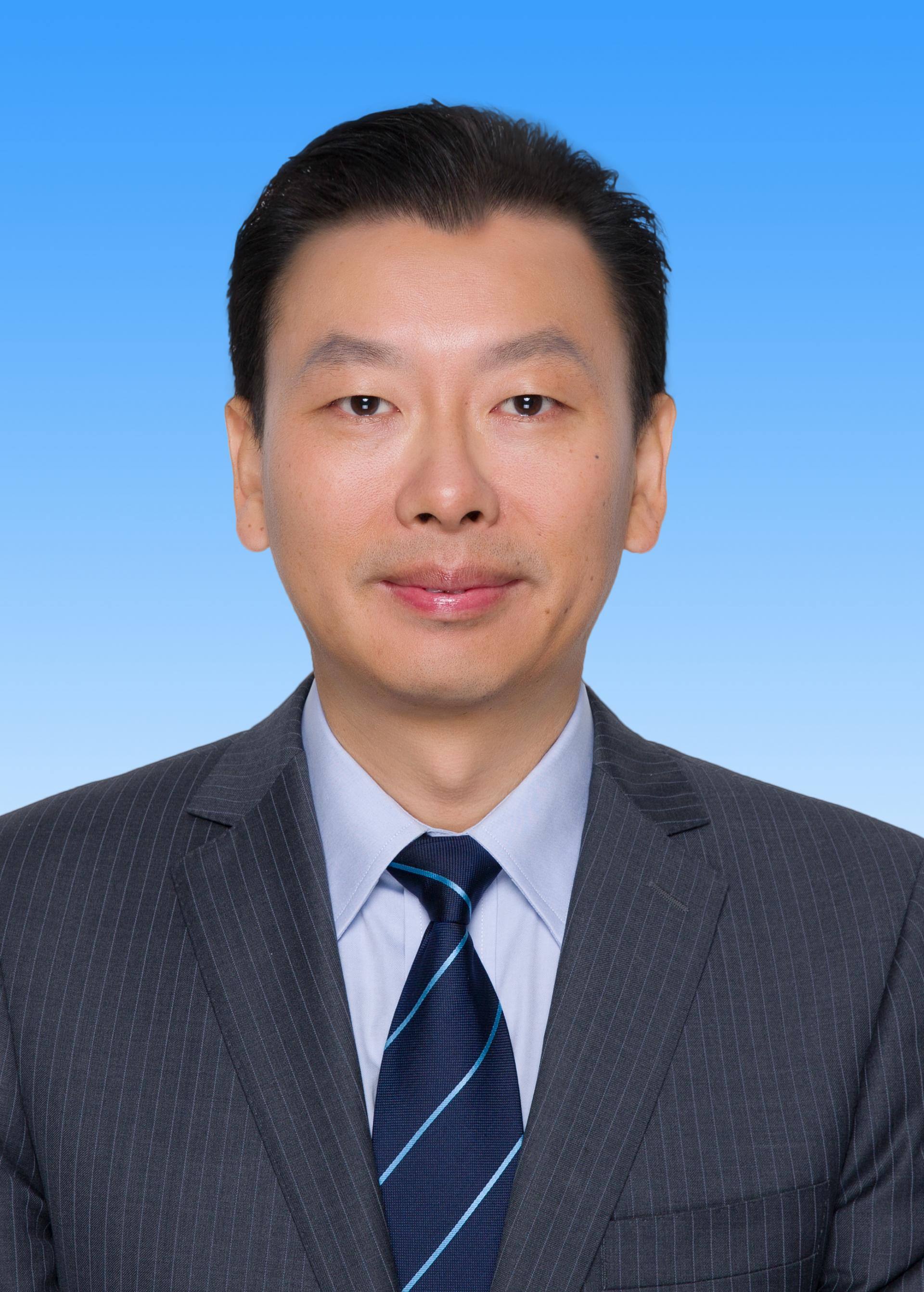
Daohong Qiuمشاهده پروفایل
دانشیار
Daohong Qiu is an Associate Professor and Master Tutor at the Geotechnical and Structural Engineering Center, School of Civil Engineering, Shandong University. His research focuses on advanced geological prediction in tunnels, surrounding rock stability, structural health monitoring for urban rail transit, and TBM tunneling performance optimization. Position: Associate Professor Affiliation: School of Civil Engineering, Shandong University Email: qiudh@sdu.edu.cn Research Interests: He specializes in geotechnical engineering challenges related to underground construction, including rock burst prediction , disaster control , and machine learning applications in geological modeling. His work emphasizes integrating advanced computational methods like quantum genetic algorithms and RBF neural networks with field data to improve tunnel safety and efficiency. Publication Trends: His recent 2019 studies address subsea tunnel risk assessment , rock burst prediction in underground caverns, and machine learning-driven surrounding rock classification . Earlier works (2014-2015) explore SVM/GA-SVM for geological disaster forecasting, while pre-2010 papers focus on optimization theory and stress field analysis. Patent Contributions: He holds multiple invention patents for geological prediction devices, including three-dimensional geological network modeling , seismic signal detection , and concrete elevation control systems .
Liu Zhiqiangمشاهده پروفایل
استادیار
- Physical Oceanography
- Numerical Simulation of Ocean Circulation
- Circulation Dynamics in South China Sea
- +۷ مورد دیگر
Liu Zhiqiang is an Assistant Professor at the Department of Ocean Science and Engineering , Southern University of Science and Technology (SUSTech). He holds a PhD in Marine Environmental Science from the Hong Kong University of Science and Technology (2013) and has held research positions at HKUST from 2013-2018 before joining SUSTech in 2019. PhD: Hong Kong University of Science and Technology (2013) Postdoc/Researcher: HKUST (2013-2018) Current: SUSTech (2019-Present) His research focuses on multiscale physical ocean dynamics in the Northwest Pacific-China Sea system, particularly: South China Sea basin-slope-shelf-estuary interactions Kuroshio's regulation of China Sea circulation Coastal dynamics in the Guangdong-Hong Kong-Macao Greater Bay Area Three-dimensional water pathways and residence times Geostrophic flow mechanisms in shelf processes Improved open boundary conditions for ocean models Analysis of his 15 most recent publications reveals key trends in: South China Sea circulation structure East China Sea shelf dynamics Storm and wind effects on coastal transport Biogeochemical coupling in hypoxic zones Topographic Rossby wave studies Time-series analysis of oceanic exchanges His group has developed a 7-10 km resolution Northwest Pacific-China Sea simulation system and pioneered dual-wave open boundary conditions that simultaneously resolve tidal and non-tidal processes in limited-area models.
Fu Zongmei is a Professor at the School of Environmental Science and Engineering of Southern University of Science and Technology (SUSTech) since 2019. She previously held academic positions at Peking University (2010-2019) and Hong Kong Polytechnic University (2008). Her research focuses on atmospheric chemistry , air pollution , and chemistry-climate interactions , with expertise in inverse modeling of emissions, secondary organic aerosol formation, and air-sea exchange processes. Education: Ph.D. in Earth & Planetary Sciences (Harvard University, 2007), S.M. in Engineering & Applied Sciences (Harvard University, 2005), M.S. and B.S. in Atmospheric Sciences (National Taiwan University) Her research combines ground-based , aircraft , and satellite observations to study pollutant transport, cloud-aerosol interactions, and climate impacts on air quality. Recent work includes assessing haze mitigation strategies in Northern China and analyzing PM2.5 health risks through spatiotemporal modeling. Key honors include the National Natural Science Foundation of China Outstanding Young Scientist Fellowship (2012), the Tu Chang Wang Meteorological Science and Technology Award (2013), and the Ministry of Education Natural Science Award (Second Prize) (2019). She serves as an associate editor for Atmospheric Environment and contributes to major international conferences as session co-chair and organizer. Notable grants: NSFC General Project on Organic Nitrogen Aerosols (2020-2023, PI), National Key R&D Program on Air Quality Modeling (Co-I), and 973 Program on Chemistry-Climate Interactions (Co-PI)