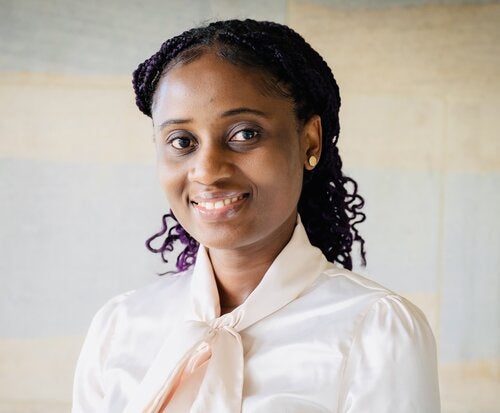
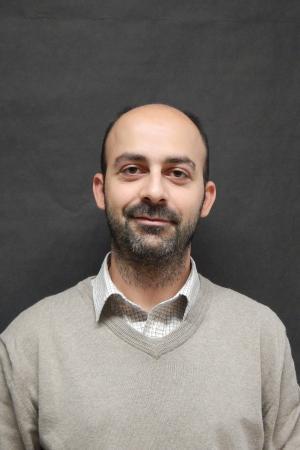
Tolulope Fadina is an Assistant Professor in the Department of Mathematics at the University of Illinois at Urbana-Champaign, affiliated with the College of Liberal Arts & Sciences. His research focuses on financial mathematics, risk management, stochastic processes, and quantitative finance, with emphasis on uncertainty modeling and actuarial applications. His work addresses topics such as optimal reinsurance strategies under multivariate risks, parametric variability in risk measures, and axiomatization of quantiles. He explores frameworks for risk assessment under ambiguity, contributing to both theoretical and applied aspects of financial engineering. Notable publications include studies on reinsurance optimization with dependence uncertainty, risk measures under parameter uncertainty, and hyperfinite constructions in stochastic calculus. His research has appeared in journals like European Journal of Operational Research , Finance and Stochastics , and SIAM Journal on Financial Mathematics . No scientific awards are explicitly listed in the provided information. He advises no formally listed students or mentees. His office is located at 273 Altgeld Hall, Urbana, IL.
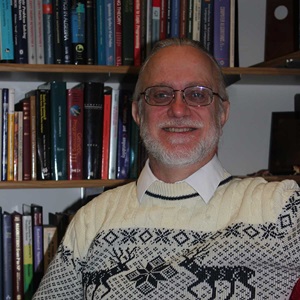
Todd Kuffner is an Associate Professor in the Department of Mathematics and Statistics at Washington University in St. Louis, within the College of Arts & Sciences. His research focuses on statistical theory, foundations, and methodology, particularly Bayesian asymptotics, higher-order asymptotics, post-selection inference, and bootstrap methods. He holds a PhD in Mathematics from Imperial College London and has organized major workshops like WHOA-PSI and BFF conferences. Education: PhD in Mathematics (Imperial College London), M.Sc. in Econometrics and Mathematical Economics (London School of Economics), M.Sc. in Economics (London School of Economics), B.A. in Economics (University of Michigan). Research Interests: Kuffner explores validity, accuracy, and power of statistical inference procedures, with a focus on neo-Fisherian, Bayesian, and frequentist paradigms. Current projects include post-selection inference, bootstrap methods, and prediction after model selection. He actively engages in interdisciplinary applications across neuroscience, environmental science, and high-energy physics. Grants & Advising: Principal Investigator on NSF grants including DMS-1811936 (2018-2021) and DMS-1812088 (2018). Advised PhD students like Qi Wang and Qiyiwen Zhang. Organized over 20 conferences/workshops, including the 5th WHOA-PSI in 2020. Labs/Teams: Leads the Workshop on Higher-Order Asymptotics and Post-Selection Inference (WHOA-PSI), co-edits journals like Harvard Data Science Review and Journal of the American Statistical Association. Hosted numerous visiting scholars and collaborators.
Dr. N. Sri Namachchivaya is Professor of Applied Mathematics at the University of Waterloo with PhD from University of Waterloo. His research develops mathematical frameworks for stochastic dynamical systems, focusing on stability analysis, bifurcation theory, and multi-scale modeling. Recipient of NSF Presidential Young Investigator Award and multiple distinguished professorships, he has secured $8M+ in research funding and published over 250 scholarly works. Research examines noise-induced phenomena in nonlinear systems using asymptotic methods, dimensional reduction, and computational techniques. Current projects investigate stochastic bifurcations in fluid-structure systems, data assimilation for chaotic systems, and filtering algorithms for multiscale dynamics. Publications demonstrate theoretical advances in stochastic stability analysis and practical algorithms for engineering systems. Recent work focuses on Hopf bifurcations in turbulent flow models, particle filtering for chaotic systems, and stability of infrastructure in turbulent conditions. Scientific Awards: NSF Presidential Young Investigator (1990) Russell Severance Springer Distinguished Professor (2011) MSRI Distinguished Professor (2007) Xerox Research Award (1989, 1993) ASME Outstanding Service Award (2007) Supervised 20 doctoral students and 21 master's students. Lectures internationally on stochastic dynamics and nonlinear systems theory. Directs the Fields-CQAM Laboratory for Inference & Prediction, developing mathematical tools for complex system analysis across physics, engineering, and environmental science domains.
Luen-Chau Li is a Professor in the Department of Mathematics at The Pennsylvania State University, affiliated with the Eberly College of Science. He holds a Ph.D. in Mathematics from New York University (1983). His research focuses on Integrable Systems, Mathematical Physics, and Poisson Geometry, with contributions to nonlinear dynamics, Lie algebra structures, and geometric mechanics. Key research interests include the analysis of Toda lattices, integrable flows on matrix groups, and the interplay between Poisson geometry and factorization problems. His work often explores exact solvability of nonlinear equations and the application of symmetry principles in dynamical systems. Recent publications (2023–2008) highlight studies on Hessenberg elements in Lie algebras, shock clustering models, and the geometry of Floquet CMV matrices. These contributions advance theoretical frameworks in mathematical physics and algebraic structures. Li’s research integrates analytical methods with geometric insights, addressing fundamental questions in integrable systems and their applications to fluid dynamics and spectral theory. No scientific awards are explicitly mentioned in the provided texts.
James A. Foster is a University Distinguished Professor of Biology in the Department of Biological Sciences at the University of Idaho. His research spans computational biology, evolutionary algorithms, and stochastic modeling. Key interests include neural ODE optimization, high-order SDE solvers, microbiome influences on health, and viral evolution modeling. Recent computational work focuses on improving efficiency and accuracy in stochastic simulations. Applications extend to pediatric nutrition (INSPIRE study), sepsis diagnostics, and COVID-19 variant analysis. Biological investigations cover gamete preparation and fertilization mechanisms.
Jeff Hyde is a Visiting Assistant Professor of Physics at Swarthmore College specializing in particle astrophysics, cosmology, and neutrino physics. His research examines neutrino interactions, cosmic phenomena, and beyond-standard model physics using observatories like IceCube. Dr. Hyde's recent publications focus on neutrino self-interactions, dark matter detection, gravitational wave production, and astronomical observations. His work bridges theoretical particle physics with astrophysical observations, particularly in galactic nuclei and cosmic string phenomena. His educational contributions include developing cosmology curriculum that explores Hubble constant data analysis for introductory courses.
Professor Anatoly Zhigljavsky serves as Chair in Statistics and Honorary Professor at Cardiff University's School of Mathematics. He holds multiple administrative positions including membership in the Senior Management Committee, School Research Committee, School Management Board, School Learning and Teaching Committee, Board of Studies, and Subject panel. University: Cardiff University School: School of Mathematics Position: Chair in Statistics, Honorary Professor Professor Zhigljavsky earned his MSc from the University of St.Petersburg, Russia in 1976, followed by his PhD in 1981 and Habilitation in 1987, all from the same institution. His academic credentials reflect a strong foundation in mathematical statistics and theoretical probability. His research spans several interconnected domains in statistics and optimization. He is particularly renowned for his contributions to Time Series Analysis, where he has advanced Singular Spectrum Analysis (SSA) into a powerful technique for time series analysis, forecasting, and change-point detection. His work in Statistical Modelling in Market Research has resulted in numerous industry collaborations, while his research in Stochastic Global Optimization has provided theoretical insights into random search algorithms, especially in high-dimensional spaces. His investigations into Probabilistic Methods in Search and Number Theory have yielded novel approaches to discrete search problems including group testing with lies. Professor Zhigljavsky has also pioneered Dynamical system approaches for studying convergence of search algorithms, bridging continuous and discrete optimization methodologies. Analysis of Professor Zhigljavsky's recent publications (2021-2025) reveals an evolving research trajectory with increasing focus on high-dimensional statistical challenges, quantization theory, and the intersection of optimization with time series analysis. His work consistently demonstrates mathematical rigor combined with practical relevance, addressing computational challenges in large-scale data analysis. His collaborations span multiple institutions with researchers including Luc Pronzato, Jack Noonan, and Anatoly Pepelyshev. Scientific recognition includes: Constantin Caratheodory Prize in France (2019) Professor Zhigljavsky has secured substantial external funding including projects with Procter and Gamble on statistical modelling in Market Research (totaling approximately £200,000), projects with AcNielsen/BASES on consumer behaviour modeling (£40,000), and projects with GlaxoSmithKline on biopharmaceutical studies (£15,000) and environmental science (£10,000). His research has consistently demonstrated practical applications across multiple industries. As an active member of Cardiff University's Statistics research group, Centre for Optimisation and Its Applications, and Statistical Modelling Unit, Professor Zhigljavsky continues to influence both theoretical developments and practical applications in statistics and optimization.
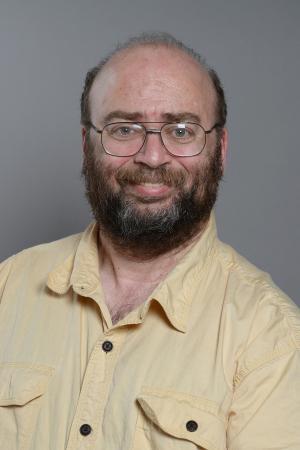
Stephen Montgomery-Smith is a Professor in the Department of Mathematics at the University of Missouri. His research spans fluid mechanics, functional analysis, numerical methods, and probability theory. He develops mathematical models for complex physical systems, including fiber suspensions in fluids, robotic kinematics using dual quaternions, and stochastic processes in biological contexts like the Luria-Delbrück experiment. His work combines theoretical rigor with practical applications in engineering and science. Recent publications feature innovations in motion simulation filters, instability analysis of non-Newtonian fluids, and dual quaternion applications in robotics. He tackles challenging problems such as the Navier-Stokes existence conjecture, employing diverse approaches from spectral analysis to computational algebra. His interdisciplinary collaborations extend to battery technology and materials science.
Dr. Pascal Grittmann is a Research Fellow in Computer Graphics at Saarland University, specializing in efficient and robust rendering algorithms. His research advances Monte Carlo methods, importance sampling, and bidirectional rendering techniques for global illumination. Current DFG-funded project develops adaptive bidirectional rendering solutions requiring minimal user configuration. Research aims to create universal rendering algorithms balancing efficiency and robustness across diverse scenes. Publications demonstrate innovations in variance-aware sampling, path guiding optimizations, and caustic rendering. Served as Eurographics Symposium on Rendering conference co-chair (2021). Teaching includes practical implementation of rendering techniques using Vertex Connection and Merging methods. Maintains collaborations with international computer graphics researchers.
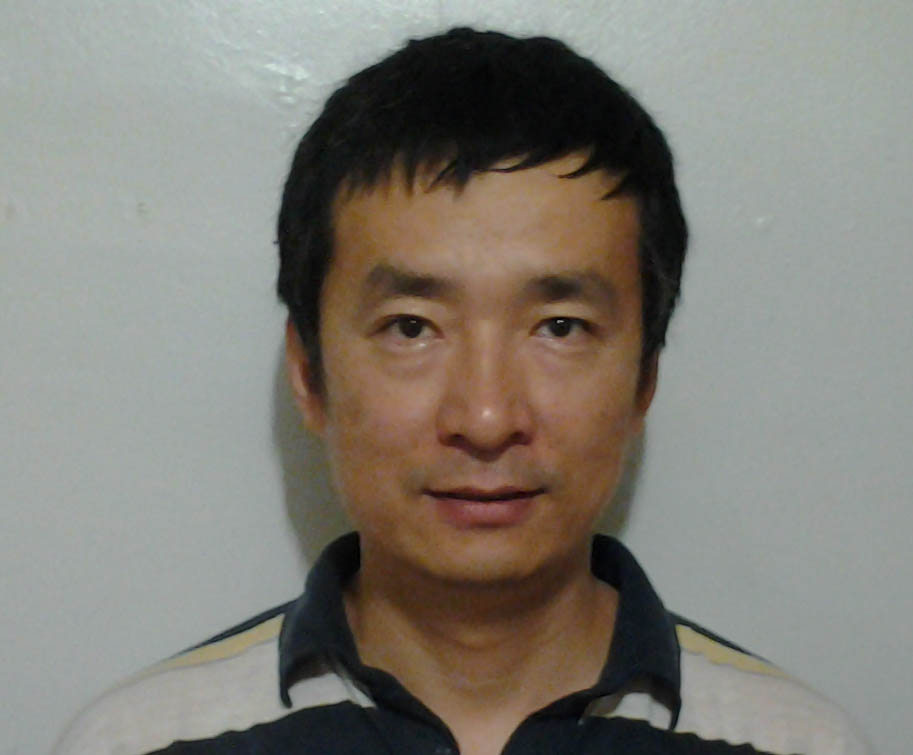
Ning Xie is a Professor in the Department of Computer Science at Florida International University's School of Computing and Information Sciences. He has been actively teaching graduate and undergraduate algorithm courses since at least 2013, including COT-6405 Analysis of Algorithms, COP-4534 Algorithm Techniques, and COT-6446 Randomized Algorithms. Dr. Xie's research focuses on theoretical computer science, particularly in the areas of sub-linear algorithms, property testing, local computation algorithms, and Fourier analysis of Boolean functions. He was advised by Professor Ronitt Rubinfeld during his doctoral studies. His work bridges theoretical foundations with practical algorithmic applications, contributing significantly to our understanding of computational complexity and efficient algorithm design. His research has resulted in numerous publications in top theoretical computer science venues including FOCS, STOC, SODA, and various prestigious journals. Dr. Xie mentors several PhD students, currently supervising Yekun Xu and Xiaolong Zhu, and has successfully graduated students including Shokoufeh Mokhtari (now at Microsoft) and Shuai Xu (now at Case Western Reserve University). His teaching portfolio demonstrates a strong commitment to algorithm education at both undergraduate and graduate levels, with detailed course materials covering dynamic programming, graph algorithms, NP-completeness, and other advanced topics.
Petros Valettas is an Associate Professor at the University of Missouri, holding dual appointments in the Department of Mathematics and the Department of Electrical Engineering and Computer Science. His research focuses on Asymptotic Convex Geometry, Geometric Functional Analysis, High-Dimensional Probability, and Probabilistic Methods in Analysis and Geometry. He has taught advanced courses such as High-Dimensional Probability, Analysis of Boolean Functions, and Advanced Calculus I, alongside foundational courses like Discrete Mathematical Structures and Calculus I/II. Dr. Valettas’ work explores the interplay between probability, geometry, and functional analysis, with contributions to topics like concentration inequalities, convex body properties, and stochastic processes. His recent publications address areas such as Gaussian convex bodies, hypercontractivity in normed spaces, and decomposition methods for high-dimensional random arrays. He has authored a monograph, Geometry of Isotropic Convex Bodies , and maintains an active role in academic seminars and curriculum development. His teaching spans undergraduate and graduate levels, emphasizing rigorous mathematical foundations and modern applications. Collaborations with co-authors like Paouris and Giannopoulos highlight his engagement with leading figures in geometric analysis. No scientific awards are explicitly mentioned, though his prolific publication record underscores sustained academic excellence.
Zhengchao Wan is an Assistant Professor in the Department of Mathematics at the University of Missouri, part of the College of Arts and Science. His research focuses on the intersection of machine learning, topological data analysis, metric geometry, and probability theory. He explores applications of these areas in graph-based learning, optimal transport, and geometric data analysis. His work includes developing novel methods for graph neural networks, analyzing effective resistance in networks, and advancing topological techniques like persistent homology and the persistent Laplacian. He also contributes to foundational studies in metric geometry, including ultrametric spaces and Gromov-type distances. Recent publications highlight his contributions to robust graph learning algorithms, flow matching ODE dynamics, and the theoretical underpinnings of graph transformers. His research bridges abstract mathematical concepts with practical machine learning challenges, emphasizing both theoretical rigor and real-world applicability.
Pedro Vilanova-Guerra is a Teaching Assistant Professor in the Department of Mathematical Sciences at the Charles V. Schaefer, Jr. School of Engineering and Science, Stevens Institute of Technology. Located in North Building 222, he can be reached at (201) 216-3771 or pguerra@stevens.edu. His research focuses on mathematical modeling of complex systems including neural networks and biochemical oscillators, employing techniques from stochastic processes and kinetic theory. His recent publications investigate population dynamics in neural networks and synchronization phenomena in stochastic biochemical systems. Professional affiliations include membership in the AMS Mathematical Reviews. His teaching portfolio spans probability, statistics, optimization, and numerical methods courses.
Professor Dave Campbell is affiliated with Carleton University's School of Mathematics and Statistics and School of Computer Science. He specializes in inferential data science, Bayesian algorithms, and computational statistics. His research interests include differential equation models, uncertainty quantification, and time-series analysis. He has advised multiple graduate students in areas like statistical language models and machine learning. Recent work includes studies on climate impacts on human conflict, forensic entomology, and NMR-based metabolite quantification. Active in open data initiatives, he maintains ShinyApps for ecological and educational datasets. Teaching includes Statistical Computing and Statistical Language Models courses.
Neda Yaghoobian is an Associate Professor in the Department of Mechanical Engineering at Florida A&M University-Florida State University (FAMU-FSU), associated with the Geophysical Fluid Dynamics Institute. She holds a Ph.D. from the University of California, San Diego, and has held postdoctoral positions at the University of Maryland and Johns Hopkins University. Her research focuses on environmental thermo-fluid dynamics, including land-atmosphere interactions, boundary layer meteorology, urban microclimates, fire dynamics, and energy efficiency. She leads the Environmental Thermo-Fluid Dynamics (ETFD) Lab, exploring multiscale phenomena such as firebrand transport, urban heat island mitigation, and natural structures' thermal functions. Dr. Yaghoobian teaches advanced courses in turbulent flow, aerodynamics, and numerical methods. She is an NSF CAREER awardee and actively mentors graduate and undergraduate students. Her work integrates computational fluid dynamics (CFD), large-eddy simulations (LES), and energy balance models to address challenges in wildfire safety, sustainable urban design, and bio-inspired engineering. She collaborates on projects like the 'Complex-environment Temperature and Moisture Predictor (CeTMP)' and investigates thermal functions of termite mounds. Key research areas include: Urban microclimatology and heat island mitigation strategies Firebrand transport dynamics in wildland-urban interfaces Diurnal effects on building energy use and urban pollution Thermal modeling of complex fuels and fire behavior prediction Bioinspired design of natural structures like termite mounds She has supervised numerous students and contributed to over 50 peer-reviewed publications. Her lab actively recruits graduate students with backgrounds in CFD and fluid dynamics.