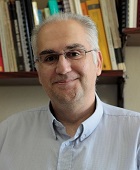
Dr. Jean-Christophe Nave is an Associate Professor in the Department of Mathematics and Statistics at McGill University. He holds a PhD from the University of California, Santa Barbara (2004), under advisors Xu-Dong Liu and Sanjoy Banerjee. Prior to McGill, he served as a Lecturer and Instructor at MIT's Mathematics Department (2005-2010). His research focuses on numerical analysis, partial differential equations, fluid mechanics, and computational methods for interface problems. He has led research groups involving postdocs, PhD, and undergraduate students, collaborating on projects like the Correction Function Method for PDEs and the Characteristic Mapping Method for advection problems. Education: Ph.D. in Applied Mathematics from UCSB (2004). Affiliations include the Institut des Sciences Mathematiques Steering Committee, Centre de Recherches Mathematiques Applied Math Lab, and CNRS-UMI. Active in teaching courses like Numerical Analysis I/II and Non-Linear Dynamics at McGill, with sabbatical periods noted in recent years. Research interests span numerical methods for PDEs, fluid-structure interaction, and multi-phase flows. His work integrates computational geometry and invariant numerical techniques, addressing challenges in complex fluid dynamics and interface-driven phenomena. Over 40 peer-reviewed publications and continuous contributions to the field of computational applied mathematics. Scientific advising includes over 20 graduate and undergraduate students, with notable alumni now in academia and industry. Collaborations include projects on volcano dynamics, fiber drawing instabilities, and concentrated solar power systems. His methods have advanced numerical simulations for engineering and physical systems involving discontinuous coefficients and sharp interfaces.
Chasalevris Athanasios is an Assistant Professor at the School of Mechanical Engineering, National Technical University of Athens (NTUA), specializing in Rotordynamics and Tribology. His research focuses on nonlinear dynamics of machines, active bearings, and turbomachinery design. He holds a Ph.D. in Rotordynamics from the University of Patras (2009) and a Diploma in Mechanical & Aeronautical Engineering (2004). Research Interests: Machine Dynamics, Turbomachinery, Active Bearings, Bifurcation Analysis, Crack Detection. Teaching: Dynamics of Rotating Machines, Kinematics and Dynamics of Mechanisms, Machine Elements I. Collaborations: KIT (Germany), RPI (USA), MTU Aero Engines (Germany), and Cleveland State University (USA). Awards include the Humboldt Foundation Fellowship (2010), GE's 'Beyond and Ahead' Award (2017), and recognition as a Top 2% Scientist (2023). He has authored over 40 publications and supervised numerous graduate students. Current roles include Academic Advisor at DOATAP and Associate Editor for journals like ASME Journal of Tribology.
Dimitris Mitropoulos is an Assistant Professor at the National and Kapodistrian University of Athens (NKUA) in the Department of Business Administration, where he teaches courses on Distributed Ledger Technologies, Data Security and Privacy, Algorithms and Business Analytics, and Introduction to Programming. He also serves as Head of the Reliability Engineering Directorate at the National Infrastructures for Research and Technology (GRNET), Greece's national research and education network organization. Previously, he was a Postdoctoral Researcher in the Computer Science Department at Columbia University. Dr. Mitropoulos received his Ph.D. degree in Secure Software Development Technologies from the Athens University of Economics and Business (AUEB) in 2014. His doctoral research was supported by the Heracleitus II Scholarship, co-financed by the European Union and Greek national funds. He is a member of prestigious professional organizations including ACM, IEEE, and USENIX. Dr. Mitropoulos conducts pioneering research at the intersection of software engineering and cybersecurity, with particular expertise in secure software development, vulnerability analysis, and blockchain security. His work spans multiple dimensions of software security including code injection attacks, infrastructure as code security, smart contract analysis, and dependency management in software ecosystems. His research methodology combines static and dynamic analysis techniques with empirical studies of real-world software systems, particularly focusing on Java, Python, and Solidity ecosystems. His recent work has made significant contributions to understanding security vulnerabilities in modern software development practices and infrastructure management. Dr. Mitropoulos has received numerous prestigious awards for his research contributions, including the Research Excellence Award from NKUA (2025), Distinguished Paper and Artifact Awards at PLDI '22, Best Data Showcase Award at MSR 2018, and multiple postdoctoral research funding scholarships. His work on "Finding typing compiler bugs" was recognized with both Distinguished Paper and Artifact Awards at PLDI '22, highlighting the significance and reproducibility of his research. He has also received recognition for his service to the academic community, including a Certificate of Appreciation from ESEC/FSE '21 for his contributions to conference organization. Dr. Mitropoulos has been actively involved in securing research funding and leading significant research projects. He currently serves as Principal Investigator for the SecOPERA project (2023-Today), funded by the European Commission under Horizon Europe. Previously, he contributed to several major EU and US-funded projects including eSSIF-Lab (2019-2022), FASTEN (2019-2022), PRIViLEDGE (2018-2021), CERTCOOP (2017-2020), PANORAMIX (2016-2019), and TREDISEC (2016-2018). His research has been supported by diverse funding sources including the European Commission's Horizon 2020 program, the National Science Foundation, and the Defense Advanced Research Projects Agency (DARPA). Dr. Mitropoulos plays an active role in the international research community through various leadership positions. He serves on program committees for top-tier conferences including OOPSLA (2026), ICSE (2026), ESEC/FSE (2025), and ISSTA (2025). He has previously served as Workshop Co-Chair for ISSTA 2025 and Student Volunteer Chair for ESEC/FSE 2021. His contributions to mentoring the next generation of researchers include serving as a mentor for the ICSE Student Mentoring Workshop (2022) and supervising Google Summer of Code projects (2017).
Pavel Panchekha is an Assistant Professor in the School of Computing at the University of Utah, where he holds the Warnock Chair for Junior Faculty. His research spans programming languages, web browsers, and numerical analysis, with a focus on developing programming language techniques to address challenges across computer science. Dr. Panchekha received his educational training at prestigious institutions: PhD in Computer Science from the Paul G. Allen School for Computer Science and Engineering at the University of Washington, advised by Michael D. Ernst and Zachary Tatlock BS in Mathematics from MIT Panchekha's research program has two major thrusts. First, he works on web browser internals , with projects including fuzzing layout invalidation, multi-tenant garbage collection, and optimizing 2D graphics. He is also authoring a textbook on web browsers that informs much of this research. Second, he focuses on automatic numerical analysis , with projects such as automatic accuracy improvement, synthesis via term rewriting, scalable static accuracy analysis, and math library implementation. He leads the FPBench and Herbie projects, which are major deployments of his research. His scholarly output demonstrates consistent contributions across programming languages, verification, and numerical methods. Recent work shows a growing emphasis on bidirectional typing systems, layout invalidation in browsers, and robust floating-point error analysis. His publications reveal a trajectory from foundational work on floating-point accuracy (notably the Herbie tool that won a Distinguished Paper Award at PLDI 2015) toward more comprehensive systems for program synthesis, verification, and browser optimization. Panchekha has received significant recognition for his research contributions: NSF Fellowship ARCS Foundation Fellowship Adobe Research Fellowship Wissner-Slivka Foundation Fellowship 2015 PLDI Distinguished Paper Award for work on the Herbie numerical analysis and repair tool As an advisor, Panchekha mentors a substantial group of students across multiple levels. He currently advises six students: Marisa Kirisame (PhD), Bhargav Kulkarni (PhD), Yumeng He (PhD), Artem Yadrov (MS), Jesus Ponce (BS), and Jonas Regehr (BS). Previously, he has advised over twenty students including PhD candidates like Ian Briggs and numerous MS and BS students. His advising spans theoretical topics in programming languages and practical applications in web browsers and numerical computing. Panchekha leads research groups focused on programming languages applications to web browsers and numerical analysis. His work on the Herbie tool for floating-point accuracy improvement has become influential in the programming languages community, and his more recent work on browser internals is shaping how researchers understand and optimize modern web rendering engines. He is currently developing a textbook on web browsers that aims to synthesize knowledge about browser architecture and implementation.
Emmanouel (Manos) Varvarigos is a Professor at the School of Electrical and Computer Engineering, National Technical University of Athens (NTUA), where he leads the High Speed Communication Networks Laboratory. He holds a Diploma from NTUA (1988) and an M.S./Ph.D. from MIT (1990/1992). Prior roles include Professorships at UC Santa Barbara (1992-1998) and Delft University (1998-1999), and leadership at the University of Patras (1999-2015). He has coordinated over 30 EU research projects, including H2020 initiatives like ORCHESTRA and FLEXGRID. His research focuses on optical networking, cloud computing, smart energy grids, and high-speed network protocols. He has published over 450 papers and serves on numerous conference committees. Awards include the NSF Research Initiation Award. His lab employs 5 postdocs and 10+ PhD students, addressing challenges in networking, data centers, and grid computing. Education: Ph.D., Electrical Engineering and Computer Science, MIT, 1992 M.S., Electrical Engineering and Computer Science, MIT, 1990 Diploma in Electrical and Computer Engineering, NTUA, 1988 Research Interests: Optical networking, high-speed network protocols, data center architectures, cloud computing, smart energy grids, wireless networks, and distributed systems. Grants & Projects: Coordinated 7 EU projects (e.g., FLEXGRID, ORCHESTRA) and participated in 35+ others. National projects include roles as Scientific Director of the Greek School Network and CTI’s Network Technologies Division. Labs & Teams: Directs the High Speed Communication Networks Lab (HSCNL), collaborating with global institutions on optical networks, edge cloud, and smart grids. The lab’s work includes EU-funded projects on 5G, data centers, and renewable energy integration.
Todd Millstein is a Professor in the Computer Science Department at the University of California, Los Angeles (UCLA). He served as the Computer Science Department Chair from 2022-2025 and is also an Amazon Scholar. His research focuses on making software systems more reliable through programming languages techniques, with significant contributions to network verification and probabilistic programming. Millstein received his Ph.D. from the University of Washington Department of Computer Science, where he was a member of the Cecil group led by Craig Chambers. Prior to that, he completed his undergraduate studies at Brown University under the guidance of Paris Kanellakis and Pascal Van Hentenryck. Millstein's research spans several areas of programming languages and systems with a focus on reliability. He has made significant contributions to network verification, developing the Batfish network configuration analyzer which is now managed by Amazon Web Services and forms the basis of Oracle Cloud's Network Path Analyzer. His work has been recognized with the ACM SIGCOMM Networking Systems Award in 2025. He also works on interactive program verification through lemma synthesis and scalable reasoning methods for probabilistic programming languages. His research bridges programming languages theory with practical systems challenges, as highlighted in his SPLASH/OOPSLA 2024 keynote "Everything is a Program (even if it's not)". Millstein's recent publications demonstrate a consistent focus on verification and reliability across multiple domains. His work shows a progression from foundational programming language techniques to practical applications in networking and probabilistic systems. Key themes include data-driven approaches to program analysis, synthesis of verification artifacts, and applying programming languages techniques to non-traditional domains like network configuration. Millstein's scientific achievements have been recognized with numerous prestigious awards including an NSF CAREER Award, an ACM SIGPLAN Most Influential PLDI Paper Award, an ACM SIGCOMM Networking Systems Award, IEEE Micro Top Picks selection, best-paper awards from PLDI, OOPSLA, and SIGCOMM, a Microsoft Research Outstanding Collaborator Award, an Okawa Foundation Research Grant, an IBM Faculty Award, and a Facebook Research Award. He has also received both the Northrop Grumman Excellence in Teaching Award (for junior faculty) and the Eon Instrumentation Inc. Excellence in Teaching Award (for senior faculty) from UCLA Engineering. Millstein advises several Ph.D. students including Ana Brendel, Poorva Garg (co-advised with Guy Van den Broeck), Rajdeep Mondal (co-advised with George Varghese), and Rathin Singha (co-advised with George Varghese). His research has been supported by various grants including an NSF CAREER Award, Okawa Foundation Research Grant, IBM Faculty Award, and Facebook Research Award. He has also been a Co-Founder and Chief Scientist of Intentionet, which was later acquired by Amazon Web Services. Millstein is actively involved in the Batfish project, an open-source network configuration analyzer that has had significant practical impact. Batfish is now managed by AWS, powers Oracle Cloud's Network Path Analyzer, and is used by dozens of companies. His research group continues to work on network reliability, developing techniques for scalable BGP policy verification and behavioral testing of protocol implementations.
David Naumann is Professor and Department Chair of Computer Science at Stevens Institute of Technology. His leadership in the department and active research program positions him as a key figure in programming languages and formal methods research. Naumann's research focuses on formal methods and software security, with particular emphasis on relational and hyperproperty verification , fine-grained confidentiality/integrity policies , and program analysis and verification . His work bridges theoretical foundations with practical applications in security-critical systems. He has developed novel program logics and verification techniques that enable precise reasoning about information flow and security properties. His recent publications (2022-2025) reveal a strong trend toward modular relational verification techniques with applications to pointer programs, distributed systems, and concurrent applications. The research spans theoretical foundations (algebraic structures for alignment) to practical tools (WhyRel prototype), demonstrating both depth and breadth in addressing verification challenges. Naumann has served as program committee co-chair for IEEE Computer Security Foundations Symposium (2021-2022) and has been active on committees for POPL, CCS, CSF, ECOOP, and other top venues. His editorial service includes ACM Transactions on Programming Languages and Systems, Formal Aspects of Computing, and Journal of Object Technology. He leads the Cypress research group at Stevens Institute of Technology and has secured significant funding from NSF, Microsoft Research, and Siemens. His mentoring extends to numerous PhD students who have gone on to successful careers in academia and industry.
Edouard Bard (born September 1, 1962) is a distinguished French climatologist currently serving as Professor of Climate and Ocean Evolution at the Collège de France. He is also a member of the French Academy of Sciences and deputy director of the European Centre for Research and Education in Environmental Geosciences (CEREGE) at the Arbois Technopole in Aix-en-Provence. His academic journey began with geological engineering studies at ENSG in Nancy, followed by doctoral research at the Commissariat à l'énergie atomique (CEA) in Gif-sur-Yvette (1987), and postdoctoral work at Columbia University's Lamont-Doherty Earth Observatory (1988-1989). Bard's research spans climatology, oceanography, and geology with a focus on understanding the natural functioning of the ocean-atmosphere-cryosphere-biosphere system across timescales from centuries to millions of years. His work integrates analytical chemistry techniques to reconstruct past environments from marine and lake sediments, corals, stalagmites, and polar ice. He has pioneered methods using mass spectrometry to measure radioactive isotopes for dating climate variations recorded in geological archives. Bard's publication record shows consistent contributions across paleoclimatology, with particular emphasis on radiocarbon dating calibration, sea level reconstruction, and climate-ocean interactions. His recent work (2010-2013) focuses on ice sheet dynamics, meltwater pulses, and cosmogenic nuclide applications, while maintaining his foundational work in radiocarbon methodology. His research demonstrates a clear trajectory from methodological development to application in major climate questions. His scientific achievements have been recognized with numerous prestigious awards: Macelwane Medal of the American Geophysical Union (1997) Wegener Medal of the European Geosciences Union (2013) Foreign Member of the National Academy of Sciences of the USA (2014) Multiple recognitions as a Highly Cited Researcher Beyond research, Bard has significantly contributed to public understanding of climate science through popular books like 'L'Homme et le climat' (2005) and 'L'Océan, le climat et nous' (2011). He organized numerous Collège de France symposia on climate change, served as scientific curator for major exhibitions, and participated in high-level policy discussions including the Grenelle de l'Environnement and UN Climate Change Conferences. As deputy director of CEREGE and coordinator of the EQUIPEX ASTER-CEREGE project, he leads significant research infrastructure in environmental geosciences.
Michalis Xenos is a Professor in the Department of Mathematics at the University of Ioannina, Greece. He holds a PhD in Applied Mathematics (2003) from the University of Patras and has held postdoctoral positions at the University of Illinois at Chicago (2003-2007) and Stony Brook University (2007-2011). His research spans Applied Mathematics, Fluid Mechanics, and Biomechanics, with a focus on Magnetohydrodynamics (MHD), Computational Fluid Dynamics (CFD), and Fluid-Structure Interaction (FSI) in cardiovascular systems. Education : BSc (1996), MSc (1998), PhD (2003) in Applied Mathematics, University of Patras. Affiliations : University of Ioannina (2011-present), Stony Brook University (postdoctoral, 2007-2011), University of Illinois at Chicago (postdoctoral, 2003-2007). His work involves modeling blood flow in aneurysms, optimizing mechanical heart valves, and analyzing hemodynamic factors in vascular diseases. Collaborators include Prof. A.A. Linninger (UIC), Prof. D. Bluestein (SUNY), and Prof. U. Morbiducci (Politecnico di Torino). His publications address MHD flows, AAA rupture risk prediction, thrombogenicity in devices, and nonlinear differential equations.
Michael Mühlebach is a Lecturer at the Department of Information Technology and Electrical Engineering at ETH Zurich, affiliated with the Max Planck Institute for Intelligent Systems in Tübingen, Germany. He received Bachelor (2010) and Master (2013) degrees from ETH Zurich, awarded the Outstanding D-MAVT Bachelor Award and Willi-Studer Prize for top performance. His research specializes in multibody dynamics , control of nonlinear systems , and model predictive control , with applications in robotics and aerospace systems. Publications demonstrate consistent focus on theoretical control frameworks validated through experimental platforms like ducted fans and reaction-wheel systems. Awards: Outstanding D-MAVT Bachelor Award Willi-Studer Prize (Best Master in Robotics, Systems, and Control)
Elias N. Glytsis is a Professor at the National Technical University of Athens (NTUA), affiliated with the Department of Electromagnetic Applications, Electro-Optics and Electronic Materials. He previously held a Professorship at the Georgia Institute of Technology (USA) from 1988 to 2003. His research focuses on electromagnetic theory, diffractive devices, optical interconnects, quantum heteromaterials, and numerical methods for electromagnetic problems. Glytsis has published over 115 journal articles, 95 conference papers, and holds 17 U.S. patents with an h-index of 31 (as of 2017). Education: Diploma in Electrical Engineering (NTUA, 1982), M.S. and Ph.D. (Georgia Tech, 1984–1987). Professional memberships include IEEE (Senior Member), Optical Society of America (Fellow), and EURATOM-Hellenic Republic. Research highlights include work on holographic gratings, optical fiber gratings, and plasma-edge RF scattering. He has developed optimization methods for photonic devices and contributed to stochastic modeling via polynomial chaos expansions. Glytsis teaches courses on electromagnetic fields, optical science, and integrated optics at both undergraduate and postgraduate levels. Key technical contributions span microwave interconnects, quantum device modeling, and fusion plasma physics. His methodologies address challenges in material variability, waveguide design, and electromagnetic compatibility.
Efthymios N. Karatzas serves as an Assistant Professor in the Department of Mathematics at Aristotle University of Thessaloniki, Faculty of Sciences, within the Computer Science and Numerical Analysis Section. He maintains an active research profile in computational mathematics with strong institutional affiliations including collaborations with SISSA mathLab and FORTH Institute of Applied and Computational Mathematics. His academic credentials include: PhD in Mathematics, National Technical University of Athens (2015) Master's in Applied Mathematical Sciences – Computational Mathematics, NTUA (2009) Master's in Applied Mathematics, University of Patras (2001) Bachelor's in Mathematics (Computational Mathematics), University of Patras (1999) Dr. Karatzas' research program centers on advanced numerical techniques for partial differential equations , with pioneering work in reduced order modeling , embedded boundary methods , and optimal control systems . His expertise spans computational fluid dynamics, uncertainty quantification, and biomechanical applications, characterized by methodological innovation in handling geometrically complex domains through cut finite element approaches and shifted boundary formulations. Analysis of his 15 most recent publications reveals a cohesive research trajectory focused on developing efficient numerical frameworks for parametrized PDE systems. His work consistently bridges theoretical rigor with practical implementation, particularly in advancing reduced basis methods for fluid-structure interaction and biological modeling, demonstrating significant contributions to computational mathematics through high-impact journal publications. No major scientific awards are documented in the available sources. Dr. Karatzas demonstrates research leadership through project management roles including Scientific Manager for the ELIDEK project at NTUA (2019-2021) and Project Manager for the European Social Fund HEaD initiative at SISSA (2017-2019). His grant administration experience encompasses coordinating interdisciplinary teams and securing external funding for computational mathematics research. He maintains active collaborations with the SISSA mathLab in Trieste (particularly with Prof. Gianluigi Rozza's group) and the FORTH Institute in Crete, participating in international workshops including the Reduced Order Methods in CFD Summer School (2019) and SIAM UQ conferences. His research network spans computational mathematics groups across Europe with emphasis on advancing numerical methodologies for real-world engineering and biological applications.
Brandon Lucia is a Full Professor in the Department of Electrical and Computer Engineering at Carnegie Mellon University's College of Engineering. He leads the abstract research group focusing on the intersection of computer architecture, systems, and programming languages. His work bridges theoretical foundations with practical implementations in energy-constrained environments. Lucia's research centers on intermittent computing systems and edge computing in extreme environments. His work on energy-harvesting systems has established fundamental principles for batteryless computing, while his orbital edge computing research pioneers computational intelligence for nanosatellite constellations. These research thrusts address critical challenges in reliability, efficiency, and programmability for systems operating under severe power constraints. His publication record shows a clear evolution from foundational work on intermittent computing models to sophisticated applications in space computing and edge intelligence. Recent publications demonstrate increasing integration of dataflow architectures with energy-harvesting constraints, particularly in satellite constellations where computational resources must be managed across distributed, power-constrained platforms operating in extreme environments. NSF CAREER Award (2017) IEEE TCCA Young Computer Architect Award (2019) Sloan Foundation Fellowship (2021) ASPLOS Best Paper Awards (2018, 2020) OOPSLA Distinguished Paper and Artifact Awards (2015) Lucia actively mentors numerous PhD students including Brad Denby, Zhuo Cheng, and Emily Ruppel, many of whom contribute significantly to his research program. His abstract research group maintains strong industry connections while pursuing fundamental advances in computing systems. The group has developed multiple open-source tools including Legerdemain for program analysis and MultiCacheSim for cache coherence simulation. His laboratory work spans from theoretical foundations of intermittent computing to practical implementations in space systems. Current projects include computational nanosatellite constellations, energy-minimal dataflow architectures, and secure edge computing systems that operate reliably despite frequent power failures.
Heather Miller is a tenure-track Assistant Professor in the Software and Societal Systems Department within Carnegie Mellon University's School of Computer Science. Her academic journey includes prior roles as an Assistant Clinical Professor at Northeastern University's College of Computer and Information Science and as Executive Director of the Scala Center at EPFL. Miller's research centers on distributed and concurrent computation through the lens of programming languages, with particular emphasis on data-centric systems, big data processing, and edge computing. A defining theme throughout her work is composability - enabling construction of complex distributed systems through composition of components that are correct by construction. Her projects span distributable closures, flexible serialization techniques, futures and promises for asynchronous programming, and deterministic concurrent dataflow models. Her recent publications demonstrate strong trends in applying programming language theory to practical distributed systems challenges, with increasing focus on WebAssembly instrumentation, microservice resilience, and language model pipelines. This evolution reflects her commitment to bridging theoretical foundations with real-world system requirements. Dahl-Nygaard Junior Prize (2023) Mentorship forms a significant component of Miller's academic work. She actively supervises multiple PhD, MS, and undergraduate researchers at CMU, including Christopher Meiklejohn, Matthew Weidner, Huairui Qui, Ria Pradeep, and Luke Dramko. Her service contributions span numerous top-tier conferences including PLDI, SPLASH, ECOOP, and ICSE where she has served as committee member, chair, and keynote speaker. Miller co-founded the Curry On conference to foster industry-academia dialogue, hosting successful editions in Prague, Rome, Barcelona, Amsterdam, and London. She leads research groups focused on distributed programming models and maintains strong industry connections through Two Sigma, where she holds an affiliation. Her work consistently emphasizes practical open-source implementations, primarily within the Scala ecosystem where she's been a core contributor since 2011.
Georgios Zouraris is a Professor at the University of Crete, where he has maintained an active research profile since earning his Ph.D. from the same institution in 1995. His work is centered in the School of Science and Engineering, focusing on advanced computational mathematics with applications in physics and engineering. Education: Ph.D. in Mathematics, University of Crete, 1995 Professor Zouraris specializes in the development and rigorous analysis of numerical methods for partial differential equations. His research spans finite element and finite difference techniques for nonlinear Schrödinger equations, logarithmic heat equations, and stochastic PDEs with space-time white noise. Key contributions include error estimation frameworks for relaxation schemes, convergence analysis of Crank-Nicolson methods, and efficiency improvements for multilevel Monte Carlo simulations. His theoretical work consistently addresses singular nonlinearities and complex domain geometries, bridging mathematical rigor with computational practicality. Analysis of his 2020-2025 publications reveals a sustained focus on high-accuracy numerical schemes for challenging PDEs, particularly those involving logarithmic singularities and stochastic forcing. Recent work demonstrates increasing sophistication in handling noncylindrical domains and coupling strategies, with applications ranging from quantum systems to material science. The publications show consistent emphasis on provable convergence rates and computational efficiency. Information regarding student advising, research grants, and laboratory facilities is not documented in the available sources. His active publication record through 2025 indicates ongoing research leadership in computational mathematics.