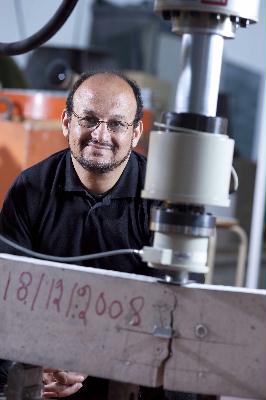
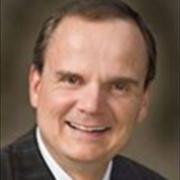
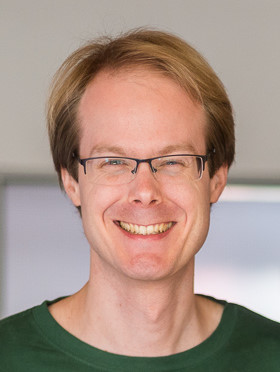
Riccardo Trinchero is an Associate Professor at the Department of Electronics and Telecommunications (DET) within Politecnico di Torino. He actively contributes to the College of Electronic, Telecommunications and Physics Engineering as a course instructor and to the College of Computer, Film and Mechatronics Engineering as a member. His research focuses on circuit modeling, electronic simulation, and machine learning applications. Academic Appointments 2025/26: Spectral and machine learning methods for uncertainty quantification (Main Teacher) 2023/24: Electronic Circuit Modeling (Main Teacher) Research Interests Compact dynamical modeling Stochastic circuit analysis High-speed link optimization via ML Electromagnetic compatibility (EMC) PhD Supervision Marco Atlante (since 2024) Nazanin Soleimani (since 2024) Dilyorjon Yuldashev (since 2024) Minzhou Liu (2020-2024) Yuan Yan (2020-2024) Nastaran Soleimani (2019-2023) Research Projects AI4FREIGHT (2025-2029) - Scientific Manager Physical simulation models for grounding contacts (2020-2021) - Scientific Manager Recent Publications 2025: SPICE modeling with ML kernels 2025: Multi-output active learning for PCB uncertainty 2025: Electromagnetic field analysis for transmission lines 2025: Digital twins in train dynamics 2024: Compressed SPICE-ML IC models
Bela Fejer is a Professor in the Physics Department at Utah State University, where he has made significant contributions to the field of ionospheric physics and space science. His research focuses on understanding the complex electrodynamics of the Earth's ionosphere, particularly in equatorial and low-latitude regions. Educational Background: PhD in Electrical Engineering, Cornell University, 1974 MS from Comissao Nacional de Atividades Espaciais (CNAE), São José dos Campos, Brazil, 1970 BS in Electrical Engineering, University of São Paulo, Brazil, 1968 Professor Fejer's research interests center on ionospheric electrodynamics, with particular emphasis on equatorial and low-latitude regions. His work investigates how solar wind, magnetospheric disturbances, and atmospheric phenomena like sudden stratospheric warming affect ionospheric electric fields, plasma drifts, and related space weather phenomena. He has made significant contributions to understanding the lunar tidal effects on equatorial ionospheric electrodynamics and the response of the ionosphere to geomagnetic storms. His research integrates theoretical models with observational data from various satellite missions and ground-based instruments. His most recent publications (2023-2024) continue to explore complex multi-process interactions in the equatorial ionosphere during extreme space weather events, demonstrating his ongoing active research in the field. His work consistently bridges theoretical models with observational data from satellites and ground-based instruments, contributing significantly to our understanding of space weather effects on communication and navigation systems. Scientific Awards: CEDAR Prize Lecture, 1997 (National Science Foundation) Professor Fejer has mentored numerous graduate students throughout his career, including Luis Navarro, Dibrup Hui, Brian Tracy, Michael Olsen, John Jensen, and John Emmert. His teaching portfolio includes foundational physics courses like "Great Ideas in Physics" (PHYS 1100) as well as advanced courses such as "Methods of Theoretical Physics I" (PHYS 5340), "Plasma Physics I" (PHYS 6330), and "Electromagnetism" courses. His research has been consistently funded, as evidenced by his extensive publication record spanning several decades and his receipt of the CEDAR Prize. His work often involves collaboration with international teams and utilizes data from various satellite missions including Swarm, CHAMP, and C/NOFS, as well as ground-based radar and ionosonde measurements from locations around the globe, particularly in equatorial regions. This global approach has established him as a leading researcher in understanding the interconnected nature of atmospheric and space phenomena.
Nils Bullerjahn is a scientific assistant at the Institute of Mathematics within the Faculty of Electrical Engineering, Computer Science and Mathematics at the University of Paderborn . His work focuses on numerical mathematics and stochastics, with a specialization in computational modeling and discretization techniques. Education: Doctoral studies (PhD) at University of Paderborn since 2023 Master of Science in Mathematics (2020-2022) and Bachelor of Science in Mathematics (2016-2020) from University of Bonn Research Interests: Bullerjahn’s research centers on numerical solutions for partial differential equations, particularly Cahn-Hilliard systems with dynamic boundary conditions. His work involves error estimation, mass conservation techniques, and computational modeling for material science and fluid dynamics applications. Publications: Recent contributions focus on advanced discretization methods for Cahn-Hilliard equations. Collaborative work with Balázs Kovács highlights expertise in numerical analysis and algorithm development. Contact: Email: bullerja@math.uni-paderborn.de Office: Warburger Str. 100, Paderborn (Room J2.244)
Serhiy Mykhailovych Tykhovod is an Associate Professor and Head of the Department of Electrical Machines at the Electrotechnical Faculty of Zaporizhzhia Polytechnic National University. With a Doctor of Technical Sciences degree, he has been actively contributing to the university since 1986. His academic career spans several decades of teaching and research in electrical engineering disciplines. Dr. Tykhovod's research focuses on modeling of electromagnetic and electromechanical processes, with particular emphasis on transient phenomena in transformers and electrical circuits. His work bridges theoretical electrical engineering with practical applications, developing innovative computational methods for analyzing complex electromagnetic systems. His research has resulted in numerous publications and a textbook on transformer modeling using magnetoelectric equivalent circuits. His scholarly output demonstrates consistent focus on transient process analysis, magnetoelectric modeling, and computational methods in electrical engineering. The research shows progression from fundamental theoretical work to practical applications in transformer and converter systems, with increasing sophistication in numerical methods and computational approaches over time. Badge 'Excellent Educationist of Ukraine, 3rd degree' Dr. Tykhovod has taught key electrical engineering subjects including Theoretical foundations of electrical engineering, General electrical engineering, and Theory of electrical circuits. His academic leadership as department head has shaped electrical engineering education at the university for many years. While specific grant information isn't provided, his extensive publication record suggests successful research funding throughout his career. As Head of the Department of Electrical Machines, he leads academic and research activities focused on electrical machinery, transformer systems, and electromagnetic processes. His department likely serves as a center for both theoretical and applied research in electrical engineering at Zaporizhzhia Polytechnic National University.
Srđan Divac is a Teaching Assistant at the Department of General Electrical Engineering and Electronics within the Faculty of Technical Sciences, University of Kragujevac . He earned his PhD in 2025 (average grade: 9.88) after completing his master's (2018, grade: 10) and bachelor's (2017, grade: 9.67) studies at the same institution. His research focuses on: Numerical methods in electromagnetics Measurement uncertainty analysis for electrical machines Dynamic hysteresis modeling in ferromagnetic materials Harmonic interpolation techniques for nonlinear circuits Instantaneous magnetisation power analysis Equivalent circuit parameter estimation Key article trends include simulation of magnetic hysteresis loops, electromagnetic computation for power systems, and advanced modeling of ferromagnetic and permalloy materials under varying excitation frequencies. His work appears in journals like Applied Sciences and Energies , as well as conferences such as IcETRAN and PES .
Hans Georg Beyer is an Affiliated Professor in Energy Engineering at the Faculty of Science and Technology, The University of the Faroe Islands. His work focuses on sustainable energy systems with emphasis on renewable energy integration and meteorological aspects of power generation. With extensive publication history spanning over three decades, he has established himself as a leading researcher in renewable energy systems analysis. Professor Beyer's research interests center on sustainable energy supply systems based on renewables, with special emphasis on relating system performance characteristics to meteorological conditions. His work in Energy Meteorology covers analysis and modeling of spatial and temporal statistics of wind and irradiance fields, including forecasting methods for wind speed and solar irradiance with horizons of 6-35 hours and near now-casts in minute time scales. In Renewable Energy Systems, he investigates layout, dimensioning, modeling and performance analysis of grid-connected and stand-alone solar, wind and hybrid systems. His research bridges meteorological science with practical energy engineering applications, particularly for island and remote communities. His publication record shows consistent research activity with 55 research outputs documented, including significant contributions to solar and wind energy forecasting, hybrid system design, and grid integration challenges. Notable work includes the development of methods for satellite-derived irradiance data applications in PV system monitoring and performance assessment. Solar Energy Best Paper Award, ISES 1999 Solar World Congress, Jerusalem Professor Beyer has been instrumental in several major collaborative projects including PVSAT-2 (satellite-based PV system performance monitoring), SWERA (UNEP solar resource assessment), and various European initiatives focused on renewable energy integration. His work demonstrates strong international collaboration, particularly with German, Brazilian, and other European research institutions. While specific grant details aren't provided in the source material, his extensive publication record in high-impact journals suggests substantial research funding support throughout his career.
Gilles Savard is a Full Professor in the Department of Mathematics and Industrial Engineering at Polytechnique Montréal. He serves as Director General of the Institute for Data Valorization (IVADO), a position he held until July 2021 when Luc Vinet succeeded him. He is also a member of the Research Group in Decision Analysis (GERAD) and the Interuniversity Research Center on Enterprise Networks, Logistics and Transportation (CIRRELT). In October 2021, he was appointed Acting President of Polytechnique Montréal. His research spans operations research, revenue management, and mathematical optimization with applications in transportation networks, energy systems, and logistics. He has made significant contributions to bilevel programming, network pricing, demand forecasting, and combinatorial optimization. His work bridges theoretical advances in mathematical programming with practical applications in revenue management systems across transportation and energy sectors. Analysis of his recent publications reveals a strong focus on integrating machine learning techniques with traditional optimization methods for revenue management problems. His work increasingly addresses smart grid optimization and energy market applications while maintaining core expertise in transportation revenue systems. The publications demonstrate sophisticated use of bilevel programming frameworks to model complex decision hierarchies in pricing problems. Order of Academic Palms from the French Ministry of National Education (2018) Innovation Personality Award from ADRIQ (2017) Professor Savard has supervised 23 PhD students and 28 Master's students throughout his career, with research spanning revenue management, transportation optimization, bilevel programming, and energy systems. His students have addressed problems in airline revenue management, railway demand forecasting, media placement optimization, and inventory management. He has participated in numerous research projects related to transportation networks, smart grid systems, and revenue optimization frameworks. Professor Savard has been instrumental in establishing Montreal as a hub for artificial intelligence research through his leadership at IVADO.
Qi Luo is an Assistant Professor in the Department of Business Analytics at Tippie College of Business, University of Iowa. His research focuses on developing data-driven decision-making models in supply chain management, emerging mobility services, and healthcare systems, alongside designing efficient algorithms for online learning, dynamic games, and nonlinear optimization. Education: While specific educational background details are not provided in the text, Dr. Luo's extensive research portfolio and academic position suggest advanced training in operations research, business analytics, or related quantitative fields. Research Interests: Core Areas: Data-driven decision making, supply chain optimization, urban transportation systems, healthcare operations Methodological Focus: Online learning algorithms, dynamic game theory, stochastic optimization, nonlinear programming Application Domains: Emerging mobility services (ride-sharing, autonomous vehicles), multimodal transit systems, inventory management with fixed costs, clinical trial optimization Research Impact: Dr. Luo's work spans from theoretical algorithmic developments to practical applications in transportation and healthcare. His publications demonstrate a consistent focus on solving real-world problems through advanced optimization techniques, with particular emphasis on stochastic modeling and learning-based approaches. The research addresses critical challenges in modern transportation systems including ride-pooling, multimodal transit, and autonomous vehicle operations, as well as healthcare applications like clinical trial design and robotic surgery optimization. Scientific Recognition: TRB Kikuchi-Karlaftis Best Paper Award INFORMS APS Best Student Paper (finalist) IEEE I-Sim Best Student Paper Award Research Funding & Support: Principal Investigator: "Early-Stage Clinical Trials with Patient Choice" - National Science Foundation (NSF), funded June 2023 - August 2026 ($XXX,XXX) Investigator: "Exploring Passenger-Parcel Comodality Transportation in Rural Regions" - Tippie College of Business, funded March 2025 - February 2026 Professional Affiliations: Dr. Luo maintains active memberships in leading professional organizations including the Association for Computing Machinery (ACM) since 2020, Institute of Electrical and Electronics Engineers (IEEE) since 2019, and Institute for Operations Research and the Management Sciences (INFORMS) since 2015.
Professor Balázs Adam Kulcsár is a faculty member in the Automatic Control research group at the School of Electrical Engineering and Computer Science, Chalmers University of Technology. With 104 publications and involvement in 34 research projects, he is a prominent researcher in intelligent transportation systems. His work spans multiple domains within transportation engineering and control theory, with significant contributions to traffic flow modeling, electric vehicle routing, and advanced control systems. Professor Kulcsár's research primarily focuses on intelligent transportation systems design, traffic flow modeling for control, Linear Parameter Varying systems, and failure diagnostics. His work demonstrates a strong integration of control theory with practical transportation challenges, particularly in the context of electric mobility and sustainable transportation. Recent research shows a growing emphasis on machine learning applications for transportation optimization, electric vehicle infrastructure, and urban traffic management. Analysis of his recent publications reveals a clear trajectory toward sustainable transportation solutions, with electric vehicle charging infrastructure, fleet management, and public transit optimization as dominant themes. His work increasingly incorporates machine learning techniques, particularly graph neural networks and reinforcement learning, to address complex transportation challenges. The research demonstrates strong interdisciplinary collaboration across engineering disciplines, with a focus on practical implementation of theoretical advances. Professor Kulcsár leads and participates in numerous research projects focused on future transportation systems, including projects on electric mobility, traffic optimization, and intelligent transportation infrastructure. His research group collaborates extensively with industry partners like Volvo and Heart Aerospace, as well as with other academic institutions. Current projects include Rethinking the Sustainability of V2G, Quantum computing for future mobility solutions, and Digital Twin for Energy Prediction. His research group maintains strong connections with transportation industry stakeholders and contributes to major initiatives such as the Transport Area on Advance project, which aims to achieve leading competence in future green, safe, and efficient transport systems. The team operates at the intersection of theoretical control systems and practical transportation applications, with particular expertise in modeling complex traffic phenomena and developing implementable control solutions.
Dr. Kevin Worrall is a Senior Lecturer in Robotics and Control at the University of Glasgow's School of Engineering, Aerospace Sciences division. He holds affiliations with both the Space Engineering and Technology group and the Centre for Medical and Industrial Ultrasonics. His academic journey includes a BEng in Electronics and Electrical Engineering from Glasgow (2003), an MSc in Robotics and Embedded Systems from the University of Essex (2004), and a PhD from Glasgow (2008) focusing on optimization algorithms for mobile robot guidance. Research interests span mechatronic systems for extreme environments (space, underground, Antarctica), precision medical applications, and agricultural robotics. His work integrates control theory, machine learning, and hardware development across: Spacecraft attitude control and satellite systems Ultrasonic drilling and granular material handling Medical ultrasound classification using ML Autonomous planetary exploration technologies Publications demonstrate strong focus on aerospace control systems (inverse simulation, attitude control), planetary drilling technologies, and medical imaging AI. Recent work shows increasing emphasis on machine learning applications in both space systems and healthcare diagnostics. Grant leadership includes: ERC: Interglacial Collapse of Ice Sheets (£339k, CoI) ESA: Drill for Extensive Exploration of Planetary Environments (£253k, CoI) UKSA: Roving with Rosalind (£30k, CoI) EC H2020: Robot for Underground Operations (£477k, CoI) Multiple PI-led industry collaborations in positioning systems and image testing Current PhD supervision covers fault-tolerant space algorithms, planetary rover navigation, spacecraft plume interactions, and infrastructure monitoring. He leads research within the Space Engineering and Medical Ultrasonics research groups.
Ahmed LOUKILI is a Professor in the Mechanics, Materials and Civil Engineering Department at Ecole Centrale de Nantes, France. He is affiliated with the Research Institute in Civil and Mechanical Engineering (GeM), where he leads a research team focused on concrete. His work spans concrete technology, structural engineering, and materials science, with a particular emphasis on sustainable construction practices. Professor LOUKILI earned his Bachelor of Civil Engineering from the University of Bordeaux 1 in 1991, followed by a Master of Civil Engineering from Ecole Centrale de Nantes in 1992. He completed his Doctorate Degree (PhD) at Ecole Centrale de Nantes in November 1996 with a thesis on "Delayed deformation of the Ultrahigh-Performance Concrete." In December 2005, he obtained his Habilitation degree from the University of Nantes, enabling him to direct research. His research interests focus on the mix design and mechanical behavior of concrete, durability of cement-based materials, green concrete, and size effects in concrete. Professor LOUKILI has made significant contributions to understanding the early-age behavior of new cementitious materials and the durability mechanics of concrete structures. His work combines experimental approaches with advanced modeling techniques to address critical challenges in concrete technology. Analysis of Professor LOUKILI's recent publications reveals a strong focus on sustainable concrete technologies, including low-carbon cementitious materials, alternative binders like calcined clay and geopolymers, and the application of artificial intelligence for concrete optimization. His research increasingly integrates multi-scale characterization techniques such as nanoindentation and SEM imaging to understand the fundamental mechanisms governing concrete behavior. There's also a growing emphasis on 3D concrete printing and the development of methodologies for eco-design of concrete structures. Professor LOUKILI is a RILEM Senior Member and serves on the TC 195-DTD committee, which develops recommendations for test methods for autogenous deformation and thermal dilation of early-age concrete. He is also a member of the American Concrete Institute (ACI) and regularly reviews for numerous civil engineering journals. Since 2002, he has been a member of the scientific council at Ecole Centrale de Nantes. As Head of the concrete research team in Nantes, Professor LOUKILI has supervised numerous research projects focused on concrete technology and durability. His work has resulted in over 40 refereed papers and book chapters, with recent research expanding into areas like AI applications for concrete optimization and advanced characterization of low-carbon cementitious materials. He teaches courses in concrete technology, reinforced concrete, durability of concrete, and structural engineering. Professor LOUKILI's research is conducted through the Research Institute in Civil and Mechanical Engineering (GeM), where he leads a team investigating fundamental aspects of concrete behavior. His laboratory work combines experimental testing with advanced analytical techniques to address practical challenges in concrete technology and sustainable construction.
Théodore Cherriere is a researcher at the Laboratory of Electrical and Electronic Engineering in Paris, specializing in topological optimization of electrical machines and actuators. His work focuses on advanced computational methods for designing rotating machines, magnetic circuits, and multi-material systems. Research Interests : Topological optimization of magnetic devices Finite element analysis for electrical machine design Multimaterial filtering techniques Magneto-mechanical interactions Density-based optimization methods Nonlinear material behavior modeling Key Article Trends : His recent publications emphasize multimaterial design strategies, geometric optimization without initial constraints, and novel filtering techniques to enhance magnetic flux efficiency in permanent magnet synchronous machines and reluctance motors.
Professor Somchai Wongwises at King Mongkut's University of Technology Thonburi is a leading researcher in thermal engineering and fluid dynamics. His work focuses on advanced cooling systems, heat exchangers, and multiphase flow phenomena. Research trends from his recent publications highlight expertise in: microchannel heat sinks, nanofluid applications, two-phase flow modeling, and optimization of condensation heat transfer. Key innovations include dual-vapor thermosyphon designs and topology-optimized heat sinks for electronic cooling. His experimental and numerical studies span refrigeration systems, porous media integration in thermal collectors, and electrohydrodynamic flow simulations. Despite prolific contributions, no specific awards, student lists, or educational history are detailed in the provided data.
Andre Filiatrault is an Adjunct Professor at the Department of Civil Engineering within McMaster University . His research spans seismic engineering, structural dynamics, and performance-based design, focusing on nonstructural components, damping systems, and wood/steel structures. Key contributions include seismic isolation, passive energy dissipation, and experimental validation of building systems. Research Interests: Earthquake Engineering, Structural Dynamics, Performance-Based Seismic Design, Nonstructural Components, Steel and Wood Structures, Seismic Retrofit Recent Trends: Advanced studies on viscous dampers, seismic loss estimation for acceleration-sensitive elements, and integration of building information modeling with seismic analysis.
Arnd Hartmanns is an associate professor in the Formal Methods and Tools group at the University of Twente, Faculty of Electrical Engineering, Mathematics and Computer Science (EEMCS). Previously, he was a postdoc at both the University of Twente and Saarland University's Dependable Systems and Software group, where he also completed his Ph.D. in computer science in 2015. He has led multiple research projects including the NWO VIDI project 'Trustworthy Analysis of Stochastic Timed Systems (TruSTy)', the Interreg North Sea project 'STORM_SAFE', and coordinates the MSCA RISE project 'MISSION'. His primary research interests focus on modeling tools and formalisms for stochastic timed and hybrid systems, particularly the Modest framework. Hartmanns has been a strong advocate for reproducibility in Computer Science research through artifact evaluation initiatives, tool competitions like QComp, and standardized benchmark sets. His work bridges theoretical foundations with practical applications across various domains including network-on-chip systems, power grids, and space communication infrastructure. He has made significant contributions to probabilistic model checking, statistical verification techniques, and formal methods for system analysis. Hartmanns serves on numerous program committees, particularly focusing on artifact evaluation for conferences like TACAS, QEST, and FORMATS. His leadership in establishing reproducibility standards has influenced the formal methods community significantly. The trends in his recent publications show a strong emphasis on verified implementations of verification algorithms, statistical model checking techniques that go beyond standard approaches, and applications of formal methods to increasingly complex real-world systems. Scientific Recognition 2016 Best Dissertation Award by the GI/ITG Technical Committee for 'Measurement, Modelling and Evaluation of Computing Systems' Hartmanns has supervised numerous Master's and PhD students through his research projects, though specific names aren't listed in the provided information. His grant portfolio includes several major projects funded by NWO (VENI, VIDI, Open Competition) and European programs (MSCA RISE, Interreg North Sea). He is actively involved in developing educational materials for formal methods and has contributed to establishing benchmark sets that are now standard in the field. His work on the Modest modeling language and toolset has created an important infrastructure for quantitative verification research. The integration of formal verification with machine learning techniques, particularly in strategy learning and decision tree generation, represents one of his more recent research directions that connects formal methods with emerging AI approaches.