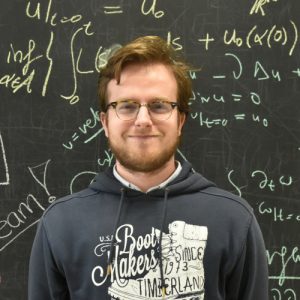
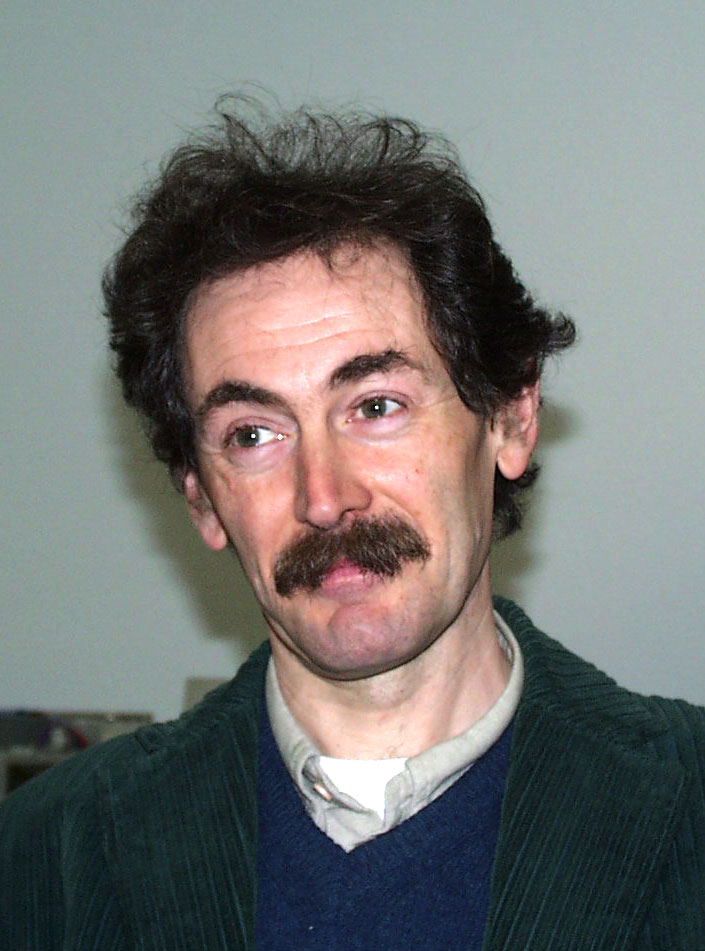
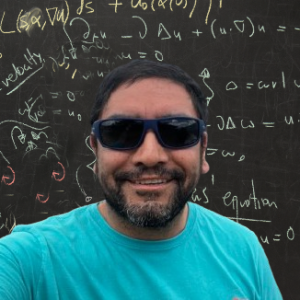
Borjan Geshkovski is a Researcher affiliated with the Universidad Autónoma de Madrid (UAM) under a Marie Skłodowska-Curie fellowship at the Conflex Project. He has been associated with institutions such as FAU Erlangen-Nürnberg, University of Deusto, and the DyCon team during his academic journey. PhD in Control Theory (2021, UAM) MSc in Applied Mathematics (2016–2018, University of Bordeaux) BSc in Applied Mathematics and Computer Science (2012–2016, University of Bordeaux) His research focuses on the intersection of Control Theory and Free Boundary Problems in fluid mechanics, with recent explorations into Deep Learning from a mathematical control perspective. Key contributions include work on turnpike properties, optimal actuator design, and controllability of nonlinear PDEs. Scientific awards include the Best Review and Presentation Prize at the 2nd ConFlex workshop (2019). His publications span topics like neural ODEs, porous medium flows, and obstacle problems, reflecting collaborations with the DyCon team and ConFlex consortium.
Francisco Manuel Bernal Martínez is an Associate Professor in the Department of Mathematics at Carlos III University of Madrid. His research focuses on numerical methods, partial differential equations, and computational mathematics, with applications in industrial engineering and materials science. He leads projects such as 'Financiación adicional 5º año (2022)' and collaborates on initiatives like 'Clustering Automático de Comportamientos de Invertebrados en Libertad mediante Imagen 3D.' His work emphasizes domain decomposition algorithms, radial basis functions, and stochastic control problems. He has advised at least one PhD thesis and holds grants from regional and national funding bodies. Key research interests include meshless methods, probabilistic domain decomposition, and uncertainty quantification in energy systems. Recent publications highlight advancements in hybrid algorithms for large-scale PDEs and volatility modeling. Bernal Martínez actively participates in academic networks and has presented at international conferences on computational methods and industrial mathematics.
Francisco Javier Fernandez Fernandez is a Professor at the University of Seville's Department of Mathematical Analysis. His research focuses on nonlinear differential equations, optimal control, environmental modeling, and mathematical analysis. He teaches courses such as 'Derivation and Integration of Functions of a Real Variable' and 'Professional Software in Environmental Issues' across various mathematics and interdisciplinary programs. His research group, 'Nonlinear Differential Equations,' explores topics like Stieltjes differential equations, population dynamics, and eutrophication control. Recent work emphasizes applications in environmental systems (e.g., Vespa Velutina population modeling, urban heat islands) and digital twin technologies for real-time simulation. Publications from 2025 highlight advancements in Stieltjes derivative theory and functional spaces, while earlier works address water circulation optimization and 3D eutrophication models. His contributions span over two decades, with a strong emphasis on bridging mathematical theory and environmental engineering challenges. No scientific awards are listed, but his extensive publication record reflects sustained academic impact. Advising and grant details are not explicitly mentioned in the provided texts, though his teaching roles suggest involvement in mentoring students through coursework.
Santiago Badia is a Full Professor of Computational Science and Engineering at Universitat Politècnica de Catalunya (UPC), holding an adjoint researcher position at the International Center for Numerical Methods in Engineering (CIMNE). He leads the Large Scale Scientific Computing (LSSC) group at CIMNE, focusing on finite element methods, numerical analysis, and high-performance computing. His research emphasizes fluid dynamics, multiphysics problems, and scalable solvers for large-scale systems. Previously, he worked at Politecnico di Milano and Sandia National Labs. He developed the FEMPAR software framework, a parallel finite element tool for PDE simulations, achieving landmark scalability (e.g., 60 billion unknowns on 458,672 cores). FEMPAR is recognized in the High-Q Club of European codes. His expertise includes discontinuous Galerkin methods, XFEM, and domain decomposition preconditioners. Research interests span metal additive manufacturing, superconductor devices, and nuclear engineering applications. Awards include FEMPAR's High-Q Club inclusion. He advises PhD and MSc students (e.g., Jesus Bonilla, Eric Neiva, Marc Olm) and has open positions in postdoc/PhD levels. His team includes researchers like Javier Principe and Alberto Martín. Ongoing projects involve advancing parallel algorithms, multiphysics simulations, and software scalability for exascale computing.
Rafael Vazquez Valenzuela is a University Professor in the Department of Aerospace Engineering and Fluid Mechanics at the Higher Technical School of Engineering, University of Seville. His research focuses on control systems for aerospace applications, particularly in spacecraft dynamics, orbital mechanics, and partial differential equation (PDE) control systems. Professor Vazquez Valenzuela's research spans several key areas in aerospace engineering and control theory. His primary interests include spacecraft guidance and navigation, particularly for asteroid exploration and rendezvous operations. He has made significant contributions to the field of backstepping control for PDE systems, with applications ranging from fluid dynamics to spacecraft control. His work also extends to stochastic analysis of aircraft performance, thermoacoustic instability control, and the development of advanced algorithms for unmanned aerial vehicles. Notably, his research bridges theoretical control theory with practical aerospace applications, resulting in numerous high-impact publications in top journals. His publication record shows a clear trend toward increasingly sophisticated control algorithms for complex aerospace systems. Recent work focuses on predictive control for spacecraft operations near asteroids, chance-constrained optimization for halo orbit rendezvous, and prescribed-time control methods. His research consistently addresses the challenging intersection of theoretical control design and practical implementation constraints in aerospace applications. Professor Vazquez Valenzuela has been involved in numerous research projects, including "APPLICATION OF LEADING TECHNOLOGY TO UNMANNED AERIAL VEHICLES FOR RESEARCH AND DEVELOPMENT IN ATM (ATLANTIDA)" "Diseño de Algoritmos de Guiado y Control Innovadores para Aplicaciones Avanzadas de Rendezvous: Órbitas Halo y Exploración de Asteroides" "SESAR WP-E ComplexWorld Network" These projects highlight his expertise in both theoretical control systems and practical aerospace applications. He is affiliated with the INGENIERÍA AEROESPACIAL (GIA) research group at the University of Seville, where he collaborates with researchers on advanced control and navigation systems for autonomous aerospace vehicles.
Gleb Pogudin is an Assistant Professor at École Polytechnique, Institute Polytechnique de Paris, where he is a member of the MAX team within the Laboratoire d'informatique. His research focuses on the intersection of symbolic computation, differential equations, and algebraic methods with applications across multiple scientific domains. Dr. Pogudin's primary research interests span several interconnected areas: Symbolic computation and computer algebra algorithms Theory and applications of differential and difference equations Nonlinear algebra and polynomial systems Structural identifiability of dynamical models Model reduction techniques for complex systems His recent publications (2024-2025) demonstrate a strong focus on developing theoretical foundations for differential elimination, structural identifiability analysis, and model reduction. These works span applications in systems biology, epidemiology, pharmacology, and optics. Notably, his research bridges pure mathematical theory with practical computational implementations, creating tools that address real-world scientific challenges. Dr. Pogudin has developed several significant software tools that implement his theoretical advances: StructuralIdentifiability.jl: A Julia package for assessing structural identifiability CLUE: Software for exact model reduction of ODE models via constrained lumping SIAN: Software for structural identifiability analysis of ODE models His GitHub repositories contain numerous implementations of algorithms from his papers on differential elimination and related topics, demonstrating his commitment to making theoretical advances practically accessible to researchers across disciplines.
Matteo Giacomini is an Associate Professor of Computational Engineering at Universitat Politècnica de Catalunya (UPC), affiliated with the Laboratori de Càlcul Numèric (LaCàN). He is also an affiliated researcher at CIMNE (Severo Ochoa Excellence Centre) and affiliated faculty at IMTech (Institute of Mathematics of UPC-BarcelonaTech). His research focuses on numerical methods for PDEs, including high-order and low-order methods, error estimation, and reduced-order modeling. Applications span computational fluid dynamics, solid mechanics, image segmentation, and industrial sustainability. Education : PhD in Applied Mathematics, École Polytechnique (2016) MSc & BSc in Mathematical Engineering, Politecnico di Milano (2013 & 2010) Research Interests : High-order methods: finite element, discontinuous Galerkin Error & adaptivity: a posteriori estimates, mesh adaptation Dimensionality reduction: reduced order models, scientific ML PDE-constrained optimization: topology/shape optimization Software development: open-source CSE tools Recent Work Trends : Recent articles emphasize multi-fidelity surrogate modeling, domain decomposition for parametric PDEs, and robust finite volume methods for incompressible/compressible flows. He also contributes to HDG method implementations (e.g., HDGlab) and industrial applications of CFD. Labs & Affiliations : LaCàN - UPC CIMNE - Innovative Algorithms & Credible Data-Driven Models groups IMTech - Mathematical Modelling research line
María Concepción Bermúdez Edo serves as a State Researcher at the Polytechnic University of Cartagena's Faculty of Sciences, maintaining an active research career from 1999 to 2025. Her work centers on advancing computational mathematics through rigorous numerical analysis methodologies. Her primary research explores iterative solution techniques for nonlinear systems, with specialization in Newton-type methods, wavelet applications for Maxwell's equations, and convergence analysis of high-order algorithms. This includes significant contributions to k-step iterative schemes, damped parameter optimization, and non-Fréchet differentiable operator handling. Analysis of her 13 journal publications reveals consistent focus on algorithmic efficiency and mathematical foundations across computational electromagnetics and differential equations. The 2017 wavelets overview demonstrates cross-disciplinary integration of numerical analysis with electromagnetic theory, while her 2009 mentoring publication highlights engagement in faculty development initiatives within the Faculty of Sciences.
Jose Salvador Moll Cebolla is an Associate Professor in the Department of Mathematical Analysis at the Faculty of Mathematics, University of Valencia. He is actively engaged in research within the Geometric Analysis Group U.V. (GAGUV) and the Nonlinear Partial Differential Equations (EDPNOL) research group. PhD, University of Valencia, 2005 His research focuses on nonlinear partial differential equations, calculus of variations, and geometric analysis. Key areas include total variation methods, 1-harmonic flows, flux-saturated diffusion, and phase-field models for materials science. His work bridges pure analysis with applications in image processing and material modeling. The recent publications highlight a strong trend in nonlinear diffusion equations, particularly those with singular or flux-limited behavior, as well as variational methods in imaging and geometric evolution equations. His work frequently involves existence, regularity, and qualitative behavior of solutions to highly nonlinear PDEs. No scientific awards are mentioned in the provided texts. He has collaborated extensively with researchers such as Lorenzo Giacomelli, José M. Mazón, Vicent Caselles, Fuensanta Andreu, Ken Shirakawa, and Francesco Petitta. There is no mention of grants or student advising in the available information. He is a member of the research groups GAGUV (Geometric Analysis Group U.V.) and EDPNOL (Nonlinear Partial Differential Equations), which focus on geometric PDEs and nonlinear evolution equations, respectively.
Miguel Escobedo Martínez is a Professor of Mathematical Analysis in the Department of Mathematics at the Faculty of Science and Technology, University of the Basque Country. He also serves as an External Scientific Member at the Basque Center of Applied Mathematics (BCAM). Research Interests Professor Escobedo specializes in Nonlinear Partial Differential Equations , with particular focus on Kinetic Equations and Aggregation and Fragmentation Models . His research explores the mathematical foundations of physical phenomena, particularly in quantum systems and particle dynamics. His work often involves rigorous analysis of existence, uniqueness, and asymptotic behavior of solutions to complex nonlinear systems. Research Trends Professor Escobedo's publications demonstrate a consistent focus on nonlinear PDEs with applications to physical systems, particularly quantum kinetic equations and coagulation-fragmentation models. His work spans from fundamental mathematical analysis to applications in quantum physics and statistical mechanics. A significant portion of his research centers on the mathematical theory of Bose-Einstein condensation and related quantum phenomena, as well as the analysis of coagulation equations that model particle aggregation processes. Projects and Affiliations Principal Investigator for research project "Partial Differential Equations: Analysis, Control, Numerics and Applications" (MTM2008-03541) External Scientific Member at Basque Center of Applied Mathematics (BCAM) Conference Participation Professor Escobedo has presented his work at various international conferences, including SIAM conferences on Nonlinear Waves and Material Sciences, where he has discussed topics such as singular solutions for the Uehling-Uhlenbeck equation and self-similar solutions for coagulation and fragmentation equations.
Rodrigo Lecaros Lira is an Associate Professor at Universidad Técnica Federico Santa María, with a research focus spanning Inverse Problems, Control Theory, and Numerical Analysis for Partial Differential Equations. His work bridges mathematical modeling with industrial applications, particularly in mining and fluid mechanics. Educated with a PhD in Engineering Sciences (Mathematical Modeling) and a Bachelor of Science in Engineering (Mathematics) from Universidad de Chile Research interests include Controllability , Stability , and Mathematical Modeling of complex systems such as water waves, shock waves, and discrete/stochastic PDEs. His recent work emphasizes semi-discrete systems and numerical methods for inverse problems. Recent publications show a trend in applying Carleman estimates to controllability problems for semi-discrete and stochastic PDEs, with applications in geophysics and ultrasound modeling. Key subfields include dynamic boundary conditions, non-local formulations, and discrete operators. No scientific awards explicitly mentioned in the provided text. No formal advisees or part-time roles noted. Professional experience includes roles at the Center for Mathematical Modeling (CMM) in Chile and the Basque Center for Applied Mathematics (BCAM) in Spain, focusing on industrial projects like seismic risk assessment (GEOSIS software) and mining-related numerical modeling.
Antonio Miguel Márquez Durán is an Associate Professor in the Department of Economics, Quantitative Methods and Economic History at Universidad Pablo de Olavide in Seville, Spain. His academic career spans over three decades with significant contributions to numerical analysis and partial differential equations. His research focuses on developing and analyzing finite element methods for fluid mechanics, solid mechanics, and fluid-structure interaction problems. PhD from University of Seville (2005) Thesis: Contribution to the study of some models governed by non-autonomous and/or stochastic evolution equations Supervised by Dr. Tomás Caraballo Garrido and Dr. José Real Anguas Professor Márquez Durán's research interests center on numerical methods for partial differential equations , particularly finite element methods for fluid mechanics, solid mechanics, and fluid-structure interaction problems. His work often involves developing mixed formulations, analyzing error estimates, and studying the coupling of different physical models. He has made significant contributions to pseudostress-based formulations, Brinkman models, and non-autonomous/stochastic evolution equations. His research bridges theoretical mathematical analysis with practical computational applications in engineering and physics. His publication record shows a consistent focus on developing robust numerical methods for complex physical systems. Recent work emphasizes mixed-hybrid and discontinuous Galerkin methods for dynamical systems, coupling techniques between different numerical methods (VEM and BEM), and analysis of fluid-solid interaction problems. The research trajectory demonstrates increasing sophistication in handling time-dependent problems, nonlinearity, and multi-physics coupling. Professor Márquez Durán has established productive collaborations with leading researchers in computational mathematics, most notably Gabriel N. Gatica (24 joint publications) and Salim Meddahi (22 joint publications). His work has been cited 815 times across 465 documents, indicating significant impact in his field. He has published in top journals including Computer Methods in Applied Mechanics and Engineering, SIAM Journal on Numerical Analysis, and IMA Journal of Numerical Analysis. His academic activities include extensive research collaboration, with 25 co-authors and 521 co-co-authors. While specific grant information isn't detailed in the provided materials, his sustained publication record suggests successful funding acquisition. Professor Márquez Durán appears to be an active member of the computational mathematics research community, contributing to both theoretical developments and practical applications of numerical methods.
Jose Enrique Adsuara Fuster is a Researcher at the Department of Computer Science and Artificial Intelligence within the School of Engineering at Universitat de Valencia. He earned his PhD in 2017 with the thesis 'Improved numerical methods for elliptic problems in astrophysics' supervised by Dr. Miguel-Ángel Aloy Toras and Dr. Pablo Cerdá-Durán. He belongs to the ERI Image Processing Laboratory (IPL) and focuses on numerical methods for astrophysical simulations. His research bridges computational mathematics and astrophysics, specializing in iterative solvers like the Scheduled Relaxation Jacobi method and their equivalence to classical algorithms. His work emphasizes improving convergence rates for elliptic PDEs relevant to astrophysical phenomena. No scientific awards or student supervision details are listed in available sources. The three articles since 2016 show a consistent focus on numerical analysis for astrophysical applications, particularly elliptic PDEs and iterative methods. His publications appear in computational physics journals, with collaborations within the IPL group.
Miguel Ángel Martínez Beneito is an Associate Professor in the Department of Statistics and Operations Research at the Faculty of Mathematics, University of Valencia. His research focuses on Bayesian statistics, spatial epidemiology, and disease mapping, with applications in public health and risk cluster detection. Education: PhD in Statistics from the University of Valencia (2005), thesis on statistical methods for detecting risk foci in epidemic outbreaks. His research interests include Bayesian modeling, spatial statistics, and computational epidemiology. He is a member of the Valencia Bayesian Research Group (VABAR), contributing to advanced statistical methodologies in health sciences. The recent publications attributed to him span topics in stochastic processes, biomechanics, and mathematical biology. However, there is a possibility of name disambiguation, as some works on biomechanics appear more aligned with a researcher from the University of Zaragoza. The core research at UV remains in statistical and epidemiological modeling. Scientific Contributions: Development of Bayesian methods for disease mapping. Application of statistical models to public health surveillance. Potential contributions to stochastic modeling in biological systems. He advises students in statistics and public health, though no specific advisees are listed. He has collaborated extensively with researchers in applied mathematics and biomechanics, though the nature of these collaborations requires further clarification due to potential name overlap. He is affiliated with the VABAR research group, focusing on Bayesian inference and its applications in real-world health problems.
Anna Martinez-Gavara is an Associate Professor in the Department of Statistics and Operations Research at the Faculty of Mathematics, Universitat de València. She is a member of the OPTIMATH research group, focusing on Optimization and Mathematical Modelling. Her research spans two major domains: applied numerical analysis for partial differential equations—particularly in developing high-resolution, well-balanced, and adaptive schemes for hyperbolic conservation laws and shallow water flows—and combinatorial optimization , where she applies metaheuristic methods such as tabu search, GRASP, and scatter search to problems like graph drawing, clustering, and diversity maximization. Her work integrates theoretical stability analysis with practical algorithmic design. The 15 most recent publications reflect a dual trajectory: early works (2008–2012) emphasize numerical methods for fluid dynamics and conservation laws, while more recent papers (2015–2023) pivot toward discrete optimization and metaheuristics. This evolution highlights her interdisciplinary approach, bridging numerical PDEs and operational research. Her collaborations include prominent researchers such as Rafael Martí, Rosa Donat, and Manuel Laguna, resulting in publications in high-impact journals including Journal of Computational Physics , Applied Numerical Mathematics , and European Journal of Operational Research . While no scientific awards are mentioned in the provided texts, her sustained publication record and active research up to 2023 indicate a strong and ongoing academic contribution. She has advised no publicly listed students in the data, and there is no mention of external grants or leadership of a lab or research team.