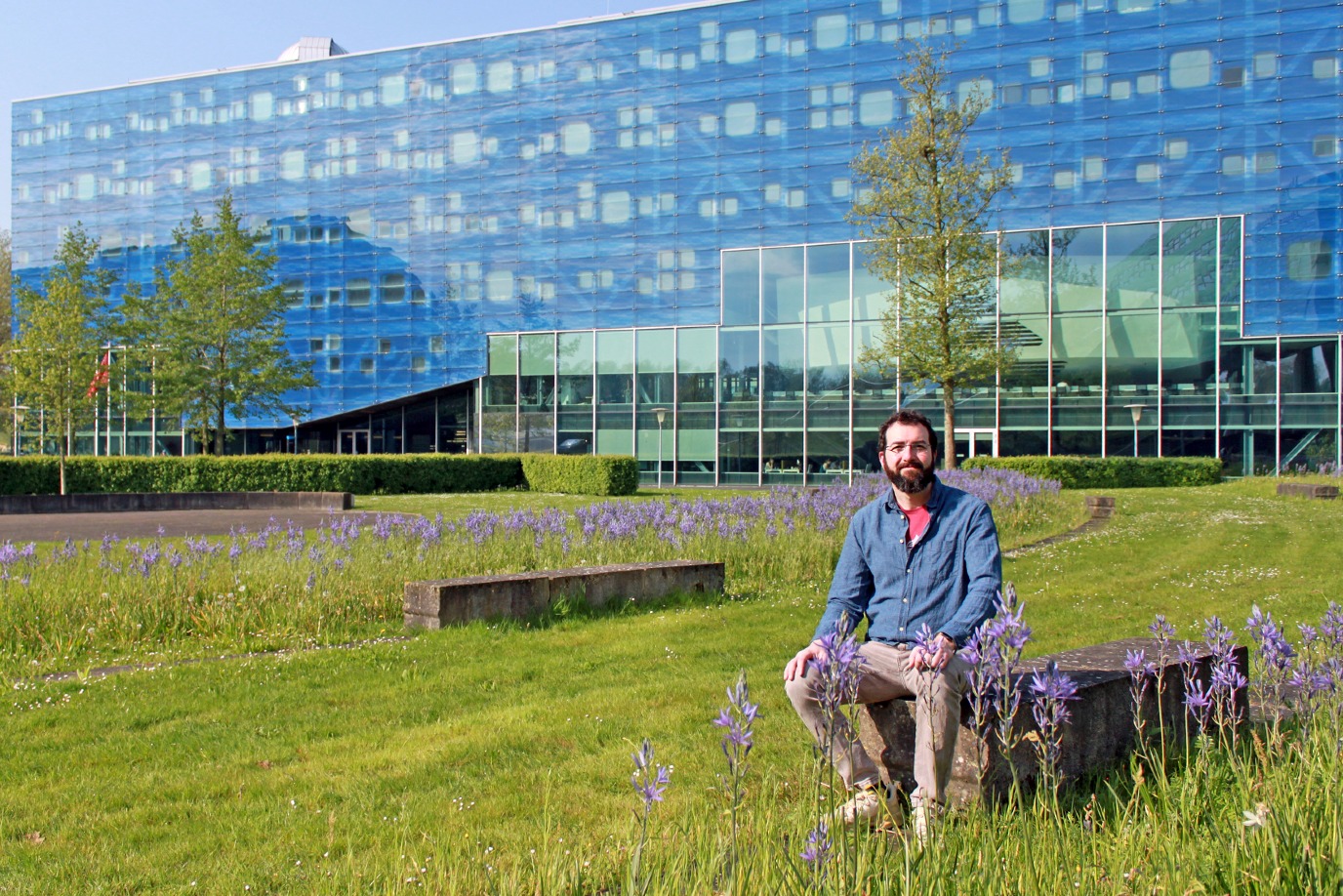
Kemal Uçak serves as an Associate Professor in the Department of Control and Automation Engineering at Istanbul Technical University, specializing in advanced control systems and machine learning integration. His research bridges theoretical control engineering with practical applications in nonlinear dynamical systems. Research Interests: Development of adaptive controllers for nonlinear systems using machine learning techniques Integration of support vector regression with classical control frameworks Fuzzy logic applications in MIMO control systems Novel observer designs for system state estimation Hybrid optimization approaches combining evolutionary algorithms and gradient-based methods His publication trend demonstrates consistent innovation in control theory, with recent works focusing on Runge-Kutta based adaptive controllers, LSSVR-integrated optimal control, and fuzzy PID systems. These contributions primarily advance nonlinear control methodologies applicable to industrial automation and robotics. Current Research Activity: Principal Investigator for the active project "Runge-Kutta and Machine Learning Based Adaptive Controller Architecture for Nonlinear Systems" (2024-2026) Collaborations spanning computational intelligence and control engineering domains Development of model-free control strategies reducing dependency on system identification
Jack HALE is a Research Scientist at the University of Luxembourg's Faculty of Science, Technology and Medicine (FSTM), Department of Engineering. He joined Prof. Stéphane Bordas' team in 2013, focusing on computational mechanics and numerical methods. His work integrates advanced techniques like meshfree methods, XFEM, and isogeometric analysis to address challenges in solid mechanics and high-performance computing. Education : PhD in Aeronautics, Imperial College London (2009-2013), supervised by Dr. Pedro M. Baiz Villafranca. MEng in Engineering, University of Bristol (2004-2008). Research exchange at Rice University (2006-2007) on cross-flow filtration processes. Research Interests : Implicit boundary methods for medical image-based simulations. Development of scalable meshfree/XFEM/isogeometric analysis frameworks. Mixed variational methods to resolve locking phenomena in solid mechanics. High-performance computing for distributed parallel systems. Publications & Software : His 50+ publications emphasize open-access research via ORBilu, with a focus on FEniCSx-based tools (e.g., DOLFINx, FEniCS-shells). Recent work addresses Bayesian model selection, melt instability identification, and SAR data assimilation in aquifer modeling. Collaborations : Open to academic/industrial partnerships in computational mechanics, material science, and biomedical engineering.
Nancy Jane Kopell is a distinguished Professor of Mathematics at Boston University, holding the William Fairfield Warren Distinguished Professor title since 2009, the first woman to achieve this honor at BU. She earned her B.S. from Cornell University and her Ph.D. in Mathematics from the University of California, Berkeley. Before joining BU in 1986, she held positions at MIT and Northeastern University, where she became a full professor in 1978. Her research focuses on mathematical modeling of neural networks, particularly oscillatory systems in vertebrate and invertebrate nervous systems. She co-directs the Center for BioDynamics (CBD), a multidisciplinary initiative training students in dynamical systems theory applied to biology and engineering. Her work bridges mathematics and neuroscience, analyzing how network properties emerge from cellular interactions. Key achievements include the MacArthur Fellowship (1990), election to the National Academy of Sciences (1996), and the William Goodwin Aurelio Professorship (2000). Her publications span over 80 papers, emphasizing dynamical systems, nonlinear oscillations, and applications in neuroscience.
Peter Münch is a postdoctoral researcher at the Chair of Numerical Methods for Partial Differential Equations within the Institute of Mathematics at Technical University of Berlin (TU Berlin), Faculty II - Mathematics and Natural Sciences. He has held research positions at Uppsala University, University of Augsburg, Helmholtz-Zentrum Hereon, and Technical University of Munich. Dr. Münch's research focuses on high-performance scientific computing with expertise in matrix-free computations, dynamic sparse communication patterns, node-level optimization, iterative solvers including multigrid and block preconditioners, and efficient algorithms for high-dimensional partial differential equations. His work spans discontinuous Galerkin methods, computational fluid dynamics, and simulation of additive manufacturing processes including solid-state sintering and melt-pool modeling. He is one of the principal developers of the deal.II finite-element library, which won the SIAM/ACM Prize in Computational Science and Engineering in 2025. His recent publications demonstrate significant contributions to matrix-free finite element methods, multigrid solvers, and applications in computational fluid dynamics and materials science. The research shows a strong trend toward high-performance implementations of numerical methods for extreme-scale computing, with particular emphasis on matrix-free approaches that avoid explicit storage of large sparse matrices. SIAM/ACM Prize in Computational Science and Engineering 2025 (for deal.II) Dr. Münch has supervised numerous student projects including Master's theses, Bachelor's theses, and term papers on topics ranging from immersed boundary methods to high-order discontinuous Galerkin methods. His teaching activities include courses on Numerical Methods for ODEs, PDEs, and High-Performance Parallel Computing. He has contributed to multiple deal.II tutorial programs (steps 19, 68, 75, 76, 87) demonstrating advanced finite element techniques. As a principal developer of the deal.II finite element library, Dr. Münch is actively involved in the open-source scientific computing community, contributing to one of the most widely used finite element frameworks in computational science and engineering. His GitHub profile shows consistent contributions to deal.II and related projects, with significant activity in 2025.
Hendrik Ranocha is a Professor in Numerical Mathematics at Johannes Gutenberg University Mainz, Germany. His research focuses on the analysis and development of numerical methods for partial and ordinary differential equations, with particular emphasis on stability and structure-preserving techniques that transfer results from continuous to discrete levels. His educational background includes: PhD in Mathematics from TU Braunschweig (2016-2018), advised by Thomas Sonar MSc in Mathematics from TU Braunschweig (2014-2016) BSc in Mathematics from TU Braunschweig (2011-2014) Exchange student at Yonsei University, Seoul (2013) BSc in Physics from TU Braunschweig (2010-2013) Hendrik Ranocha's research spans Numerical Analysis and Scientific Computing . His work focuses on developing numerical schemes for hyperbolic balance laws and dispersive-dissipative equations, including Discontinuous Galerkin methods, spectral element methods, finite difference schemes, and flux reconstruction. He specializes in structure-preserving methods that conserve entropy/energy, utilizing summation by parts operators and mimetic properties. His research also encompasses Runge-Kutta methods, stability of time integration schemes, adaptivity in time and space, data-driven approaches, and uncertainty quantification. His recent publications demonstrate a strong focus on entropy-stable numerical methods, structure-preserving discretizations, and high-performance computing implementations in Julia. The research trends show increasing emphasis on practical software implementations (Trixi.jl, SummationByPartsOperators.jl), applications to physical systems like compressible Euler equations and shallow water equations, and addressing fundamental numerical challenges in stability and convergence. Hendrik Ranocha leads a research group at Johannes Gutenberg University Mainz with several PhD students and postdocs, including Louis Petri, Marco Artiano, Sebastian Bleecke, Saurav Samantaray, Arpit Babbar, and Valentin Churavy. He collaborates extensively with researchers such as Gregor Gassner, Andrew R. Winters, Michael Schlottke-Lakemper, and Jesse Chan on numerical methods and software development. He is actively involved in open-source scientific computing, contributing to projects like Trixi.jl (a Julia package for adaptive high-order numerical simulations of conservation laws), SummationByPartsOperators.jl, OrdinaryDiffEq.jl, NodePy, and RK-Opt. He is part of the SciML organization, which develops high-performance Julia libraries for scientific machine learning and computational science.
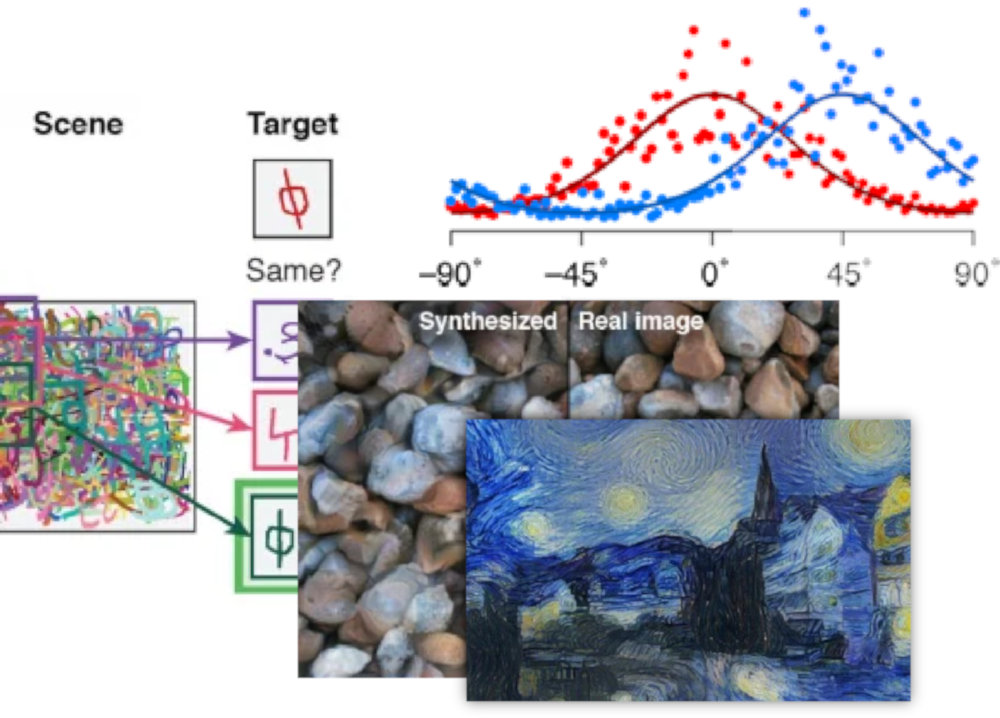
Prof. Dr. Alexander Ecker is Professor of Data Science at the Institute of Computer Science, University of Göttingen, and concurrently holds the prestigious Max Planck Fellow position at the Max Planck Institute for Dynamics and Self-Organization. Since 2020 he also serves on the Executive Board of the Campus Institute Data Science in Göttingen. He leads the Neural Data Science research group, comprising 14 PhD students and 2 postdoctoral researchers, focusing on the interface of machine learning and computational neuroscience. His educational background includes a Dr. rer. nat. in Neuroscience (2014) from the Graduate School of Neural and Behavioral Sciences/IMPRS, University of Tübingen, followed by post-doctoral and group-leader positions at the University of Tübingen and the Max Planck Institute for Biological Cybernetics. Research Interests Machine Learning & Deep Learning: developing novel algorithms for representation learning and generative modeling. Computational Neuroscience: large-scale data-driven modeling of visual cortical circuits. Visual Perception: bridging biological vision and computer vision via biologically inspired architectures. His work has produced a steady stream of influential publications (2019-2025) in leading journals such as Nature Communications , Nature , Nature Methods , PLOS Computational Biology , ICLR , NeurIPS , and CVPR . The publications trend toward integrating high-resolution neural recordings with state-of-the-art machine-learning models to uncover principles of sensory processing, neuron-type classification, and behavior. Scientific Awards & Honors Max Planck Fellow, Max Planck Institute for Dynamics and Self-Organization (ongoing) Executive Board Member, Campus Institute Data Science, Göttingen (since 2020) Teaching, Advising & Grants Regularly teaches advanced courses: “Deep Learning for Image Synthesis”, “Current Topics in Deep Learning”, and “Graph Machine Learning”. Supervises 14 current PhD students and 2 postdocs within the Neural Data Science Group. Offers numerous Bachelor’s and Master’s thesis projects, with topics ranging from neuronal morphology clustering to primate vocalization analysis. Leads or co-leads large collaborative consortia with labs in Göttingen, Tübingen, Baylor College of Medicine, and other institutions across the US and Germany. Labs & Teams The Neural Data Science Group operates at the Institute of Computer Science, University of Göttingen, and is tightly integrated with the Max Planck Institute for Dynamics and Self-Organization. The group maintains active collaborations with over a dozen partner laboratories, including groups led by Fabian Sinz, Andreas Tolias, Thomas Euler, Tim Gollisch, and Viola Priesemann, fostering an interdisciplinary environment that spans computer science, physics, biology, and psychology.
Associate Professor Julius Osato Ehigie is a faculty member in the Department of Mathematics, Faculty of Science, University of Lagos, Nigeria. He specializes in computational and applied mathematics, with core expertise in developing high-order numerical methods for oscillatory and fractional differential equations. Education: B.Sc. Mathematics, Lagos State University, 2006 M.Sc. Applied Mathematics, University of Lagos, 2009 Ph.D. Mathematics, University of Lagos, 2014 Research Interests: Ehigie’s research revolves around computational mathematics and scientific computing , focusing on fast, high-order accurate schemes such as Runge-Kutta and exponentially fitted integrators for periodic and oscillatory initial value problems. He applies these techniques to diverse areas including genetic regulatory systems, celestial mechanics, nonlinear atomic vibrations, air-pollution tracking models, and biological wave dynamics. His recent publications exhibit a clear trend toward exponential integrators and structure-preserving methods for highly oscillatory systems, with practical applications in engineering (pipe vibrations), biology (genetic circuits), and nanotechnology (nanolattice oscillations), underscoring an interdisciplinary blend of rigorous numerical analysis and real-world modelling. Scientific Awards & Fellowships: APSA Fellowship Award 2025 IMU-Simons African Fellowship Scholar 2022 EMS-Simons for Africa Scholar 2019 NAU-Postdoctor Fellowship Scholar 2015 Roles & Collaboration: He currently serves as Departmental Postgraduate Coordinator and founded the Numerical Analysis Research Clusters at the University of Lagos. His collaborative network spans the Departments of Mathematics at Southern Methodist University, University of Oxford, Nanjing Agricultural University, and Texas Tech University, as well as the Department of Civil & Environmental Engineering at the University of Lagos.
Sriram Sankaranarayanan is a Professor in the Department of Computer Science at the University of Colorado Boulder and also serves as Associate Dean for Digital Education in the College of Engineering and Applied Science. Since joining the faculty in 2009, he has built an internationally recognized research program that blends programming languages, formal methods, and control theory to reason about cyber-physical systems. Education: Ph.D. in Computer Science, Stanford University, 2005 (advisers Zohar Manna & Henny Sipma) B.Tech., Indian Institute of Technology Kharagpur (President’s Gold Medal, 2000) Research Interests: Prof. Sankaranarayanan’s work centers on hybrid dynamical systems —models that capture discrete software interacting with continuous physical environments—and on developing formal-methods techniques for their verification, control, and synthesis. Specific themes include control-barrier & Lyapunov function synthesis, neural-network verification, stochastic-game models for human-autonomy interaction, and physics-informed machine learning. Application domains range from autonomous robotics and surgical-task planning to safety-critical medical devices such as the artificial pancreas. Recent Publication Trends (2024-2025): His latest papers advance safe control synthesis (successive control barrier functions, piecewise-affine Lyapunov functions) and trustworthy AI (Taylor-model enhanced physics-informed neural networks), while also exploring game-theoretic anticipation for robotic systems interacting with uncertain human operators. Honors & Awards: NSF CAREER Award (2009) Siebel Scholar (2005) President’s Gold Medal, IIT Kharagpur (2000) CU Boulder Dean’s Award for Outstanding Junior Faculty (2012) CU Boulder Outstanding Teaching Award (2014) CU Boulder Provost’s Faculty Achievement Award (2014) Coursera Outstanding Innovation Award (2022) Student Advising & Grants: He has mentored numerous PhD students; recent graduates include Dr. Emily Jensen, Dr. Monal Narasimhamurthy, and Dr. Kandai Watanabe (2024). His group regularly publishes at top venues such as HSCC, POPL, PLDI, CAV, and WAFR, supported by NSF, NIH, and industry grants. Group & Teaching: Prof. Sankaranarayanan leads activities within the Programming Languages & Verification group and teaches graduate and undergraduate courses on programming languages, algorithms, optimization, and formal methods. He is active in conference organization (e.g., PC Chair VMCAI 2025) and maintains open-source courseware and research notebooks on GitHub.
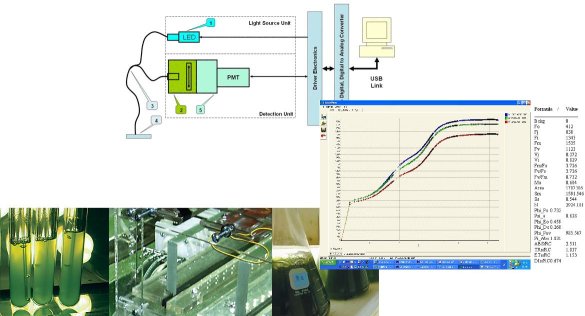
David Safranek is an Assistant Professor at the Faculty of Informatics , Masaryk University, where he contributes to systems biology research and education. His work bridges computational modeling, bioinformatics, and experimental data analysis. Affiliations: Faculty of Informatics, Masaryk University; Systems Biology Laboratory (Sybila); CyanoTeam; E-photo project. His research interests include: Computational modeling of cyanobacterial cells and photosynthesis in silico. Formal methods in systems biology, such as discrete timed automata and ODE model abstractions. Metabolomics, photobiology, and chlorophyll fluorescence analysis. Development of tools like BioDiVinE and BioMS for biochemical model specification. He supervises both PhD and master’s students , including Sven Drazan, Jana Fabrikova, and Matej Klement, and has guided numerous bachelor’s and master’s theses. His teaching focuses on systems biology, computational methods, and modeling, with courses like PB050 and PV225. David leads the Systems Biology Laboratory (Sybila) and has been involved in projects such as ParaDiSe, EC-MOAN, and Liberouter. His technical contributions include firewall design, network address translation, and VRML-based virtual environments for education.
Aditya Prakash is a Professor and Associate Chair for Academic Affairs at the School of Computational Science and Engineering, College of Computing, Georgia Institute of Technology. He is also core-faculty at the Center for Machine Learning (ML@GT) and the Institute for Data Engineering and Science (IDEaS) at Georgia Tech. His research has been supported by major organizations including NSF, CDC, DoE, NSA, and NEH, with tools developed by his group being used at ORNL, CDC, Walmart, and Facebook. Dr. Prakash received his Ph.D. in Computer Science from Carnegie Mellon University in 2012 and his B.Tech in Computer Science from IIT Bombay in 2007. His academic journey includes previous faculty positions at Virginia Tech before joining Georgia Tech. His research focuses on Data Science, Machine Learning, and AI with emphasis on big-data problems in networks and time-series, with applications spanning epidemiology, health, security, urban computing, and the web. His work combines theoretical analysis, algorithm development, and empirical studies on large-scale data to address challenges in understanding and managing dynamical mechanisms across natural, social, and technological systems. His recent publications demonstrate a strong trend toward integrating AI and machine learning techniques with epidemiological modeling, time-series forecasting, and network analysis. There's a clear focus on real-world applications, particularly in public health (including pandemic response), healthcare systems, and critical infrastructure. His work increasingly incorporates large language models, graph neural networks, and advanced uncertainty quantification methods. Facebook Faculty Award (2015) 'AI Ten to Watch' 2017 by IEEE NSF CAREER award (2018) Best Paper Award at AI4ABM workshop at ICML 2022 Best Poster Award at SDM 2024 1st place in the COVID-19 Symptom Data Challenge 2nd place in the C3AI COVID-19 Grand Challenge Dr. Prakash has advised numerous PhD students who have gone on to faculty positions at institutions like Virginia Tech, University of Michigan, and University of Iowa, as well as positions at leading tech companies including Google, Pinterest, and LinkedIn. His research has been supported by multiple NSF grants including a CAREER award, CDC funding, and industry partnerships. He leads the BEHIVE project, a multi-institution NSF initiative for developing the science of pandemic prevention and prediction. He is actively involved in the infectious diseases modeling MIDAS network and has developed tools that have been implemented in real-world settings including ORNL, CDC, Walmart, and Facebook. His group is currently working on impactful projects related to ML and data science for networks and time-series, including applications to COVID, hospital infections, campus mobility, and energy grids.
Marcello Seri is an Associate Professor at the Bernoulli Institute for Mathematics, Computer Science and Artificial Intelligence within the Faculty of Science and Engineering at the University of Groningen. He joined the institute in June 2018 and was promoted to Associate Professor in August 2023. His research focuses on the intersection of Spectral Theory, Differential Geometry, and Dynamical Systems, with applications ranging from sub-Riemannian geometry to celestial mechanics. Seri holds a Ph.D. in Mathematics from the University of Bologna and University of Erlangen (2012), a Laurea Magistrale from the University of Bologna (2008), and a Laurea Triennale from the University of Camerino (2006). His academic career includes positions at University College London, University of Reading, and Citrix Systems Ltd. His research explores geometric mechanics and spectral theory, particularly in singular systems like sub-Riemannian geometry. Seri collaborates extensively with astrophysicists and mathematical physicists, applying abstract mathematical theories to concrete physical systems. His recent publications focus on relativistic field theories, black hole dynamics, contact Hamiltonian systems, and innovative numerical methods for celestial mechanics. Awards & Honors: ENW Klein Grant (2020) for spectral aspects of magnetic fields Richard Rado Postdoctoral Fellowship (2015) Leadership & Service: Board Member of European Women in Mathematics Netherlands (EWM-NL) since 2023 Member of Young Academy Groningen (YAG) and Young Science and Engineering Network (YSEN) Co-founder of podcasts: 'It's Not Just Numbers' (mathematics communication) and 'Degrees of Freedom' (higher education)
Niki Kilbertus is a Professor in the Department of Informatics at the Technical University of Munich and a group leader at Helmholtz AI (Helmholtz Munich). They are also affiliated with MCML, the Konrad Zuse School relAI, and the Munich Unit of ELLIS. Since 2024, they have been a member of the Junge Akademie and received the Leopoldina Prize for Young Scientists. In 2025, they were awarded an ERC Starting Grant and achieved tenure at TUM. Professor Kilbertus's research focuses on causal machine learning, mechanistic ML, dynamical systems, and AI for science. Their work spans theoretical foundations of causal inference and practical applications across scientific domains. They have made significant contributions to causal effect estimation, causal discovery in stochastic processes, learning differential equations, and fair machine learning. Their research often bridges computer science with physics, biology, and climate science, demonstrating the interdisciplinary nature of their work. Professor Kilbertus has published extensively in top machine learning venues including NeurIPS, ICML, and ICLR, with numerous publications in 2024-2025. Their recent work shows a strong trend toward causal discovery in continuous-time systems, intervention modeling, and physics-informed machine learning applications. Scientific Awards: Leopoldina Prize for Young Scientists (2024) ERC Starting Grant (2025) Professor Kilbertus actively supervises multiple PhD students and collaborates with researchers across institutions including Max Planck Institutes and Helmholtz centers. They serve as an Action Editor for TMLR and regularly review for major ML conferences. The research group is well-funded through the ERC grant and institutional support from TUM and Helmholtz AI, enabling active recruitment of new PhD students and postdocs. Based at Technical University of Munich and Helmholtz AI, Professor Kilbertus's team works at the intersection of theoretical machine learning and scientific applications, with particular strengths in causal reasoning for complex dynamical systems.