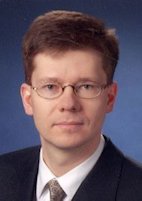
Prof. Dr. Michael Rohlfing is a theoretical physicist at the Institute of Solid State Theory , University of Münster. His research focuses on electronic structure , optical excitations , and many-body perturbation theory in 2D materials and hybrid heterostructures . He leads the AG Rohlfing group, which develops and applies ab initio methods to study surfaces , interfaces , and nanoscale systems . Current projects include optical excitations in TMDC heterostructures under pressure (DFG since 2020) and electronic interface states in weakly bound systems (SFB 103, A13). His group investigates phenomena such as excitonic effects , electron-phonon interactions , and spin-orbit-driven surface states , with applications in nanotechnology and optoelectronics . Recent work explores trions , image potential effects , and valley-selective interlayer coupling in materials like CrSBr and MoS2 . Key publications highlight exciton dynamics in 2D systems, strain-tunable optical properties , and first-principles simulations of scanning tunneling microscopy images. His research team is involved in the Collaborative Research Center 1083 (Structure and Dynamics of Internal Interfaces) and the Computational 2D Materials Database (C2DB) . Scientific awards include the Heisenberg Fellowship (DFG, 2001-2004) and recognition for STM simulations and electron correlation studies . Prof. Rohlfing supervises numerous Bachelor’s , Master’s , and PhD students , including recipients of the Infineon PhD Award (Matthias Drüppel, 2017). His group regularly contributes to public workshops and collaborative experimental-theoretical studies .
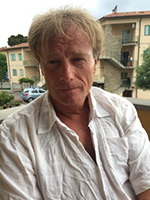
Professor Morten Hjorth-Jensen is a theoretical physicist affiliated with the Department of Physics at the University of Oslo and the Department of Physics and Astronomy at Michigan State University. He has held a shared professorship between these institutions since 2012, with prior roles as an associate professor (1999) and full professor (2001) at the University of Oslo. Education: PhD in Physics, University of Oslo (1993) His research spans computational physics, nuclear many-body theory, quantum computing, and machine learning, focusing on solving Schrödinger's and Dirac's equations for complex systems. He explores algorithmic methods, quantum mechanical properties, and interdisciplinary applications of machine learning in nuclear and particle physics. Recent publications highlight his expertise in quantum computing algorithms for many-body systems, machine learning in nuclear physics, and computational modeling of neutron stars. Themes include neural networks, Bayesian methods, and quantum simulations. Supervision: Geoscience: Optimal Climate Physics: Frictional properties of surface structures generated by machine learning Machine-learning-based molecular modeling of nanoscale geological processes Quantum computing algorithms for quantum mechanical many-body systems
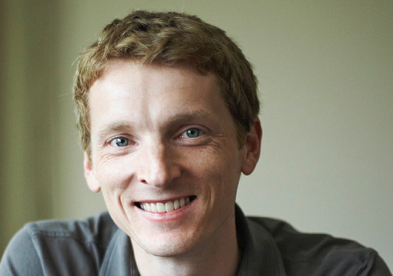
Prof. Eran Rabani is a distinguished researcher and professor holding dual appointments at Tel Aviv University's School of Chemistry and the University of California, Berkeley's Department of Chemistry. At UC Berkeley, he holds the prestigious Glenn T. Seaborg Chair in Physical Chemistry and serves as a Faculty Scientist at Lawrence Berkeley National Laboratory. His research bridges theoretical chemistry, computational physics, and nanomaterials science, with significant contributions to understanding quantum phenomena at the nanoscale. Prof. Rabani earned his Ph.D. in Theoretical Chemistry from The Hebrew University in 1996, followed by postdoctoral research at Columbia University. His academic career progressed from Senior Lecturer to full Professor at Tel Aviv University, where he has maintained a continuous appointment since 1993. His educational background includes a summa cum laude B.Sc. from the Special Program "Amirim" at The Hebrew University. Rabani's research program centers on three interconnected pillars: Optoelectronic Properties of Nanomaterials , where his group develops computational models to describe exciton fine structure and phonon interactions in nanocrystals; Quasiparticle Dynamics , investigating electron transfer processes in nanoscale systems; and Stochastic Electronic Structure Methods , pioneering computational approaches that dramatically reduce the complexity of quantum simulations. His work combines theoretical innovation with practical applications in renewable energy, sensing technologies, and quantum information processing. Analysis of Rabani's recent publications reveals a strong emphasis on quantum confinement effects, exciton dynamics, and the development of stochastic computational methods that enable simulations of previously intractable systems. His research demonstrates increasing interdisciplinary collaboration, particularly with experimental groups working on quantum dots, perovskites, and other nanomaterials, with a clear trajectory toward solving real-world problems in energy conversion and quantum technologies. Prof. Rabani's contributions have been recognized with numerous prestigious awards: International Association of Advanced Materials Fellow (2023) Humboldt Research Award (2022) Vebleo Fellow for Prominence and Leadership in Science (2021) Glenn T. Seaborg Chair in Physical Chemistry (2017) Baker Symposium Speaker at Cornell University (2016) Kavli Frontiers of Science Alumni (2015) Marko & Lucie Chaoul Chair for Theoretical and Computational Nanoscience (2013) His research program is supported by substantial funding from major agencies including the National Science Foundation, Department of Energy, and Israel Science Foundation. Current grants (2021-2025) total over $2.5 million, focusing on semiconductor nanowires, computational materials science, and optoelectronic materials. As Director of The Sackler Center for Computational Molecular and Materials Science at Tel Aviv University, he leads a vibrant research group that bridges theoretical innovation with experimental validation. Prof. Rabani directs The Sackler Center for Computational Molecular and Materials Science at Tel Aviv University and has served in various administrative roles including Vice President for Research and Development. His research group maintains strong collaborations with experimentalists worldwide, creating an intellectual community focused on advancing fundamental understanding of nanoscale phenomena while exploring practical applications in energy, sensing, and quantum technologies.
Professor Robert Seiringer is a distinguished faculty member at the Institute of Science and Technology Austria (ISTA), where he leads the Seiringer Group focused on mathematical physics and quantum many-body systems. His research develops rigorous mathematical frameworks for analyzing complex quantum phenomena, with special emphasis on exotic behaviors in quantum gases such as Bose-Einstein condensation and superfluidity. His research interests span mathematical physics, quantum mechanics, many-particle systems, quantum statistical mechanics, and condensed matter physics. Professor Seiringer's work addresses fundamental challenges in deriving non-perturbative results for quantum systems where traditional approximations often lack rigorous justification. His group develops new mathematical techniques to precisely establish conditions under which various physical approximations can or cannot be applied. Professor Seiringer has received numerous prestigious awards including: 2023 Erwin Schrödinger Prize 2017 Corresponding Member, Austrian Academy of Sciences (ÖAW) 2016 ERC Advanced Grant 2009 Henri Poincaré Prize of the International Association of Mathematical Physics 2004-2006 Alfred P. Sloan Fellowship His research is supported by significant grants including an ERC Advanced Grant. He currently supervises PhD students Davide Desio and Lorenzo Pigozzi, and leads a research team including postdoctoral researchers Martin Christiansen, Marie Fialova, and Borbala Gerhat. Professor Seiringer co-organizes the Mathphys Analysis Seminar at ISTA, which features weekly international speakers on cutting-edge topics in mathematical physics and analysis.
Romain Duboscq is a Lecturer at the National Institute of Applied Sciences (INSA) in Toulouse and a member of the Institute of Mathematics of Toulouse (IMT). He is affiliated with Paul Sabatier University (University Toulouse III) as evidenced by his contact information at the Toulouse Institute of Mathematics. His research spans several interconnected areas in mathematical physics: Analysis and numerical simulation of partial differential equations related to quantum mechanics Numerical methods for Gross-Pitaevskii type equations in Bose-Einstein condensates Stochastic Schrödinger equations and their numerical approximation Cauchy problem for stochastic Gross-Pitaevskii equations Stochastic regularization effects and the Itô-Tanaka trick Minimization of quantum entropies under local constraints Duboscq has developed the GPELab toolbox, a free-access Matlab resource for solving Gross-Pitaevskii equations, in collaboration with Xavier Antoine. His research often addresses challenging cases with strong nonlinearity and fast rotation in quantum systems. His work demonstrates a consistent integration of theoretical analysis with practical computational methods, making contributions to both fundamental understanding and applied methodology in quantum mechanical systems. His publication record shows sustained productivity across prestigious journals including Journal of Mathematical Physics, Annales Henri Lebesgue, and ESAIM: Mathematical Modelling and Numerical Analysis. The recent publications (2022-2025) demonstrate continued engagement with multiple research threads, particularly in quantum PDEs, stochastic methods, and computational approaches to quantum systems. Duboscq has received recognition through numerous publications in high-impact journals: Multiple publications in Annales Henri Lebesgue (2022) Work published in Journal of Mathematical Physics (2022) Contributions to ESAIM: Mathematical Modelling and Numerical Analysis (2025) Publications in Annals of Probability (2025) Research in Journal of Functional Analysis (2021) Duboscq maintains active research collaborations with several prominent researchers including Xavier Antoine, Christophe Besse, Renaud Marty, Anthony Réveillac, and Olivier Pinaud. His GPELab toolbox represents a significant contribution to computational tools for quantum physics research. While specific student supervision details aren't provided in the available information, his numerous collaborations suggest an active mentoring role in the research community. Duboscq leads the GPELab research group, which focuses on developing numerical methods and computational tools for quantum mechanical systems, particularly Bose-Einstein condensates modeled by Gross-Pitaevskii equations. The group's work bridges theoretical mathematics with practical computational applications, providing resources that enable more accurate simulations of complex quantum phenomena.
Bogdan OSTAHIE is a Scientific Researcher III at the National Institute of Materials Physics (NIMP), Romania, affiliated with the Laboratory of Theoretical Physics and Computational Modeling. His primary research focuses on topological quantum phenomena in condensed matter systems. Education: PhD in Theoretical Physics, University of Bucharest (2018) Master Degree in Condensed Matter Physics, University of Bucharest (2010-2012) Graduate studies, Faculty of Physics, University of Bucharest (2007-2010) OSTAHIE's research centers on quantum transport in topological and low-dimensional quantum structures. His work spans Floquet topological insulators, non-Hermitian quantum systems, edge state engineering, and quantum Hall phenomena. He employs analytical and numerical methods to study spectral properties, transport characteristics, and topological phase transitions in systems ranging from 2D lattices to heterostructures. His recent work demonstrates how symmetry breaking, disorder, and external fields manipulate topological states for potential quantum device applications. Analysis of his publications reveals three dominant research thrusts: (1) Floquet engineering of topological phases (2023-2025), particularly second-order corner states and light-induced topological transitions; (2) Non-Hermitian extensions of topological systems (2021-2022), exploring exceptional points and chiral disorder effects; (3) Foundational work on graphene and phosphorene topological systems (2014-2018), establishing edge state mechanisms for quantum Hall effects. His publications consistently bridge theoretical predictions with experimental signatures like quantum transport measurements. Scientific Recognition: Radu Grigorovici Prize of the Romanian Academy (2016) OSTAHIE leads the project 'Edge states manifestation in non-Hermitian topological systems' (PD-type, 2020-2022), demonstrating active grant funding. His collaborations span international institutions including University of Granada (Spain) and Budapest University of Technology (Hungary). While no formal students are listed, his work appears in premier journals like Physical Review B and New Journal of Physics, indicating significant contributions to theoretical condensed matter physics. His laboratory focuses on computational modeling of quantum structures using tight-binding approaches and non-Hermitian quantum transport formalisms.
Panagiotis Tolias is a Researcher at KTH Royal Institute of Technology working in the Division of Space and Plasma Physics. His research focuses on theoretical plasma physics with direct applications to fusion energy research, particularly for ITER and DEMO reactors. He holds a doctoral degree from KTH with a thesis on complex plasma systems. Dr. Tolias specializes in the statistical mechanics of charged systems, with research interests spanning non-ideal plasmas (strongly coupled, dusty, complex, quantum), magnetic confinement fusion, plasma surface interactions (electron emission, stopping powers, energy deposition), classical liquids (stable, metastable, glasses), surface & interfacial forces, and warm dense matter. His work has significant implications for future fusion reactors, with specific focus on dust transport, macroscopic melt motion, emissive sheaths in dense magnetized plasmas, and dust adhesion and remobilization in tokamaks. While primarily theoretical and modeling-focused, he has also designed multiple experiments conducted on major fusion devices and the International Space Station. His publication record demonstrates expertise across plasma physics, statistical mechanics, and computational methods. The research trends show consistent focus on warm dense matter, quantum plasmas, and plasma-wall interactions with increasing emphasis on computational approaches like path integral Monte Carlo simulations. His work bridges fundamental theoretical physics with practical fusion energy applications. Dr. Tolias teaches Applied Plasma Physics (EF2270) and has been involved in numerous collaborative research projects with major fusion facilities worldwide. His work contributes significantly to understanding plasma-material interactions critical for the success of future fusion reactors.
Michael Mayle is a Research Professor for Applied Computational Physics at Nuremberg University of Applied Sciences. He serves as a member of the Doctoral Center for Physical and Biomedical Engineering (CPaB) and holds a deputy position on the CPaB doctoral committee. His office is located at space KA.434, with contact details including phone +49 (0)911 5880-1309 and email michael.mayle@th-nuernberg.de. His research centers on Computational Physics with specialized focus in Sensor Technologies , Ultracold Quantum Gases , and Acoustics . He leads the Computational Physics for Sensor Technologies research group, developing advanced computational models for physical systems with direct applications in sensor design and analysis. His work bridges theoretical physics with practical engineering solutions. Analysis of his publication trajectory (2006-2025) reveals a distinct evolution from fundamental quantum research to applied sensor technology. Early work (2006-2013) established expertise in ultracold molecules and Rydberg atom physics, while recent publications (2019-2025) demonstrate a strategic pivot toward industrial applications including piezoelectric material analysis, ultrasonic flow metering, and water consumption pattern recognition. Professor Mayle actively contributes to doctoral education through the CPaB framework and teaches core courses including Simulation of Physical Systems (Continuum Mechanics) for M-AMP, Physics (Oscillations and Waves) for B-MED, and Building Physics for B-EGT/B-BI programs. His research group maintains strong industry connections through sensor technology development and applied computational modeling projects.
Dr. Rahul Trivedi is a tenured Research Group Leader in the Theory Division at the Max Planck Institute of Quantum Optics in Garching, Germany. His research focuses on theoretical quantum information and quantum science, particularly addressing challenges in noisy quantum systems and simulators. Dr. Trivedi received his undergraduate degree in Electrical Engineering from the Indian Institute of Technology Delhi, followed by MS and PhD in Electrical Engineering from Stanford University (2021). After a postdoctoral fellowship at the Max Planck Harvard Research Center for Quantum Optics, he served as an Assistant Professor of Electrical and Computer Engineering at the University of Washington before returning to MPQ as a tenured researcher in 2024. His research program spans multiple areas at the intersection of quantum information theory, many-body physics, and quantum device engineering. Key research directions include: Theory of open quantum systems and non-Markovian dynamics Quantum simulation with noisy intermediate-scale quantum (NISQ) devices Quantum error correction and fault tolerance Quantum optics theory with applications to quantum simulation and metrology Dr. Trivedi has secured significant research funding including an ERC Starting Grant for his ToNQS project (Theory of Noisy Quantum Simulation of Many-body Physics), as well as previous awards from the National Science Foundation and Department of Energy in the United States. His scientific awards and recognitions include: ERC Starting Grant: ToNQS - Theory of Noisy Quantum Simulation of Many-body Physics National Science Foundation (NSF) research funding Department of Energy (DOE) research funding Dr. Trivedi currently leads a research group consisting of three PhD students, one Master's student, and several co-advised students. His group maintains extensive collaborations with partners both within Europe and the US. With the ERC grant, additional positions for PhD students and postdoctoral researchers are becoming available. The Theory of Open Systems research group is housed in the Theory Division at the Max Planck Institute of Quantum Optics. The group actively collaborates with experimental teams to bridge theoretical frameworks with practical quantum device implementations, particularly focusing on how noise affects quantum simulation capabilities.