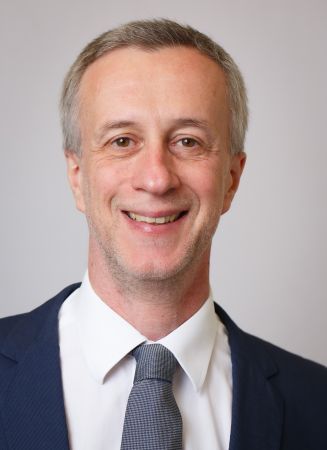
Luis Nunes Vicente is the Timothy J. Wilmott '80 Endowed Faculty Professor and Chair of Lehigh University's Department of Industrial and Systems Engineering since August 2018. He previously served as a faculty member at the University of Coimbra's Department of Mathematics. His research focuses on Continuous Optimization, Computational Science and Engineering, and Machine Learning/Data Science. Education: Ph.D. in Applied Mathematics (Rice University, 1996), M.A. in Applied Mathematics (Rice University, 1994), B.S. in Mathematics and Operations Research (University of Coimbra, 1990). Honors include the Lagrange Prize (2015), SIAM Fellowship (2024), and Fulbright Scholarship (1996). He co-authored the influential book Introduction to Derivative-Free Optimization (2009). Research Interests: Development of optimization algorithms for derivative-free and stochastic scenarios, multi-objective optimization, machine learning applications, and computational methods for engineering problems. Key contributions include trust-region methods, bilevel optimization frameworks, and fairness-aware machine learning models. Grants and Leadership: Secured over $1M from the Office of Naval Research (2024) and the Air Force Office of Scientific Research (2023). Served as Editor-in-Chief of Portugaliae Mathematica (2013–2018) and on editorial boards of top journals like SIAM Journal on Optimization . Elected President of the Operations Research Association of Chairs (2024). Visiting Positions: IBM T.J. Watson Research Center (2002/2003), Courant Institute/NYU (2009/2010), and CERFACS/Toulouse (2010–2015). Active in international conferences, delivering plenary lectures at 13th French-German Conference on Optimization, ICCOPT III, and ISMP 2018.
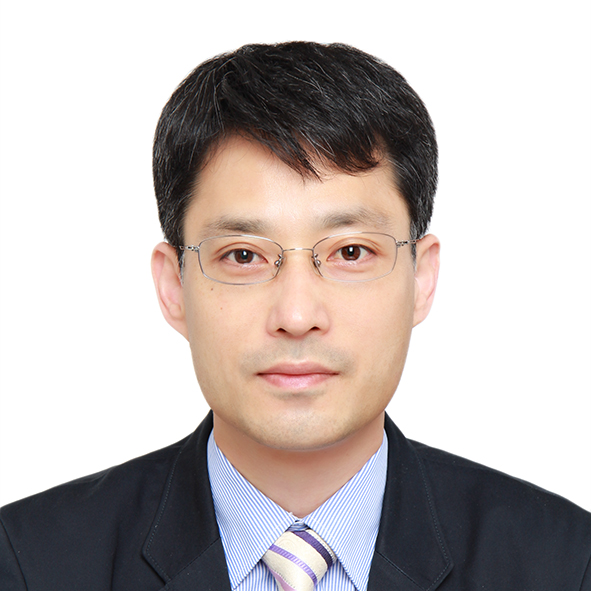
Xujia ZHU is an Associate Professor at CentraleSupélec, Paris-Saclay University, affiliated with the Laboratory of Signals and Systems (L2S). His research focuses on uncertainty quantification, surrogate modeling, stochastic simulators, and reliability analysis. He holds an engineer’s degree in Mechanics from École Polytechnique (2015), a Master’s in Computational Mechanics from TU Munich (2017), and a Ph.D. from ETH Zurich (2022). He was a postdoctoral researcher at ETH Zurich until 2023. Education: Ph.D., Chair of Risk, Safety, and Uncertainty Quantification, ETH Zurich, 2022 Master’s (high distinction), Computational Mechanics, Technical University of Munich, 2017 Engineer’s Degree, Mechanics, École Polytechnique, 2015 Research Interests: Xujia’s work bridges numerical simulations and statistics, addressing topics like uncertainty propagation, sensitivity analysis, and surrogate modeling for stochastic systems. Key areas include polynomial chaos expansions, Bayesian active learning, and applications in seismic fragility analysis. Publications: His recent work emphasizes emulation techniques for stochastic simulators, multi-fidelity methodologies, and Bayesian active learning strategies in reliability analysis. Key themes include sparse polynomial chaos expansions and latent variable modeling. Labs/Teams: Affiliated with L2S, he collaborates on transversal projects in energy, industry, and health, leveraging interdisciplinary approaches in uncertainty quantification and computational modeling.
June-Yub Lee is a Professor of Mathematics and Vice President at Ewha Womans University, leading the Office of University Planning and Coordination. He is also a member of the Institute of Mathematical Sciences. His academic background includes a Physics major and Mathematics minor from KAIST, followed by a Ph.D. in Mathematics from New York University's Courant Institute. Prof. Lee specializes in numerical analysis, inverse problems, computational fluid dynamics, and phase-field modeling. His research focuses on developing robust numerical methods for partial differential equations, with applications in materials science and fluid dynamics. Notable contributions include work on operator splitting methods, energy-stable schemes for phase-field models, and inverse problem solutions in electrical impedance tomography. He has organized major international conferences like ICM2014 and ICIP series, and serves on editorial boards of journals such as the Journal of the Korean Society for Industrial and Applied Mathematics (KSIAM). His work bridges theoretical mathematics with computational science, emphasizing interdisciplinary applications. Prof. Lee has actively contributed to academic administration, including serving as Director of the Division of Natural Sciences at the National Research Foundation (NRF). His research lab focuses on scientific computation, with recent projects exploring long-time simulations of phase-field crystal models and high-order numerical methods for multiphase systems.
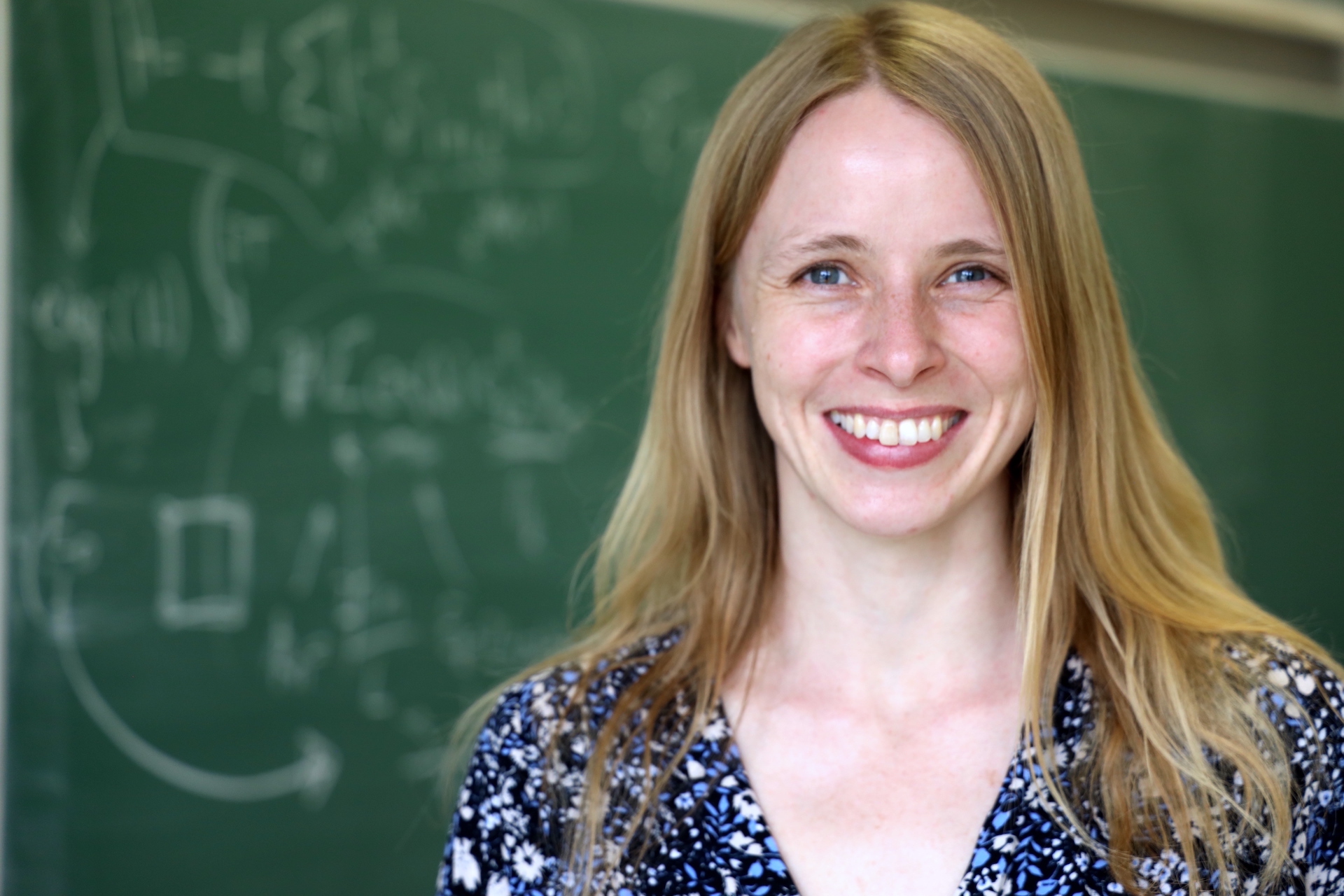
Annabelle Bohrdt is a Professor at the University of Regensburg's Faculty of Physics, affiliated with the Institute of Theoretical Physics. Her research focuses on strongly interacting quantum many-body systems, combining numerical methods, quantum simulation experiments, and machine learning techniques like neural networks. She explores topics such as the Fermi-Hubbard model, t-J model, and stripe formation in doped antiferromagnets. Her work bridges theoretical models and experiments, leveraging quantum gas microscopy and interpretable machine learning tools. Notable contributions include studies on pairing mechanisms in bilayer antiferromagnetic Mott insulators and the role of fluctuations in quantum many-body systems. Bohrdt actively collaborates with experimental groups to validate theoretical predictions. Teaching includes specialized courses on numerical methods for quantum many-body systems and machine learning applications in physics. She advises graduate and undergraduate students on projects in quantum matter and computational physics.
Dragan S. Antic is a Professor at the Department of Automation, Faculty of Electronics, University of Niš. He earned his PhD in Automation from the same institution in 1994, following a Master's (1991) and Bachelor's (1987) degree in the same field. His research focuses on control systems, signal processing, and neuro-fuzzy systems, with a strong emphasis on sliding mode control, orthogonal function-based modeling, and adaptive neural networks. He has published 51 papers in journals with impact factors and currently participates in 2 national and 8 international research projects. Key research areas include dynamic system modeling, quasi-orthogonal filters, and finite-time stability analysis of time-delay systems. His work often integrates mathematical techniques with engineering applications, such as anti-lock braking systems and PID control optimization. Contact details include his office at Aleksandra Medvedeva 4, Niš, and the email dragan.antic@elfak.ni.ac.rs. Professional contributions include foundational research in endocrine neural networks and low-pass filter design, with notable publications in journals like Electronics Letters and Journal of the Franklin Institute . His efforts bridge theoretical advancements with practical engineering solutions in automation and control.
Simon Masnou is a Full Professor at Université Claude Bernard Lyon 1, affiliated with the Institut Camille Jordan (CNRS UMR 5208). He holds leadership roles as Head of the 'Applied Mathematics, Statistics' Master's degree and Head of the 'M2 Maths in Action' program. Previously, he served as Director of the Camille Jordan Institute (2018-2022). His research focuses on applied mathematics, image processing, shape optimization, and geometric measure theory, with contributions to variational models, geometric flows, and applications in computer vision and materials science. Education: PhD in Mathematics (1998, Paris Dauphine) and HDR (2008, Paris 6). Research projects include ANR STOIQUES (2024-2028), PEPR PDE-AI (2023-2028), and collaborations with industry on topics like defect prediction in aluminum production and high-dimensional data analysis. Teaching includes courses on linear algebra, optimization, and machine learning at undergraduate and graduate levels. Key contributions span phase field models, varifold-based surface approximation, and image inpainting. He supervises PhD students in geometric variational problems and computational methods. His work bridges theoretical mathematics with industrial challenges, addressing issues in materials science, medical imaging, and cultural heritage preservation.
David P. Woodruff is a Professor in the Department of Computer Science at Carnegie Mellon University, part of the Theory Group within the School of Computer Science. He is actively involved in academic leadership roles, including chairing the CATCS (Conference on Theoretical Computer Science) and serving as PC chair for SODA 2024 and ICALP 2022. His research focuses on algorithms, data streams, machine learning, numerical linear algebra, sketching, and sparse recovery. He has been recognized with awards such as the Herbert Simon Award for teaching and the PODS Best Paper Award. Woodruff has advised numerous students and postdocs, including notable scholars like Ainesh Bakshi, Rajesh Jayaram, and Hongyang Zhang. His work often addresses foundational challenges in theoretical computer science, with contributions to distributed computing, streaming algorithms, and privacy-preserving techniques. He has published extensively in top conferences like NeurIPS, ICML, FOCS, and STOC, covering topics ranging from low-rank approximation to adversarial robustness in data streams. His teaching includes courses like Algorithms for Big Data and core algorithms courses, reflecting his commitment to both research and education. Collaborations span academia and industry, with applications in genomics and secure computation. Woodruff is a key contributor to the Foundations of Data Science program at the Simons Institute.
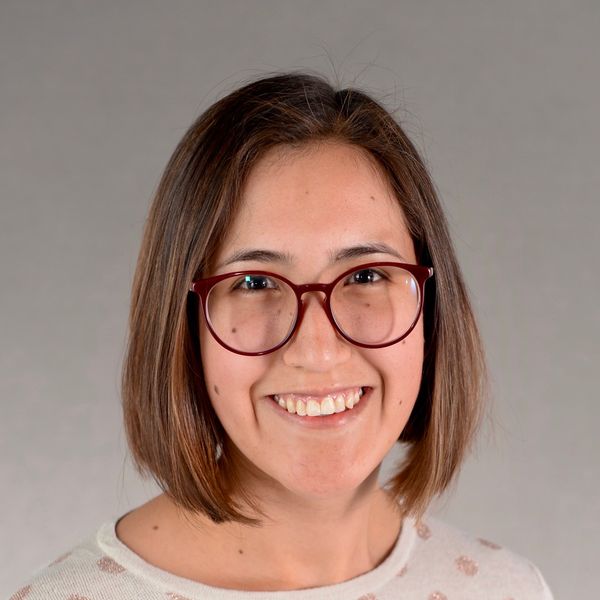
Juanita Duque-Rosero is a Research Assistant Professor at Boston University, specializing in computational number theory and arithmetic geometry. She collaborates with Jennifer Balakrishnan on explicit Chabauty methods and triangular modular curves. Her research focuses on rational points on curves, modular curves, and p-adic heights. Education: PhD from Dartmouth College (2023, advised by John Voight), Masters from Colorado State University (2019, advised by Rachel Pries), and undergraduate degree from Universidad de los Andes. Research interests include arithmetic properties of curves, geometric quadratic Chabauty, and computational aspects of modular forms. She has contributed to databases of Hilbert modular surfaces and studies of Artin-Schreier curves. Her recent articles explore invariants of curves, p-adic heights, and geometric methods in number theory. Talks include presentations at CIRM, IPAM, and Texas A&M. Teaching includes courses like Modern Algebra and Graph Theory at Boston University, and calculus courses at Dartmouth and Colorado State. She mentors students in algebraic geometry and number theory through directed reading programs. She advocates for equitable mathematics education through Federico Ardila’s axioms and participates in outreach activities. A creative hobby is mathematical origami, leading a club at Colorado State University.
Prof. Dr. Özlem İlk Dağ is a Professor of Statistics at the Middle East Technical University (METU), Ankara, Turkey. She holds the position of Department Head of Statistics and serves on advisory boards for TUBITAK and the Journal of Biostatistics. Her academic journey includes roles from Research Assistant (1997) to Professor (2018), with affiliations in Actuarial Sciences and Biostatistics. Education: Ph.D. in Statistics (Iowa State University, 2004), M.S. and B.S. from METU. Research focuses on longitudinal data analysis, multilevel modeling, Bayesian methods, and biostatistics. She authored three editions of R Yazilimina Giris and a foundational book on multivariate longitudinal data analysis. Key contributions include developing marginalized transition random effects models (MTREM) and R packages like 'mmm'. Awards include METU's 20-year service recognition and teaching excellence. She has supervised numerous research projects and co-authored over 50 peer-reviewed articles across biostatistics, genomics, and statistical computing. Her work bridges statistical theory and application, with notable contributions to gene expression clustering, maternal antibody studies in veterinary science, and computational methods for longitudinal data. She maintains active collaborations in genomics and biostatistics, and her lab focuses on integrating statistical computing with biomedical research.
Joost Batenburg is a Professor at Leiden Institute of Advanced Computer Science (LIACS) , with a chair in Imaging and Visualization . He is affiliated with the Centrum Wiskunde & Informatica (CWI) and serves as Program Director for the interdisciplinary Society, Artificial Intelligence and Life Sciences (SAILS) initiative. His research focuses on tomographic image processing and reconstruction , where he has published over 80 journal articles and 60 conference papers. Current projects include Universal Three-dimensiOnal Passport for process Individualization in Agriculture (UTOPIA) and Center for Optimal, Real-Time Machine Studies of the Explosive Universe (CORTEX) , both funded by NWO grants. He leads the FleX-Ray Lab , a custom CT system integrated with advanced data processing algorithms. His research spans discrete tomography , real-time imaging pipelines , and AI-enhanced reconstruction methods , with applications in industrial inspection, agricultural analysis, and cultural heritage conservation. Recent articles demonstrate novel approaches to: Single-shot dynamic object tomography using level-set methods and motion modeling X-ray scattering quantification for defect detection in real-time systems Cross-modal image registration between CT scans and physical photographs Auto-differentiation in CT workflows combining classical and machine learning algorithms Scientific Awards: Dutch Award for ICT Research (2018) C.J. Kok Prize (2007) Philips Mathematics Prize (2006) He has supervised numerous PhD candidates including Mary Go, Eani Lachmansingh, and Zhichao Zhong, while maintaining editorial roles at IEEE Transactions on Computational Imaging and Journal of Mathematical Imaging and Vision . His work bridges theoretical mathematics with practical applications in agriculture, industry, and art conservation.
Assoc. Prof. Dr. Ayhan Gün is an Associate Professor in the Department of Electrical and Electronics Engineering at Kütahya Dumlupınar University's Faculty of Engineering. With a career spanning over two decades, he has held various academic positions including Research Assistant, Assistant Professor, and currently Associate Professor since 2024. His extensive administrative experience includes serving as Head of the Control and Command Systems Department (2007-2021) and various leadership roles in university-industry collaboration initiatives. Dr. Gün completed his Bachelor's degree at Near East University (1991-1996), Master's at Dumlupınar University (1998-2001), and PhD at Eskişehir Osmangazi University (2001-2007). His research focuses on control systems, mathematical modeling, artificial neural networks, robotics, SCADA, PLC programming, electromechanical systems, nonlinear control, fuzzy logic, optimization techniques, automation, biomechanics, and mechatronics. His recent publications demonstrate a consistent research trajectory in control engineering, with particular emphasis on optimization algorithms applied to quadrotor control, inverted pendulum systems, and electrical motor design. His work bridges theoretical control concepts with practical implementations in robotics and power systems. A significant portion of his research involves applying swarm intelligence and evolutionary algorithms to solve complex control problems. Bilim, Sanayi ve Teknoloji Bakanlığı Kurumsal Kapasitenin Arttırılması (2016) BİLİM SANAYİ VE TEKNOLOJİ BAKANLIĞI Çift Beslemeli İndüksiyon Generatörü Tasarımı ve İmalatı (2016) Dr. Gün has supervised multiple graduate students and managed numerous research projects, including the current 'Robotic Arm Design and Implementation for Patients with Hemiparetic Arms' project. His external roles include serving as an expert witness for judicial institutions, project referee for TÜBİTAK, and publication reviewer for IEEE Transactions. He has also contributed to regional development through his work with Kütahya Governorship's Planning and Development Board.
Tayfun Günel is a Professor in the Department of Electronics and Communication Engineering at Istanbul Technical University (ITU) , Faculty of Electrical and Electronics Engineering. He holds a PhD (1993), MSc (1988), and BSc (1986), all from ITU. His research spans microwave circuits, radar systems, antennas, and optimization using genetic algorithms and soft computing. His research interests include Microwave Circuits , Radar and Antennas , Optimization , and Genetic Algorithms . His work focuses on impedance matching, microstrip antennas, noise modeling, and metamaterial-based microwave components. He has taught courses such as Electromagnetic Fields, Radar Systems, and Satellite Communication Systems. The recent publications reflect a strong trend in microwave circuit design , antenna miniaturization , and the application of evolutionary algorithms (genetic algorithms, PSO) and machine learning (neural networks, SVR) in electromagnetic design and optimization. There is a consistent focus on practical microwave components like transmission lines, patches, and amplifiers, often using nanomaterials (e.g., carbon nanotubes) and metamaterials . His work bridges theoretical modeling with computational optimization for real-world RF and radar applications. Email: gunelmur@itu.edu.tr Professor Günel has supervised 2 completed PhD theses, 2 ongoing PhD theses, 23 completed master's theses, and 1 ongoing master's thesis, demonstrating a significant contribution to student mentoring. There are no specific grants or funding sources mentioned in the provided text. He is affiliated with research in microwave systems and antenna design , likely operating within the broader research ecosystem of the Electronics and Communication Engineering Department at ITU, which includes labs such as the Microwave Systems and Antennas Laboratory and the Radar and Microwave Technologies Research Laboratory.
Giovanni Pantuso is an Associate Professor at the Department of Mathematical Sciences, University of Copenhagen, specializing in stochastic programming and optimization under uncertainty . His work bridges mathematical methods with practical applications in transportation, logistics, and production planning. Education : PhD in Operations Analysis from the Norwegian University of Science and Technology (Feb 2014) Research Focus : Developing mathematical frameworks for decision-making under risk, with applications to maritime fleet renewal, car-sharing systems, and ride-sharing logistics. Teaching : Courses in Advanced Operations Research: Stochastic Programming, Risk Optimization, and Introduction to Numerical Analysis. His methodological contributions include novel algorithms for stochastic programming and decomposition methods, while applied work spans electric car-sharing systems, first-mile transportation challenges, and production planning under uncertainty. Current research explores dynamic fleet management and cost-service tradeoffs in shared mobility.
Dr. Yinghe Qi is a Professor in the Department of Experimental Fluid Dynamics at ETH Zürich, Switzerland. His research focuses on multiphase flows, turbulence, and free-surface dynamics, with applications in aerospace, marine engineering, and computational fluid dynamics. He has contributed extensively to understanding bubble dynamics, flow instabilities, and turbulence modulation through experimental and phenomenological studies. Research Interests: Dr. Qi’s work addresses complex phenomena in multiphase flow instabilities free-surface turbulence deformable bubble dynamics supersonic jet interactions vortex-induced fragmentation machine learning in fluid dynamics Recent Publications: His recent studies (2023–2025) explore multiscale bubble deformation, free-surface turbulence structure, and supersonic jet-plume interactions. Key themes include turbulent fragmentation, vortex-bubble coupling, and novel computational methodologies. Laboratory Affiliations: He collaborates with the Coletti Group, Jenny Group, and Supponen Group at ETH Zürich, advancing experimental and computational techniques in fluid dynamics.
Rainald Loehner is a Distinguished Professor of Fluid Dynamics at George Mason University's Center for Computational Fluid Dynamics. Since 2003, he has led the Center for Computational Fluid Dynamics at George Mason University. He is currently a Hans Fischer Senior Fellow at the Technical University of Munich's Institute for Advanced Study (TUM-IAS) for 2023, hosted by Professors Kai-Uwe Bletzinger and Roland Wüchner in the 'Adjoint-Based System Identification of Large-Scale Structures' Focus Group. Loehner received his Diplom Ingenieur (Maschinenbau) degree from the Technical University of Braunschweig, and his PhD and a DSc in civil engineering from the University College of Swansea, Wales. After teaching at Swansea for a year, he worked at the Naval Research Laboratory in Washington, DC, followed by a research professorship at George Washington University. He joined George Mason University as an associate professor and was promoted to full professor in 1995 and distinguished professor in 2004. With over 35 years of experience, Professor Loehner's research spans the complete pipeline of numerical solvers and simulation tools. His expertise includes pre-processing, grid generation, numerical methods, field solvers, parallel computing, adaptive mesh refinement, fluid-structure interaction, shape optimization, system identification, and computational crowd dynamics. His current work focuses on developing advanced field solvers for compressible and incompressible flows, acoustics, electromagnetic wave propagation, heat and mass transfer, structural mechanics, and fluid-structure interaction. Key application areas include blast mitigation, ship hydrodynamics, blood flow, contaminant transport, and pedestrian safety. Loehner's recent research output (2020-2024) shows a strong trend toward digital twin technology and adjoint-based methods for structural analysis and optimization. His publications focus on high-fidelity digital twins for detecting structural weaknesses, risk assessment in engineering systems, and optimization of sensor placement. His work bridges computational mechanics with machine learning approaches, particularly in system identification and inverse problems, demonstrating how computational methods can solve complex real-world engineering challenges. 2020: Ranked #15119 in the Stanford List of Most Influential Scientists of the World; #8 in Aerospace and Aeronautics 2010: Distinguished International Career Award, Argentine Association of Computational Mechanics 2008: Fellow, International Association for Computational Mechanics 2006: Associate Fellow, AIAA 2005: Honorary Professor, University of Wales Swansea 2005: Advisory Professor, Shanghai Jiao Tong University 2004: Distinguished Professor of Fluid Dynamics, George Mason University 1999: Computational Mechanics Achievements Award, Japan Society of Mechanical Engineering 1993: Doctor of Science in Civil Engineering, University College of Swansea 1979-1983: Studienstiftung des Deutschen Volkes (Top 1% of German Students) Professor Loehner has mentored numerous students through his work at George Mason University and has supervised research in computational fluid dynamics, structural mechanics, and related fields. His research has been supported by various grants from government agencies and industry partners, enabling the development of advanced simulation tools applied in aerodynamics, hydrodynamics, shock-structure interaction, and medical applications. His codes and methods have been widely adopted in industry and academia for applications ranging from aircraft and ship design to medical simulations and urban pathogen transmission modeling. Loehner leads the Center for Computational Fluid Dynamics at George Mason University, which focuses on developing cutting-edge computational methods for fluid dynamics and related multiphysics problems. The center works on strategic application areas including blast mitigation, ship hydrodynamics, blood flow simulation, and pedestrian movement modeling. As a TUM-IAS Fellow, he collaborates with the Chair of Computational Modeling and Simulation at TUM on adjoint-based system identification of large-scale structures, bringing together expertise in computational mechanics and digital twin technology to address complex engineering challenges.