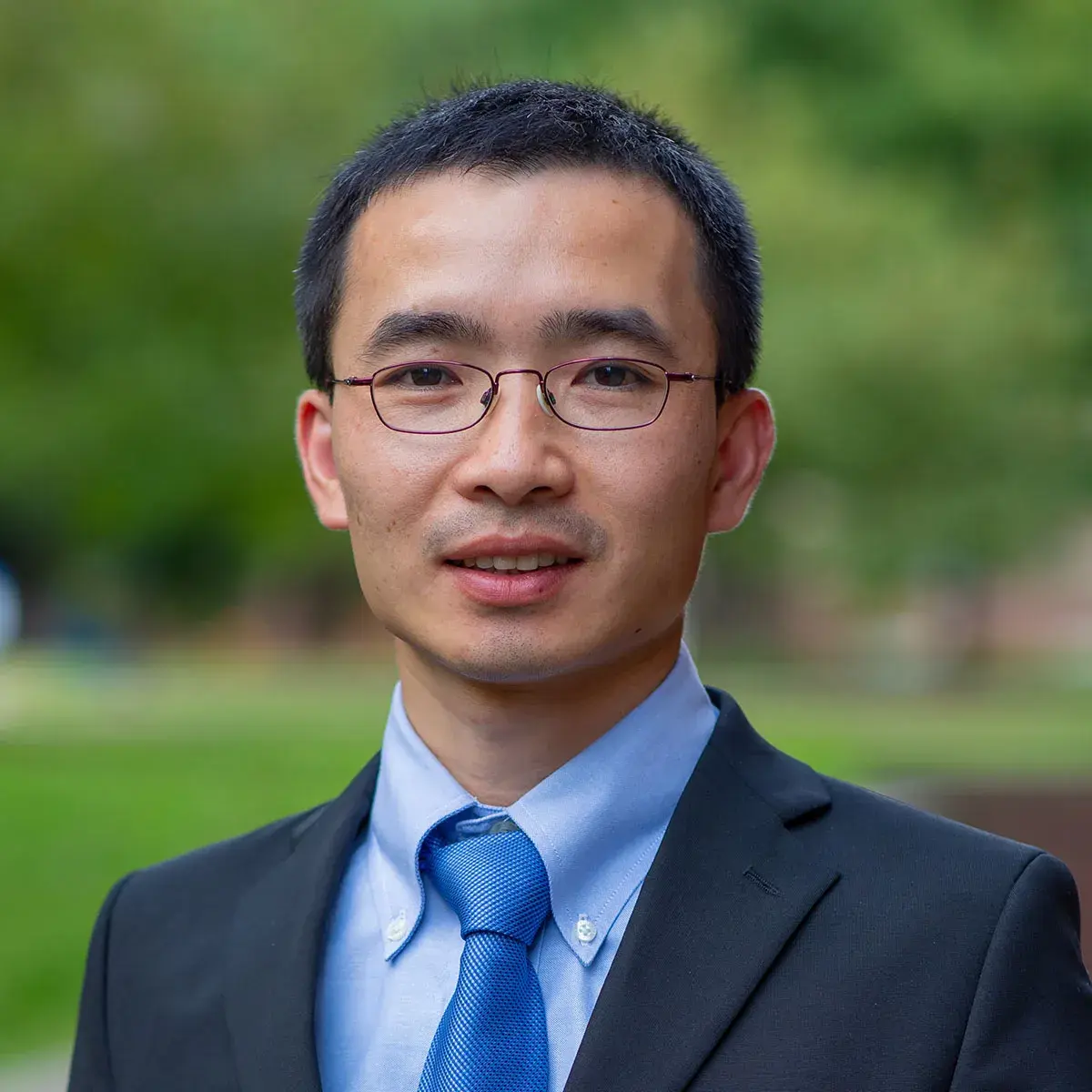
Timothy Duff is an Assistant Professor in the Mathematics Department at the University of Missouri's College of Arts and Science. He co-organizes the Math & Data Seminar and specializes in applied computational algebraic geometry for 3D reconstruction in computer vision. Research integrates algebraic geometry with machine learning and numerical analysis to solve geometric problems in imaging systems. Core interests include multi-view geometry, minimal solvers, and certified numerical methods. Recent publications emphasize efficient algorithms for camera calibration, 3D reconstruction, and polynomial system solving. Work frequently develops tools in Macaulay2 and addresses theoretical challenges in computer vision through algebraic frameworks.
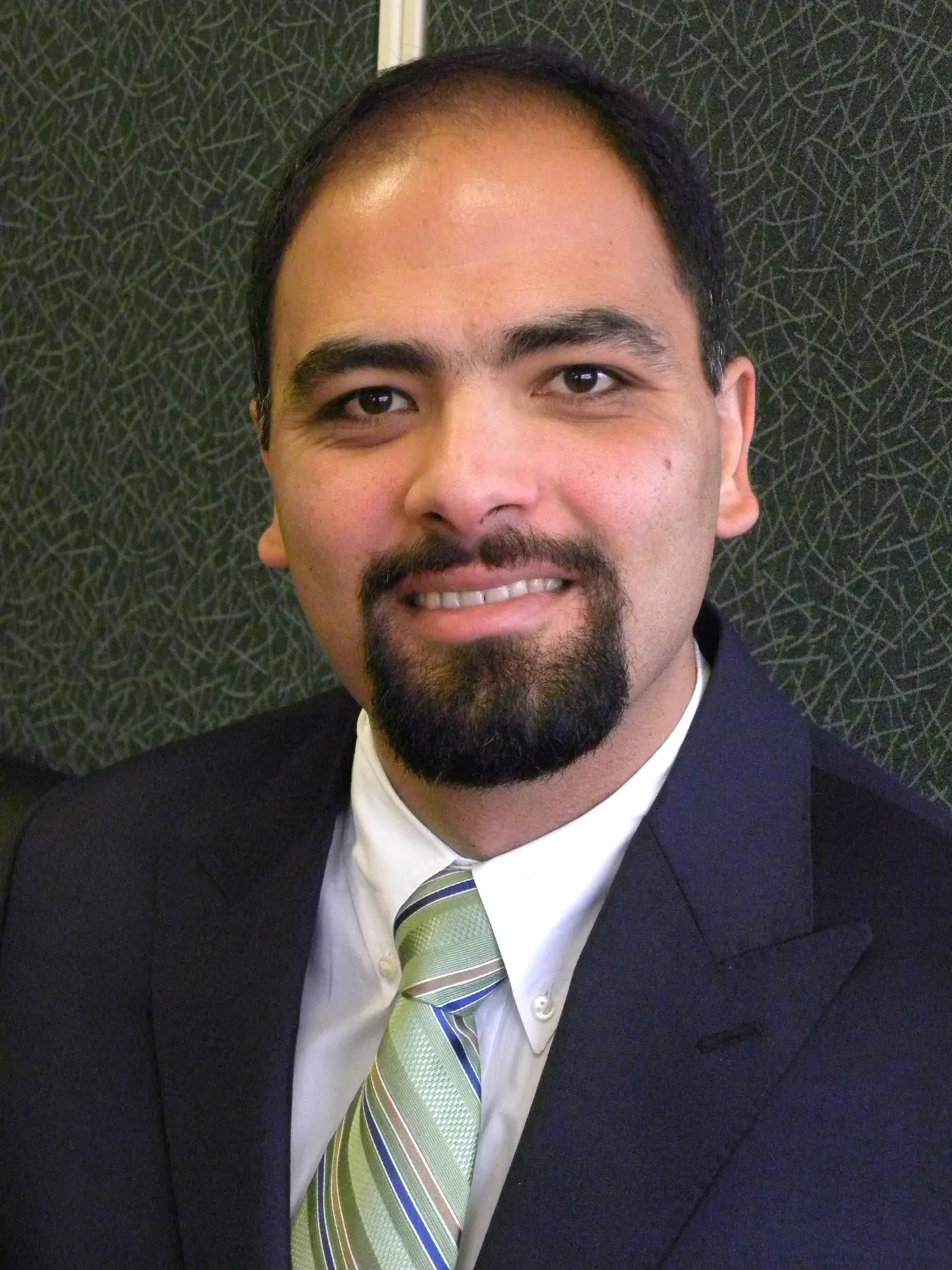
Jonathan Pakianathan is a Professor of Mathematics at the University of Rochester's School of Arts & Sciences, Department of Mathematics. He holds a PhD from Princeton University (1997) and a BS in Mathematics and Physics from Caltech (1992). His research focuses on algebraic topology, cohomology of groups and Lie algebras, geometric combinatorics, and finite fields. He has held leadership roles, including Director of Graduate Studies (2014–2020) and Director of Undergraduate Studies (2003–2010). Notable awards include the Goergen Award for Excellence in Teaching (2014) and the Sloan Foundation Doctoral Dissertation Fellowship (1996). His research explores applications of topology and algebra in discrete geometry, often collaborating with Alex Iosevich and students. Recent work addresses topics like Fuglede's conjecture over finite fields, geometric configurations, and probabilistic methods in combinatorics. His articles frequently intersect harmonic analysis, group theory, and number theory, reflecting interdisciplinary strengths. Education : PhD, Princeton University, 1997 BS in Mathematics and Physics, Caltech, 1992 Awards : Goergen Award for Excellence in Undergraduate Teaching, 2014 Sloan Foundation Doctoral Dissertation Fellowship, 1996 H. J. Ryser Scholarship, 1991 Grants include an NSA Mathematical Sciences Grant (2016–2017, $110,000 total) with A. Iosevich. He advises numerous PhD students, many of whom now hold academic or research positions. His teaching spans undergraduate to graduate courses, including algebra, topology, and financial mathematics. Research groups and collaborations extend to geometric combinatorics, algebraic topology, and applications in physics and data science. Ongoing projects explore topological methods in discrete geometry and probabilistic structures over finite fields.
David M Evans holds the position of Chair in Pure Mathematics at the Department of Mathematics, Faculty of Natural Sciences, Imperial College London. His academic career spans several decades with continuous research contributions in mathematical logic and its interdisciplinary applications. Professor Evans' research focuses on the theoretical foundations and practical applications of Model Theory, with particular emphasis on: Stability theory and its generalizations within model-theoretic frameworks Hrushovski constructions and their geometric properties Interactions between model theory, algebra, and combinatorics Automorphism groups of infinite structures Ramsey properties in sparse graphs and metric spaces His publication record demonstrates consistent innovation in geometric model theory, with recent work exploring amalgamation properties in measured structures, simplicity of automorphism groups, and EPPA (Extension Property for Partial Automorphisms) in various mathematical structures. His research bridges abstract model-theoretic concepts with concrete combinatorial and algebraic applications, particularly in the study of homogeneous structures and their automorphism groups. Professor Evans has supervised numerous doctoral students including D. G. D. Gray, Reinhold Konnerth, Herwig Nuebling, Marco Antonio Semana Ferreira, Yibei Li, and Robert Sullivan. His research has been supported by grants such as 'Model theory of generic structures and simple theories' and the 'Workshop on Pure Model Theory,' reflecting the significance of his contributions to the field.
Javier Peña is the Bajaj Family Chair Professor of Operations Research at the Tepper School of Business, Carnegie Mellon University, where he has been a faculty member since 1999. He currently holds the rank of Professor with tenure in the Department of Operations Research. His educational background includes: PhD in Applied Mathematics from Cornell University (1998) MS in Computer Science from Cornell University (1997) MS in Mathematics from Universidad de Los Andes, Bogotá, Colombia (1993) BS in Electrical Engineering from Universidad de Los Andes, Bogotá, Colombia (1991) BS in Mathematics from Universidad de Los Andes, Bogotá, Colombia (1991) Professor Peña's research focuses on the theoretical foundations and practical applications of optimization. His primary research interests include condition numbers for optimization, algorithms for convex optimization (particularly first-order methods), and equilibria computation. He has made significant contributions to understanding the convergence properties of the Frank-Wolfe algorithm and related first-order methods. His work uniquely bridges theoretical analysis with practical applications, particularly in finance and data science. His research demonstrates a consistent pattern of investigating the fundamental mathematical properties of optimization problems while developing practical algorithms with provable convergence guarantees. His extensive publication record shows a clear evolution from foundational work on condition numbers and Hoffman constants toward more applied research on first-order methods and their applications. A notable trend is his recent focus on affine-invariant analysis of optimization algorithms, which provides deeper insights into algorithm behavior independent of coordinate systems. His work frequently appears in top optimization journals like Mathematical Programming and SIAM Journal on Optimization. Professor Peña is also the co-author of the influential textbook 'Optimization Methods in Finance,' now in its second edition, which has become a standard reference in the field. In terms of teaching, Professor Peña regularly instructs courses in Probability and Statistics, Financial Optimization, and Convex Optimization. His teaching approach emphasizes practical applications, with students in Financial Optimization routinely using open-source financial datasets like Alpha Advantage Open Stock API in their projects. He has been actively involved in the academic community through numerous conference presentations, seminar invitations, and committee service at Carnegie Mellon University, including roles on the Faculty Senate, Promotion and Tenure Committee, and various curriculum committees.
Anthony Bloch is the Alexander Ziwet Collegiate Professor of Mathematics and Professor of Mathematics at the University of Michigan, serving as Chair of the Department of Mathematics. He is affiliated with the Center for the Study of Complex Systems (CSCS) in Weiser Hall. His research focuses on: Geometric Mechanics : Hamiltonian/Lagrangian mechanics, symplectic geometry, and integrable systems including Toda lattices and rigid body dynamics Nonlinear Dynamics : Nonholonomic systems with nonintegrable constraints, stability analysis, and continuous-discrete flow relationships Control Theory : Nonlinear and optimal control applications extending to quantum dynamics and astrophysical systems Recent publications demonstrate geometric methods applied to nonholonomic control, virtual constraints, and stabilization, with growing interdisciplinary work in network dynamics, quantum control, and cosmological models like cosmic reheating. Through the Center for the Study of Complex Systems, Professor Bloch collaborates across disciplines to investigate complex phenomena in natural and engineered systems, leveraging geometric frameworks to address fundamental questions in mechanics and dynamics.
Yannis Kevrekidis is a Professor at Princeton University with a distinguished career in computational mathematics and chemical engineering. He is currently a Hans Fischer Senior Fellow at the Technical University of Munich (TUM-IAS) and has held visiting positions at institutions like the Zuse Institute Berlin and Caltech. Education : National Technical University of Athens (Chemical Engineering) University of Minnesota (PhD in dynamical systems) Research Interests : Equation-Free and Variable-Free Modeling Complex Systems Dynamics Multiscale Computation Integration of Machine Learning with Scientific Computing Pattern Formation & Instability Analysis Key Article Trends : Advanced data-driven modeling of dynamical systems Manifold learning for reaction coordinates Projective integration methods Coarse-grained modeling across disciplines Applications in epidemiology, neuroscience, and fluid dynamics Scientific Awards : Guggenheim Fellowship Humboldt Research Award Computing in Chemical Engineering Award (AIChE) Bodossaki Academic Award Allan P. Colburn Award Collaborations : Extensive international collaborations with institutions in Germany, Austria, and the UK Key role in the Complex Systems Modeling and Computation focus group at TUM-IAS
Corrado Maurini is a Professor in Mechanics at Sorbonne University , Paris, France. He leads two international master programs: Mécanique des Solides (Solid Mechanics) and Computational Mechanics .
Hailong Chen is an Associate Professor in the Department of Mechanical and Aerospace Engineering within the Stanley and Karen Pigman College of Engineering at the University of Kentucky. His academic journey includes a Ph.D. in Mechanical Engineering from Arizona State University (2015) and an M.S. in Mechanical Engineering from the University of Florida (2012). Dr. Chen's research focuses on Computational Mechanics & Materials, with expertise spanning meshfree methods, multi-scale multi-physics modeling, mechanics of stochastic heterogeneous microstructures, and pervasive fracture and impact modeling. His work bridges theoretical developments with practical engineering applications through the CM 3 (Computational Mechanics and Methods) research group, which develops advanced computational techniques for real-world mechanics problems. The CM 3 group specializes in multi-scale multi-physics modeling of solid materials, damage and failure analysis under extreme conditions, mechanics of stochastic heterogeneous microstructures (composites, polycrystals), and computational materials engineering. Recent publications demonstrate strong activity in peridynamics, lattice particle methods, and computational homogenization techniques for fibrous and porous materials. Dr. Chen's research has resulted in numerous publications in top journals including Computer Methods in Applied Mechanics and Engineering and Mechanics Research Communications, with recent work focusing on generalized peridynamic formulations, micro-CT-based property computation, and fluid-structure interaction frameworks for hypersonic applications. His academic progression shows steady advancement from Postdoctoral Computational Scientist at Idaho National Laboratory (2015-2018) to Assistant Professor (2018-2024) and currently Associate Professor (2024-present) at the University of Kentucky.
Alireza Vakil Amirkhizi serves as Professor in the Department of Mechanical and Industrial Engineering at the Francis College of Engineering, University of Massachusetts Lowell. His research focuses on mechanics of materials under extreme conditions and advanced composite systems. His academic credentials include: Ph.D. in Mechanical and Aerospace Engineering, University of California, San Diego (Dissertation: Multifunctional Composites and Structures with Integrated Mechanical and Electromagnetic Properties) M.S. in Mechanical and Aerospace Engineering, University of California, San Diego B.S. in Civil and Environmental Engineering, Sharif University of Technology (Thesis: Experimental Study of Concrete Shear Walls Reinforced with Punched Steel Plates under Cyclic Loading) Dr. Amirkhizi's research spans applied mechanics and materials science with emphasis on dynamic behavior of materials under high strain-rates, extreme pressures, and temperature variations. His work explores metamaterials for wave manipulation, biomechanics of soft tissues, and molecular-level design of polymeric materials. Current investigations focus on structure-property relationships for next-generation protective systems and energy-absorbing composites. His publication record (2006-2019) reveals consistent contributions in composite mechanics , polymer physics , and metamaterial design . Key themes include constitutive modeling of pressure-sensitive polymers, micromechanical analysis of composite systems, and electromagnetic-mechanical coupling in chiral materials. His work bridges experimental validation with computational modeling across multiple length scales. Notable recognitions: Dissertation Fellowship (2006), UC San Diego Highest Academic Achievement Award (2004), UC San Diego MAE Department Certificate of Recognition (2003), UC San Diego Research funding demonstrates strong military and defense partnerships. As Principal Investigator, he secured grants from the U.S. Army (Natick Soldier RDEC), Air Force (AFOSR, SBIR), Office of Naval Research, and DARPA for projects including parachute material shelf-life analysis, cavitation-resistant coatings, and microstructurally-architected materials. Collaborative projects with S. Nemat-Nasser at UC San Diego involved blast-mitigating polymers and multi-frequency dynamic materials. His laboratory activities focus on experimental characterization of materials under dynamic loading, supported by advanced testing facilities for high-strain-rate mechanics and multi-physics material response.
Emilie Carretier is a Professor at Aix-Marseille University (AMU) , affiliated with the Procédés Membranaires research team. Her work focuses on membrane separation technologies, particularly for industrial applications in pharmaceuticals, water treatment, and nuclear waste management. Research Interests : Membrane processes (pervaporation, reverse osmosis), solvent regeneration, radioactive effluent treatment, catalyst recovery, and industrial sustainability. Publications highlight advancements in ceramic membranes, VOC removal, and membrane aging studies, with applications in pharmaceuticals, microelectronics, and nuclear industries. Laboratory : Active within the M2P2 research center, specializing in membrane process innovation for complex industrial matrices.
Caglar Oskay is an Associate Professor in the Department of Civil and Environmental Engineering at Vanderbilt University, where he has held academic positions since 2006. He specializes in multiscale computational mechanics, materials modeling, and failure analysis of heterogeneous materials. His research integrates advanced numerical methods such as the Extended Finite Element Method (XFEM), reduced-order homogenization, and variational multiscale enrichment to study composite materials, viscoelastic systems, and polycrystalline structures under extreme conditions. Dr. Oskay has been recognized with awards including the Chancellor Faculty Fellow (2016–2018) and ASCE ExCEEd Fellow (2011). Education: PhD (Civil Engineering, Rensselaer Polytechnic Institute, 2003), M.S. (Civil Engineering, Rensselaer Polytechnic Institute, 2000), M.S. (Applied Mathematics, Rensselaer Polytechnic Institute, 2000), B.S. (Civil Engineering, Middle East Technical University, 1998). Research focuses on predictive computational models for material behavior under mechanical, thermal, and chemical loading. Key areas include fatigue life prediction, damage accumulation in composites, and coupled transport-deformation phenomena. Recent work addresses multiscale modeling of nickel-based superalloys, polyurea-coated composites, and energetic materials under dynamic loading. His contributions span 100+ peer-reviewed publications, including seminal studies in International Journal for Multiscale Computational Engineering and Acta Materialia . His articles emphasize multiscale frameworks for heterogeneous materials, with trends in reduced-order methods, uncertainty quantification, and interdisciplinary applications (e.g., biology, energy systems). Awards highlight his educational and technical leadership. Advising and grants include collaborative projects on composite durability and energetic material simulation. Dr. Oskay leads the Multiscale Computational Mechanics Lab (MCML), advancing computational tools for engineering materials research.
Dave Morris is a Professor in the Department of Mathematics & Computer Science at the University of Lethbridge since 2003. He holds a PhD in Mathematics from the University of Chicago (1985). His research focuses on algebraic and geometric aspects of group theory, particularly infinite matrix groups, arithmetic groups, and applications to graph theory and dynamical systems. Key research areas include: Arithmetic groups and their rigidity properties Algebraic properties of infinite matrix groups Applications of finite groups in graph theory (e.g., Cayley graphs) Unipotent flows and Ratner's Theorems His publications span over 50 works, including books on Ratner's Theorems (2005), Ergodic Theory (2008), and an open-access textbook on abstract mathematics (with Joy Morris). He has delivered numerous talks on topics like Hamiltonian cycles in Cayley graphs and actions of Lie groups on manifolds.
Ivan Vladimirovich Arzhantsev serves as Dean of the Faculty of Computer Science and Professor at the Department of Big Data and Information Retrieval at the National Research University Higher School of Economics (HSE University). He also heads the Research Laboratory of Algebraic Transformation Groups and is a member of the Academic Council of HSE University. Having joined HSE in 2011, he has over 20 years of scientific and teaching experience in mathematics and computer science. Dean: Faculty of Computer Science Professor: Faculty of Computer Science / Department of Big Data and Information Retrieval Leading Researcher, Head of Laboratory: Faculty of Computer Science / Research Laboratory of Algebraic Transformation Groups Member of the Academic Council of the National Research University Higher School of Economics Arzhantsev's educational background includes a Specialist degree in Mathematics and Applied Mathematics from Moscow State University (1995), a Candidate of Physical and Mathematical Sciences degree (1998), and a Doctor of Physical and Mathematical Sciences degree (2011), all from Moscow State University. He was awarded the academic title of Associate Professor in 2009 and Professor in 2020. His research focuses on Algebraic Geometry, Transformation Groups, Algebraic Groups, and Geometric Invariant Theory. Arzhantsev's work explores homogeneous spaces, flexible varieties, infinite transitivity, locally nilpotent derivations, and algebraic monoids. His research has significant implications for understanding the structure and classification of algebraic varieties and their automorphism groups. He has developed important connections between algebraic geometry and combinatorial methods, particularly in the context of toric varieties and group actions. His work on the pigeonhole principle demonstrates applications to geometric problems, bridging discrete mathematics with algebraic geometry. Arzhantsev's recent publications demonstrate a consistent focus on affine varieties, transformation groups, and geometric structures. His work shows a progression from foundational studies of homogeneous spaces to more complex structures involving flexible varieties and infinite transitivity. The research spans both theoretical developments and practical applications in algebraic geometry, with several papers exploring connections between different mathematical structures through group actions. Medal 'Recognition - 10 years of successful work' of HSE University (July 2025) Honorary Certificate of the Ministry of Science and Higher Education of the Russian Federation (December 2024) Honorary Certificate of HSE University (March 2024) Letter of Gratitude from the Rector of HSE University (February 2023) Best Teacher - 2019, 2015 Laureate of the All-Russian Prize 'Dean of the Year' in Physical and Mathematical Sciences (2024) Arzhantsev has supervised numerous PhD students, including Y. I. Zaitseva, I. S. Beldiev, and K. V. Shakhmatov, among others. He leads multiple research grants, including the Russian Science Foundation grant 'Demazure Roots and Root Subgroups' (2025-2027) and the Russian-Indian grant 'Study of Affine Spaces and Related Objects Using Algebraic Transformation Groups and Locally Nilpotent Derivations' (2022-2024). His research has been supported by various prestigious funding sources including the Russian Foundation for Basic Research and the 'Basis' Foundation. He directs the Research Laboratory of Algebraic Transformation Groups at HSE University, which organizes the annual 'Algebraic Groups: White Nights Season' conference in St. Petersburg. The laboratory focuses on advanced research in algebraic transformation groups, homogeneous spaces, and related geometric structures, fostering international collaboration and training the next generation of mathematicians.
Joseph Talghader is the Cymer Professor in the Department of Electrical and Computer Engineering at the University of Minnesota, where he has been a faculty member since 1997, progressing from Assistant to Full Professor. He leads the Optical Micro+Nanosystems Group and holds appointments in the College of Engineering. Dr. Talghader's educational background includes a B.S. in Electrical Engineering from Rice University, followed by an M.S. (1993) and Ph.D. (1995) from UC Berkeley, where he was awarded an NSF Graduate Fellowship. Prior to joining academia, he worked at Texas Instruments and Waferscale Integration in process development and memory design. His research spans optics and micro/nano-mechanical systems with particular focus on infrared detectors, optical coatings, heat transfer mechanisms, and microsensors. His group has developed groundbreaking technologies including the highest sensitivity uncooled thermal detectors and the first tunable multispectral thermal detectors. Recent work has expanded into applications for glacial ice analysis and high-power laser systems. His research integrates theoretical modeling with advanced fabrication techniques, particularly atomic layer deposition. Analysis of his 15 most recent publications reveals a consistent focus on infrared technologies, optical coatings, and thermal phenomena. His work demonstrates strong interdisciplinary connections between electrical engineering, materials science, and optical physics, with increasing emphasis on practical applications in environmental sensing and high-power laser systems. Among his notable recognitions are three 3M Faculty Awards and being a Finalist for the Minnesota Cup for entrepreneurs. He has served on various program committees including the Army Research Office Electronics Division strategic planning panel and has chaired multiple IEEE conferences. Dr. Talghader actively mentors students and postdocs, with numerous publications listing junior researchers as lead authors. His group has secured significant research funding, though specific grant details aren't provided in the source material. He currently serves as an Editor for the NPG journal Light: Science and Applications, demonstrating his standing in the optics research community. The Optical Micro+Nanosystems Group maintains strong industry and interdisciplinary collaborations, with research spanning from fundamental materials properties to practical device implementation. Current projects focus on improving infrared detection technologies, developing advanced optical coatings for high-power applications, and exploring novel sensing mechanisms for extreme environments.
Mahir Can is a Professor of Mathematics at Tulane University, affiliated with the School of Science & Engineering. His research focuses on Algebraic Combinatorics and Geometry, with particular emphasis on algebraic structures, monoid theory, and geometric representation theory. He holds a Ph.D. in Mathematics from the University of Pennsylvania (2006) and a B.S. in Mathematics from Middle East Technical University (2001). His work explores intersections between combinatorics, algebraic geometry, and coding theory, including studies on Schubert varieties, toric varieties, and error-correcting codes derived from algebraic structures. Recent research highlights include investigations into irreducible numerical monoids, spherical varieties, and the geometry of flag manifolds. Publications span topics such as metric space constructions via directed graphs, applications of homogeneous fiber bundles, and generalized conjectures in combinatorial monoid theory. No scientific awards or grants are explicitly listed in the provided text. Dr. Can’s advising record and lab affiliations are not detailed here, though his academic profile reflects active engagement in advanced mathematical research and education.