Prof. Radek Erban is a Professor of Applied Mathematics at the Mathematical Institute , University of Oxford. He is affiliated with the Oxford Centre for Industrial and Applied Mathematics and works across interdisciplinary fields including Mathematical Biology, Stochastic Processes, and Reaction-Diffusion Systems. His research focuses on: Multiscale modeling of biological and chemical processes Stochastic simulation algorithms for reaction-diffusion systems Mathematical analysis of collective behavior in biological systems Computational methods for chemotaxis and gene regulatory networks Partial differential equation models for biological phenomena Recent work explores multi-resolution simulations of ions, morphogen gradient modeling, and hybrid numerical methods for stochastic processes. His publications span journals in applied mathematics, computational biology, and physical sciences. Current projects involve bridging atomistic and continuum models for chemical systems.
Prof. Dr. Thomas Koop is a Professor of Physical Chemistry at Bielefeld University, where he leads the Atmospheric and Physical Chemistry research group within the Faculty of Chemistry. He has served as Dean of the Faculty of Chemistry from 2022-2024 and currently serves as Vice Dean (2024-2025). His research focuses on phase transition phenomena, particularly ice nucleation and growth, supercooled liquids, and the formation of amorphous glassy materials. His work has significant implications for understanding atmospheric aerosols, cloud formation mechanisms, and cryobiological processes. The group employs experimental techniques such as differential scanning calorimetry and optical cryo-microscopy, developing specialized equipment for studying phase transitions at micro and nanoscales. Prof. Koop's publication record shows a consistent focus on atmospheric chemistry with increasing exploration of biological ice nucleators, planetary atmospheres (including Venus), and the physical properties of atmospheric aerosols. His most cited work includes 'Water activity as the determinant for homogeneous ice nucleation in aqueous solutions' (Nature, 2000), which established fundamental principles in the field. 2024-2025: Vice Dean of Faculty of Chemistry 2022-2024: Dean of Faculty of Chemistry 2001-2022: Co-founder and Executive Editor of Atmospheric Chemistry and Physics Since 2004: Coordinator of Graduate School of Chemistry and Biochemistry Prof. Koop has mentored numerous students and postdoctoral researchers, contributing significantly to the development of the next generation of atmospheric scientists. His research has been supported by various funding agencies and has led to collaborations with institutions worldwide, from MIT and UC Berkeley to research centers in Switzerland and Israel.
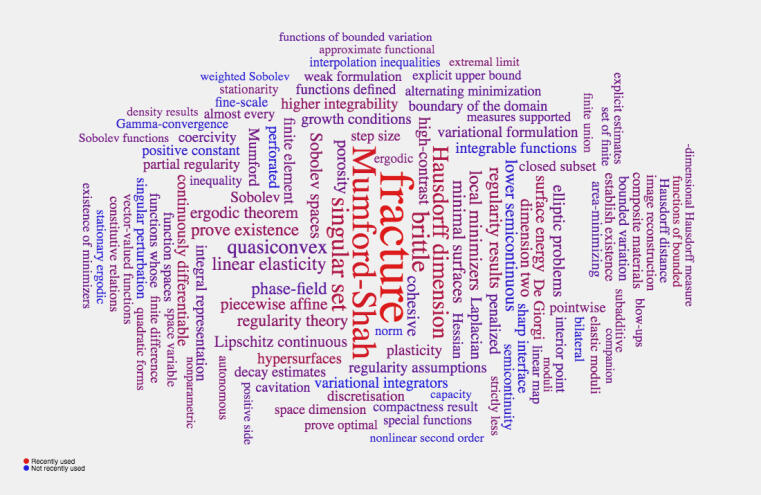
Endre Süli is Professor of Numerical Analysis at the University of Oxford, where he has maintained a distinguished academic career since 1985. He currently serves as Fellow and Tutor in Mathematics at Worcester College and Supernumerary Fellow at Linacre College. His progression at Oxford includes University Lecturer in Numerical Analysis (1985-1996), Reader in Numerical Analysis (1996-1999), and Professor of Numerical Analysis (1999-present). Süli completed his B.Sc. in Mathematics at the University of Belgrade (1974-1978), followed by an M.Sc. in Mathematics (1978-1980). As a British Council Visiting Student, he studied at Reading University and Oxford University in 1983/84, earned his Ph.D. from the University of Belgrade in 1985, and received his M.A. from Oxford University in the same year. Professor Süli's research centers on numerical analysis of nonlinear partial differential equations with applications across multiple scientific domains. His work spans free-discontinuity problems and computational modeling of fracture; finite element methods; Navier-Stokes-Fokker-Planck systems; adaptive algorithms with a-posteriori error control; implicitly constituted material models; and discontinuous finite element methods. His research bridges theoretical mathematics with practical computational approaches for complex physical phenomena. Recent publications (2024-2025) demonstrate Süli's continued leadership in numerical analysis, with focus areas including fractional calculus, stochastic PDEs, and advanced finite element techniques. His work shows strong interdisciplinary connections between mathematical analysis, fluid dynamics, and materials science, addressing challenging problems in polymeric fluids, porous media, and capillary flow modeling. Professor Süli's distinguished career has been recognized with numerous prestigious honors: Invited Speaker at the International Congress of Mathematicians, Madrid (2006) Fellow of the Institute of Mathematics and its Applications (2007) Foreign Member of the Serbian National Academy of Sciences and Arts (2009) Fellow of the European Academy of Sciences (2010) IMA Service Award (2011) SIAM Fellow (2016) Member of the Academia Europaea (2020) London Mathematical Society Naylor Prize and Lectureship (2021) Fellow of the Royal Society (2021) As an educator, Süli has received the Oxford University Teaching Excellence Award (2009) and the Mathematical Institute Teaching Award (2013). He has supervised numerous PhD students and postdoctoral researchers throughout his career, though specific names aren't documented in the available materials. His research has been supported by various grants enabling work on computational methods for partial differential equations. Süli maintains active service to the mathematical community through editorial boards and professional organizations. Professor Süli is affiliated with the Numerical Analysis research group and the Oxford Centre for Nonlinear PDE at the Mathematical Institute. These research centers provide a collaborative environment for theoretical and applied work on partial differential equations. His research often involves interdisciplinary collaborations with physicists, engineers, and computational scientists to develop and analyze numerical methods for complex physical phenomena.
Jean-Luc Thiffeault is a Professor of Applied Mathematics at the University of Wisconsin-Madison, serving as Chair of the Department of Mathematics. His research spans applied mathematics, fluid dynamics, and topological chaos, with a focus on mixing mechanisms in viscous flows, biogenic mixing by microorganisms, and computational modeling. Key research themes include: Topology-driven fluid mixing via braid theory; Chaotic advection in low-Reynolds environments; Microswimmer interactions with boundaries and waves; Development of numerical tools for dynamical systems analysis. He has authored significant software packages like braidlab (braid analysis), rodent (ODE integration), and jlt lib (utility functions for scientific computing). Collaborative projects include studies on hagfish slime unraveling, burger flipping dynamics, and Brownian particle winding around vortices. His work is supported by NSF grants DMS-0806821 and CMMI-1233935, emphasizing interdisciplinary approaches combining mathematics, physics, and computational methods.
Professor Fabian Waleffe is an Applied Mathematician at the University of Wisconsin, Madison, holding a joint appointment between the Department of Mathematics and the Department of Engineering Physics. His academic career spans multiple decades with extensive teaching experience at both UW Madison and MIT. Professor Waleffe's primary research focuses on the fundamental problem of turbulence in fluid flows and its relation to Exact Coherent States. He developed the Self-Sustaining Process theory for shear flows, which provides an ab initio method to discover families of 3D traveling wave solutions of the Navier-Stokes equations in all canonical shear flows. His research also encompasses geophysical flows and computational methods for solving partial differential equations, including spectral integration methods and numerical techniques for incompressible flows. His publication record demonstrates consistent focus on hydrodynamic instabilities, turbulence, and coherent structures. Recent work examines optimal heat transport in Rayleigh-Bénard convection, streak instability, and near-wall turbulence, integrating theoretical analysis, numerical computation, and physical insight to address fundamental questions in fluid dynamics. His research has evolved from early work on triad interactions in homogeneous turbulence to the current focus on exact coherent structures that form the 'backbone' of turbulent shear flows. Professor Waleffe has taught extensively across the mathematics and engineering curriculum. He has taught Math 321 (Vector and complex calculus for the physical sciences) for 29 semesters at UW Madison, along with numerous other undergraduate and graduate courses. His teaching spans from introductory calculus to advanced graduate topics in hydrodynamic instabilities and turbulence, reflecting his deep commitment to mathematical education in the physical sciences.
Francesco Fanelli is a Research Professor at the Basque Center for Applied Mathematics (BCAM) under Ikerbasque - Basque Foundation for Science. He is on leave from Université Claude Bernard Lyon 1 and Institut Camille Jordan since September 2023. His work spans partial differential equations (PDEs), fluid dynamics, harmonic analysis, and asymptotic behavior of non-homogeneous fluids. He has made significant contributions to: Hydrodynamics of inviscid and compressible fluids Multi-scale analysis and singular perturbation problems Well-posedness theory for hyperbolic operators with low regularity coefficients Fourier analysis methods in PDEs (Littlewood-Paley theory, paradifferential calculus) His research intersects with geophysical fluid dynamics, magnetohydrodynamics (MHD), and turbulence theory. His 15 most recent publications focus on: Ekman boundary layers and pumping effects Kolmogorov turbulence models Fast rotation asymptotics Low Mach number limits with stratification Singular integrals and Besov space applications Scientific recognition includes: PEDR teaching and research excellence fellowship (2017-2020, renewed 2021-2025) ERC Consolidator Grant finalist (2024) Vinci 2010 fellowship He organizes and participates in international conferences on fluid dynamics and PDEs. Collaborators include leading researchers from institutions in France, Italy, Spain, Poland, and Chile.
Marco Paggi is a Full Professor of Structural Mechanics at the IMT School for Advanced Studies Lucca, Italy, since 2017. He previously held academic roles at Politecnico di Torino (Assistant Professor, 2007-2013) and has been an Alexander von Humboldt Fellow at Leibniz University Hannover. His research focuses on fracture mechanics, contact mechanics, and computational methods applied to renewable energy systems, composite materials, and multi-scale modeling. Key Themes: Fracture propagation, contact interfaces, phase field modeling, photovoltaic durability, and material heterogeneity. Awards: Stanford Top 2% Scientists (2020-2024) Research.com Top Scientists (2022-2024) European Structural Integrity Society Young Scientist Award (2010) Publications: His work spans tribology, computational fracture mechanics, and material degradation, with recent emphasis on phase field modeling for quasi-brittle materials and photovoltaic systems. He has pioneered methods for multi-scale and multi-physics analysis of structural systems. Mentorship: Supervised 17 PhD graduates and 14 postdocs, including award-winning researchers like Pietro Lenarda and Zeng Liu.
Guillaume Bal is a Professor at the University of Chicago, holding joint appointments in the Departments of Statistics and Mathematics, and affiliated with the Committee on Computational and Applied Mathematics (CCAM). His research focuses on inverse problems in medical and geophysical imaging, partial differential equations with random coefficients, and the mathematical analysis of topological insulators. He explores applications in wave propagation, uncertainty quantification, and hybrid imaging modalities. His recent work delves into theoretical and computational aspects of stochastic partial differential equations and topological edge states. Research Interests: Inverse Problems (Geophysical/Medical Imaging) Topological Insulators and Edge States Wave Propagation in Heterogeneous Media Uncertainty Quantification Publications Trends: Recent articles emphasize topological insulator dynamics, hybrid imaging techniques, and stochastic PDE models. Key themes include bulk-edge correspondence, dual-energy CT optimization, and semiclassical propagation in curved interfaces.
Abhishek Santra is a Senior Lecturer in the Department of Computer Science and Engineering at The University of Texas at Arlington. He holds a PhD in Computer Science from UT Arlington (2020), and earlier degrees from the University of Delhi (BS 2011, MS 2013). His research focuses on multilayer networks, graph mining, and data analysis, with contributions to complex data modeling and visualization tools like MLN-geeWhiz and ModViz. He is also a Post-Doctoral Research Scholar in the Information Technology Lab (ITLab), led by Dr. Sharma Chakravarthy. Teaching interests include Discrete Structures, Database Systems, and DBMS Models. He has advised numerous students on research projects and thesis work, such as substructure discovery in multilayer networks and video content analysis. Recent grants include REU-funded projects for dashboard development (2022–2025). His service roles include committee memberships in the CSE department and organizing technical workshops like QVC and MLN-DIVE. Key research areas involve analyzing multi-source data through multilayer network frameworks, with applications in healthcare monitoring, big data analytics, and visualization systems. Publications span conferences like BDA, IC3K, and IEEE BigDataService, emphasizing algorithmic innovation for network-centric data problems.
Dr. Sudhir R. Paul is a Professor in the Department of Mathematics and Statistics at the University of Windsor, Faculty of Science. He holds a Ph.D. from Wales and has received prestigious awards including Fellowships from the American Statistical Association (2006) and the Royal Statistical Society (1982). His research focuses on Biostatistics and Statistical Inference, with expertise in areas such as Generalized Linear Models, Clustered/Longitudinal Data Analysis, and Categorical Data Analysis. He has supervised numerous graduate students and maintains an active research program addressing topics like risk difference estimation, bias correction in statistical models, and applications in environmental and medical contexts. Education: Ph.D. (Wales). Research interests span advanced statistical methodologies, including zero-inflated models, measurement error correction, and dose-response modeling. His work bridges theoretical development and practical applications in epidemiology, clinical trials, and environmental studies. His publications reflect contributions to clustered data analysis, interval estimation, and generalized estimating equations. Awards highlight his impact in advancing statistical science through teaching, research, and service. Advising: Over 30 M.Sc. and Ph.D. students have been supervised, with current students engaged in doctoral and master’s research. Postdoctoral fellows include experts in statistical theory and applications.
Diego Donzis is a Professor in the Department of Aerospace Engineering at Texas A&M University, affiliated with the College of Engineering. He holds the Presidential Impact Fellow title. His work focuses on high-performance computing for fluid dynamics, particularly compressible turbulence, turbulent mixing, and shock-turbulence interactions. Donzis earned his Ph.D. and M.S. in Aerospace Engineering from the Georgia Institute of Technology. Research interests include large-scale simulations of turbulent flows, thermal boundary condition effects on turbulence, and the development of advanced numerical methods like Selected-Eddy Simulations (SES) for extreme-scale computing. His studies explore universality in turbulence scaling, energy spectra dynamics, and the interplay between compressibility and fluid mixing. Publications emphasize turbulence decay laws, shock-turbulence interactions, and the role of thermal non-equilibrium in turbulent flows. Notable contributions include advancing asynchronous algorithms for exascale CFD and analyzing density gradient statistics in compressible turbulence. Awards include the Presidential Impact Fellow distinction. Donzis collaborates on grants such as the Frontera Travel Grant for compressible turbulence research. His work bridges computational methods with fundamental fluid dynamics, addressing challenges in both numerical accuracy and physical modeling.
Jacob Fish is the Robert A.W. and Christine S. Carleton Professor and Chair of the Department of Civil Engineering and Engineering Mechanics at Columbia University. He directs the Multiscale Science and Engineering Center and leads Columbia's Computational Science and Engineering initiative (iCSE), coordinating 65+ faculty. With 35 years of pioneering research, he specializes in multiscale computational methods bridging aerospace, automotive, and healthcare industries. His research integrates multiscale computational science with applications in: Homogenization and reduced-order methods for complex materials Stochastic modeling of heterogeneous systems Coupled thermo-chemo-electro-mechanical processes Data-physics driven frameworks for industrial processes Recent work emphasizes AI-enhanced modeling for composites, porous media, and environmental systems. His 15 most recent publications (2023-2025) demonstrate strong trends toward: Data-physics integration in manufacturing (e.g., resin transfer molding) Multiscale environmental applications (canopy flows, CO2 mineralization) Advanced numerical methods (discontinuous Galerkin, solver-free homogenization) Digital twin development for composite lifecycle management Scientific Awards & Honors: 2018 JSCES Grand Prize 2010 IACM Computational Mechanics Award 2005 USACM Computational Structural Mechanics Award 2003 Rensselaer Research Award Fellowships: AAM, USACM, IACM Two Best Paper awards He founded the commercial Multiscale Designer software suite (250+ global clients) and secured major grants including an NSF-DFG collaboration on thermoplastic interfaces. His textbooks are used in 200+ universities worldwide. Leads the Multiscale Science and Engineering Center focusing on industrial-scale computational challenges and mentors researchers through Columbia's iCSE initiative. Former President of USACM and current IACM Vice-President for the Americas.
Prof. Dr. Jürgen Biela serves as Full Professor at ETH Zurich within the Department of Information Technology and Electrical Engineering, where he leads the Laboratory for High Power Electronic Systems. His academic career at ETH Zurich has progressed from doctoral studies to his current position as head of his research laboratory, with significant contributions to power electronics research and education. Biela earned his diploma with honors from Friedrich-Alexander University in Erlangen, Germany in 2000 and completed his Ph.D. at ETH Zurich in 2005, both in electrical engineering. His educational background includes specialized work on resonant DC-link inverters at Strathclyde University and active control of series connected IGCTs at the Technical University of Munich. His research program focuses on multi-physics modeling, design and optimization of power electronic systems , with particular emphasis on applications for future energy distribution and transmission, pulsed power systems, and advanced medium voltage power electronics based on novel semiconductor technologies like silicon carbide (SiC). He also investigates integrated passive components for ultra-compact and ultra-efficient high-power converter systems, pushing the boundaries of power density and efficiency in electronic power conversion. Analysis of his recent publications reveals strong trends in high-frequency power conversion , with significant work on transformer and inductor design, insulation systems for medium-frequency applications, thermal management of power components, and advanced modeling techniques for electromagnetic phenomena. His research bridges fundamental electromagnetic theory with practical engineering applications, particularly in high-voltage and high-power scenarios where traditional approaches face limitations. As a prolific researcher, Biela has published over 85 journal papers and 210 conference papers while holding more than 35 patents. He serves as an Associate Editor for the IEEE Transactions on Power Electronics and regularly reviews for leading journals and conferences in the field. His work demonstrates consistent contributions to advancing power electronic systems through rigorous theoretical analysis combined with practical implementation. Biela has supervised numerous doctoral and master's students, with recent publications indicating active mentorship of researchers working on advanced power electronic components and systems. His laboratory at ETH Zurich serves as a hub for innovation in high-power electronics, with connections to industry research projects that translate theoretical advances into practical applications. Current research directions include developing cost-effective alternatives to traditional components like Litz wire, improving insulation systems for high-voltage applications, and creating more accurate models for predicting thermal and electromagnetic behavior in power electronic systems.
Mor Naaman is a Professor at Cornell University specializing in Human-Computer Interaction, Social Media Analysis, and AI-Mediated Communication. With a prolific publication record spanning over two decades, his research focuses on how people interact with social computing systems, particularly examining trust, information exposure, and community dynamics in online environments. His research interests span several interconnected domains: Human-Computer Interaction with emphasis on social media platforms, AI-Mediated Communication examining how AI systems influence human communication patterns, Misinformation Detection and analysis of information ecosystems, Location-Based Social Networks and community awareness systems, and Trust in Online Systems. His work often bridges technical and social aspects of computing, with publications appearing in top venues like CHI, CSCW, and ICWSM. Analysis of his recent publications (2022-2025) reveals a strong focus on the emerging challenges of AI in social contexts, particularly examining AI-generated content, trustworthiness evaluations of AI systems, and the social implications of generative AI. His research shows consistent interest in understanding community dynamics across platforms like Reddit, Facebook, and Twitter, with recent work examining hyperlocal communities, news consumption patterns, and cross-cultural aspects of AI-mediated communication. Mor Naaman has mentored numerous students and collaborators, including Xiao Ma, Yiqing Hua, and Marianne Aubin Le Quéré, who frequently appear as co-authors on his publications. His work demonstrates strong interdisciplinary connections between computer science, social science, and communication studies. His research methodology typically combines large-scale data analysis of social media platforms with user studies and system design, contributing both theoretical insights and practical applications for designing more effective social computing systems. Recent projects have examined AI writing assistants, community governance of AI content, and the cultural implications of AI-mediated communication.
Professor Caterina Ida Zeppieri is a distinguished mathematician at the Westfälische Wilhelms-University Münster (University of Münster) in Germany, where she leads the Research Group 'Analysis and Modelling' within the Institute for Analysis and Numerics. She has maintained a continuous academic presence since at least the Winter semester 2012/13 through to upcoming semesters in 2025/26, consistently teaching advanced mathematics courses and supervising research activities. Her research focuses on fundamental aspects of mathematical analysis with significant applications to materials science. She specializes in Calculus of Variations, Elliptic PDEs, Gamma-convergence, Homogenization theory, Free-discontinuity problems, Nonlinear elasticity, and Plasticity. Her work bridges theoretical mathematics with practical applications in understanding material behavior, particularly fracture mechanics and composite materials. Professor Zeppieri's publication record demonstrates a consistent and impactful research trajectory from 2007 through forthcoming publications in 2025. Her recent work shows a strong emphasis on stochastic homogenization techniques applied to free-discontinuity problems and singularly-perturbed functionals, revealing sophisticated mathematical approaches to modeling complex material behaviors across multiple scales. She regularly collaborates with leading researchers including Filippo Cagnetti, Gianni Dal Maso, and Lucia Scardia, contributing to significant advances in the mathematical understanding of material science phenomena. Her research has been published in top-tier mathematics journals including Calculus of Variations and Partial Differential Equations, Archive for Rational Mechanics and Analysis, and SIAM Journal on Mathematical Analysis. Within the department, Professor Zeppieri plays an active role in teaching advanced courses such as Partial Differential Equations, Calculus of Variations, and Advanced Topics in the Calculus of Variation, while participating in the department's Advanced Seminar in Applied Mathematics and Colloquium on Applied Mathematics.