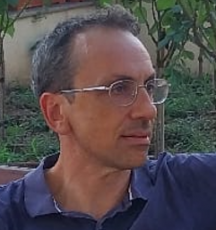
Felix Schindler is a Researcher at the Institute for Analysis and Numerical Analysis , part of the Department of Mathematics and Computer Science at the University of Münster . His work bridges numerical analysis, machine learning, and scientific computing, with a focus on model reduction for partial differential equations (PDEs), adaptive algorithms, and computational efficiency. Research Interests include: Numerical analysis of parametric and multiscale PDEs Localized reduced basis methods (LRBM) and adaptive enrichment Integration of model order reduction (MOR) with machine learning (ML) Conservative flux reconstruction techniques Development of software libraries like dune-xt and pyMOR Recent Publications highlight trends in applying deep kernel models for surrogate modeling, localized training strategies for PDE-constrained optimization, and hybrid full/reduced-order pipelines for reactive flow prediction. His work emphasizes certified error control, hierarchical adaptivity, and cross-disciplinary computational frameworks. Collaborations span institutions such as AIMS Senegal, Springer Nature, and DUNE project teams. He actively contributes to conferences like GAMM, ENUMATH, and Algoritmy.
Julian Givi serves as an Associate Professor in the Department of Marketing at West Virginia University, where his research focuses on consumer behavior with exceptional emphasis on gift-giving phenomena. Recognized as one of the world's most prolific scholars in gift-giving research, he examines psychological mechanisms driving consumer decisions across diverse contexts including social invitations, AI interactions, and charitable behavior. His academic credentials include: Ph.D. in Marketing from Carnegie Mellon University B.S.B.A. in Finance from the University of Pittsburgh Dr. Givi's research program investigates fundamental questions about how consumers navigate social transactions, particularly examining discrepancies between givers' and recipients' perspectives. His work spans gift exchange taboos, mindful gifting frameworks, AI-authorship effects, invitation psychology, and charitable giving motivations. He employs experimental methodologies to uncover cognitive biases and social norms influencing consumer choices, often revealing counterintuitive findings about human behavior in commercial contexts. Analysis of his recent publications (2023-2025) reveals dominant themes in gift-giving psychology, with emerging focus on digital transformation impacts (AI-generated content, digital gift cards) and sociopolitical dimensions of consumer behavior. His work consistently appears in premier journals including Journal of Consumer Psychology, Journal of Personality and Social Psychology, and Journal of Business Research, demonstrating interdisciplinary impact across marketing and social psychology. While no formal scientific awards are documented in the source material, Dr. Givi's research has achieved extraordinary media penetration across global platforms. His advising activities and grant funding remain unspecified in available materials, though his extensive publication record suggests robust research mentorship. Media engagement constitutes a significant dimension of his scholarly impact, with frequent appearances in major outlets. No dedicated research laboratories or specialized teams are mentioned in the provided documentation.
Håkon Andreas Hoel serves as an Associate Professor in the Department of Mathematics at the University of Oslo, specializing in numerical methods for stochastic and partial differential equations, Monte Carlo techniques, and data assimilation. His work bridges theoretical probability with practical computational challenges in scientific modeling. His academic credentials include a PhD in Numerical Analysis from the Royal Institute of Technology (KTH) in Stockholm (2007-2012), preceded by a Master's (2006) and Bachelor's (2004) in Computational Science from the University of Oslo. Professional experience spans postdoctoral roles at KAUST, EPFL, and UiO, along with a junior professorship at RWTH Aachen (2019-2022). Research centers on developing efficient algorithms for uncertainty quantification, particularly multilevel Monte Carlo methods and ensemble Kalman filtering. His publications demonstrate consistent innovation in reducing computational costs for high-dimensional stochastic simulations while maintaining accuracy, with applications across natural sciences and engineering disciplines. Analysis of recent publications reveals a strong trajectory toward adaptive multilevel frameworks for spatio-temporal data assimilation, integrating statistical inference with numerical solution techniques for complex stochastic systems. This work emphasizes theoretical rigor alongside practical implementation challenges. No scientific awards or honors were documented in the source materials. The provided texts contain no information regarding graduate students supervised or research grants administered by Dr. Hoel. He is actively affiliated with the Computational Mathematics research group at UiO, which focuses on differential equations and computational methods within the Department of Mathematics.
Associate Professor Nguyen Thien Nam is a Senior Lecturer at the Faculty of Linguistics, Vietnamese Language and Vietnam Studies at the University of Social Sciences and Humanities, Vietnam National University (VNU). Appointed as an Associate Professor in 2010, he holds a PhD in Linguistics from VNU (2001) and has dedicated his career to advancing Vietnamese language education for foreign learners. Born in 1960, Dr. Nguyen graduated from Hanoi University of Science with a Literature degree in 1980, completed graduate training at Tokyo University of Foreign Studies (1992-1994), and possesses proficiency in English, Japanese, and Khmer (each at level C). His academic journey reflects a deep commitment to cross-cultural language understanding. Dr. Nguyen's research focuses on Vietnamese linguistics, grammar systems, and innovative teaching methodologies for Vietnamese as a foreign language. His extensive publication record demonstrates particular expertise in identifying and addressing error patterns among foreign learners, with numerous studies on grammatical structures, vocabulary usage, and cultural aspects of Vietnamese language acquisition. His work bridges theoretical linguistics with practical teaching applications. His scholarly output shows a clear evolution from foundational textbooks in the 1980s-1990s to more specialized research on error analysis and pedagogical approaches. Recent publications (2014-2017) reflect engagement with contemporary language teaching paradigms, particularly the post-method era and specialized Vietnamese instruction. Designing training programs for Vietnamese language teachers (2007) Developing the Vietnamese Language Proficiency Framework (2015) Enhancing online Vietnamese teaching for overseas Vietnamese (2017-2020) Dr. Nguyen's leadership in these major projects demonstrates his significant contribution to standardizing and modernizing Vietnamese language education both in Vietnam and internationally, while his comparative cultural studies (notably on Vietnamese-Japanese chopstick culture) reveal the interdisciplinary nature of his scholarship.
Prof. dr. Jeroen de Mast is a faculty member at the University of Amsterdam (UvA) , affiliated with the Faculty of Economics and Business and the Section Business Analytics . His research focuses on Lean Six Sigma , statistical engineering , and diagnostic problem solving , with applications in healthcare operations and industrial processes. He has authored numerous publications on topics such as variation reduction, measurement systems, and quality improvement frameworks. Academic Rank: Professor Contact: j.demast@uva.nl Research Trends (2019–2025): His work spans operational excellence , appointment scheduling optimization , and statistical validation , emphasizing interdisciplinary collaboration between statistics, healthcare, and business analytics. Key methodologies include DMAIC , DAPS diagrams , and adaptive polynomials .
Melissa McInerney serves as Professor of Economics and Professor of Community Health at Tufts University's School of Arts and Sciences. Her academic appointments span both the Department of Economics and Community Health, reflecting her interdisciplinary research focus at the intersection of economic policy and health outcomes. She has established herself as a leading researcher examining Medicare, Medicaid, and broader social policy questions through rigorous economic analysis. Education: PhD in Economics, University of Maryland, College Park (2008) MPP in Education, Social, and Family Policy, Georgetown Public Policy Institute (2002) BA in Mathematics, Carleton College (1998) Professor McInerney's research focuses on Public Economics, Health Economics, Labor Economics, and Applied Microeconomics, with particular emphasis on Medicare and Medicaid policy. Her work examines critical social policy questions including how insurance affects healthcare utilization among seniors, the impact of Medicaid expansion on dual Medicare-Medicaid beneficiaries, racial disparities in healthcare access, and workplace safety issues. She employs sophisticated econometric methods to analyze large datasets including Medicare Current Beneficiary Survey, Health and Retirement Study, and administrative records. Her publication record reveals a consistent focus on policy-relevant research with significant implications for vulnerable populations, particularly seniors and low-income individuals. The trajectory of her work demonstrates increasing sophistication in data linkage methods and growing attention to health disparities by race and ethnicity. Her most recent publications address contemporary issues including the impact of the Affordable Care Act, Medicare-Medicaid dual eligibility, and the effects of the COVID-19 pandemic on vulnerable seniors. Professor McInerney has secured substantial research funding from prestigious institutions including the National Institute on Aging, Agency for Healthcare Research and Quality, Russell Sage Foundation, the United States Department of Labor, the W.E. Upjohn Institute for Labor Research, and the Center for Retirement Research at Boston College. As an active member of the academic community, she serves as a Research Associate at the National Bureau of Economic Research and participates in numerous professional committees. Her teaching portfolio includes undergraduate courses in Labor Economics, Econometrics, Public Economics, and Principles of Microeconomics, as well as graduate courses for the Master of Public Policy program.
Lorenzo Vangelista serves as Associate Professor of Telecommunications at the Department of Information Engineering, University of Padua, Italy, a position held since 2006. He teaches core courses including Internet of Things and Smart Cities, Telecommunications, and Project Management. His academic leadership includes chairing the Information Engineering Degree curriculum from 2010 to 2014. His research expertise spans Internet of Things , Smart Cities , 5G systems (with focus on machine-to-machine traffic), DVB systems , and OFDM-based communications . He is a pioneer in LoRa and LPWAN technologies, contributing to standardization bodies such as IEEE 802.11, 3GPP, ETSI, and the LoRa Alliance. His work integrates statistical signal processing , embedded systems design , and protocol development for next-generation wireless networks. With over 80 publications, his recent work explores LoRaWAN enhancements for satellite IoT, vehicular communications, and interstellar optical systems. Key innovations include golden modulation for massive IoT and machine learning applications for network optimization. His research bridges theoretical advances with real-world deployment, as seen in field tests for vehicle-to-roadside communication and underwater acoustic modems. Professor Vangelista has supervised nine PhD students (including a dual PhD with Supèlec, Paris) and numerous MSc theses. He led European projects PACIF and SWAP (a Marie Curie best practice) and regional initiatives. His entrepreneurial endeavors include founding Patavina Technologies (acquired by A2ASmartCity in 2017) and Wireless and More, developing IoT solutions like the LoRa Suite. He maintains strong industry ties with Nokia Bell Labs, RAI, and Wisycom, and collaborates with international research centers including CTTC. His standardization contributions notably include co-authoring foundational DVB-T2 papers and serving as ETSI Rapporteur for LPWAN-CSS.
Prof. Dr. Katharina Frosch holds the professorship for General Business Administration with a focus on Human Resource Management at the Brandenburg University of Technology since March 2015. She also serves as the overall project leader for the SCALE-C initiative and has held a research professorship in the field of "Digital- and AI-supported learning at the workplace" since September 2024. Additionally, she has been a member of the Senate of the Brandenburg University of Technology since October 2023. Her research focuses on digitally supported human resource management tools for small and medium-sized enterprises (SMEs), human resource economic analyses in knowledge-intensive sectors, and AI-supported workplace learning. Key research areas include testing digitally supported onboarding processes in SMEs, hybrid approaches to work-integrated learning, and developing low-threshold digital HR tools for the Brandenburg-Berlin metropolitan region. Her work emphasizes professionalizing interactions between HR managers and employees at critical points to improve recruitment, motivation, and retention of skilled workers. Prof. Frosch's recent publications demonstrate a strong trend toward AI-enhanced learning solutions, particularly in microlearning, conversation training, and cybersecurity education. Her research increasingly examines how AI technologies can transform workplace learning while maintaining human elements of communication and trust. The SCALE-C project represents a significant interdisciplinary effort combining cybersecurity, artificial intelligence, and learning design to create semi-automated microlearning content. Best Paper Award at eLmL 2023 for 'Scan to Learn: A Lightweight Approach for Informal Mobile Micro-Learning at the Workplace' Best Paper Award at ICDS 2023 for 'Taking the Matter in Their Own Hands – Can Business Unit Developers Fullfill their Digital Demands with Low-Code Development Platforms?' Prof. Frosch actively collaborates with SMEs and public institutions in the Brandenburg-Berlin metropolitan region, leading a community of researchers, students, and HR practitioners developing Open HRM tools. She offers numerous opportunities for students to participate in research through project work, theses, and the SCALE-C initiative. Her teaching portfolio includes courses on Human Resources and Organization, Strategic Personnel Management, and Applied Research in Personnel Psychology, with a special focus on the Open HRM Hackathon. She leads the Open HRM Community, which conducts regular hackathons to develop functional HR app prototypes. Current projects include scientific support for the Federal Office for Foreign Affairs in implementing psychologically supported digital onboarding approaches, developing digital learning laboratories for workplace competence acquisition in SMEs, and implementing digital HR processes for companies like Autohaus Mothor GmbH.
Dr. QUAN Chen is an Associate Professor at the School of Microelectronics, Southern University of Science and Technology (SUSTech), holding this position since May 2025 after serving as Assistant Professor (2019-2025) and Research Assistant Professor at the University of Hong Kong (2012-2018). A Shenzhen high-level overseas talent, he earned his PhD from the University of Hong Kong and conducts cutting-edge research in electronic design automation. His academic credentials include: Ph.D. from The University of Hong Kong (2010) Master's degree from The University of Hong Kong (2007) Bachelor's degree from Sun Yat-Sen University (2005) Dr. Chen's research pioneers advanced EDA algorithms for large-scale analog/RF circuit simulation, post-Moore multi-physics analysis, and AI-assisted design technologies. His work addresses critical challenges in nanodevice modeling and quantum computing circuits, resulting in over 50 publications in top venues like IEEE TCAD and DAC, plus four Chinese patents. Analysis of his recent publications reveals dominant trends in exponential integrator methods for transient simulation, model order reduction techniques, and physics-informed machine learning for reliability analysis. His work bridges numerical mathematics with practical EDA applications across analog circuits, quantum hardware, and emerging memory technologies. Key recognitions include: Wu Wenjun Artificial Intelligence Science and Technology Award, Second Prize (2020) ICCAD Best Paper Award Nomination (2012) Dr. Chen actively recruits Postdoctoral Fellows, Research Assistants, and Graduate Students while leading major funded projects including NSFC key/general programs and Guangdong Provincial R&D initiatives. His industry partnerships with Huawei, Empyrean, and Guowei Group translate theoretical advances into real-world EDA solutions. He directs a specialized research group at SUSTech focused on computational methods for next-generation circuit design, fostering innovation in simulation algorithms and multi-physics analysis through academic-industry collaboration.
Jonas Olson is Professor of Practical Philosophy at Stockholm University and serves as Vice Dean of the Faculty of Humanities for the term 2024-2027. He is based at the Department of Philosophy, with office in room D 720 at Universitetsvägen 10 D. Olson holds significant administrative responsibilities, serving as Chair of the Teacher Proposal Committee and as a member of numerous university committees including the Area Committee for Human Sciences, Faculty Committee for Humanities, Budget Committee, BUGA (Committee for Education at Undergraduate and Advanced Level), HUGO (Working Group for Education and Quality Issues), and RALV (Council for Work Environment and Equal Opportunities). Olson's academic journey includes: Ph.D. in Practical Philosophy, Uppsala University (2005) M.A. in Practical Philosophy, Lund University (2001) University Lecturer in Practical Philosophy, Stockholm University (since 2008) Tutorial Fellow and Departmental Lecturer at University of Oxford (2005-2008) Assistant Lecturer at University of Otago, New Zealand (2004-2005) His research focuses primarily on metaethics, with special emphasis on moral error theory, value theory, and the intersection of moral philosophy with epistemology. Olson's work consistently engages with historical figures including Hume, Brentano, and Moore while addressing contemporary debates in normative ethics. His scholarship demonstrates particular interest in moral nihilism, expressivism, and the metaphysics of reasons, often exploring how historical perspectives inform current metaethical discussions. Analysis of his recent publications reveals continued development of his work on moral error theory, with increasing attention to its practical implications for moral discourse and practice. His writing shows strong engagement with contemporary debates about moral fictionalism, normative certitude, and the relationship between moral and epistemic error theories. Key scholarly contributions include: Author of "Moral Error Theory: History, Critique, Defense" (Oxford University Press, 2014), which received significant attention including a book symposium in Journal of Moral Philosophy Co-editor of "The Oxford Handbook of Value Theory" (2015) Co-editor of "Theories of Justice and Rights, by J. L. Mackie" (2024) Olson leads major research projects including "If Nothing Matters: Normative Nihilism and Its Implications" (funded by the Swedish Research Council since 2020) and "'A Controversy Started of Late': Rationalism and Sentimentalism in 18th Century Metaethics" (funded by the Bank of Sweden Tercentenary Foundation from 2014-2017). He serves as Editor of the Library of Theory book series since 2022 and contributes regularly to public discourse through essays in DN Kultur, Flamman, and other media outlets.
Nicolas Ballier is a Professor at Université Paris Cité (formerly Université Paris Diderot), where he teaches and conducts research in linguistics and digital humanities. Previously, he taught at the Université de Rouen and Paris 13. His work focuses on the intersection of linguistics, computational methods, and language learning technologies, with particular expertise in neural machine translation and speech processing. His primary research interests include: Corpus prosody Neural machine translation Automatic analysis of learner corpora Digital humanities Epistemology of linguistics (third revolution of grammatisation) Interpretability of neural machine translation systems Representation of speech in Whisper audio models Dr. Ballier's recent work explores how computers transform linguistic data (the 'third revolution of grammatisation'), with a focus on neural machine translation interpretability and speech analysis using large language models like Whisper. His research bridges theoretical linguistics with practical applications in language learning and translation technologies, particularly focusing on how these technologies can be made transparent and useful for translators and language learners. His 15 most recent publications (2022-2024) demonstrate a strong focus on neural machine translation interpretability, Whisper applications for language assessment, and learner corpus analysis. The publications span multiple prestigious venues including EAMT, ACL, LREC-COLING, and specialized journals in speech technology and computational linguistics, showing consistent productivity and impact in his fields. Dr. Ballier has been PI or team member on numerous European-funded projects including DOKTORAND (2012-2016), KVARK project (2014-2026), PHC Ulysses (2019), multitraiNMT (2021), and LT-LIder project (2024-Nov 2026). He has developed platforms like PAPTAN for neural machine translation experiments and MAKE-NMT VIZ for investigating machine translation interpretability. He has supervised PhD students through collaborative projects and has been involved in research initiatives like DLLA (Deep Learning for Language Assessment) exploring CEFR levels with keylog data, Neuroviz (2021-2022), and SPECTRANS (2020-2022) focusing on specialized neural translation and probing information flow in neural networks.
Jochen Merker serves as Professor for Analysis and Optimization at the Faculty of Computer Science and Media, Leipzig University of Applied Sciences (HTWK Leipzig). His academic profile demonstrates deep expertise in mathematical analysis, numerical methods, and computational mathematics with applications across various scientific domains. Institution: Leipzig University of Applied Sciences (HTWK Leipzig) Faculty: Computer Science and Media Position: Professor for Analysis and Optimization Contact: Available by appointment via email Professor Merker's research spans multiple mathematical disciplines with particular emphasis on partial differential equations, numerical analysis, and mathematical modeling. His work bridges theoretical mathematics with practical applications in fluid mechanics, epidemiology, and machine learning. He has made significant contributions to the understanding of doubly nonlinear evolution equations, positivity preservation in numerical methods, and rate-induced tipping phenomena. His research demonstrates how advanced mathematical techniques can solve complex problems in physical systems and data science. Analysis of his publication trends reveals a consistent focus on mathematical rigor combined with practical applicability. His recent work shows increasing integration of mathematical theory with computational approaches, particularly in digital learning environments and e-assessment systems for STEM education. The interdisciplinary nature of his publications demonstrates how mathematical analysis serves as a foundation for solving problems across physics, engineering, epidemiology, and computer science. Primary research areas: Mathematical Analysis, Numerical Methods, Partial Differential Equations Application domains: Fluid Mechanics, Epidemiology, Machine Learning Methodological focus: Positivity preservation, Maximum principles, Numerical stability Educational contributions: Digital teaching in STEM fields, E-assessment systems Professor Merker actively contributes to the academic community through his research publications and educational initiatives. His work on digital teaching methods for STEM disciplines reflects his commitment to modernizing mathematical education. While specific grant information isn't available in the provided materials, his extensive publication record suggests sustained research activity across multiple projects. His laboratory or research team likely focuses on computational mathematics and numerical analysis, though specific details aren't provided in the source material.
Oreste Floquet is an Associate Professor in the Department of European, American and Intercultural Studies at Sapienza University of Rome. His academic work focuses on French linguistics with special expertise in African Francophonies, particularly in Niger and West Africa. Professor Floquet's research spans multiple linguistic subfields including sociolinguistics, historical linguistics, phonology, syntax, and language acquisition. His work consistently examines language variation in postcolonial contexts, with particular attention to metalinguistic awareness - how speakers perceive and reflect on their own language use. His publications demonstrate expertise in analyzing French language phenomena across diverse contexts including metropolitan France, West Africa, and Italy. Analysis of Professor Floquet's recent publications reveals a strong emphasis on African Francophonies, with numerous studies examining French language variation in Niger, Ivory Coast, and Benin. His research explores the intersection of linguistic theory and sociolinguistic reality, particularly focusing on phonological phenomena like liaison, syntactic structures including negation and pronominal verbs, and orthographic awareness in multilingual contexts. A recurring theme throughout his work is the relationship between language structure and speaker perception. Professor Floquet teaches French language and linguistics across multiple degree programs at Sapienza University, including courses for Sustainable Tourism Sciences, Modern Philology, History/Anthropology/Religions, Linguistics, Intercultural Mediation, and Fashion Sciences. He works with teaching assistants Marta Tomassetti and Martina Bocci to support students with exam preparation and materials. His office hours are available by appointment in room 336 (third floor, Marco Polo building) or via Zoom.
Mohamed Najim is a Professor at IMS Bordeaux (Laboratoire de l'intégration, du matériau au système) affiliated with the University of Bordeaux. He is a member of the Signal and Image Processing research group within the MOTIVE team, where he conducts cutting-edge research in multidimensional signal processing and image analysis. His work spans theoretical developments in signal modeling and practical applications in speech enhancement, image colorization, and communication systems. Professor Najim's research interests focus on advanced signal processing techniques, with particular expertise in autoregressive modeling, Kalman filtering, generative adversarial networks, and multidimensional system analysis. His work bridges theoretical signal processing with practical applications in image processing, speech enhancement, and wireless communications. He has made significant contributions to the development of novel algorithms for texture analysis, channel modeling, and noise reduction in various signal processing contexts. The analysis of his publication record spanning over 25 years reveals a consistent research trajectory focused on fundamental signal processing techniques with expanding applications into modern deep learning approaches. His recent work demonstrates a clear progression from traditional signal processing methods toward integrating machine learning techniques, particularly evident in his 2023 SPDGAN paper which combines manifold learning with generative adversarial networks for image colorization. Throughout his career, Professor Najim has maintained strong theoretical foundations while adapting to emerging technologies in the field. Mohamed Najim has supervised numerous research projects and collaborated extensively with colleagues across institutions. His work shows consistent funding support through participation in various research programs focused on signal processing applications. He has maintained active research collaborations with institutions including CNRS and HESAM University. Professor Najim conducts his research within the IMS laboratory, a leading research center for integration from materials to systems. The laboratory provides state-of-the-art facilities for signal processing research, including specialized computing resources for image processing and speech analysis. His work within the MOTIVE team focuses on developing innovative approaches to complex signal processing challenges across multiple application domains.
Jocelyn Read serves as Professor of Physics at California State University Fullerton, where she bridges nuclear physics and astrophysics through gravitational-wave observations. From 2016 to 2022, she co-led the Extreme Matter team within the LIGO-Virgo-Kagra Collaboration, directing efforts to extract neutron-star equation-of-state constraints from gravitational-wave data. She currently contributes to Cosmic Explorer, a next-generation gravitational-wave observatory project designed to achieve unprecedented sensitivity for probing dense matter physics. Her research program centers on connecting theoretical nuclear physics with observational gravitational-wave astronomy, specifically investigating how neutron-star mergers reveal properties of matter at supranuclear densities. By analyzing signals from events like GW170817 and GW190425, her work constrains the equation of state governing neutron-star interiors and examines tidal effects in binary systems. This research directly impacts fundamental questions about phase transitions in dense matter and the maximum mass of neutron stars. Analysis of her 15 most recent publications (2019-2023) reveals three dominant research thrusts: gravitational-wave data analysis of compact binary mergers (particularly using LIGO-Virgo-Kagra catalogs), equation-of-state modeling for neutron-star matter, and science-case development for future detectors like Cosmic Explorer. Her work consistently integrates multi-messenger astronomy approaches and advances waveform modeling techniques to extract maximum physical insight from gravitational-wave observations. Her scientific recognition includes: Fellow of the American Physical Society While specific student advisement details are not publicly documented, her leadership roles in major collaborations indicate significant mentoring contributions within the gravitational-wave community. Her grant activities remain unreported in available sources, though her Cosmic Explorer involvement suggests participation in large-scale instrumentation projects. She maintains active roles in the LIGO-Virgo-Kagra Collaboration's scientific working groups and is a key contributor to the Cosmic Explorer project, which aims to deploy a 40-km arm-length detector by the 2030s. Her work within the Nicholas and Lee Begovich Center for Gravitational-Wave Physics and Astronomy at CSU Fullerton positions her at the forefront of next-generation gravitational-wave science development.