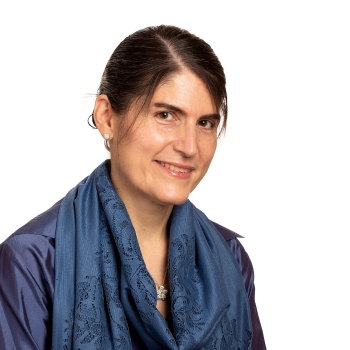
M. Laura Beninati is an Associate Professor of Mechanical Engineering at Bucknell University. She holds dual B.S. degrees in Architectural and Civil Engineering from Drexel University (1994), M.S. in Civil and Mechanical Engineering from Drexel (1997), and a Ph.D. in Mechanical Engineering from the University of Iowa (2004). Her research focuses on environmental fluid mechanics, sediment transport, turbulence dynamics, and experimental fluid mechanics instrumentation. She teaches courses in fluid mechanics, thermodynamics, and engineering experimentation. Awards: Lindback Grant (2007), Swanson Research Fellow (2005-2007), Amelia Earhart Scholarship (2002-2003) Her experimental studies emphasize vortex dynamics and turbulence interactions in fluid flows, with applications to environmental and aerospace engineering. Research methodologies include advanced fluid dynamics instrumentation and computational modeling.
Xiaowen Zhang is a Professor of Computer Science at the College of Staten Island (CSI), City University of New York (CUNY), and a Doctoral Faculty Member at the CUNY Graduate Center. His academic work bridges theoretical and applied research in cybersecurity, information systems, and network technologies. Dr. Zhang holds a Ph.D. in Computer Science from the CUNY Graduate Center (2007) and a Ph.D. in Electrical Engineering from Northern Jiaotong University (1999), along with an M.A. from CUNY Queens College, an M.S. from Northern Jiaotong University, and a B.S. from Shanxi University. His research focuses on Cryptography, Information Security, Cybersecurity, Secure Biometrics, RFID Security & Privacy, Information Retrieval, and Wireless Sensor Networks . He explores both foundational cryptographic methods—such as secret sharing schemes and hash functions—and their practical implementations in secure systems, including RFID authentication protocols and data visualization platforms for sensor networks. The analysis of his recent publications reveals a consistent focus on security mechanisms in distributed and wireless environments . His work frequently combines cryptographic theory with system-level implementations, particularly in RFID and sensor networks. There is a strong trend toward privacy-preserving protocols, efficient data retrieval, and secure information sharing , often leveraging mathematical structures like Latin squares and Bloom filters. Dr. Zhang has been actively involved in mentoring students, as evidenced by numerous co-authored publications with graduate and undergraduate researchers. His contributions span journals such as Security and Communication Networks , Journal of Applied Security Research , and International Journal of Security and Networks , as well as major conferences including IEEE LISAT, ACM CODASPY, and IEEE Sarnoff Symposium.
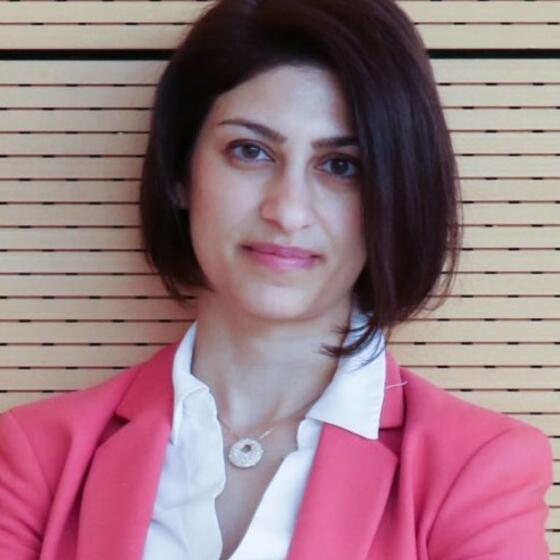
Martha Constantinou is an Associate Professor of Physics at Temple University, specializing in Theoretical/Computational Nuclear Physics with a focus on Lattice Quantum Chromodynamics (QCD). Her research addresses fundamental questions in hadron structure, including nucleon spin content and proton radius puzzles, leveraging supercomputing resources. She leads a group conducting advanced numerical simulations at major computational facilities. Constantinou holds a Ph.D. in Theoretical Computational Physics (University of Cyprus, 2008) and a BS in Physics (University of Cyprus, 2003). Her work aligns with the upcoming Electron-Ion Collider (EIC) at Brookhaven National Lab, aiming to explore nucleon structure and dark matter connections. Key research areas include generalized parton distributions (GPDs), axial form factors, and high-performance computing applications. Notable awards include the US Department of Energy Early Career Award (2019) and the Selma Lee Bloch Brown Professorship (2020). Her publications (15 most recent listed) emphasize Lattice QCD advancements, with contributions to GPDs, quark-gluon momentum partitioning, and EIC theory. She actively promotes STEM outreach and public engagement through collaborative initiatives.
Claudia Patricia Ayala Martinez serves as a Lecturer in the Department of Service and Information Systems Engineering at the Barcelona School of Informatics (FIB), Polytechnic University of Catalonia (UPC). She is actively involved in research through the GESSI - Group of Software and Service Engineering and the UPC inSSIDE - integrated Software, Services, Information and Data Engineering research groups. Her career spans over two decades of academic contributions in software engineering with consistent publication output. Dr. Ayala Martinez's research focuses on Empirical Software Engineering, Off-The-Shelf Adoption, Requirements Engineering, and Software and Architectural Quality. Her work demonstrates an evolution from traditional software engineering topics toward increasing integration with machine learning and AI systems. Recent publications show particular emphasis on software quality indicators, ML pipeline design principles, trustworthiness of ML models, and green computing in software systems. Analyzing her publication trends reveals a consistent research trajectory with growing focus on AI/ML integration in software engineering. Her work spans empirical studies, systematic literature reviews, and practical industrial applications. The research shows strong connections between software quality metrics, architectural decisions, and emerging technologies, with increasing attention to ethical considerations in ML systems and sustainability in software development. Most-Influential Paper Award at the 30th IEEE International Requirements Engineering Conference Dr. Ayala Martinez has participated in numerous competitive R&D projects including those funded by the Spanish National Research Plan, Horizon 2020, and the Catalan Innovation Strategy. Her collaborative network includes extensive work with Professor Javier Franch Gutierrez (69 joint publications), Silverio Juan Martinez Fernandez (26 joint publications), and Cristina Gomez Seoane (20 joint publications). Her research has been supported by various national and European funding programs focusing on software engineering, quality assessment, and open source adoption. She is actively involved with the GESSI and inSSIDE research groups at UPC, which focus on integrated software, services, information, and data engineering. These groups maintain strong industry connections and have produced significant research in empirical software engineering, reference architectures, and quality assessment methodologies. Her recent work shows increasing collaboration with researchers working at the intersection of software engineering and artificial intelligence.
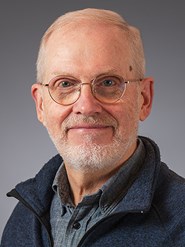
Martin Berggren is a Professor at the Department of Computing Science , Umeå University , Sweden. His work focuses on Computational Design Optimization , combining computer simulations and numerical optimization to enhance engineering designs for devices like antennas, microwave components, and loudspeakers. Berggren is also active in mathematical modeling of physical phenomena, particularly wave propagation and fluid mechanics, with a strong emphasis on finite-element methods . His research addresses large-scale conceptual design problems using thousands to millions of design variables, relying on gradient-based algorithms and adjoint-based computations of design sensitivities—similar to back-propagation in deep learning. Key application areas include acoustic and electromagnetic devices, where he investigates damping mechanisms, boundary conditions, and material distribution. Other interests, though less active, involve flow control and unsteady fluid–structure interaction . Berggren collaborates extensively on projects such as Structured Regularization , Topology Optimization of Acoustic Black Holes , and Design of Microstrip-to-Waveguide Transitions . His publications span journals like Journal of Computational Physics , Pattern Analysis and Applications , and IEEE Transactions on Antennas and Propagation , often co-authored with researchers like Linus Hägg , Eddie Wadbro , and Disi Lin .
Michio Sugeno is a distinguished Professor at Tokyo Institute of Technology's Graduate School of Information Science and Engineering, Department of Computational Intelligence. With a career spanning over four decades, he has established himself as a leading figure in fuzzy systems and computational intelligence. His research interests encompass Fuzzy Systems, Computational Intelligence, Nonlinear Control, Choquet Integral theory, Brain-Computer Interfaces, and Linguistic Computing. Sugeno's work has fundamentally shaped modern fuzzy control theory, particularly through his development of the Takagi-Sugeno fuzzy model which has become a standard approach in industrial applications. Analysis of his recent publications reveals a continued focus on piecewise nonlinear modeling, stability analysis of fuzzy systems, and the application of Choquet calculus to various computational problems. His work demonstrates a consistent trajectory from theoretical foundations to practical implementations in control systems and intelligent computing. IEEE Pioneer Award in Fuzzy Systems IFSA Fellow Emanuel R. Piore Award Sugeno has mentored numerous researchers who have become prominent in their own right, including Tadanari Taniguchi, Luka Eciolaza, and Anh-Tu Nguyen. His laboratory has been instrumental in developing novel approaches to nonlinear control systems using piecewise bilinear models and fuzzy logic. Current research directions include brain-computer interfaces using EEG analysis and the development of everyday language computing systems that enable more natural human-computer interaction.
Albert S. Berahas is an Assistant Professor in the Department of Industrial and Operations Engineering at the University of Michigan's College of Engineering. He joined the university in 2020 after completing postdoctoral positions at Lehigh University (2018-2020) and Northwestern University (2018). He holds a PhD in Engineering Sciences and Applied Mathematics from Northwestern University (2018), an MS in Applied Mathematics from Northwestern (2012), and a BSE in Operations Research and Industrial Engineering from Cornell University (2009). His research focuses on designing, developing, analyzing, and implementing algorithms for solving large-scale nonlinear optimization problems. His work spans multiple sub-fields including constrained optimization, optimization for machine learning, stochastic optimization, derivative-free optimization, and decentralized optimization. He is affiliated with the Michigan Institute for Data Science (MIDAS), the Michigan Institute for Computational Discovery and Engineering (MICDE), and the Michigan Center for Applied and Interdisciplinary Mathematics (MCAIM). Berahas has received numerous honors including the Charles Broyden Prize (2025), the Air Force Office of Scientific Research Young Investigator Program award (2025), the IISE Operations Research Division Teaching Award (2024), and the North Campus Dean's MLK Spirit Award for Community Building & Impact (2024). His recent publications demonstrate strong activity in developing novel optimization frameworks with theoretical guarantees for challenging problem settings. His research has been supported by significant grants including from the Office of Naval Research (ONR) and the Air Force Office of Scientific Research. He actively mentors PhD students and has successfully advised Jiahao Shi, who defended his dissertation in March 2025 and joined Amazon. Berahas is also engaged in community outreach, particularly through initiatives like Engage Detroit that aim to empower Detroit's next generation of engineers.
Martin Huber is Professor of Applied Econometrics and Policy Evaluation at the University of Fribourg, Switzerland, within the Faculty of Management, Economics and Social Sciences, Department of Economics. He leads the Chair of Applied Econometrics and maintains an active research profile with numerous publications in top economics and statistics journals. His work bridges theoretical econometrics with practical policy applications across multiple domains including labor, health, and education economics. Professor Huber earned his Ph.D. in Economics and Finance in 2010 and served as Assistant Professor at the University of St. Gallen until 2014. He has conducted research stays at Harvard University (2011/2012) and the University of Sydney (2014 and 2019), establishing an international research network. His academic affiliations include the Committee for Econometrics of the Verein für Socialpolitik, Global Labor Organization, Soda Labs (Monash Business School), and Centre for European Economic Research (ZEW) Mannheim. Huber's research focuses on data-based causal analysis , machine learning applications in economics , and policy evaluation methods . He specializes in developing and applying statistical and econometric methods for measuring causal effects, with particular emphasis on semi- and nonparametric microeconometrics. His work spans labor economics (gender occupational segregation, maternal labor supply), health economics, education policy, and competition policy (bid-rigging cartels detection). His recent publications (2023-2025) demonstrate a clear trajectory toward integrating machine learning techniques with traditional econometric methods for causal inference. This includes developing frameworks for causal discovery, improving difference-in-differences methods with machine learning, and creating novel approaches for detecting collusion in markets. His 2023 book "Causal Analysis: Impact Evaluation and Causal Machine Learning with Applications in R" (MIT Press) has become a key reference in the field. As an active researcher, Professor Huber directs several research projects including experimental evaluations of gender occupational segregation in the Swiss apprenticeship market. His work combines theoretical rigor with practical policy relevance, often employing experimental and quasi-experimental methods to address questions of causal mechanisms in social and economic phenomena. Through his Chair of Applied Econometrics, Huber supervises Ph.D. students and maintains an active research group focused on advancing causal inference methodologies. His work has significant implications for evidence-based policymaking across multiple sectors, particularly in evaluating the effectiveness of social programs and economic policies.
Peter Oppeneer is a Professor in the Materials Theory group within the Department of Physics and Astronomy at Uppsala University, Sweden. His research program focuses on theoretical condensed matter physics with emphasis on ultrafast phenomena and magnetic materials. His research interests span femtosecond magnetism, ultrafast spin and orbital currents, out-of-equilibrium magnon and phonon dynamics, unconventional superconductivity, multipolar and hidden order parameters, and orbitronics. The group develops both analytical theories and numerical simulation codes, combining ab initio methods with model Hamiltonian approaches. Key research thrusts include ultrafast demagnetization mechanisms, spin-crossover materials, molecular spintronics, and topological quantum states in magnetic materials. Analysis of recent publications reveals strong focus on altermagnetism, terahertz spin dynamics, Dirac semimetals, and laser-induced phase transitions. The group's work bridges fundamental quantum theory with applications in next-generation spintronic devices and ultrafast magnetic switching technologies. Collaborative activities include work with experimental groups on ultrafast spectroscopy, X-ray magnetic circular dichroism, and terahertz emission studies. The group maintains active collaborations across Europe and internationally, particularly in the areas of femtosecond magnetism and topological materials. Research infrastructure includes development of specialized computational codes for Eliashberg theory, dynamical mean field theory, and ultrafast spin dynamics simulations. The group contributes to major international facilities including synchrotron and free-electron laser sources for time-resolved studies.
Toshiharu Sugawara is a Professor in the Department of Computer Science and Engineering at Waseda University's Faculty of Science and Engineering, School of Fundamental Science and Engineering, a position he has held since April 2007. With a Ph.D. in Engineering from Waseda University, his research spans multiple domains in artificial intelligence and multi-agent systems, maintaining active collaborations across international institutions and contributing significantly to the field through numerous publications and awards. Dr. Sugawara received his BS and MS degrees in Mathematics from Waseda University in 1980 and 1982, respectively, followed by his Ph.D. in 1992. Before joining Waseda University as faculty, he worked as a Research Scientist at NTT Laboratories from 1982 to 2007, with a visiting researcher position at the University of Massachusetts at Amherst in 1992-1993. He also held part-time lecturer positions at University of Electro-Communications (2003-2007), Waseda University (2004-2006), and Tokyo University of Agriculture and Technology (1990-1991). His research interests focus on artificial intelligence with particular expertise in multi-agent systems, machine learning, cooperation and coordination mechanisms, soft computing, computational social science, and social informatics. His work bridges theoretical foundations with practical applications in network management and information systems. Recent publications demonstrate a strong trajectory toward interpretable multi-agent reinforcement learning, efficient path planning algorithms, and modeling social behaviors in complex networks. His research group has made significant contributions to multi-agent path finding, cooperative task execution, and understanding virtual economies in social media platforms. Dr. Sugawara has received numerous prestigious awards including multiple Best Paper Awards at JAWS conferences (2014, 2015, 2018), ACM SAC 2015, and various research paper awards from Japanese academic societies. His work on multi-agent systems has been consistently recognized for its theoretical rigor and practical impact. As an advisor, Dr. Sugawara has mentored numerous students who have become prominent researchers in their own right, with many co-authoring papers that have received awards. His laboratory maintains strong collaborations with industry partners, particularly in the areas of network management and intelligent systems. Current research directions include developing interpretable multi-agent reinforcement learning frameworks, optimizing multi-agent coordination in constrained environments, and analyzing social dynamics in virtual economies.
Matthias Schlottbom is an Associate Professor specializing in Mathematics of Computational Science, with a focus on numerical methods and their applications in physics, biology, and engineering. His research integrates advanced computational techniques with interdisciplinary problems, including radiative transfer, photonic crystals, and chemotaxis modeling. Research Interests: Schlottbom’s work spans numerical analysis, finite element methods, and machine learning. He develops high-order discretization schemes, iterative solvers for anisotropic transport, and mathematical frameworks for biological network formation. Publications: Recent articles highlight his contributions to accelerating radiative transfer simulations, extending component mode synthesis for Helmholtz equations, and analyzing diffusion limits in kinetic models. His work often bridges computational mathematics with practical applications in photonics and multiscale systems. Collaborations: He actively collaborates on datasets for optical simulations, radiative transfer algorithms, and photonic crystal modeling, contributing to open-access repositories like 4TU.Centre and Zenodo. Activities: Schlottbom has organized workshops such as the Kinetic Theory Workshop in the Netherlands and delivered keynotes on residual minimization and data-driven methods for transport equations. Scientific Awards: No specific awards or fellowships are mentioned in the provided materials. Advising & Grants: Details about students, advising roles, or grant funding are not included in the available data.
Matteo Brunelli is Associate Professor of “Mathematical Methods of Economics and Actuarial and Financial Sciences” at the University of Trento , Department of Industrial Engineering, and Adjunct Professor (docent) at Lappeenranta University of Technology , Finland. He is nationally habilitated as Full Professor in Italy and has held long-term visiting positions at Berkeley, Turku, Auckland, JAIST and Binghamton. Education: Ph.D. (Doctor of Science) in Information Technologies, Åbo Akademi University, Finland, 2011 – graded Eximia cum laude approbatur M.Sc. in Economics, University of Trento, 2007 – grade 110/110 cum laude B.Sc. in Economics, University of Trento, 2005 Research focus: Brunelli’s work sits at the intersection of multi-criteria decision analysis , operations research and computational optimisation . He develops axiomatic foundations and algorithms for pairwise comparison matrices , consistency indices , the best-worst method and fuzzy preference relations , and applies them to energy planning, sustainable inventory, maintenance scheduling, 3-D printer selection, and blockchain governance. His 2023-2025 articles reveal intensified interest in uncertainty modelling (Dempster-Shafer theory), bi-objective optimisation of inventory and maintenance, and group decision protocols that integrate probabilistic or active-learning components, demonstrating both methodological depth and practical relevance. Scientific awards & grants: Academy of Finland Postdoctoral Researcher grant (€254 670, 2014-2017) Claudio Dematté Research Grant (€19 000, 2008) Teacher of the Year Award, Aalto University (2013 – both Spring & Autumn semesters) Bernard Roy Award 2021 for outstanding contribution to Multiple Criteria Decision Aiding (under-40 category) Supervision & funding: While specific doctoral students are not listed, Brunelli currently supervises graduate theses at Trento and has continuously held competitive national grants. His Academy of Finland project “Consistency of valued preference relations for decision analytics methods” financed three years of full-time research and international collaboration. Editorial & community roles: He serves on the editorial boards of International Journal of General Systems and Mathematical and Computational Applications , and acts as area editor for Journal of Multi-Criteria Decision Analysis , positioning him among the key gatekeepers of the MCDA community.
Silas Alben is a Professor in the Department of Mathematics at the University of Michigan, affiliated with the College of Literature, Science, and the Arts. His research focuses on applied mathematics and mathematical biology, particularly fluid-structure interactions in biological systems. He employs computational simulations and laboratory experiments to study fundamental physics of flexible bodies in fluids. Research interests include biomechanics of swimming organisms, vortex dynamics in fluid-structure interactions, and thermal transport optimization. His work bridges mathematical modeling with experimental validation to understand complex physical phenomena. Publications demonstrate strong focus on fluid dynamics applications, including vortex-enhanced heat transfer, membrane flutter dynamics, and bio-inspired locomotion. Recurring themes include optimization of fluid-structure systems, vortex wake interactions, and computational methods for aeroelastic problems.
Paul Wilson serves as the Grainger Professor of Nuclear Engineering and Chair of the Department of Nuclear Engineering & Engineering Physics at the University of Wisconsin-Madison. His research develops computational tools for modeling nuclear energy systems with applications in radiation shielding, waste management, non-proliferation, and energy policy. Education: PhD in Nuclear Engineering, University of Wisconsin-Madison (1999) Dr.-Ing in Mechanical Engineering, Technical University of Karlsruhe (1998) MS in Nuclear Engineering, University of Wisconsin-Madison (1995) B.A.Sc. in Engineering Science (Nuclear Power option), University of Toronto (1992) Wilson's research spans computational nuclear engineering with emphasis on Monte Carlo methods, nuclear fuel cycles, and proliferation analysis. His Computational Nuclear Engineering Research Group (CNERG) develops simulation tools for radiation transport, waste transmutation, and fusion systems. Key projects include the Infinity Two fusion pilot plant design and Cyclus nuclear fuel cycle simulator. Recent publications reveal strong focus on fusion energy systems (particularly stellarator-based designs like Infinity Two), machine learning applications in nuclear security, and advanced neutronics modeling. His work bridges computational methods with real-world nuclear challenges including waste management and non-proliferation. Scientific awards: Fellow of the American Nuclear Society (2023) American Nuclear Society Young Member Advancement Award (2019) American Nuclear Society Arthur Holly Compton Award (2018) Grainger Professor of Nuclear Engineering (2016) American Nuclear Society Presidential Citation (1996) Wilson advises graduate students through thesis research courses (N E 790/890/990) and has secured significant funding from the U.S. Department of Energy. His consultancy roles include work with CEA Saclay, Karlsruhe Institute of Technology, and the Blue Ribbon Commission on America’s Nuclear Energy Future. He previously served on the Generation IV Technology Roadmap Committee (2001-2003). He leads the Computational Nuclear Engineering Research Group (CNERG), which develops open-source tools including PyNE and Cyclus. The group's work spans fusion pilot plant design, nuclear security applications, and fuel cycle simulation for next-generation nuclear systems.
Jim Dowling is a distributed systems researcher at KTH Royal Institute of Technology, focusing on large-scale distributed systems, machine learning, and big data. His work emphasizes improving system dependability, performance, security, and scalability through middleware, peer-to-peer systems, and cloud-native solutions. He leads courses such as Advanced Course in Large Scale Machine Learning and Deep Learning and Scalable Machine Learning and Deep Learning , demonstrating his commitment to education in AI and distributed computing. His research spans topics like feature stores, Kubernetes integration, and AI-driven environmental analytics (e.g., ANIARA project for edge infrastructure automation and ExtremeEarth for Copernicus data analysis). He has contributed to scalable ML pipelines, cloud storage systems (HopsFS-S3), and hyperparameter optimization tools like Maggy. Key projects include the Hopsworks platform for machine learning operations and the development of cloud-native tools for big data analytics. His work bridges theoretical distributed systems research with practical applications in AI, healthcare, and environmental science. He has advised on numerous collaborative initiatives but no formal students are listed. His grants and lab activities are centered around Hopsworks and the ANIARA project, reflecting his focus on scalable, self-managing systems.