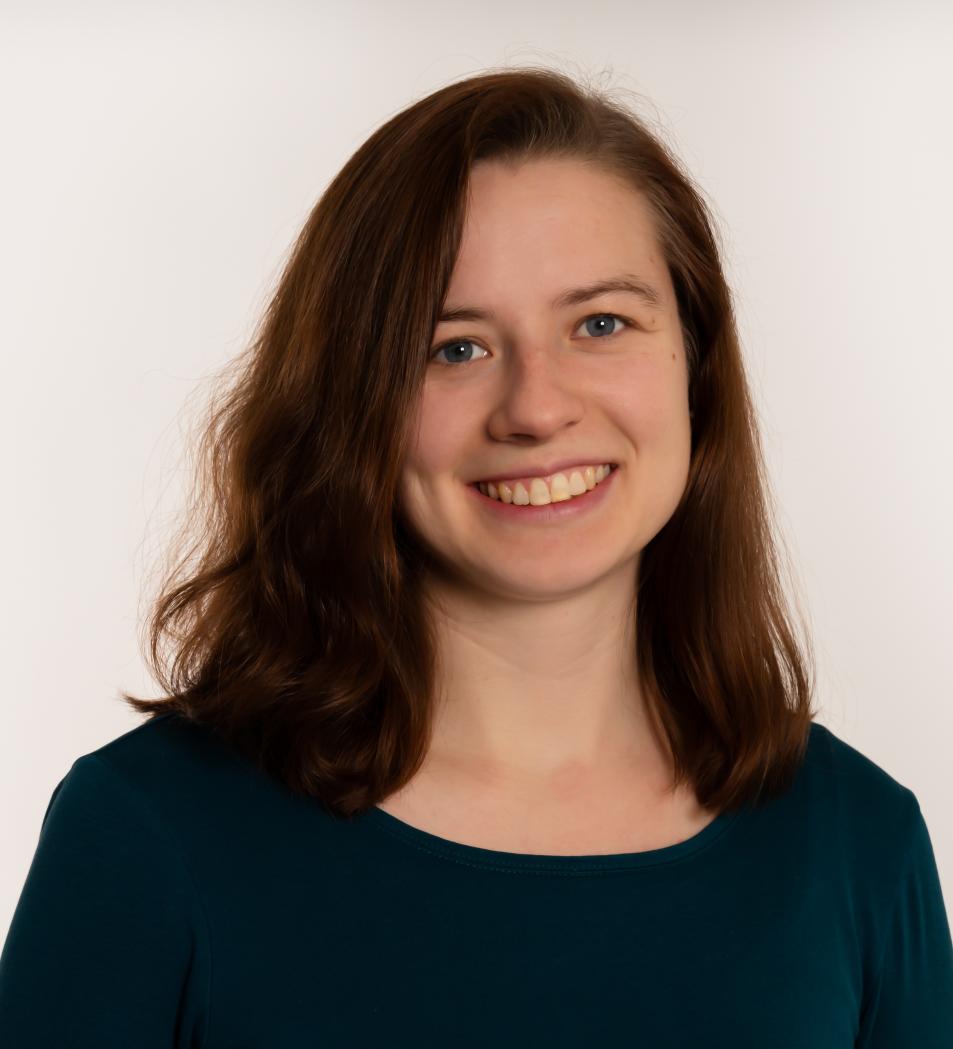
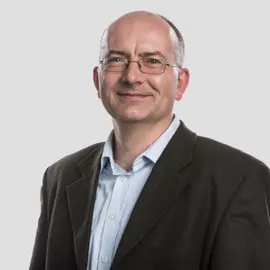
Peter Oehme serves as a Researcher and Doctoral Assistant at the Numerical Algorithms and High-Performance Computing Chair (ANCHP) within the Department of Mathematics, School of Basic Sciences at École Polytechnique Fédérale de Lausanne (EPFL). Concurrently, he is a doctoral candidate in the Doctoral Program in Mathematics (EDMA) and acts as Webmaster for the SIAM Student Chapter, managing its digital presence. His research centers on Numerical Algorithms and High-Performance Computing , with specialization in computational mathematics and parallel algorithm design. These fields focus on developing efficient computational methods for solving complex mathematical problems using advanced parallel architectures, contributing to scientific computing across engineering and physical sciences. As a core member of the ANCHP research group, Peter advances numerical simulation techniques while actively supporting academic community engagement through SIAM. Contact details: peter.oehme@epfl.ch .
Nian Shao is a Researcher at the Department of Mathematics, School of Basic Sciences, École Polytechnique Fédérale de Lausanne (EPFL), affiliated with the Numerical Algorithms and High-Performance Computing group under the CADMOS Chair. His work focuses on computational methods and advanced numerical algorithms. Email: nian.shao@epfl.ch Research interests include Numerical Algorithms , High-Performance Computing , Computational Mathematics , Applied Mathematics , Scientific Computing , and Computer Science . Office: MA B2 454 (Bâtiment MA), Station 8, Lausanne.
Zhipeng Xue is a doctoral student and staff member at École Polytechnique Fédérale de Lausanne (EPFL), affiliated with the Department of Mathematics and the Chair of High-Performance Numerical Algorithms and Simulations. Role: Doctoral Assistant in the HPNALGS laboratory Education: Pursuing a Doctoral Program in Mathematics His research focuses on high-performance numerical algorithms and simulations, aligning with computational mathematics and parallel computing.
Mark Sawley is a Senior Scientist at École Polytechnique Fédérale de Lausanne (EPFL) with dual appointments in the Institute of Mechanical Engineering (IGM) for administration and the School of Management (SGM) for teaching. With over 30 years of experience in academic, government laboratory, and private institutions across Switzerland and Australia, he holds a PhD in Physics and has founded/co-founded two high-tech startup companies. His administrative roles include coordinating ACCES for Computational Engineering promotion and serving as Coordinator for Academic Affairs at the STI Faculty. Dr. Sawley's research spans computational fluid dynamics, discrete element method simulations, and high-performance computing applications. His work bridges multiple disciplines with applications in materials science (concrete simulation), bioengineering (blood flow modeling), marine engineering (America's Cup yacht design), avalanche dynamics, and industrial particulate processing. His recent publications (2018-2021) demonstrate continued activity in applying numerical methods to solve complex engineering problems. His scientific contributions include 37 peer-reviewed journal papers, 58 conference proceedings, and 21 articles for general audiences. His work uniquely connects technical research with science communication through projects like TIMBRE!! and the DEM Gallery, emphasizing the relationship between science and art. 37 scientific papers in international peer-reviewed journals 58 papers in international conference proceedings 21 science communication articles for general audiences Professor Sawley has advised PhD students including Serge Wüthrich (1992) and Olivier Byrde (1997). His Computational Granular Dynamics lab (http://cgd.epfl.ch) provides a platform for interdisciplinary research connecting physics, engineering, and computational science. His administrative leadership in academic affairs and computational engineering promotion demonstrates his commitment to advancing both research and education at EPFL.
Pham-Ba Son is a current researcher at the School of Architecture, Civil and Environmental Engineering at École Polytechnique Fédérale de Lausanne (EPFL), affiliated with the ENAC-IT unit and the Laboratory for Multiscale Mechanics (LSMS). His research focuses on computational mechanics, tribology, and applied mathematics, with publications in areas such as numerical simulations, friction modeling, and multiscale computational methods. Email: son.phamba@epfl.ch
Dr. Surya Gupta is a PostDoc researcher at the University of Basel's Department of Environmental Sciences, Faculty of Science, working within the FG Alewell research group. He joined the university in April 2022 after completing his Ph.D. at ETH Zurich. His research focuses on the intersection of soil science, hydrology, and remote sensing applications, with particular emphasis on digital soil mapping and the relationship between soil properties and erosion processes. Education: Ph.D. in Environmental Sciences (2018-2021), ETH Zurich M.Tech in Remote Sensing and GIS (2013-2015), Indian Institute of Remote Sensing, Dehradun B.Tech in Agricultural Engineering (2009-2013), Punjab Agricultural University, Ludhiana Dr. Gupta's research primarily centers on soil hydraulic properties and their applications in environmental modeling. His work involves developing advanced methods for global and national digital mapping of soil properties, particularly saturated hydraulic conductivity and van Genuchten parameters. He investigates the complex relationship between soil erosion and soil hydraulic properties, examining how incorporating hydraulic properties changes soil erosion modeling outcomes. A significant portion of his research focuses on machine learning applications in soil science, where he works on reducing clustering and overfitting in algorithms while developing Pedo-Transfer Functions (PTFs) and Covariate-based GeoTransfer Functions (CoGTFs). His methodological approach combines extensive field data with remote sensing datasets and sophisticated computational techniques to address critical environmental questions related to soil health and water management. Analysis of Dr. Gupta's recent publications reveals a strong focus on global-scale soil property mapping using machine learning approaches. His research demonstrates increasing sophistication in integrating legacy soil data with modern environmental covariates to produce high-resolution global datasets. A notable trend is his work bridging soil physics with practical applications in erosion modeling and agricultural management, particularly in how soil hydraulic properties influence crop responses to climate variability. His publications span top-tier journals in soil science, hydrology, and environmental modeling, indicating strong recognition within these interdisciplinary fields. Dr. Gupta has demonstrated exceptional productivity with numerous first-author publications in high-impact journals. His collaborative network is extensive, working with researchers across multiple institutions in Switzerland, Europe, and India. While no specific major grants are mentioned in the provided text, his publication record suggests involvement in significant research projects addressing global soil and water challenges. As part of the Department of Environmental Sciences at the University of Basel, Dr. Gupta contributes to the institution's strong research profile in environmental systems science. His work aligns with the department's focus on understanding complex Earth system processes and human-environment interactions, particularly through the integration of field observations, remote sensing, and computational modeling approaches.
Professor Jean-Louis Reymond is a distinguished academic at the University of Bern, currently serving as Dean of the Faculty of Science since 2024. He leads the Reymond Research Group within the Department of Chemistry, Biochemistry and Pharmaceutical Sciences. Previously, he served as Director of the Department of Chemistry and Biochemistry from 2015-2017. His educational background includes diploma studies in Chemistry and Biochemistry at ETH Zürich (1981-1985), a Ph.D. in Natural Products Synthesis at the University of Lausanne (1986-1989), and post-doctoral research on Catalytic Antibodies at Scripps Research Institute (1990-1991). He joined the University of Bern as a Professor in 1997 after serving as Assistant Professor at Scripps Research Institute (1992-1997). Reymond's research centers on The Chemical Space Project, which explores the vast universe of possible chemical compounds with potential medical applications. His work spans three interconnected areas: Peptide Chemistry (design of bioactive peptides including dendrimers and polycyclic structures), Cheminformatics (development of the GDB chemical universe database), and Medicinal Chemistry (computer-aided design of small molecule modulators). His research has significant implications for addressing antimicrobial resistance through novel peptide-based therapeutics. Analysis of his recent publications reveals a strong focus on navigating and exploiting chemical space for drug discovery, particularly in antimicrobial applications. His work combines computational methods with synthetic chemistry to identify novel scaffolds and optimize bioactive compounds. The 2024-2025 publications demonstrate continued innovation in peptide design, chemical space visualization, and applications in drug delivery systems. ERC Advanced Grant (2020) for project SPACE4AMPS (€2.5 million over 5 years) Professor Reymond actively mentors numerous graduate students and leads a vibrant research group that collaborates across disciplines. His research is supported by significant grants including the ERC Advanced Grant and participation in the NCCR TransCure initiative. The Reymond Research Group maintains strong connections with other research units at the University of Bern and international collaborators. The research group operates state-of-the-art facilities for peptide synthesis, cheminformatics analysis, and biological testing. They have developed specialized tools including the GDB chemical space database (www.gdb.unibe.ch) and collaborate with the NCCR TransCure consortium on transporter and ion channel research. Their work on antimicrobial peptides positions them at the forefront of addressing the global antimicrobial resistance crisis.
Pia Ruttner-Jansen is an External Doctoral Student at the WSL Institute for Snow and Avalanche Research SLF and affiliated with the GSEG group at ETH Zurich since March 2021. Her work focuses on remote sensing and geomatics applications in snow and avalanche research . Education : BSc in Geodesy and Geoinformation (Technical University of Vienna, 2018) MSc in Geomatic Engineering (ETH Zurich, 2021) Her research explores high-resolution snow depth monitoring using drones, terrestrial laser scanning (TLS) , and GNSS technologies to improve avalanche risk assessment and infrastructure safety in alpine regions. Key methodologies include: Low-cost lidar and optical sensors for snow depth mapping Probability-based avalanche run-out modeling Machine learning integration for GNSS residual analysis Recent publications highlight her contributions to automated railway infrastructure monitoring , avalanche core-powder cloud simulation , and keypoint-based TLS deformation detection . Her work emphasizes practical applications for mountain hazard mitigation . Current affiliations include: PhD Student at WSL Institute for Snow and Avalanche Research SLF PhD Student at ETH Zurich's Department of Civil, Environmental and Geomatic Engineering
Olivier Lévêque is a Senior Scientist at the École Polytechnique Fédérale de Lausanne (EPFL), affiliated with the School of Computer and Communication Sciences. He conducts research at the Laboratory of Information Theory (LTHI) and holds teaching responsibilities in both Communication Systems (SSC) and Computer Science (SIN) sections. Additionally, he contributes to the Interface EPFL-Gymnases initiative. Lévêque obtained his Physics diploma (1995) and PhD in Mathematics (2001) from EPFL, with a visiting lectureship at Stanford University's Electrical Engineering Department in 2005-2006. His research explores fundamental aspects of information theory , random matrices , and stochastic calculus , with applications in wireless communications and network theory. Key interests include capacity scaling laws in ad hoc networks, diversity-multiplexing tradeoffs, and mathematical frameworks for communication systems. Recent publications demonstrate broad interdisciplinary engagement, spanning computational thinking assessment (2022), digital education frameworks (2019), satellite positioning systems (2018), and theoretical advances in probability (2018). His work consistently integrates mathematical rigor with practical communication challenges, particularly in wireless network optimization and information-theoretic security. He has supervised four doctoral students at EPFL and teaches courses including Information, Computation, Communication , Markov Chains and Algorithmic Applications , and Cryptography . Lévêque leads research activities within the Laboratory of Information Theory, focusing on theoretical foundations of modern communication systems.
Olaf Hoenecke is a Researcher at Zurich University of Applied Sciences (ZHAW) within the School of Engineering, specializing in Digital Signal Processing. Based in Winterthur at Technikumstrasse 71, he actively contributes to research projects in sensor fusion, renewable energy systems, and power grid simulation methodologies. His research spans Digital Signal Processing, Power Systems, Renewable Energy integration, Sensor Fusion techniques, Fuel Cell heating systems, and advanced Simulation Modeling. Core expertise includes developing measurement-based simulation frameworks for power system transients and stability analysis, with emphasis on computational efficiency and real-world applicability. Publication analysis reveals consistent focus on power systems simulation, particularly transient analysis and measurement-driven modeling. His work addresses critical challenges in power grid dynamics, renewable energy integration, and computational methods for electromagnetic transient programs. Scientific Awards: No awards or fellowships were documented in the source material. Regarding academic advising, no graduate students or doctoral candidates are listed. His grant portfolio includes completed projects: 3D Time-of-Flight in Sensor Fusion, RENERG2 (Renewable energies in future energy supply), Optimized fuel cell heating systems, and SoE Project MPIG – all indicating collaborative industry-academia partnerships. Hoenecke operates within ZHAW's Research Focus group for Digital Signal Processing, which serves as his primary research unit for developing sensor fusion algorithms and power system simulation tools.
Professor Jenny leads the Jenny Research Group at ETH Zürich, specializing in turbulent reactive flows, rarefied gas kinetics, and biomedical fluid dynamics. Her work bridges fundamental research with industrial applications in energy systems and fluid mechanics. Develops advanced turbulence models (TDDM, hybrid LES/RANS) for multi-scale flows Pioneers data assimilation frameworks for RANS simulations using adjoint methods Advances particle-based stochastic algorithms for fractured porous media transport Her recent publications emphasize adaptive time integration techniques, probabilistic modeling of non-linear transport phenomena, and optimized simulation tools for hydrogen storage systems. The group's methodological innovations focus on reducing computational costs while maintaining physical accuracy through novel regularization strategies. Key applications include combustion device optimization, high-pressure tank filling analysis, and fractured reservoir simulations. Current projects integrate machine learning with traditional CFD methods to address challenges in droplet clustering, flame surface density propagation, and supersonic spray dynamics. The research framework spans from direct numerical simulations of fundamental flow physics to industrial-scale hybrid modeling implementations.
Prof. Dr. Sarah Degallier Rochat serves as Head of Humane Digital Transformation at Bern University of Applied Sciences (BFH), where she is a Professor in the Department of Technology and Computer Science. She is affiliated with the Institute for Human Centered Engineering (HuCE) and specifically works within the Laboratory for Computer Perception and Virtual Reality. Her research spans multiple institutional collaborations including the Institute for Data Applications and Security (IDAS) at BFH and partnerships with the University of Fribourg on experimental studies. Professor Degallier Rochat's research focuses on human-robot interaction , collaborative robotics , and humane digital transformation . She challenges the notion of complete human replacement by technology, advocating instead for human augmentation where technology empowers rather than mechanizes workers. Her work examines how humans and robots can work together effectively in industrial settings, with particular emphasis on developing intuitive interfaces for robot programming that promote digital skills acquisition among workers through experiential learning rather than symbolic cognition. Her research has evolved from foundational work in motor primitives for humanoid robots to current applications in industrial settings. She investigates the human factors involved in digital transformation, with special attention to workers with intermediate and lower levels of education who are often overlooked in digital skills training. Her approach emphasizes embodied cognition and work experience as foundations for developing effective human-machine interfaces that leverage existing worker knowledge. Human augmentation through collaborative robotics Intuitive robot programming interfaces (visual programming) Digital skills development for industrial workers Human-centered approaches to digital transformation Ethical considerations in human-robot collaboration Workplace adaptation to new technologies Professor Degallier Rochat has secured funding from diverse sources including Innosuisse, the Gerbert Rüf Foundation, and SNF. With support from the Gerbert Rüf Foundation's First Venture program, she co-founded a spin-off company aimed at making automation profitable for SMEs through employee training. Her research demonstrates significant practical impact, with interface designs tested across 116 participants showing positive effects on programming anxiety and usability. Her laboratory develops practical solutions for human-robot collaboration in manufacturing environments, creating interfaces that workers can use without extensive technical training. Through numerous publications, conference presentations, and media engagements, she actively contributes to the discourse on ethical and human-centered technological development in industry.