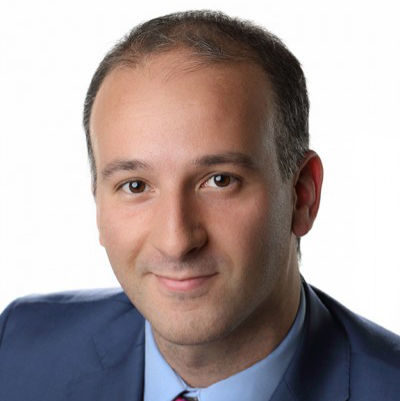
Prof. Dr. Markus Zimmermann leads the Chair of Product Development and Lightweight Design at the Technical University of Munich (TUM). With a background in mechanical engineering from TU Berlin and the University of Michigan, and a doctorate from MIT on solid-state singularities, he bridges academic rigor with industrial application. His career spans 12 years at BMW focusing on vehicle development before transitioning to academia. Specializes in solution space engineering for robust design Expert in additive manufacturing and systems engineering Develops methodologies for managing design complexity and uncertainty His research focuses on multidisciplinary design optimization and lightweight structures , particularly in robotics and automotive systems . His team applies digital twin frameworks and attribute dependency graphs to enhance design processes. Recent publications emphasize topology optimization in robotic systems and thermal management for medical X-ray sources. Key trends in his 2024-2025 publications include: Topological optimization for additive manufacturing and robotics Application of solution spaces to manage design uncertainty Development of compact X-ray systems for medical therapy Integration of digital twin technologies in industrial contexts
Prof. Dr. Michael Ulbrich is a full professor and Chair of Mathematical Optimization at the Technical University of Munich (TUM), within the School of Computation, Information and Technology. He has held this position since 2006 and previously served as Dean of Studies (2007–2010) and Vice Dean of the Faculty of Mathematics (2012–2015). His research focuses on nonlinear optimization, optimal control, and numerical analysis, with applications in fluid dynamics, shape optimization, and PDE-constrained systems. He leads projects in the DFG SPP 1962 and IGDK 1754, and has received prestigious awards including the Howard Rosenbrock Prize (2015) and the Doctoral Award from the TUM Association of Friends (1996). Ulbrich is Editor-in-Chief of Optimization and Engineering and contributes to multiple journals. His work bridges theoretical foundations and practical applications, including CO2 sequestration, fluid-structure interaction, and distributed optimization algorithms. Education: PhD (1996), Habilitation (2002) in Mathematics at TUM. Research stays at Rice University (USA) under DFG funding. Research Areas: Semismooth Newton methods, PDE-constrained optimization, optimal control of Navier-Stokes equations, and distributed parameter systems. Awards: Rosenbrock Prize, Teaching Excellence Awards, and recognition for doctoral work. Leadership Roles: Department Head of Mathematics (2022–), Member of TUM Senate (2019–2022), and Co-Chair of GAMM 2018. Ulbrich has authored influential textbooks like Semismooth Newton Methods for Variational Inequalities and Nichtlineare Optimierung . His recent projects include OptiGeoS (2024–2026) and collaborations on nonsmooth optimization and stochastic algorithms. His academic contributions span over 100 publications, emphasizing both algorithmic innovation and rigorous mathematical analysis.
Vladimir Spokoiny is a Professor at the Departments of Mathematics and Economics of the Humboldt University of Berlin and Head of the Research Group "Stochastic Algorithms and Nonparametric Statistics" at the Weierstrass Institute for Applied Analysis and Stochastics (WIAS) in Berlin, Germany. His research spans multiple areas of statistics, machine learning, and financial mathematics, with significant contributions to nonparametric statistics, high-dimensional data analysis, and statistical methods in finance. Spokoiny received his M.Sc. in applied mathematics from the Moscow Institute of Railway Engineering in 1981 and his Ph.D. in mathematics from Lomonosov Moscow State University in 1988. He completed his Habilitation at Humboldt University in 1996. His academic career includes positions at the All-Union Institute of Railway Transport in Moscow, the Institute for Information Transmission Problems in Moscow, and the Institute for Applied Analysis and Statistics in Berlin before joining the Weierstrass Institute and Humboldt University where he has been a professor since 2002. Spokoiny's research focuses on adaptive nonparametric smoothing and hypothesis testing, high dimensional data analysis, statistical methods in finance, image analysis with applications to medicine, classification, and nonlinear time series. His work often addresses the challenges of nonstationarity in time series data and develops innovative methods for volatility estimation and risk management. He has made significant contributions to the development of adaptive weights smoothing procedures, which have applications in image processing, community detection, and manifold learning. His recent work has expanded into high-dimensional statistics, Bayesian inference, and optimization methods for machine learning, with publications demonstrating novel approaches to Gaussian approximation, Laplace methods, and statistical inference in non-Euclidean spaces. Spokoiny has supervised numerous PhD students including Oliver Reiss, Danilo Mercurio, Ying Chen, Elmar Diederichs, and Mstislav Elagin, whose research has focused on mathematical finance, time series analysis, and statistical methods. He serves as an Associate Editor for The Annals of Statistics (since 2004) and Statistics and Decisions (since 2002), and has previously served on the editorial board of the Journal of Statistical Planning and Inference. His professional activities include reviewing for major statistical journals including Annals of Statistics, Bernoulli, Econometrica, and Journal of American Statistical Association, as well as reviewing grant proposals for the National Science Foundation (USA), German Research Foundation, and Netherlands Organisation for Scientific Research. Spokoiny is a member of several professional societies including the International Statistical Institute, American Statistical Association, Institute of Mathematical Statistics, and Bernoulli Society. He is fluent in Russian (mother tongue), English, and German, and has good knowledge of French. His research group at WIAS focuses on developing novel statistical methodologies with applications across various scientific domains, particularly emphasizing adaptivity and robustness in complex data environments. The group's work has significant implications for financial risk management, medical imaging, and machine learning applications, with recent publications addressing fundamental questions in high-dimensional statistics and nonparametric inference.
Dr. Yolanda Gil is a Research Professor in Computer Science and Spatial Sciences at the University of Southern California, where she serves as Principal Scientist and Senior Director for Strategic Initiatives in Artificial Intelligence and Data Science at the Information Sciences Institute (ISI). She is also the Director of AI and Data Science Initiatives in the Viterbi School of Engineering and leads the USC Center for Knowledge-Guided Interdisciplinary Data Science (CKIDS). Dr. Gil received her Licenciatura in Computer Science from the Polytechnic University of Madrid and her M.S. and Ph.D. in Computer Science from Carnegie Mellon University, with a focus on artificial intelligence and cognitive science. Her research focuses on developing AI approaches that use knowledge to accelerate scientific discovery processes. Her key research interests include knowledge capture and representation, semantic workflows, ontology tools, scientific discovery methods, task-based collaboration, provenance tracking, knowledge networks, reproducibility in science, and machine learning for data analysis. She collaborates with scientists across multiple domains to improve how scientific knowledge is created, shared, and used. Dr. Gil's work has significant impact across multiple scientific domains including climate science, neuroscience, and omics research. Her projects demonstrate her commitment to building knowledge-guided systems that transform how scientists conduct research. She has pioneered approaches to capture the provenance of scientific experiments and to automate the analysis of complex scientific data. Fellow of the Association for Computing Machinery (ACM) Fellow of the Association for the Advancement of Science (AAAS) Fellow of the Institute of Electrical and Electronics Engineers (IEEE) Fellow of the Association for the Advancement of Artificial Intelligence (AAAI) 24th President of the Association for the Advancement of Artificial Intelligence Co-chair of the CRA/AAAI 20-Year Artificial Intelligence Research Roadmap for the US Initiator and leader of the W3C Provenance Group that resulted in a widely-used standard for web trust As an educator and leader, Dr. Gil directs the Data Science Program in Computer Science and serves as Co-Director of multiple joint MSc programs including Communication Data Science, Spatial Data Science, Environmental Data Science, Public Policy Data Science, and Healthcare Data Science. She also leads the new dual degree USC-Tsinghua University on Communication Data Science. Her leadership extends to mentoring numerous students and researchers in AI and data science. Through the USC Center for Knowledge-Guided Interdisciplinary Data Science (CKIDS), Dr. Gil organizes DataFest events each semester, fostering collaboration and innovation in data science across disciplines.
Prof. Bryan Ford leads the Decentralized/Distributed Systems (DEDIS) lab at EPFL. He focuses on secure decentralized systems, including blockchain technology, privacy, and systems security. He earned his Ph.D. from MIT and held faculty positions at Yale University and EPFL. His work spans distributed consensus protocols, peer-to-peer networking, and privacy-preserving systems. Key projects include QuePaxa (timeout-free consensus), UIA (global connectivity for mobile devices), and MedCo (secure healthcare data sharing). He advises numerous PhD students and contributes to open-source projects like Bitcoin collective signing and privacy networks like Riffle. Education: Ph.D., MIT; Postdoctoral work at Yale Research interests include blockchain scalability, consensus algorithms, and cryptographic privacy. His lab develops systems like TRIP for coercion-resistant voting and F3B to mitigate blockchain front-running. His work on NAT traversal and peer-to-peer protocols (e.g., STUN/ICE) remains foundational in network architecture. He emphasizes practical, auditable security solutions such as CertiKOS and atomic cross-chain transactions (Atom). Notable contributions: CoSi (collective signing), OmniLedger (sharded blockchain), and privacy-preserving protocols like PURBs (Protected Unsealable Recursive Boxes). His lab collaborates with Swiss Post to audit e-voting systems and designs democratic cryptocurrencies like PoPCoin.
Vijay Laxmi is a Professor in the Department of Computer Science and Engineering at Malaviya National Institute of Technology (MNIT) Jaipur, India. With over a decade of active research publication from 2014-2024, Dr. Laxmi has established themselves as a prominent researcher in network security, Android security systems, and Network-on-Chip architectures. Their work demonstrates consistent collaboration with Manoj Singh Gaur and numerous doctoral students at MNIT Jaipur. Dr. Laxmi's research interests span Network Security, Android Security, Malware Analysis, Network-on-Chip Architectures, Routing Protocols, Side-Channel Attacks, Wireless Networks, and Mobile Security. Their work bridges theoretical security frameworks with practical implementations, particularly in mobile and embedded systems. Recent publications indicate a growing focus on AI-based security approaches including GAN applications for fuzzing and deep learning for image dehazing. The research trajectory shows increasing sophistication in security analysis techniques, evolving from basic malware detection to advanced side-channel attack analysis and sophisticated network security protocols. Recent publications demonstrate expertise in both theoretical frameworks and practical implementations with applications in real-world security challenges. Dr. Laxmi has mentored numerous graduate students including Vineeta Jain, Anugrah Jain, Sonal Yadav, Mohit Singh, and Gaurav Singal, who appear as co-authors across multiple publications. Their collaborative network extends to researchers at international institutions, indicating strong academic connections beyond their home institution.
Asia J. Biega is a tenure-track faculty member (W2) at the Max Planck Institute for Security and Privacy (MPI-SP), where she leads the interdisciplinary Responsible Computing group. She is also a principal investigator of the Cluster of Excellence CASA and the FINDHR consortium. Her work sits at the intersection of computing and society, focusing on responsible computing, data protection & governance, and digital well-being within data-driven and AI-based systems. Dr. Biega's research spans multiple disciplines including computer science, law, philosophy, and social sciences. Her work examines how principles of responsible computing can be computationally operationalized, with particular attention to data protection frameworks, privacy technology governance, and digital well-being. She actively collaborates across disciplinary boundaries to make technical contributions while supporting research in other fields. Her approach combines theoretical rigor with practical applications, often drawing from her industry experience at Microsoft and Google. Her publication record reveals a strong focus on the intersection of fairness, privacy, and transparency in information retrieval systems. She has pioneered work on data minimization compliance, fair ranking algorithms, and user perceptions of data collection practices. Her research consistently bridges technical and legal perspectives, particularly examining how GDPR principles can be computationally implemented. Recent work shows increasing attention to generative AI governance, algorithmic hiring systems, and the relational aspects of data in recommender systems. Dr. Biega has received several prestigious awards including the Council of Europe's Rodotà Award for innovative research in data protection, the SaTML Notable Reviewer Award, the GI-DBIS Dissertation Award of the German Informatics Society, and recognition as one of the '100 Brilliant Women in AI Ethics' in 2025. She has advised numerous PhD students and postdocs who have gone on to faculty positions at institutions including the University of Trieste, Penn State, and the University of Washington. Her research is funded by the Max Planck Society, Alexander von Humboldt Foundation, and the European Union (Horizon Europe FINDHR). She serves as General Co-Chair for ACM FAccT 2025 and has held leadership roles in multiple academic conferences.
Anders Rantzer is a Professor of Automatic Control at the Department of Control Engineering, Faculty of Engineering, Lund University, Sweden. He has held visiting positions at Caltech (2004–2005) and the University of Minnesota (2015–2016) as the Taylor Family Distinguished Visiting Professor. His academic journey began with a PhD from KTH Stockholm in 1991, followed by a postdoc at the Institute for Mathematics and its Applications (IMA), University of Minnesota. His research interests center on modeling, analysis, and synthesis of control systems , with a strong focus on scalability, adaptation, and applications in energy networks . He is particularly known for foundational work in positive systems and integral quadratic constraints (IQCs) . These theoretical frameworks are critical in analyzing stability and robustness of large-scale interconnected systems. His work bridges mathematical rigor with practical engineering applications, especially in sustainable energy and networked systems. The recent publications and lecture materials reflect a consistent trajectory in scalable and robust control, optimization, and distributed systems. Themes such as large-scale convex optimization , nonlinear and stochastic control , and network dynamics dominate his scholarly output, indicating a sustained commitment to advancing control theory for complex, real-world systems. Scientific honors include: Fellow of IEEE Member of the Royal Swedish Academy of Engineering Sciences (IVA) Chairman of the Swedish Scientific Council for Natural and Engineering Sciences Chairman of the Royal Physiographic Society of Lund Rantzer has supervised numerous students and contributed extensively to academic leadership and education. He has been involved in major national and international research initiatives such as WASP (Wallenberg AI, Autonomous Systems and Software Program) and ELLIIT. His work includes developing educational tools and courses in control, optimization, and machine learning. He leads and contributes to research projects on autonomous systems, cloud control, and smart energy networks. He is affiliated with the Control Lab at LTH and participates in collaborative efforts such as the Nordic University Hub on Industrial Internet of Things (HI2OT). His work integrates theoretical advances with practical implementations in robotics, biomedical systems, and industrial automation.
Prof. Dr. Peter Gomber is Chair of e-Finance at the Faculty of Economics and Business, Goethe University of Frankfurt, Germany. He serves as Co-Chairman and member of the Board of the 'efl – the Data Science Institute', an industry-academic partnership between Frankfurt and Darmstadt Universities and leading industry partners. Additionally, he is a member of the Exchange Council of the Frankfurt Stock Exchange, Supervisory Board of Clearstream Banking AG, and Research Fellow at the Leibniz Institute for Financial Research SAFE in Frankfurt. Prof. Gomber received his Ph.D. at the Institute of Information Systems at the University of Giessen in 1999 after graduating in Business Administration. Before joining Goethe University in 2004, he worked for five years as Director, Head of Market Development Cash Markets and Xetra Research at Deutsche Börse AG, where he developed new market models and products for cash market trading on Xetra. His research focuses on market microstructure theory, digital finance and fintech, regulatory impact on financial markets, and electronic trading systems. With over 150 publications in leading international journals, his work has significantly influenced the field, particularly his highly cited papers on the Fintech Revolution. His recent research examines market fragmentation, circuit breakers, research unbundling under MiFID II, and the application of AI in financial markets. Prof. Gomber's extensive publication record shows a clear evolution from traditional market microstructure and electronic trading systems toward digital finance, fintech innovations, and regulatory impact analysis. His work bridges technical aspects of financial markets with regulatory considerations, demonstrating how technological innovations interact with market structure and regulation. His scientific recognition includes: IBM Shared University Research Grant (2007) Reuters Innovation Award (2000) Best Paper Award of the Journal of the Association for Information Systems (2020) Best Information Systems Publications Award (2020) Top 1 and Top 3 most cited articles in Fintech research (2025 bibliometric analysis) Prof. Gomber has successfully supervised numerous PhD students, including Tino Cestonaro who won the Best PhD Paper Award 2025. He has acquired significant research funds from both public institutions and the private sector. Notably, a market model invention by Prof. Gomber was granted a patent by the United States Patent and Trademark Office, with two additional market model inventions filed for patent in Europe and the US. He leads an active research team at the Chair of e-Finance, including researchers like Benjamin Clapham, Micha Bender, and Tino Cestonaro. The team collaborates closely with the efl – the Data Science Institute and the Leibniz Institute for Financial Research SAFE, bridging academic research with practical applications in financial markets.
Michael Muehlebach leads the independent Learning and Dynamical Systems research group at the Max Planck Institute for Intelligent Systems in Tuebingen, Germany. His interdisciplinary work bridges machine learning, dynamical systems theory, and control engineering to develop algorithms for cyber-physical systems with theoretical guarantees and practical implementations. Dr. Muehlebach received his B.Sc. and M.Sc. in Mechanical Engineering from ETH Zurich in 2010 and 2013, specializing in robotics and control systems. He completed his Ph.D. at ETH's Institute for Dynamic Systems and Control under Prof. R. D'Andrea in 2018, followed by postdoctoral research with Prof. Michael I. Jordan at UC Berkeley. His research focuses on constrained optimization, reinforcement learning, and control theory with applications in robotics. He pioneered approaches that express constraints in terms of velocities rather than positions, enabling more efficient optimization algorithms. His work spans theoretical foundations to physical implementations, including the One-Wheel Cubli balancing robot and electromagnetic navigation systems. Recent publications reveal a strong trend toward physics-informed machine learning, particularly for robotics applications requiring real-time performance and safety guarantees. Dr. Muehlebach has received numerous prestigious awards: Outstanding D-MAVT Bachelor Award Willi-Studer prize for best Master's degree ETH Medal and HILTI prize for doctoral thesis Branco Weiss Fellowship (2018) Emmy Noether Fellowship (2020) Amazon Fellowship (2024) He actively mentors doctoral researchers including Hao Ma, Melis Ilayda Bal, and Onno Eberhard, with research supported by multiple grants. His group maintains strong collaborations with Bernhard Schölkopf's Empirical Inference group at the Max Planck Institute. The Learning and Dynamical Systems group develops innovative hardware and software platforms, including Floaty (a wind-harnessing flying robot), advanced electromagnetic navigation systems, and data-efficient learning methods for robotic table tennis. Their approach combines rigorous theoretical analysis with practical validation on physical systems, emphasizing the integration of known physical structure into machine learning algorithms to improve sample efficiency and ensure generalization.
Dr. Emilio Ferrara is a Professor of Computer Science & Communication at the University of Southern California, holding appointments in the Viterbi School of Engineering, Annenberg School for Communication and Journalism, and Keck School of Medicine. He serves as Associate Director of Applied Data Science at USC, Research Team Leader at the USC Information Sciences Institute, and Principal Investigator at the USC/ISI Machine Intelligence and Data Science (MINDS) group. His educational background includes a PhD in Machine Learning and BSc & MSc in Computer Science. Ferrara's research focuses on the intersection of artificial intelligence and computational social science, specifically using AI to model and predict human behavior in techno-social systems. His work spans social networks, machine learning, and network science with applications to understanding communication dynamics in digital environments. Ferrara has published over 150 articles in prestigious venues including Proceedings of the National Academy of Sciences, Communications of the ACM, and Physical Review Letters. His research has been widely featured in major news outlets and examines topics ranging from social media manipulation to AI ethics and online behavior. His scientific achievements have been recognized with numerous awards: 2019 Viterbi Scientific Award 2018 DARPA Director's Fellowship 2016 DARPA Young Faculty Award 2016 Complex Systems Society Junior Scientific Award 2015 IBM Watson Big Data Influencer Ferrara's research is supported by major funding agencies including DARPA, IARPA, Air Force, and Office of Naval Research. He leads the HUMANS LAB (Humans & Machines + Networks & Social Systems) which has trained numerous PhD students who have gone on to successful careers in academia and industry. His work on social bots, election integrity, and AI ethics continues to shape understanding of digital social dynamics.
Prof. Dr. Martin Kronbichler is a faculty member at the Faculty of Mathematics , Ruhr University Bochum , leading the Numerics group. His research focuses on higher-order finite element methods, multigrid techniques, and high-performance computing for complex fluid and solid mechanics problems. Key Research Areas: Higher-order finite element methods, iterative solvers, multigrid algorithms, exascale mathematical software, and computational fluid dynamics. Notable Projects: EU-funded dealii-X (exascale digital twins), BMBF PDExa (optimized PDE solvers for exascale), and DFG grants for cut-discontinuous Galerkin methods and geometric multigrid. Publications Trends: Recent works emphasize matrix-free operators for hyperelasticity, diffuse-interface models for additive manufacturing, and multigrid smoothers for higher-order elements. Scientific Awards: Recipient of the Humboldt Research Award for his contributions to numerical methods and HPC. Team: Collaborates with researchers like Dr. Shubham Kumar Goswami, Dr. Richard Schussnig, and Natalia Nebulishvili.
Prof. Alexander Pretschner is a Professor of Software & Systems Engineering at the Technical University of Munich (TUM) and Founding Director of the Bavarian Research Institute for Digital Transformation (bidt). He also serves as Scientific Director of fortiss, a Bavarian research institute for software-intensive systems. His research focuses on software engineering, testing, information security, and ethical software development. Pretschner holds a PhD from TUM and has held academic positions at Karlsruhe Institute of Technology (KIT) and TU Kaiserslautern. He is a co-editor of several prestigious journals, including IEEE Transactions on Reliability and the Journal of Software Testing, Verification and Reliability. Education: PhD in Computer Science, Technical University of Munich MSc in Computer Science, University of Kansas (on Fulbright Scholarship) Diplom in Computer Science, RWTH Aachen University Research Interests: His work spans testing methodologies, secure software design, and ethical considerations in agile development. Notable contributions include frameworks for metamorphic testing, distributed data usage control, and accountability mechanisms for cyber-physical systems. Awards: IBM Faculty Award (2012, 2013) Google Focused Research Award (2011, 2012) EARTO Innovation Prize (2014) 2nd Platz Supervisory Award (2020) Advising & Grants: Pretschner has supervised numerous PhD and Master’s students, contributing to over 200 publications. He leads projects like EDAP (Ethical Deliberation in Agile Processes) and collaborates with industry partners on cybersecurity and AI ethics initiatives. Labs & Teams: His work is anchored in bidt, fortiss, and TUM’s Chair of Software & Systems Engineering, focusing on societal impacts of digitalization and trustworthy AI systems.
Cristian Cadar is a Professor in the Department of Computing at Imperial College London, leading the Software Reliability Group . His research focuses on improving software reliability and security through practical techniques in software engineering, computer systems, and program analysis. Education: Ph.D. in Computer Science, Stanford University M.Eng. in Computer Science, MIT B.S. in Computer Science and Mathematics, MIT His research interests center on software engineering and software security , particularly symbolic execution , dynamic symbolic execution (DSE) , and multi-version execution . Current work explores techniques for scalability, constraint solving, and runtime security in software systems. Key trends in his recent articles include optimizing symbolic execution for testing, addressing path explosion in constraint-based test generation, and advancing multi-version execution for dynamic software updates. His publications also cover program analysis , automated testing , and formal methods for software reliability. Awarded prestigious honors such as the Humboldt Research Award (2024) , ERC Consolidator Grant (2018) , and IEEE New Directions Award (2022) . Other accolades include the BCS Roger Needham Award (2019) and SIGOPS Hall of Fame (2018) . Cadar supervises PhD and postdoctoral researchers in software reliability and security. His group has secured grants from the ERC and EPSRC , including a Consolidator Grant (2018) and Early-Career Fellowship (2013) . He actively contributes to conference organizing committees and editorial boards. The Software Reliability Group at Imperial College, led by Cadar, specializes in techniques like KLEE and EXE for automated testing. Their work has been adopted by industry partners such as Fujitsu, IBM, and Microsoft, particularly in runtime security tools like WIT .
Anna Levina is an Assistant Professor for Computational Neuroscience at the University of Tübingen , affiliated with the Department of Computer Science under the Faculty of Science. Her research focuses on the self-organization of neuronal activity, critical dynamics in neural networks, and the excitation/inhibition balance in cortical circuits. Current positions: Assistant Professor (since 2018), Group Leader (2017-2018), Equality Officer (Computer Science) Previous roles: IST Fellow (2015-2017), Associated Researcher (2011-2015), Postdoc/PI (2011-2015), Postdoc (2008-2011) Her research integrates mathematical modeling , statistical physics , and computational neuroscience to study criticality phenomena, neural avalanches, and adaptive network dynamics. Key interests include: Self-organized criticality in neural systems Excitation/Inhibition balance mechanisms Network topology and dynamics Timescale analysis in neural processing Stochastic modeling of neural activity Recent publications reveal trends in understanding critical dynamics across biological and artificial networks, with applications to memory systems, sensorimotor integration, and disease modeling. She has received recognition as an IST Fellow .