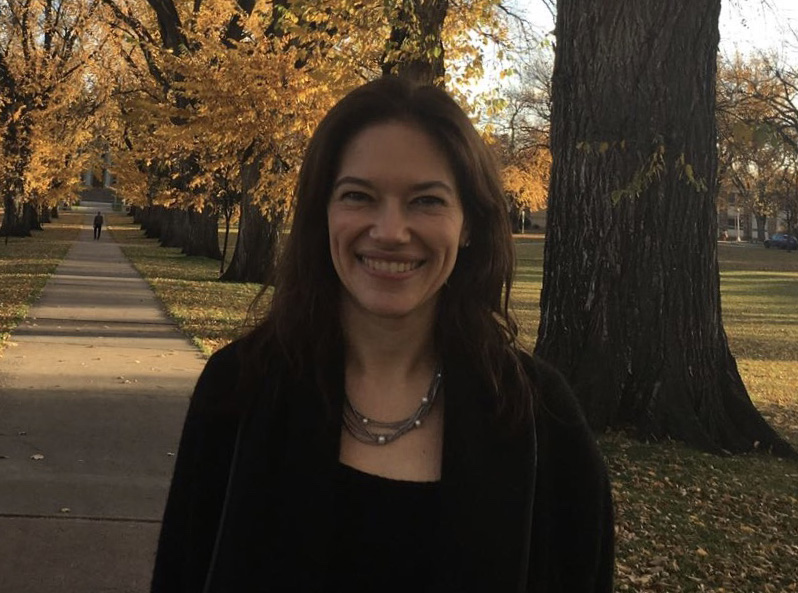
Maria Chudnovsky is a Professor of Mathematics at Princeton University and a former Professor of IEOR and Mathematics at Columbia University (2006-2014). Her research focuses on graph theory and combinatorics, with significant contributions to structural graph theory, perfect graphs, and algorithmic applications. Education: B.A. Summa Cum Laude (1996) and M.Sc. (1999) from Technion, Ph.D. (2003) from Princeton University Her work addresses fundamental problems in graph coloring, forbidden induced subgraphs, and combinatorial optimization, including the proof of the Strong Perfect Graph Theorem and development of algorithms for detecting graph structures. Notable awards include the MacArthur Foundation Fellowship (2013-2017), D.R. Fulkerson Prize (2009), and Henry Burchard Fine Professor of Mathematics (2022). She has held prestigious fellowships such as the Clay Mathematics Institute Research Fellowship (2003-2008). Grants: NSF DMS-EPSRC Grant DMS-2120644 (2021-2024), US Army Research Office Grant W911NF-16-1-0404 (2016-2020), and multiple NSF grants She has advised numerous PhD/MSc students and postdocs, including Sophie Spirkl, Mingxian Zhong, and Tara Abrishami. Her outreach includes popular science communication on YouTube's Numberphile and participation in initiatives promoting women in STEM.
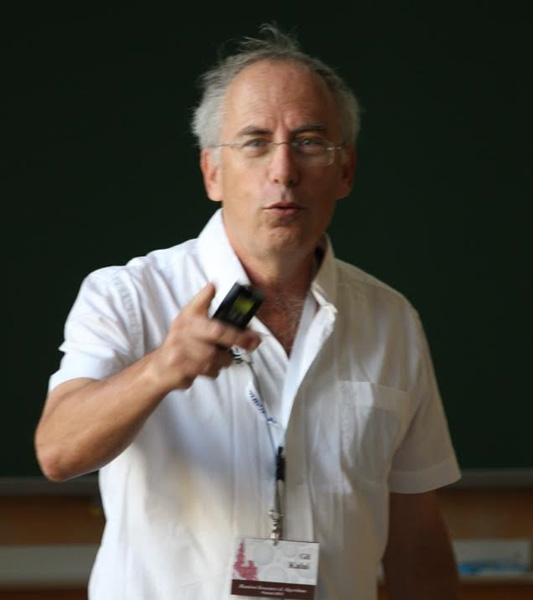
Gil Kalai is a Professor of Mathematics at the Hebrew University of Jerusalem since 1992, where he holds the Henry and Manya Noskwith Chair. He also serves as an Adjunct Professor of Mathematics and Computer Science at Yale University since 2004 in a long-term part-time visiting position. His academic career includes visiting positions at prestigious institutions including MIT, Cornell, IAS Princeton, Berkeley, Bell-labs, IBM, and Microsoft. Professor Kalai's research spans multiple areas within mathematics and theoretical computer science. His work in combinatorics encompasses geometric, probabilistic, and topological approaches. He has made significant contributions to the study of convex sets and polytopes, linear programming, and theoretical computer science. His influential 1988 paper with Kahn and Linial on Boolean functions pioneered applications of Fourier analysis in theoretical computer science. Kalai's research has evolved to include the application of Fourier analysis to thresholds, influences, symmetries, noise, percolation, and social choice. He has developed theories in algebraic shifting and studied face-numbers and other combinatorial invariants of polytopes. His work on the diameter of polytopes and randomized simplex algorithms has been influential in optimization theory. In 1993, his collaboration with Kahn produced a groundbreaking counterexample to Borsuk's Conjecture in 1325 dimensions. Professor Kalai's publications reveal a consistent focus on the intersection of combinatorics, geometry, and theoretical computer science. His work shows a progression from foundational combinatorial geometry to increasingly sophisticated applications of harmonic analysis in discrete mathematics. The recurring themes across his 30+ year career include Boolean functions, polytope theory, and probabilistic methods in combinatorics, demonstrating remarkable coherence in his research trajectory. 2016 European congress of Mathematics, plenary speaker 2013 ERC advanced grant 2012 Rothschild Prize 1994 International Congress of Mathematicians invited section talk, Zurich 1994 Fulkerson Prize 1993 Erdos Prize 1992 Polya Prize Though specific details of his advising are not provided in the source material, Kalai has written over 70 scientific papers and maintains an active research blog entitled "Combinatorics and More." His 2013 ERC advanced grant indicates significant research funding for his work. His extensive collaborations with researchers across multiple institutions suggest a robust research program with numerous PhD students and postdoctoral researchers, though specific names are not mentioned in the provided texts. Professor Kalai maintains active research connections across multiple institutions including Hebrew University, Yale, and various research centers worldwide. His work bridges pure mathematics and theoretical computer science, creating a unique interdisciplinary research environment that influences both fields.
Nori Franco serves as Professor in the Department of Physics at the University of Michigan and Chief Scientist at RIKEN's Theoretical Quantum Physics Laboratory in Japan. His dual appointments reflect his significant contributions to both American and Japanese academic communities, with continuous service at Michigan since 1990 and at RIKEN since 2002. His research spans quantum information, condensed matter physics, and quantum optics, with particular focus on light-matter interactions, superconducting qubits, optomechanics, and quantum open systems. Franco's work bridges theoretical foundations with experimental implementations, especially in circuit quantum electrodynamics and quantum computing applications. Analysis of his recent publications reveals a strong emphasis on non-Hermitian quantum systems, quantum control techniques, and applications of quantum information science to fundamental physics problems. His research group consistently produces highly cited work, with publications appearing in top journals across quantum physics and condensed matter disciplines. Scientific Awards: Charles Hard Townes Medal (2024) - sole recipient for fundamental contributions to quantum optics and quantum information processing Research Doctorate Honoris Causa from University of Messina (2024) Highly Cited Researcher for eight consecutive years (2017-2024) Member of Academia Europaea (2023) Willis E. Lamb Medal (2023) for quantum electronics research Throughout his career, Franco has secured significant research funding and mentored numerous students and postdoctoral researchers. His work has received international recognition through invitations to deliver prestigious lectures including the Stanislav Ulam Lecture and Sir Nevill Mott Lecture in 2024. His research group maintains strong collaborations across multiple continents, reflecting his global impact on quantum physics. At RIKEN, Franco leads the Quantum Information Physics Theory Research Team within the Quantum Computing Center, directing cutting-edge theoretical work that complements experimental efforts in quantum computing hardware development.
Mark Coeckelbergh is a Professor of Philosophy at the University of Vienna, specializing in the philosophy of technology, AI ethics, and robot ethics. He is affiliated with the Department of Philosophy and the Research Network Data Science at the University of Vienna. In addition to his academic position, Coeckelbergh has held significant roles including Former President of the Society for Philosophy and Technology (SPT) and Member of the European Commission's High-Level Expert Group on Artificial Intelligence (AI HLEG). His research focuses on the ethical, political, and philosophical implications of emerging technologies, particularly artificial intelligence and robotics. Coeckelbergh has published extensively in these areas, authoring influential books such as Robot Ethics (2022), The Political Philosophy of AI (2022), and Why AI Undermines Democracy and What To Do About It . His work explores how AI systems affect democratic processes, human agency, and social relationships. Recent publications demonstrate a strong focus on the relationship between AI, democracy, and ethical governance, examining how AI systems can both threaten and potentially enhance democratic processes through algorithmic transparency and participatory design approaches. Finalist of the World Technology Award 2017 Coeckelbergh teaches various courses including 'Introduction to Philosophy of LLMs,' 'LLMs and the Future of Writing,' 'Ethics and Robotics,' and 'Global Governance of AI.' He has supervised numerous students working on topics related to technology ethics and philosophy. He has been involved in several major research projects including H2020 PERSEO, WWTF Democracy Responsible Entrepreneurship, and FP7 DREAM (Development of Robot-Enhanced therapy for children with Autism spectrum disorders). Coeckelbergh has also announced upcoming guest professorships at the Institute of Philosophy of the Czech Academy of Sciences and Uppsala University, where he will work on environmental and technology ethics projects.
Vladimir Kazeev is an Assistant Professor at the Faculty of Mathematics, University of Vienna , where he has held a faculty position since 2019. He also held previous academic appointments as a Szegő Assistant Professor at Stanford University (2017–2019), a postdoctoral researcher at the University of Geneva (2015–2017), and research positions at ETH Zurich (2011–2015), Russian Academy of Sciences (2008–2011), and Moscow Institute of Physics and Technology (2009). His research focuses on adaptive, data-driven numerical methods for differential equations, nonlinear low-parametric approximation, and numerical linear algebra. His work intersects computational mathematics, tensor methods, and high-dimensional problem-solving, particularly in the context of partial differential equations (PDEs) and stochastic modeling. The 15 most recent publications reveal a strong emphasis on quantized tensor-structured methods for PDEs, low-rank approximations, and high-dimensional numerical analysis. His research spans theoretical advancements in tensor decomposition, practical applications in chemical reaction networks, and novel discretization techniques for multiscale and degenerate diffusion problems. Scientific awards include the prestigious ETH Medal for outstanding doctoral theses (2016) Russian Academy of Sciences Medal for outstanding student works in mathematics (2011) Advising and teaching activities include supervising Jason Zhu (Stanford, 2019) and Simon Etter (ETH Zurich, 2014), as well as teaching advanced courses in tensor methods, numerical analysis, and PDEs at the University of Vienna, Stanford University, and the University of Geneva. His service to the community includes peer review for 15+ journals and co-organizing minisymposia at SIAM meetings.
Xu Jinchao is a Professor of Applied Mathematics and Computational Sciences at King Abdullah University of Science and Technology (KAUST) and the Verne M. Willaman Professor of Mathematics at Penn State University. He has held distinguished roles, including Director of the Center for Computational Mathematics and Applications at Penn State since 1997 and is an Affiliated Faculty member of the College of Information Sciences and Technology at Penn State. His research focuses on numerical partial differential equations (PDEs), multigrid methods, machine learning, finite element methods, and domain decomposition methods. He is renowned for pioneering contributions such as the Bramble-Pasciak-Xu (BPX) preconditioner, Hiptmair-Xu (HX) preconditioner, Xu-Zikatanov (XZ) identity, and Morley-Wang-Xu (MWX) element. His work bridges computational mathematics and machine learning, including the development of MgNet, which unifies multigrid methods with convolutional neural networks. Xu has been recognized with numerous awards, including Fellowships from SIAM, AMS, AAAS, and the European Academy of Sciences. Notable accolades include the 2008 DOE Top 10 Breakthroughs for his HX preconditioner and the 1995 Feng Kang Prize for Scientific Computing. He has organized over 100 conferences and serves on editorial boards of top journals such as Mathematics of Computations and Numerische Mathematik . His leadership includes directing research centers and advancing computational science through collaborative efforts.
Noga Alon is a Professor at Princeton University (previously at Tel Aviv University since 1985), renowned for transformative contributions to Combinatorics and Theoretical Computer Science. His work bridges deep mathematical theory with computational applications, earning him the 2024 Wolf Prize and 2022 Shaw Prize in Mathematical Sciences. Education Ph.D. in Mathematics, Hebrew University of Jerusalem, Israel (1983) Research Interests Alon pioneers combinatorial methods with profound impacts across mathematics and computer science. His expertise spans Graph Theory, Combinatorial Algorithms (including Streaming Algorithms), Circuit Complexity, and Combinatorial Geometry/Number Theory. He innovatively applies Algebraic and Probabilistic Methods to solve fundamental problems, such as necklace splitting and signrank applications, driving advancements in both pure and applied domains. Scientific Awards 1989 Erdos Prize, Israel 1991 Feher Prize, Israel 1997 Member of the Israel National Academy of Sciences 2000 Polya Prize, SIAM, USA 2001 Bruno Memorial Award, Israel 2005 Landau Prize, Israel 2005 EATCS-ACM Goedel Prize 2008 Israel Prize in Mathematics 2008 Member of the Academia Europaea 2011 EMET Prize 2015 Fellow of the American Mathematical Society 2015 Łojasiewicz Lecture at Jagiellonian University 2017 Fellow of the Association for Computing Machinery 2021 Leroy P. Steele Prize for Mathematical Exposition (with Joel Spencer) 2022 Shaw Prize in Mathematical Sciences 2024 Wolf Prize in Mathematics Advising and Grants While Alon has undoubtedly mentored numerous students during his tenure at Tel Aviv University and MIT, specific advisee names are not documented in the source material. Similarly, grant funding details remain unspecified despite his extensive research output.
Jiannong Cao is a Chair Professor and Director of the University Research Facility in Big Data Analytics at the Department of Computing, Hong Kong Polytechnic University. He has held various academic roles since 1990, including Assistant Professor at City University of Hong Kong and Lecturer at Australian universities. PhD in Computer Science, Washington State University (1990) MSc in Computer Science, Washington State University (1986) BSc in Computer Science, Nanjing University (1982) His research focuses on cloud and edge computing , parallel and distributed computing , and mobile computing , with significant contributions to wireless sensor networks (WSN) for structural health monitoring (SHM) and software-defined networking (SDN) for vehicular communications. Recent work includes WiFi-based non-invasive health monitoring systems and multi-user computation partitioning in mobile cloud environments. Dr. Cao’s publications demonstrate trends in WSN optimization , SDN architectures , and cognitive modeling for network embedding , with applications in smart healthcare , transportation systems , and industrial IoT . Ministry of Education Natural Science Award (2018) ACM Distinguished Member (2017) IEEE Fellow (2014) Best Paper Awards at IEEE DSAA, SMARTCOMP, WCNC He has mentored numerous researchers, including Linchuan Xu , Xuefeng Liu , and Weigang Wu , who have authored key publications in top venues like ACM WSDM and IEEE INFOCOM . His professional roles include chairing IEEE committees and serving on grant panels for the Hong Kong Research Grant Council.
Alan Bovik is the Cockrell Family Regents Endowed Chair Professor in the Department of Electrical and Computer Engineering at The University of Texas at Austin's Cockrell School of Engineering. He also holds positions at The Institute for Neurosciences and serves as Director of the Laboratory for Image and Video Engineering (LIVE). With a career spanning over three decades at UT Austin, he has progressed from Assistant Professor (1984-1988) to Associate Professor (1988-1994) to his current position as Full Professor (1994-present). Dr. Bovik received his Ph.D. in Electrical and Computer Engineering in 1984 from the University of Illinois, Urbana-Champaign. Professor Bovik's research focuses on image and video quality assessment, visual perception, and digital media processing. He is renowned for developing groundbreaking algorithms including the Structural Similarity (SSIM) index, Visual Information Fidelity (VIF), and various blind quality assessment models like BRISQUE and NIQE. His work bridges engineering and neuroscience, creating perception-based models that optimize visual media delivery while reducing bandwidth consumption. These innovations have had profound industry impact, with his algorithms processing a significant proportion of global internet video traffic. His recent publications demonstrate continued leadership in perceptual quality assessment, with increasing focus on AI-generated content, high dynamic range (HDR) video, and novel applications in medical imaging. The research shows a clear trajectory toward more sophisticated, neural network-based quality metrics that better align with human visual perception across diverse content types. Professor Bovik has received numerous prestigious awards recognizing his contributions to the field: John Fritz Medal (2024) IEEE Edison Medal (2022) IAMB BaM Award (2022) Elected to the United States National Academy of Engineering (2022) Technology and Engineering Emmy Award (2021) IEEE Fourier Award for Signal Processing (2019) Progress Medal from The Royal Photographic Society (2019) Named Honorary Fellow of The Royal Photographic Society (2019) Primetime Emmy Award (2015) Edwin H. Land Medal from The Optical Society (2017) As Director of the Laboratory for Image and Video Engineering (LIVE), Professor Bovik has secured substantial research funding from organizations including the National Science Foundation and the National Institute for Standards and Technologies. His lab has produced numerous influential datasets including the LIVE Image and Video Quality Databases. He has mentored many successful students who have gone on to make significant contributions in academia and industry, though specific student names are not provided in the source materials. The Laboratory for Image and Video Engineering (LIVE) under Professor Bovik's direction has become a world-renowned center for research in perceptual image and video quality. The lab maintains close collaborations with major technology companies including Netflix, Amazon, and YouTube, ensuring that research has direct practical applications. LIVE has developed numerous influential tools and databases that are widely used in both academic research and industrial applications worldwide.
Dirk Praetorius is a Professor of Numerics of Partial Differential Equations (PDEs) at the Technische Universität Wien (TU Wien) , affiliated with the Institute for Analysis and Scientific Computing (ASC) within the Faculty of Mathematics and Geoinformation . He leads the research group on Numerics of PDEs and has held various leadership roles, including Institute Director (since 2020) and head of the Numerics research area. His work focuses on numerical methods for PDEs, including Finite Element Methods (FEM), Boundary Element Methods (BEM), adaptive algorithms, and computational micromagnetics. Education and Career: Praetorius earned his Diplom in Mathematics (2000) and PhD in Applied Mathematics (2003) from TU Wien, followed by a Habilitation in Numerical Analysis (2005). He has been a faculty member at TU Wien since 2005, progressing from Assistant Professor to full Professor in 2017. He has also held visiting positions at institutions such as the University of Jyväskylä and RICAM (Linz). Research Interests: His research spans numerical analysis, adaptive FEM/BEM, a-posteriori error estimation, matrix compression, and computational micromagnetics. He has contributed to modeling spin dynamics, magnetic skyrmions, and multiscale systems. His work emphasizes efficient algorithms for large-scale problems and optimal computational complexity. Awards and Editorial Roles: Praetorius received the TU Best Teacher Award (2021) and TU Best Lecture Award (2019). He serves as Senior Editor for Computational Methods in Applied Mathematics (CMAM) and on the editorial board of Applied Numerical Mathematics (APNUM) . He co-founded the outreach initiative TUForMath to promote mathematics education. Grants and Projects: He leads or co-leads several research projects funded by the Austrian Science Fund (FWF), including the collaborative SFB "Taming Complexity in Partial Differential Systems" (2017–2025) and international collaborations with Germany. His work addresses topics like functional error estimates, nonlinear PDEs, and computational design of magnetic devices. Labs and Teams: He contributes to the ASC Institute and coordinates interdisciplinary projects involving computational physics and engineering. His team develops software tools like MooAFEM and Commics for micromagnetic simulations.
Philipp Eichmeir is a Researcher at the Research Center Wels within the Upper Austria University of Applied Sciences . His work focuses on optimal control , multibody dynamics , and adjoint methods applied to robotics and automotive systems. Expertise in adjoint gradient computation for extremal value optimization Active in automotive/mobility and smart production domains Philipp's research spans computational mathematics , robotics , and mechanical engineering , utilizing advanced numerical methods and simulation modeling for complex dynamic systems. His recent publications focus on multibody dynamics , adjoint optimization , and inequality constraint handling in control systems. Collaborative projects include IOMMS (Innovative Optimization Methods for Multibody Systems) and JR-Centre for Thermal NDE of Composites . Scientific Awards Best Paper Award (2020) Automatisierte Körperschallauswertung (2015)
Markus Vincze is an Associate Professor at the Institute of Automation and Control Engineering (ACIN) at Vienna University of Technology (TU Wien). He founded the Vision for Robotics (V4R) group in 1996 to advance robotic perception, particularly in real-world environments and homes. His work focuses on cognitive computer vision techniques for robotics. Education: Diplom in Mechanical Engineering (1988) and PhD (1993) from TU Wien; M.Sc. (1990) from Rensselaer Polytechnic Institute. V4R coordinates EU projects like ActIPret, robots@home, HOBBIT, and national initiatives like vision@home. Markus has edited a book on Robust Vision with Gregory Hager and authored 62 peer-reviewed journal articles and over 400 reviewed publications. His recent research explores zero-shot 6D pose estimation, sim-to-real transfer, and transparent object detection. Markus has served as program chair for ICRA 2013 and organized HRI 2017 in Vienna. He has advised numerous students and secured grants from the Austrian Academy of Sciences for work at HelpMate Robotics and Yale's Vision Laboratory. The V4R group leads innovations in robotic vision, including frameworks for synthetic data generation (Unrealgensyn), depth completion (CAGT), and educational robotics applications for sustainability. Their work spans household robotics (RH3), agricultural robotics (EdgeSoil), and human-robot collaboration.
Ilaria Perugia is a University Professor (Univ.-Prof.) and Chair of Numerics of PDEs at the Department of Mathematics, Faculty of Mathematics, University of Vienna. She also serves as Deputy Head of the Research Platform Erwin Schrödinger International Institute for Mathematics and Physics. Her research focuses on numerical methods for partial differential equations with applications in computational physics and engineering. Professor Perugia's primary research interests include: Numerical methods for PDEs Finite element methods Discontinuous Galerkin methods Trefftz methods Virtual element methods Space-time methods Computational electromagnetics Wave propagation problems Nonlinear reaction-diffusion problems Her work spans theoretical analysis, algorithm development, and practical implementation of numerical methods for solving complex physical phenomena. Her recent publications demonstrate a strong focus on space-time methods, virtual element methods, and structure-preserving discretizations for wave equations, heat equations, and other PDEs. She has made significant contributions to the development of stable and efficient numerical schemes that preserve important physical properties of the underlying continuous problems, particularly in the context of wave propagation and computational electromagnetics. Professor Perugia leads a research group comprising several researchers and students including Mattia Corti, Matteo Ferrari, Monica Nonino, Andrea Scaglioni, Paul Stocker, Enrico Zampa, and Marco Zank. Her group actively collaborates on projects related to numerical analysis and scientific computing, with particular emphasis on developing novel discretization techniques for challenging PDE problems.
Univ.-Prof. Aiko Voigt is a Professor and Head of the Department of Meteorology and Geophysics at the University of Vienna. Her research focuses on climate dynamics, cloud physics, and atmospheric processes. She leads the Environment and Climate Research Hub and teaches advanced courses like 'Climate Modelling Lab' and 'Cloud Physics.' Her work explores cloud-radiative interactions, climate change impacts, and extreme weather dynamics. Recent studies analyze energy imbalances, high-cloud feedbacks, and tropical precipitation patterns. Voigt's contributions bridge climate modeling with observational data, emphasizing high-resolution simulations and interdisciplinary approaches. Teaching includes courses such as 'Climate System of the Earth,' 'Scientific Communication,' and 'Introduction to Computational Meteorology.' Her research spans from present-day climate to Snowball Earth scenarios, addressing both modern and paleoclimatic challenges. Publications highlight advancements in radiative transfer algorithms, cyclone dynamics under warming, and uncertainties in climate model predictions. Her work underscores the critical role of clouds in amplifying climate sensitivity and reshaping atmospheric circulation patterns.
Endre Süli is a Professor of Numerical Analysis at the University of Oxford, affiliated with Worcester College and Linacre College. He has held various academic roles since 1985, including Fellowships and Tutorships in Mathematics. University Education: B.Sc. in Mathematics, University of Belgrade (1974-1978) M.Sc. in Mathematics, University of Belgrade (1978-1980) Ph.D. in Mathematics, University of Belgrade (1985) M.A., University of Oxford (1985) British Council Visiting Student, Reading University and University of Oxford (1983/84) Süli's research focuses on numerical methods for partial differential equations (PDEs), with expertise in finite element methods, adaptive algorithms, error control, and computational modeling of fractures and non-Newtonian fluids. His work bridges mathematical theory and practical applications in fluid dynamics and material science. His recent publications emphasize finite element approximations, nonlinear PDEs, and stochastic models for polymer dynamics. Themes include multiscale methods, tensor-sparsity for high-dimensional problems, and compressible flow simulations. Scientific Awards: Fellow of the Royal Society (2021) London Mathematical Society Naylor Prize and Lectureship (2021) Pro Urbe Prize, City of Subotica (2021) SIAM Fellow (2016) Member, Academia Europaea (2020) Foreign Member, Serbian National Academy of Sciences and Arts (2009) IMA Service Award (2011) Fellow, European Academy of Sciences (EurASc) (2010) Fellow, Institute of Mathematics and its Applications (2007) London Mathematical Society/New Zealand Mathematical Society Forder Lecturer (2015) Professor Hospitus, Charles University, Prague (2012) Distinguished Visiting Chair Professor, Shanghai Jiao Tong University (2013) Invited Speaker, International Congress of Mathematicians, Madrid (2006) Süli has supervised numerous research projects and held visiting appointments globally. His contributions to numerical analysis span foundational work on error estimation, nonlinear stability, and advanced computational frameworks for complex physical systems.