Mohammad Javad Latifi is a Researcher at Dartmouth College's Department of Mathematics. He holds a PhD in Mathematics from the University of Arizona and focuses on Mathematical Physics, Geometry, Applied Mathematics, and Data Science. His research bridges theoretical work in quantum field theory and dynamical systems with applied areas like machine learning and numerical modeling of physical systems. Research Highlights: Developed kernel smoothing techniques for sea-ice dynamics modeling. Advanced the theory of star transforms and V-line tomography in imaging and inverse problems. Contributed to tensor network approximations of Koopman operators in nonlinear dynamics. Collaborated on multi-level graph spanners and optimization algorithms. Teaching: Taught undergraduate courses including Differential Equations (Math 23) and Linear Algebra (Math 22). Designed visualizations for vector calculus and ODEs, emphasizing conceptual understanding and real-world applications. Software & Projects: Developed KSPoly , a Python package for smooth field approximations in polygonal geometries. Created a sound visualization tool exploring numerical sequences as musical patterns. Contributed to Lunewave's radar and autonomous vehicle software, implementing C++ algorithms for object tracking and data analysis.
Dr. Armin Nurkanović is an interim professor at the Technical University of Braunschweig's Department of Mathematical Optimization, where he teaches courses on dynamic optimization and numerical methods. Previously, he completed his PhD at the University of Freiburg under Prof. Moritz Diehl, focusing on optimal control of nonsmooth dynamical systems. His research emphasizes numerical methods for hybrid systems, real-time optimization, and applications in robotics and renewable energy systems. He has received the IEEE Control Systems Letters Outstanding Paper Award (2022) and was a finalist for the 2024 European Systems & Control PhD Thesis Award. Education: Bachelor's in Electrical Engineering (University of Tuzla, 2015) Master's in Electrical Engineering and Information Technology (Technical University of Munich, 2018) PhD in Control (University of Freiburg, 2023) Research Interests: Optimal control of hybrid and nonsmooth systems (e.g., Filippov systems, switched systems) Real-time optimization for model predictive control (MPC) Robust control theory and stochastic optimization Applications in robotics and renewable energy systems Teaching & Software: Developed open-source tools nosnoc and nosnoc_py for optimal control Teaching courses on numerical optimization and optimal control at TU Braunschweig Collaborations & Students: Open to academic and industry collaborations Supervises Bachelor's/Master's theses in mathematics, engineering, and computer science
Johannes Paßmann is Junior Professor of History and Theory of Social Media and Platforms at Ruhr University Bochum and Principal Investigator in the CRC/SFB 1472 'Transformations of the Popular' at the University of Siegen. He has held research and teaching positions at Utrecht University, the University of Basel, and the Nordic Centre for Internet & Society. His work bridges media theory, digital culture, and historical praxeology. Research Interests: Media Theory and Platform Studies History and Sociology of Social Media Praxeology and Digital Methods Web Archiving and Historical Reconstruction Paratextuality and Online Commenting Aesthetic Valuation and Recognition His recent publications analyze the social logics of likes, retweets, and comments, tracing their evolution through web archives and software histories. He emphasizes methodological innovation, particularly through the development of Technograph for analyzing archived web data. His work reveals how platform features shape social interaction, public discourse, and cultural recognition. Scientific Awards: Dirlmeyer-Preis for his dissertation Shortlisted for the Volkswagen Foundation’s Opus Primum Prize Grants and Projects: He leads the DFG-funded project 'Historical Technography of Online Commenting' and co-leads 'Medienpraxiswissen' funded by the Stiftung Innovation in der Hochschullehre. He has supervised numerous student research projects and contributes to academic service through peer review and conference organization. Labs and Teams: He is part of the CRC/SFB 1472 at the University of Siegen and collaborates closely with researchers such as Lisa Gerzen, Cornelius Schubert, Anne Helmond, and Martina Schories. Together, they develop tools and methods for qualitative digital research, particularly using web archives to reconstruct past digital practices.
Nils-Ole Stutzer is a Doctoral Research Fellow at the Institute of Theoretical Astrophysics , University of Oslo, specializing in Cosmology , Line Intensity Mapping , and Cosmic Microwave Background (CMB) data analysis. He contributes to major projects like COMAP COSMOGLOBE BeyondPlanck and develops computational tools in Python/C++ for mitigating systematic errors in radio telescope data. His research interests focus on Galactic and extragalactic CMB analysis Radio interferometry for molecular gas mapping Bayesian methods in cosmological parameter estimation Instrumental signal deconvolution Open science data frameworks His work addresses fundamental questions about cosmic structure formation and early universe physics. Key publication trends include: 2024 studies on 30GHz spinning dust emission in dark clouds Advanced CO power spectrum constraints at z ∼ 3 2023-2024 Bayesian reanalysis of Planck/WMAP missions LiteBIRD mission forecasts for gravitational waves Projects emphasize reproducibility and end-to-end data modeling. He teaches AST2000 project groups and collaborates across institutions on CMB&CO initiatives. Current affiliations include the Faculty of Mathematics and Natural Sciences at the University of Oslo.
Matti Hämäläinen is a Professor at the Department of Neuroscience and Biomedical Engineering , Aalto University. He is a leading expert in Magnetoencephalography (MEG) , with a focus on sensor design, neural connectivity, and clinical applications. His work contributes to understanding brain disorders like autism and epilepsy. Doctorate in Materiaalifysiikka, Teknillinen Korkeakoulu (1989) Diplomi-insinööri in Teknillinen Fysiikka, Teknillinen Korkeakoulu (1983) Hämäläinen's research spans MEG technology , auditory and visual cortex dynamics , and functional connectivity analysis . He develops open-source tools like MNE-Python and HNN-Core for neural data interpretation. Scientific Awards : None explicitly mentioned. He has led projects such as NIH Scalable Software for MEG/EEG and Device-Independent Real-Time MEG EEG Source Localization , with media coverage in outlets including Massachusetts General Hospital and Targeted News Service.
Gerhard Wellein is a Professor for High Performance Computing at the Department of Computer Science of Friedrich-Alexander-Universität Erlangen-Nürnberg (FAU). He is the head of NHR@FAU (Erlangen National Center for High Performance Computing) and a member of the board of directors of the German NHR-Alliance. Since 2024, he has also served as a Visiting Professor for HPC at the Delft Institute of Applied Mathematics, Delft University of Technology. He holds a PhD in theoretical physics from the University of Bayreuth and has over two decades of experience in HPC education and research. Research Interests: His research focuses on performance modeling and engineering, architecture-specific code optimization, novel parallelization techniques, and the development of hardware-efficient building blocks for sparse linear algebra and stencil solvers. His work bridges computer science, applied mathematics, and computational physics, aiming to maximize efficiency on current and future HPC architectures, including exascale systems. Publication Trends: His recent publications emphasize analytical performance modeling (e.g., Roofline, oscillator models), energy efficiency, GPU optimization, and scalable linear algebra. They reflect a strong focus on both theoretical modeling and practical implementation, with applications in CFD, quantum physics, and molecular dynamics. Scientific Awards: 2011 Informatics Europe Curriculum Best Practices Award (shared with Jan Treibig and Georg Hager) for outstanding teaching contributions in HPC. Grants and Advising: He has led numerous third-party funded projects from the EU, BMBF, and DFG, including EoCoE-III, ESSEX, EXASTEEL, and ProPE. These projects focus on exascale software, performance engineering, fault tolerance, and multiscale simulation. He has mentored multiple researchers and students, contributing to the development of tools such as LIKWID, ClusterCockpit, and GEOPM. Labs and Teams: He leads the HPC research group at FAU and is deeply involved in national and international HPC initiatives. His team collaborates extensively on open-source HPC software and performance tools, fostering a strong community-driven approach to performance engineering.
Harald Köstler is an Associate Professor and Head of Research at the Erlangen National High Performance Computing Center (NHR@FAU) within the Department of Computer Science at Friedrich-Alexander-Universität Erlangen-Nürnberg (FAU). He leads the research group on HPC Software Design at the Chair of Computer Science 10 (System Simulation), focusing on software engineering for high-performance computing and data analytics. His research interests include: Software Engineering for HPC Code Generation for Numerical Solvers Performance Engineering on Hybrid Architectures Discontinuous Galerkin and Lattice Boltzmann Methods Multigrid Solvers and Parallel Algorithms Performance Portability across CPUs, GPUs, and FPGAs The recent publications highlight a strong trend in developing efficient, scalable, and portable simulation frameworks for complex physical systems. His work emphasizes code generation, performance optimization, and the integration of classical model-driven and data-driven approaches. Key application areas include computational fluid dynamics, geotechnical engineering, and climate modeling, often leveraging the waLBerla and ExaStencils frameworks. Harald Köstler has no listed scientific awards in the provided text. He advises students in the areas of high-performance computing, numerical methods, and software engineering for scientific applications. His research is supported by collaborations within the FAU HPC ecosystem and likely involves grants related to national high-performance computing initiatives. He is a key contributor to the waLBerla framework, a block-structured, high-performance software for multiphysics simulations, and is involved with the ExaStencils project, which focuses on advanced multigrid solver generation. These frameworks form the core of his research team's efforts in scalable scientific computing.
Dr. Rebekka Burkholz is a tenured faculty member at the CISPA Helmholtz Center for Information Security in Saarbrücken, Germany, leading the Relational Machine Learning Group . Her research bridges machine learning and complex network science to develop robust, data-efficient models with applications in molecular biology. Previously, she held positions at Harvard T.H. Chan School of Public Health and ETH Zurich. PhD in Systems Design (2016) from ETH Risk Center Mathematics and Physics BSc/MSc from TU Darmstadt Her work focuses on sparse training methods and theoretical deep learning , addressing challenges like computational efficiency and adversarial robustness. Recent publications explore: Sparse training via implicit sparsification GNN optimization through rescaling and rewiring Integration of domain knowledge in biomedical modeling Theoretical guarantees for batch normalization and lottery tickets Scientific awards include: Zurich Dissertation Prize (2016) CSF Best Contribution Award (2016) She actively advises PhD students and collaborates with interdisciplinary teams in biostatistics and systems biology.
Christian Fibich is a Researcher and Lecturer at the Department of Electronic Engineering, University of Applied Sciences Technikum Wien, Austria. He leads the Research Group Embedded Systems, focusing on FPGA reliability and high-level synthesis. His roles include project management for R&D initiatives like VECS (2013-2018), INES (2018-2023), and the 2024 Drohnentechnik integration project. Fibich holds an MSc in Embedded Systems from Technikum Wien and has been active in the field since 2010. Research interests include fault-tolerant FPGA design, reliability analysis of SRAM-based FPGAs, and high-level synthesis optimization. His work emphasizes practical applications of open-source tools and automated design exploration. Recent projects explore temperature-dependent fault effects and drone integration in academic programs. Publications span FPGA reliability, fault injection methods, and embedded systems design, with a focus on open-source IP cores and hardware security. His contributions include Fiji (a fault injection tool) and HLShield (a reliability framework for HLS).
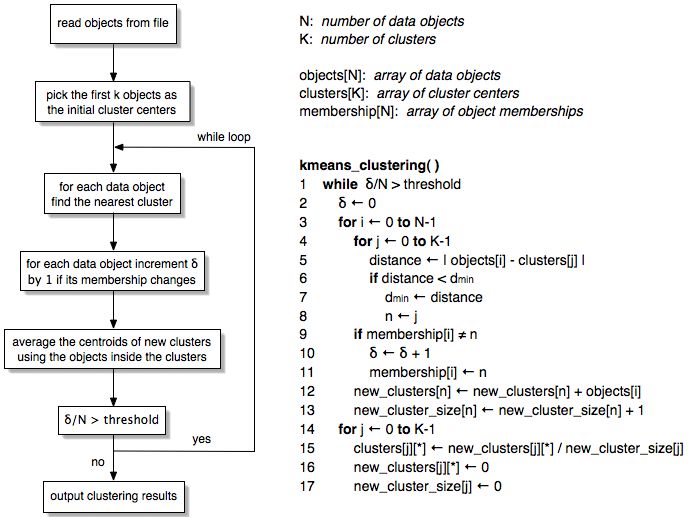
Wei-keng Liao is a Research Professor in the Department of Electrical Engineering and Computer Science at Northwestern University's McCormick School of Engineering. His research spans high-performance computing with a focus on parallel and distributed systems. Dr. Liao's research interests include parallel and distributed file I/O and storage system design, data mining algorithm design and their parallelization, data management for large-scale scientific applications, and computational model design for large-scale applications on parallel and distributed environments. He is a key contributor to the Parallel netCDF project, which provides parallel I/O capabilities for scientific applications. His recent work shows strong trends in high-performance computing infrastructure, particularly in optimizing I/O systems for scientific applications, parallel data clustering algorithms, and machine learning acceleration in distributed environments. His publications span computational science, parallel computing, and data-intensive applications across various scientific domains including materials science, astrophysics, and healthcare. Best Paper Award at IEEE International Conference on Cluster Computing (2016) for Parallel DTFE Surface Density Field Reconstruction Dr. Liao has supervised numerous research projects funded by DOE, NSF, NASA, and Argonne National Laboratory, with recent work focusing on data libraries for exascale science, machine learning-driven resilience for extreme-scale systems, and scalable data clustering for scientific computing. He leads research on the Parallel K-means Data Clustering software package and is a principal developer of Parallel netCDF. His work connects multiple research groups through the Center for Ultra-scale Computing and Information Security (CUCIS) at Northwestern University, where he collaborates with scientists across disciplines to develop scalable computing solutions for complex scientific problems.
Dr. Sven Burger is a leading Researcher at the Zuse Institute Berlin (ZIB) within the Modeling and Simulation of Complex Processes department. His work focuses on Nanophotonics , Quantum Technologies , and Optical Resonance Computation , particularly in photonic crystals, plasmonic systems, and quantum light sources. Key projects: NanoLab GRIPS 2024 , MATH+ TES QT , MATH+ PaA-1 (perovskite solar cells), Colour Impression of Solar Cells Collaborations: MATH+ , BIFOLD , Research Campus MODAL His research spans Bayesian optimization for quantum systems, quasinormal mode expansions , chiral plasmonics , and terawatt-scale photovoltaics . Recent work emphasizes RPExpand software for resonance analysis and AAA algorithm applications in photonic design. He contributes to quantum key distribution via plug&play single-photon sources, hot carrier dynamics in plasmonic nanocrystals, and high-efficiency light extraction for deep-UV LEDs. His computational methods address non-Hermitian systems , exceptional points , and self-interference nanoparticle tracking .
Stephen Siegel is an Associate Professor at the University of Delaware with a joint appointment in the Department of Computer and Information Sciences and the Department of Mathematical Sciences . Holding a PhD in Mathematics from the University of Chicago (1993), he transitioned from finite group theory research to formal methods in computer science, focusing on verification of parallel and scientific software. His research centers on the Verified Software Laboratory (VSL) and the CIVL Model Checker for HPC program verification. Recent work includes formal verification of PETSc components at CAV 2025 and collective contract frameworks for message-passing programs. Research Interests Formal methods for software verification Parallel and HPC software reliability Model checking techniques Application of mathematical logic to computing Academic Service Highlights Program Committee & Publication Chair, CAV 2025 Co-organizer, International Workshop on Verification of Scientific Software (VSS 2025) Chair, VerifyThis competition (2023) Editorial service at IEEE Transactions on Software Engineering (2015-2019) Teaching Portfolio CISC 404/604: Logic in Computer Science CISC 414/614: Formal Methods in Software Engineering CISC 372: Parallel Computing (MPI/OpenMP/CUDA instruction) Advanced Topics courses: Model Checking, Abstract Interpretation
Maria Paz Linares Herreros is a Senior Lecturer at the Universitat Politècnica de Catalunya (UPC) in the Department of Statistics and Operations Research within the Faculty of Mathematics and Statistics (FME). She is affiliated with the IMP - Information Modeling and Processing research group and inLab FIB. Her educational background includes a Licenciada en Matemáticas, a Doctorate from UPC, and a Master's in Logistics, Transportation, and Mobility. Licenciada en Matemáticas Doctorat from Universitat Politècnica de Catalunya Máster en Logística, Transporte y Movilidad Her research focuses on urban mobility , traffic simulation , and smart city technologies . She develops data-driven models for transportation systems and parking management, integrating deep learning techniques for real-time predictions. Her work addresses environmental impact assessment of traffic policies and inclusive mobility solutions . Recent publications analyze urban mobility trends through macroscopic and microscopic traffic models , deep learning applications for parking predictions, and dynamic ride-sharing systems . She explores IoT interoperability and data integration in transportation. Scientific awards include the IV International Award on Transport Infrastructure Management Research (2014). She participates in competitive R+D+I projects like ALGORAE and Virtual Mobility Lab, focusing on transportation innovation and smart city policy evaluation . She contributes to multimodal transport simulation frameworks such as CitScale and Barcelona Virtual Mobility Lab, which evaluate emerging mobility concepts and city policies using integrated modeling approaches .
Dieter A. Fensel is a Full Professor at the Institute of Computer Science, Faculty of Computer Science, University of Innsbruck, Austria . He has held academic positions at the University of Karlsruhe, Vrije Universiteit Amsterdam, and the University of Amsterdam. He founded the Digital Enterprise Research Institute (DERI) in Galway and Innsbruck and co-founded the Semantic Technology Institute International (STI2). His work spans semantic technologies, knowledge engineering, and intelligent systems. PhD in Political Science, University of Karlsruhe (1993) Habilitation in Applied Computer Science, University of Karlsruhe (1998) Masters in Computer Science (TU Berlin) and Social Science (FU Berlin) His research interests focus on the Semantic Web, ontologies, knowledge representation, web services, and intelligent systems. He investigates how semantics can enhance data interoperability, service composition, and knowledge sharing in distributed environments. His work bridges formal methods with practical applications in e-commerce, tourism, and digital enterprises. He emphasizes the role of semantics in enabling machine-understandable content and automated reasoning across domains. The research trends in his publications and projects reveal a consistent focus on semantic technologies, from foundational work on knowledge representation (e.g., KARL language) to large-scale EU projects on data ecosystems (PlanetData, BYTE), travel (EuTravel), and energy (ENTROPY). His work evolved from theoretical AI and knowledge engineering to applied semantic web services, linked data, and digital innovation in societal domains. His scientific awards include: Carl-Adam-Petri-Award of the Faculty of Economic Sciences, University of Karlsruhe (2000) As an academic advisor, Dieter Fensel has supervised over 25 PhD students and served on numerous Master’s and PhD committees. He has led more than 100 national and international research projects with total funding in the hundreds of millions of euros, including major grants from the EU’s 7th Framework Program, Horizon 2020, and Science Foundation Ireland. These projects span domains such as big data, ambient assisted living, transportation, and digital services. He co-founded and led several research labs and teams , including: Digital Enterprise Research Institute (DERI), Galway and Innsbruck Semantic Technology Institute (STI) Innsbruck Semantic Technology Institute International (STI2) Co-founder of the European Semantic Web Conference (ESWC) and International Semantic Web Conference (ISWC) These organizations foster global collaboration in semantic technologies and have become central hubs for research, innovation, and community building in the field.
Josep Ribes Bertomeu is an Associate Professor in the Department of Chemical Engineering at the University of Valencia, Spain, within the School of Engineering. He is a key member of the CALAGUA-UV Research Group on Environmental Technologies, where he has conducted extensive research since 1999. His research focuses on wastewater treatment , particularly using anaerobic membrane bioreactors (AnMBR) , mathematical modeling , process control , and optimization through artificial intelligence. He has made significant contributions to the development of simulation tools such as DESASS and LoDif-BioControl, and has worked on parameter calibration and control algorithms for wastewater treatment plants (WWTPs). His recent publications demonstrate a strong trend in energy recovery , resource valorization , and sustainable water management , aligning with circular economy principles. He has also been active in chemical engineering education , innovating laboratory teaching and virtual learning strategies. Principal Researcher, LIFE MEMORY Project (University of Valencia) Supervised 3 PhD theses Published over 35 international journal papers Co-author of 3 registered software programs and 5 invention patents He has contributed to numerous applied research and technology transfer projects with public and private entities, emphasizing real-world impact.