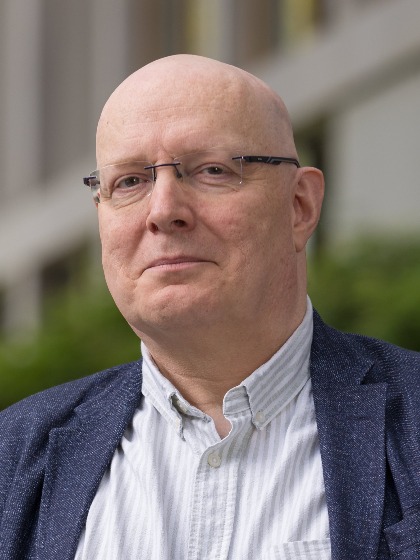
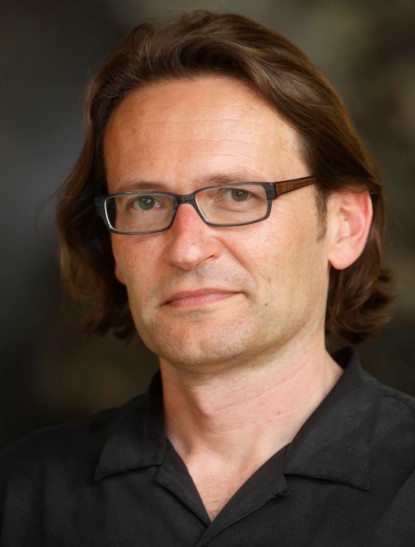
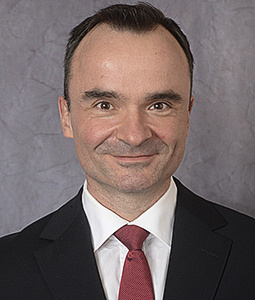
Prof. Rob Timmermans is a Professor of Theoretical Physics and Vice-Dean for Education at the University of Groningen (UG). He is affiliated with the Faculty of Science and Engineering and the Precision Frontier — Van Swinderen Institute for Particle Physics and Gravity. His research focuses on theoretical particle physics, quantum mechanics, and precision measurements, particularly in electric dipole moment (EDM) searches using molecules like BaF. His work includes developing methods for molecular beam manipulation, phase-space analysis, and symmetry violation studies. He has contributed to collaborations such as NL-eEDM, advancing techniques for EDM detection and precision physics. Prof. Timmermans has received nominations for teaching awards, reflecting his commitment to education. Research highlights include studies on nucleon decay, antinucleon-nucleon interactions, and chiral effective field theory. His lab activities involve collaborations on laser-cooled molecules and trapping techniques. Prof. Timmermans’ articles often address fundamental physics questions, such as Lorentz violation in beta decay and parity violation in molecular systems. Awards: Nominated for Faculty Teaching Award 2014, Teacher of the Year 2014-15. Grants/Advising: Leads projects on EDM searches and particle physics, with active roles in international collaborations. Labs/Teams: Van Swinderen Institute, Precision Frontier group.
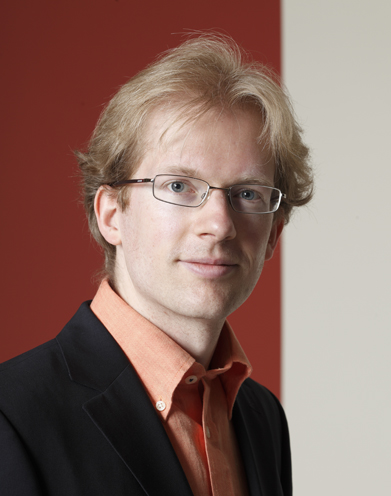
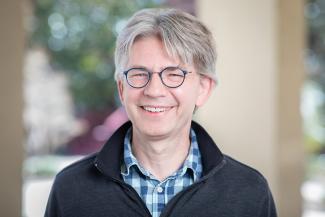
Harvey B. Meyer is a Professor of Theoretical Physics at Johannes Gutenberg University Mainz since 2014. Previously, he held positions including Junior Professor at Mainz (2010), Fellow at CERN's Theoretical Physics Division (2009), Research Scientist at MIT (2008), and postdoctoral roles at MIT (2006-2008) and DESY (2004-2006). He earned his D.Phil. in Theoretical Physics from the University of Oxford (2001-2004) and a Diplome de Physique from the University of Lausanne (1996-2001). His research focuses on lattice field theory, QCD phase diagrams, thermal field theory, and hadron structure. He leads the NEPhEuQCD collaboration and has received the ERC Consolidator Grant (2018) for the SIMDAMA project. Meyer teaches courses in theoretical physics and mathematical methods at Mainz, including 'Theoretische Physik 4' and 'Mathematische Rechenmethoden'. His work integrates advanced computational techniques to address fundamental questions in particle and nuclear physics. Key achievements include pioneering studies on the muon's anomalous magnetic moment, hadronic light-by-light scattering, and quark-gluon plasma dynamics. Collaborations include MIT, CERN, and institutions globally through lattice QCD projects. His lab and team contributions are central to the PRISMA+ Cluster of Excellence at Mainz.
Alexandra Gade is a University Distinguished Professor at the Department of Physics and Astronomy in the College of Natural Science , Michigan State University (MSU). She serves as the FRIB Scientific Director and has held leadership roles at both the National Superconducting Cyclotron Laboratory (NSCL) and FRIB. Her research focuses on the structure of exotic nuclei using radioactive isotope beams , with expertise in Coulomb excitation and nucleon knockout reactions . Education: Ph.D. in Physics (Dr. rer. nat.), University of Köln (2002) Diploma thesis, University of Köln (1998) Vordiplom, University of Köln (1995) Her nuclear structure research investigates how neutron-proton asymmetry alters nuclear properties like deformation, excitation patterns, and shell closures. She employs advanced experimental techniques at NSCL/FRIB, including the S800 spectrograph and GRETINA/SeGA gamma-ray detectors , to study exotic nuclei across the nuclear chart. Key projects include proton/neutron removal reactions and intermediate-energy Coulomb excitation , providing insights into nuclear deformation , collective modes , and single-particle orbit modifications . Recent scientific contributions focus on high-profile FRIB experiments , triaxial nuclear shapes , and shell evolution near drip lines . Her work bridges experimental observations with nuclear theory , particularly in refining shell model calculations and reaction models for exotic systems. Scientific Awards: 2023-24 Research Leadership Award (MSU) 2020 AAAS Fellow 2018 William J. Beal Outstanding Faculty Award (MSU) 2017 NatSci Outstanding Faculty Award (MSU) 2015 Zdzislaw Szymanski Prize 2014 GENCO Membership Award (GSI) 2013 APS Fellow 2010 Thomas H. Osgood Excellence in Teaching Award (MSU) 2008 Alfred P. Sloan Fellow 2008 DOE Outstanding Junior Investigator Her research group has trained numerous PhD students and postdoctoral researchers , many of whom hold academic or national laboratory positions. Collaborations include nuclear theorists , instrumentation experts , and international facilities like CERN, Argonne, and Lawrence Livermore National Laboratory.
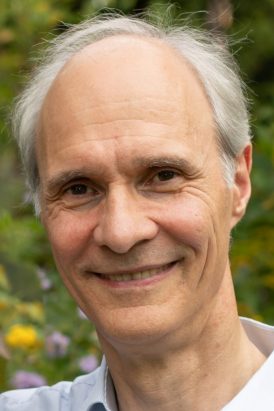
Wolfgang Lorenzon is a Professor of Physics at the University of Michigan, specializing in experimental particle physics, nuclear physics, and astrophysics. His research spans three major experimental programs: the LUX-ZEPLIN (LZ) dark matter experiment at SURF, the MUSE experiment at PSI for proton radius measurements, and the SpinQuest collaboration at Fermilab studying hadronic physics. He has held significant roles in major collaborations including SeaQuest and HERMES, where he served as Deputy Spokesman from 1997-1998. His educational background includes a Ph.D. (1988) and Diploma (1984), both from the University of Basel. Lorenzon has built a distinguished research career focusing on precision measurements in particle and nuclear physics, with particular expertise in detector development and experimental techniques. Lorenzon's research interests center on fundamental questions in particle physics. His work on the LZ experiment involves developing the in-line radon removal system for the central time-projection chamber, crucial for enhancing the detector's sensitivity to WIMPs. At PSI, he leads the development of liquid hydrogen targets for the MUSE experiment, which aims to resolve discrepancies in proton charge radius measurements. His hadronic physics work with SeaQuest and SpinQuest focuses on understanding nucleon structure through antiquark distributions and polarized Drell-Yan processes. His research bridges theoretical questions with cutting-edge experimental techniques, often requiring innovative detector solutions. Analysis of his recent publications (2023-2025) reveals a strong focus on dark matter detection using liquid xenon technology, precision measurements of nucleon structure, and development of next-generation detectors. His work spans theoretical interpretation of experimental results, detector development, and analysis of fundamental particle interactions. The research shows increasing collaboration across international boundaries, with significant contributions to multiple major experiments simultaneously. Scientific Awards: Fellow of the American Physical Society Lorenzon has mentored numerous graduate students through completion of their Ph.D. degrees, with recent graduates including Haley Reid (2024), Noah Wuerfel and Chami Amarasinghe (2023), Maris Arthurs (2022), Marshall Scott (2020), and Daniel Morton (2019). His current research group includes postdocs, graduate students, and undergraduate researchers. His research is supported by multiple grants from the National Science Foundation (Grant 2110229) and the Department of Energy (Grant SC0019193 and Subcontract 734299), as well as University of Michigan funding. Lorenzon leads a research group with active laboratories at both the Homer A. Neal Laboratory (3265 HANL) and West Hall (357 WH) at the University of Michigan. His team collaborates with international groups at Fermilab, SURF in South Dakota, and the Paul Scherrer Institute in Switzerland. The group maintains strong connections with the LZ collaboration, MUSE experiment, and SpinQuest collaboration, contributing both technical expertise and physics analysis capabilities to these major international efforts.
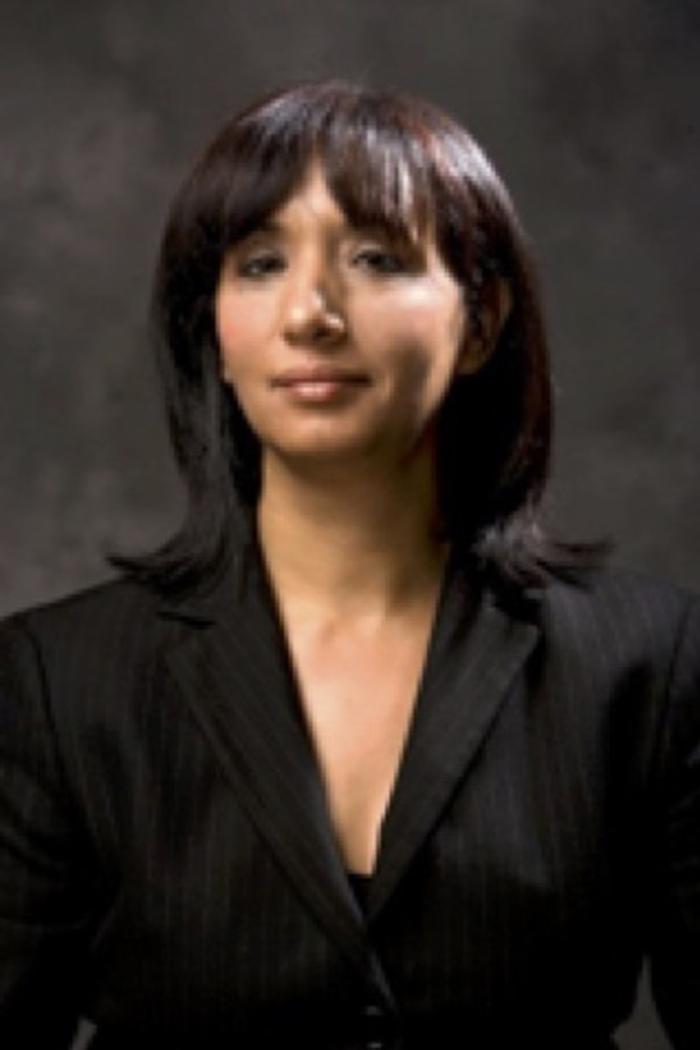
Roles & Affiliation: Research Professor of Physics and Senior Staff Scientist at the Thomas Jefferson National Accelerator Facility. Specializes in nuclear and particle physics with expertise in experimental hadronic physics and electromagnetic probe techniques. Education: BSc in Physics and Mathematics, University Mohamed V, Rabat, Morocco (1984) MSc in Theoretical Physics, University Mohamed V, Rabat, Morocco (1986) Diplôme des Etudes Approfondies, University of Blaise Pascal, France (1987) PhD in Physics, University of Blaise Pascal, France (1991) with thesis: Measurement of the Nucleon Axial Form Factor from Low Energy Pion Electroproduction advised by Prof. Pierre Y. Bertin Strategic Laboratory Leadership Program, University of Chicago Booth School of Business (2010) Research Focus: Experimental investigations into nucleon structure using electromagnetic probes, including axial form factor measurements. Active in pion electroproduction studies and hadronic physics. Engaged in advancing detector technologies through her work on drift chamber tracking systems. Grants & Advising: No specific grants or advisees listed in available records. Labs & Facilities: Primary affiliation with Jefferson Lab's nuclear physics division, contributing to accelerator-based experiments in fundamental nuclear structure.
Professor Roxanne P. Springer is a faculty member at Duke University's Department of Physics within Trinity College of Arts & Sciences, specializing in weak interactions and quantum chromodynamics (QCD). Her research explores fundamental symmetry violations and hadronic structure through effective field theories. Education: Ph.D. in Physics from California Institute of Technology (1990) Research Interests: Springers work focuses on hadronic parity violation, large-Nc expansion, and precision nuclear physics. She applies pionless effective field theory (EFT(π/)) to study neutron-deuteron capture, two-nucleon interactions, and neutrinoless double-beta decay. Her projects bridge QCD symmetries with nuclear dynamics. Publication Trends: Recent works emphasize large-Nc scaling, parity-violating observables, and cross-section calculations in nuclear reactions. Key topics include Wigner-SU(4) symmetry, renormalization group constraints, and hadronic structure analysis. Scientific Awards: POWRE Visiting Professorship (1998-1999) Grants: Principal investigator for DOE-funded projects on lattice QCD and effective field theory since 2005. Co-PI for multiple DOE grants on high-energy nuclear physics from 1990-2005. Includes support for strangeness physics and extreme energy density studies. Teaching: Taught graduate courses on quantum mechanics, quantum field theory, and nuclear physics since 2022. Led methods courses for physics research. Advising: Chaired thesis and preliminary committees for students including James Wheeler (2019), Adryanna Major (2020), and Qiaofeng Liu (2021). Mentored graduate students Xincheng Lin, H Nguyen, and Son Nguyen through 2021.
Professor James Zanotti is a faculty member at the University of Adelaide, holding the position of Professor/Reader in the School of Physics, Chemistry and Earth Sciences within the Faculty of Sciences, Engineering and Technology. His research focuses on advanced theoretical and computational studies of particle physics, particularly in the realm of lattice Quantum Chromodynamics (QCD). He specializes in exploring nucleon structure, quark dynamics, and the internal forces within protons using lattice simulations. His work includes groundbreaking studies on transverse force distributions, parity-odd structure functions, and the application of the Feynman-Hellmann theorem to nucleon matrix elements. Professor Zanotti is actively involved in supervising Masters and PhD students in these areas. His recent research highlights include mapping proton force distributions, constraining beyond-Standard-Model physics through nucleon charges, and investigating collective magnetic states in materials. He is affiliated with Adelaide's physics department and accessible via james.zanotti@adelaide.edu.au.
Jie Chen is an Associate Professor at the Department of Physics, Faculty of Science, Southern University of Science and Technology (SUSTech). She completed her Bachelor of Science at Lanzhou University in 2011 and her Ph.D. in Science at Peking University's Department of Technical Physics in 2016. She has held postdoctoral positions at Argonne National Laboratory (ANL) and Michigan State University's Rare Isotope Facility (FRIB), and served as a Research Fellow at ANL before joining SUSTech. Education: 2011 – Bachelor of Science, Lanzhou University 2016 – Doctor of Science, Peking University (Department of Technical Physics) Research Interests: Jie Chen's research is centered on understanding exotic nuclear structures through direct nuclear reactions. Her work spans multiple areas including exotic atomic nuclear structure , nuclear science and technology , and nuclear astrophysics . She employs techniques such as single-particle transfer and elastic/inelastic scattering experiments to probe unstable nuclei, contributing to the broader understanding of nuclear forces and open quantum systems. Scientific Awards & Invited Talks: Invited talk: "Investigating the Spin-Orbital splitting in N=19 isotones using SOLARIS" at Nuclear Structure conference 2022, Lawrence Berkeley National Laboratory Special report: "Probing nuclear structures with light-ion induced reactions using SOLARIS at ReA" at APS April Meeting 2022, NYC Special report: "Investigating the low-lying states of Be isotopes via one-nucleon transfer reactions" at GANIL seminar Invited talk: "Experimental study of single particle strength in exotic psd-shell nuclei using transfer reactions" at University of Notre Dame Research Impact & Collaborations: As a spokesperson for multiple international collaborations, Jie Chen has conducted experiments at world-leading facilities including RCNP at Osaka University, ATLAS at ANL, FRIB at Michigan State University, and ISOLDE at CERN. Her research has resulted in over 40 publications in top-tier international journals, establishing her as a leading figure in experimental nuclear physics.
David A. Egolf is an Associate Professor in the Department of Physics at Georgetown University, specializing in computational physics with a focus on systems maintained far-from-equilibrium. His research spans fluid dynamics, granular materials, biophysics, and statistical mechanics, employing nonlinear dynamics and large-scale computation to understand complex phenomena. His educational background includes undergraduate and doctoral studies at Duke University, where he earned his PhD in Physics with a thesis on Characterizations of Extensively Chaotic States and Transitions . Prior to Georgetown, he held postdoctoral positions at Cornell University's Cornell Theory Center and Los Alamos National Laboratory's Center for Nonlinear Studies. Egolf's research interests center on spatiotemporal chaos and nonequilibrium systems. He investigates how localized events determine the evolution of complex systems, with applications ranging from fluid convection to fibrillating heart tissue. His work reveals that seemingly chaotic systems often contain predictable elements around specific critical events, providing pathways to develop a statistical mechanics for nonequilibrium phenomena. His publication record shows consistent contributions to understanding dynamical systems, with recent work focusing on granular jamming transitions, biopolymer networks, and QCD calculations. The research demonstrates recurring themes of identifying fundamental building blocks within chaotic systems and establishing connections between nonequilibrium behavior and equilibrium statistical mechanics. Alfred P. Sloan Research Fellow Software of the Year Award (1984) for AtariLab Science Series Egolf has successfully mentored numerous undergraduate researchers at Georgetown, supervising over a dozen senior theses with several students receiving departmental awards and honors. His research has been supported by major funding agencies including the National Science Foundation, Research Corporation, NASA, and the Alfred P. Sloan Foundation. He maintains an active collaboration with experimental physicist Jeffrey Urbach, combining theoretical and experimental approaches to study driven granular systems and biophysics. His laboratory work focuses on computational modeling of nonequilibrium systems, utilizing large computer clusters to simulate complex phenomena across multiple scales. Current projects include studying granular systems driven by both shaking and shearing to introduce multiple time-scales, and investigating biopolymer networks relevant to cellular mechanisms.
Luchang Jin is an Associate Professor in the Department of Physics at the University of Connecticut, where he is a member of the Particle-Astro-Nuclear (PAN) Group. His research focuses on theoretical particle physics and lattice Quantum Chromodynamics (QCD), with emphasis on precision calculations of hadronic contributions to fundamental constants like the muon's anomalous magnetic moment (g-2). He holds a Ph.D. in Physics from Columbia University (2016) and a B.Sc. in Physics from Peking University, Beijing, China (2011). Dr. Jin's work spans lattice QCD simulations, electroweak interactions, and high-precision calculations of hadron properties. Notable contributions include studies of hadronic light-by-light scattering, pion structure, and CKM matrix element determinations. His research has been recognized with awards including the DOE Early Career Award (2020) and the Kenneth G. Wilson Award (2019). He teaches advanced courses such as Quantum Field Theory and Mechanics at UConn, and his academic affiliations include membership in the American Physical Society. His publications emphasize computational methods in lattice gauge theory, including HMC algorithm improvements and quasi-distribution frameworks for parton distribution functions.
Thomas Aumann is a Professor at the Institute of Nuclear Physics, Technical University of Darmstadt, serving as Working Group Leader for Experimental Nuclear Physics with Exotic Ion Beams, Coordinator of BMBF-FSP ErUM T07, and Managing Director of the Helmholtz Research Academy Hesse for FAIR (HFHF). His research group conducts experiments at major international facilities including GSI/FAIR and RIKEN. His research focuses on experimental studies of exotic nuclei with extreme neutron-to-proton asymmetry to understand nuclear structure, reactions, and applications in nuclear astrophysics (e.g., element synthesis in the universe) and neutron star properties. His team develops instrumentation for facilities like R3B at GSI/FAIR, SAMURAI at RIKEN, and NEPTUN at S-DALINAC. Professor Aumann leads the R3B collaboration—the only worldwide experiment enabling kinematically complete measurements of exotic nuclear reactions at high beam energies (up to 1 GeV/nucleon) with heavy nuclei and high resolution. His team includes permanent scientists, postdocs, doctoral students, and administrative staff. Scientific Awards: None mentioned in the provided text. He advises doctoral students Martin Baumann, Christian Helmel, and Nikhil Mozumdar. Research funding sources include: German Federal Ministry of Education and Research (BMBF) Collaborative Research Center 1245 (SFB 1245) ELEMENTS Research Cluster German Research Foundation (DFG) LOEWE Research Cluster Nuclear Photonics GSI Helmholtz Centre for Heavy Ion Research Helmholtz Research Academy Hesse for FAIR (HFHF)
Prof. Jenny Hiu Ching Lee is an Associate Professor at the Department of Physics, Faculty of Science, The University of Hong Kong . She leads experimental research in Experimental Nuclear Physics , focusing on Nucleon Correlations , Nuclear Shell Structure , and Exotic Nuclei using facilities at RIKEN Nishina Center, RCNP Osaka University , and NSCL Michigan State University . Education: B.Sc. in Physics, The Chinese University of Hong Kong (2002-2005) M.S. in Nuclear Physics, Michigan State University (2005-2007) Ph.D. in Nuclear Physics, Michigan State University (2007-2010) Her research employs Direct Reactions , In-beam Gamma Spectroscopy , and Beta-decay Spectroscopy to investigate Neutron-rich Nuclei , Isospin Symmetry Breaking , and Nuclear Mass Measurements . Her recent work includes studies on 78Ni , 54Ca , and 56,58Ca to probe nuclear deformation and magic number stability. As a Principal Investigator , she has secured grants for projects like "Studies of Nuclear Structure Evolutions using In-beam Gamma Spectroscopy of 54,56Ca, around 78Ni and 100Sn" and "Exploring triton-cluster structure in exotic nuclei beyond alpha clustering" . Her group collaborates internationally on detector array development (e.g., BRIKEN beta-delayed neutron detector ). She supervises Ph.D. students in experiments at Radioactive-Isotope Beam Facilities in Japan and China, emphasizing precision mass measurements and nuclear spectroscopy. Her teaching includes PHYS1250 Fundamental Physics , PHYS3851 Atomic and Nuclear Physics , and PHYS3760 Physics Laboratory .
Prof. Dr. John Bulava is a Professor of Theoretical Hadron Physics at Ruhr University Bochum, affiliated with the Faculty of Physics and Astronomy. His research focuses on computer simulations of the strong nuclear force using lattice Quantum Chromodynamics (QCD) to study hadron properties and interactions, particularly hyperon scattering processes relevant to neutron stars. Prof. Bulava holds a B.Sc. in Physics and Mathematics from The George Washington University, an M.Sc. from Carnegie Mellon University, and a Ph.D. in Nuclear and Particle Physics from Carnegie Mellon University under Prof. Colin Morningstar. His research explores the dynamics of quarks within protons and neutrons, with special attention to how changes in fundamental constants like quark masses affect physical phenomena. Computational approaches form the cornerstone of his investigations into quantum field theories. Prof. Bulava's recent publications demonstrate consistent focus on resonance states and scattering processes in particle physics, employing lattice QCD methodologies. Key themes include baryon/meson resonances, finite-volume spectral analysis, and coupled-channel scattering studies. He has held positions at DESY (Germany), CERN (Switzerland), Trinity College Dublin (Ireland), and University of Southern Denmark before joining Ruhr University Bochum in 2023.
Steffen Strauch is a Professor of Physics in the Department of Physics and Astronomy at the University of South Carolina, affiliated with the McCausland College of Arts and Sciences. His research focuses on baryon structure, muon-proton scattering, and photoproduction experiments addressing nuclear physics challenges such as the proton-radius puzzle and chiral symmetry restoration. Education: Ph.D. in Physics, Technische Hochschule Darmstadt, 1998 Dipl. Phys., Technische Hochschule Darmstadt, 1993 Research Interests: High-precision lepton-scattering experiments (e.g., MUSE at PSI) Photoproduction studies to resolve baryon spectroscopy issues Nuclear medium effects on hadron properties Radiative corrections and two-photon exchange analyses Key Collaborations: MUSE experiment at Paul Scherrer Institut CLAS and Hall A Collaborations at Jefferson Lab Synergistic Activities: Co-spokesperson for MUSE, co-organizer of workshops on hadron physics, reviewer for proposals and journals, and mentor for science outreach programs.
Dr. Volker Crede is a Professor of Physics at Florida State University (FSU), part of the College of Arts and Sciences. He joined FSU's Physics Department in December 2004 after completing a postdoctoral fellowship at the University of Bonn and a Feodor-Lynen Research Fellowship at Cornell University. His research focuses on subnuclear structure, particularly the search for 'missing' baryon resonances predicted by quark models but not yet experimentally confirmed. He leads experimental activities at the Jefferson Laboratory (JLab) and the ELSA facility in Germany, utilizing detectors like CLAS and FROST to study nucleon excitations through electromagnetic probes. Dr. Crede holds a Ph.D. in Experimental Nuclear Physics from the University of Bonn (2000), where he investigated antiproton-deuteron annihilations. His work emphasizes spectral analysis of nucleon resonances, leveraging polarization observables and multi-channel frameworks to disentangle resonance signals from background noise. He is also a co-spokesperson on proposals at ELSA targeting helicity differences in meson production reactions. In teaching, he instructs courses such as College Physics A/B and Particle and Nuclear Physics, emphasizing hands-on laboratory work and collaborative problem-solving. His research is supported by the National Science Foundation and the U.S. Department of Energy.