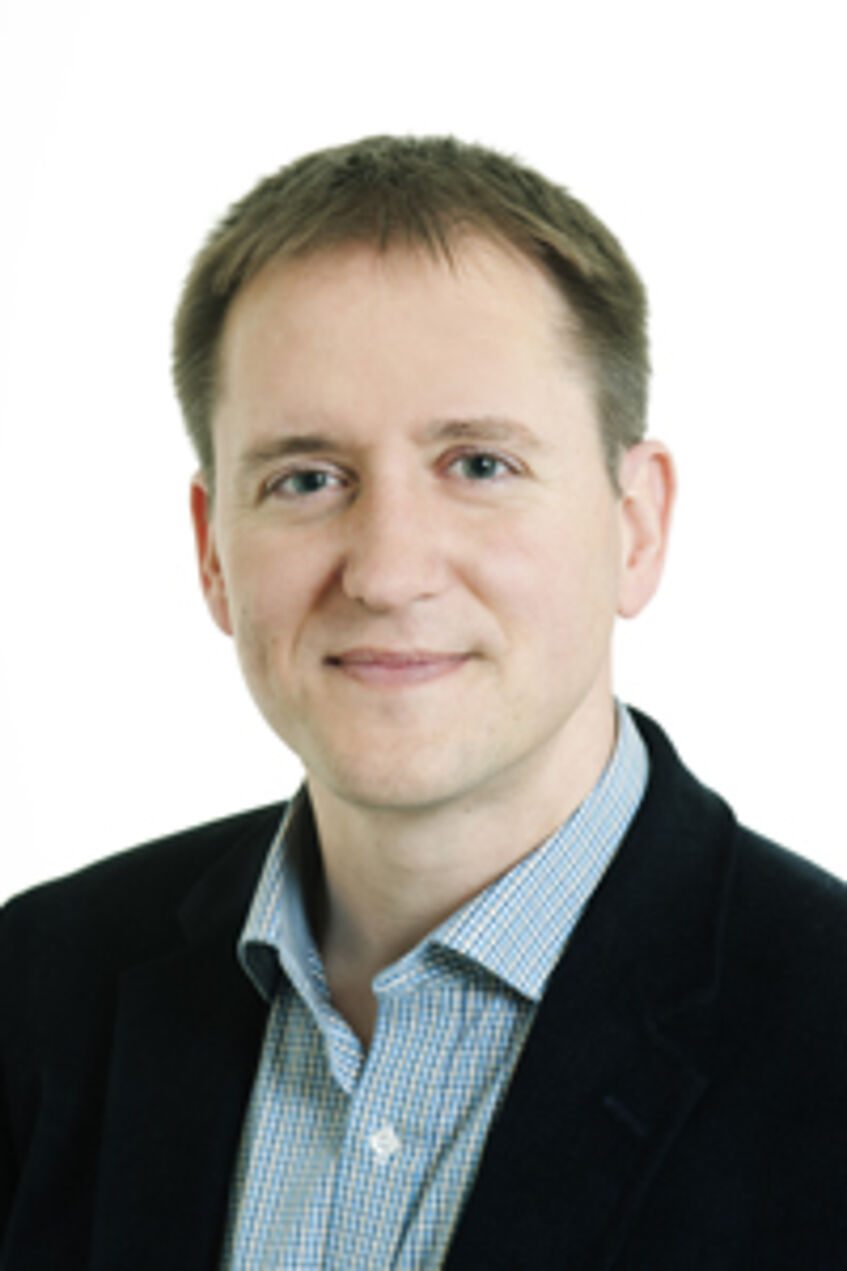
Nico Sommerdijk is a Professor of Bone Biochemistry at the Radboud Institute for Molecular Life Sciences, Radboud University Medical Center Nijmegen. Previously, he held positions at Eindhoven University of Technology, including Full Professor (2014–2019) and Head of the Laboratory of Materials and Interface Chemistry. His research focuses on biomineralization, biomimetic materials, and advanced electron microscopy techniques, particularly cryo-EM and liquid-phase EM. He earned his PhD (cum laude) from Radboud University Nijmegen in 1995 and completed postdoctoral research at the University of Kent (UK), Radboud University, and Eindhoven University of Technology. He pioneered the use of cryo-EM to study organic-inorganic interactions and founded the Radboud Electron Microscopy Center. His work has been supported by prestigious grants, including an ERC Advanced Grant (2018), NWO VICI (2010), and TOP-PUNT (2016). Notable awards include the Royal Society of Chemistry Soft Matter Award (2015) and the NWO VIDI Award (2006). Key research areas include collagen mineralization mechanisms, crystal nucleation, and biomaterial design. His interdisciplinary approach bridges chemistry, materials science, and biophysics, with applications in biomedical materials and geology.
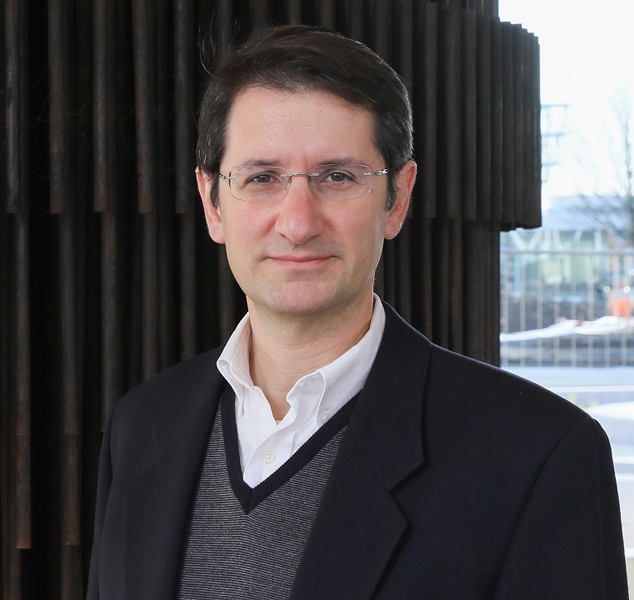
Christoph Dellago is a full Professor of Computational Physics at the Faculty of Physics of the University of Vienna, where he has been a faculty member since 2003. He currently serves as Director of the Erwin Schrödinger Institute for Mathematics and Physics, Head of the Computational and Soft Matter Physics Group, and Project lead of EuroCC Austria - National Competence Centre for Supercomputing. Previously, he served as Dean of the Faculty of Physics (2009-2012) and Coordinator of the Doctoral College Advanced Functional Materials (DCAFM). Full Professor, Faculty of Physics, University of Vienna (2003-present) Director, Erwin Schrödinger Institute for Mathematics and Physics (2017-present) Head, Computational Physics and Soft Matter Group (2024-present) Coordinator, Doctoral College Advanced Functional Materials (DCAFM) Austrian Representative, Council of CECAM Dellago received his PhD in Physics from the University of Vienna in 1996, followed by postdoctoral research at UC Berkeley as a Schrödinger Fellow of the Austrian Science Foundation. His research focuses on developing computational methods to study rare events in condensed matter systems, particularly transition path sampling methodology for simulating nucleation, chemical reactions, and biomolecular reorganizations. He has pioneered the application of machine learning to molecular structure recognition and potential energy surfaces. Recent work examines self-assembly of nanocrystals, biopolymer folding, aqueous interfaces, phase separation in alloys, thermo-polarization, cavitation, and freezing phenomena. Analysis of Dellago's recent publications (2023-2025) reveals a strong emphasis on machine learning applications in computational physics, particularly neural network potentials for simulating water interfaces, crystal defects, and phase transitions. His work bridges traditional statistical mechanics with modern computational techniques, creating powerful tools for studying complex dynamical processes that occur on timescales far beyond conventional molecular dynamics simulations. The publications demonstrate increasing integration of machine learning with rare event sampling methods, reflecting the cutting-edge direction of computational statistical mechanics. Förderpreis der Stiftung Futura zur Förderung junger Südtiroler im Ausland (1997) The Raymond and Beverly Sackler Prize in the Physical Sciences (2005) UNIVIE Teaching Award of the University of Vienna (2014) Dellago leads an active research group with multiple PhD students and postdocs, focusing on computational statistical mechanics. His group develops trajectory-based sampling methods and machine learning approaches for molecular simulation. He has secured significant funding through EuroCC Austria and various research platforms including the Research Platform Accelerating Photoreaction Discovery and the Research Platform Erwin Schrödinger International Institute for Mathematics and Physics. His research has been supported by numerous grants enabling advanced computational infrastructure for high-performance simulations. The Dellago Group operates within the Computational and Soft Matter Physics division at the University of Vienna, with strong connections to the Research Network Data Science. The group collaborates extensively with international research institutions and maintains close ties with the Erwin Schrödinger Institute, which Dellago directs. Their research environment combines theoretical physics, computational chemistry, and machine learning expertise to tackle fundamental questions in condensed matter physics and soft matter systems.
Professor Markku Kulmala, currently at the University of Helsinki's Division of Atmospheric Sciences, leads the Finnish Centre of Excellence in Atmospheric Composition and Climate Change. His research unit comprises 150 scientists, including 5 foreign professors, and he has coordinated major projects like EUCAARI and iLEAPS. Academy Professor (2004-2009, 2011) King Carl XVI Gustaf Visiting Professor (2009-2010) His research focuses on biosphere-aerosol-cloud-climate interactions, atmospheric nucleation mechanisms, and climate-air quality relationships. He has authored over 600 publications with 15,000+ citations and an H-index of 61. Awarded extensively including: Fuchs Memorial Award (2010) Wilhelm Bjerkenes Medal (2007) ERC Advanced Grant (2009-2013) Honorary Doctorates from Stockholm and Tartu Universities He has supervised 48 PhDs, 9 of whom are now professors. His research group offers 60+ ECTS of postgraduate courses in collaboration with international institutions.
Christian George is a distinguished Research Professor and Deputy-director of the Research Institute on Catalysis and the Environment at Lyon (IRCELYON) since 2016. Affiliated with the Centre National de la Recherche Scientifique (CNRS) in France, he has held progressively senior research positions since 1995, including Senior Research Scientist at CNRS-IRCELYON (2006-2015) and Research Scientist at the Laboratoire d'Application de la Chimie à l'Environnement at University Lyon 1. His educational background includes: Research Habilitation Thesis (HDR) in Physical Chemistry from University Louis Pasteur, Strasbourg (1999) PhD in Physical Chemistry from University Louis Pasteur, Strasbourg (1993) George's research focuses on the complex interactions between atmospheric chemistry and environmental processes. His work primarily investigates aerosol physical-chemistry, tropospheric multiphase chemistry, and air quality with particular emphasis on photochemical processes at interfaces. His research has significantly advanced our understanding of how chemical reactions at air-water and air-particle interfaces influence atmospheric composition, aerosol formation, and climate dynamics. Dr. George has received numerous prestigious awards recognizing his contributions to atmospheric science: President of Chinese Academy of Sciences – International distinguished scientist (PIFI), 2018 High-end Foreign Expert (HEFE) of the Chinese State Administration of Foreign Experts Affairs, 2018 Advanced Grant 2011 of the European Research Council (ERC) for the project "Air-Sea Exchanges driven by Light" EUREKA-Lillehammer Prize – EUROTRAC 2, 2004 George has held significant institutional responsibilities including serving on the Board of trustees of PULSALYS (2013-present), as Regional vice coordinator of the academic community in the Rhône-Alpes Region (2011-2015), and as Vice President of the University of Lyon 1 (2011-2012). His research has been supported by major grants including the ERC Advanced Grant in 2011. As Deputy-director of IRCELYON, George leads research teams investigating catalysis and environmental processes. His laboratory work focuses on experimental studies of photochemical reactions at environmental interfaces, particularly examining how these processes influence atmospheric composition, aerosol formation, and air quality on global and regional scales.
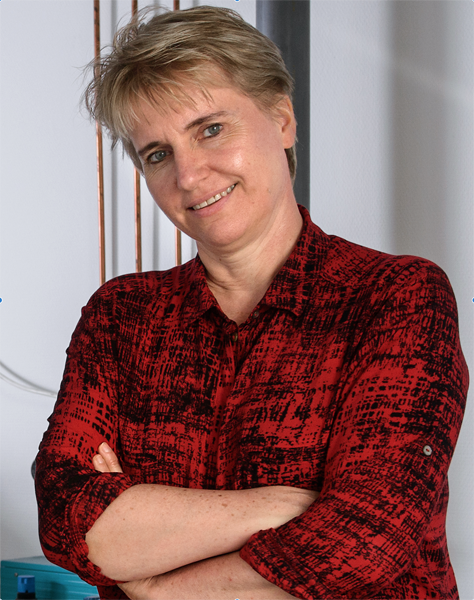
Signe Kjelstrup is a Full Professor at the Department of Chemistry, Norwegian University of Science and Technology (NTNU), and holds a part-time professorship at TU Delft. She has held visiting positions at the University of Barcelona, University of Kyoto, University of Leiden, and Medical College of Ohio. Her career includes roles as Assistant Professor at the University of Rochester and NTNU. Her research focuses on non-equilibrium thermodynamics , energy optimization , and transport phenomena . Key areas include: Heat and mass transfer in biological, chemical, and energy systems Molecular dynamics simulations of ion pumps and membrane transport Thermodynamic efficiency in industrial processes and renewable energy Interfacial phenomena and phase equilibria Recent publications (2011-2012) emphasize molecular-scale thermodynamics , with applications in hydrogen purification, clathrate hydrates for energy storage, and biological ion pumps. Work frequently combines theoretical modeling with molecular simulations to analyze energy conversion and transport. Awards and honors: Nansen Foundation Award (1980) Honorary professorships in China, Japan, and Spain Major grants from Research Council of Norway Memberships in Norwegian Academy of Technology, Royal Norwegian Society of Science, and Norwegian Academy of Sciences She leads research on non-equilibrium thermodynamics at NTNU and collaborates internationally on projects involving sustainable energy and membrane technology.
Christiane Helling is Full Professor in Weltraumwissenschaften (Space Sciences) at Graz University of Technology and Director of the Institute for Space Research Graz (IWF) at the Austrian Academy of Sciences. She previously held leadership roles at the University of St Andrews, including Director of the Centre for Exoplanet Science, and has been a Senior Scientist at the Netherlands Institute for Space Research. Habilitation in Astrophysics (TU Berlin) PhD in Astrophysics (TU Berlin, with distinction) Diploma in Physics (TU Berlin) Her research focuses on exoplanet and brown dwarf atmospheres, cloud microphysics, charge processes, and atmospheric chemistry. She integrates hydrodynamic simulations with space observations from missions like CHEOPS, JWST, and PLATO to map cloud distributions and study planetary climate. Her recent publications emphasize time-dependent cloud formation, thermodynamic disequilibrium in planetary disks, and exoplanet atmospheric characterization using space telescopes. Key collaborations include the CHAMELEON project (virtual laboratories for exoplanet atmospheres) and the MSG model for cloudy sub-stellar atmospheres. ERC Starting Grant (LEAP Project: Lightning, Electrical and Atmospheric Processes on exoplanets) Marie-Curie Innovative Training Network (CHAMELEON)
Colin O'Dowd is a Personal Professor in the Department of Physics at the National University of Ireland Galway since 2009. He was elected to the Royal Irish Academy (2010) and holds a DSc from the University of Manchester (2007). His research spans atmospheric composition, aerosol dynamics, and climate interactions, with a focus on marine environments. Atmospheric composition Air-sea exchange Biogeochemical cycling Air pollution Atmospheric aerosols Climate change O'Dowd's publications include 6 Nature papers as senior author and 1 Science paper, with an h-index of 71 (Google Scholar). His work has secured €24M in competitive funding over 22 years, including leadership in EU projects like EUCAARI and QUEST. NUI Galway President's award for research excellence (2018) Mason Medal, Royal Meteorological Society (2016) Royal Irish Academy Gold Medal in Geosciences (2013) Appleton Award & Medal, Institute of Physics (2012) German Aerosol Society Smoluchowski Award (2004) Fellow, Royal Meteorological Society (2003) Fellow, Institute of Physics (2002) He has mentored 19 PhD/MSc graduates, 5 current students, and supervised 47 postdocs. His editorial roles include Journal of Geophysical Research – Atmospheres Joint Editor-in-Chief (2000-2008) and contributions to Nature journals. Media engagement includes over 90 interviews and documentaries like 'C-CAPS Short Film' (2015).
Bernhard Gollas is an Associate Professor at the Institute for Chemistry and Technology of Materials at Graz University of Technology since 2009. He studied chemistry at the University of Tübingen and the University of Oregon, earning his PhD in molecular electrochemistry in 1996. After postdoctoral work at the University of Southampton, he joined TU Graz in 2001 as Assistant Professor and later held leadership roles at the Centre for Electrochemical Surface Technology (2001-2014). His research spans electrochemistry, electrodeposition mechanisms, and functional coatings with applications in energy storage and industrial electroplating. Research Interests include: Electrochemistry of solid/liquid interfaces Electrodeposition from deep eutectic solvents Spectroelectrochemical reaction mechanisms Electrochemical quartz-crystal microbalance (EQCM) Functional coatings for corrosion resistance Post-lithium battery materials (Mg, Zn, Al) Publication Trends show focus on electrochemical energy storage (zinc-air, aluminum, magnesium batteries), green solvents, and advanced surface characterization techniques like PM-IRRAS and AFM-SECM. His work addresses dendritic growth suppression, hydrogen evolution mitigation, and industrial electroplating innovations. Research Group includes 20+ members and alumni working on electrochemical methods, coating technologies, and energy storage systems. Collaborative projects like ECOCAPS , IP-URFC , and Uniform highlight his interdisciplinary approach. Contact : Phone: +43 316 873-32338 Email: bernhard.gollas@tugraz.at Room: CE.02.030 Institute: Stremayrgasse 9, 8010 Graz
Univ.-Prof. Dr. Paul Winkler is a Professor and Deputy Head of the Research Group in Aerosol Physics and Environmental Physics at the University of Vienna's Faculty of Physics. His research focuses on heterogeneous nucleation processes, nanoparticle dynamics, and aerosol systems. He leads major projects like the ERC Consolidator Grant (NANODYNAMITE, 2014–2019) and the EU-funded CLOUD-DOC (2023–2026). Winkler has presented widely on topics like nanoplastic aerosol nucleation and aerosol characterization techniques at conferences such as the International Aerosol Conference (IAC). His work bridges fundamental aerosol science with environmental and climate applications. Education: PhD in Aerosol Physics (not explicitly stated, inferred from role). Key Projects: CLOUD-DOC (EU-MASCA-ITN, 2023–2026) NANODYNAMITE (ERC Grant, 2014–2019) CLOUD-MOTION (EU-MSCA-ITN, 2018–2021) Awards: FWF Erwin-Schrödinger Fellowship (2014–2019), NCAR Awarded Study Program (2009–2011). Research Interests: Winkler explores mechanisms governing aerosol formation, including nanoparticle generation from plastics, heterogeneous nucleation, and the role of chemical species like iodine oxoacids. His lab develops advanced measurement tools like the versatile condensation particle counter (TSI 3789) and ion mobility classifiers. Publications: Over 136 articles, focusing on topics like atmospheric nanoparticle growth, isoprene-driven nucleation, and nanoplastic aerosol behavior. Recent work includes insights into upper-tropospheric particle formation and the environmental impact of nanoplastics.
Athanasios Nenes is Professor of Atmospheric Processes at École polytechnique fédérale de Lausanne (EPFL) since 2018, where he leads the Laboratory of Atmospheric Processes and Insights (LAPI). He maintains significant academic affiliations as Adjunct Professor at Georgia Institute of Technology (2018-present) and Affiliated Scientist at Foundation for Research and Technology in Greece (2008-present). His research spans air quality, aerosol-cloud-climate interactions, and atmospheric instrumentation. Nenes has pioneered theoretical frameworks and measurement techniques that transformed how we understand cloud formation and aerosol impacts on climate. His work on aerosol acidity and biogeochemical cycling has established fundamental relationships now used in global climate models. He has developed open-source codes widely adopted for regulatory purposes and climate modeling worldwide. Nenes' publication portfolio includes over 315 papers with more than 26,700 citations (h-index 89), featuring numerous high-impact articles in journals like PNAS and Nature Geoscience. His research demonstrates consistent innovation across atmospheric chemistry, climate modeling, and instrumentation development, with several publications ranking among the top 5% most cited in their field. 2020 American Geophysical Union Fellow 2020 Web of Science Highly Cited Researcher 2016 European Research Council Consolidator Grant Multiple NASA Group Achievement Awards (2009, 2010, 2019) 2014 Vaughan Lectureship at Caltech 2012 AGU Atmospheric Sciences Section Ascent Award Nenes has mentored 20 PhD students and 20 postdoctoral researchers, with graduates securing faculty positions across multiple countries and prestigious awards including the US Presidential Early Career Award. He has served in significant leadership roles including editor of Atmospheric Chemistry & Physics for 15 years, President of the EGU Atmospheric Sciences Division, and member of the US National Academy's Committee on Atmospheric Chemistry Research.
Blaž Gasparini is an Assistant Professor (Universitätsassistent) at the University of Vienna , Faculty of Earth Sciences, Geography and Astronomy, based in the Department of Meteorology and Geophysics and affiliated with the Environment and Climate Research Hub . He leads an active research programme on cloud-climate interactions and teaches four courses each academic year. Education & early career: MSc ETH (Swiss Federal Institute of Technology) – atmospheric / climate science PhD studies (University of Vienna) focusing on cirrus-cloud geo-engineering with global climate-model simulations Post-doc/assistant professor appointment at University of Vienna since 2020 Research interests sit at the intersection of cloud microphysics and climate dynamics . Using high-resolution models, satellite observations and theory he investigates how high clouds (especially tropical anvil and cirrus) form, evolve and interact with radiation, and how these processes may change as the planet warms. A second strand explores deliberate climate intervention (cirrus thinning, stratospheric aerosols) and associated physical and ethical uncertainties. His recent publications (2024-2025) reveal three dominant themes: (i) lifecycle and radiative impacts of tropical anvil clouds, (ii) turbulence and microphysical controls on cirrus ice formation, and (iii) critical evaluation of geo-engineering proposals. Collectively the work advances understanding of cloud-radiative feedbacks that govern climate sensitivity and the hydrological cycle. Teaching & outreach: Each semester Dr Gasparini coordinates 2–3 courses including Modelling and Data Analysis , Thermodynamics of the Atmosphere and the Paper Club seminar. He frequently appears on Austrian/Slovenian radio and podcasts explaining climate science and geo-engineering, co-authored the youth brochure "WTF is Climate Change?!" (EN/SL/HU), and maintains an educational blog on high-performance computing for climate modelling. Grants & projects: He is principal investigator on Austrian Science Fund (FWF) and EU-funded projects examining cloud-radiative heating, cirrus microphysics and aerosol-cloud interactions, and participates in international model inter-comparison activities (RCEMIP, CMIP6 analyses). No doctoral students or major scientific prizes are listed in the supplied material.
Dr. Maximilian Dollner is a researcher at the University of Vienna's Faculty of Physics, affiliated with the Department of Aerosol Physics and Environmental Physics. His work focuses on airborne measurements of aerosol and cloud particles, aerosol-cloud interaction processes, microphysical and optical properties of aerosols and clouds, and the impact of air masses on cloud particle properties. He leads or contributes to major international projects such as SABRE (2022-2025), ACCLIP (2022), ACACIA (2019-2024), and FIREX-AQ (2019), collaborating with NASA and NOAA. His research integrates field experiments, in situ measurements, and advanced instrumentation to advance understanding of aerosol dynamics and climate interactions. Publications highlight contributions to aerosol type classification, biomass burning plume analysis, and stratospheric aerosol chemistry. Education: MSc and Dr. (PhD) in Physics, specialized in environmental and atmospheric sciences. Research interests emphasize global-scale aerosol processes, with a focus on mineral dust, pyrocumulonimbus impacts, and anthropogenic influences. Recent studies include the A-LIFE campaign's aerosol inlet analysis and pollution effects on Mediterranean dust properties. His work bridges observational data with climate modeling, addressing pressing questions in atmospheric science and environmental physics. Publications span aerosol optical properties, cloud-aerosol interactions, and instrument validation, reflecting interdisciplinary approaches to environmental challenges. Collaborations with global institutions and NASA missions underscore his role in advancing atmospheric research.
Dr. Agnieszka Straus (Kupc) is a researcher at the University of Vienna , affiliated with the Faculty of Physics and Aerosol Physics and Environmental Physics department. Her work focuses on New particle formation and growth , Microphysical and chemical properties of atmospheric aerosol , and Airborne aerosol measurements . Projects : FWF Erwin-Schrödinger-Fellowship (2016-2019), ATom (NASA), A-LIFE (University of Vienna), AEROMMA (NOAA) Expertise : New particle formation, aerosol optical properties, stratospheric aerosol dynamics Publications highlight her contributions to understanding global-scale aerosol processes, including stratospheric air intrusions, biomass burning impacts, and mineral dust's role in cloud formation. She frequently collaborates on studies involving aircraft-based in situ measurements. Awards : FWF Erwin-Schrödinger-Fellowship (2016-2019) Collaborations include work with NASA's Atmospheric Tomography Mission (ATom) and NOAA's AEROMMA project. Her research informs climate models and atmospheric chemistry assessments using field data and simulations.
Liane G. Benning holds a joint appointment as Professor in Interface Geochemistry at German Research Centre for Geosciences GFZ Potsdam and Freie Universität Berlin since 2016, while maintaining her position as Professor in Experimental Biogeochemistry at University of Leeds since 2007. She serves as Head of Interface Geochemistry Section 4.4 at GFZ Potsdam, leading a research group focused on mineral-fluid-microbe interactions in extreme environments. Her academic journey began with a Vordiplom in Geology/Mineralogy from Christian-Albrechts-Universität zu Kiel, followed by a Diploma in Petrology/Geochemistry and PhD in Aqueous Experimental Geochemistry from ETH Zürich. Professor Benning's research interests span biogeochemistry, mineralogy, and extremophile microbiology with particular focus on mineral-fluid-microbe interface reactions in cryogenic environments. Her work examines microbial-mineral-ice interactions contributing to Greenland Ice Sheet darkening and accelerated melting, nucleation and crystallization mechanisms of environmentally relevant minerals, and microbial processes in extreme cryogenic settings that influence global-scale biogeochemical cycles. She develops and applies innovative in situ and time-resolved techniques to quantify these complex interactions at molecular to ecosystem scales. Her publication record demonstrates consistent high-impact research across geochemistry, environmental science, and materials science. The articles reveal a strong focus on mineral formation processes, particularly calcium carbonate and sulfate systems, with increasing attention to cryospheric microbiology and its climate implications. Her work bridges fundamental geochemical processes with real-world environmental challenges, especially regarding ice sheet dynamics and biogeochemical cycling in polar regions. 2020 Geochemistry Fellow: European Association of Geochemistry + Geochemical Society 2018 Member of the German National Academy of Sciences, Leopoldina 2017 Member of the European Academy of Sciences, Academia Europaea 2016 Schlumberger Award, The Mineralogical Society of Great Britain and Ireland 2016 Bigsby Medal, Geological Society of London 2015-2017 President of the European Geochemical Society 2009-2014 Wolfson Research Merit Award, UK Royal Society Professor Benning has secured substantial research funding, with over 24 million Euro acquired through EU and UK grants in the last decade. She serves on the UK NERC Peer Review College and has contributed to DIAMOND working groups for beamline design. As Founding Editor of Geochemical Perspectives and Geochemical Perspectives Letters since 2014, she plays a significant role in shaping geochemical discourse. Her research has important implications for understanding climate change processes, particularly regarding ice sheet dynamics and biogeochemical cycling in polar regions. Leading the Interface Geochemistry Section at GFZ Potsdam, Professor Benning directs a multidisciplinary team investigating mineral-fluid-microbe interactions across various environmental systems. Her laboratory combines advanced analytical techniques with experimental approaches to study biogeochemical processes at interfaces. The research group collaborates extensively with international partners, particularly in polar science initiatives examining the role of microbial communities in ice sheet dynamics and global biogeochemical cycles.
Gianfranco Pacchioni is Full Professor at the Department of Materials Science, University of Milano-Bicocca. He serves as Vice-Director of his Department and Director of the Solar Energy Research Center. His career spans institutions in Germany (Friedrich-Alexander University Erlangen-Nuremberg, Freie Universität Berlin), Spain (University of Barcelona), France (University of Paris VI), and the US (IBM Almaden Research Center). PhD in Physical Chemistry from Freie Universität Berlin (1984) Laurea in Chemistry from University of Milano (1978) His research focuses on the electronic structure of oxides and supported metal clusters for applications in surface chemistry , catalysis , photocatalysis , and energy production . He investigates defects in oxides , diffusion/nucleation processes , and oxide ultrathin films using theoretical methods. Key publication trends include oxide-metal interfaces , cluster stability , and charge transfer mechanisms , with applications in heterogeneous catalysis and nanomaterials for energy . Alexander von Humboldt Fellow (1993) Nasini Medal (1994) Federchimica Prize (1996) Humboldt Research Award (2005) European Academy of Sciences Member (2009) Pacchioni has led significant initiatives including the COST Action on 'Inorganic Oxide Surfaces' and chairs the European Research Council's Panel PE5 for Advanced Grants. He coordinates the PhD program in Nanostructures and Nanotechnology.