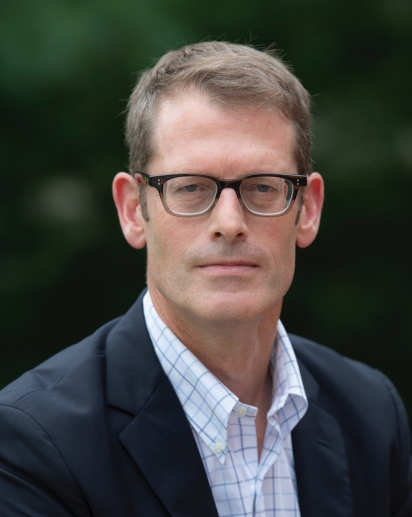
Daryl G. Press is a Professor of Government at Dartmouth College and the inaugural Faculty Director of the Davidson Institute for Global Security . He co-founded the Strategic Forces Boot Camp with Sandia National Laboratories and serves as a non-resident Senior Fellow at the Atlantic Council . Research Expertise U.S. National Security Policy Nuclear Deterrence Dynamics Technological Evolution in Warfare Strategic Stability Analysis Defense Department Consultancy Recent Publications (2023–2025) Examined U.S.-China military dynamics in East Asia Analyzed North Korean deterrence strategies Explored post-primacy U.S. foreign policy frameworks Investigated nuclear escalation risks Contact Information Email: daryl.g.press@dartmouth.edu Phone: (603) 646-1707 Office: Silsby Room 120, HB 6108
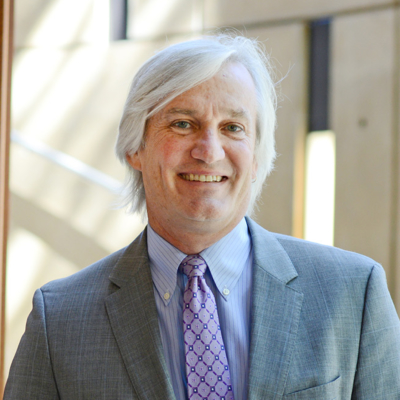
Allen S. Weiner is a Senior Lecturer in Law at Stanford Law School and directs three major programs: the Stanford Program in International and Comparative Law, the Stanford Humanitarian Program, and the Stanford Center on International Conflict and Negotiation. His expertise spans international security, conflict resolution, and humanitarian law. Weiner holds a BA from Harvard University (1985) and a JD from Stanford Law School (1989). Prior to joining Stanford in 2003, he served in the U.S. State Department, advising on international law and representing the U.S. in international tribunals. His research focuses on international law’s application to contemporary security threats, including cyber warfare, nuclear doctrine, and online misinformation in conflict zones. Notable works include co-authoring the leading textbook International Law (8th ed., 2023) and analyzing historical cases like the Hiroshima bombing’s legal implications. Weiner’s policy work includes projects with INTERPOL to combat transnational crime and rethinking its governance models. Scientific awards are not explicitly listed in the provided texts, though his contributions to legal scholarship and policy are widely recognized. He teaches courses on conflict resolution, humanitarian law, and ethics in warfare. His advising and grants include policy practicums addressing global security challenges.
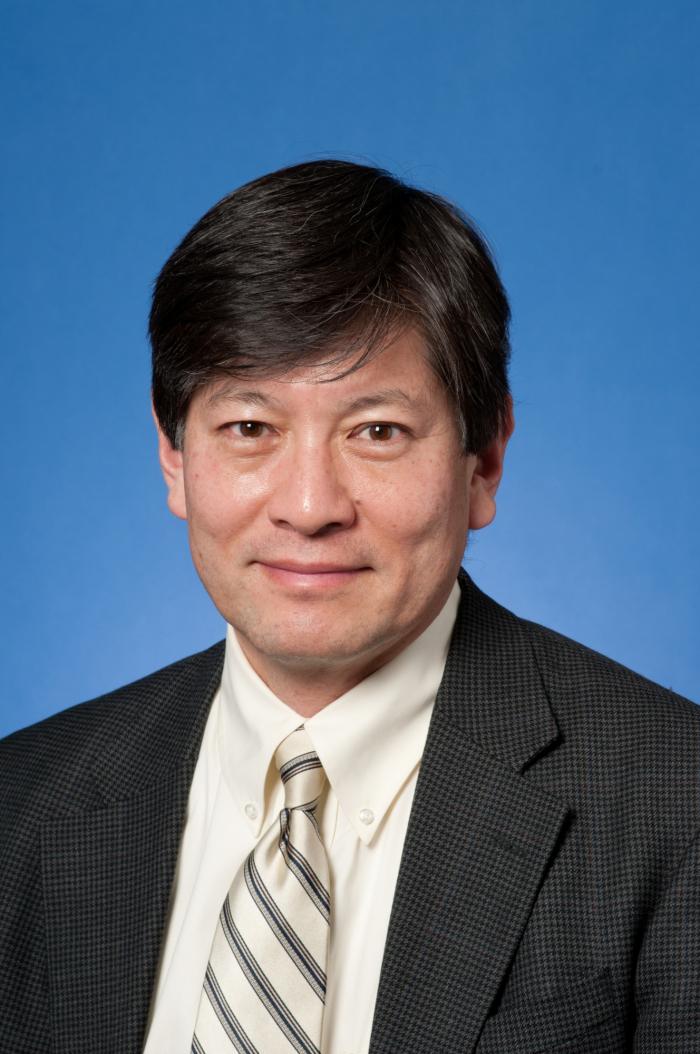
Professor Stephan Frühling is a leading academic in strategic and defence studies at The Australian National University's (ANU) Strategic and Defence Studies Centre. He specialises in Australian defence policy, nuclear weapons, NATO, and alliance dynamics. His research bridges academic analysis and policy impact, contributing to national security strategies such as the 2016 Defence White Paper. He has held key administrative roles, including Acting Head of his Centre (2022), Associate Dean (2016–2022), and inaugural Director of the ANU Master in Military Studies program (2011–2013). His international experience includes a Fulbright Fellowship at Georgetown University (2017) and research roles at NATO's Defence College (2015). His research focuses on deterrence theory, Indo-Pacific security, and alliance resilience, with a particular emphasis on Australia's strategic position amid rising great power competition. Recent work examines NATO-Asia partnerships, extended nuclear deterrence, and the evolving role of Australia-US alliances in regional stability. Professor Frühling's projects include Pathways of Deterrence: Causal Chains of 21st Century Signalling (2024–2027) History of Strategic Policy since 1976 (ongoing) AusCSCAP DFAT-funded diplomacy initiatives His 146+ publications span books, policy papers, and peer-reviewed articles, addressing topics such as force development in small/middle powers, nuclear strategy, and regional security dynamics. His work is cited widely in policy circles and academia, reflecting its practical relevance to contemporary strategic challenges.
Michelle Bentley is a Professor of International Relations and Director of the Centre for International Security at Royal Holloway, University of London. She specializes in weapons of mass destruction, US foreign policy, and security taboos. Her work bridges academic research with policy-oriented analysis, particularly focusing on chemical, biological, and nuclear weapons dynamics. Education: BSc SocSci (Hons), PGCert, PGDip, MSc SocSci, PhD Research Interests: Her interdisciplinary research explores how political rhetoric shapes weaponization norms, with a focus on: Weapons of Mass Destruction (WMD) taboos US foreign policy continuities Terrorism and counter-radicalization strategies Publications: Recent work includes acclaimed books like The Biological Weapons Taboo (2023) and peer-reviewed articles in International Affairs and Security Studies . Her 2024 analysis of chemical warfare in Ukraine highlights strategic ambiguity in modern conflicts. Awards: Recipient of the BISA Teaching Excellence Award (2022) and multiple Royal Holloway teaching commendations for innovative methods like social media engagement in political education. Engagement: Active media contributor with analyses featured in Vox and The Conversation , addressing topics like US-Iran tensions and the political impact of Trump biopics. Leadership: Oversees the Gender Institute and Conflict, Violence and Terrorism Research Centre, fostering interdisciplinary security research.
Dr. Do Young Lee is an Assistant Professor and Postdoctoral Fellow at the Department of Political Science, University of Oslo, and a fellow at the Oslo Nuclear Project. Previously, he held postdoctoral positions at the University of California, San Diego (UCSD) and the George Washington University. He earned his PhD in Political Science from the University of Chicago (2020), with additional predoctoral fellowships at the Institute for Security and Conflict Studies. His research focuses on extended deterrence strategies, nuclear politics in the Asia-Pacific, and alliance dynamics. Education: PhD in Political Science, University of Chicago (2020) MA and BA in Political Science, Korea University Military service: Special Commando Battalion, Republic of Korea Marine Corps (2005–2007) Research Interests: Strategies of extended deterrence Nuclear weapons proliferation Alliance commitments and cohesion Technology diffusion in military contexts International relations of the Asia-Pacific Publications reflect a focus on US alliances with Japan/South Korea, nuclear cooperation between North Korea and Russia, and US nuclear assistance strategies. His work appears in Security Studies , The Chinese Journal of International Politics , and The Washington Quarterly . Research funding supported by the Smith Richardson Foundation, Charles Koch Foundation, Scowcroft Institute, and George Washington University. Teaches courses including 'Politics and Strategy in the Nuclear Age' and 'Conflict and Cooperation.'
Mike M. Mochizuki is an Associate Professor at the Elliott School of International Affairs , The George Washington University, specializing in Political Science and International Affairs . He holds the Japan-U.S. Relations Chair in Memory of Gaston Sigur and has directed the Sigur Center for Asian Studies (2001–2005). His research focuses on Japanese politics, U.S.-Japan relations, and East Asian security dynamics. Education: Ph.D. in Political Science from Harvard University Research Interests: Professor Mochizuki’s work explores the intersection of Japanese foreign policy, strategic alliances in the Asia-Pacific, and regional security challenges. His scholarship addresses historical reconciliation, military basing rights (notably in Okinawa), and the geopolitical implications of U.S.-Japan-China triangular relations. He co-directs the Memory and Reconciliation in the Asia-Pacific project and contributes to journals like Foreign Affairs and International Security . Publications: His notable works analyze the U.S.-Japan alliance’s role in East Asian security, including edited volumes on Okinawa, China-Taiwan relations, and nuclear proliferation on the Korean Peninsula. He is currently finalizing a book on the U.S.-Japan alliance and China’s rise, alongside a co-edited volume on historical reconciliation in East Asia.
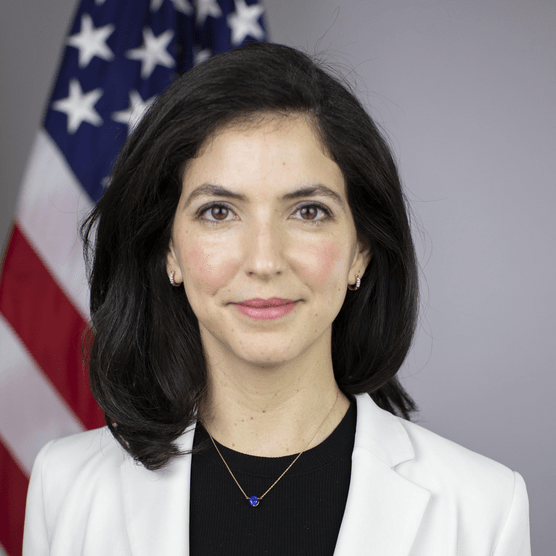
Rebecca Lissner is a Senior Fellow for U.S. Foreign Policy at the Council on Foreign Relations (CFR) and a former professor at the U.S. Naval War College, where she served in the Strategic and Operational Research Department within the College of Operational and Strategic Studies. She has held senior national security roles in the Biden-Harris administration, including Deputy Assistant to the President and Principal Deputy National Security Advisor to the Vice President, advising on U.S.-China competition, Ukraine, AI, and climate policy. AB in Social Studies, Harvard University MA and PhD in Government, Georgetown University Lissner’s research focuses on American grand strategy, the future of the liberal international order, and U.S. global leadership. She explores how the United States can adapt its foreign policy to maintain influence amid rising powers and domestic political shifts. Her work emphasizes reimagining, rather than restoring, the post-World War II international system through strengthened alliances, democratic coalitions, and strategic innovation. Her recent publications reveal a consistent focus on grand strategy, U.S. foreign policy after Trump, NATO and European security, and the evolving liberal order. These works span journals like Foreign Affairs , Foreign Policy , and Washington Quarterly , highlighting her expertise in strategic planning, crisis management, and alliance politics. Themes include the resilience of international institutions, the need for strategic coherence, and the importance of proactive leadership in shaping global norms. Scientific awards and honors are not explicitly mentioned in the provided texts. Lissner has advised national security leadership and presidential campaigns, including those of Biden, Harris, and Clinton. She has contributed to major policy documents such as the Biden administration’s National Security Strategy and led contingency planning on Russia-Ukraine. Her media engagement includes commentary for CNN, MSNBC, BBC, and writing in The Atlantic and Washington Post , demonstrating broad influence in both policy and public discourse. She has held research affiliations at Georgetown University, Perry World House at the University of Pennsylvania, Yale’s International Security Studies, and Columbia’s Saltzman Institute, reflecting a robust academic network. While no formal lab or team is specified, her collaborative work with Mira Rapp-Hooper and leadership in government strategy teams indicate active participation in high-level research and policy teams.
Keir Lieber is a Professor at Georgetown University, holding dual appointments in the Edmund A. Walsh School of Foreign Service and the Department of Government. His work focuses on nuclear strategy, deterrence, and international relations theory. He co-authored The Myth of the Nuclear Revolution and authored War and the Engineers . Lieber holds a Ph.D. and M.A. from the University of Chicago and a B.A. from the University of Wisconsin-Madison. He has received major fellowships from institutions like the Brookings Institution and Carnegie Corporation. His research explores how technological change and power politics shape modern conflict, particularly in the nuclear realm. Education: Ph.D. and M.A. in Political Science, University of Chicago B.A. in Political Science and International Relations, University of Wisconsin-Madison Proud alumnus of D.C. public schools Research Interests: Lieber examines nuclear weapons policy, deterrence dynamics, and the interplay of technology with conflict causation. His work critiques assumptions about nuclear stability and emphasizes the enduring role of political choices over technological determinism. Article Trends: Recent publications address nuclear tripolarity, escalation management, and the evolving role of technology in deterrence. Key themes include the fragility of strategic stability and the risks posed by modernizing arsenals. Awards: Fellowships from Brookings Institution, Carnegie Corporation, Council on Foreign Relations, and Smith Richardson Foundation Advising & Grants: While no formal advisees are listed, Lieber’s mentorship is reflected in collaborative research on nuclear strategy. His grants fund studies on U.S. nuclear modernization and arms control.
Joshua D. Kertzer is the John Zwaanstra Professor of International Studies and Government at Harvard University, where he also serves as Director of Graduate Studies. His research integrates international security, political psychology, and foreign policy analysis. His work examines public opinion formation, elite decision-making, and experimental approaches to international relations. Recent studies focus on how observers assess resolve in international conflicts, partisan influences on foreign policy attitudes, and the psychological foundations of reputation costs. Publications demonstrate methodological innovation in combining survey experiments with archival research, exploring topics from democratic credibility to signaling in crisis diplomacy. His award-winning research has been recognized by the International Studies Association and American Political Science Association.
Dale Copeland is a Professor of International Affairs at the Frank Batten School of Leadership and Public Policy, University of Virginia. He holds a Ph.D. from the University of Chicago and is a leading scholar in international relations, specializing in security studies and international political economy. His research explores the interplay between economic interdependence, reputation, and state behavior, particularly in great power relations. Ph.D., University of Chicago His research focuses on security studies , international political economy , and IR theory , with particular emphasis on the causes of war, economic interdependence, bargaining and coercion, and the impact of rising and declining power. He investigates how trade, finance, and military behavior are interconnected and how states build reputations in international politics. His recent and past publications reveal a consistent focus on the conditions under which economic interdependence leads to peace or conflict. His work combines historical case studies with theoretical rigor, often engaging with realism, liberalism, and constructivism. Key themes include preventive war, reputation dynamics, trade expectations, and the strategic use of economic tools in foreign policy. His scientific awards include: International Studies Association Best Book Award (2017) MacArthur Fellowship Mellon Fellowship Post-doctoral Fellowship at the Belfer Center for Science and International Affairs, Harvard University Professor Copeland has advised numerous students and contributed to major scholarly debates through symposia on his work in International Security Studies Forum and Qualitative and Mixed Methods Research . He has received significant research support through prestigious fellowships and grants, enabling his influential publications. He is currently working on a book about commerce and American foreign policy and a new project on coercion without war. He is affiliated with the Frank Batten School and contributes to its mission of training future leaders in public policy and international affairs. His research informs both academic discourse and policy-relevant understanding of international conflict and cooperation.
Jacques deLisle is the Stephen A. Cozen Professor of Law and Professor of Political Science at the University of Pennsylvania. He serves as Director of the Center for the Study of Contemporary China, co-director of the Center for Asian Law, and director of the Asia Program at the Foreign Policy Research Institute. His expertise centers on contemporary Chinese law, politics, and U.S.-China relations, with a focus on legal reform, cross-strait relations, and Taiwan's international status. DeLisle’s research explores the interplay between law, governance, and international dynamics in China. His notable works analyze China’s engagement with international law, Taiwan’s diplomatic strategies, and the implications of U.S. policy toward the region. Recent publications include studies on China-India territorial disputes, political warfare tactics by authoritarian regimes, and the evolving role of the Chinese Communist Party. His work frequently addresses geopolitical issues such as the South China Sea disputes, the impact of the pandemic on U.S.-China relations, and the legal frameworks governing cross-strait interactions. DeLisle has advised on legal reform initiatives in China and frequently engages in policy discussions, including as an expert witness on Chinese law and a consultant for development programs.
Professor Michael Goodman is a Professor of Intelligence and International Affairs at King's College London, serving as Director of the King’s Centre for the Study of Intelligence. He previously headed the Department of War Studies and currently holds visiting roles at the Norwegian Intelligence School and Sciences Po. His research focuses on intelligence history, Cold War dynamics, and nuclear weapons, with a prolific publication record including books like The Official History of the Joint Intelligence Committee and Spinning Intelligence . Goodman has been the Official Historian of the Joint Intelligence Committee and is a British Army reservist on government secondment until 2026. His academic contributions span intelligence theory, security policy, and international affairs. Awards include the 2025 Fellowship of the Academy of Social Sciences. Goodman supervises PhD students in intelligence history, contemporary issues, and nuclear weapons studies. He leads interdisciplinary initiatives at the King’s Cybersecurity Centre and Conflict Records Unit, emphasizing historical and strategic insights into modern security challenges.
Nicole Jackson is an Associate Professor in the School for International Studies at Simon Fraser University (SFU), Vancouver. Her research focuses on foreign and security policy, particularly Russian foreign policy, post-Soviet Central Asia, securitization, and hybrid challenges. She holds a Ph.D. from the London School of Economics (LSE) in Government, an MSc in Comparative Government from LSE, and a BA (Hons) in Political Science from the University of Toronto's Trinity College. Her career includes prior roles as Assistant Professor at the University of Warwick (UK) and current research on NATO's approaches to nuclear and information warfare risks. She is the 2025 NATO Defence College Fellow, focusing on strengthening responses to disinformation and hybrid threats through multilateral cooperation. Her work spans empirical studies on Russian policy, Canadian foreign policy responses, and theoretical debates on securitization. Education: Ph.D., Government, London School of Economics MSc, Comparative Government, London School of Economics BA (Hons), Political Science, University of Toronto Research themes include Russian military actions in post-Soviet conflicts, securitization frameworks, and Canada/NATO strategies against hybrid warfare. She has published extensively on these topics, including her 2003 book Russian Foreign Policy and the CIS and recent articles on disinformation and deterrence. Her 2024 MINDS/NDC Fellowship in Rome aims to address NATO’s responses to manipulated information threats. Teaching includes courses on Russian foreign policy, global security governance, and special topics in governance and conflict. She supervises graduate students on Eurasian security and Canadian foreign policy, with alumni in government agencies like Global Affairs Canada and CSIS.
Dr. Kris Stoddart is an Associate Professor of Cyber Threats at Swansea University's School of Social Sciences, affiliated with the Hillary Rodham Clinton School of Law and the Cyber Threats Research Center (CYTREC). He previously served as a Reader at Aberystwyth University and Deputy Director of the Center for Intelligence and International Security Studies. His research focuses on cybersecurity, cyber warfare, nuclear weapons, and international security. Notable projects include a £1.2M study on cybersecurity lifecycles (2014–2017) and EU-funded work on hybrid warfare resilience. He is a Fellow of the Royal Society of Arts and has advised UK policing ethics panels. His recent publications include works on Russia's cyber campaigns in Ukraine and cyber threats to critical infrastructure. Research interests span cyber espionage, cyber terrorism, and the intersection of technology with global security. He has authored/co-authored five books and over 25 articles, including Cyberwarfare: Threats to Critical Infrastructure (2022). Media engagements include BBC Radio and NATO cybersecurity forums. Awards include recognition from the Higher Education Academy and Royal Historical Society. Current supervision includes PhD candidates exploring crypto-crimes and humanitarian intelligence analysis. Grants include EU Jean Monnet funding (€30K) and leadership in SCADA cybersecurity projects.
T.V. Paul is a Distinguished James McGill Professor of International Relations at McGill University's Department of Political Science, part of the Faculty of Arts. He has held leadership roles including President of the International Studies Association (ISA, 2016-2017) and founded the Global Research Network on Peaceful Change (GRENPEC). His research focuses on international security, rising powers (especially India and China), nuclear proliferation, and IR theory. Paul has been honored with prestigious awards such as the Royal Society of Canada Fellowship (2018) and the ISA-Canada Distinguished Scholar Award (2024). Education: PhD in Political Science from UCLA (1991), MA from UCLA (1988), MPhil from Jawaharlal Nehru University (1984), and BA from Kerala University (1977). Research interests span international security dynamics, globalization impacts on state behavior, regional security in Asia, and nuclear non-proliferation. His work emphasizes peaceful change mechanisms and soft balancing strategies in global politics. Recent articles analyze deglobalization trends, China-India rivalry, and institutional adaptations to power shifts. Grants include SSHRC funding for studies on peaceful grand strategies and FRQSC support for international security research. He has organized major conferences on topics like 'Globalization and National Security' and 'Accommodating Rising Powers'. His advisory roles include directing GRENPEC and serving on editorial boards for Georgetown University Press' South Asia series. Labs/Teams: Leads GRENPEC, a global network analyzing peaceful change in world politics, and previously directed McGill/Université de Montréal's Center for International Peace and Security Studies (CIPSS).