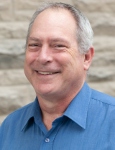
Robert M. Holt is a Professor in the Department of Geology and Geological Engineering at the University of Mississippi. His research focuses on geological CO2 sequestration, fluid transport in porous media, and hydrogeological characterization for nuclear waste disposal. Holt investigates how fluid behavior in heterogeneous geological formations impacts environmental processes ranging from carbon storage to groundwater contamination. His work examines the fundamental physics governing multiphase flow through porous and fractured geological media, with applications to contaminant transport, energy resources, and waste isolation. Holt has developed experimental methods for visualizing and modeling fluid behavior in heterogeneous subsurface environments, improving understanding of capillary processes and flow dynamics. Holt's research includes field studies of evaporite karst systems, geochemical assessments of aquifer systems, and investigations of hydraulic properties in low-permeability mudrocks. His work on CO2 injection monitoring has contributed to safer implementation of carbon sequestration technologies.
Jari Puttonen is a Professor of Structural Engineering at Aalto University's Department of Civil Engineering, School of Engineering. His research focuses on structural analysis, fire safety, materials science, and nuclear infrastructure safety. He has held roles as Principal Investigator in projects related to nuclear waste repository concrete modeling and aging management of NPP infrastructure. He has advised over 20 academic visitors and served in doctoral thesis committees. Education: Doctoral degree (1987), Licentiate (1984), and Master's degree (1979) in Engineering and Technology from Helsinki University of Technology (now part of Aalto University). Research Interests: Steel and composite materials behavior under extreme conditions Fire resistance of structural systems Long-term performance of concrete in nuclear facilities Non-destructive testing of construction materials Seismic resilience of critical infrastructure Awards: Recipient of the Knight, First Class of the Order of the White Rose of Finland (2020), PUUPalkinto 2010, and Schweighofer Prize 2011 for innovative energy facade research. Grants & Projects: Led 13 research projects including PERCO2_2023 (nuclear waste repository modeling) and CONAGE2022 (NPP concrete aging). Active in EU-funded initiatives and industry collaborations. Labs & Teams: Core member of Aalto's Structural Engineering Research Group, collaborating with Chalmers University and Technical University of Munich on advanced materials testing.
Hyuck Jin Park is a Full Professor in the Department of Energy Resources and Geosystems Engineering at Sejong University, South Korea, where he has been teaching and conducting research since 2003. With a Ph.D. in Engineering Geology from Purdue University, his expertise spans geotechnical engineering, landslide analysis, and geospatial technologies. Professor Park has built a distinguished career in landslide hazard assessment, combining traditional geotechnical approaches with modern machine learning techniques to improve prediction accuracy and risk management. His educational background includes: B.S. in Geology from Yonsei University (1990) M.S. in Geophysics from Yonsei University (1993) Ph.D. in Engineering Geology from Purdue University (2011) Professor Park's research focuses on the spatial and temporal probability of landslide occurrence, utilizing fuzzy logic, probabilistic analysis, GIS, Monte Carlo simulation, and machine learning for landslide hazard assessment. His work integrates physically based models with statistical approaches to better understand landslide mechanisms and improve prediction capabilities. He has made significant contributions to the development of methodologies that account for geological uncertainties in hazard assessment, with applications ranging from rock slope stability to rainfall-induced shallow landslides. His recent publications demonstrate a clear trend toward integrating explainable artificial intelligence with traditional geotechnical approaches for natural hazard assessment. Professor Park's work increasingly focuses on making machine learning models transparent and interpretable while maintaining high predictive accuracy. The research spans multiple hazard types including landslides, earthquakes, and floods, with a growing emphasis on climate change impacts and data-scarce environments. With an h-index of 28 and over 3,421 citations, Professor Park has established himself as a leading researcher in his field. His work has been published in high-impact journals including Engineering Geology, Landslides, and Catena, reflecting the significance and quality of his contributions to geotechnical engineering and natural hazard assessment. Professor Park has mentored numerous researchers through collaborative projects and has secured funding for his innovative work in landslide prediction and hazard assessment. His research has involved significant international collaboration, particularly with researchers from Malaysia, Australia, and Yemen, addressing landslide and flood risks in diverse geographical contexts. He leads research activities within the Department of Geoinformation Engineering at Sejong University and has contributed to the development of specialized tools like DEWS (Distance, Elevation, Watershed, and Slope unit) for landslide early warning systems.
Adriaan Buijs is a Professor in the Engineering Physics Department at McMaster University in Hamilton, Canada. He previously held roles at Atomic Energy of Canada Limited (AECL) from 2001 to 2008, including Senior Scientist and Section Head for neutronic overpower protection in CANDU reactors. Education: Master’s and PhD in Experimental Physics from Utrecht University , with research at Stanford Linear Accelerator Center . Academic History: Fellow and Staff Member at CERN (1986–1994), then Full Professor at Utrecht University (1994–2001). Research Interests : Nuclear Engineering : Specializing in Small Modular Reactors (SMRs) and Canadian Supercritical Water-Cooled Reactors (SCWR) . Reactor Physics : Focused on neutron transport calculations , gamma heating estimation , and safety analysis for reactor systems. Particle Physics : Past contributions include studies on photon-photon collisions , charmonium states , and supersymmetric particles at CERN and LEP. Publications include work on nuclear reactor simulations , fuel cycle assessments , and Monte Carlo methods for reactor kinetics. He has served as Associate Chair and Acting Chair in his department.
Koroush Shirvan is the Atlantic Richfield Career Development Professor in Energy Studies and a tenured faculty member in MIT's Department of Nuclear Science and Engineering within the School of Engineering. Joined in July 2017, he directs the Reactor Technology Course for Utility Executives and leads the Fission Materials in Extreme Environments Lab. His work bridges nuclear engineering with practical industrial applications for decarbonization. His research focuses on reactor design economics, materials testing under irradiation, nuclear safety, and boiling heat transfer. He accelerates innovations in nuclear fuels, small modular reactors, and space propulsion through multi-scale physics integration. Current projects include accident-tolerant fuels, high-temperature materials for microreactors, and AI-driven optimization of reactor systems. His approach combines experimental irradiation testing at MITR with advanced computational modeling. Recent publications reveal strong trends toward economic nuclear deployment via advanced fuel technologies and small modular reactors. AI/ML applications dominate optimization research, particularly for core reload and uncertainty quantification. Materials science under extreme conditions remains central, with growing emphasis on space nuclear applications and horizontal reactor configurations for cost reduction. His scientific recognition includes: Nuclear News 40 under 40 (2024) American Nuclear Society Landis Young Member Engineering Achievement Award (2023) American Nuclear Society Reactor Technology Award (2022) Teaching responsibilities span Sustainable Energy (22.811/081), Graduate Reactor Physics, and Nuclear Design courses. Research grants support experimental programs at MIT Reactor Lab and computational frameworks for reactor-to-repository analysis. He mentors students through senior design projects and graduate research in nuclear fuel cycles. He directs the Fission Materials in Extreme Environments Lab and co-leads MIT's Space Nuclear initiative with AeroAstro. The team conducts irradiation experiments using MITR's high-temperature hydrogen flow capabilities and advanced diagnostics for post-irradiation examination. Current thrusts include nuclear thermal rocket materials testing and fission surface power development for lunar/Mars missions.
Mikael Rinne is an Associate Professor in the Department of Civil Engineering at Aalto University's School of Engineering. His research focuses on rock fracture mechanics and its applications in various engineering contexts including nuclear waste repositories, geothermal energy systems, and underground construction. His expertise spans time-dependent rock failure mechanisms, fracture propagation models, and rock mechanics applications in energy storage and disposal systems. His work has direct applications in projects with Posiva Oy (nuclear waste repository), St1 Deepheat (geothermal energy), and mining operations with companies like First Quantum Minerals. Rinne's research integrates advanced numerical modeling with field applications, particularly in Finnish crystalline bedrock conditions. He has contributed significantly to understanding fracture initiation and propagation in rock masses under various stress conditions, with particular emphasis on long-term stability considerations for deep underground structures. His scholarly work demonstrates strong connections between theoretical fracture mechanics and practical engineering applications, with a focus on ensuring safety and reliability in rock engineering projects. His research has evolved from fundamental fracture mechanics studies to application-focused investigations addressing contemporary challenges in energy and waste management. Rinne has supervised doctoral research in rock mechanics and collaborates with researchers specializing in photogrammetry, virtual reality applications, and energy storage systems, creating a multidisciplinary approach to complex rock engineering problems.
Thorsten Stumpf is a Professor and Director of the Institute of Resource Ecology at Helmholtz-Zentrum Dresden-Rossendorf (HZDR), with a joint professorship in Radiochemistry/Radioecology at Technische Universität Dresden. His work bridges fundamental chemistry and environmental safety in nuclear waste management. Research Interests: His research focuses on the molecular-level understanding of actinide and radionuclide behavior in the environment, including speciation, migration, and interaction with minerals, organic matter, and microorganisms. Key areas include radiochemistry, geochemistry, environmental chemistry, and nuclear waste disposal science. The recent publications reflect a strong trend in using advanced spectroscopic and synchrotron techniques (e.g., TRLFS, EXAFS, XRD) to study actinide speciation and redox behavior. Themes include bioassociation of radionuclides with plants and fungi, formation of actinide nanoparticles, and molecular interactions at mineral-water interfaces—critical for deep geological repository safety assessments. Scientific Awards: Fritz-Straßmann-Preis of the GDCh 'Fachgruppe Nuklearchemie' (2013) Advising and Grants: He has led significant research initiatives, including the Helmholtz-University Young Investigator Group and the Virtual Institute 'Advanced Solid – Aqueous Radiogeochemistry'. While specific students are not listed, his extensive publication record with multiple co-authors suggests active mentoring. His work is supported by Helmholtz Association funding and strategic collaborations. Labs and Teams: He leads the Institute of Resource Ecology at HZDR, which houses advanced laboratories for radiochemistry, spectroscopy, and environmental simulation. The institute is part of a larger network including CASUS and the Dresden High Magnetic Field Laboratory, enabling interdisciplinary research.
Behnam Taebi is Full Professor of Energy & Climate Ethics and Scientific Director of the Safety & Security Institute at Delft University of Technology. He leads TU Delft | The Hague, a university-wide initiative connecting engineering knowledge with public policy. His work bridges technology, ethics, and policy through roles at Harvard University’s Belfer Center (2014–2020) and The Young Academy of the Royal Netherlands Academy of Arts and Sciences (2016–2021). As co-Editor-in-Chief of Science and Engineering Ethics , he contributes to shaping ethical discourse in engineering. BSc in Material Science and Engineering (2006) PhD in Philosophy of Technology (2010) Taebi's research focuses on the ethical dimensions of energy systems, nuclear technology, and climate engineering. He explores intergenerational justice, distributive equity, and responsible innovation frameworks. His work integrates value-sensitive design and moral emotions to address uncertainties in technological risk governance, particularly for nuclear energy and carbon capture. Recent publications highlight ethics in nuclear waste repositories, climate policy metaphors, and synthesizing justice frameworks. His VENI-grant from NWO supports innovative research on technological risks. Collaborations span the OECD Expert Panel on transdisciplinary research and co-editorship of influential volumes like The Ethics of Nuclear Energy (Cambridge, 2015) and Ethics and Engineering: An Introduction (Cambridge, 2021). As Scientific Director of the Safety & Security Institute , he leads interdisciplinary efforts to address societal challenges through engineering ethics. His initiatives emphasize inclusive energy transitions, equitable climate strategies, and bridging technical and social sciences in policy-making.
Dr. Harald Foerstendorf serves as Group Leader of the "Analytics" group at the Institute of Resource Ecology, Helmholtz-Zentrum Dresden-Rossendorf (HZDR), a position held since 2022 following over two decades as a staff scientist at the institution. His research critically advances understanding of actinide and radionuclide behavior in environmental systems, with direct applications to nuclear waste disposal safety assessments and contamination remediation strategies. His academic foundation includes a PhD in Chemistry (1997) and Diploma in Chemistry (1992), both from Albert-Ludwigs-Universität Freiburg, where his doctoral work employed FT-IR spectroscopy to investigate photoreactions in plant receptors. PhD in Chemistry, Albert-Ludwigs-Universität Freiburg, 1997 Diploma in Chemistry, Albert-Ludwigs-Universität Freiburg, 1992 Foerstendorf's research centers on molecular-scale mechanisms of radionuclide interactions at environmental interfaces. He specializes in surface processes of actinides at liquid/solid boundaries, aqueous complexation with organic ligands, and in situ vibrational spectroscopy techniques. His work bridges fundamental chemistry with practical nuclear safety challenges, particularly in characterizing sorption dynamics on mineral surfaces relevant to repository systems. Analysis of his 15 most recent publications (2024-2013) reveals consistent focus on actinide speciation using multi-technique approaches. Key trends include advanced spectroscopic characterization (ATR FT-IR, EXAFS) of neptunium/uranium sorption on oxides, thermodynamic modeling of ligand interactions, and investigation of redox-sensitive elements like technetium. The research demonstrates increasing integration of computational methods with experimental data to resolve complex speciation scenarios. Research funding includes a German Research Foundation (DFG) grant (FO 619/1-1; 1-2) supporting fundamental studies from 2006-2009. While specific student advisees aren't documented in the source material, his leadership position implies mentorship of doctoral researchers within HZDR's structured doctoral programs. German Research Foundation (DFG) FO 619/1-1; 1-2 (05/2006-04/2009) As head of the Analytics group within the Actinide Thermodynamics department, Foerstendorf directs a specialized team operating advanced spectroscopic facilities including ATR FT-IR and EXAFS capabilities. The group maintains extensive collaborations across European nuclear research institutions and participates in international projects addressing long-term safety of radioactive waste disposal systems.
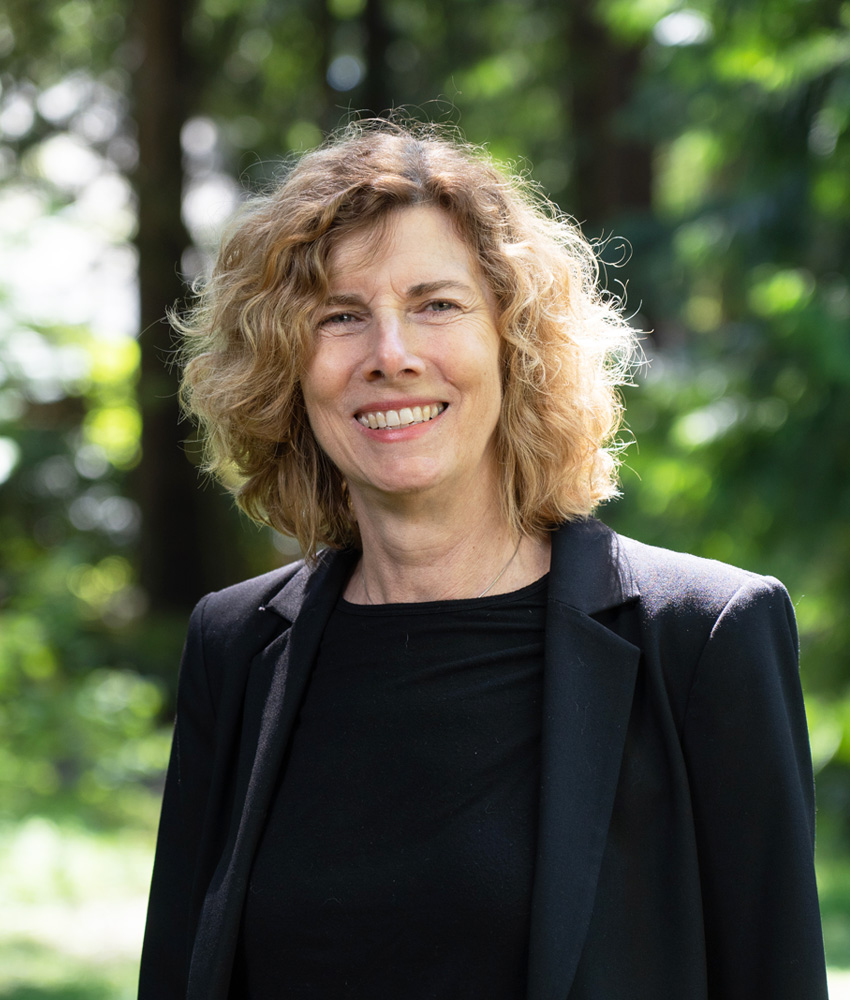
Dr. Allison M. Macfarlane is Professor and Director of the School of Public Policy and Global Affairs within the Faculty of Arts at the University of British Columbia. She is a leading expert in energy and environmental policy, with a specialized focus on nuclear policy. Dr. Macfarlane has held significant positions in both academic and government sectors, including her notable role as the first geologist and third woman to chair the U.S. Nuclear Regulatory Commission from 2012-2014. Dr. Macfarlane earned her Ph.D. in Earth Science from MIT in 1992, with a thesis on metamorphism, deformation and plutonism in the Langtang region of the central Nepal Himalaya. She received a National Science Foundation Fellowship from 1988-1991. Her undergraduate degree is a B.Sc. with Summa Cum Laude from the University of Rochester (1986), where she received Highest Distinction in Geology for her work on strontium and neodymium isotopic studies of Bermuda's volcanic rocks. Her research expertise spans energy policy, science and technology policy, and sustainable resource policy, with particular emphasis on nuclear energy production, nuclear waste management and disposal, regulation, nuclear nonproliferation, and broader energy policy frameworks. Dr. Macfarlane's work bridges technical, social, and policy dimensions of nuclear issues, informed by her unique background as both a geologist and policy expert. Analysis of Dr. Macfarlane's recent publications reveals a consistent focus on nuclear waste management challenges, particularly regarding small modular reactors, deep borehole disposal, and long-term policy solutions. Her work demonstrates an interdisciplinary approach that combines geological knowledge with policy analysis, addressing both technical aspects of nuclear waste disposal and broader governance issues. She has increasingly focused on the relationship between nuclear energy and climate change mitigation efforts. Wilson Center Scholar, Woodrow Wilson Center for International Scholars (2019-2020) Fulbright Distinguished Chair, Flinders University and Carnegie Mellon University (2018) Member of the Board, American Institute of Physics (2018-present) Alumni Achievement Award, University of Rochester (2017) Chairman, U.S. Nuclear Regulatory Commission (2012-2014) Commissioner, U.S. Blue Ribbon Commission on America's Energy Future (2010-2012) Chair of the Science and Security Board, Bulletin of Atomic Scientists (2008-2012) Dr. Macfarlane has demonstrated leadership in numerous collaborative research initiatives and policy projects. During her tenure at the Nuclear Regulatory Commission, she pushed for greater public dialogue, international engagement among nuclear regulators, and stricter safety protocols following the Fukushima accident. She has also advocated for more family-friendly workplace policies. Her research supervision spans interdisciplinary projects connecting earth sciences with policy analysis, particularly in nuclear waste management contexts.
Kenneth H. Stokoe is a Professor and the Jennie C. and Milton T. Graves Chair in Engineering at The University of Texas at Austin's Department of Civil Engineering. He holds a Ph.D. in Civil Engineering from the University of Michigan (1972), with prior academic roles including Cockrell Family Regents Chair and Brunswick-Abernathy Regents Professor. His expertise spans geotechnical earthquake engineering, soil dynamics, and non-destructive testing of geotechnical systems. He has pioneered advancements such as the crosshole seismic method for shear wave velocity measurement (ASTM D4428M standard), the RCTS laboratory testing system, and the SASW (Spectral-Analysis-of-Surface-Waves) method for field seismic evaluation. His research has been applied globally, including at Yucca Mountain (Nuclear Waste Repository), Hanford (Waste Treatment Plant), and numerous airport/runway projects. He also developed the Rolling Dynamic Deflectometer (RDD) for pavement stiffness profiling. Dr. Stokoe has led major NSF-funded projects, including the NEES (Network for Earthquake Engineering Simulation) program's large-scale mobile testing equipment. He is affiliated with 8+ professional societies and has authored over 150 publications. Awards include the Walter L. Huber Prize, National Academy of Engineering membership, and the Harold Mooney Award for seismic innovations. His academic career spans 45+ years with a focus on advancing geotechnical engineering through field and lab innovations, seismic site characterization, and infrastructure resilience. Current research emphasizes deep seismic profiling, real-time pavement assessment, and in-situ soil liquefaction testing.
Lyesse Laloui is Full Professor and Director of the Soil Mechanics Laboratory at EPFL's School of Architecture, Civil and Environmental Engineering. A world-renowned expert in geomechanics and sustainability, his research develops nature-inspired solutions for climate change mitigation and renewable energy adoption. His distinguished career includes ERC Advanced and Proof of Concept Grants, two honoris causa doctorates, and leadership roles in Academia Europaea and International Society of Soil Mechanics. Research focuses on: Thermo-hydro-mechanical behavior of energy geostructures Bio-inspired geotechnical solutions for soil improvement Radioactive waste repository safety CO₂ sequestration caprock integrity Urban underground space utilization Recent publications demonstrate innovations in geothermal metro station design, shale behavior characterization for energy applications, and bio-mediated soil stabilization. His laboratory has supervised over 35 PhD graduates now advancing geotechnical engineering globally. Professor Laloui founded 5 EPFL spin-offs including Enerdrape (Swiss Top 100 startup) and serves as European Director of the International Associated Research Centers for Urban Underground Space. His awards include the ASCE Kersten Lecture and InterPore Kimberly-Clark Distinguished Lectureship.
Dr. Katalin KOPECSKÓ is Associate Professor in the Department of Engineering Geology and Geotechnics , Faculty of Civil Engineering, Budapest University of Technology and Economics (BME) . She lectures on construction-materials chemistry, durability and advanced concrete technologies, and maintains an active research portfolio spanning radioactive-waste solidification, geopolymer binders, supplementary cementitious materials and fibre-reinforced cementitious composites. Education & Academic Career Long-standing faculty member at BME Faculty of Civil Engineering (exact degrees not specified in text). Regular instructor for master-level courses: Alkali Activated Materials in Civil Engineering , Chemistry of Construction Materials , Durability of Construction Materials , Structure–Property Relations of Concrete . Holds weekly consultation hours on Thursdays 12–14 in building K, basement level, room 10/5. Research Focus Her research integrates materials science , geotechnical engineering and nuclear-waste management . Recent investigations include: Development of alkali-activated recipes for borate-rich liquid radioactive waste using limestone-portland blends. Application of semi-adiabatic calorimetry to identify optimal cement types for radioactive waste cementation. Enhancement of 3D-printing performance of concrete via metakaolin and silica fume. Long-term geotechnical and hydraulic impacts of municipal solid-waste leachate on soils. Durability of natural-fibre and nanocellulose-reinforced geopolymer mortars. Corrosion behaviour of vitrified high-level waste glass under simulated repository conditions. Across 2022-2025 she has published more than 40 peer-reviewed articles, reflecting a clear shift toward sustainable construction materials , nuclear environmental safety and advanced testing methodologies . Laboratory & Collaborative Environment Dr. KOPECSKÓ operates within BME’s well-equipped Engineering Geology and Geotechnics laboratories, where calorimetry facilities, geopolymer synthesis rigs and microstructural analysis tools support her projects. Close collaboration exists with the Vásárhelyi Pál Doctoral School and the national nuclear-waste management programme at Paks NPP, evidenced by joint publications on cemented-waste testing laboratories. Grants & Awards While specific grant numbers are not listed, her sustained output in high-impact journals and participation in national projects (e.g., NVKP_16-1-2016-0019 “Increasing the Chemical Resistance of Concrete”) indicate continuous external funding. Contact Office: Building K, basement, room 10/5, Budapest University of Technology and Economics. E-mail: kopecsko.katalin@emk.bme.hu Phone: +36 1 463 2238
Dr. James Noël is an Assistant Professor in the Department of Chemistry at Western University , leading the Electrochemistry and Corrosion Studies Group . His research focuses on materials electrochemistry, corrosion degradation, and safety protocols for nuclear waste disposal systems. Education: B.Sc. & M.Sc. from University of Guelph; Ph.D. from University of Manitoba Research interests span electrochemical measurement techniques , microelectrode sensor development , and fundamental oxide growth mechanisms on industrial alloys. His work combines chemistry, physics, and materials science to address industrially critical degradation problems. Recent publications highlight studies on nuclear waste container corrosion in changing environments, hydrogen-induced material dissolution , and nanoclay-based coating repair systems . Notable awards include the H.H. Uhlig Award (2023) and multiple Electrochemical Society recognitions. Scientific Awards: Florence Bucke Science Prize (2023) Fellow of Electrochemical Society (2022) R.C. Jacobsen Award (2018)
Oliver G. Ernst is a Professor of Numerical Analysis at Technische Universität Chemnitz . His research focuses on Numerical Analysis , Uncertainty Quantification , and Inverse Problems , with applications in Thermo-Hydro-Mechanical (THM) processes , Electromagnetics , and Stochastic Partial Differential Equations . He is associated with the Numerical Analysis group at TU Chemnitz. Key Research Areas : Efficient numerical methods for PDEs Krylov subspace techniques Stochastic finite element methods Multi-physics modeling Geoscientific applications Recent Publications (2025-2010): THM simulations under uncertainty Neural network PDE solvers Bayesian inversion frameworks Rational Krylov algorithms Deflated restarting strategies Collaborations : TU Bergakademie Freiberg University of Manchester Technical University of Munich University of Maryland University of Geneva Software Development : Contributor to OpenGeoSys platform Developer of FEMALY MATLAB library Academic Recognition : h-index 32, i10-index 66, with over 4423 citations since 2020.