Prof. Dr. Franz Pfeiffer is a full professor at the Chair of Biomedical Physics within the Department of Physics at the Technical University of Munich (TUM) . He has served as director of the Munich School of BioEngineering since 2016. His research focuses on translating advanced X-ray physics concepts to biomedical imaging and clinical applications, particularly for early cancer and osteoporosis diagnostics. Research Interests: X-ray phase-contrast and dark-field imaging, synchrotron instrumentation, CT reconstruction algorithms, and medical imaging technology. Awards: Alfred Breit Prize (2017) ERC Advanced Grant (2016) Leibniz Prize (2011) National Latsis Prize (2010) ERC Starting Grant (2009) His work bridges fundamental X-ray physics with clinical translation, involving collaborations with radiologists, engineers, and medical researchers. Recent publications emphasize AI integration in CT, dark-field chest radiography, and spectral imaging applications.
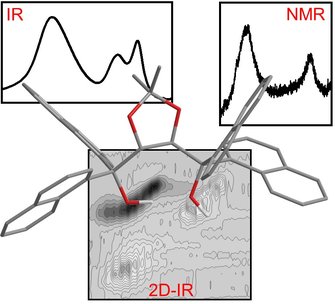
Dr. Johannes Hunger is a Group Leader at the Max Planck Institute for Polymer Research (MPI-P) in Mainz, Germany. He obtained his PhD in Chemistry from the University of Regensburg in 2006 under the supervision of Richard Buchner. Following a postdoctoral fellowship at the FOM Institute AMOLF in Amsterdam (2010-2012) funded by the German Science Foundation (DFG), he joined MPI-P as a group leader in 2012. In 2016, he established his distinguished research group with a starting grant from the European Research Council (ERC). His research focuses on dynamics in the condensed phase with particular emphasis on Coulombic and hydrogen-bonding interactions. His group intensively studies room temperature ionic liquids, electrolyte solutions, and solvation phenomena, elucidating fundamental properties of liquids including molecular-level ion transport and molecular association, as well as the relevance of such interactions in biological contexts (osmolyte action, specific ion effects) and technological applications (solvation dynamics, dissolution phenomena). With ERC funding, his group has intensified research on non-covalent interactions within reactive intermediates in organo-catalysis. The 15 most recent publications (2024-2025) demonstrate continued focus on hydrogen bonding dynamics, ion transport mechanisms, and solvation phenomena across various systems including aqueous interfaces, ionic liquids, and biomolecular environments. His work consistently combines experimental approaches with theoretical insights to unravel fundamental molecular processes. Scientific Awards: Postdoctoral Fellowship from German Science Foundation (DFG) ERC Starting Grant Dr. Hunger leads an active research group currently focused on three main areas: Fundamentals of Asymmetric Organo-Catalysis, Interaction of Osmolytes and Ions with Biopolymers, and Dynamics of Electrolytes. His research program is supported by the ERC grant FASTO-CAT and involves collaborations with numerous international research groups. His group maintains strong connections with the University of Regensburg where he completed his doctoral studies, and with research institutions in the Netherlands where he conducted his postdoctoral work. The research group operates state-of-the-art facilities for studying molecular dynamics, including advanced spectroscopic techniques for probing hydrogen bonding networks and ion transport phenomena at ultrafast timescales.
Professor James S. Cotton is a faculty member in the Department of Mechanical Engineering at McMaster University , specializing in Thermo-Fluid Sciences with a focus on energy sustainability and thermal management. Current research explores thermal energy harvesting , non-thermal plasma flue gas cleaning , and smart electrohydrodynamic heat exchangers . Active in community energy planning as a member of the Burlington Climate Action Plan (2019-2021) and Green Venture board (2016-2021). Research spans both fundamental and applied domains, including two-phase flow , electrohydrodynamic heat transfer modulation , and flow accelerated corrosion analysis. His work integrates modeling and experimental validation for real-world thermal systems. Scientific Contributions: Developed two novel patents for advanced thermal management and soot removal systems during his industrial career at Dana Corp. (until 2007). Current projects involve community energy corridors and next-generation sustainable energy solutions , including the 2025 Hamilton Energy Harvesting Study . Active mentor in graduate education, teaching courses like MECH ENG 4O04: Sustainable Energy Systems and MECH ENG 708: Two Phase Flow and Heat Transfer .
Jie Chen is an Associate Professor at the Department of Physics, Faculty of Science, Southern University of Science and Technology (SUSTech). She completed her Bachelor of Science at Lanzhou University in 2011 and her Ph.D. in Science at Peking University's Department of Technical Physics in 2016. She has held postdoctoral positions at Argonne National Laboratory (ANL) and Michigan State University's Rare Isotope Facility (FRIB), and served as a Research Fellow at ANL before joining SUSTech. Education: 2011 – Bachelor of Science, Lanzhou University 2016 – Doctor of Science, Peking University (Department of Technical Physics) Research Interests: Jie Chen's research is centered on understanding exotic nuclear structures through direct nuclear reactions. Her work spans multiple areas including exotic atomic nuclear structure , nuclear science and technology , and nuclear astrophysics . She employs techniques such as single-particle transfer and elastic/inelastic scattering experiments to probe unstable nuclei, contributing to the broader understanding of nuclear forces and open quantum systems. Scientific Awards & Invited Talks: Invited talk: "Investigating the Spin-Orbital splitting in N=19 isotones using SOLARIS" at Nuclear Structure conference 2022, Lawrence Berkeley National Laboratory Special report: "Probing nuclear structures with light-ion induced reactions using SOLARIS at ReA" at APS April Meeting 2022, NYC Special report: "Investigating the low-lying states of Be isotopes via one-nucleon transfer reactions" at GANIL seminar Invited talk: "Experimental study of single particle strength in exotic psd-shell nuclei using transfer reactions" at University of Notre Dame Research Impact & Collaborations: As a spokesperson for multiple international collaborations, Jie Chen has conducted experiments at world-leading facilities including RCNP at Osaka University, ATLAS at ANL, FRIB at Michigan State University, and ISOLDE at CERN. Her research has resulted in over 40 publications in top-tier international journals, establishing her as a leading figure in experimental nuclear physics.
Professor Christopher L H Wrede is a tenured faculty member at the Department of Physics and Astronomy , Michigan State University , and leads experimental research at the Facility for Rare Isotope Beams (FRIB) . His work bridges nuclear physics and astrophysics , focusing on beta decays of proton-rich nuclides to study hydrogen burning in accreting compact stars and isospin-symmetry breaking effects in the Standard Model. Ph.D. in Physics from Yale University (2008) Research areas: Nuclear Astrophysics Low-Energy Nuclear Experiments Isospin Symmetry Detector Instrumentation His group develops advanced detectors like GADGET II , LIBRA , and DSL2 to measure nuclear reactions in novae, neutron stars, and cosmic explosions. Recent work leverages machine learning and MCMC Bayesian analysis for data interpretation. Scientific awards include the DOE Office of Science Early Career Research Program (2016). His students and postdocs contribute to international collaborations and instrumentation projects, often publishing in Physical Review C and Nuclear Instruments and Methods in Physics Research .
Calem R. Hoffman is a Physicist at the Argonne National Laboratory , specializing in experimental and theoretical research on the structure of light nuclei. He earned his Ph.D. in Physics (Spring 2009) and B.S. in Physics (Fall 2003) from Florida State University. Research focuses on nuclear structure, radioactive beam experiments, and AI-driven accelerator optimization. Current programmatic leadership includes Autonomous Optimization of Secondary Beam Production and Delivery at the ATLAS In-Flight Facility. Key projects involve neutron-rich nuclei, quadrupole collectivity, and exotic isotope discovery. Scientific Awards : Argonne Director’s Fellow (2010–2012) Hoffman has held leadership roles in managing the ATLAS HELIOS User Program (2012–2018) and directing in-flight beam priorities. His work integrates advanced data analytics and AI for accelerator operations, supported by DOE grants.
Eray S. Aydil is the Senior Vice Dean of the NYU Tandon School of Engineering and holds the Alstadt Lord Mark Professorship in Chemical and Biomolecular Engineering. He previously served as Executive Officer of the Department of Chemical Engineering and Materials Science at the University of Minnesota and held faculty roles at UC Santa Barbara. His research focuses on electronic/optoelectronic materials, plasma synthesis, and renewable energy technologies, particularly photovoltaics and solar cells. He earned his B.S. degrees in Chemical Engineering and Materials Science from UC Berkeley (1986) and his Ph.D. in Chemical Engineering from the University of Houston (1991). Affiliations: NYU Tandon School of Engineering, American Vacuum Society Fellow, Editor-in-Chief of Journal of Vacuum Science and Technology Education: UC Berkeley (B.S.), University of Houston (Ph.D.) Research interests include semiconductor synthesis for solar energy applications, plasma-assisted materials processing, and nanomaterials characterization. Key projects involve hybrid perovskite materials, pyrite solar cells, and plasma synthesis techniques. Recent work emphasizes lead-free perovskites, quantum cutting materials, and insulator-metal transition phenomena in nanocrystals. Over 200 publications highlight contributions to perovskite optoelectronics, nanocrystal networks, and photovoltaic materials. Awards include the Peter Mark Award and Plasma Prize from the American Vacuum Society. His lab explores energy-efficient materials, solar cell efficiency, and sustainable chemical processes.
Dr. J. Ryan Rygg is a Senior Scientist at the University of Rochester’s Laboratory for Laser Energetics (LLE) and an Assistant Professor of Research in the Departments of Mechanical Engineering and Physics and Astronomy. He holds a B.S. in Physics (2000) and M.S. in Electrical Engineering (2001) from Stanford University, followed by a Ph.D. in Physics (2006) from MIT. His research focuses on novel experimental platforms for High-Energy-Density Physics (HEDP), with applications in astrophysics, basic science, and inertial confinement fusion. Key areas include shock compression of materials, x-ray diffraction diagnostics, and laser-driven experiments. His work explores extreme conditions in materials, such as phase transitions in solids under terapascal pressures and dissociation in shock-compressed gases. He has contributed to advancements in x-ray scattering techniques, THz pulse generation, and fusion target design. Recent experiments have addressed challenges in inertial confinement fusion, achieving target gain exceeding unity and investigating symmetry control in implosions. Rygg’s career includes a decade at Lawrence Livermore National Laboratory as a postdoc and staff scientist before joining LLE. His research integrates experimental design, advanced diagnostics, and computational modeling to tackle open questions in high-energy-density regimes relevant to planetary science and fusion energy.
Yoram Alhassid is the Frederick Phineas Rose Professor of Physics in the Department of Physics at Yale University, where he leads a research group focused on theoretical nuclear and many-body physics. His work bridges nuclear physics, mesoscopic systems, and ultracold atomic gases, using advanced computational methods such as quantum Monte Carlo and the configuration-interaction shell model. His research interests include the nuclear many-body problem, femtoscience and nanoscience (nuclei, quantum dots, nanoparticles), and cold atomic Fermi gases. He has developed and applied the shell model Monte Carlo (SMMC) method to study statistical and collective properties of nuclei, such as level densities, deformation, and pairing correlations. He has extended these methods to study cold Fermi gases, particularly in the unitary regime, where he has investigated pseudogap phenomena, heat capacity, and pairing gaps. The recent publications highlight a strong focus on nuclear level densities, γ-ray strength functions, deformation effects, and quantum Monte Carlo methodologies. There is a clear trend toward microscopic, ab initio calculations of nuclear and many-body properties, with increasing attention to odd-mass and deformed nuclei, as well as the interplay between pairing and collective phenomena. Scientific Awards: Frederick Phineas Rose Professor of Physics Alhassid advises students and postdoctoral researchers, as evidenced by numerous co-authored publications. His group has developed advanced computational tools and codes (e.g., HF-SHELL) for finite-temperature mean-field and shell model calculations. The research is supported by high-performance computing and has implications for nuclear astrophysics, radioactive beam facilities, and quantum simulation with cold atoms. His lab focuses on theoretical and computational modeling of finite-size quantum many-body systems, with close collaborations across nuclear theory, condensed matter, and atomic physics. The group emphasizes method development, benchmarking against mean-field theories, and extracting model-independent signatures of physical phenomena such as deformation and pairing.
Professor Hendrik Dietz holds the Chair of Biomolecular Nanotechnology at the Technical University of Munich (TUM) , affiliated with the TUM School of Natural Sciences and the Munich Institute of Robotics and Machine Intelligence . His research focuses on constructing synthetic molecular devices and machines through DNA origami and self-assembly principles. Research Themes DNA origami for programmable nanodevices Self-assembly inspired by natural molecular systems Molecular visualization with cryo-EM Applications in medicine and synthetic biology Key Article Trends : Dietz's work explores DNA-based rotary motors, virus-trapping shells, and bio-inspired vesicle production. His recent articles highlight integrations of DNA origami with electrochemical sensing, deep learning, and transmembrane transport systems. Scientific Awards ERC Consolidator Grant (2016) Gottfried Wilhelm Leibniz Prize (2015) Hoechst Lecturer Scholarship (2012) Arnold Sommerfeld Award (2010) ERC Starting Grant (2010) Collaborations and Grants : He receives funding from the Deutsche Forschungsgemeinschaft (DFG) via the Excellence Clusters CIPSM and NIM, SFB863, and the Leibniz Prize program, as well as the European Research Council. Dietz collaborates with institutions like Harvard Medical School and the Max Planck School Matter to Life.
Johann Isaak is a leading experimental nuclear physicist serving as Head of Research Data Management and Principal Investigator (PI) of the IRTG 2891 program at the Institute for Nuclear Physics (IKP) , TU Darmstadt , Germany. His research focuses on advancing our understanding of nuclear structure through precision photonuclear experiments, particularly in the areas of the Pygmy Dipole Resonance, nuclear resonance fluorescence, and gamma-ray spectroscopy. He actively teaches specialized courses such as "Photonuclear Reactions" and contributes to interdisciplinary nuclear physics education. Research Interests: Experimental Nuclear Physics: Design and implementation of advanced detection systems like DAGOBERT for electron-gamma coincidence spectroscopy. Photonuclear Reactions: Investigating nuclear responses to real photons via quasimonoenergetic and polarized beams, focusing on dipole excitations in medium-mass nuclei. Pygmy Dipole Resonance (PDR): Pioneering studies on low-lying dipole strength, its systematic behavior across isotopic chains (e.g., Sn, Ce, Te), and implications for nuclear astrophysics. Nuclear Structure: Precision measurements of transition strengths, level densities, and gamma-ray strength functions to test theoretical models and the Brink-Axel hypothesis. Advanced Detectors and Techniques: Development of high-efficiency spectroscopy setups like y³ at HIγS and AGATA for high-resolution gamma-ray detection. Publication Trends: Isaak's recent publications (2020-2025) demonstrate a strong focus on collective nuclear excitations , evidenced by studies on giant dipole resonances, two-phonon states in Sr-88, and quadrupole excitations in tin isotopes. His collaborative work spans international facilities, including HIγS, GRAF, and Legnaro National Laboratories, highlighting his role in large-scale experimental campaigns. Scientific Contributions: Methodological Advances: Introduced model-independent approaches for determining dipole responses via (γ, γ′γ″) reactions, enhancing precision in photon strength function measurements. Experimental Leadership: Coordinated multi-institutional projects like the AGATA collaboration and NUMEN project, driving advancements in gamma-ray spectroscopy. Educational Outreach: Mentors young researchers through IRTG 2891 and contributes to foundational texts, such as chapters in the Handbook of Nuclear Physics . Collaborations and Infrastructure: Isaak leverages world-class facilities, including the S-DALINAC accelerator at TU Darmstadt and international gamma-ray sources, to probe nuclear phenomena. His leadership in research data management ensures FAIR principles are integrated into nuclear physics workflows, enhancing reproducibility and data sharing.
Takaharu Otsuka is Professor of Physics at The University of Tokyo since 1997, Director of the Center for Nuclear Study (2005-present), and Adjunct Professor at Michigan State University's National Superconducting Cyclotron Laboratory (2005-present). His career spans Japan Atomic Energy Research Institute, RIKEN, and international collaborations including University of Leuven. His academic credentials: B.Sc., University of Tokyo (1974) M.Sc., University of Tokyo (1976) D.Sc., University of Tokyo (1979) Otsuka's research centers on theoretical nuclear physics with emphasis on nuclear shell modeling, exotic nuclei structure, and quantum chaos. He pioneered large-scale calculations using conventional and Monte Carlo Shell Models, extending applications to nuclear transmutation for radioactive waste management. His work bridges fundamental theory with practical nuclear technology solutions. Major recognitions include: Nishinomiya Yukawa Memorial Award (1991) Science Council of Japan membership (2011) GENCO prize (2012) American Physical Society fellowship (2013) As Director of the Center for Nuclear Study, Otsuka leads Japan's nuclear physics research infrastructure. His publication record exceeds 330 refereed articles with over 10,900 citations (h-index 53), demonstrating sustained impact in theoretical nuclear structure physics.
Robert Haring-Kaye is a Professor of Physics at Westmont, specializing in nuclear physics with a focus on atomic nucleus structure under extreme conditions. He joined Westmont in 2020 and teaches physics laboratory courses at all levels. His research involves gamma-ray spectroscopy to study high-spin and binding energy limits in nuclei, often involving undergraduates. He has secured four NSF grants, including two focused on undergraduate research experiences. Education: B.S. and M.S. in Physics from Florida State University, followed by a Ph.D. in Nuclear Physics at the same institution. His career includes extensive work on nuclear structure at facilities like NSCL and FRIB. Research emphasizes collective behavior in nuclei, including octupole rotational bands, band terminations, and quasiparticle excitations. Publications span decades, reflecting deep engagement with gamma-ray spectroscopy and experimental nuclear physics. Awards: SPS Outstanding Student Award (2008) Grants: Four NSF grants, including undergraduate research initiatives. Labs/Teams: Collaborates with MoNA-LISA research programs and contributes to FRIB projects. His work often bridges theoretical models with experimental data from advanced detectors.
Liss V. Rodriguez is a Group Leader at the Max Planck Institute for Nuclear Physics (MPIK) and an affiliated researcher at CERN, where she leads the Laboratory for Laser Induced Atomic Fluorescence and ionization (LIAF). She holds a W2 position within the Max-Planck Society, directing an independent research group focused on advancing collinear laser spectroscopy techniques to study exotic, short-lived radioactive nuclei. Her work is central to the COLLAPS collaboration at CERN’s ISOLDE facility, where she serves as spokesperson or co-spokesperson for multiple high-impact experiments. Education: Ph.D. in Nuclear Physics, University of Paris-Saclay, Orsay, France (2015–2018) Licenciado (Master's equivalent) in Nuclear Physics, InSTEC, Havana, Cuba (2007–2012), First Class Honours Bachelor, Vocational Pre-University Institute of Exact Sciences, Matanzas, Cuba (2004–2007) Her research interests lie at the frontier of nuclear structure physics, particularly in probing the limits of nuclear existence using high-precision laser spectroscopy. She investigates nuclear spins, electromagnetic moments, and charge radii to uncover emergent patterns in complex nuclei far from stability. Her work addresses fundamental questions about nuclear matter and the origin of nuclear phenomena. She has developed and applied advanced spectroscopic techniques at major international facilities, contributing significantly to our understanding of nuclear structure evolution across isotopic chains. The most recent publications reflect a strong focus on high-resolution laser spectroscopy of neutron-rich and neutron-deficient isotopes of elements like scandium, germanium, nickel, antimony, aluminum, and tin. These studies reveal trends in charge radii, electromagnetic moments, and shell structure, often highlighting deviations from expected behavior near magic numbers. The work combines experimental precision with theoretical insights, contributing to broader fields such as nuclear astrophysics and fundamental symmetries. Scientific Awards: Fellowship at CERN (2020) Best Poster Award, ISOLDE Workshop (2017) Best Poster Award, 20th Colloque GANIL (2017) CNRS Doctoral Grant (2015) First Class Honours, 'Título de Oro', InSTEC (2012) Liss V. Rodriguez actively mentors the next generation of physicists, currently supervising 3 PhD students and 3 undergraduate students. Her leadership extends to institutional roles, including serving on the Jyväskylä Program Advisory Committee and organizing seminars and workshops. She has secured significant research opportunities through her roles as spokesperson for multiple CERN ISOLDE experiments, demonstrating her ability to lead large-scale collaborative projects. Her career progression—from doctoral researcher to CERN Research Fellow to independent group leader—reflects sustained excellence and growing influence in the field of experimental nuclear physics. She is involved in several key teams and laboratories: leading the LIAF group, coordinating the COLLAPS experiment at CERN as local team leader since 2018, and participating in major collaborations including ISOLDE and NUSTAR. Her work integrates closely with theoretical efforts to interpret nuclear data and refine models of nuclear structure.
Lars Evenäs is a Full Professor at the Department of Applied Chemistry within the School of Chemistry and Chemical Engineering at Chalmers University of Technology. His research focuses on characterization methodologies and materials development in surface and colloid chemistry, employing advanced techniques such as NMR spectroscopy, diffusometry, and polarized Raman spectroscopy. He leads a research group advancing biomass-based materials, particularly cellulose derivatives, and core-shell particle formulations for controlled release applications. Education and professional background are not explicitly detailed in the provided texts, but his extensive publication record from 2009 to 2025 indicates sustained academic contributions. His research interests emphasize molecular and supramolecular properties of natural polymers, ionic liquids, and microcapsules, with applications in coatings, textiles, and energy materials. Projects include collaborations on structural battery electrolytes, acoustic levitation for contact-free analysis, and pH-responsive microcapsules. While no formal scientific awards are listed, his work has been published in high-impact journals such as Nature Communications , Langmuir , and ACS Applied Nano Materials . He has advised or collaborated with researchers like Viktor Eriksson, Smaragda Maria Argyri, and Markus Andersson Trojer, contributing to over 12 projects. His research group actively explores labs and teams focused on NMR-based characterization and sustainable materials innovation.