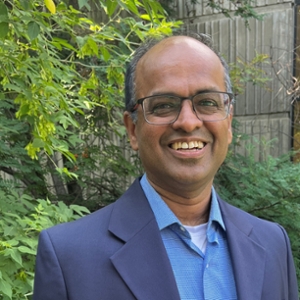
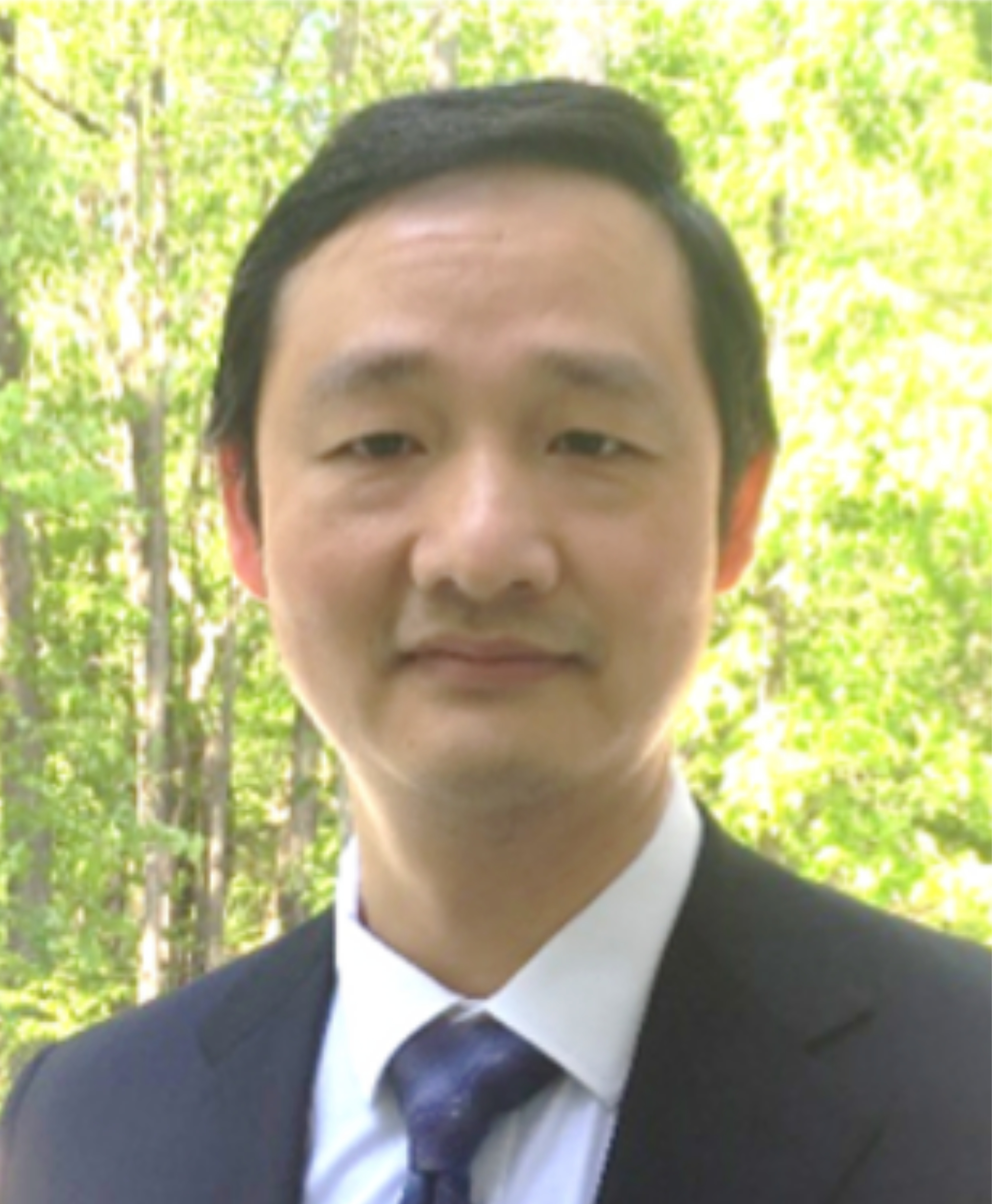
Prof. Ramakrishna Gokaraju is a Professor and Graduate Chair in the Department of Electrical and Computer Engineering at the University of Saskatchewan. His academic journey includes roles as Assistant Professor (2003), Associate Professor (2009), and full Professor (2015). He holds a B.E. from NIT Trichy (1992), M.Sc. and Ph.D. from the University of Calgary (1996, 2000). His research focuses on power system protection, smart grids, and sustainable energy systems, including small modular reactors (SMRs) and renewable integration. He has advised 8 PhD and 25+ Master’s students, with over 80 publications in top journals/conferences. Dr. Gokaraju’s honors include the Izaak Walton Killam Memorial Scholarship (1998–2000) and the Professor of the Year Award (2008). He has held visiting roles at the University of Manitoba (2009–2010), IIT Kanpur (2018), and institutions in Australia and India. His work emphasizes high-speed digital relaying, PMU-based solutions, and transient stability protection. Current research includes wind generator modeling, SMR integration, and energy storage systems for remote communities. His technical contributions span fault location algorithms, grid resilience enhancement, and GPU-based optimization for transport systems. Ongoing projects explore hybrid energy systems combining SMRs with renewables. Lab affiliations include the Power Systems Research Group at the University of Saskatchewan, focusing on smart grid innovation and sustainable energy solutions.
Lina Bertling Tjernberg is a Professor at the Department of Electrical Engineering, KTH Royal Institute of Technology, and Deputy Head of the School of Electrical Engineering and Computer Science (EECS) with responsibility for research conditions and impact. She served as Director of KTH's Energy Platform during 2018-2024 and holds memberships in IVA (Swedish Royal Academy of Engineering Sciences) and the IEEE Power & Energy Society. Research Focus: Applying mathematics (statistics, optimization, life cycle assessment) to enhance reliability and predictive maintenance in electric power systems, with emphasis on future electricity grids integrating microgrids, battery storage, HVDC, nuclear/pumped/hydro/wind/solar power, hydrogen, and electrified transport. Collaborations: Engaged with Comillas Pontifical University (Madrid), Addis Ababa University, Norwegian University of Science and Technology (NTNU), and IEA Wind. Key Research Trends: Recent articles highlight advancements in microgrid control (2025), SMR nuclear energy integration (2025), AI-driven asset management (2024), hydrogen sector coupling (2024), and renewable forecasting techniques (2024). Awards: 2021 Power Woman of the Year 2022 Energy Power List (Sweden’s top 20 energy influencers) Leadership Roles: Swedish Electromobility Center (SEC) board Chair of Swedish Electrical Standards (SEK Svensk Elstandard) Member, IEEE PES ISGT Europe steering committee
Benoit Forget is the Korea Electric Power Professor of Nuclear Engineering and the Department Head of Nuclear Science and Engineering at MIT. He joined MIT in 2008 and leads the MIT Computational Reactor Physics Group (CRPG), which focuses on advancing computational methods for reactor simulation. His research spans Monte Carlo and deterministic transport methods, multiphysics coupling, and uncertainty quantification. He co-developed OpenMC and OpenMOC, open-source tools for reactor analysis. Forget holds a PhD from Georgia Tech and has received awards including the 2013 Landis Young Member Engineering Achievement Award. He teaches courses such as 22.05 Neutron Science and Reactor Physics, and actively contributes to MIT’s computational science initiatives. Educations: PhD in Nuclear Engineering (Georgia Tech, 2006), MS and BS in Energy Engineering (École Polytechnique de Montréal, 2003). Research Interests: Computational reactor physics, radiative transport, high-performance computing, Monte Carlo and deterministic methods, multiphysics coupling, nuclear data uncertainty. Labs/Teams: MIT Computational Reactor Physics Group (CRPG), Consortium for Advanced Simulation of Light Water Reactors (CASL).
Andreas Pautz is a Full Professor at École Polytechnique Fédérale de Lausanne (EPFL), affiliated with the School of Basic Sciences, Institute of Physics, and the Laboratory of Reactor Physics and Systems Behaviour (LRS). He also contributes to educational leadership through his role in EDEY - Enseignement under AVP-DLE-EDOC. His office is located at PH D3 465, Building PH, Station 3, Lausanne, Switzerland, and he can be reached via email at andreas.pautz@epfl.ch or by phone at +41 56 310 34 97. His research focuses on nuclear reactor physics, reactor systems behavior, neutron interactions, computational modeling of nuclear reactors, and the decommissioning of nuclear power plants. As head of the LRS laboratory, he leads a team dedicated to advancing the understanding of reactor design and fuel cycle optimization. Prof. Pautz is deeply involved in graduate education, supervising numerous PhD students and teaching core courses such as Physics of Nuclear Reactors, Nuclear Computations Lab, and Decommissioning of Nuclear Power Plants. He also contributes to international education through the Frédéric Joliot / Otto Hahn Summer School on Nuclear Reactors Physics, Fuels and Systems. He has successfully supervised over 20 PhD theses at EPFL, indicating a long-standing and active role in doctoral education. His academic advising spans topics in reactor physics, computational methods, and nuclear safety. His laboratory, LRS (https://lrs.epfl.ch/), serves as a hub for research and training in nuclear reactor systems. The group engages in both theoretical and experimental aspects of reactor physics, aiming to address modern challenges in nuclear energy sustainability and safety. Professor, Laboratory of Reactor Physics and Systems Behaviour (LRS), EPFL SB IPHYS Professor, EDEY - Enseignement, EPFL VPA-AVP-DLE AVP-DLE-EDOC
Dr. Brigitte Steger is a Senior Lecturer in Modern Japanese Studies at the University of Cambridge, where she serves as a Fellow in Asian and Middle Eastern Studies at Downing College. She teaches modern Japanese society courses and directs graduate affairs while serving as Secretary of the Degree Committee. MA, MPhil, PhD in Japanese Studies (University of Vienna) Visiting researcher at multiple Japanese universities Co-founder of Cambridge Creative Circular Plastics Centre sub-project Her research focuses on cultural anthropology of Japanese daily life, particularly sleep practices (inemuri), gender dynamics in urban spaces, disaster response rituals, and cleanliness/waste practices. She conceptualizes sleep as socio-cultural performance and examines temporal practices in premodern Japan. Recent publications analyze Heian-era sleep patterns, 2011 tsunami shelter hygiene, and plastic consumption in consumer societies. She leads international research on historical timekeeping and contemporary waste practices. Her edited volumes explore Japanese gender diversity, including 'herbivore boys' and manga girl culture. Scientific awards: Bank Austria Prize (2002) Vorarlberg Science Award (2005) University of Cambridge weekly research contributor She supervises graduate research projects and serves on the European Association for Japanese Studies and Japan Anthropology Workshop councils. Her 2025-26 sabbatical focuses on completing Heian-period sleep research.
Jari Puttonen is a Professor of Structural Engineering at Aalto University's Department of Civil Engineering, School of Engineering. His research focuses on structural analysis, fire safety, materials science, and nuclear infrastructure safety. He has held roles as Principal Investigator in projects related to nuclear waste repository concrete modeling and aging management of NPP infrastructure. He has advised over 20 academic visitors and served in doctoral thesis committees. Education: Doctoral degree (1987), Licentiate (1984), and Master's degree (1979) in Engineering and Technology from Helsinki University of Technology (now part of Aalto University). Research Interests: Steel and composite materials behavior under extreme conditions Fire resistance of structural systems Long-term performance of concrete in nuclear facilities Non-destructive testing of construction materials Seismic resilience of critical infrastructure Awards: Recipient of the Knight, First Class of the Order of the White Rose of Finland (2020), PUUPalkinto 2010, and Schweighofer Prize 2011 for innovative energy facade research. Grants & Projects: Led 13 research projects including PERCO2_2023 (nuclear waste repository modeling) and CONAGE2022 (NPP concrete aging). Active in EU-funded initiatives and industry collaborations. Labs & Teams: Core member of Aalto's Structural Engineering Research Group, collaborating with Chalmers University and Technical University of Munich on advanced materials testing.
Paul Dodds is Professor of Energy Systems at University College London's Bartlett School of Environment, Energy & Resources, where he holds joint appointments at the UCL Energy Institute and the Institute for Sustainable Resources. He serves as the Faculty Graduate Tutor for the Bartlett Faculty of the Built Environment, overseeing all doctoral research programs. His academic progression at UCL has been steady, moving from Research Associate (2011-2014) to Senior Research Associate (2014-2015), Lecturer (2015-2016), Senior Lecturer (2016-2018), Associate Professor (2018-2020), and finally to Professor. His educational background includes a PhD from the University of Leeds (2010) focused on climate change and agriculture in Senegal, where he developed a new crop model for adaptation research and created detailed meteorological datasets for West Africa. He also holds a Master of Natural Science (Honours) from the University of Nottingham (2000). Dodds specializes in energy systems modelling with particular expertise in hydrogen and bioenergy systems, and the importance of energy storage. His research examines the interactions between society and the environment, with a focus on energy and food systems. He has developed the UK TIMES energy systems model, which has replaced the UK MARKAL model and is now co-developed with the UK Department of Business, Energy and Industrial Strategy (BEIS). This model has provided underpinning evidence for the UK's Clean Growth Strategy and Net Zero Strategy. His methodological contributions include formalizing a theoretical approach to analyzing the evolution of energy system models using 'model archaeology'. Analysis of his recent publications reveals a strong focus on hydrogen energy systems, with multiple papers examining hydrogen trade pathways, integration methods, and environmental impacts. His work increasingly addresses the geopolitical dimensions of energy transition, as seen in studies about Russian gas pivots to Asia and global energy scenarios. He maintains expertise in energy system modeling techniques while expanding into practical applications for policy development, particularly regarding the UK's net-zero transition. Dodds has supervised 15 PhD students at UCL, with eight under his primary supervision. His professional activities include serving as the UK Alternate Delegate to IEA Hydrogen since 2017, acting as a PhD External Examiner at the University of Edinburgh, and participating in the EPSRC Peer Review College. He has contributed to multiple government initiatives, including the UKERC Future of the Gas Networks workshop and representing the UK Government at IEA ETSAP meetings. He teaches an undergraduate module on 'Energy and Environmental Systems Modelling' and guest lectures on several MSc courses. His research group focuses on energy system modeling, with particular emphasis on the UK TIMES model development and application. His work often involves collaboration with government bodies, particularly BEIS, and he has coordinated significant projects like seven reports on overshoot pathways for the UK Government.
Dr. Eleodor Nichita is an Associate Professor in the Department of Energy and Nuclear Engineering at the University of Ontario Institute of Technology (UOIT), part of the Faculty of Engineering and Applied Science. He holds a PhD in Nuclear Engineering from Georgia Institute of Technology (USA) and additional degrees from McMaster University and the University of Bucharest. His research focuses on neutron transport, reactor kinetics, advanced nuclear reactor design, and radionuclide production. He teaches a wide range of courses including reactor physics, neutron detectors, and medical imaging applications of radiation. Education: PhD in Nuclear Engineering, Georgia Institute of Technology, United States MS in Health Physics, Georgia Institute of Technology MS in Medical Physics, McMaster University BS in Engineering Physics, University of Bucharest, Romania Research interests emphasize mathematical modeling for nuclear systems, neutronic design of advanced reactors, and production of medical isotopes like Mo-99. His work addresses reactor safety, lattice homogenization techniques, and SCWR (supercritical water-cooled reactor) dynamics. Over 50 peer-reviewed papers and book chapters reflect his contributions to CANDU reactor analysis, PHWR fuel bundle design, and educational innovations in nuclear engineering. Advising and grants: While specific student names are not listed, his extensive teaching portfolio (including graduate-level reactor physics courses) indicates active mentoring. Research grants likely support his work on reactor kinetics and SCWR technology. Lab affiliations: His research is conducted through the Energy Systems and Nuclear Science Research Centre (ERC) at UOIT, focusing on numerical methods and experimental validation for reactor analysis.
Carsten Rott is a Professor in the Department of Physics & Astronomy at the University of Utah and holds the Jack W. Keuffel Memorial Chair until December 2025. His academic journey began with a Ph.D. in Physics from Purdue University (2004), preceded by undergraduate studies at the Universität Hannover. Rott has held academic positions at institutions including The Ohio State University (CCAPP Senior Fellow 2009-2013), Penn State University (postdoc 2005-2008), and Sungkyunkwan University in South Korea (Assistant Professor 2013-2017, Associate Professor 2017-2025). He has been a member of the IceCube Neutrino Telescope collaboration since 2005 and serves on committees like the IceCube-Gen2 Coordination Committee and JSNS2 Speakers Board. His research spans Particle Physics , Neutrino Astronomy , and Dark Matter Detection . Key projects include analyzing IceCube data for sterile neutrino signatures, studying cosmic-ray anisotropy, and investigating terrestrial gamma-ray flashes. Notable achievements include the Bruno Rossi Prize (2021) for high-energy astrophysics contributions. Rott's work involves multimessenger observations (neutrinos, gamma-rays, radio signals) and detector calibration innovations, such as those for the JSNS2 experiment. Recent publications focus on atmospheric neutrino oscillation parameters, TGF spectroscopy, and dark matter constraints. He employs machine learning techniques (CNNs) for event reconstruction and leads initiatives like the IceCube Master Class for student engagement. Grants include funding for IceCube upgrades (2024-2026) and Hyper-Kamiokande collaborations (2023-2026). As department chair since 2023, Rott continues to bridge experimental particle physics with astrophysical discoveries.
Murielle Rivenet is a Professor in the Solid State Chemistry Department at Centrale Lille, specializing in actinide chemistry and materials for sustainable nuclear power. She is affiliated with the Catalysis and Solid State Chemistry Unit (UCCS), a CNRS research unit (UMR CNRS 8181). Her office is located in building C7, room 228 at the Scientific City campus in Villeneuve d'Ascq, France. Dr. Rivenet's research focuses on the solid-state chemistry of actinides and lanthanides, particularly exploring oxalate compounds and their applications in nuclear materials. Her work spans several key areas: Crystal growth and structural characterization of actinide compounds Nuclear waste immobilization materials Coordination chemistry of uranium, thorium, and plutonium Materials for sustainable nuclear power generation Synthesis and characterization of oxalate-based coordination polymers Her recent publications demonstrate a strong focus on developing materials for nuclear applications, with particular attention to crystal engineering of actinide compounds. She has made significant contributions to understanding the structural chemistry of oxalate-based materials containing uranium, thorium, and other actinides, which have implications for nuclear fuel cycles and waste management. Dr. Rivenet has received recognition for her work in actinide chemistry as evidenced by her extensive publication record in high-impact journals including Inorganic Chemistry, Journal of Solid State Chemistry, and Chemical Communications. She actively collaborates with researchers across France and internationally, working on projects related to nuclear materials science and sustainable nuclear power. Her research group develops advanced materials for nuclear applications, with a focus on understanding fundamental chemical behaviors of actinides in solid-state systems.
Paul Wilson serves as the Grainger Professor of Nuclear Engineering and Chair of the Department of Nuclear Engineering & Engineering Physics at the University of Wisconsin-Madison. His research develops computational tools for modeling nuclear energy systems with applications in radiation shielding, waste management, non-proliferation, and energy policy. Education: PhD in Nuclear Engineering, University of Wisconsin-Madison (1999) Dr.-Ing in Mechanical Engineering, Technical University of Karlsruhe (1998) MS in Nuclear Engineering, University of Wisconsin-Madison (1995) B.A.Sc. in Engineering Science (Nuclear Power option), University of Toronto (1992) Wilson's research spans computational nuclear engineering with emphasis on Monte Carlo methods, nuclear fuel cycles, and proliferation analysis. His Computational Nuclear Engineering Research Group (CNERG) develops simulation tools for radiation transport, waste transmutation, and fusion systems. Key projects include the Infinity Two fusion pilot plant design and Cyclus nuclear fuel cycle simulator. Recent publications reveal strong focus on fusion energy systems (particularly stellarator-based designs like Infinity Two), machine learning applications in nuclear security, and advanced neutronics modeling. His work bridges computational methods with real-world nuclear challenges including waste management and non-proliferation. Scientific awards: Fellow of the American Nuclear Society (2023) American Nuclear Society Young Member Advancement Award (2019) American Nuclear Society Arthur Holly Compton Award (2018) Grainger Professor of Nuclear Engineering (2016) American Nuclear Society Presidential Citation (1996) Wilson advises graduate students through thesis research courses (N E 790/890/990) and has secured significant funding from the U.S. Department of Energy. His consultancy roles include work with CEA Saclay, Karlsruhe Institute of Technology, and the Blue Ribbon Commission on America’s Nuclear Energy Future. He previously served on the Generation IV Technology Roadmap Committee (2001-2003). He leads the Computational Nuclear Engineering Research Group (CNERG), which develops open-source tools including PyNE and Cyclus. The group's work spans fusion pilot plant design, nuclear security applications, and fuel cycle simulation for next-generation nuclear systems.
Jinsong Huang serves as Adjunct Professor in the Materials Science and Engineering department at the University of North Carolina at Chapel Hill, where he leads an interdisciplinary research group focused on perovskite-based electronic materials and devices. His laboratory, housed in Murray Hall 1115, maintains active collaborations with academia, industry, and national laboratories while training next-generation scientists and engineers for competitive job markets. Dr. Huang earned his educational credentials through a rigorous academic path: Ph.D. in Materials Science & Engineering from UCLA (2007), M.S. in Semiconductor Physics from Chinese Academy of Sciences (2003), and B.E. in Materials and Photoelectronic Physics from Xiangtan University (2000). His research program spans Perovskite Solar Cells , Photodetectors , and X-ray Imagers , with particular emphasis on fundamental material physics, device design, stability enhancement, and scalable manufacturing. The group's work bridges applied research with deep scientific understanding, focusing on high-performance, low-cost electronic materials that address critical energy and medical imaging challenges. Current projects include self-powered photon-counting detectors, bifacial perovskite modules, and all-perovskite tandem solar cells. Analysis of recent publications reveals a strategic research trajectory toward commercialization of perovskite technologies, with increasing focus on stability, scalability, and real-world performance metrics. The work spans fundamental science (defect engineering, crystal growth) to applied technologies (medical imaging detectors, flexible solar cells), demonstrating remarkable breadth while maintaining technical depth in perovskite material systems. Highly Cited Researcher 2021 in Material Science and Chemistry Principal Investigator for $1.5 million UNC System Research Opportunities Initiative (2025) Multiple student/postdoc awards including Postdoctoral Awards for Research Excellence Consistent high-impact publications in Nature, Science, and Advanced Materials Huang actively mentors students and postdocs, with notable alumni including four of the 41 Tar Heels ranked as 'highly cited researchers' in December 2023. His research group has secured significant funding including the recent $1.5 million UNC System grant for 'Ultra-High Efficiency Perovskite Tandem Solar Cells' focusing on North Carolina's energy production and reduced fossil fuel dependence. The laboratory maintains strong industry partnerships that facilitate technology transfer and real-world implementation of research findings. The Huang Research Group operates as a dynamic interdisciplinary team with scientists from chemistry, materials science, physics, and electrical engineering backgrounds. Their collaborative culture has produced numerous breakthroughs including record-efficiency perovskite modules certified by NREL, self-powered photon-counting detectors published in Nature, and lead-recycling technologies highlighted in Nature Communications. Current facilities support crystal growth, device fabrication, and advanced characterization of perovskite materials for both energy and radiation detection applications.
Adriaan Buijs is a Professor in the Engineering Physics Department at McMaster University in Hamilton, Canada. He previously held roles at Atomic Energy of Canada Limited (AECL) from 2001 to 2008, including Senior Scientist and Section Head for neutronic overpower protection in CANDU reactors. Education: Master’s and PhD in Experimental Physics from Utrecht University , with research at Stanford Linear Accelerator Center . Academic History: Fellow and Staff Member at CERN (1986–1994), then Full Professor at Utrecht University (1994–2001). Research Interests : Nuclear Engineering : Specializing in Small Modular Reactors (SMRs) and Canadian Supercritical Water-Cooled Reactors (SCWR) . Reactor Physics : Focused on neutron transport calculations , gamma heating estimation , and safety analysis for reactor systems. Particle Physics : Past contributions include studies on photon-photon collisions , charmonium states , and supersymmetric particles at CERN and LEP. Publications include work on nuclear reactor simulations , fuel cycle assessments , and Monte Carlo methods for reactor kinetics. He has served as Associate Chair and Acting Chair in his department.
Satish C. Boregowda is a Senior Lecturer at the School of Mechanical Engineering, Purdue University in West Lafayette, Indiana. His work focuses on thermodynamics-based analysis of human physiological systems, energy systems engineering, and renewable energy integration. He is affiliated with Purdue's Mechanical Engineering department and maintains an office in POTR 322A. Education & Professional Background : While specific educational details are not provided, his long-term research contributions since 1992 indicate advanced expertise in thermodynamics, biomedical engineering, and energy systems. His career spans over three decades with continuous publication activity. Research Interests : Dr. Boregowda’s core research combines thermodynamics with human physiology, developing metrics like the Objective Stress Index (OSI) to quantify stress responses. His work also addresses energy security through renewable integration, entropy analysis in biological systems, and thermal comfort modeling. He applies constructal theory, fractional calculus, and finite element methods to model human thermal regulation and environmental interactions. Publications Trends : His articles (1992–2025) show sustained focus on: 1) Thermodynamic modeling of human stress and thermal comfort, 2) Renewable energy grid integration strategies, and 3) Advanced computational methods for physiological systems. Recent works emphasize decarbonization pathways and energy policy implications. Grants & Advising : No specific grants or advisees are listed in the provided data. His research likely involves collaborations with aerospace and environmental engineering groups given his work on thermal systems in microgravity and HVAC applications. Labs & Teams : While no specific lab affiliations are mentioned, his research aligns with Purdue’s mechanical engineering initiatives in renewable energy, biomedical engineering, and thermal systems design.
Olivier Tougait is a Professor at the Chemistry, materials and processes for sustainable nuclear power (CIMEND) department within the Unité de Catalyse et Chimie du Solide (UCCS) at Université Lille . He specializes in solid-state chemistry, nuclear materials, and actinide-based compounds, with a focus on understanding fuel cycle processes for nuclear energy. Academic Background: PhD in Chemistry (1998, Université de Rennes1), Postdoctoral Fellow at Northwestern University (1998-2000). Career: Lecturer at Rennes1 (2000-2014), now Professor at UCCS since 2014. Collaborations include the French Alternative Energies and Atomic Energy Commission (CEA) , Orano , and Framatome . Research Interests: Actinide-based intermetallic compounds Phase diagrams of nuclear materials Magnetocaloric properties Fuel cycle process optimization Synthesis and thermodynamic behavior of uranium alloys Collaborative industrial nuclear R&D Publications since 2012 focus on: Uranium-molybdenum fuel characterization Germanium/Aluminum substitution in actinide systems Thermal stability of uranyl peroxide nanoclusters Crystallographic analysis of heavy-fermion materials Labs: Directs the joint research laboratories LR4CU and LRC PUMA, which collaborate with Orano and Framatome on nuclear fuel cycle innovations.