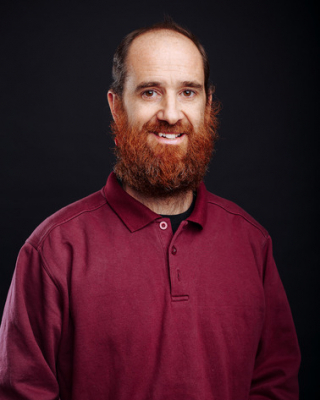
Matthew Wiebe is a Professor in the Department of Veterinary and Biomedical Sciences within the Institute of Agriculture and Natural Resources at the University of Nebraska-Lincoln. His research focuses on pathogen-host interactions, particularly using poxviruses as models to understand viral manipulation of host cellular processes. With a Ph.D. from the University of Nebraska Medical Center (2003) and a B.S. from the University of Nebraska-Omaha (1998), he has established a significant research program in virology. Dr. Wiebe's research centers on poxvirus-host interactions, with particular emphasis on vaccinia virus (the smallpox vaccine strain) and the host defense protein barrier to autointegration factor (BAF). His laboratory investigates how poxviruses evade host defenses through viral mimics of cellular enzymes, particularly focusing on viral kinases that phosphorylate BAF to overcome this antiviral defense. This work has revealed fundamental insights into host genome defense mechanisms that may extend to other pathogens. Analysis of his recent publications shows consistent focus on viral kinases, host defense mechanisms, and the molecular interplay between viral and cellular proteins. His work spans both basic virology and implications for antiviral strategies, with significant contributions to understanding how viruses manipulate cellular processes to facilitate replication.
Dr. Reinhold Weber is an Honorary Professor of Modern and Contemporary History and Regional History at the University of Tübingen's Faculty of Humanities, Department of History. He also serves as a lecturer at the Seminar for Contemporary History and is head of the "Haus auf der Alb" department at the State Center for Political Education Baden-Württemberg in Bad Urach since 2018. His academic background includes a Dr. phil. from the University of Tübingen in 2003 and a Magister Artium in 1998, with focus on Modern History, particularly Contemporary History, Medieval History, and Modern English Literature. Dr. Weber's research focuses on German history of the 20th century, regional history of Baden-Württemberg and its predecessor states, party and election history, political culture, migration history, and terrorism studies. His work demonstrates strong regional focus on Southwest Germany while addressing broader national historical themes, with particular emphasis on understanding Baden-Württemberg as an immigration region and examining political culture, resistance movements, and regional transformation throughout the 20th century. His extensive publication record includes numerous monographs and edited volumes addressing immigration history, political movements of the 1970s, regional history, and church-state relations. Recent works show a consistent pattern of connecting historical analysis with contemporary political education through his role at the State Center for Political Education. Member of the Council for Migration (RfM) since 2012 Member of the Advisory Board of the Württemberg Historical and Antiquarian Association since 2012 Ordinary member of the Commission for Historical Regional Studies in Baden-Württemberg since 2008 Chefredakteur (Chief Editor) and Referatsleiter (Department Head) at the State Center for Political Education since 2003 Dr. Weber maintains active teaching engagement with seminars on left- and right-wing terrorism in the Federal Republic, changing culture of remembrance at NS memorial sites, and environmental protection history in Germany. His work bridges academic research and public political education, making historical knowledge accessible for contemporary civic engagement while maintaining scholarly rigor.
Dr. Robert Graf serves as Group Leader of the solid-state NMR group at the Max Planck Institute for Polymer Research, where he directs research on molecular organization in advanced materials using nuclear magnetic resonance spectroscopy. His academic foundation includes: Physics studies at Johann Wolfgang Goethe University in Frankfurt, completing a diploma thesis on strongly correlated electron systems Doctoral research at the Max Planck Institute for Polymer Research (1998) under Prof. Hans Wolfgang Spiess, focusing on double-quantum NMR studies of amorphous polymers Graf's research centers on exploiting solid-state NMR techniques to investigate local molecular packing in partially disordered systems including semicrystalline polymers, nanocrystalline materials, and supramolecular assemblies. His work specifically targets molecular motions on millisecond timescales to elucidate self-organization mechanisms in complex architectures, addressing critical gaps where conventional diffraction methods fail. This approach provides essential insights into structure-property relationships for functional materials development. Analysis of his 2016-2019 publications reveals consistent emphasis on supramolecular chemistry and materials characterization, with recurring themes of molecular self-assembly pathways, polymorphism control, and structure-dynamics interplay. His collaborative work appears in premier journals including Nature Chemistry and Journal of the American Chemical Society, demonstrating methodological innovation in NMR applications for macromolecular systems. As head of the solid-state NMR group, Graf maintains an active research laboratory focused on advancing high-resolution NMR methodologies. The group's work bridges physics, chemistry, and materials engineering to characterize complex molecular organizations that govern functional properties in next-generation materials.
Prof. Giuseppe Mandaglio is an Associate Professor in the Department of Physics and Earth Sciences at the University of Messina, where he has served since December 2018. He currently coordinates the Degree Courses in Physics at the University of Messina, a position he has held since October 2021. His academic career at the University of Messina spans over two decades, beginning with his Physics degree in 2003 followed by a PhD in Physics in 2007. His educational background includes: Degree in Physics (four-year course) from the Faculty of Mathematical, Physical and Natural Sciences of the University of Messina (2003) PhD in Physics (XIX cycle) from the University of Messina (2003-2006) Saber Operator Training from the ERSF Research Institute in Grenoble, France (2006) Prof. Mandaglio's research focuses on experimental nuclear and particle physics, with particular emphasis on hadronic physics, baryonic resonances, and dark matter searches. His work spans multiple experimental collaborations including ALICE@CERN, KLOE-2 at DAFNE, EEE for cosmic ray studies, and BGO-OD at ELSA. He has made significant contributions to the measurement of hadronic cross sections, photonuclear reactions, and the search for dark force mediators. His research often bridges theoretical frameworks with experimental data, particularly in understanding the dynamics of heavy-ion collisions and resonance production. His recent publication record shows a strong focus on heavy-ion collision physics at the LHC, particularly through the ALICE experiment, with numerous papers on resonance production, particle correlations, and quark-gluon plasma characterization. He also maintains active involvement in cosmic ray research through the EEE project and continues work on dark sector searches through precision measurements at electron-positron colliders. Among his recognitions are: Bonus compensation from the University of Messina for the years 2017/2018 FFABR 2017 funding for researchers Prof. Mandaglio has supervised numerous PhD, Master's, and Bachelor's students, with current PhD candidates including Andrea Sofia Triolo, Antonino Fulci, Stefano Grazzi, and Letterio Biondo. His supervision spans topics from ALICE detector commissioning to cosmic ray monitoring and dark force searches. He has secured research funding through various mechanisms including the FFABR 2017 program and has held multiple research contracts throughout his career. He has served on committees including the Committee for the teaching of the Master's Degree in Physics and the Committee for the review of the Bachelor's Degree in Physics. He is actively involved in major international collaborations, serving as Deputy-team leader of the UniMe cluster of the ALICE@CERN experiment and as a member of the international KLOE-2 Collaboration. His work with the EEE collaboration focuses on cosmic ray studies using MRPC muon telescopes, where he is locally responsible for simulation of the single-telescope system response. He has organized numerous international conferences including the International Workshop Detection Systems and Techniques in Nuclear and Particle Physics (2019) and the 2nd International Workshop Nuclear Reactions on Nucleons and Nuclei (2017).
Dr. Francisco Miralles Arenas is a Reader in Molecular Biology at the Institute of Medical and Biomedical Allied Education, City St George's, University of London. His academic career spans over two decades with significant contributions to molecular biology, particularly in understanding the relationship between actin dynamics and gene expression regulation. Dr. Miralles obtained his PhD from the University of Barcelona in 1998, where his research focused on molecular mechanisms underlying extracellular protease gene expression during skeletal muscle differentiation. He subsequently pursued postdoctoral training at the Karolinska Institute and Stockholm University under an EMBO long-term fellowship, followed by work at the Transcription Laboratory at the London Research Institute (Cancer Research UK) where he was awarded an EU Marie Curie fellowship. His research focuses on understanding the molecular biology mechanisms that regulate gene expression under normal conditions and how their deregulation may lead to cancer. Dr. Miralles is particularly interested in the MRTF-actin signaling pathway and its role in the development of tumors of fat tissue (chondroid lipomas). His work bridges fundamental molecular mechanisms with potential therapeutic applications in cancer treatment. His research has evolved from fundamental studies of actin dynamics and transcription regulation to more applied cancer research, with recent emphasis on pancreatic ductal adenocarcinoma and microRNA-21's role in cancer stemness, epithelial-mesenchymal transition, and therapeutic resistance. Dr. Miralles has been recognized with prestigious fellowships including: EU Marie Curie postdoctoral fellowship EMBO long term postdoctoral fellowship As an educator, Dr. Miralles serves as module lead for "Genes and Gene Expression" for year 3 Biomedical Science BSc students and intercalated BSc students. He contributes specialized lectures on gene expression, cell signaling, and cancer to medical, biomedical, pharmacology, and master's students. He supervises undergraduate research projects, Master's students, and has experience supervising PhD students and visiting Erasmus students. Additionally, he serves as Chief examiner for year 1 Biomedical Science students and as the small group teaching coordinator.
Professor Hans-Henning Klauß is a faculty member at the Institute of Condensed Matter Physics, Dresden University of Technology, where he leads the research group on magnetic resonance and nuclear probes. His research focuses on strongly correlated electron systems using local probe techniques including muon spin relaxation, NMR, and Mössbauer spectroscopy. His primary research interests include correlated electron systems in transition metal oxides, iron-based superconductors, low-dimensional quantum magnets, and topological materials like Weyl semimetals. His work examines electronic correlations, quantum criticality, and unconventional magnetic and superconducting phases in condensed matter systems. Analysis of his recent publications reveals significant contributions to understanding broken time-reversal symmetry in superconductors, quantum critical points in heavy fermion systems, and magnetic properties of frustrated quantum magnets. His research frequently employs high-field techniques up to 95 T and involves international collaborations with institutions like IFW Dresden. h-factor 28 (as of September 2018) 3211 citations (as of September 2018) 148 publications (as of September 2018) Professor Klauß supervises multiple PhD students and collaborates with researchers across various institutions. His group examines materials ranging from poly- and single-crystalline specimens to thin films and multilayers, with particular interest in the interplay between local magnetic moments and topological properties of conducting electrons.
Lynda CHEHAMI serves as an Associate Professor at the University of Polytechnic Hauts-de-France (UPHF), affiliated with the College of Engineering and Department of Acoustics since 2019. She leads research in Structural Health Monitoring (SHM) and Non-Destructive Testing (NDT) within the TPIA group at IEMN UMR CNRS 8520 laboratory. Her research focuses on detection and localization of defects in reverberant environments through passive acoustic imaging using ambient noise sources. Key methodologies include ultrasonic signal reconstruction, guided wave propagation analysis, and low-power sensor networks for predictive maintenance in transport systems (automotive, rail). Research themes span Physical Acoustics, Integrated Health Monitoring, and Distributed Acoustic Sensors. Notable scientific awards include the Prime d'Encadrement Doctoral (2020-2024), Best Poster Prize (2016-2017), and Young Researcher Prize (2015-2016). She has co-supervised four PhD theses on SHM applications for nuclear structures, composite materials, and acoustic transducer arrays. ANR Jeune Chercheur Project DACLOS (Coordinator) ANR Projects PANSCAN and PASNI (Participant) European Project SOCORRO 2 (Member) She actively contributes to academic governance as elected member of UPHF's Research Council (CoR) and Academic Council (CAC), and serves on INSA's Scientific Council. Her work bridges industrial applications in regional transport sectors with fundamental acoustic research.
Ignacio Bravo Muñoz is a Professor at the Department of Electronics, Universidad de Alcalá (Spain), affiliated with the GEINTRA research group focusing on Electronic Engineering applications in Intelligent Spaces and Transport. He holds a PhD from Universidad de Alcalá (2007) with a thesis on FPGA-based object detection using computational vision and PCA techniques. His research spans indoor positioning systems (using LED/PSD sensors), sustainable energy frameworks for smart communities, FPGA-based hardware design , and remote laboratory platforms . Key contributions include real-time metrology for ESA's PLATO mission, cooperative demand response algorithms, and innovative pedagogical approaches integrating sustainability into digital electronics education. Recent work emphasizes edge computing for video surveillance , machine learning in human action recognition , and non-cooperative target identification using radar signatures. His interdisciplinary projects bridge electronics engineering with energy systems, biomedical applications, and educational technology. He actively collaborates with industry and academic institutions on EU-funded projects, contributing to advancements in aerospace instrumentation (PLATO FPA qualification), smart grid technologies, and STEM education innovation.
Laure Vermare is a 1st Class Research Officer (Chargée de Recherche) at the CNRS, affiliated with the Plasma Physics Laboratory (LPP) at Ecole Polytechnique in France. She holds a PhD from CEA Cadarache (2005) and has held postdoctoral positions at the Max-Planck Institute for Plasma Physics (2005–2007) and Los Alamos National Laboratory (2001). Her work focuses on turbulence and transport in fusion plasmas, with expertise in experimental characterization of density fluctuations using microwave scattering and reflectometry techniques. Her research interests include wave-number spectrum analysis, dimensionless scaling of turbulent transport, and wave propagation in turbulent plasmas. She collaborates internationally on tokamak experiments such as Tore Supra, ASDEX Upgrade, and contributes to gyrokinetic modeling and plasma diagnostics development. Vermare is based at both Ecole Polytechnique and CEA Cadarache, with a focus on advancing fusion energy science through experimental and theoretical plasma physics. Publications highlight her work on collisionality scaling, turbulence simulations, and plasma confinement studies. Her contributions bridge experimental observations with computational models to improve understanding of fusion plasma behavior.
Prof. Machiel Mulder is a Professor of Energy Economics at the University of Groningen's Faculty of Economics and Business. He specializes in energy market regulation, climate policy analysis, and the economics of energy transitions. Mulder holds a PhD from Erasmus University Rotterdam and has held senior roles at the CPB Netherlands Bureau for Economic Policy Analysis, the Netherlands Competition Authority (NMa), and the Authority for Consumers & Markets (ACM). His research focuses on optimizing energy systems, pricing mechanisms, and policy evaluation, particularly in the context of renewable integration and reducing fossil fuel dependency. Key research interests include carbon leakage mitigation, hydrogen market dynamics, and the effectiveness of EU emissions trading systems. He has advised government bodies on energy policy, including evaluations of the Dutch price cap subsidy and hydrogen strategy. Mulder leads the Centre for Energy Business and Economics Research (CEnBER) and contributes to programs like the Executive MBA Energy Transition at the University of Groningen Business School. His work bridges academic insights with practical policy solutions for sustainable energy systems. Publications span topics like dynamic grid tariffs, renewable energy subsidies, and the socioeconomic impacts of gas production. He frequently engages with media and policymakers, emphasizing the need for coherent regulatory frameworks to minimize transition costs while achieving climate goals. Current projects include assessments of carbon capture markets and the implications of electrification trends on gas demand.
Prof Christopher Vale is an Adjunct Professor at Swinburne University of Technology, Australia, specializing in ultracold quantum gases. He holds a BSc (Hons) and PhD in Physics from Victoria University (2001). His career includes roles as Postdoctoral Fellow at the University of Sussex (2000–2002), Research Fellow at the University of Queensland (2003–2006), and Senior Research Fellow/ARC Future Fellow at Swinburne (2007–present). Affiliations: Swinburne Research, ARC Centre of Excellence for Future Low-Energy Electronics Technologies (FLEET) Research focuses on ultracold atoms, particularly lithium-6 Fermi gases and dipolar dysprosium gases. Key areas include: Bose-Einstein condensates on atom chips Excitation spectra of strongly correlated fermions Dimensional crossover in Fermi gases Quantum many-body physics and topological phenomena Current projects involve a quantum gas microscope for long-range dipolar interactions. Teaching includes courses on Thermal Physics (PHY30003) and Quantum and Optical Physics (PHY30004). He supervises PhD/MSc students in topics like exotic superfluidity and vortex thermodynamics. Awards include the ARC Future Fellowship (2012) and Vice Chancellor's Research Excellence Award (2013). He chairs the Australian Institute of Physics's ATMOP Topical Group (2017–2018). Grants funded projects on Fermi gas dynamics, quantum microscopy, and low-energy electronics. Collaborations include MIT and the FLEET Centre.
Benjamin Cope is a Lecturer affiliated with the Laboratory of Critical Urbanism at the European Humanities University (EHU). He holds a PhD in Modern and Medieval Languages and Literature from Oxford University (2001). His research focuses on critical spatial theory, post-socialist urban spaces, and contemporary mapping practices, with notable work on the socio-spatial dynamics of cities like Vilnius, Warsaw, and Visaginas. Cope co-edited the 2021 book Re-tooling Knowledge Infrastructures in a Nuclear Town , addressing urban challenges in the post-nuclear Visaginas, Lithuania. His academic contributions span interdisciplinary urban studies, emphasizing socio-technical systems and cultural transformations. His publications critique urban policies and explore the interplay between globalization, memory, and spatial politics. Cope collaborates with international scholars and institutions, exemplified by the Laboratory of Critical Urbanism's applied summer schools in Visaginas. Key projects include analyses of Belarusian art scenes, Polish urban renewal strategies, and the socio-cultural impacts of Soviet industrial legacies. Though no formal awards are listed, his work has influenced debates on post-socialist urbanism and critical spatial theory. His involvement in EHU reflects commitment to academic innovation and community-engaged research.
Ben Caljon is an active Researcher at Vrije Universiteit Brussel in the Department of Genetics, Reproduction and Development within the School of Clinical Sciences. With an h-index of 243 and 35 research outputs spanning from 2012 to 2024, his work demonstrates significant scholarly impact in medical genetics and related fields. Dr. Caljon's research interests center around mitochondrial DNA, mitochondrial genome analysis, genetic mutations, Klinefelter Syndrome, and exome sequencing. His work spans multiple disciplines within medical genetics, with particular focus on reproductive genetics, oncogenetics, and diagnostic applications of genomic technologies. His fingerprint analysis shows strong concentration in Mitochondrial DNA (100%), Mitochondrial Genome (87%), and Mutation research (50%). Recent publication trends indicate active involvement in neurodevelopmental disorders, cancer genetics, reproductive medicine, and immunotherapy research. His 2024 publications include work on NSRP1-associated neurodevelopmental disorders and intracranial immunotherapy for glioma, demonstrating breadth across clinical genetics and oncology. Dr. Caljon actively participates in academic conferences and workshops, including the Belgian Society of Human Genetics meetings and specialized workshops on comparative genomics and epigenetics. His collaborative network extends across multiple research institutions, with significant contributions to datasets related to cancer predisposition and reproductive genetics.
Christiane Eichner is an Associate Professor at the Department of Biological Sciences (BIO), University of Bergen. Her work focuses on the molecular and biological mechanisms of the salmon louse ( Lepeophtheirus salmonis ), a major ectoparasite affecting salmonid aquaculture. She is affiliated with the Fish Disease Research Group (FDRG) and investigates host-parasite interactions, immune responses, and parasite physiology. Her research combines genomics, transcriptomics, and biochemical approaches to understand parasite adaptation, development, and interactions with hosts. Key areas of research include immune modulation by salmon lice, gene expression patterns during parasite development, and the molecular basis of blood-feeding and egg production. Her studies often address practical challenges in aquaculture, such as developing strategies to combat louse infestations. Eichner collaborates with institutions like the Institute of Marine Research and employs advanced techniques like RNA sequencing and co-expression network analysis. Her funding includes grants from the Research Council of Norway and the Fisheries and Aquaculture Industry Research Fund. She has advised multiple researchers and contributed to over a dozen peer-reviewed articles since 2015, with a focus on genomic studies, immune system dynamics, and parasite biology. Notable contributions include identifying molecular pathways in salmon louse development, characterizing enzymes involved in host settlement, and analyzing the role of extracellular matrix proteins. Her work bridges fundamental biology and applied solutions for sustainable aquaculture.
Kristin Persson is a Professor of Materials Science and Engineering at the University of California, Berkeley, where she also serves as Director of the Molecular Foundry. She is a Faculty Staff Scientist at Lawrence Berkeley National Laboratory, based in the Energy Sciences Area (ESA). Her research focuses on computational materials science for energy applications, leading the internationally recognized Persson Group and the Materials Project initiative. Professor Persson's research interests center on applying atomistic and first-principles computational methods coupled with high-performance computing and machine learning to advance materials for clean energy production and storage. Her group specializes in designing novel photocatalysts, multi-valent battery electrode materials, Li-ion battery electrode materials, polar materials, and liquid electrolytes. The Materials Project, which she directs, is a multi-national effort to compute the properties of all inorganic materials and provide this data and associated analysis algorithms free of charge, with the ultimate goal of drastically reducing the time needed to invent new materials for societal needs. Her recent publications reveal a strong trend toward data-driven materials discovery, with significant focus on battery materials (particularly zinc-ion and lithium-ion systems), sustainable materials design, and the development of computational frameworks for materials prediction. There's a clear emphasis on machine learning applications in materials science, as well as growing interest in circular economy approaches for materials and chemical recycling. Member of the National Academy of Engineers (NAE) 2024 Distinguished Scientist Fellow by the U.S. Department of Energy's Office of Science Foreign member of the Royal Swedish Academy of Sciences Fellow of the Materials Research Society Fellow of the American Physical Society (APS) Cyril Stanley Smith Award recipient Recognized by Web of Science as top 1% highly cited researcher Professor Persson has mentored numerous graduate students and postdocs, many of whom have received prestigious fellowships and awards. Her research is supported by significant grants from the Department of Energy, including through the Joint Center for Energy Storage Research (JCESR) and the Electrolyte Genome project. She has led several major computational initiatives that have been recognized with the Secretary of Energy Honor Award. The Persson Group operates within the Energy Sciences Area at Lawrence Berkeley National Laboratory, collaborating closely with the Molecular Foundry (which she directs) and maintaining strong connections with experimental groups at JCAP (Joint Center for Artificial Photosynthesis) and other DOE-funded centers. The group follows a public group handbook that emphasizes collaborative research practices and open science principles.