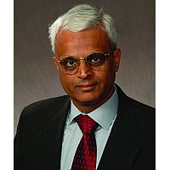
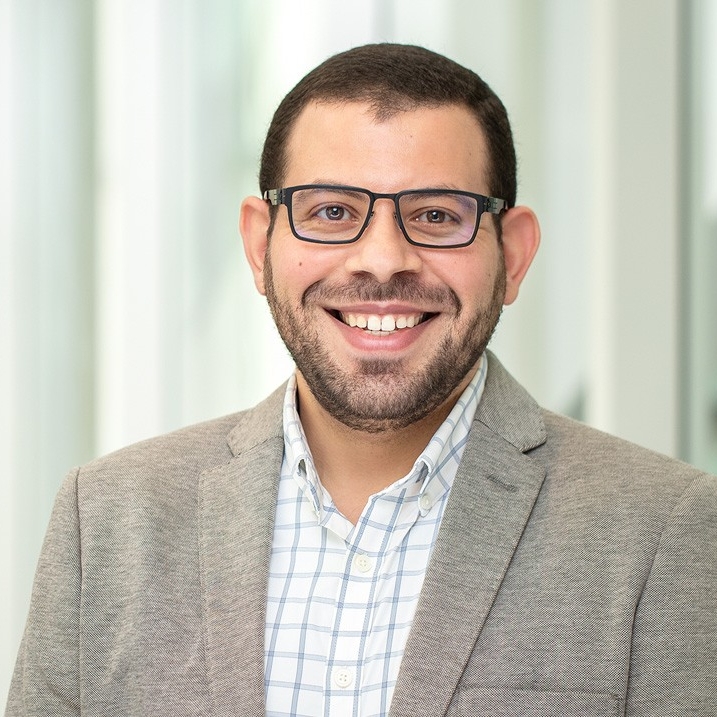
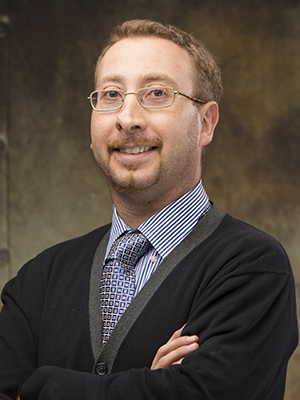
N.K. Anand is a Distinguished Professor of Mechanical Engineering at Texas A&M University, holding the James J. Cain III Regents Professorship. He leads research in advanced computational methods and thermal-hydraulic systems, with affiliations to Multidisciplinary Engineering and Nuclear Engineering programs. His work focuses on physics-informed machine learning, finite volume methods, and aerosol transport in nuclear reactor contexts. Education: PhD (Mechanical Engineering, Purdue University, 1983), M.S. (Kansas State University, 1979), and B.E. (Bangalore University, 1978). Awards include the ASME James Harry Potter Gold Medal (2020) and multiple teaching/administrative excellence awards from Texas A&M. Research emphasizes fluid dynamics modeling (e.g., PINNs for periodic flows, turbulent deposition studies), heat pipe systems, and nuclear reactor thermal-hydraulics. His Versatile Test Reactor (VTR) contributions include cartridge loop designs and aerosol transport experiments. Active in high-temperature reactor safety, with facilities studying pebble beds, helical coil exchangers, and HTGR upper plenum dynamics. Publications span physics-informed ML applications, finite volume techniques, and nuclear thermal systems. Grants supported development of advanced CFD tools and reactor safety infrastructure. His lab collaborates on international nuclear energy projects and emerging AI-driven simulation methodologies.
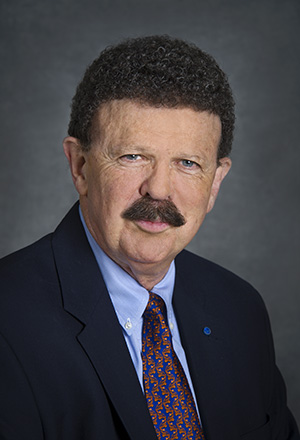
Robert O. Ritchie is the H. T. & Jessie Chua Distinguished Professor of Engineering at the University of California, Berkeley, where he holds dual appointments as Professor of Materials Science & Engineering and Professor of Mechanical Engineering. He is also a Faculty Senior Scientist at Lawrence Berkeley National Laboratory. His distinguished career spans over four decades with significant contributions to the field of materials science and engineering. Professor Ritchie received his B.A. in Physics & Metallurgy (1969), M.A. in Materials Science (1973), Ph.D. in Materials Science (1973), and Sc.D. in Materials Science (1990), all from Cambridge University, UK. His research focuses on the mechanical behavior of advanced materials, with particular emphasis on fracture mechanics, fatigue properties, and damage tolerance. Professor Ritchie's work spans multiple domains including metallic glasses, high-entropy alloys, biomaterials, and nature-inspired structural materials. His laboratory employs cutting-edge techniques such as in situ high-temperature computed tomography to study failure mechanisms in ceramic-matrix composites and nuclear graphite. His research has significant implications for aerospace, biomedical, and energy applications. Analysis of Professor Ritchie's recent publications reveals a strong focus on advanced structural materials, particularly metallic glasses and high-entropy alloys. His work combines experimental approaches with computational modeling to understand deformation mechanisms at multiple length scales. There is a clear trend toward bioinspired materials design, with several papers examining natural structures like fish scales, horn sheaths, and bone to develop new engineering materials with exceptional mechanical properties. Member, National Academy of Sciences (2025) Foreign Fellow, Academy of Athens, Greece (2024) Robert Henry Thurston Award (ASME) (2022) ASM Gold Medal (ASM Intl.) (2021) William D. Nix Medal, inaugural winner (TMS) (2020) Fellow (Foreign Member) of the Royal Society (FRS), London, UK (2017) Morris Cohen Award (TMS) (2017) Acta Materialia Gold Medal (2014) David Turnbull Award (MRS) (2013) A. Cemel Eringen Medal (Society of Engineering Science) (2010) Professor Ritchie has advised numerous graduate students and postdoctoral researchers throughout his career. His research has been supported by various funding agencies including the Department of Energy, National Science Foundation, and industry partners such as Rolls-Royce. He has served on numerous advisory boards including the Rolls-Royce Materials & Structures Advisory Board (2011-2019) and the Scientific Advisory Board of the Advanced Light Source at LBNL (2013 to date). Professor Ritchie leads the Ritchie Group at UC Berkeley, which maintains strong collaborations with Lawrence Berkeley National Laboratory. The laboratory employs state-of-the-art techniques including electron microscopy, x-ray tomography, and mechanical testing across multiple length and time scales. His team has developed innovative in situ characterization methods that have significantly advanced the understanding of material failure mechanisms under extreme conditions.
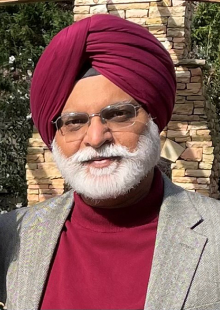
Preet Singh is a Professor and Associate Chair for Graduate Studies in the School of Materials Science and Engineering at Georgia Tech, with affiliations to the College of Engineering. His research focuses on corrosion science, electrochemistry, and environmental degradation of materials, particularly metals and alloys. Prior to joining Georgia Tech in 2003, he was a faculty member at the Institute of Paper Science and Technology (IPST), where he investigated corrosion issues in the pulp and paper industry. Professor Singh's work explores fundamental mechanisms of material degradation in industrial environments, aiming to develop mitigation strategies against environment-induced failures. Key research areas include corrosion fatigue, hydrogen embrittlement, stress corrosion cracking, and oxidation behavior. His group employs experimental approaches to study material reliability under varying chemical and mechanical conditions. Recent publications demonstrate interdisciplinary collaboration across oncology, agriculture, and energy systems, reflecting broad applications of materials science principles. Research trends show increased focus on biomedical materials and sustainable technologies alongside core corrosion studies. Professor Singh advises graduate students including Abdullah Alzubail, Yousif Al Rabie, Sai Shreeya, Yara, and Sean Li. He directs the Corrosion and Materials Reliability Laboratory (CMCRL), which partners with industry to solve practical engineering challenges related to material performance.
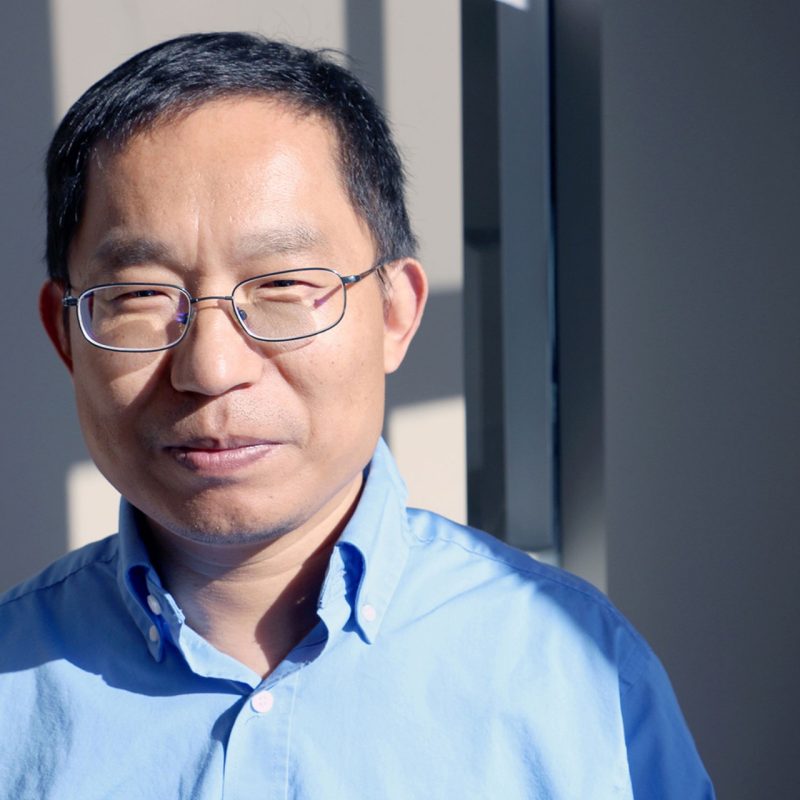
Jinsuo Zhang is a Professor in the Department of Mechanical Engineering at Virginia Tech, leading the Nuclear Materials and Fuel Cycle Center (NMFC). His research focuses on nuclear materials compatibility, fuel cycle technologies, and advanced reactor coolants. He joined Virginia Tech in 2017 to establish the NMFC, bringing expertise from Los Alamos National Laboratory in material degradation studies and pyroprocessing. His work addresses corrosion in molten salts, fuel-cladding interactions, and safeguards for nuclear systems. Education includes a Ph.D. in Engineering Mechanics from Zhejiang University (2001) and a B.S. in Engineering Mechanics (1997). He directs the NMFC, exploring nuclear fuel materials, coolant advancements, and fuel cycle innovations. Research highlights include molten salt reactor technologies, electrochemical separation methods, and corrosion mitigation strategies for extreme reactor environments.
Andrew S. Whittaker is a SUNY Distinguished Professor in the Department of Civil, Structural and Environmental Engineering at the University at Buffalo, State University of New York . He serves as Director of the Institute of Bridge Engineering and Interim Director of the Stephen Still Institute for Sustainable Transportation and Logistics , both within the School of Engineering and Applied Sciences . A registered Civil and Structural Engineer in California, Whittaker specializes in structural and earthquake engineering, bridge engineering, blast and impact engineering, performance-based engineering, and nuclear structures. Research Interests: His work focuses on seismic isolation systems for nuclear reactors, fluid-structure interaction in advanced reactor vessels, gamma radiation effects on materials, and the dynamic behavior of graphite blocks in high-temperature gas reactors (HTGRs). He also explores the commodification of microreactors and soil-structure interaction for seismically isolated facilities. Scientific Awards: Distinguished Member, American Society of Civil Engineers (2025) Untermyer & Cisler Reactor Technology Medal (2023) Nathan M. Newmark Medal (2023) Fellow of multiple societies (ASCE, SEI, ACI) Awards and grants highlight his leadership in nuclear safety, seismic engineering, and reactor design.
Peter A. Dowben is a Professor in the Department of Physics and Astronomy at the University of Nebraska–Lincoln , with a research focus spanning Condensed Matter Physics , Materials Science , and Spintronics . His work emphasizes surface physics , electronic structure , and magnetoelectric coupling , particularly in transition metal compounds , ferroelectric polymers , and graphene-based systems . Key research trends in his recent publications include voltage-controlled spin states for memory applications, magnetoelectric transistors , and interfacial effects in nanoscale materials . His collaborations extend across institutions like the Air Force Institute of Technology and the Institute of Physical Optics, with experimental techniques such as X-ray absorption spectroscopy and photoemission . While no specific awards are documented in the provided texts, his extensive publication record and interdisciplinary work on molecular spintronics , surface segregation , and band structure engineering highlight his contributions to fundamental material science and applied physics . He has advised teams in studies involving spin crossover complexes , self-assembled monolayers , and magnetoelectric heterostructures .
Riyadh Baghdadi is an Assistant Professor of Computer Science at New York University Abu Dhabi and a Global Network Assistant Professor at the Tandon School of Engineering, NYU. He is also a Research Affiliate at MIT, where he previously completed a postdoctoral fellowship. His academic journey includes a PhD and Master’s from Sorbonne University (INRIA/UPMC) and an engineering degree from Ecole Supérieure d’Informatique in Algiers. Assistant Professor, NYU Abu Dhabi Global Network Assistant Professor, Tandon School of Engineering, NYU Research Affiliate, MIT His research lies at the intersection of compilers, programming languages, and applied machine learning, with a focus on developing advanced compiler techniques for deep learning, high-performance computing, and data-parallel algorithms. He is the lead developer of the Tiramisu compiler , a polyhedral compiler designed to optimize dense and sparse deep learning workloads across diverse architectures including CPUs, GPUs, and FPGAs. Riyadh’s recent publications demonstrate a strong trend toward integrating machine learning into compiler optimization—particularly in cost modeling, loop scheduling, and automatic code generation. His work addresses critical challenges in optimizing sparse neural networks and enabling efficient execution on resource-constrained platforms like smartphones and autonomous vehicles. Outstanding Paper Award, MLSys 2021 He has mentored 18 students and taught core courses such as Computer Systems Organization and Machine Learning at NYUAD. His service to the academic community includes program committee roles at MLSys, IPDPS, ECOOP, and PACT, as well as organizing workshops on polyhedral compilation and machine learning for hardware-software co-design. Riyadh actively contributes to open-source projects and collaborates with industry leaders including Google, Facebook, NVIDIA, and Intel. He leads the development of Tiramisu and collaborates on DSLs like GraphIt and Halide, focusing on performance portability and automation in compiler design.
Koroush Shirvan is the Atlantic Richfield Career Development Professor in Energy Studies and a tenured faculty member in MIT's Department of Nuclear Science and Engineering within the School of Engineering. Joined in July 2017, he directs the Reactor Technology Course for Utility Executives and leads the Fission Materials in Extreme Environments Lab. His work bridges nuclear engineering with practical industrial applications for decarbonization. His research focuses on reactor design economics, materials testing under irradiation, nuclear safety, and boiling heat transfer. He accelerates innovations in nuclear fuels, small modular reactors, and space propulsion through multi-scale physics integration. Current projects include accident-tolerant fuels, high-temperature materials for microreactors, and AI-driven optimization of reactor systems. His approach combines experimental irradiation testing at MITR with advanced computational modeling. Recent publications reveal strong trends toward economic nuclear deployment via advanced fuel technologies and small modular reactors. AI/ML applications dominate optimization research, particularly for core reload and uncertainty quantification. Materials science under extreme conditions remains central, with growing emphasis on space nuclear applications and horizontal reactor configurations for cost reduction. His scientific recognition includes: Nuclear News 40 under 40 (2024) American Nuclear Society Landis Young Member Engineering Achievement Award (2023) American Nuclear Society Reactor Technology Award (2022) Teaching responsibilities span Sustainable Energy (22.811/081), Graduate Reactor Physics, and Nuclear Design courses. Research grants support experimental programs at MIT Reactor Lab and computational frameworks for reactor-to-repository analysis. He mentors students through senior design projects and graduate research in nuclear fuel cycles. He directs the Fission Materials in Extreme Environments Lab and co-leads MIT's Space Nuclear initiative with AeroAstro. The team conducts irradiation experiments using MITR's high-temperature hydrogen flow capabilities and advanced diagnostics for post-irradiation examination. Current thrusts include nuclear thermal rocket materials testing and fission surface power development for lunar/Mars missions.
Sachiko Amari serves as a Research Professor of Physics in the Department of Physics at Washington University in St. Louis, where she conducts pioneering research in cosmochemistry through the McDonnell Center for the Space Sciences. Her work bridges laboratory astrophysics and planetary science, focusing on extraterrestrial materials to unravel solar system formation and stellar processes. Amari's educational foundation includes a PhD from Kobe University and both Master of Engineering and Bachelor of Engineering degrees from Waseda University in Japan. This engineering background informs her precise analytical approach to meteoritic materials. Her research centers on presolar grains—stardust formed in stellar outflows that were incorporated into primitive meteorites. Using secondary ion mass spectrometry, she analyzes isotopic ratios to investigate nucleosynthesis in stars, mixing processes in stellar ejecta, and Galactic chemical evolution. A secondary focus examines noble gas trapping mechanisms in meteorites to understand volatile origins and early solar system processes. Her work reveals how microscopic grains preserve macroscopic cosmic histories. Analysis of her recent publications shows consistent emphasis on silicon carbide and graphite presolar grains, with increasing technical sophistication in NanoSIMS analysis. Research trends include correlating multi-element isotopic systems, identifying rare stellar sources like novae, and resolving phase Q—the elusive noble gas carrier in meteorites. Her work demonstrates how laboratory studies of individual grains constrain astrophysical models. Amari leads an active research group within the McDonnell Center for the Space Sciences and collaborates on major initiatives including the Mars Sample Return Science Definition Team. She mentors graduate students in meteoritics research while developing analytical protocols for extraterrestrial material characterization. Her laboratory serves as a hub for stardust analysis, utilizing advanced mass spectrometry techniques to decode isotopic fingerprints of stellar processes.
Dr. Mohammad Naraghi is a Professor and Associate Department Head for Academics in the Department of Aerospace Engineering at Texas A&M University. He leads the Nanostuctured Materials Lab , focusing on advanced nanomaterials for aerospace applications. His work integrates material science principles to develop lightweight, high-performance materials for structural, energy storage, and smart textile systems. Education: Ph.D., Aerospace Engineering (2009), University of Illinois at Urbana-Champaign M.S., Civil Engineering (2004), Sharif University of Technology B.S., Civil Engineering (2004), Sharif University of Technology Research Interests: Graphitic carbon nanomaterials, bio-inspired composites, experimental nanomechanics, and polymer nanofiber processing. His lab explores multifunctional materials for aerospace applications, including self-healing polymers, structural batteries, and sustainable carbon fiber recycling. Publications: Dr. Naraghi has authored over 150 peer-reviewed articles, with recent work focusing on carbon nanomaterial synthesis, self-healing vitrimers, and all-electric aircraft sustainability . His studies bridge nanoscale mechanics and macroscale applications, emphasizing scalability and industrial relevance. Awards: Best Paper Award (2009) for nano viscoelastic composites research Roger A. Strehlow Memorial Award (2009) for outstanding research First Place in Sandia MEMS Design Competition (2007) Advising & Grants: Leads NSF-funded projects on sustainable materials and structural energy storage. Advises graduate students in aerospace and materials engineering. Collaborates with Sandia National Labs and industry partners on advanced composite development. Labs & Facilities: Directs the Nanostuctured Materials Lab, equipped with advanced nanomechanical testing systems, electrospinning setups, and characterization tools for nanoscale materials analysis.
Maggie He is an Assistant Professor of Organic Chemistry in the Department of Chemistry & Biochemistry at the University of Arkansas, College of Arts & Sciences. Her research program focuses on the development of functional materials with applications in sensing and adaptive systems. Education: Ph.D. in Chemistry, ETH Zürich M.S. in Chemistry, University of Pennsylvania B.S. in Chemistry, magna cum laude, The City College of New York Her research spans organic synthesis, materials chemistry, and sensor development, with particular expertise in carbon nanomaterials and shapeshifting molecular systems. Current work emphasizes covalent functionalization of carbon nanotubes , bullvalene-based dynamic molecules , and real-time chemical sensors for environmental and medical applications. The group integrates synthetic chemistry with materials characterization to bridge fundamental science and practical devices. Her publication record shows consistent focus on carbon nanomaterial functionalization (35% of recent articles), molecular dynamics in fluxional systems (25%), and sensing applications (40%), with increasing emphasis on radiation detection and bio-inspired sensor designs in the last five years. Scientific Awards: ETH Medal (2015) Swiss National Science Foundation Early Postdoc Mobility Fellowship (2014) Roche Symposium – Leading Chemists (2012) Multiple undergraduate research awards including Merck Index Award and Bristol-Myers Squibb Research Award She teaches graduate courses in organic analysis (CHEM 5753) and experimental methods (CHEM 4723), advising students in synthetic methodology and materials characterization. Her research group maintains collaborations with MIT and ETH Zürich, with funding supporting carbon nanomaterial synthesis and sensor development. The He Group operates specialized facilities for organic synthesis, nanomaterial characterization, and sensor testing, focusing on translating molecular innovations into functional devices for environmental monitoring and healthcare applications.
Professor James S. Cotton is a faculty member in the Department of Mechanical Engineering at McMaster University , specializing in Thermo-Fluid Sciences with a focus on energy sustainability and thermal management. Current research explores thermal energy harvesting , non-thermal plasma flue gas cleaning , and smart electrohydrodynamic heat exchangers . Active in community energy planning as a member of the Burlington Climate Action Plan (2019-2021) and Green Venture board (2016-2021). Research spans both fundamental and applied domains, including two-phase flow , electrohydrodynamic heat transfer modulation , and flow accelerated corrosion analysis. His work integrates modeling and experimental validation for real-world thermal systems. Scientific Contributions: Developed two novel patents for advanced thermal management and soot removal systems during his industrial career at Dana Corp. (until 2007). Current projects involve community energy corridors and next-generation sustainable energy solutions , including the 2025 Hamilton Energy Harvesting Study . Active mentor in graduate education, teaching courses like MECH ENG 4O04: Sustainable Energy Systems and MECH ENG 708: Two Phase Flow and Heat Transfer .
Sir Harshad Bhadeshia is a renowned Indian-British metallurgist and Professor of Metallurgy at Queen Mary University of London since 2022. Previously, he held the Emeritus Tata Steel Professorship at the University of Cambridge, where he worked from 1980 until his move to Queen Mary. His research focuses on the theory of solid-state transformations in multicomponent steels , aiming to create novel alloys and processes with minimal resource use. Education: BSc from City of London Polytechnic, PhD from University of Cambridge (1980) under David V. Edmonds Research Areas: Phase transformations in steel, computational modeling, neural networks, Bainite, welding technology, hydrogen embrittlement resistance, nanostructured materials Scientific Awards: Bessemer Gold Medal (2006), Hume Rothery Prize (1992), Rosenhain Medal (1994), Knight Bachelor (2015), Adolf Martens Medal (2017), William Menelaus Medal (2025) Editorial Roles: Editor for Materials Science and Engineering: A , Materials Science and Technology , and Science and Technology of Welding and Joining Students: Roger Reed, Rachel Thomson His Google Scholar publications (over 650) cover topics in metallurgy, phase transformations, computational modeling, hydrogen resistance, and AI in materials science, with a significant emphasis on Bainite, welds, and nanostructured steels. The SKF University Technology Centre (2009-2019) and Computational Metallurgy Laboratory (2005-18) highlight his leadership in industrial collaborations and international research. His scientific awards and fellowships (Royal Society, Royal Academy of Engineering, Institute of Materials, Minerals and Mining) underscore his global recognition.
Sara Mana serves as Chairperson of the Department of Geological Sciences at Salem State University, where she teaches courses spanning Dynamic Earth (GLS 100), Volcanology (GLS 346), Field Geology II (GLS 485), and specialized topics like Geology in the Movies (GLS 108) and Forensic Microscopy (GLS 256). Her research integrates field geology with advanced analytical techniques to investigate active tectonic systems. Dr. Mana's research focuses on active tectonics and quantitative analysis in rift environments, particularly the East African Rift. She employs radiogenic isotope geochemistry , incompatible trace element analysis , and high-precision 40 Ar/ 39 Ar geochronology to study magma evolution, basin development, and deformation processes. Her work connects climate-tectonics interactions with ecosystem evolution, utilizing gas geochemistry and remote sensing for regional-scale analysis. Recent publications reveal persistent focus on East African Rift dynamics, with recurring themes of tephrochronology , rift-related magmatism , and paleoanthropological site correlation . Collaborative work spans Costa Rican volcanism, Appalachian metamorphism, and nuclear forensics, demonstrating interdisciplinary reach across geophysics, archaeology, and critical zone science. Dr. Mana has secured significant National Science Foundation funding: PI on $80,157 NSF award (2018-2021, extended to 2023 with $25,712 supplement) for the East African Rift Tephra Database project PI on $12,885 NSF sub-award for Miocene ecosystem research in Kenya External collaborator on $2,671,455 NSF Frontier Research project examining climate-tectonics interactions in the East African Rift She mentors undergraduates through senior research courses (GLS 500/501) and forensic geoscience internships (GLS 499), emphasizing field-based learning and analytical skill development.
Dr. D. Marshall Porterfield is a Professor of Agricultural & Biological Engineering at Purdue University, specializing in biosensors, bio-nanotechnology, and space biology. His research focuses on developing technologies for bioregenerative life support systems and nutrient delivery in microgravity environments. He served as NASA's Division Director for Space Life and Physical Sciences (2012-2016), pioneering initiatives like geneLAB and materialsLAB to advance space research utilization. His work bridges engineering and biology, with applications in space exploration and terrestrial challenges. Porterfield holds leadership roles in organizations like the American Society for Gravitational and Space Research and the Institute for Biological Engineering. He has authored over 100 peer-reviewed papers and holds patents in biosensor technology. Awards include the Halstead Investigator Award and election to the AIMBE College of Fellows. His research portfolio includes lab-on-a-chip devices, biomimetic sensors, and gravitational physiology studies, with recent emphasis on lunar agriculture and space radiation mitigation. His articles highlight advancements in space microbiology, extraterrestrial crop systems, and molecular responses to spaceflight. Key themes include optimizing oxygen delivery for hydroponics, detecting cancer biomarkers via microtest tech, and understanding aging in space environments. Porterfield collaborates across disciplines, leveraging Purdue's facilities like the Birck Nanotechnology Center and Discovery Park for interdisciplinary innovation.