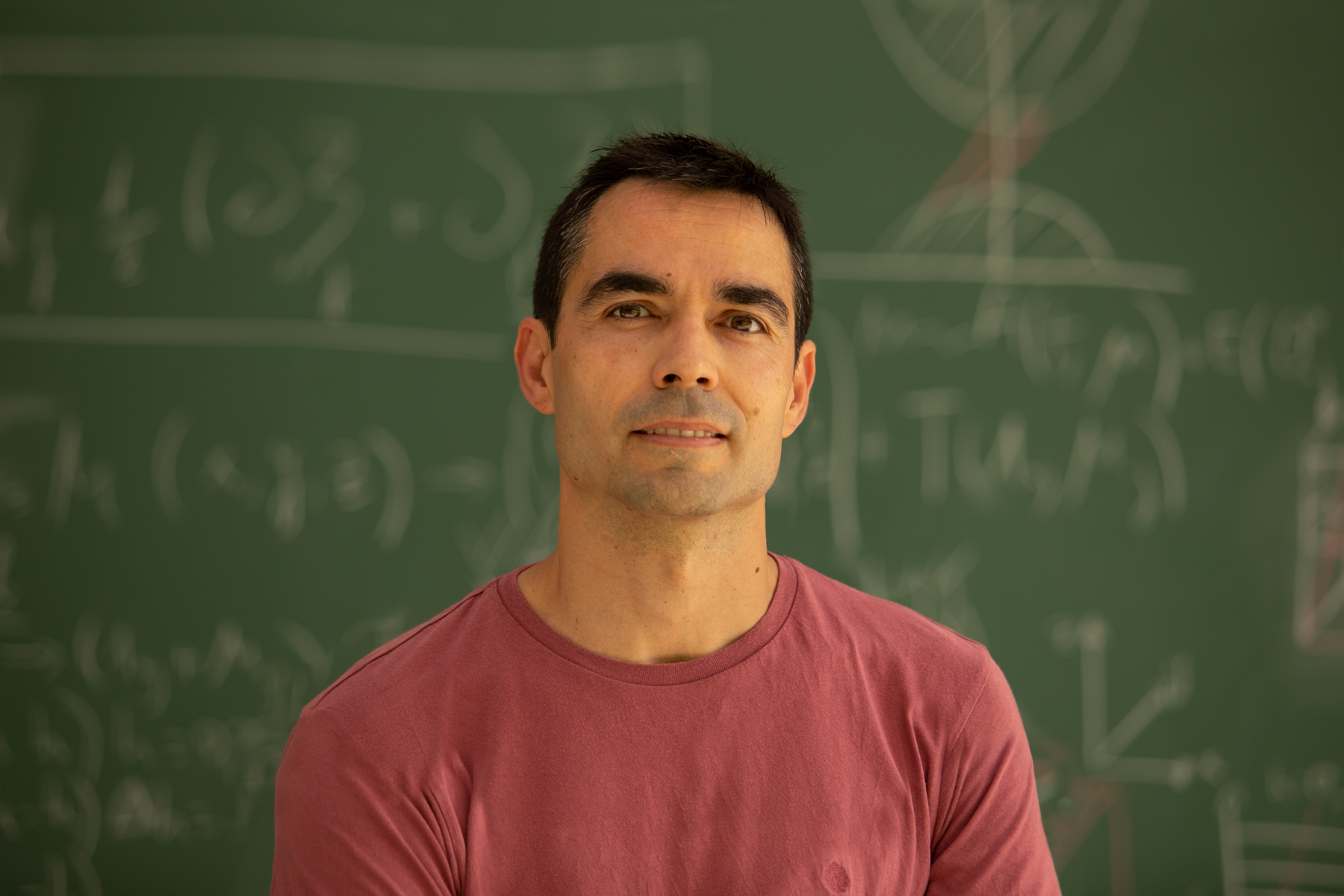
Dr. Francisco Tabarés is a Researcher at the National Fusion Laboratory, part of CIEMAT (Center for Energy, Environmental and Technological Research) in Madrid. His work focuses on plasma-wall interaction challenges in fusion technology. His research spans plasma physics, materials science, and nuclear engineering, addressing critical issues in fusion reactor development. He has published on topics including plasma-facing materials, wall erosion, and surface chemistry in fusion devices. While no scientific awards are explicitly mentioned in the available records, his contributions to plasma-wall interaction studies remain central to advancing fusion energy technology. No details about students, additional affiliations, or current projects are provided in the scraped data.
Jose Miguel Reynolds Barredo is an Associate Professor and Director of the Doctorate in Plasmas and Nuclear Fusion at Carlos III University of Madrid. His research focuses on plasma physics, magnetohydrodynamics (MHD), and energy systems resilience. He leads studies on stellarator reactor design, plasma confinement optimization, and the integration of renewable energy into power grids. His work spans advanced MHD equilibrium solvers (e.g., SIESTA, FLIPEC) and fusion device optimization for ITER and Wendelstein 7-X. He also investigates climate impacts on renewable energy efficiency and power grid stability under high renewable penetration. Notable contributions include HVDC grid segmentation strategies and non-axisymmetric plasma transport modeling. Key Areas: Fusion reactor design, MHD stability, power grid resilience, climate-energy interactions Tools: SIESTA, FLIPEC, GENE, OPA cascading blackout model Projects: Doctorate in Plasmas and Nuclear Fusion, W7-X bootstrap current studies, climate-energy system interdependencies Research emphasizes computational plasma physics and interdisciplinary energy solutions, blending theoretical, numerical, and applied engineering approaches.
Dr. Lluis Batet Miracle is a Professor at the Universitat Politècnica de Catalunya (UPC) with the Department of Physics . He leads the Advanced Nuclear Technologies Research Group (ANT) and has contributed extensively to nuclear fusion technology, thermal hydraulics, and liquid metal systems. His work spans reactor safety analysis, tritium processing, and magnetohydrodynamic modeling. Expertise : Nuclear Engineering, Plasma Physics, Computational Fluid Dynamics, Fusion Reactor Design, Tritium Management Notable Projects : CONSOLIDER TECNO-FUS (2009-2013), EURATOM collaborations, HCLL Breeding Blanket Systems for ITER Research Trends : Recent publications focus on helium solubility in liquid metals, bubble dynamics in fusion blankets, and MHD simulations under nuclear conditions. His work combines atomistic modeling, high-fidelity CFD, and experimental validation for tritium and hydrogen systems in fusion reactors. Collaborations : Regularly works with Luis Sedano, Eduardo Ríos, Jordi Martí, Francesc Reventos, and Elisabet Mas de les Valls Grants : Involved in Horizon Europe, EURATOM, and Spanish National Research programs
MARTIN SOLIS, JOSE RAMON is a Full Professor in the Department of Physics at Carlos III University of Madrid (UC3M), where he conducts cutting-edge research in plasma physics and nuclear fusion. His work is central to understanding runaway electrons and disruption phenomena in tokamaks, with critical implications for the ITER project and future fusion reactors. Research Interests: His research spans plasma instabilities, runaway electron dynamics, disruption mitigation, magnetic confinement fusion, and plasma-wall interactions. He applies theoretical, computational, and experimental approaches to model and diagnose high-energy electron generation and control in fusion plasmas. Recent Research Trends: His most recent publications (2019–2023) focus on cross-machine analysis of runaway electron generation, formation and termination of runaway beams, radial losses during disruptions, and diagnostic development such as the Runaway Electron Imaging Spectrometry (REIS) system. These works are published in top journals like Nuclear Fusion , Physics of Plasmas , and Physical Review Letters , and are highly relevant to ITER safety and operational protocols. Principal Investigator on multiple national and EU-funded projects related to ITER disruption modeling and plasma edge physics. Collaborator with the ITER Organization and member of the ITER Scientist Fellows Network. Active in international collaborations with JET, FTU, DIII-D, and ASDEX Upgrade. Scientific Recognition: ORCID: 0000-0003-0458-4405 High Mendeley readership and citations across policy and news sources. Contributor to Wikipedia and policy documents on fusion topics. Advising and Grants: Supervised multiple PhD theses on topics including runaway electrons in FTU, turbulence studies, and pellet injection physics. Principal Investigator on grants from AEI, Ministry of Economy, European Commission, and ITER Organization (2013–2026). Key roles in EUROFUSION projects focusing on runaway electrons and plasma-material interactions. Labs and Teams: Member of the Física de Plasmas research group at UC3M, collaborating with the UC3M4ITER initiative and national/international fusion laboratories. His work integrates modeling, diagnostics, and experimental validation across major tokamak facilities.
Ignacio Arganda Carreras is an Associate Professor at the Universidad del País Vasco/Euskal Herriko Unibertsitatea (UPV/EHU) and an Ikerbasque Research Associate, affiliated with the Donostia International Physics Center (DIPC). His research focuses on biomedical computer vision, with a strong emphasis on deep learning applications in microscopy and medical imaging. Key areas include bioimage analysis pipelines, domain adaptation for cross-modal image segmentation, and AI-driven solutions for healthcare diagnostics. He has contributed extensively to open-source tools like BiaPy, CartoCell, and DL4MicEverywhere, which advance accessibility to deep learning in bioimaging. His work bridges computational methods with biological and medical challenges, addressing issues like 3D object detection, super-resolution imaging, and automated classification in microscopy and clinical settings. Research highlights include developing the MitoEM and Nucmm datasets for mitochondria and neuronal nuclei segmentation, as well as innovative applications in wound healing modeling and aquaculture monitoring. His methodologies emphasize reproducibility, generalization, and mitigation of overfitting in deep learning models.
Raimon Pericas Casals is a researcher affiliated with the Universitat Politècnica de Catalunya (UPC), specifically within the Departament de Física at the Escola Tècnica Superior d'Enginyeria Industrial de Barcelona (ETSEIB). His work focuses on nuclear engineering and safety, particularly in reactor thermal hydraulics, best-estimate plus uncertainty methodologies, and severe accident analysis. He has contributed to projects like the BEMUSE initiative and Fusion Cat, collaborating with institutions across Europe. Education: PhD Thesis: 'Contribution to the validation of best estimate plus uncertainties coupled codes for the analysis of NK-TH nuclear transients' (Departament de Física, UPC, 2015) Research Highlights: Developed methodologies for nuclear power plant safety analysis using codes like RELAP5 and SCDAPSIM Validated models for Asco-II NPP and Fukushima-like scenarios Contributed to international benchmarks like BEMUSE Phase IV Grants/Projects: Lead researcher in 'Fusió a Catalunya (Fusion Cat)' (2019, RIS3CAT program) Collaborated in EU projects addressing nuclear safety and fusion energy Awards: No explicit awards listed, but recognized through high-impact publications and collaborative projects. Labs/Teams: Member of the ANT (Advanced Nuclear Technologies) research group and GREENER (Energies and Radiation Studies) at UPC.
Miguel Angel Monge Alcazar is a Full Professor in the Physics Department at Carlos III University of Madrid, where he conducts research at the Álvaro Alonso Barba Institute of Chemistry and Materials Technology. His work focuses on advanced materials for nuclear fusion applications, particularly in the areas of high entropy alloys, oxide dispersion strengthened materials, and tungsten-based composites. His research interests include: Development of materials for nuclear fusion reactors High entropy alloys for extreme environments Oxide dispersion strengthened (ODS) steels and copper alloys Positron annihilation spectroscopy for material characterization High heat flux materials for plasma-facing components Professor Monge Alcazar leads the TechnoFusion Consortium, a Spanish initiative focused on fusion materials development. His recent research has centered on tungsten-based multi-principal element alloys, copper-based high entropy alloys for plasma-facing components, and chemical compatibility studies of advanced materials with liquid metal coolants. His work bridges fundamental materials science with practical applications in next-generation fusion reactors. His significant scientific contributions include: Leadership of the TechnoFusion program funded by the Madrid Regional Government Multiple research grants from the Spanish Ministry of Economy, Commerce and Enterprise Collaboration with CIEMAT (Spanish Center for Energy, Environmental and Technological Research) on fusion materials projects Professor Monge Alcazar has supervised several doctoral theses, including research on high entropy copper alloys for fusion reactors (2023), Cu-Y dispersion strengthened alloys for high heat flux applications (2017), and fine-grained titanium alloys (2010). He leads the Nanostructured And Multifunctional Materials research group, which operates advanced facilities for materials production and processing, including mechanical alloying, hot isostatic pressing, and spark plasma sintering equipment.
Cristina Alén Cordero is an Associate Professor at the University of Alcalá, Department of Signal and Communication Theory. She is affiliated with the TM Tecnologías Mecánicas, Eléctricas y Térmicas research group. Her academic career includes a PhD from Universidad Politécnica de Madrid (2010) with a thesis on market inspection reliability modeling. Her research spans mechanical engineering, robotics, safety engineering, and nuclear materials science. Key areas include advanced mechanical design, ITER-related technologies (optical coatings, diagnostics), and safety assessment in machinery. She has also contributed to educational methodologies in engineering and assistive robotics for mobility. Her recent publications highlight work on stair-climbing wheelchair control systems, radiation-resistant optical materials for ITER, and vibration damping technologies for space applications. She has collaborated on international projects such as ITER diagnostics and safety standards for machinery compliance. Her work integrates experimental and theoretical approaches, addressing challenges in mechanical systems, fusion engineering, and human-centric robotics. Despite no listed awards, her contributions reflect impactful research in applied engineering domains.
Sergi Colominas Fuster serves as Associate Professor in the Department of Analytical and Applied Chemistry at the School of Engineering, University Ramon Llull (IQS). His research focuses on developing electrochemical sensors for hydrogen and tritium monitoring in nuclear fusion reactors, with particular expertise in solid electrolyte materials and advanced sensor fabrication techniques. His primary research interests encompass electrochemical sensors, hydrogen isotope detection, perovskite-based solid electrolytes, lithium-lead eutectic systems, and 3D printing applications for ceramic sensor components. This work directly addresses critical monitoring challenges in next-generation fusion energy systems, especially for tritium management in breeding blanket environments. Professor Colominas Fuster's publication trends (2024-2025) reveal a concentrated focus on optimizing perovskite-based hydrogen sensors through additive manufacturing techniques, with significant advancements in high-temperature sensor performance for fusion reactor conditions. His research consistently bridges materials science with practical fusion engineering requirements. He actively leads and participates in major research initiatives including the EUROFUSION Horizon Europe project (2021-2025), ECSFUS sensor development project (2023-2027), and the EUTECTIC industrial production project (2022-2025). These collaborations involve extensive international partnerships within the fusion research community and European funding frameworks. As a core member of the Electroquímica i Bioanàlisi (EQBA) research group at IQS, he contributes to both fundamental electrochemical studies and applied sensor development. The group maintains strong industry connections and specializes in translating laboratory innovations into solutions for fusion energy challenges.
Shimpei Futatani is a researcher at the Universitat Politècnica de Catalunya (UPC) within the Advanced Nuclear Technologies Research Group (ANT). He holds a doctoral degree and specializes in plasma physics, magnetohydrodynamics (MHD), and nuclear fusion research, with a focus on edge-localized modes (ELMs), turbulence suppression, and plasma confinement in tokamaks. His work integrates nonlinear MHD simulations, experimental validation, and code development (e.g., JOREK) to advance fusion energy technologies. Research interests include plasma edge dynamics, ELM control mechanisms, and ITER-relevant scenarios. He collaborates on projects like the JT-60SA tokamak and contributes to experiments on JET and ASDEX Upgrade. His studies address MHD stability, particle transport, and the role of energetic ions in fusion plasmas. Key projects include the development of hybrid kinetic-MHD models and pellet-triggered ELM simulations. He actively participates in the EUROfusion program, focusing on plasma control and turbulence mitigation strategies for future fusion reactors.
Maria Angustias Auger Martinez is an Associate Professor and Deputy Director of the Physics Department at Carlos III University of Madrid . Her research focuses on materials science , particularly in surface engineering , thin film deposition , and mechanical property enhancement of coatings for industrial and nuclear applications. Email : mariaangustias.auger@uc3m.es Contact : +34 916249478 Location : 4.0.C07 - Quevedo Towers (Leganés) Her work involves reactive magnetron sputtering for depositing TiN , ZrN , and AlN coatings, analyzing their microstructure , hardness , and corrosion resistance . She has contributed to understanding nanoparticle dispersion in ODS steels for fusion reactors and developed multilayer coatings with enhanced mechanical properties. Her publications from 2002–2017 reflect expertise in X-ray diffraction , AES/EDS characterization , and nanoindentation . Notable projects include industrial tool life extension (67% improvement via TiN coatings) and thermal stability studies of nitride films. She collaborates on structural material development for nuclear applications (e.g., W-V/Ti ODS materials ). Her research spans metallurgical characterization , tribology , and corrosion behavior of advanced materials. Despite no explicit scientific awards or student advising information in the provided texts, her technical contributions to coating technologies and nuclear-grade alloys demonstrate significant impact in applied materials science.
Vicente González Millán is a full Professor in the Department of Electronic Engineering at the School of Engineering, University of Valencia. His work bridges electronics technology and nuclear physics, with strong involvement in international collaborations such as CERN, AGATA, and NEDA. His research focuses on the development of advanced radiation-hard semiconductor sensors, particularly the MALTA series of monolithic active pixel sensors, for applications in high-energy and nuclear physics experiments. He is actively involved in detector design, signal processing, FPGA-based data acquisition systems, and real-time data analysis techniques. His work supports cutting-edge experiments in nuclear structure, particle detection, and medical physics instrumentation. The recent publications show a consistent focus on detector development, sensor characterization, and data acquisition systems. Key themes include radiation hardness, timing performance, charge calibration, and the use of machine learning for event reconstruction in neutron detection arrays. The work is highly experimental and closely tied to large-scale facilities like CERN and GANIL. He leads or is a core member of two research groups: i2N (Electronic Instrumentation in Medical and Nuclear Physics) and IRIMED (Research in Radiophysics and Nuclear Instrumentation in Medicine), highlighting the dual application of his work in both fundamental physics and medical technology. While no specific awards are listed, his sustained publication record and leadership in major detector projects indicate significant recognition in the field. He also contributes to the development of real-time trigger systems, digital front-end electronics, and FPGA-based solutions for gamma and neutron spectroscopy.
Eva María Arenas Pinilla is an Associate Professor at the School of Engineering (ICAI) of Comillas Pontifical University, affiliated with the Department of Thermal and Fluids Engineering. She holds a PhD in Industrial Engineering from Comillas (2004) and a degree from ICAI (1997). Previously, she worked at Patentes Talgo, S.A., and served in the Ministry of Industry, Tourism, and Trade as a member of the State Corps of Industrial Engineers. Since 2011, she has been dedicated full-time to academia, teaching Turbomachinery, Fluid Mechanics, and Thermodynamics. Education: PhD in Industrial Engineering, Comillas Pontifical University (2004) Industrial Engineering Degree, ICAI (1997) Her research focuses on supercritical CO2 turbomachinery , hydraulic systems , and energy poverty mitigation , with contributions to renewable energy integration and thermal fluid engineering. Notable projects include modeling energy consumption patterns and designing sustainable energy solutions in Spain. Her publications emphasize energy transition strategies, biohydrogen applications, and thermal systems optimization. Recent work addresses policy frameworks for energy poverty reduction and decarbonization of industrial sectors. Grants & Projects: Lead researcher in projects funded by ECODES and industry partners, including theoretical energy expenditure models and pump-turbine design. Recipient of multiple awards for supervising prize-winning engineering projects. She actively contributes to academic leadership, organizing events on nuclear energy, hydrogen production, and renewable technologies through the Rafael Mariño Chair in New Energy Technologies.
Luis Raul Sanchez Fernandez is a Full Professor at Universidad Carlos III de Madrid, serving as Director of the Master's Degree in Plasma Physics and Nuclear Fusion. His research focuses on plasma turbulence, magnetohydrodynamics (MHD), and advanced confinement regimes in fusion devices. Key areas include I-mode transport control, Alfven eigenmode dynamics, and numerical methods for plasma equilibrium. His work integrates computational tools like SIESTA and FLIPEC for solving MHD equilibria and stability problems. Recent studies explore non-diffusive transport, magnetic island effects, and cross-phase modification for enhanced plasma confinement. He has contributed to ITER-related pedestal transport analysis and tungsten impurity studies. Publications emphasize fusion energy applications, plasma edge physics, and turbulence modeling. His team addresses challenges in stellarators and tokamaks, with a focus on self-organized criticality and transport barrier formation. Ongoing projects include developing efficient numerical algorithms and advancing control mechanisms for burning plasmas.
Ignacio Bravo Muñoz is a Professor at the Department of Electronics, Universidad de Alcalá (Spain), affiliated with the GEINTRA research group focusing on Electronic Engineering applications in Intelligent Spaces and Transport. He holds a PhD from Universidad de Alcalá (2007) with a thesis on FPGA-based object detection using computational vision and PCA techniques. His research spans indoor positioning systems (using LED/PSD sensors), sustainable energy frameworks for smart communities, FPGA-based hardware design , and remote laboratory platforms . Key contributions include real-time metrology for ESA's PLATO mission, cooperative demand response algorithms, and innovative pedagogical approaches integrating sustainability into digital electronics education. Recent work emphasizes edge computing for video surveillance , machine learning in human action recognition , and non-cooperative target identification using radar signatures. His interdisciplinary projects bridge electronics engineering with energy systems, biomedical applications, and educational technology. He actively collaborates with industry and academic institutions on EU-funded projects, contributing to advancements in aerospace instrumentation (PLATO FPA qualification), smart grid technologies, and STEM education innovation.