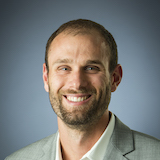
Megan C. King is Professor of Cell Biology and of Molecular, Cellular and Developmental Biology at Yale School of Medicine, where she also serves as Co-Leader of the DNA Damage and Genome Integrity Program and Associate Cancer Center Director for Basic Science at Yale Cancer Center. Her primary appointment is in the Department of Cell Biology with a secondary appointment as Associate Professor on Term in Therapeutic Radiology. She is a key member of multiple research programs including Cytoskeletal Dynamics, DNA Damage and Genome Integrity, and the Molecular Cell Biology, Genetics and Development Track. Dr. King's research focuses on fundamental aspects of nuclear structure and function. Her lab investigates how macromolecular complexes embedded in the nuclear envelope physically couple the cytoskeleton to the nucleus (LINC complexes), defining the mechanisms underlying nuclear force response. They also study genome organization through the lens of chromatin dynamics, using innovative live cell assays to examine how nuclear cell biology impacts genome integrity. Her work spans from basic molecular mechanisms to implications for diseases including hereditary breast and ovarian cancer syndrome. Analysis of Dr. King's recent publications (2021-2025) reveals a strong emphasis on nuclear mechanics, chromatin organization, and nuclear pore complex dynamics. Her work integrates approaches from biophysics, cell biology, computational modeling, and genetics, with publications appearing in top journals including Nature Cell Biology, Cell, and Genome Biology. A notable trend is the increasing interdisciplinary nature of her research, combining advanced microscopy techniques with computational approaches to understand nuclear architecture. Allen Distinguished Investigator (2020) from the Allen Institute for pioneering research in nuclear biology NIH New Innovator Award (2011) supporting innovative early-career research Searle Scholar (2011) recognizing exceptional promise in biomedical research Dr. King maintains an active research program with consistent high-impact publications and significant collaborations, particularly with C. Patrick Lusk (co-leader of the LusKing Lab), Ivan Surovtsev, and other Yale researchers. Her lab provides training opportunities for students and postdocs interested in nuclear cell biology, with research spanning from fundamental mechanisms to potential therapeutic applications. The LusKing Lab emphasizes both scientific discovery and creating an inclusive research environment that values diverse perspectives and experiences.