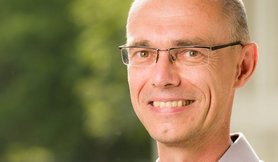
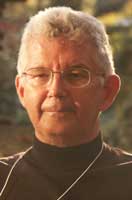
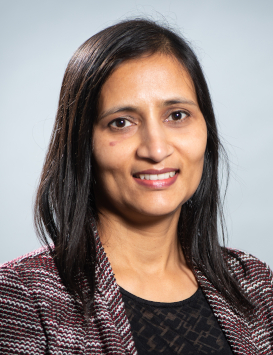
Dr. Robert Ringel is a researcher at HTW Dresden's Faculty of Computer Science and Mathematics, specializing in programming education and task-based learning methodologies. His work focuses on developing frameworks for effective programming instruction, leveraging tools like Jupyter Notebooks. He contributes to educational research, including a doctoral dissertation on programming learning frameworks and publications on digital teaching environments. His courses include Applied Programming and Applied Methods of Machine Learning. He actively maintains open educational resources like the LearningTasks4Programming repository, emphasizing Python learning tasks for beginners.
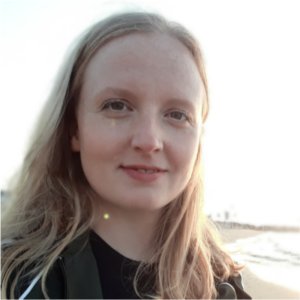
Naima Elosegui Borras is a Researcher at the Technical University of Berlin, affiliated with the Berlin Institute for the Foundations of Learning and Data (BIFOLD). Her interdisciplinary work bridges machine learning foundations and neuroscience, focusing on theoretical frameworks for neural computation. Her educational background includes: MSc in Neural Systems and Computation (2023) from ETH Zürich and UZH Zürich (joint program) BSc in Neuroscience (Honours) (2020) from The University of Edinburgh Her core research integrates Information Geometry and Statistical Physics to analyze learning dynamics in neural systems, with specific investigations into criticality in reservoir computing, hippocampal plasticity modeling, and neuromorphic vestibular system implementations. This NeuroAI-focused work employs probabilistic machine learning to uncover universal principles across biological and artificial networks. Through BIFOLD, she contributes to foundational AI research while maintaining active open-source development on GitHub. Her 16 public repositories demonstrate technical proficiency in Jupyter Notebooks, Component Pascal, and neural network simulations, with recent contributions reflecting ongoing doctoral research activities. No scientific awards or grants are documented in available sources. As a doctoral researcher, she has no formal advisees but collaborates through GitHub projects visible to the research community.
Fulvio Corno is a Professor in the Department of Control and Computer Engineering at the Polytechnic University of Turin, Italy. With a research career spanning over three decades since 1992, he has established himself as a prominent researcher in Internet of Things, Human-Computer Interaction, and Ambient Intelligence. His research focuses on making technology accessible to end-users, particularly through work on End-User Development in IoT systems, assistive technologies for people with disabilities, and security challenges in IoT environments. Corno's work bridges the gap between technical complexity and user needs, developing tools that simplify interaction with smart environments. His publication trends show a consistent focus on IoT systems, with recent work emphasizing security issues for novice programmers, computational notebooks for prototyping, and natural language interfaces for configuring smart environments. His research has evolved from foundational work on semantic approaches to IoT to practical tools addressing real-world implementation challenges. Corno has collaborated extensively with researchers including Luigi De Russis, Alberto Monge Roffarello, and Dario Bonino, producing significant contributions to the field of smart environments and end-user programming. He has contributed to education in Ambient Intelligence, developing courses that prepare engineers for the challenges of intelligent environments, and has supervised numerous students in this emerging field. His laboratory work centers on practical implementations of IoT systems, with projects spanning healthcare support systems, notification management across devices, and accessibility solutions for people with motor disabilities.
Miguel D. Mahecha is a Full Professor of Environmental Data Science and Remote Sensing at the University of Leipzig's Faculty of Physics and Earth System Sciences, where he serves as Institute Head of the Institute for Earth System Science and Remote Sensing. He is also a key figure at the Remote Sensing Centre for Earth System Research, a collaborative initiative between Leipzig University and the Helmholtz Centre for Environmental Research (UFZ). His academic positions include being a Principal Investigator in the Centre for Scalable Data Analytics and Artificial Intelligence and co-spokesperson for the National Research Data Infrastructure for Earth System Sciences (NFDI4Earth). Mahecha's research focuses on understanding ecosystem responses to climate extremes and human-environment relationships during these extreme events. His work spans macro-ecological dynamics, ecosystem functioning, and the development of Earth System Data Cube methodologies that combine empirical methods with theoretical understanding. His research employs data-driven approaches and high-dimensional Earth observations to unravel complex interactions within the Earth system. His recent publications reveal a strong emphasis on compound climate extremes, Earth system data cubes, and AI applications in environmental science. Mahecha's work frequently addresses the intersection of biodiversity, climate extremes, and ecosystem functioning, with particular attention to developing novel methodologies for analyzing spatiotemporal patterns in Earth system data. Fellow of the European Laboratory for Learning and Intelligent Systems Member of the German Centre for Integrative Biodiversity Research (iDiv) Co-spokesperson for NFDI4Earth Principal Investigator in the Centre for Scalable Data Analytics and Artificial Intelligence Mahecha leads multiple significant research projects including Digital Forest (real-time forest monitoring), NFDI4BioDiversity (biodiversity data infrastructure), and XAIDA (AI for detection and attribution of extreme events). His teaching portfolio covers fundamental and advanced topics in physical geography, Earth system components, and geospatial data analysis, reflecting his commitment to training the next generation of Earth system scientists.
Morakot Choetkiertikul is a Lecturer at the Faculty of ICT, Mahidol University, Thailand, where he co-founded the SERU research group. He earned his Ph.D. in computer science from the School of Computing and Information Technology, Faculty of Engineering and Information Sciences (EIS) at the University of Wollongong (UOW), Australia, where he worked in the Decision Support Lab (DSL). His research focuses on AI-Driven Software Engineering , particularly in defect prediction, code quality assessment, and security vulnerability analysis. His work bridges artificial intelligence with practical software development challenges, creating tools that address real-world problems in software engineering processes. The SERU research group he co-founded demonstrates a strong commitment to developing practical solutions for the software industry. Morakot's publication record from 2020-2025 shows a clear evolution from foundational defect prediction research to comprehensive tool development across multiple aspects of the software lifecycle. His work spans code proficiency analysis (PyGress, jscefr), vulnerability detection (V-Achilles, DEV-EYE), and AI applications in development processes (Autorepairability studies), with increasing emphasis on empirical validation in real-world settings. Examiners' Commendation for Outstanding Thesis Best thesis award from University of Wollongong Dr. Choetkiertikul actively contributes to the software engineering community through program committee roles at major conferences including ASE, APSEC, ICSE, and ICSME. His leadership roles have expanded from committee member to track chair and early research achievements co-chair, reflecting his growing recognition in the field. His research on autorepairability, bus factor monitoring, and code proficiency assessment demonstrates a commitment to improving both software quality and developer productivity through data-driven approaches.
Eric Bodden is a leading expert in Secure Software Engineering at Paderborn University and Director for Software Engineering and IT Security at Fraunhofer IEM . He also serves as a Professor at the Heinz Nixdorf Institute and is involved with the Software Innovation Campus Paderborn (SICP) . His work focuses on creating precise automated program analysis tools and securing AI applications through formal methods. Member of Acatech (German National Academy of Science and Engineering) Member of DFG review board for Software Engineering 2024: ERC Advanced Grant for Self-Optimizing Static Program Analysis 2019: ACM Distinguished Member His research spans static analysis , Android security , and Cyber-Physical Systems , with notable tools like FlowDroid and PhASAR . He collaborates with companies to develop attack-proof software and serves on editorial boards including ACM TOSEM and IEEE Security & Privacy .
Dr. Anne Temme is a researcher and coordinator of the integrated research training group (MGK) at Humboldt-Universität zu Berlin's Department of Romance Studies. She holds a PhD in linguistics and focuses on the syntactic and semantic aspects of psych-verbs. As a science manager, she oversees stipend programs and qualification initiatives within the MGK, emphasizing young researcher promotion and academic policy. Her role also involves coordinating training activities and serving as the primary contact for MGK-related inquiries. Her research interests center on grammatical structures, particularly psych-verbs, and institutional academic management. She has organized and presented at multiple CRC/MGK Methodschool events, including workshops on computational tools for linguists (e.g., Jupyter Notebooks, R Markdown, and INCEpTION). She is affiliated with the Institute for Romance Studies and contributes to interdisciplinary projects on language variation and register studies through collaborative research frameworks like CRC 1412. Contact details include her office at Mohrenstraße 40/41, 10117 Berlin, and her ORCID profile at https://orcid.org/0000-0001-8056-0179.
Prof. Frank Krüger is a Postdoctoral Researcher in the Collaborative Research Center ELAINE (CRC ELAINE) at the University of Rostock's Institute of Communications Engineering. He leads the Research Group on Signal Theory and Digital Signal Processing. His academic journey includes a Diploma in Computer Science (2006), a PhD (2016) from Rostock, and postdoctoral roles focusing on Research Data Management and Sensor-based Behavior Analysis. **Research Interests:** Research Data Management Data Mining & Analysis Artificial Intelligence Assistive Technologies Ubiquitous Computing Biomedical Informatics **Recent Work Trends:** His articles emphasize data provenance in biomedical workflows, software citation practices, and deep learning for behavior assessment. Notable contributions include frameworks for interdisciplinary data sharing and sensor-based dementia care monitoring. His work bridges signal processing, machine learning, and healthcare applications. **Grants & Collaborations:** Key projects include CRC ELAINE (focused on biomedical engineering) and the InsideDEM framework for dementia behavior analysis. He co-leads research data management initiatives and has contributed datasets to repositories like Zenodo. **Labs/Teams:** Active in the Institute of Communications Engineering and affiliated with interdisciplinary teams in the Faculty of Computer Science and Electrical Engineering.
Akash Lal is a Partner Researcher at Microsoft Research India, focusing on programming languages, concurrency, verification, and AI applications in software engineering. His work bridges formal methods with practical tools like Coyote and Corral for concurrent system reliability. PhD from University of Wisconsin-Madison (2009), advised by Thomas Reps Key research areas: LLM-driven memory safety (2024-2025) Concurrency testing frameworks (Coyote, P#) Smart contracts verification (Celestial) CodeQL-based resource leak detection His 15 most recent publications span 2021-2025, emphasizing LLM integration for verification, concurrency analysis, and systems research. Notable trends include industrial-strength concurrency testing (TACAS 2023), ML-driven documentation (ASE 2023), and Rust/ML pipeline safety (ICSE 2025). Major awards: CAV Award (2023) for context-bounded analysis EASST Best Paper (2023) for Coyote ACM Distinguished Paper (OOPSLA 2021) ACM Distinguished Artifact (OOPSLA 2020) Best Paper (FMCAD 2020) Advisees: 18 researchers including Ankush Das (CMU), Samvid Dharanikota (CMU), and Nausheen Mohammed (Leuven)
Jim Hollan is a Visiting Professor at the Department of Cognitive Science, University of California, San Diego (UCSD), and codirector of the Distributed Cognition and Human-Computer Interaction Lab. He is a pioneer in bridging digital and physical worlds through multimodal interfaces, paper-digital integration, and activity-enriched computing. His collaborative research spans human-computer interaction, distributed cognition, and medical informatics. Research Interests : Human-Computer Interaction, Distributed Cognition, Multimodal Interfaces, Paper-Digital Integration, Activity Tracking, Collaborative Interaction Scientific Awards : SIGCHI Lifetime Research Award Honorable Mention Award at CHI 2021 Publication Trends : Recent work focuses on visualization psychology, audiovisual data analysis, computational notebooks, and 4D interaction models, often addressing cognitive consequences of technology, multimodal healthcare interfaces, and activity history mining. Students & Collaborators : Amaya Becvar Weddle (PhD, 2008), Gaston Cangiano (Ph.D., 2011), Anne Marie Piper (Ph.D., 2011), Adam Rule (Ph.D., 2018), Amy Rae Fox (Ph.D., 2022), Arvind Satyanarayan (Honors UCSD CS, Ph.D. Stanford 2017), and others across Cognitive Science, Computer Science, and Sociology.
Prof. Nicolaj Stache is a Professor of Automotive Measurement and Sensor Technology and Research Professor of Artificial Intelligence at Heilbronn University, where he also serves as Vice Dean of the Faculty of Technology. He leads the Automotive Systems Engineering (ASE) program and co-directs the Center for Machine Learning (ZML), focusing on interdisciplinary AI applications. His roles include directing the industrial AI Center (iAI), funded by Carl Zeiss Stiftung, addressing SMEs' AI challenges in production processes. Research interests span autonomous systems, sensor fusion, and AI-driven solutions for automotive and industrial domains. Education: PhD in Industrial Image Processing from RWTH Aachen University (2010). Previously led Continental’s Artificial Intelligence Center. Current roles include membership in the Baden-Württemberg Center for Applied Research (BW-CAR). Research focuses on automotive perception, medical economics, and industrial AI applications. Key projects include an autonomous testbed using VW Passat for sensor-driven autonomy and the ZML’s mission to bridge academic-industry AI collaboration. Active in teaching advanced courses on autonomous systems, deep learning, and sensor technology. Labs/Teams: ZML (machine learning across faculties), iAI (industrial AI for SMEs), and the Autonomous Systems Lab. Engages students in projects involving robotics, autonomous vehicles, and AI ethics. Advises on topics like reinforcement learning in fluid control and holographic interfaces.
April Yi Wang is a tenure-track Assistant Professor at the Department of Computer Science, ETH Zürich, leading the PEACH Lab. She holds core faculty roles at the Institute for Intelligent Interactive Systems and the ETH AI Center. Her research focuses on human-centered approaches in programming, education technology, and data science collaboration. She earned her PhD from the University of Michigan (2023) and MSc from Simon Fraser University (2018), advised by Steve Oney and Christopher Brooks. Education: PhD in Information Science, University of Michigan (2018–2023) MSc in Computer Science, Simon Fraser University (2016–2018) B.Eng in Computer Science, Zhejiang University (2013–2016) Research Interests: Human-Computer Interaction (HCI) Programming Support Systems Collaborative Data Science AI-Enhanced Education Literate Programming Accessibility in Technology Recent Work Trends: Her 2025 publications emphasize AI-driven educational tools (e.g., Math2Visual for math pedagogy, datAR for data literacy), emotion-aware moderation systems, and studies on workplace multitasking. Her work bridges HCI with computational education, focusing on intuitive programming interfaces and inclusive design. Awards: Gary M. Olson Award (2023), ACM CHI Honorable Mentions (2023/2020/2018), Rising Stars in EECS (2022). Grants: Innovedum funding for Coducate project (2025). Lab Focus: Designing expressive systems for programming and data literacy through visual/tangible interfaces, AI co-decomposition tools, and interdisciplinary metaphors. Teaching: Courses on Human-Computer Interaction, Educational Technology, and Mixed Reality at ETH Zürich.
Tobias Daniels is a distinguished researcher at the Department of Medieval History within the Faculty of History and the Arts at Ludwig Maximilian University of Munich (LMU). Having completed his habilitation in 2018, he holds the position of Privatdozent (PD) and has been funded by the German Research Foundation (DFG) since 2016 through their prestigious Heisenberg Programme since 2021. His academic journey includes significant appointments as Acting Chair at multiple institutions including Ruprecht-Karls-University Heidelberg, University of Cologne, University of Zurich, and University of Trier, demonstrating his expertise in Medieval History with specialization in both Early/High Middle Ages and Late Middle Ages. Born in Recklinghausen (1981) Doctorate from Universities of Innsbruck and Pavia (2011) Research Associate at Bibliotheca Hertziana, Max Planck Institute (2012-2016) Visiting Fellowships at Yale University, Princeton University, Harvard University, and Oxford University Daniels' research interests span Medieval History with particular focus on Italian History, Political Communication in the Middle Ages, Diplomatic History, History of the Papacy, Book History, and Historiography. His scholarly work reveals a deep engagement with the cultural, political, and religious dimensions of medieval European society, particularly examining how knowledge was transmitted, contested, and institutionalized during this period. His research demonstrates exceptional methodological diversity, incorporating manuscript studies, archival research, diplomatic analysis, and interdisciplinary approaches that bridge history with literary studies, art history, and religious studies. Daniels' recent publications reveal a sustained scholarly engagement with the Pazzi Conspiracy as a transnational media event, the history of Santa Maria dell'Anima (the German national church in Rome), early printing culture, and the social dynamics of medieval and Renaissance communities. His research program under the Heisenberg grant on 'Changing Knowledge Orders of the High Middle Ages' represents a significant contribution to understanding medieval knowledge systems through the innovative analysis of notebooks and historiography. Humboldt University Prize for Outstanding Achievements in Medieval History (2022) DFG Heisenberg Fellowship (2021) Extensive publication record including monographs, edited volumes, and scholarly articles Regular reviewer for leading historical journals across Europe As an academic leader, Daniels has supervised numerous research projects, organized international conferences, and established collaborative networks across European institutions. His current work on medieval notebooks and knowledge transmission promises to reshape our understanding of intellectual life in the High Middle Ages. His future research agenda includes digital editions of medieval manuscripts and comparative studies of knowledge systems across medieval Europe.
Sriram Sankaranarayanan is a Professor in the Department of Computer Science at the University of Colorado Boulder and also serves as Associate Dean for Digital Education in the College of Engineering and Applied Science. Since joining the faculty in 2009, he has built an internationally recognized research program that blends programming languages, formal methods, and control theory to reason about cyber-physical systems. Education: Ph.D. in Computer Science, Stanford University, 2005 (advisers Zohar Manna & Henny Sipma) B.Tech., Indian Institute of Technology Kharagpur (President’s Gold Medal, 2000) Research Interests: Prof. Sankaranarayanan’s work centers on hybrid dynamical systems —models that capture discrete software interacting with continuous physical environments—and on developing formal-methods techniques for their verification, control, and synthesis. Specific themes include control-barrier & Lyapunov function synthesis, neural-network verification, stochastic-game models for human-autonomy interaction, and physics-informed machine learning. Application domains range from autonomous robotics and surgical-task planning to safety-critical medical devices such as the artificial pancreas. Recent Publication Trends (2024-2025): His latest papers advance safe control synthesis (successive control barrier functions, piecewise-affine Lyapunov functions) and trustworthy AI (Taylor-model enhanced physics-informed neural networks), while also exploring game-theoretic anticipation for robotic systems interacting with uncertain human operators. Honors & Awards: NSF CAREER Award (2009) Siebel Scholar (2005) President’s Gold Medal, IIT Kharagpur (2000) CU Boulder Dean’s Award for Outstanding Junior Faculty (2012) CU Boulder Outstanding Teaching Award (2014) CU Boulder Provost’s Faculty Achievement Award (2014) Coursera Outstanding Innovation Award (2022) Student Advising & Grants: He has mentored numerous PhD students; recent graduates include Dr. Emily Jensen, Dr. Monal Narasimhamurthy, and Dr. Kandai Watanabe (2024). His group regularly publishes at top venues such as HSCC, POPL, PLDI, CAV, and WAFR, supported by NSF, NIH, and industry grants. Group & Teaching: Prof. Sankaranarayanan leads activities within the Programming Languages & Verification group and teaches graduate and undergraduate courses on programming languages, algorithms, optimization, and formal methods. He is active in conference organization (e.g., PC Chair VMCAI 2025) and maintains open-source courseware and research notebooks on GitHub.
Dr. Mamta Amrute is an Associate Professor and Principal Investigator at the Institute of Molecular and Cell Physiology, Hannover Medical School (MHH), where she has led her research group since 2017. Her academic journey includes a PhD from MHH (2003-2006), postdoctoral research at MHH (2012-2016), and at the prestigious Medical Research Council-Laboratory of Molecular Biology in Cambridge, UK (2008-2011). Her research program focuses on single-molecule biophysics of molecular motor proteins , with particular emphasis on understanding how mutations in cardiac myosin lead to hypertrophic cardiomyopathy (HCM), a condition affecting approximately 1 in 200 individuals worldwide. The lab employs advanced techniques including Total Internal Reflection Fluorescence Microscopy, optical trapping, and zero-mode waveguides to investigate fundamental motor protein mechanisms. Analysis of recent publications reveals three major research trajectories: 1) Detailed characterization of cardiac and skeletal myosin isoforms at the single-molecule level, 2) Investigation of epigenetic regulation in muscle physiology and atrophy, and 3) Development of computational tools for biochemical research. This work has significant implications for understanding and potentially treating heart disease and muscle wasting conditions. Dr. Amrute's research is supported by multiple funding sources including the Deutsche Forschungsgemeinschaft (DFG), Fritz Thyssen Foundation, and MHH's early career research grant program (HilF). She supervises a diverse team of doctoral students and postdoctoral researchers, providing training in advanced biophysical techniques. The Amrute-Nayak Research Group maintains an extensive international collaboration network spanning institutions in the UK, USA, Japan, Italy, Sweden, and Australia, facilitating cross-disciplinary approaches to studying molecular motors and muscle diseases. Her work bridges fundamental biophysics with clinical applications in cardiology and muscle physiology.