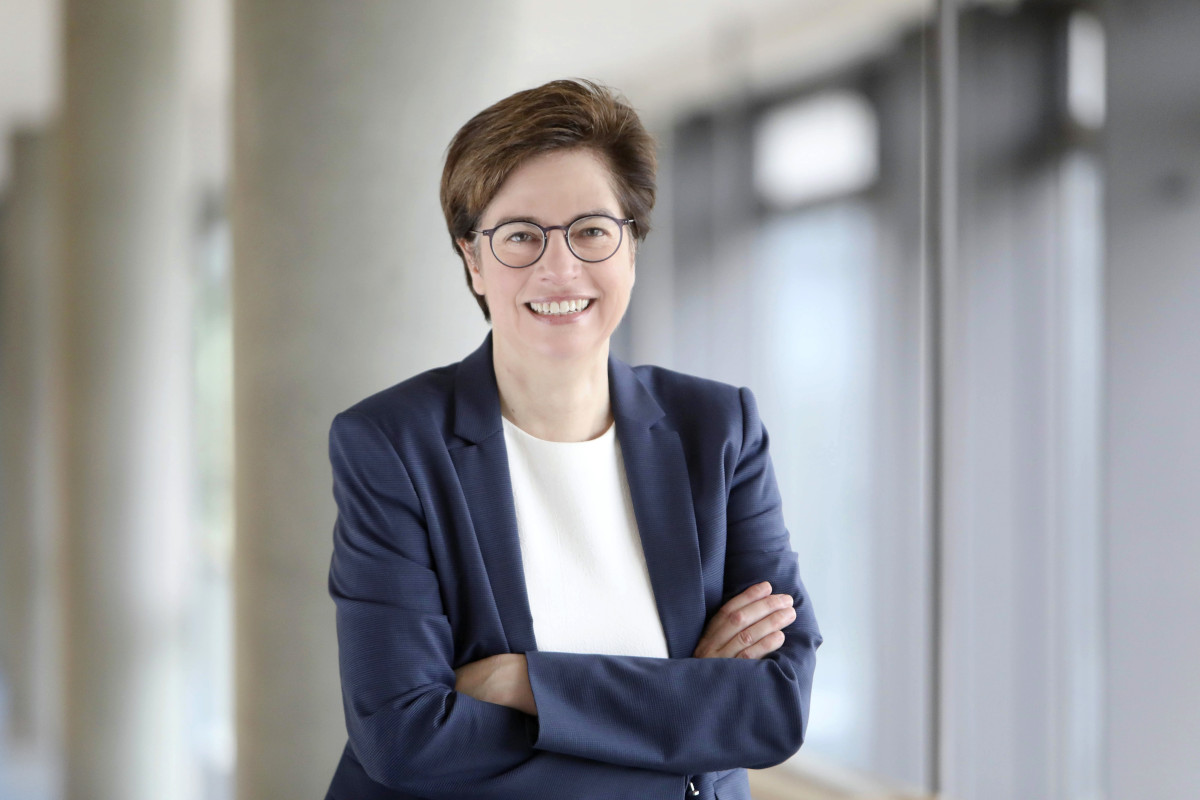
Prof. Dr. Sakibe Nalan BÜYÜKKANTARCIOĞLU is a Professor at Çankaya University, Faculty of Arts and Sciences, Department of Translation and Interpreting Studies (English). She previously served as Professor (2007–2019), Associate Professor (2000–2007), and Assistant Professor (1997–2000) at Hacettepe University, Department of English Linguistics. PhD in English Linguistics (Hacettepe University, 1991) MA in English Language Teaching (Middle East Technical University, 1985) BA in English Teaching (Istanbul University, 1978) Her research spans Linguistics, Cognitive Linguistics, Discourse Analysis, Psycholinguistics, Sociolinguistics, Translation Studies , with a focus on figurative language, interjections, political discourse, and endangered languages. She received the European Language Award (2011) and has supervised numerous PhD and MA theses, including work on Turkish idioms, gender representation, and language awareness. A prolific editor and conference participant, she has contributed to interdisciplinary projects and publications on Turkish sociolinguistics.
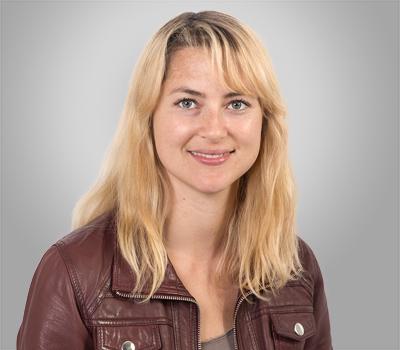
Adriana Tapus is a Full Professor at ENSTA Paris, affiliated with Institut Polytechnique de Paris, leading the Autonomous Systems and Robotics Laboratory (SAR) within the Computer Science and Systems Engineering Unit (U2IS). She holds an HDR (Habilitation) and a PhD from EPFL, Switzerland, with postdoctoral experience at USC. Her research focuses on socially assistive robotics, human-robot interaction (HRI), and personalized therapy for individuals with physical/cognitive impairments. She directs the IP Paris Doctoral School and coordinates national/international projects like the EU-funded ENRICHME and SWEET. Education: PhD in Mobile Robotics, EPFL (2005) Habilitation (HDR), ENSTA Paris (2011) M.S. Computer Science, University Joseph Fourier Engineer, Politehnica University of Bucharest Research Interests: Tapus pioneers socially assistive robotics, integrating machine learning, human modeling, and multimodal communication (verbal/non-verbal/para-verbal). Her work addresses adaptive therapies for vulnerable populations using robotics, physiological data interpretation, and context-aware interaction. Key themes include: Human-robot cooperation and trust Emotion recognition and expression Personalized rehabilitation systems AI ethics and human-centered design Publications: Over 150 articles, with recent work exploring humor in HRI, teleoperation trust models, and cross-cultural intelligent vehicles. Notable 2025 contributions include studies on robot laughter efficacy and multimodal facial expression frameworks. Awards: 2025: 4 IROS papers accepted 2016: 25 Women in Robotics recognition 2010: Romanian Academy Award Multiple conference best paper awards (RO-MAN, ICRA, etc.) Advising & Grants: Supervised over 20 PhD students and led projects like EU Horizon 2020 ENRICHME. Current students focus on teleoperation dynamics, robot humor, and haptic interfaces. Active in editorial roles (IJSR, THRI) and conference organization (HRI General Chair 2019). Labs/Teams: Founder of RoboticsByDesign lab and co-initiator of the Hi! Paris interdisciplinary AI center. The SAR lab develops systems for healthcare, education, and human-robot collaboration.
Adam Zylbersztejn is an Assistant Professor (Maître de conférences HDR) at Université Lumière Lyon 2 and affiliated with GATE Lyon Saint-Etienne, a research group in economics. He holds a PhD from the Paris School of Economics (2013) and previously conducted postdoctoral research at WU Wien (Vienna University of Economics and Business). His research focuses on behavioral economics using experimental methods to study individual and interactive decision processes, particularly in contexts involving trust, strategic uncertainty, and cultural variability. Key research areas include behavioral game theory, experimental finance, and the impact of nonverbal communication in economic interactions. His work has been published in top journals such as Journal of Economic Psychology , Games and Economic Behavior , and Experimental Economics . Recent studies examine topics like anonymity effects in charitable giving, trust in market exchanges under oath, and cognitive processes in asset markets using eye-tracking technology. His ongoing projects include research on risk-incentive tradeoffs and ambiguity framing in decision-making. While no formal academic awards are listed, his work has received press coverage in outlets like Le Monde and CORTEX Mag . He collaborates widely with institutions such as GATE-LSE and the Paris School of Economics, contributing to both theoretical and applied economic inquiry.
Nicole Koschate-Fischer is Professor and holds the GfK Chair for Marketing Intelligence at Friedrich-Alexander University Erlangen-Nuremberg (FAU), where she currently serves as Dean of Research at the Faculty of Business, Economics and Social Sciences. She is spokesperson for the interdisciplinary research focus "Customer Insights" and founding director of the Experimental Lab for Business Insights Nuremberg (ELAN). Previously, until September 30, 2024, she served as spokesperson for the Institute of Marketing and head of the Master's in Marketing program. Professor Koschate-Fischer earned her doctorate and habilitation from the University of Mannheim after completing a degree in business administration and psychology. Her academic journey includes membership in the interdisciplinary Collaborative Research Center "Concepts of Rationality, Decision Behavior, and Economic Modeling" at Mannheim, along with research stays as visiting scholar at University of Florida and University of Texas at Austin. She has held professorships at Technical University of Kaiserslautern and HEC Paris, and served as visiting professor at University of Vienna and Central University of Finance and Economics in Beijing. Research Interests Professor Koschate-Fischer's research spans customer insights , digital marketing , pricing and product management , and marketing analytics . Her work investigates consumer behavior in digital contexts, brand partnerships, life event impacts on purchasing decisions, and the psychological aspects of pricing. She employs experimental research methods and mediation analysis to understand causal relationships in consumer decision-making processes. Her publication record demonstrates consistent high-impact research in leading journals including Journal of Marketing, Journal of Marketing Research, and Journal of the Academy of Marketing Science. Recent work focuses on digital communication phenomena like emoji usage in electronic word-of-mouth, conversational agent interactions, and the application of behavioral pricing principles in charitable contexts. Professional Recognition Full member of the Bavarian Academy of Sciences and Humanities Member of the Board of Academic Trustees of the Center for Advanced International Marketing Knowledge (AiMark) Editorial board member of Journal of International Marketing Professor Koschate-Fischer regularly serves as reviewer for leading international academic journals and presents her research at both academic and practitioner-oriented conferences. Her work receives funding from organizations including the German Research Foundation (DFG), and she maintains active collaborations with renowned companies across various industries. She has directed the Experimental Lab for Business Insights Nuremberg (ELAN) since its founding, creating a hub for interdisciplinary customer insights research that bridges academic rigor with practical business applications.
Dr. Young Yun Kim is a Professor in the Department of Communication at the University of Oklahoma's Dodge Family College of Arts and Sciences, where she has developed nationally recognized Intercultural Communication graduate programs since joining in 1988. Her academic journey spans continents, beginning in Seoul, Korea, and continuing through significant scholarly institutions in the United States. B.A.: Seoul National University, Seoul, Korea M.A.: University of Hawaii (East-West Center Communication Institute) Ph.D.: Northwestern University, Evanston, Illinois Dr. Kim's research pioneers the theoretical foundations of cross-cultural adaptation and interethnic communication. Her Integrative Communication Theory of Cross-Cultural Adaptation positions communication as the central mechanism for achieving internal equilibrium in new cultural environments, while her Contextual Theory of Interethnic Communication examines associative and dissociative behaviors across ethnic boundaries. Her work uniquely bridges personal transformation with systemic cultural dynamics, emphasizing how intercultural experiences foster expanded human understanding. Analysis of her recent publications reveals consistent theoretical refinement with increasing focus on identity transformation, synchrony in communication, and the emergence of intercultural personhood beyond traditional cultural boundaries. Her scholarship demonstrates remarkable continuity in core themes while progressively incorporating globalization's impact on individual and collective identity formation. Scientific Awards Fellow of the International Communication Association (2002) Top Scholar Award for Lifetime Achievement, Intercultural Communication Division, International Communication Association (2006) Dr. Kim has directed numerous doctoral theses and collaborated on significant cross-cultural research projects examining adaptation patterns among diverse populations including Korean and Indonesian expatriates, Hispanic youth, international students, and refugees. Her research funding includes a two-year study of Indochinese refugees (1978-1980) sponsored by the U.S. Department of Health and Human Services, reflecting sustained external validation of her methodological rigor and theoretical significance. As a foundational leader in intercultural scholarship, Dr. Kim serves on 11 editorial boards including Journal of Communication and Human Communication Research, and has held executive positions in the International Communication Association and International Academy for Intercultural Research, culminating in her presidency (2013-2015) of the latter organization.
Ignacio Ojea Quintana serves as Assistant Professor at Ludwig Maximilian University of Munich's Faculty of Philosophy, Philosophy of Science and Religious Studies within the Chair of Philosophy of Science. He joined LMU in 2022 after a three-year research fellowship at the Australian National University's School of Philosophy. His academic foundation includes a PhD in Philosophy from Columbia University (2019), supervised by Philip Kitcher with focus on formal social epistemology, and prior Masters/BA degrees in Philosophical Logic from the University of Buenos Aires where he collaborated with the Buenos Aires Logic Group. Ojea Quintana's research employs formal methodologies to examine digital technologies' impact on knowledge organization across scientific and public spheres. His work intersects Social Epistemology , Philosophy of Data Science , and Autonomous Systems Ethics , with significant contributions to social media network analysis of controversial movements. Current projects analyze Twitter dynamics in racial justice movements, ethical constraints in AI decision systems, and consensus formation in scientific modeling. His 2021-2022 publications reveal an interdisciplinary trajectory bridging philosophy, computer science, and social sciences. Key trends include computational analysis of online discourse, formal modeling of group rationality under uncertainty, and ethical frameworks for AI systems. Works appear in high-impact venues including Nature Humanities and Social Sciences Communications and the AAAI/ACM Conference on AI, Ethics, and Society. Ojea Quintana maintains active collaborations with the "Humanising Machine Intelligence" initiative (formerly at ANU) and the Buenos Aires Logic Group. His research program demonstrates sustained engagement with technology's societal implications through formal modeling approaches and empirical digital trace analysis.
Heather Knight is an Assistant Professor in the Department of Electrical Engineering and Computer Science at Oregon State University, part of the College of Engineering. Her research focuses on social robotics and human-robot interaction, emphasizing non-verbal communication and the design of non-anthropomorphic robots. She directs the CHARISMA Research Lab, which applies principles from performing arts to enhance robot charisma through expressive motion and interaction design. Dr. Knight holds a Ph.D. in Robotics from Carnegie Mellon University (2016), and dual M.S. degrees in Robotics (Carnegie Mellon) and Electrical Engineering & Computer Science (MIT, 2008), alongside a B.S. in Electrical Engineering from MIT (2006). She also leads Marilyn Monrobot, a robot theater company producing comedic performances and an annual Robot Film Festival. Her work bridges technical innovation with societal impact, exploring how robots can better communicate intent through motion and interaction. Notable contributions include the 'Sanitizerbot' project for playful public health support and the development of Laban-based motion frameworks for expressive robotics. Awards include being named to Forbes' 30 Under 30 in Science (2011) and her TED talk on robot comedy. Key Research Themes: Multi-robot formations, expressive motion design, human-robot social dynamics, and ethical integration of AI in robotics. Recent Projects: VR storytelling with social robots, service robots in workplace environments, and motion-based affective communication. Her articles span topics from robot humor generation to industrial light communication systems, reflecting a commitment to both foundational research and applied solutions for human-robot coexistence.
Susan Hughes, Ph.D., is a Professor of Psychology and Director of the Evolutionary Studies Program at Albright College. She holds a B.S. in Psychobiology from Binghamton University and a Ph.D. in Biopsychology from the University at Albany, SUNY. Her work bridges evolutionary psychology, biopsychology, and the study of human mating strategies. She explores how voice characteristics convey social, biological, and behavioral information, including attractiveness, mate selection, and sexual behavior. Her research also examines facial/body measures in attraction, female preferences for resources, and sexual orientation from an evolutionary lens. Education: B.S. Psychobiology, Binghamton University, SUNY Ph.D. Biopsychology, University at Albany, SUNY Research Interests: Evolutionary Psychology: Human mating strategies, sex differences, and ancestral adaptations Voice Analysis: Vocal attractiveness, manipulation, and its role in social perception Mating/Sexual Behaviors: Post-coital behaviors, jealousy, and physical markers of fitness Labs/Teams: Directs the Evolutionary Studies Program, fostering interdisciplinary research on evolutionary principles. Collaborates with colleagues on studies of vocal perception and behavioral ecology. Grants/Awards: None explicitly listed. Teaching: Teaches courses including Evolutionary Psychology, Human Sexuality, and Psychobiology. Engages students in research labs and fieldwork.
Niels Henze is a Professor at the Chair of Media Informatics within the Faculty of Languages, Literature and Cultural Studies at the University of Regensburg, where he has been serving since May 2018. His research centers on human-computer interaction, with a strong focus on predictive models in interactive systems, mobile interaction, augmented and virtual reality, and attention-aware computing. His research interests include: Human-Computer Interaction (HCI) Predictive modeling for runtime adaptation Mobile and wearable interaction Augmented and Virtual Reality (AR/VR) Attention-aware and context-sensitive systems Sociocognitive aspects of interactive technologies The analysis of his recent publications reveals a consistent focus on leveraging user behavior and contextual cues to build intelligent, adaptive interfaces. His work integrates machine learning with interaction design, emphasizing real-time model updates, implicit feedback, and cognitive load awareness to improve usability and user experience across mobile and immersive platforms. Scientific awards: No awards mentioned in the provided text. Niels Henze leads research in adaptive interactive systems and advises students in the field of media informatics. He has previously held a junior professorship at the University of Stuttgart and completed his doctorate at the University of Oldenburg under Susanne Boll. He is actively involved in advancing the theoretical and practical foundations of predictive and attention-aware computing. Grants and funding sources are not specified in the text. He is associated with the Institute for Information and Media, Language and Culture (I:IMSK) at the University of Regensburg, contributing to a multidisciplinary environment that bridges informatics with cultural and linguistic studies.
Song Ma is a Professor of Finance and Entrepreneurship at Yale School of Management and a Faculty Research Fellow at the National Bureau of Economic Research (NBER). He is also an affiliated faculty member at Yale Law School Center for the Study of Corporate Law and Yale SOM Program on Entrepreneurship, having joined Yale SOM Faculty in 2016. His educational background includes: PhD in Finance from Duke University's Fuqua School of Business (2016) BA in Economics from Zhejiang University (2010) Professor Ma's research primarily focuses on innovation economics, entrepreneurship, financial economics, AI, and big data. His work extends to corporate strategy, industrial organization, antitrust, labor, and business law. He has made significant contributions to understanding how innovation interacts with financial markets, corporate strategy, and competition policy, particularly through his influential 'Killer Acquisitions' paper which has been cited in Congressional antitrust reports and lawsuits against major tech companies. His recent publications demonstrate an interdisciplinary approach combining finance, economics, and data science methodologies. Many papers examine the intersection of innovation and corporate finance, with increasing incorporation of AI and big data techniques as seen in his video analysis research. His work shows evolution from traditional finance topics toward more policy-relevant research with real-world impact on antitrust regulation and innovation policy. Professor Ma has received numerous prestigious awards: 2023 Best Paper Award, China International Conference in Finance 2022 Best Paper on Competition Economics, Association of Competition Economics 2022 Jerry S. Cohen Award for Antitrust Scholarship 2021 GARP Best Paper in Risk Management Award 40 Under 40 Best Business School Professors by Poets & Quants (2021) Robert F. Lanzillotti Prize for Antitrust Economics (2020) Jensen Prize for Best Paper on Corporate Finance (2019) In teaching, Professor Ma delivers popular courses including 'Entrepreneurial Finance,' 'Venture Capital and Private Equity,' and 'Finance and the Society.' He co-organizes WEFI (Workshop on Entrepreneurial Finance and Innovation), a bi-weekly virtual research forum. His research has been referenced by major regulatory bodies worldwide including the FTC, EU Competition Commission, and UK Competition and Markets Authority, and featured in leading media outlets like Wall Street Journal and New York Times. Professor Ma actively incorporates new data science technologies into his empirical economic research, focusing on unstructured data analysis and machine learning applications.
Hanbyul Joo is an Assistant Professor in the Department of Computer Science and Engineering at Seoul National University (SNU). Prior to joining SNU, he was a Research Scientist at Facebook AI Research (FAIR) in Menlo Park. He completed his Ph.D. in the Robotics Institute at Carnegie Mellon University, working with Yaser Sheikh, and received his M.S. in Electrical Engineering and B.S. in Computer Science from KAIST, Korea. Dr. Joo's educational journey began at KAIST, where he earned both his Bachelor's and Master's degrees. He then pursued his Ph.D. at Carnegie Mellon University's Robotics Institute, completing his dissertation titled "Sensing, Measuring, and Modeling Social Signals in Nonverbal Communication." His doctoral work focused on developing the Panoptic Studio, a unique sensing system with over 500 synchronized cameras for capturing social interactions. Dr. Joo's research primarily focuses on endowing machines and robots with the ability to perceive and understand human behaviors in 3D . His goal is to build "social Artificial Intelligence" that can interact with humans using social signals (body languages). He pursues this direction using data-driven methods where data is collected by measuring the wide spectrum of social signals transmitted during interpersonal social interaction. His research spans computer vision, machine learning, computer graphics, and robotics , with particular emphasis on 3D human pose estimation, human-object interaction, and social signal processing. His recent publications demonstrate a clear trend toward leveraging diffusion models for 3D reconstruction and generation tasks, with a focus on human-centric applications. His work bridges the gap between 2D image understanding and 3D scene reconstruction, often utilizing pre-trained models to overcome data limitations. The research consistently addresses fundamental challenges in understanding human behavior, interaction with objects, and social dynamics in 3D space. Dr. Joo is a recipient of several prestigious awards including the Samsung Scholarship and the CVPR Best Student Paper Award in 2018 . His paper "Total Capture: A 3D Deformation Model for Tracking Faces, Hands, and Bodies" received this honor at CVPR 2018. His research has been widely recognized in top computer vision and AI conferences, with multiple oral presentations at venues like CVPR, ICCV, and ECCV. Dr. Joo actively mentors a large group of students, with approximately 15 current students working toward MS/PhD degrees under his supervision. His lab, the SNU VCLab, focuses on cutting-edge research in computer vision and graphics. He has secured significant research funding through his work, though specific grant details aren't provided on his website. Dr. Joo frequently serves as an area chair for major conferences including CVPR, ICCV, and NeurIPS, demonstrating his standing in the academic community. Dr. Joo leads the SNU VCLab, which has developed several notable datasets and tools including SNU ParaHome, FrankMocap, and the CMU Panoptic Studio Dataset. His lab maintains strong industry connections, with students interning at leading companies like Meta. The lab's research focuses on building the infrastructure and algorithms needed for social AI, with an emphasis on practical applications that can be deployed in real-world settings.
Paul Pu Liang is an Assistant Professor at the Massachusetts Institute of Technology (MIT) Media Lab and Department of Electrical Engineering and Computer Science (EECS). He directs the Multisensory Intelligence research group, focusing on building AI systems that integrate diverse sensory inputs to enhance human-AI symbiosis. His work spans theoretical foundations, large-scale resources, and neural architectures for multisensory learning. Education: PhD in Machine Learning (Carnegie Mellon University), MS in Machine Learning (Carnegie Mellon), BS with University Honors in Computer Science and Neural Computation (Carnegie Mellon) Research Interests: Multimodal machine learning, human-AI interaction, clinical AI, generative models, and responsible deployment of AI systems Key Contributions: MultiBench, HEMM evaluation framework, CLIMB clinical data foundations, and multimodal transformer architectures Recent publications emphasize multimodal foundation models , clinical applications , and socially responsible AI . His work has been recognized with multiple best paper awards and fellowships from Siebel, Facebook, and other institutions. Scientific Awards Siebel Scholars Award Waibel Presidential Fellowship Facebook PhD Fellowship Center for ML and Health Fellowship Rising Stars in Data Science Four best paper awards Paul teaches courses on machine learning and multimodal AI at MIT and CMU. He mentors students across multiple programs including Media Arts & Sciences, EECS, and IDSS, with former advisees now at institutions like OpenAI, UC Berkeley, and Princeton.
Dr. Brigitte Steger is a Senior Lecturer in Modern Japanese Studies at the University of Cambridge, where she serves as a Fellow in Asian and Middle Eastern Studies at Downing College. She teaches modern Japanese society courses and directs graduate affairs while serving as Secretary of the Degree Committee. MA, MPhil, PhD in Japanese Studies (University of Vienna) Visiting researcher at multiple Japanese universities Co-founder of Cambridge Creative Circular Plastics Centre sub-project Her research focuses on cultural anthropology of Japanese daily life, particularly sleep practices (inemuri), gender dynamics in urban spaces, disaster response rituals, and cleanliness/waste practices. She conceptualizes sleep as socio-cultural performance and examines temporal practices in premodern Japan. Recent publications analyze Heian-era sleep patterns, 2011 tsunami shelter hygiene, and plastic consumption in consumer societies. She leads international research on historical timekeeping and contemporary waste practices. Her edited volumes explore Japanese gender diversity, including 'herbivore boys' and manga girl culture. Scientific awards: Bank Austria Prize (2002) Vorarlberg Science Award (2005) University of Cambridge weekly research contributor She supervises graduate research projects and serves on the European Association for Japanese Studies and Japan Anthropology Workshop councils. Her 2025-26 sabbatical focuses on completing Heian-period sleep research.
Oya Celiktutan is a Reader (Associate Professor) at King’s College London in the Department of Engineering, leading the Social AI & Robotics (SAIR) Lab within the Centre for Robotics Research. She holds a BSc in Electronics Engineering from Uludag University, and an MSc and PhD in Electrical and Electronics Engineering from Bogazici University, Turkey. Her doctoral work included a visiting research period at the National Institute of Applied Sciences in Lyon, France. She has held postdoctoral positions at Queen Mary University London, the University of Cambridge, and Imperial College London before joining King’s College in 2018. Her research focuses on multimodal machine learning for autonomous agents, addressing challenges in human-robot interaction, social awareness, and navigation. Key areas include human behavior analysis, generative models, and continual learning. Her work is supported by EPSRC, The Royal Society, EU Horizon, and industry partners like Toyota and NVIDIA. Notable awards include the EPSRC New Investigator Award (2021) and a Best Paper Award at IEEE Ro-Man 2022. Dr. Celiktutan’s lab explores socially assistive robotics, extended reality systems, and ethical AI. Recent projects include the LISI initiative to enable robots to learn social interactions from human-human data and the CL-HRI project advancing continual learning in human-centric robotics. Her research has led to datasets like MHHRI and RICA, and collaborations with companies like SoftBank Robotics. She teaches modules on Sensing and Perception, and Sensors and Actuators, emphasizing practical applications in robotics and mechatronics. Current research interests span socially-aware navigation, algorithmic fairness, and multimodal data fusion for robotics in healthcare and urban environments.
Dr. Tan Viet Tuyen Nguyen is a New Frontiers Fellow (Lecturer) in AI at the University of Southampton, specializing in Human-Centered Artificial Intelligence and Social Human-Robot Interaction. His research focuses on multimodal learning for robots to adapt their behavior to human social needs, with applications in healthcare, education, and service environments. Prior to this role, he was a Research Associate at King’s College London and a Research Assistant on the EU-funded CARESSES project, developing culturally-aware assistive robots for elderly support. Education: PhD in Information Science (Robotics) from Japan Advanced Institute of Science and Technology. He has organized conferences such as the IEEE RO-MAN 2022 special session on nonverbal communication and served as a reviewer for top-tier robotics and AI conferences. Research Interests include: Human-Robot Collaboration, Multimodal Perception, Generative AI for Social Interaction, and Context-Aware Robot Behavior Generation. His work has been recognized with awards including the Best Paper Award at ROMAN 2022 and the Prospective Research Award at ICServ 2023. Teaching Responsibilities include courses on Biologically Inspired Robotics, High-Level Programming, and MSc/Undergraduate project supervision. He currently oversees two PhD students and collaborates on projects like 'Exploring the impact of AI-driven writing of engagement in climate change' and 'Bridging Generations and Cultures through Generative AI.' Labs/Teams: Member of the Agents, Interaction and Complexity Centre and the Centre for Robotics Research at Southampton.