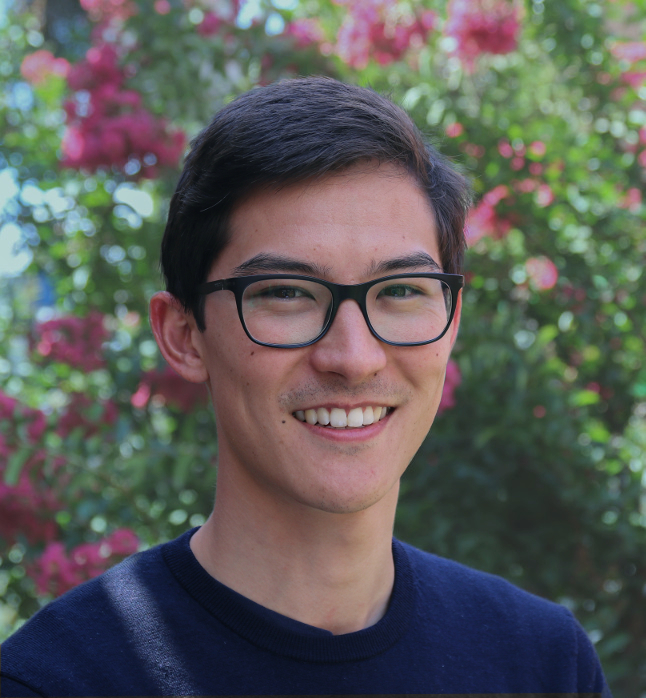
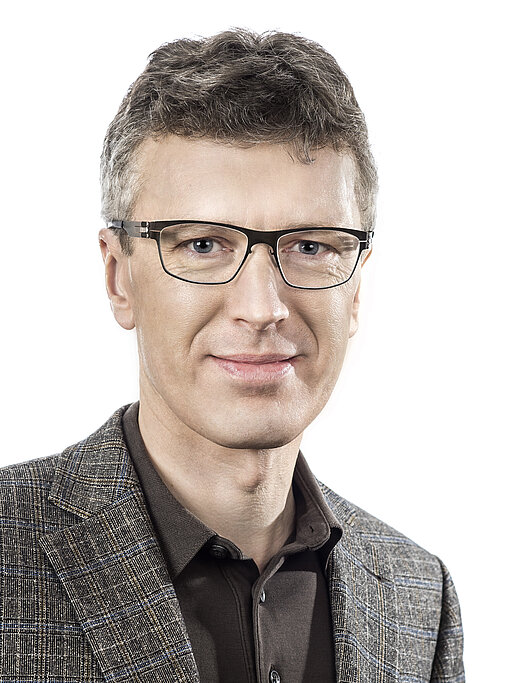
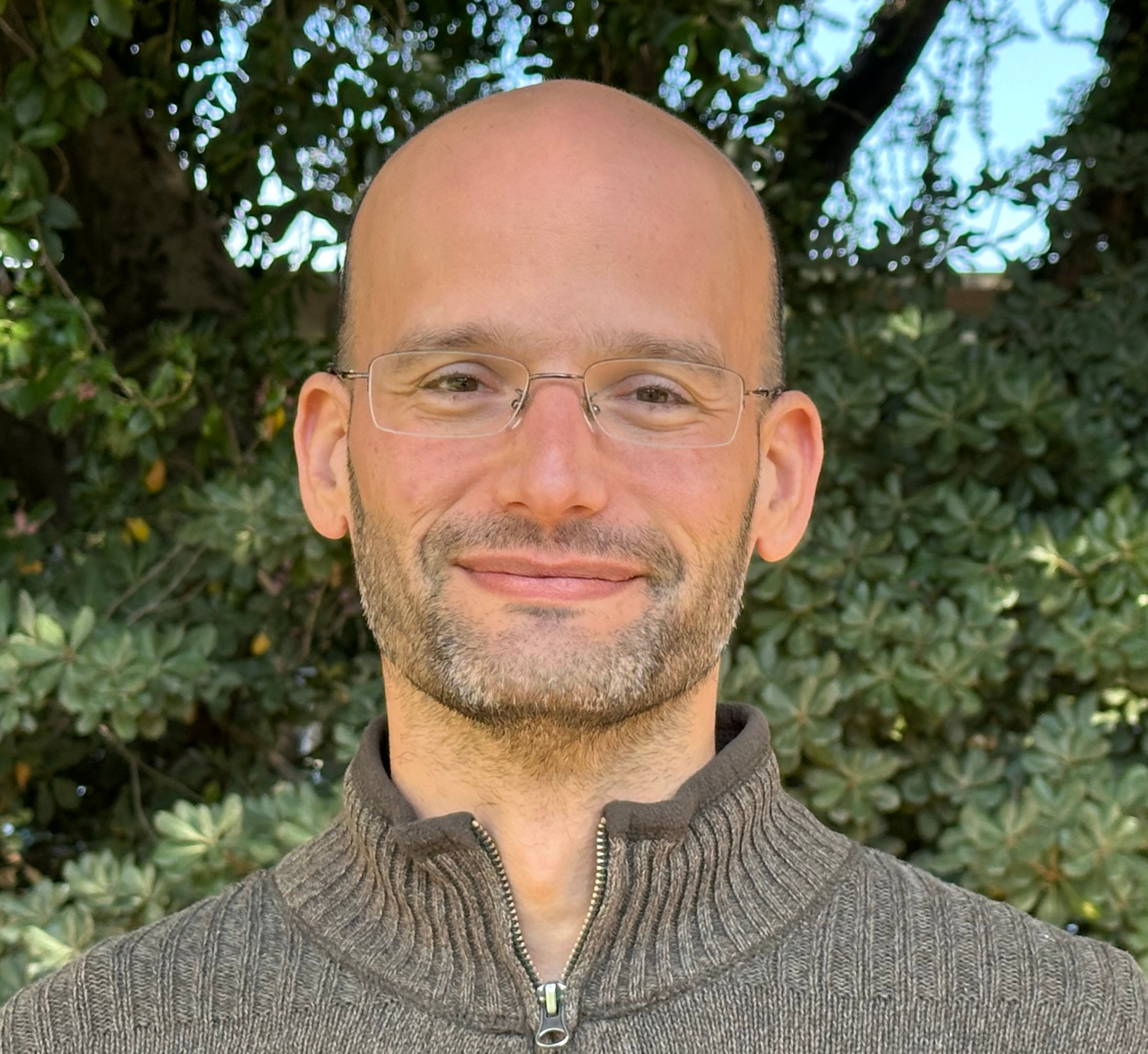
Matthew K. Tam is an Associate Professor at the School of Mathematics and Statistics, The University of Melbourne, specializing in Operations Research. He is also an investigator at the Melbourne Centre for Data Science and an associate investigator in the ARC Training Centre OPTIMA. PhD in Mathematics (2016) from University of Newcastle under Jonathan Borwein Postdoctoral research at University of Göttingen with RTG-2088 and Alexander von Humboldt Foundation Junior Professor at University of Göttingen (2017-2020) His research focuses on continuous optimization, monotone operator theory, and variational analysis, with applications in wavelet construction and inverse problems. Key trends include distributed algorithms, resolvent splitting, and convergence analysis for feasibility problems. Discovery Early Career Researcher Award (DECRA) Alexander von Humboldt Fellowship He collaborates with institutions like ANZIAM, Springer, and IEEE, with publications spanning mathematical optimization, harmonic analysis, and computational mathematics. His work emphasizes algorithmic design for complex data systems and real-world applications in imaging and industrial modeling.
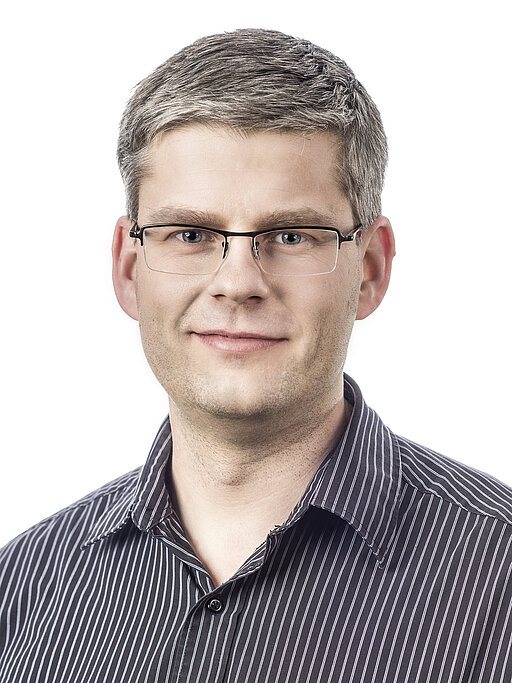
Dr. Constantin Christof is a Lecturer (Akademischer Rat auf Zeit) at the Department of Mathematics , Technische Universität München , with prior roles as a W2 Stand-in Professor at Universität Augsburg and Research Associate at TUM and TU Dortmund. His research focuses on Optimal Control of PDEs , Variational Inequalities , and Nonsmooth Optimization , with applications in Non-Newtonian Fluids and Neural Networks . May 2015 - July 2018: Dr. rer. nat. in Mathematics, TU Dortmund Oct. 2013 - July 2014: MAST (Part III of Mathematical Tripos), University of Cambridge Oct. 2009 - Sept. 2012: B.Sc. in Technomathematics and Mathematics, TU Dortmund Christof's work bridges Finite Element Error Analysis , Sensitivity Analysis , and Physics-Guided Machine Learning , particularly in problems involving Contact Mechanics and Parabolic PDE Constraints . His recent publications address challenges in Semilinear Elliptic PDEs , Obstacle Problems , and Nonsmooth Superposition Operators , with a focus on theoretical and numerical advancements. Scientific awards include the Dissertation Award and Best Graduate Award from TU Dortmund, and the Award for Academic Excellence by the Minister President of North Rhine-Westphalia. He has supervised 11 theses at the Master's and Bachelor's levels, covering topics from Neural Network Surrogate Models to Bingham Fluid Simulations .
Bennet Gebken is a researcher at the Department of Mathematics , Technical University of Munich , affiliated with the Chair of Mathematical Optimization led by Prof. Ulbrich. His work focuses on nonsmooth and multiobjective optimization, particularly in PDE-constrained problems and numerical continuation methods. Research Interests: Bennet specializes in nonsmooth optimization, multiobjective optimization, and regularization techniques. His recent work explores convergence analysis in nonsmooth settings, second-order gradient sampling, and inverse optimization methods for data-driven decision criteria. Publications: His research spans topics like PDE-constrained multiobjective optimization, L1 penalty terms, and the hierarchical structure of Pareto critical sets. Key trends include reduced-order modeling, computational efficiency, and the interplay between optimization and machine learning. Contact: bennet.gebken@tum.de . Based at Boltzmannstr. 3, Garching b. München, Germany.
Guilherme Mazanti is a Researcher at the Signals and Systems Laboratory, focusing on advanced topics in control theory and dynamical systems. His work primarily centers around delay differential equations, stability analysis, and mean field games, with numerous publications in these areas. His research interests span across several key areas in applied mathematics and control theory: Delay differential equations and their stability properties Control design for systems with time delays Mean field games and their applications Spectral analysis of delay systems Pole placement techniques for delayed systems Development of software tools for stability analysis Analysis of his recent publications reveals a strong focus on the theoretical foundations of delay systems and their applications. His work often combines deep mathematical analysis with practical control design considerations. Notably, he has made significant contributions to understanding the multiplicity-induced-dominancy property in delay systems and developing computational tools like YALTAPy for stability analysis. His research on mean field games explores both theoretical aspects and practical applications, particularly in nonsmooth settings and with state constraints. Guilherme Mazanti has collaborated extensively with researchers including Islam Boussaada, Silviu-Iulian Niculescu, and Yacine Chitour, indicating strong connections within the control theory research community.
Karl Kunisch is University Professor at the Department of Mathematics and Scientific Computing, University of Graz , and simultaneously Scientific Director of the Radon Institute (RICAM) of the Austrian Academy of Sciences in Linz. A SIAM Fellow and recipient of the 2021 W.T. and Idalia Reid Prize, he leads the ERC Advanced Grant OCLOC and heads the research group “Optimization and Optimal Control”. Education: Dipl.-Ing. (1975), Dr. techn. (1978) and Habilitation (1980), Graz University of Technology Research Interests: His work centres on optimization and optimal control of partial differential equations , nonsmooth optimisation in function spaces , inverse problems and mathematical imaging , together with advanced numerical analysis . Current emphases are life-science applications , closed-loop control and machine-learning based feedback design. Publications Profile: With over 400 papers and two monographs, his recent output is dominated by high-impact studies on infinite-horizon optimal control , feedback stabilisation of semilinear parabolic and Navier–Stokes systems, risk-averse and data-driven control , and sparse control strategies . A clear trend is the fusion of rigorous PDE analysis with cutting-edge machine-learning techniques. Scientific Awards & Distinctions: W.T. and Idalia Reid Prize (2021) SIAM Fellow (2017) ERC Advanced Grant Horizon 2020 (2015) Alwin Walther Medaille (2008) ICM Invited Lecture, Hyderabad (2010) SIAM Outstanding Paper Prize (2006) Christian Doppler Laboratory Fellowship (1992) Fellowship of the Japanese Society for the Promotion of Science (1990) Max Kade Scholarship (1982/83) Fulbright Travel Grants (1979/80, 1985) Theodor-Körner-Fonds Research Award (1979) Pro Scienta Scholarship (1974–1977) Grants & Leadership: Principal Investigator, ERC Advanced Grant “ OCLOC – From Open to Closed Loop Control ” Scientific Director, Radon Institute (RICAM), Austrian Academy of Sciences Head of Research Group “Optimization and Optimal Control”, RICAM Co-Speaker, International Research Training Group IGDK Former member/consultant: MATHEON Scientific Advisory Board, Weierstrass Institute Scientific Advisory Board, Christian Doppler Forschungsgesellschaft Senate, DFG and INRIA evaluation boards Laboratory & Team: Prof. Kunisch currently leads the “Optimization and Optimal Control” group at RICAM, comprising post-docs, doctoral researchers and international visitors, focusing on interdisciplinary projects at the interface of PDE control, numerical optimisation and life sciences.
Professor Daniel Wachsmuth holds the Chair of Mathematics VII (Optimal Control) at the University of Würzburg, where he has been a professor since 2012. He is affiliated with the Faculty of Mathematics and Computer Science and maintains his office in Building 30 (Mathematics West), Room 02.011. Prior to his current position, he completed his academic training with positions as a postdoc at RICAM in Linz, Austria (2008-2012) and as a research assistant at TU Berlin (2002-2008). Wachsmuth's research focuses on optimal control theory , particularly concerning partial differential equations, nonsmooth optimization problems, and regularization of problems with bang-bang control. His work bridges theoretical mathematical analysis with practical numerical methods for solving complex control problems. He has made significant contributions to the understanding of sparse optimization, topological derivatives, and non-convex optimization problems in function spaces. His recent publications demonstrate a strong trend toward addressing L 0 constraints in optimal control, developing advanced numerical methods for non-smooth problems, and exploring connections between optimal control theory and deep neural networks. His work spans both theoretical developments (such as second-order conditions and stability analysis) and practical algorithmic implementations for solving challenging optimization problems. Among his notable recognitions is the Dimitrie-Pompeiu Preis awarded in 2016. His research has been published in top-tier journals including SIAM Journal on Control and Optimization, Computational Optimization and Applications, and Inverse Problems. Current Position: Professor of Mathematics at University of Würzburg (since 2012) Previous Positions: Postdoc at RICAM, Linz (2008-2012); Research Assistant at TU Berlin (2002-2008) Contact: daniel.wachsmuth@uni-wuerzburg.de; +49 931 31-89071
Mostafa Nasri serves as an Instructor in the Department of Mathematics and Statistics at the University of Winnipeg within the Mathematics and Statistics Faculty. Holding a Ph.D. from IMPA, he completed postdoctoral fellowships at Laval University, University of Montreal, and McGill University before joining his current institution. His academic credentials include: Ph.D. in Mathematics, IMPA- Instituto Nacional de Matemática Pura e Aplicada (2008) M.Sc. in Mathematics, Amirkabir University of Technology (2004) B.Sc. in Mathematics, Sharif University of Technology (2002) Dr. Nasri's research integrates Mathematical Analysis and Operations Research with specialized expertise in Functional Analysis, Optimization, and Applied Mathematics. His theoretical work examines Schauder bases, composition operators, and Dirichlet spaces, while his Optimization research develops augmented Lagrangian methods for equilibrium problems and variational inequalities. Applied contributions include contact dynamics modeling for multibody systems and HIV infection dynamics. Analysis of his 2023-2025 publications reveals intensified focus on Functional Analysis (particularly Dirichlet spaces and operator theory) alongside persistent development of optimization algorithms, with applied mechanics and mathematical biology research continuing at reduced frequency. No scientific awards are documented in available materials. Current information indicates no graduate student advising or active research grants at the University of Winnipeg. Prior industry collaboration with CM Labs Simulations Inc. and Canadian university departments demonstrates applied research experience, though no current laboratories or dedicated research teams are specified.
Weierstrass Institute for Applied Analysis and StochasticsGermany
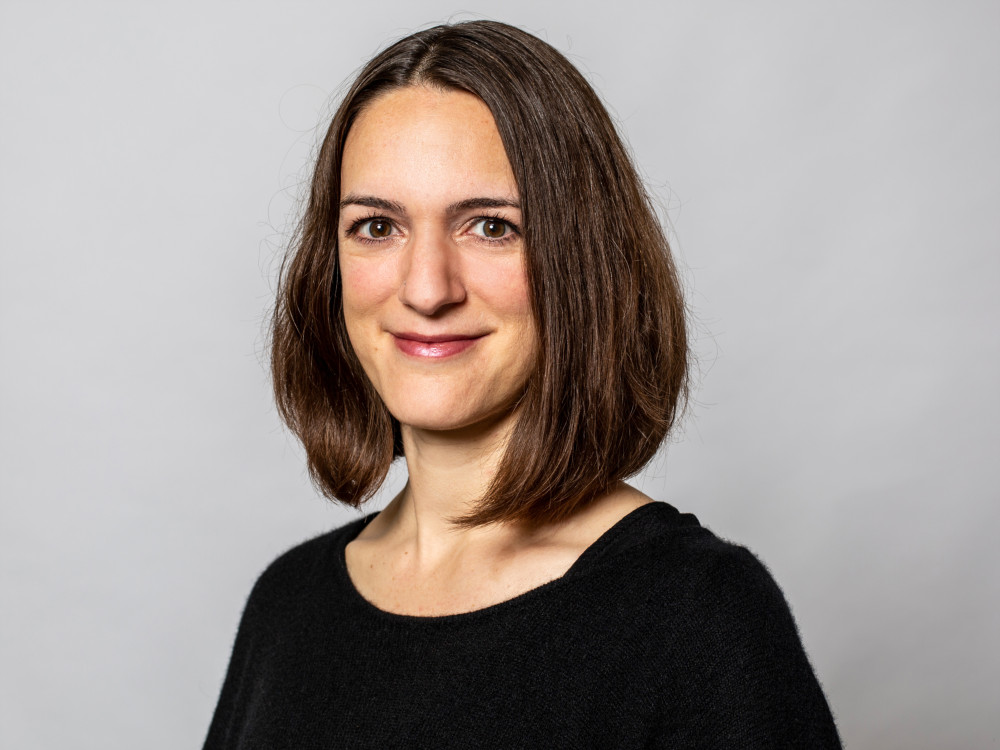
Caroline Geiersbach is an Assistant Professor of Mathematics (Optimization under Uncertainty) at the University of Hamburg. She specializes in stochastic optimization and numerical algorithms for high-dimensional and infinite-dimensional spaces. Her research addresses challenges in energy systems, shape optimization constrained by PDEs, and stochastic Nash equilibrium problems. She recently relocated from the Weierstrass Institute to the University of Hamburg (effective October 2024) and will move to the University of Klagenfurt in fall 2025. She has published in premier journals like Journal of Optimization Theory and Applications and Mathematics of Operations Research . Research Interests: Stochastic optimization methodologies Algorithms for nonsmooth and probabilistic constraints Applications in energy markets and shape optimization Convergence theory of stochastic gradient methods Publications reflect a focus on stochastic programming, PDE-constrained optimization, and energy market modeling, with recent works addressing Cournot-Nash models and Riemannian shape manifolds. Current openings: 1 postdoc and 1 predoc position in her research group, with applications due June 25, 2025 for a start date of October 1, 2025.
Jarvis Haupt is an Associate Professor and Associate Department Head in the Department of Electrical and Computer Engineering at the University of Minnesota - Twin Cities. His work bridges theoretical foundations with practical applications in signal processing, machine learning, and data science. He leads the Haupt Research Group, which focuses on developing novel methodologies for efficient data acquisition and analysis. Education: B.S. in Electrical Engineering from the University of Wisconsin-Madison (2002) M.S. in Electrical Engineering from the University of Wisconsin-Madison (2003) Ph.D. in Electrical Engineering from the University of Wisconsin-Madison (2009) Postdoctoral Research Associate at Rice University (2009-2010) Professor Haupt's research centers on statistical signal processing and learning theory, with particular expertise in compressed sensing and adaptive sampling techniques. His work develops theoretical foundations for high-dimensional statistical inference while addressing practical challenges in communications, remote sensing, data science, and medical imaging applications. He has made significant contributions to understanding how to efficiently extract information from large datasets through carefully designed measurement processes. His recent publications demonstrate a shift toward neural network theory and applications, particularly examining convergence properties of gradient flow in homogeneous neural networks. Alongside this theoretical work, he continues to apply signal processing techniques to medical imaging challenges, particularly in MRI reconstruction. His interdisciplinary approach bridges theoretical machine learning with practical applications in imaging systems. Scientific Awards: DARPA Young Faculty Award (2014) and Director's Fellowship extension (2016) UMN ECE Russell J. Penrose Excellence in Teaching Award (2015) Multiple Best Paper Awards including at GlobalSIP (2015) and IWSHM (2015) Wisconsin Academic Excellence Scholarship and other undergraduate honors Three U.S. Patents related to adaptive data acquisition and channel estimation Professor Haupt has supervised numerous graduate students and collaborated extensively across disciplines, particularly with researchers in civil engineering, medical imaging, and astrophysics. His research has been supported by multiple grants from NSF, NIH, DARPA, and the U.S. Army Research Laboratory, totaling millions of dollars. Current projects include work on multi-messenger astrophysics, plenoptic imaging, and brain imaging with minimal mobility restriction. He leads the Haupt Research Group, which brings together students and collaborators from electrical engineering, computer science, and various application domains. The group maintains strong connections with industry partners and national laboratories, facilitating the translation of theoretical advances into practical systems.
Associate Professor Vera Roshchina is a mathematician at the University of New South Wales (UNSW) Sydney , affiliated with the College of Science and School of Mathematics & Statistics . Her research focuses on convex geometry , mathematical optimization , and nonsmooth analysis , with significant contributions to projection methods, hyperbolicity cones, and Chebyshev approximation. Her recent work explores constructing spectrahedra with prescribed facial dimensions (2025) optimal camouflaging in billiards (2025) convergence of projection algorithms (2024) amenability of hyperbolicity cones (2024) topological properties of convex sets (2023) She is supported by multiple ARC Discovery grants and received the Christopher Heyde Medal (2021) . Her teaching includes courses in Mathematical Optimization and Calculus . She organized and participated in international research programs like MoCaO lectures (2024) and the WODCA2025 workshop , collaborating with researchers globally. Her publications span journals in optimization, nonlinear analysis, and dynamical systems.
Christian Kanzow is a Full Professor at the University of Würzburg , holding the Chair of Mathematics VII (Numerical Mathematics and Optimization) . His research focuses on optimization problems, complementarity, variational inequalities, generalized Nash equilibrium problems, mathematical programs with equilibrium constraints, sparse optimization, and cardinality constraints, with algorithmic developments for large-scale nonconvex optimization. Academic Affiliation: Faculty of Mathematics and Computer Science, University of Würzburg Research Interests: Optimization theory, numerical methods for equilibrium problems, sparse control, infinite-dimensional optimization His recent publications emphasize proximal gradient methods, augmented Lagrangian techniques, and nonsmooth DC programming, often analyzing convergence under the Kurdyka–Łojasiewicz property or C2-cone reducibility. He has received multiple best paper awards, including the Charles Broyden Prize (2008, 2022) and COAP Best Paper Award (2021) . He served as Dean of the Faculty of Mathematics and Computer Science (2017–2019) and Vice Dean (2015–2017), with extensive involvement in university governance and appointment committees.
Ohad Shamir is a Professor in the Department of Computer Science and Applied Mathematics at the Weizmann Institute of Science's Faculty of Mathematics and Computer Science. He holds visiting positions at Google Research and Microsoft Research, and completed his PhD at the Hebrew University in 2010. His office is located in Ziskind 254 at the Weizmann campus in Rehovot, Israel. His educational background includes a PhD from the Hebrew University (2010), with subsequent visiting positions at major tech research labs. He has supervised numerous graduate students, many of whom have become faculty members at prestigious institutions including Weizmann Institute, Hebrew University, and Ben Gurion University. Shamir's research focuses on theoretical aspects of machine learning, particularly deep learning theory, the intersection of machine learning and optimization, and learning under information and communication constraints. His work bridges mathematical rigor with practical machine learning challenges, examining fundamental questions about neural network expressivity, optimization landscapes, and generalization behavior. He investigates how architectural choices (like depth and width) affect learning capabilities, and explores the theoretical foundations of modern learning algorithms. His publication record shows consistent high-impact output with recent papers (2023-2025) concentrated in neural network theory, optimization complexity, and statistical learning foundations. Key themes include depth-width tradeoffs, benign overfitting phenomena, nonsmooth optimization challenges, and the theoretical limits of learning with neural networks. His work often provides rigorous mathematical analysis of empirical phenomena observed in deep learning. Shamir actively contributes to the academic community through teaching advanced courses including Topics in Machine Learning Theory (offered repeatedly since 2013) and Seminar on Deep Learning Theory. He serves as a coordinator for the Weizmann Machine Learning and Statistics Seminar held alternate Wednesdays in Ziskind building. Notably, he will be on sabbatical starting August 2025 and will not host new students or visitors during this period. His current research group includes PhD students Daniel Barzilai (co-advised with Ronen Basri) and Guy Kornowski, along with MSc students Itamar Shoshani and Amitsour Egosi. His past students include prominent researchers like Gal Vardi (now Weizmann faculty) and Yossi Arjevani (Hebrew University faculty), demonstrating his significant impact on training the next generation of theoretical ML researchers.
Eugene Stepanov is a Full Professor at the St. Petersburg Branch of the Steklov Research Institute of Mathematics of the Russian Academy of Sciences. His research focuses on geometric measure theory, optimal transportation, and calculus of variations. He has contributed extensively to studies on metric measure spaces, isoperimetric problems, and differential equations. Key research interests include the structure of metric cycles, branched transportation networks, and the application of geometric integration techniques to nonsmooth systems. His work bridges pure mathematics with applied areas such as control theory and stochastic analysis. Stepanov has authored 56+ publications, with recent trends emphasizing multidimensional scaling, fractal geometry, and constructive controllability. His articles frequently explore the intersection of geometry and optimization, addressing problems like Steiner tree configurations and functional quantization. He has participated in conferences on optimal transport, geometric analysis, and measure theory, often contributing to seminar discussions on topics ranging from nonholonomic systems to invariant measures. His research also involves collaborations with international scholars, evident in co-authored works on eigenvalue problems, self-contracted curves, and operator theory. Despite no listed awards, his prolific publication record highlights sustained contributions to foundational mathematical theories.
Weierstrass Institute for Applied Analysis and StochasticsGermany
Alexander Zass is a Substitute Professor for Probability Theory at the University of Potsdam and a post-doctoral researcher in the Interacting Random Systems group at WIAS, Berlin. His research focuses on advanced topics in probability theory, statistical mechanics, and stochastic processes, with particular emphasis on Gibbs point processes, diffusion dynamics, and mathematical physics. He explores systems such as infinite-dimensional diffusions, depletion interactions in colloids, and phase transitions in interacting particle systems. His work integrates rigorous mathematical analysis with applications in physics and complex systems, as seen in studies of the free Bose gas, Widom-Rowlinson models, and the Vicsek model for collective motion. Zass also contributes to foundational aspects of Gibbs measures and their existence under unbounded interactions. His publications reflect expertise in stochastic geometry, cluster expansions, and path-space processes, often addressing existence and uniqueness theorems in probabilistic frameworks. While no awards are explicitly mentioned, his research activity spans over a decade with contributions to both theoretical and applied probability.
Anne H Han is Clinical Instructor of Psychiatry and Behavioral Sciences at University of Southern California, serving as Assistant Director of Academic Embedded Counseling for USC Student Health. Her work focuses on clinical education and mental health service delivery. Research interests include optimization under uncertainty, risk-adaptive decision making, and computational methods for nonconvex/nonsmooth problems. Her extensive publications demonstrate consistent focus on developing robust mathematical frameworks for complex systems.