Lawrence H. Staib is a Professor of Biomedical Engineering at Yale University, with additional academic appointments in Electrical & Computer Engineering and Radiology & Biomedical Imaging. He holds a Ph.D. from Yale University and specializes in automated medical image analysis, including techniques like model-based segmentation, nonrigid registration, and diffusion tensor imaging (DTI). His research focuses on applications in neuroscience, cardiology, and cancer imaging, emphasizing machine learning and functional MRI analysis. His key contributions include advancements in white matter tractography via anisotropic wavefront evolution, real-time neural tract parcellation (Fasciculography), and noise reduction in diffusion tensor fields. Staib is a Fellow of the American Institute for Medical and Biological Engineering (2015), recognizing his impactful work in medical imaging technologies. Staib's research also encompasses statistical deformation models, perturbation-based shape analysis, and 3D deformable models for volumetric segmentation. He has developed patented 3D ultrasound computed tomography systems (USPTO #6878115, 7025725). His work bridges clinical needs with computational methods, addressing challenges in image registration, structural connectivity analysis, and medical robotics.
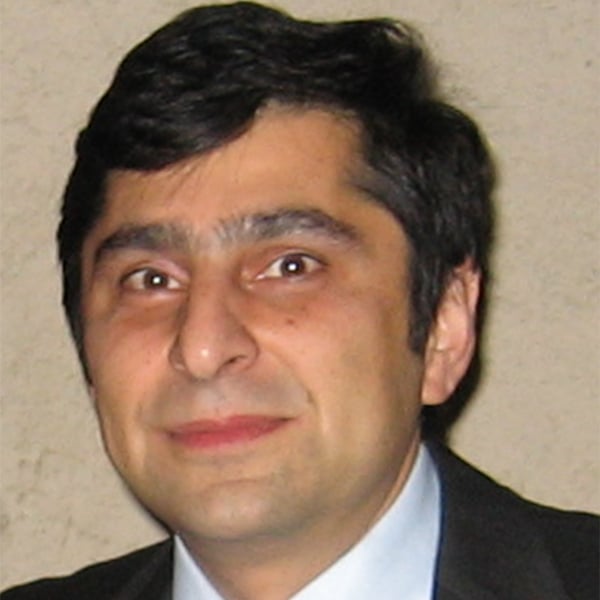
Siamak Ardekani is a Senior Lecturer in the Department of Biomedical Engineering and the Department of Medicine at Johns Hopkins University. He holds a PhD in Biomedical Engineering from UCLA (2006), an MD from Shiraz University of Medical Sciences (1993), and an MS in Biomedical Engineering from Drexel University (2000). His research focuses on computational medical imaging, particularly MRI, to develop statistical shape and function models for early disease detection and therapy monitoring in neurological and cardiovascular disorders. His work emphasizes extracting clinically relevant data from medical images to aid in patient risk assessment and treatment efficacy evaluation. Ardekani's contributions include advancements in cardiac MRI analysis, diffusion tensor imaging (DTI), and automated anatomical modeling. He received the Johns Hopkins Discovery Award in 2020 for multidisciplinary research. His affiliations include the Center for Imaging Science at Johns Hopkins. Ardekani’s research spans computational methods for cardiac motion analysis, MRI-based disease phenotyping, and image registration techniques. He collaborates on projects such as the Cardiovascular Research Grid (CVRG), enhancing data sharing and analysis in cardiovascular studies. His work bridges medicine and engineering, with applications in both clinical and preclinical settings.
Dr. Guojun Gordon Liao is a Professor in the Department of Mathematics at the University of Texas at Arlington. He received his B.S. in Mathematical Mechanics from Peking University and his PhD in Mathematics from UC Berkeley, where his dissertation focused on differential geometry under the supervision of Professor Rick Schoen. Postdoctoral appointments at UCSD and the University of Utah preceded his joining UT Arlington in 1989 as an associate professor, advancing to full professor by 2000. PhD: University of California, Berkeley (1985) BS: Peking University (1968) His research focuses on variational methods in applied mathematics, particularly medical image analysis and adaptive grid generation . Funded by the National Science Foundation and NIH, he has pioneered techniques for 3D diffeomorphism construction and deep learning in image registration , including the CSRGAN model for super-resolution. Recent publications explore Jacobian determinant control and curl vector regulation in mesh generation, with applications to brain morphometry and nonrigid image registration . Collaborations span departments and institutions, including work with Professors Dale Anderson, Brian Dennis, Frank Lu, and Stan Osher. Scientific Awards: R03MH120627: NIH/NIMH Small Research Grant (2020-2023) Dr. Liao teaches undergraduate and graduate courses in linear algebra , calculus of variations , and image analysis . He has served on dissertation committees across Mathematics, Mechanical & Aerospace Engineering, and Computer Science, and held editorial/reviewer roles for MDPI and Elsevier journals.
Anthony Petrella is an Associate Professor and Department Head of Mechanical Engineering at the Colorado School of Mines. He serves as Director of the FEA Professional Certificate Program and leads the Computational Biomechanics Group. His academic career at Mines began in 2006 following a six-year industry role managing computational biomechanics research at Johnson & Johnson's DePuy Orthopaedics. Dr. Petrella's research spans computational and experimental biomechanics of the musculoskeletal system, with primary focus on orthopaedic applications. His group employs advanced nonlinear finite element methods, subject-specific anatomy modeling, and statistical techniques to investigate spine, hip, knee, and ankle mechanics. Recent work integrates machine learning for injury prediction and expands into additive manufacturing for biomedical applications. Analysis of Dr. Petrella's recent publications (2015-2024) reveals a dominant emphasis on spine biomechanics through automated finite element modeling and statistical shape analysis, with growing focus on ankle mechanics and machine learning applications. The research demonstrates consistent evolution from joint replacement studies toward comprehensive musculoskeletal system modeling and clinical outcome improvement. As director of the Computational Biomechanics Group, Dr. Petrella oversees researchers and graduate students in developing computational models of spinal function across healthy, degenerated, and surgically reconstructed states. His FEA Professional Certificate Program provides industry professionals with advanced structural and thermal analysis skills, reflecting his dual commitment to research innovation and engineering education.
Dr. Michael I. Miga is the Harvie Branscomb Professor and Chair of Biomedical Engineering at Vanderbilt University's School of Engineering. He holds joint appointments in Radiology, Neurological Surgery, Otolaryngology, and Computer Science. As Director of the Vanderbilt Institute for Surgery and Engineering (VISE) and the Biomedical Modeling Laboratory (BML), he leads interdisciplinary research in image-guided surgery, computational modeling for therapeutic applications, and soft-tissue biomechanics. Affiliations : Vanderbilt University School of Engineering, VISE, BML. Education : Ph.D. in Biomedical Engineering from Dartmouth College (2001). Research : Focuses on enhancing surgical guidance through advanced modeling, including digital twins, augmented reality, and biomechanical simulations. His work spans liver, brain, breast, and kidney surgeries. His lab develops translational technologies, such as the first FDA-cleared image-guided liver surgery system. He directs an NIH-funded T32 training program in surgery-engineering collaboration. Awards : AIMBE Fellow, SPIE Fellow; NIH Study Sections (BMIT-B, BTSS). Grants : Multiple NIH grants for image-guided interventions, tumor response modeling, and surgical training. Current projects include computational forecasting for neoadjuvant therapy, vagus nerve stimulation modeling, and mixed-reality surgical navigation systems.
Warren D. D'Souza serves as Adjunct Professor in the Department of Radiation Oncology at the University of Maryland School of Medicine, where he leads the Medical Physics Division. Concurrently, he holds the position of Vice President for Enterprise Data and Analytics at the University of Maryland Medical System. His academic career spans over two decades, beginning at MD Anderson Cancer Center in 2000 before joining the University of Maryland in 2002, where he progressed from Assistant Professor to full Professor by 2014. His educational background includes: B.S. in Applied Physics (summa cum laude), Xavier University, 1995 M.S. in Medical Physics, University of Wisconsin-Madison, 1998 Ph.D. in Medical Physics, University of Wisconsin-Madison, 2000 MBA, Duke University's Fuqua School of Business, 2013 (Fuqua Scholar and Health Sector Management Scholar) Dr. D'Souza's research integrates advanced computational techniques with clinical radiation oncology, focusing on radiation treatment plan optimization through combinatorial methods derived from operations research. His work bridges medical physics with data science through machine learning applications for treatment outcomes prediction, multi-modality imaging for therapeutic response assessment, and development of novel analytic approaches in medicine. His expertise spans both theoretical optimization frameworks and practical clinical implementations. His publication record (2007-2009) reveals a strategic evolution toward integrating machine learning with radiation therapy planning, particularly in multi-plan IMRT frameworks and motion management solutions. Key thematic clusters include beam angle optimization using nested partitioning algorithms, real-time motion compensation systems, and 4D CT-based stereotactic body radiotherapy planning - demonstrating consistent innovation at the intersection of operations research, medical physics, and clinical oncology. Scientific recognition includes: Medical Physics Travel Award, American Association of Physicists in Medicine Fellow, American Association of Physicists in Medicine (2015) Fuqua Scholar designation at Duke University (top 10% of class) Health Sector Management Scholar at Duke University As Principal Investigator, he has secured substantial research funding from NIH, NSF, and industry partners to advance radiation therapy optimization and motion management technologies. His leadership extends to mentoring medical physics trainees and directing the Medical Physics Division's clinical and research operations, with six U.S. patents reflecting his translational impact. Current initiatives focus on enterprise data analytics applications within the medical system. He directs the Medical Physics Division within Radiation Oncology, fostering collaborations between radiation oncologists, medical physicists, and computer scientists. Current team projects include developing motion-synchronized treatment couches, implementing 4D CT for stereotactic radiotherapy, and creating machine learning models for predicting treatment complications - all aimed at enhancing precision radiation therapy delivery.
Rochester Institute of Technology (RIT)United States
Nathan Cahill is an Associate Professor in the School of Mathematical Sciences and Associate Dean for Industrial Partnerships in the College of Science at Rochester Institute of Technology (RIT). He holds a DPhil in Engineering Science from the University of Oxford and is the Director of RIT's PhD Program in Mathematical Modeling. His research focuses on computer vision, machine learning, medical imaging analysis, and mathematical modeling. He directs the Image Computing and Analysis Laboratory (ICAL), which develops mathematical models for imaging analysis and computer vision tasks like registration, segmentation, and classification. Dr. Cahill has extensive industrial experience, having worked at Eastman Kodak and Carestream Health, earning 26 US patents in computer vision and medical imaging. He teaches advanced courses in numerical analysis, mathematical modeling, and imaging science. His work bridges academia and industry, with collaborations spanning biomedical engineering, neuroscience, and astrophysics. He advises numerous graduate and undergraduate students, many of whom have pursued PhDs or industry roles in tech and healthcare. His research outputs include influential papers in medical image registration, graph theory applications in social networks, and hyperspectral imaging. He actively contributes to open-source tools for image processing, including MATLAB implementations of segmentation and clustering algorithms. Cahill also holds an Erdős number of 3 and has been recognized for his teaching, offering unique incentives to engage students in applied mathematics and computer science. Key affiliations include the Center for Imaging Science and the PhD Program in Computing and Information Sciences. His current projects involve machine learning applications in healthcare analytics, pulsar signal analysis, and improving wastewater surveillance during pandemics. He maintains an active lab environment fostering interdisciplinary research with collaborators at institutions like the University of Rochester Medical Center and the Mind Research Network.