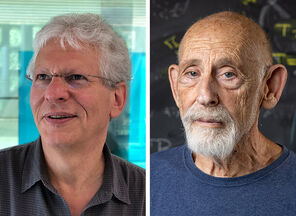
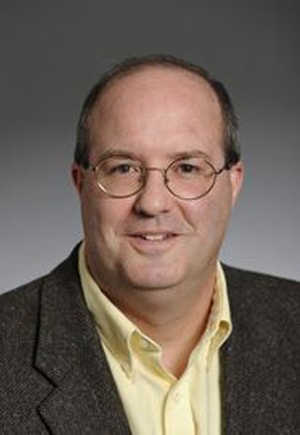
Silviu Pufu is a Professor of Physics at Princeton University, where he earned both his A.B. (2007) and Ph.D. (2011) in Physics. Prior to his faculty position, he was a Pappalardo Postdoctoral Fellow at MIT (2011–2013). His research focuses on quantum field theory, string theory, and gravity, with emphasis on conformal field theory, gauge/gravity duality, and lattice gauge theory. He has received the Alfred P. Sloan Research Fellowship (2017) and led the Simons Collaboration for Nonperturbative Bootstrap (2016–2023). His work explores advanced topics such as AdS/CFT correspondence, M-theory corrections, and non-perturbative bootstrap methods. Pufu advises three graduate students: Ross Dempsey, Debaditya Pramanik, and Benjamin Søgaard. His research outputs span theoretical frameworks like super-Yang-Mills theories, M-theory orbifolds, and lattice Hamiltonian formulations of QCD. His 2020–2025 publications highlight contributions to bootstrap techniques, holographic calculations, and precision studies of strongly coupled systems.
Christopher Beem is a Professor of Mathematics and Theoretical Physics at the University of Oxford's Mathematical Institute, with a concurrent role as a Fellow for Research and Tutorial Fellow in Mathematics at St. John's College. His career bridges advanced mathematical structures and cutting-edge theoretical physics. University: University of Oxford School: Mathematical Institute Rank: Professor Research focuses on Quantum Field Theory , Conformal Field Theory , and Supersymmetry , with deep connections to String Theory and algebraic frameworks. His work explores the mathematical foundations of quantum field theories through vertex operator algebras and chiral algebras. Recent publications (2022-2025) emphasize 3D gauge theories, superconformal symmetry, and algebraic structures in class S theories. Key methodologies include deformation quantization, boundary vertex algebras, and Feigin-Frenkel gluing techniques. Scientific Awards Principal Investigator, Simons Collaboration for the Nonperturbative Bootstrap (2016-2023) ERC Consolidator Grant: Algebraic Foundations of Supersymmetric Quantum Field Theory (2020-2025) Teaching contributions include undergraduate and graduate courses on quantum theory, string theory, differential equations, and vertex operator algebras, reflecting his interdisciplinary expertise.
Stephen Shenker is the Richard Herschel Weiland Professor of Physics at Stanford University, where he has been a faculty member since 1998. He previously served as a professor at Rutgers University (1989-1998) and as an Assistant to Full Professor at the University of Chicago (1981-1989). Shenker also directed the Stanford Institute for Theoretical Physics from 1998 to 2009. Shenker's research focuses on quantum gravity, particularly string theory and M theory, with emphasis on nonperturbative aspects. His work has significantly advanced our understanding of gauge theories, conformal field theory, matrix models of string theory, D-branes, and the connection between quantum gravity and quantum chaos. He has made foundational contributions to the field of string theory, including the discovery of Matrix Theory, which provides a nonperturbative definition of String/M theory. His recent publications demonstrate a consistent focus on eternal inflation, the string theory landscape, de Sitter space, and holographic principles, reflecting his ongoing investigation into the deepest questions of theoretical physics and cosmology. Shenker's work often intersects with that of Leonard Susskind, with whom he shares the 2023 Dirac Medal. Member, National Academy of Sciences (2015) Lars Onsager Prize, American Physical Society (2010) Dean's Award for Distinguished Achievements in Teaching, Stanford University (2007) Fellow, American Academy of Arts and Sciences (2006) Fellow, American Physical Society (2003) Fellow, MacArthur Foundation (1987) Shenker has advised numerous doctoral students and postdoctoral researchers at Stanford, contributing significantly to the education of the next generation of theoretical physicists. His teaching excellence has been recognized with multiple awards, including Stanford's Dean's Award for Distinguished Achievements in Teaching.
Kari Rummukainen is a Professor at the Department of Physics, Faculty of Science, University of Helsinki. His research focuses on theoretical particle physics and cosmology , particularly using computational methods . He leads the Computational Field Theory research group . Research keywords include: Physical sciences High Energy Physics Cosmology Lattice Gauge Theory Scientific awards: Finnish Academy of Sciences and Letters: 2008 Vaisala prize (awarded in Dec 2006) Current projects: Avaruuden ja kosmologian tutkimus (2024–2030) - University of Helsinki Funds CoCoS AdG (2024–2029) - European Research Council Particle cosmology and gravitational waves (2024–2027) - Academy of Finland
Monica Jinwoo Kang is a postdoctoral researcher at the University of Pennsylvania in the Department of Physics and Astronomy and the Center of Particle Cosmology. Previously, she was a Sherman Fairchild Postdoctoral Fellow at the California Institute of Technology (Caltech), following her PhD in Physics from Harvard University (2019). She also holds a bachelor's degree from UC Berkeley in Mathematics and Physics. Roles: Postdoctoral Fellow (UPenn), Sherman Fairchild Fellow (Caltech), Thesis Advisor: Mboyo Esole, Shing-Tung Yau Education: PhD in Physics (Harvard, 2019), BS in Mathematics and Physics (UC Berkeley, 2012) Her research explores the intersection of quantum gravity , string theory , and mathematical physics , with a focus on holography, operator algebras, and supersymmetric field theories. She combines techniques from conformal field theory, algebraic geometry, and quantum information to study spacetime geometry and entanglement. Her work includes constructing holographic tensor networks and analyzing nonperturbative gravitational corrections to bulk reconstruction. Recent publications examine: Holographic tensor networks in 3D spacetime Nonperturbative bulk reconstruction with infinite-dimensional Hilbert spaces Supersymmetric dualities in 4D and 6D SCFTs Geometric origins of anomalies and spectra in lower-dimensional theories Scientific awards include: Sherman Fairchild Postdoctoral Fellowship (Caltech) Center of Particle Cosmology Postdoctoral Fellowship (UPenn) At UPenn and Caltech, Kang has organized seminars and workshops connecting mathematicians and physicists on topics like integrability, geometry, and quantum field theory. She also lectures extensively on quantum field theory, holography, and algebraic geometry, with recent talks at Princeton , CERN , and the Isaac Newton Institute .
Paul S. Aspinwall is a Professor and Associate Chair in the Department of Mathematics at Duke University. He holds a D.Phil. (1988) and B.A. (1985) from the University of Oxford in Theoretical Elementary Particle Physics. His research bridges mathematics and physics, focusing on string theory and its geometric implications. His research explores string compactification, duality symmetries, and the geometry of Calabi-Yau manifolds. Key interests include: Physics of extra-dimensional compactification Algebraic geometry in supersymmetric systems D-brane dynamics and stability Mirror symmetry applications Nonperturbative effects in quantum gravity Recent publications (2015-2025) demonstrate consistent focus on string moduli spaces, D-brane categories, and mirror symmetry extensions. Mathematical techniques include parabolic factorizations, noncommutative resolutions, and deformation theory applied to quantum gravity problems. Honors include: Langford Award (2001) Sloan Fellowship (1999) ICM invited addresses (1998, 1999) Multiple NSF and Sloan research grants He mentors graduate students and postdoctoral researchers, with current advisees including Brian Fitzpatrick, Kangkang Wang, and Benjamin Gaines. Former doctoral students include Arya Roy. He has organized major conferences like String Theory for Mathematicians (2012) and directed the School on Mathematics in String and Field Theory (2003).
Olaf Lechtenfeld is a Professor at the Institute of Theoretical Physics, Leibniz University Hannover, within the Faculty of Mathematics and Physics. His research focuses on mathematical physics, string theory, quantum field theory, and integrable systems. He leads the Lechtenfeld Working Group, which explores topics like supersymmetric sigma models, Nicolai maps, and geometric aspects of field theories. He has advised multiple PhD and Master’s students, including Federico Arrighi, Fin Müller, and Simeon Rehra. Key projects include contributions to the Riemann Center for Geometry and Physics and involvement in the Saalburg WE-Heraeus Summer School. His work spans peer-reviewed articles in top journals like Phys. Lett. B and JHEP , addressing themes such as Yang-Mills solutions, Calogero models, and supermembrane theories. Lechtenfeld’s affiliations include administrative roles at the Institute and collaborations on international projects. His research often bridges algebraic structures and physical phenomena, with a focus on exact solutions and non-perturbative methods. Notable recent work includes studies on Nicolai maps in supersymmetric theories and applications of geometric techniques to gauge theories. Education: Doctorate in Theoretical Physics (university unspecified). Research Teams: Lechtenfeld Working Group, Riemann Center for Geometry and Physics. Grants: Ongoing projects in string theory and quantum field theory.
Hirasawa Mitsuaki is an Assistant Professor (2023-2026) and Fixed-term researcher at the University of Milan-Bicocca's Department of Physics "Giuseppe Occhialini". His research focuses on theoretical particle physics and quantum gravity, with specialization in non-perturbative methods for quantum field theories. Research interests span several interconnected domains: Lattice gauge theories : Investigating CP restoration in Yang-Mills theories at finite temperature using imaginary θ simulations Matrix models : Studying emergent spacetime dynamics in Lorentzian type IIB matrix models Computational methods : Developing complex Langevin techniques to overcome sign problems in quantum systems Quantum gravity : Exploring spacetime emergence mechanisms in high-energy physics frameworks Recent publications (2019-2025) demonstrate consistent focus on non-perturbative aspects of quantum field theories and quantum gravity. Primary research threads include: 1) Numerical investigation of CP-violating phases in gauge theories, 2) Spacetime emergence in matrix models using novel regularization techniques, and 3) Development of advanced complex Langevin methods for lattice simulations. The work frequently combines theoretical formalism with large-scale computational approaches. No scientific awards, prizes, or fellowships are mentioned in available sources. Available records show no information regarding student advising, research grants, laboratory affiliations, or team collaborations.
Shubho Ranjan Roy is an Associate Professor in the Department of Physics at the Indian Institute of Technology Hyderabad. His research focuses on theoretical physics, particularly in nonperturbative string theory, quantum field theory, AdS/CFT correspondence, quantum black holes, and gravity theory. He earned his Ph.D. from Brown University and works in the Physics Building (Room PH-408), Kandi, Sangareddy, Telangana, India.
Giuseppe Vallone is a Full Professor at the Department of Information Engineering, University of Padova, where he has served since February 2024. Previously, he was an Associate Professor (May 2019-January 2024) and Assistant Professor (May 2011-April 2019) at the same institution. His career spans quantum optics, quantum communication, and quantum information, with a focus on practical implementations of quantum technologies. Born in 1979 in Vico Equense (Naples), Vallone earned his Master's degree in Physics from the University of Torino in 2002 with top honors ("110/110 lode e menzione"). He completed his Ph.D. in Theoretical Physics at the University of Torino in 2006, with a thesis on String Theory titled "Nonperturbative aspects of gauge theory from strings" under the supervision of Professor A. Lerda. During his Ph.D., he was awarded a Marie Curie Fellowship, which allowed him to conduct research at the Nordic Institute for Theoretical Physics (NORDITA) in Copenhagen for 11 months. Vallone's research focuses on quantum optics, quantum communication and information, and quantum key distribution. His work has advanced the experimental implementation of Quantum Random Number Generators and Quantum Key Distribution protocols, particularly for earth-satellite communication. He leads the Quantum Communications group (also known as QuantumFuture) at the University of Padova, which has developed expertise in practical quantum communication systems. His team has made significant contributions to time-bin encoding, device-independent protocols, and space-based quantum communication. His recent publications reveal a strong trend toward practical quantum communication systems, with emphasis on satellite-based quantum networks, integrated photonics for quantum applications, and field demonstrations of quantum key distribution. His work bridges fundamental quantum physics with real-world applications, particularly in secure communication. Recent projects include high-speed quantum random number generators, intermodal quantum key distribution systems that work across different communication channels, and experiments combining quantum mechanics with general relativity. 2008: "Vito Volterra prize for young master student graduated in Physics after May 2001" from Societa Italiana di Fisica (S.I.F.) 2003-04: "Marie Curie training site" fellowship at NORDITA institute (Copenhagen) 2003: "OPTIME 2002/03 prize" from Industrial Association of Torino 2003: "Best master thesis of each course (a.y. 2001/02)" from University of Torino Vallone has secured significant research funding as principal investigator, coordinating multiple European projects including QUDICE (Horizon-EU, 2023-2024), QUANGO (EU-H2020, 2021-2023), and QUASAR (CARIPARO, 2020-2023). He has also served as principal investigator for projects funded by ESA, EU-QUANTERA, and ASI. His research group, QuantumFuture, has conducted field trials of quantum key distribution in Padua's metropolitan area and has developed integrated photonic solutions for quantum communication. Current work focuses on satellite quantum communication, quantum-secured time transfer, and the intersection of quantum mechanics with general relativity. The QuantumFuture research group at Padova, led by Vallone, specializes in practical quantum communication systems. They have developed expertise in experimental implementations of Quantum Random Number Generators and Quantum Key Distribution protocols, with particular emphasis on earth-satellite communication. The group has successfully demonstrated quantum communication over classical network infrastructure in Padua and has made significant progress on integrated photonic solutions for quantum technologies. Their research spans from fundamental quantum physics to deployable quantum communication systems.
Colin Morningstar is a Professor of Physics at Carnegie Mellon University within the Mellon College of Science. He specializes in nonperturbative phenomena in quantum field theories, particularly through computational studies of quantum chromodynamics (QCD) and hadron physics. Academic Affiliation: Department of Physics, Carnegie Mellon University Research Focus: Lattice QCD simulations, hadron confinement, glueball spectrum, meson-baryon scattering Education: PhD in Theoretical Particle Physics, University of Toronto (1991) M.Sc. in Theoretical Particle Physics, University of Toronto (1986) His research interests center on nonperturbative aspects of quantum field theories, especially using lattice QCD Monte Carlo simulations to study hadron formation and quark confinement. Key achievements include determining the glueball spectrum in pure Yang-Mills theory and heavy-quark hybrid meson spectra in the Born-Oppenheimer approximation. Current work involves ab initio studies of excited baryon and meson spectra using supercomputing resources from NSF XSEDE and DOE INCITE programs. Scientific Awards: Fellow of the American Physical Society He has supervised multiple graduate students including Ruairi Brett, Andrew Hanlon, Jacob Fallica, and others. His research involves collaborations with institutions like JLab and funding for computational infrastructure. He also contributes to developing lattice field theory software for nuclear physics applications.
Mirjam Cvetic is the Fay R. and Eugene L. Langberg Professor in the Department of Physics and Astronomy at the University of Pennsylvania School of Arts & Sciences. She specializes in high-energy theoretical physics, focusing on string theory, M-theory, black hole physics, and supergravity. Her research bridges fundamental theory and phenomenological implications, with contributions to solutions in string vacua and nonperturbative gravitational phenomena. Education includes a Ph.D. from the University of Maryland (1984), M.A. and B.S. from the University of Ljubljana (1981, 1979). She has held positions since 1984 at institutions like SLAC and the University of Pennsylvania, where she became Full Professor in 1999. Research interests span superstring theory, compactifications, and black hole microstates. Notable contributions include supersymmetric standard models from intersecting branes, M-theory conifolds, and studies of rotating black holes in anti-de Sitter spaces. She explores F-theory compactifications for realistic particle physics models and studies anomalies in higher-form symmetries. Key awards include the NSF Career Advancement Award (1995) and the B. Kidric Award (1983). Her work on black hole thermodynamics, generalized symmetries, and swampland conjectures has advanced understanding of quantum gravity and holography. Current efforts focus on STU black holes, subtracted geometries, and the interplay between string theory and particle physics.
Martin Gorbahn is a Senior Lecturer in the Department of Mathematical Sciences at the University of Liverpool since 2012. Previously, he held positions including Carl von Linde Junior Fellow at the Technical University of Munich (TUM) and a Research Associate at Durham University and Karlsruhe Institute of Technology. He earned his diploma in physics from TUM in 2000 and completed his PhD there in 2003 under Prof. Andrzej Buras. His research focuses on extending the Standard Model to explain dark matter and electroweak symmetry breaking, with contributions to precision calculations in particle physics. Research Interests: Particle physics, theoretical physics, electroweak symmetry breaking, dark matter, QCD, and precision measurements in kaon and B-meson decays. Grants: Recipient of grants from the UK Science and Technology Facilities Council (STFC) for projects in particle physics and theoretical studies. Recent grants include 'New Horizons in Quantum Field Theory, Particle Physics and String Phenomenology' (2020-2024) and Experimental Particle Physics Consolidated Grant (2019-2025). Teaching: Coordinates modules such as Calculus I and Quantum Field Theory. Awarded a teaching prize for Mechanics 1 tutorials. Publications: Over 50 peer-reviewed articles, including recent work on K→πνν decays, electroweak precision tests, and lattice field theory applications. Active in workshops like Kaons@CERN 2023.
João Miguel Penedones is an Associate Professor at École Polytechnique Fédérale de Lausanne (EPFL), affiliated with the School of Basic Sciences, Institute of Physics, and leading the Fields and Strings Laboratory (FSL). He also holds a role in the School of Physics and Chemistry (SPH) and serves on the executive committee of the Center for Imaging (CIB). His research focuses on foundational aspects of theoretical physics, particularly in quantum field theory, string theory, and the AdS/CFT correspondence. His work emphasizes nonperturbative methods, including the S-matrix bootstrap, scattering amplitudes, and constraints from physical principles such as unitarity and analyticity. The article titled Nonperturbative aspects of scattering amplitudes (2023) reflects current research trends in his group, exploring deep analytical structures in quantum field theories, Landau singularities, anomalous thresholds, and connections to conformal field theories. This highlights a strong focus on rigorous mathematical frameworks for understanding quantum scattering beyond perturbation theory. He has supervised several PhD students, including Alves Da Silva João Pedro, Hebbar Aditya, Häring Kelian Philippe, Marucha Jan Krzysztof, Ribeiro Correia Miguel Alexandre, and Salehi Vaziri Kamran. His current doctoral candidates are Armanini Elisabetta, Loparco Manuel, Martina Adrien Philippe, and Vuignier Antoine. There is no mention of external grants, but his leadership of a dedicated research lab suggests active research funding. He is involved in academic leadership through his membership in the executive committee of the Center for Imaging (CIB), contributing to institutional governance at EPFL.
Peter Arnold is a Professor in the Department of Physics at the University of Virginia. His research focuses on theoretical nuclear and particle physics, particularly high-energy interactions in extreme environments such as the early universe and heavy-ion collisions. He has contributed to understanding matter-antimatter asymmetry and quark-gluon plasma properties. His work applies high-energy theoretical methods to low-temperature phenomena like Bose-Einstein condensation. Notable achievements include election as an APS Fellow (2014) for developing gauge theories at high temperatures. Recent publications explore jet quenching, LPM effect in bremsstrahlung, and AdS/CFT applications to plasma dynamics. Scientific awards: APS Fellow (2014) He serves on departmental committees including the APS Fellowship & AAAS Recognition Committee (Member), Chair's Advisory Committee (Chair), and Graduate Program Committee (Member).