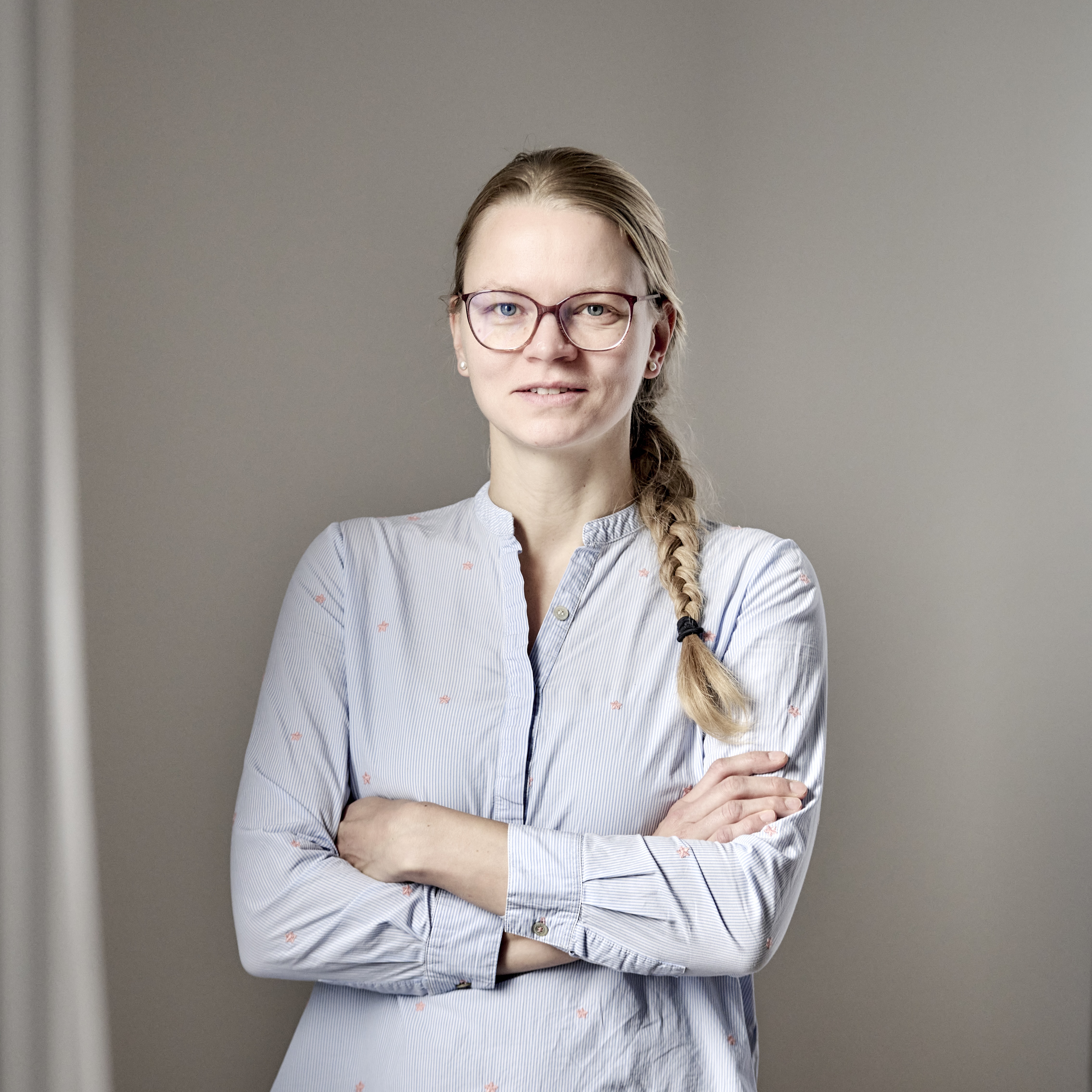
Peter Bühlmann is a Professor at ETH Zürich within the Seminar für Statistik , focusing on high-dimensional statistics, causal inference, and machine learning. His work bridges theoretical advancements with practical software implementations in R packages like pcalg , mboost , and glmmlasso , impacting fields such as genomics, proteomics, and intensive care analytics. Key Contributions : Causal structure learning, stability selection, anchor regression, and deconfounding. Software : Developed widely used R packages for statistical modeling and causal inference. Teaching : Courses on high-dimensional statistics at ETH Zürich and international institutions. Research Trends : Recent articles emphasize causal robustness, domain adaptation, and applications in medicine. His work addresses challenges in heterogeneous data, missing values, and covariate shifts using methods like spectral deconfounding and residual prediction tests. Scientific Recognition : Co-author of a paper designated as a New Hot Paper (Meinshausen and Bühlmann, 2006) by Essential Science Indicators, indicating significant impact in high-dimensional multiple testing.
Swiss Federal Institute of Technology in LausanneSwitzerland
Academic Profile: Damir Filipovic is a Full Professor and the Swissquote Chair in Quantitative Finance at the College of Management of Technology (CDM) of École Polytechnique Fédérale de Lausanne (EPFL), Switzerland. He previously held academic positions at the University of Vienna, University of Munich, and Princeton University, and served as Head of the Vienna Institute of Finance. Research Focus: Quantitative finance, risk management, stochastic processes, term structure modeling, volatility risk, and machine learning applications in financial markets. Industry Collaboration: Co-developed the Swiss Solvency Test for insurance capital requirements while consulting for the Swiss Federal Office of Private Insurance. Publications: Contributed extensively to journals like Journal of Financial Economics, Mathematical Finance, and Annals of Applied Probability, with a textbook on Term-Structure Models. Academic Service: Editorial board member of multiple journals and organizer of advanced workshops on systemic risk and financial technology. Recent Research: His work emphasizes machine learning for portfolio risk management, kernel-based yield curve estimation, and robust stochastic modeling. Keynote speaker at international conferences on finance and insurance mathematics, with over 15 recent publications in 2023-2025 addressing high-dimensional financial problems, neural control systems, and causal inference in market data. Education: Ph.D. in Mathematics from ETH Zurich (2000). Graduate of ETH Zurich and University of Vienna. Teaching & Mentorship: Supervises current and former EPFL Ph.D. students in quantitative finance, including Nicolas Camenzind, Joshua Hayes, Andrea Ruglioni, and ten others. Former students like Damien Ackerer and Lotfi Boudabsa now lead research in risk management. Labs & Programs: Directs EPFL's Finance and Technology Programme, leads the Computational Finance Group (CSF) at EPFL, and contributes to Swiss Finance Institute initiatives. Scientific Leadership: Served on EPFL Committee of Academic Evaluation and Doctoral Program Finance committee.
University of Applied Sciences and Arts LucerneSwitzerland
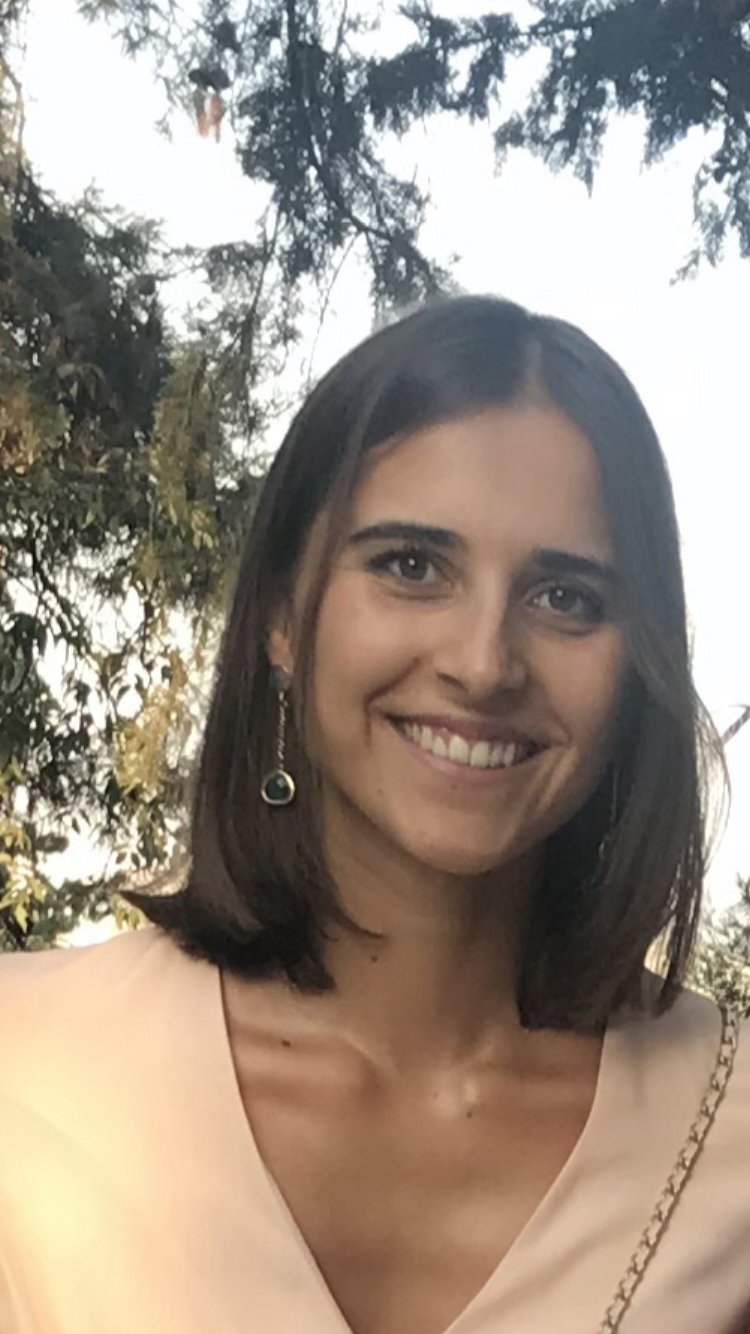
Fabio Sigrist is a Professor of Applied Statistics and Data Science at the Institute of Financial Services Zug (IFZ) , part of the Lucerne University of Applied Sciences and Arts . He also holds a Senior Scientist and Lecturer position at the Seminar for Statistics, ETH Zurich . His career spans academic research, industry consulting, and project leadership in finance and data science. PhD in Statistics (2013), ETH Zurich MSc in Mathematics with distinction (2008), ETH Zurich MEd in Mathematics Education (2008), ETH Zurich Sigrist’s research focuses on integrating Machine Learning with Spatial Statistics for applications in Financial Econometrics and Credit Risk . His work includes developing novel algorithms like GPBoost and KTBoost , advancing spatio-temporal modeling , and applying tree-based boosting to financial problems. Projects such as CreHos (credit risk in hospitality) and NISMO (interpretable real estate modeling) highlight his interdisciplinary approach. His publications address challenges in large-scale spatial data , loss given default modeling , and stock volatility prediction . He contributes to software development with tools like spate (R package) and varycoef (spatially varying coefficients).
Johanna Ziegel is a Professor of Statistics at ETH Zurich, Switzerland, since 2024, and a Visiting Scientist at the Heidelberg Institute for Theoretical Studies (HITS). Previously, she held positions at the University of Bern, where she was promoted to Full Professor in 2023. Her research focuses on decision-theoretically sound methods for forecast evaluation, probabilistic forecasting, risk measures in finance, and applications in meteorology, medicine, and climate science. She is actively involved in editorial roles for journals like Bernoulli , JASA: Theory & Methods , and SIAM Journal on Financial Mathematics . Education: PhD in Stereological Analysis of Spatial Structures from ETH Zurich (2010), supervised by Paul Embrechts and Eva B. Vedel Jensen. Postdoctoral research at the University of Melbourne and Heidelberg University. Research Interests: Forecast evaluation, elicitable functionals, risk measures, isotonic regression, statistical calibration, and applications in finance, climate science, and biostatistics. Her work bridges theoretical statistics with practical challenges in uncertainty quantification and decision-making under uncertainty. Advising & Collaborations: Supervised 7 PhD students and mentored several postdocs. Collaborates with the Computational Statistics group at HITS and the Oeschger Centre for Climate Change Research. Her group explores distributional regression under order constraints and novel methods for forecast comparison. Recognition: Credit Suisse Award for Best Teaching (2022), H.I.T. Program for Academic Leadership (2021–2022). Active in professional service, including the Bernoulli Society Council and editorial boards.
Eva Cantoni is a Full Professor at the Research Center for Statistics within the Geneva School of Economics and Management , University of Geneva. Her expertise spans robust statistical methodology, model selection, and applications in ecology and medicine. Ph.D. from University of Geneva Accredited European Statistician (FENStatS) Research Interests : She specializes in Robust statistics for real-world data Variable/model selection in high-dimensional settings Nonparametric and semi-parametric regression Zero-inflated and overdispersed count models Longitudinal and spatiotemporal data analysis Her work addresses ecological challenges (fish stock assessment), medical applications (hospital congestion modeling), and housing market analysis. Recent Trends in Publications : Recent articles focus on Confidence intervals for robust mixed models Editorial leadership in robust statistics Applications to fisheries science and public health Flexible modeling frameworks for complex data Comparative studies of statistical measures Extremes modeling in healthcare Leadership & Grants : She has served as: Vice-Dean for Teaching (2020-2023) Director of Master's in Statistics (2012-2019) Director of Applied Statistics Certificate (2015-2019) President, Swiss Federal Statistics Committee (2024-2027) Specialty Chief Editor, Frontiers in Applied Mathematics (2024) Grants include projects on Robust solutions for modern data (2023-2025) Sustainable fisheries modeling (2018-2021) Advancements in state-space models (2014-2017) Software Contributions : Developed R packages for robust statistical methods: confintROB (bootstrap confidence intervals) RobSSM (robust state-space models) R2_LMM (explained variation measures)
Swiss Federal Institute of Technology in LausanneSwitzerland
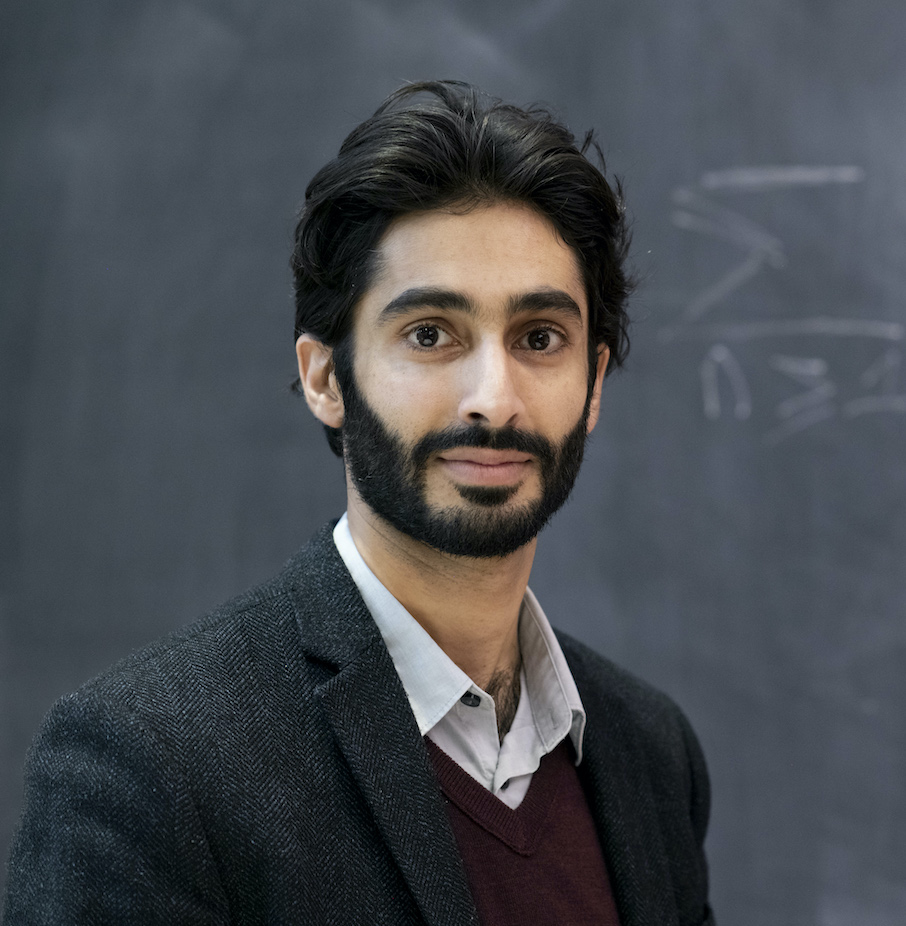
Myrto Limnios is a Bernoulli Instructor at the Institute of Mathematics at École Polytechnique Fédérale de Lausanne (EPFL), holding dual appointments as Lecturer in the School of Basic Sciences - Mathematics Section and Scientist in the Mathematics Department - Geometry section. Her office is located at CM 1 618 (Centre Midi), Station 10, 1015 Lausanne, Switzerland. Dr. Limnios's academic journey began with her PhD at Centre Borelli, ENS Paris-Saclay, Université Paris-Saclay, under the supervision of Prof. Nicolas Vayatis and Ioannis Bargiotas. Her doctoral thesis, Rank Processes and Statistical Applications in High Dimension , established her expertise in statistical methodology. Following her PhD, she completed a postdoctoral fellowship at the Copenhagen Causality Lab of the University of Copenhagen. Her research program focuses on nonparametric statistics, statistical learning theory, and stochastic processes with biomedical applications. She specializes in causal learning methods for event processes using conditional local independence testing (collaborating with Niels Richard Hansen) and concentration results for k-sample Rank and U-processes (with Prof. Stephan Clémençon of Télécom Paris). Her work bridges theoretical advances with practical implementations in epidemiology, neuroscience, and medical diagnostics. Analysis of her recent publications reveals a strong trend toward developing ranking-based statistical methods with applications to anomaly detection, two-sample testing, and causal inference. Her work demonstrates increasing sophistication in handling high-dimensional event processes while maintaining theoretical rigor in statistical guarantees. Among her notable achievements is the Bernoulli Instructorship at EPFL and organizing the Women in Mathematics conference at EPFL in May 2025, which hosted over 60 participants from Switzerland, France, and Spain. She was also honored with a research visit to the Simons Institute for the Theory of Computing at UC Berkeley in November 2024, hosted by Prof. Peter Bartlett. Dr. Limnios teaches advanced statistical methods at EPFL, including Regression Methods (covering linear regression, analysis of variance, diagnostics, and variable selection) and Empirical Processes (focusing on controlling nonasymptotic behavior of estimator collections). Her GitHub activity shows active development of statistical software for independence testing and anomaly ranking. She maintains active collaborations with the Copenhagen Causality Lab, Télécom Paris, and biomedical research groups, particularly through her work on postural control analysis for Parkinsonian syndromes and epidemiological modeling of infectious diseases.
Patrick Gagliardini is a Full Professor of Econometrics at the University of Lugano (USI) within the Faculty of Economics and the Institute of Finance. He also serves as Pro-Rector at USI. His academic journey includes a PhD in Econometrics from USI (2003) and studies in Physics at ETH Zurich (1998). He has held roles such as Visiting Fellow at CREST Paris (2003) and Assistant Professor at the University of St. Gallen (2004–2006). His research focuses on econometric methods (nonparametric techniques, GMM, latent factor models) and financial applications such as credit risk, asset pricing, and risk management. Competence areas include Big Data, investment decisions, and systematic risk analysis. He teaches courses in econometrics, financial econometrics, and time series at the undergraduate, graduate, and PhD levels. Recent publications explore latent factor models, econometric testing (e.g., eigenvalue tests for factor detection), and financial decision-making in small data regimes. His work bridges theoretical econometrics with practical applications in finance and risk modeling. Notably, his research addresses challenges in dynamic latent factor models, hedge fund performance evaluation, and granularity theory in financial systems. He maintains an active academic profile with contributions to both theoretical and applied econometrics.
Shahin Tavakoli is a Senior Lecturer in the Research Institute for Statistics and Information Science at the Geneva School of Economics and Management (University of Geneva). He holds a PhD in Mathematical Statistics from EPFL and has held positions as a University Research Fellow at the University of Cambridge and a tenure-track Assistant Professor at the University of Warwick. His research focuses on functional data analysis with applications in neuroimaging, phonetics, biophysics, econometrics, and genomics. Education: BSc/MSc in Mathematics (EPFL), PhD in Mathematical Statistics (EPFL). Key roles include Associate Editor for the Journal of Statistical Planning and Inference and proposer for a JRSS B discussion paper. Teaching includes Applied Bayesian Statistics, Multivariate Analysis, and Mathematics courses at the University of Geneva. Research interests emphasize statistical methodologies for complex data structures, including high-dimensional functional time series and spatial modeling of linguistic data. Notable recent publications address phonetic analysis, brain imaging, and econometric factor models. Collaborations span institutions like the University of Cambridge, University of Warwick, and LMU Munich. Advising includes PhD students Marco Palma and Beatrice Matteo, with contributions to projects such as functional regression clustering and normative brain mapping. His work bridges theoretical statistics with applied domains, reflecting interdisciplinary impact across natural and social sciences.
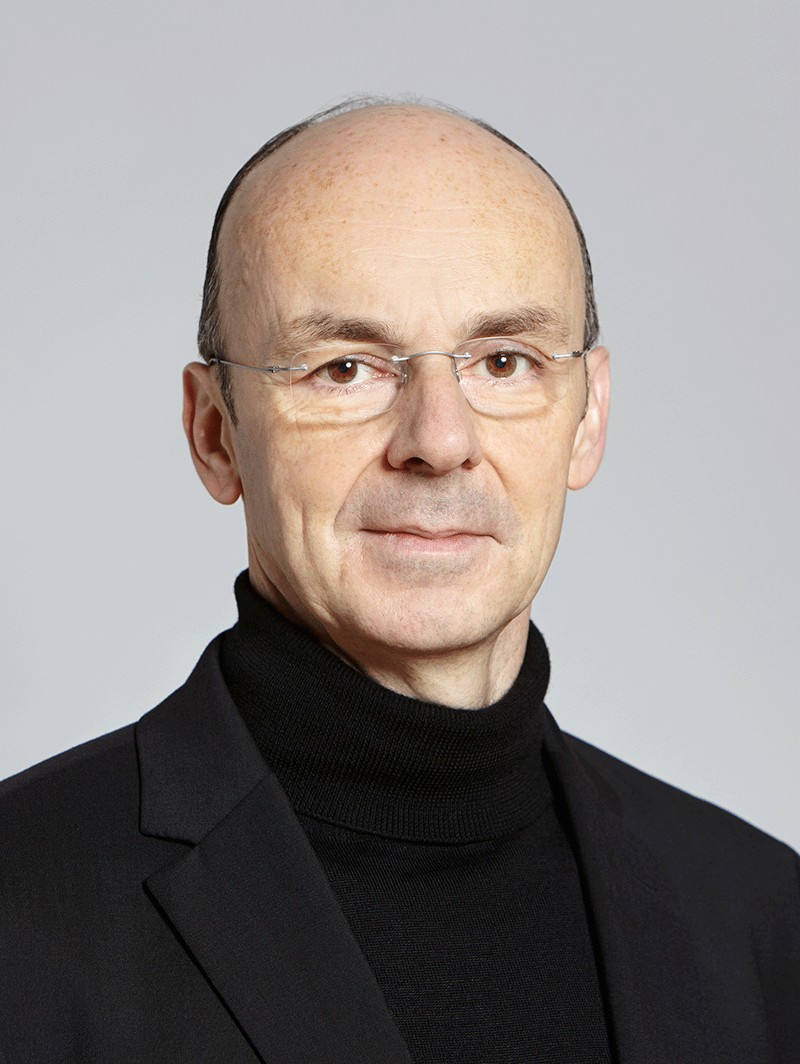
Prof. Dr. Helmut Bölcskei is a Full Professor of Mathematical Information Science at ETH Zurich's Department of Information Technology and Electrical Engineering. He holds a joint affiliation with the Department of Mathematics. His academic journey includes a Dipl.-Ing. and Dr. techn. from Vienna University of Technology, followed by postdoctoral research at Stanford University and industry roles at Iospan Wireless and Celestrius AG. He has been at ETH Zurich since 2002, contributing to applied mathematics, machine learning theory, signal processing, and statistics. Education : 1994: Dipl.-Ing., Vienna University of Technology 1997: Dr. techn., Vienna University of Technology Industry Experience : Co-founder of Iospan Wireless (acquired by Intel) and Celestrius AG His research focuses on applied mathematics , machine learning theory , and data science , with emphasis on neural network approximation, metric entropy, and signal processing. Recent work explores theoretical limits of deep learning and nonlinear system identification. His publications highlight advancements in quantization, compression, and system complexity analysis. Prof. Bölcskei has received numerous accolades, including IEEE Fellow status, the 2010 Vodafone Innovations Award, and the ETH 'Golden Owl' Teaching Award. He served as Editor-in-Chief of the IEEE Transactions on Information Theory (2010–2013) and has held editorial roles in multiple journals. His leadership includes roles on the Board of Governors of the IEEE Information Theory Society and as a delegate for faculty appointments at ETH Zurich. Labs/Teams : Mathematical Information Science Group at ETH Zurich's Department of Information Technology and Electrical Engineering
Swiss Federal Institute of Technology in LausanneSwitzerland
Julien Fageot is a Researcher at the École Polytechnique Fédérale de Lausanne (EPFL) in the AudioVisual Communications Laboratory within the School of Computer and Communication Sciences. He previously held postdoctoral positions at Harvard University, McGill University, and EPFL. His educational background includes: Ph.D. in Electrical Engineering at EPFL (2012-2017) M.Sc. Mathematics, Vision, and Learning in ENS Paris-Saclay, France (2011) M.Sc. in Probability and Statistics at Université Paris Orsay, France (2009) École Normale Supérieure, Section Mathématiques, Paris, France (2007-2012) Dr. Fageot's research lies at the intersection of high-level mathematics and data sciences, focusing on mathematical properties of advanced processing tools for sparse signal reconstruction and synthesis. His expertise spans sparsity, random processes, approximation theory, splines, convex optimization, functional analysis, and signal/image processing. He explores probability theory (sparse stochastic processes), optimization theory (sparsity-promoting spline reconstruction), and applications in signal processing (inverse problems, segmentation, detection, CNNs). His publication record demonstrates a clear progression from theoretical foundations of stochastic processes to practical applications in biomedical imaging. Recent work shows increasing focus on machine learning applications while maintaining strong mathematical rigor, particularly in developing sparse representations for medical image analysis. His scientific achievements have been recognized with: Best Paper Award at the MIDL Conference (2019) EPFL Best Doctorate Award (2018) Outstanding PhD Thesis Distinction in Electrical Engineering, EPFL (2017) Education Award from the Life Science Department, EPFL (2013) Dr. Fageot actively mentors students, currently supervising PhD candidate Adrian Jarret and having previously guided Thomas Debarre and Shayan Aziznejad to completion. He has supervised numerous master's theses on spline-based reconstruction and biomedical image analysis. His research is supported by Swiss National Science Foundation grants including the Postdoc.Mobility fellowship for 'Mathematical Models for Analog Data Sciences: the Continuous Way' (2020) and the Early Postdoc.Mobility fellowship for 'Probabilistic and Variational Methods for Sparse Signals' (2018). As a key member of EPFL's AudioVisual Communications Laboratory, he collaborates with Prof. Martin Vetterli, Prof. Michael Unser, and Prof. Christian Genest, bridging theoretical mathematics with practical applications in signal processing and data science.
Zurich University of Applied Sciences (ZHAW)Switzerland
Prof. Andreas Ruckstuhl is a Professor at the ZHAW Zurich University of Applied Sciences, affiliated with the School of Engineering and the Data Analysis and Statistics research group. His work spans interdisciplinary fields including data science, environmental science, healthcare analytics, and statistical methodology. Research interests focus on robust statistical methods, environmental monitoring, healthcare policy analysis, and customer behavior modeling. Recent contributions include studies on data scientists’ roles in enterprises, aerosol particle classification, and health technology assessment in Switzerland. Prof. Ruckstuhl has led and contributed to projects such as data anonymization for Swisscom, e-participation frameworks using collective intelligence, and cost analyses of healthcare issues like low back pain. He has collaborated extensively on environmental projects, including atmospheric trace gas analysis and VOC reduction technologies. His publications span peer-reviewed journals in statistics, environmental science, and healthcare, reflecting his expertise in applying advanced statistical techniques to real-world problems. Notable projects include developing baseline signal extraction methods for spectroscopic data and nonparametric function estimation models.
Dr. Tobias Heilmann is a Lecturer at the Department of Humanities, Social and Political Sciences at ETH Zurich. His research focuses on statistical inference, change point detection, differential privacy, high-dimensional data analysis, network analysis, and machine learning. He holds a PhD in Statistics from Fudan University, advised by Zhiliang Ying, and has contributed to software packages such as changepoints , GMPro , and APPLE . His work bridges theoretical statistics and practical applications, emphasizing privacy-preserving techniques, dynamic systems analysis, and algorithmic robustness. Key areas include nonparametric methods, contextual bandits, federated learning, and functional data analysis. Recent contributions address challenges in distributed systems, adversarial robustness, and high-dimensional model selection. He has published extensively in top journals like Annals of Statistics , SIAM Journal on Mathematics of Data Science , and IEEE Transactions on Information Theory . Dr. Heilmann's research also involves interdisciplinary collaborations, including social psychology of groups and biomedical applications. His software tools are widely used for change point analysis and community detection in networks. Current projects explore optimal privacy-utility trade-offs and adaptive algorithms for non-stationary environments.
Dacheng Xiu is a Professor at the University of Chicago Booth School of Business and affiliated with the National Bureau of Economic Research (NBER). His research spans finance, machine learning, and econometrics, focusing on asset pricing, volatility modeling, and high-frequency data analysis. His work includes developing machine learning frameworks for financial applications, such as return prediction, factor models, and text mining of market data. Recent publications emphasize leveraging large language models (e.g., BERT, GPT) and deep learning architectures (e.g., autoencoders) to address challenges in empirical asset pricing and portfolio optimization. He has collaborated extensively with scholars like Bryan T. Kelly and Stefano Giglio, contributing to high-impact journals and working papers. His research also explores the statistical limits of arbitrage and weak signal detection in financial markets, with applications to risk premium estimation and factor zoo regularization.
Francesco Audrino is a Professor of Statistics at the Department of Mathematics and Statistics, University of St. Gallen, affiliated with the School of Economics and Political Science (SEPS). He holds a Diploma in Mathematics from ETH Zurich (specializing in Financial and Insurance Mathematics) and a Ph.D. in Statistics/Finance from ETH Zurich, with a thesis on statistical methods for high-dimensional financial time series. Research Focus: Computational Statistics applied to Economics and Finance, Financial Econometrics, Sentiment Analysis, Volatility Estimation, and Regime-switching Models. His work emphasizes nonparametric methods (e.g., Functional Gradient Descent) and their applications in asset pricing, interest rate dynamics, and risk management. Recent projects include the SentiVol program for sentiment-driven volatility forecasting and causal machine learning analyses of post-earnings sentiment impacts. Selected Projects: Director of the SentiVol SNF Grant (2017–2020) on sentiment analysis for volatility prediction. Co-Director of the SNF Grant on Behavioral Asset Pricing (2010–2013). Leading research on cross-asset dependency structures and causal machine learning applications. Awards & Recognition: Swiss Society of Economics and Statistics Young Economist Award (2007). University of St. Gallen’s Best Researcher Award (2007). Teaching load reduction for outstanding publications (2009–2018). Teaching & Academic Service: Teaches Statistics, Financial Volatility, and Computational Statistics at bachelor’s, master’s, and Ph.D. levels. Served as Elected Member of the Board of Directors of the European Regional Section of the International Association for Statistical Computing (2016–2020). Active in academic networks like the Computational Financial Econometrics (CFE) Network. Labs & Resources: Developed the FGD Code package for nonparametric high-dimensional time series analysis, widely used in volatility and correlation modeling. Maintains real-time volatility forecasts for S&P 500 constituents via the SentiVol project.
Dr. Gil Kur is a Lecturer in the Department of Mathematics at ETH Zürich. His research focuses on statistical estimation, high-dimensional data analysis, convex regression, machine learning theory, optimization, and probability theory. He has contributed to areas such as nonparametric estimation, convex body approximation, and differential privacy mechanisms. His work bridges theoretical foundations with applications in computational statistics and optimization. Key research themes include analyzing convergence rates of estimators, developing optimal algorithms for convex regression, and studying geometric properties of high-dimensional spaces. His recent articles explore topics like debiased LASSO methods, log-concave maximum likelihood estimation, and the performance of empirical risk minimization under various constraints. Kur’s publications demonstrate a strong focus on rigorous mathematical analysis, often combining tools from probability, functional analysis, and convex geometry. While no specific awards or grants are listed, his active publication record reflects sustained contributions to statistical theory and machine learning fundamentals.