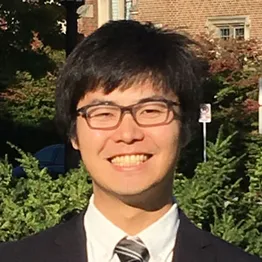
Yuejiao Cindy Fu is a Full Professor in the Department of Mathematics and Statistics at York University's Faculty of Science. Her office is located in the Ross Building. Research specializes in mixture models, empirical likelihood, density ratio models, and statistical analysis of high-dimensional spatial, genetic, and DNA methylation data. Methodologies include homogeneity testing, dimension reduction techniques, and robust inference for genomic applications. Education: Ph.D. in Statistics from University of Waterloo (2004). Contact: (647) 831 1208.
Martin Bilodeau is a full professor in the Department of Mathematics and Statistics at Université de Montréal. He holds a Ph.D. from the University of Toronto (1986) and is an Associate of the Society of Actuaries (ASA) since 1993. His research focuses on multivariate statistics, statistical decision theory, asymptotic methods, and robust statistics. Bilodeau has authored a notable textbook, *Theory of Multivariate Statistics* (Springer, 1999), co-authored with David Brenner, which provides a rigorous treatment of modern multivariate statistical theory. His work emphasizes foundational topics such as multivariate regression, principal components analysis, and robust statistical methods. Bilodeau has also contributed to computational statistics through R packages like *groc* and *IndependenceTests*, which implement advanced statistical techniques for regression analysis and independence testing. Recent publications include methodological advancements in variance component models (2021), independence testing across scales (2017), and applications of meta-elliptical distributions (2014). Bilodeau's research integrates theoretical developments with practical applications, spanning fields from ecology to actuarial science. His work on nonparametric independence tests (2007) and robust SUR models (2000) demonstrates his commitment to both statistical methodology and real-world problem-solving. He maintains an active academic profile with contributions to statistical education and ongoing collaborations in multivariate analysis.
Yining Chen is an Associate Professor in the Department of Statistics at the London School of Economics and Political Science (LSE). He holds a PhD in Statistics from the University of Cambridge (2014). His research focuses on statistical methodology, particularly in change-point detection, nonparametric estimation, and computational aspects of statistical methods. He also explores shape-constrained estimation and time series analysis. Dr. Chen has taught courses such as ST444 Computational Data Science and ST304 Time Series and Forecasting at LSE. He has contributed to interdisciplinary research in medical statistics, including work on kidney and liver transplantation outcomes. His software contributions include R packages like 'not', 'scar', and 'Sshaped', which implement his methodological advancements in statistical computing. His research has been published in top-tier journals such as the Journal of the Royal Statistical Society and Biometrika. Key areas of application span econometrics, actuarial science, and biomedical research. He actively engages in collaborative projects addressing practical data challenges across disciplines.
Michael McDermott, PhD, is a Professor of Biostatistics, Neurology, and the Center for Health + Technology at the University of Rochester Medical Center. He holds an academic appointment in the Department of Biostatistics and Computational Biology. His research focuses on statistical methodology including order-restricted inference, clinical trial design, diagnostic test evaluation, and meta-analysis. Dr. McDermott has collaborated extensively on neurological disorders such as Parkinson’s, Huntington’s, and multiple sclerosis, and has a joint appointment with the Department of Neurology. Educated at the University of Rochester (PhD, 1989), his work bridges statistical theory and clinical application. He has authored influential papers on hypothesis testing under order constraints and developed methods for verification bias correction in diagnostic studies. McDermott serves on editorial boards for journals like International Statistical Review and Movement Disorders , and has held leadership roles in professional societies. His research interests span statistical theory (e.g., multivariate analysis, ROC curves) and applied biostatistics (e.g., dose-response modeling, clinical trial optimization). McDermott’s methodological contributions address challenges in medical research design, including adaptive trial phases and missing data imputation techniques. He has been recognized as a Fellow of the American Statistical Association and an Elected Member of the International Statistical Institute. Collaborative efforts include leading national/international groups studying neurological diseases and serving as an advisor for the T32 Training Grant in Biostatistics. His lab focuses on advancing statistical tools for translational medical research while maintaining active involvement in neurology-related clinical studies.
Kenichi Nagasawa is an Assistant Professor in the Department of Economics at the University of Warwick. He specializes in econometrics with a focus on bootstrap-assisted inference, treatment effect estimation, and asymptotic theory. His research develops methodologies for statistical inference in complex econometric models. He teaches EC226: Econometrics 1 and has secured funding through the BA/Leverhulme Small Research Grants (2024-2026). His work frequently involves collaborative research with institutions globally. Research Focus: Development of robust inference techniques for econometric models, particularly using bootstrap methods for nonstandard distributions and treatment effect estimation with imperfect data.
Orimar Sauri Arregui is an Associate Professor in the Department of Mathematical Sciences at Aalborg University's Faculty of Engineering and Science, Denmark. His research lies at the intersection of mathematical statistics, stochastic processes, and financial modeling. Research Interests: His work focuses on ambit fields , trawl processes , Lévy and infinite divisible random fields , and nonparametric estimation in continuous time. He investigates asymptotic behavior, limit theorems, and statistical inference for complex stochastic models, with applications in financial market microstructure and energy flux modeling. The analysis of his recent publications reveals a strong trend in theoretical statistics and probability, particularly in developing and analyzing models driven by non-Gaussian noise and long-range dependence. His work often involves high-frequency data and contributes to the foundations of spatiotemporal modeling. Scientific Contributions: Developed mathematical frameworks for financial market microstructure. Advanced theory for nonparametric estimation of trawl processes. Derived asymptotic error distributions for numerical schemes in stochastic delay equations. Proved local limit theorems for energy fluxes in random fields. Advising and Research Activity: He has been involved in PhD supervision and maintains an active research output, primarily through preprints on arXiv and SSRN. His collaborations span topics in financial econometrics and statistical physics. Though specific grants are not listed, his consistent publication record suggests ongoing research funding. Laboratory and Teams: While no formal lab is mentioned, his work is part of the broader research network in mathematical statistics and financial mathematics at Aalborg University, with notable collaborations in stochastic modeling and econometrics.
Paul Schneider is a Full Professor in the Faculty of Economic Sciences at the University of Italian Switzerland (USI), where he has been a faculty member since 2012. He is affiliated with the Institute of Finance (IFin) and the Euler Institute (EUL), contributing to interdisciplinary research in quantitative finance and econometrics. His research focuses on financial econometrics, asset pricing, and statistical methods in finance, with an emphasis on extracting latent market information under minimal assumptions. He integrates techniques from engineering, mathematics, and data science to develop robust models for financial markets. His work spans risk premia, ambiguity in investment decisions, nonlinear pricing, and model-free recovery methods. His recent publications (2023–2024) in journals such as Review of Finance , Management Science , and SIAM Journal on Mathematics of Data Science highlight trends in adaptive learning, empirical scenario generation, constrained likelihood estimation, and optimal investment under ambiguity . These reflect a strong focus on data-driven, computationally efficient, and theoretically sound approaches to financial modeling. Adaptive joint distribution learning Fast empirical scenarios Optimal Investment under Ambiguity Constrained polynomial likelihood Dispersion of Beliefs and Sentimental Recovery Scientific Awards: No specific awards or fellowships are mentioned in the provided text. Advising and Grants: While no formal list of advisees is provided, Paul Schneider has collaborated extensively with researchers such as Damir Filipovic, Fabio Trojani, and Christian Wagner, suggesting a strong mentorship and collaborative role. He has contributed to funded research projects, particularly in financial modeling and econometrics, though specific grant names are not detailed. Labs and Research Teams: He is actively involved with the Institute of Finance (IFin) and the Euler Institute at USI, which support interdisciplinary research in finance, mathematics, and data science. He has also developed computational tools such as the KDM R package for kernel density machines, indicating engagement with data science and open research practices.
Vanesa Guerrero Lozano is an Associate Professor in the Department of Statistics at Universidad Carlos III de Madrid, affiliated with the Flores de Lemus Institute and the UC3M-Santander Big Data Institute. Her work bridges mathematical optimization, statistical modeling, and data science, with applications across disciplines including biomedicine, fluid mechanics, and sustainable development. Her research focuses on developing advanced statistical methodologies using mathematical optimization. Key interests include shape-constrained regression, P-splines smoothing, sparse modeling, clustering of categorical data, and interpretable machine learning. She applies these techniques to complex datasets in turbulence modeling, biological age imputation, and pandemic forecasting. The recent publications reveal a strong trend in integrating optimization techniques with statistical learning, particularly in nonparametric and semiparametric models. There is a consistent emphasis on interpretability, robustness, and scalability, especially for high-dimensional and dynamic datasets. Applications span from fluid dynamics to public health, demonstrating interdisciplinary impact. Scientific Awards and Recognition: Ayuda adicional within the Juan de la Cierva Incorporación Program (2020), awarded by the State Research Agency (AEI) Research Leadership and Advising: She has served as principal investigator on multiple competitive research projects funded by national and regional agencies, including the State Research Agency (AEI), the Jacques Hadamard Mathematical Foundation, and the Community of Madrid. Her projects cover topics such as constrained additive models, machine learning for sustainable fishing, turbulence control, and ADHD diagnosis using data science. She has supervised at least one doctoral thesis on constrained smoothing models, indicating active mentorship in methodological statistics and optimization. Laboratories and Research Groups: She is a member of the Energy Analytics research group and conducts her work within the UC3M-Santander Big Data Institute, which supports interdisciplinary data science research. Her affiliation with the Flores de Lemus Institute further underscores her engagement with advanced statistical and computational methodologies.
Eero Pätäri is a Professor in Finance at the School of Business and Management, Lappeenranta University of Technology (LUT University), where he has been employed since March 2003. He is affiliated with the Business Studies department and actively contributes to research in quantitative finance and investment strategies. His research interests center on value investing , momentum strategies , portfolio optimization , and performance evaluation in equity markets. He applies quantitative models and empirical analysis to examine anomalies, trading rules, and financial decision-making, with a focus on Finnish, German, Russian, and U.S. stock markets. The recent trend in his publications shows a strong emphasis on combining financial ratios, multicriteria decision-making (e.g., data envelopment analysis), and technical trading rules to enhance portfolio performance. His work bridges finance and operations research, particularly in evaluating hedge funds and mutual funds, and synthesizing the value premium literature. Scientific Awards: No awards explicitly mentioned. Dr. Pätäri has not listed any formal advisees or students in the provided texts, but his extensive collaboration with researchers such as Timo Leivo, Pasi Luukka, and Sheraz Ahmed suggests a strong advisory or mentoring role in research. There is no mention of external grants in the text. While no specific lab or research team is named, his consistent output in finance journals indicates leadership in a research group focused on empirical asset pricing and investment strategies.
Klaus Nordhausen is a Professor in the Department of Mathematics and Statistics at the University of Helsinki. His research focuses on multivariate statistical methods, spatial statistics, blind source separation, and high-dimensional data analysis. He actively contributes to computational statistics and machine learning applications in environmental and biomedical domains. Recent work includes advancements in spatio-temporal modeling, invariant coordinate selection, and variational autoencoders for multivariate data. Nordhausen leads the project Signal recovery in noisy spatial data (2024–2028), funded by the Academy of Finland. He is a frequent invited speaker at international conferences and collaborates with researchers globally, particularly in spatial and computational statistics. His publications span statistical methodology, environmental modeling, and machine learning, emphasizing robust techniques for complex data structures. Key contributions include spatial blind source separation algorithms, signal dimension estimation, and novel applications of independent component analysis. Professional activities include organizing workshops and hosting academic visitors, reflecting his role in fostering international collaboration. Nordhausen maintains an active research agenda with over 130+ peer-reviewed outputs across journals like Environmetrics , Neural Networks , and Annals of the Institute of Statistical Mathematics .
Daniel Merlo is a Research Fellow in the Department of Neuroscience at Monash University, Faculty of Medicine, Nursing and Health Sciences. He is actively engaged in research on multiple sclerosis, with a focus on early detection and monitoring of cognitive decline. His work is conducted within the Van Der Walt research group and involves leadership in national research projects. Education: PhD in Neuroscience, Monash University (awarded October 6, 2021) His research interests center on subclinical cognitive impairment in multiple sclerosis, including pathophysiology, early diagnosis, and longitudinal monitoring of cognitive trajectories. He applies advanced statistical and machine learning techniques to clinical datasets, particularly in survival analysis and treatment outcomes. His work contributes to improving clinical decision-making and patient monitoring in MS. Recent publications show a strong trend in applying artificial intelligence to neurology, especially deep learning models for predicting disease progression, alongside traditional clinical epidemiology studies comparing disease-modifying therapies. His work bridges computational methods and clinical neurology. Dr. Merlo has served as Editor-in-Chief for peer review responsibilities at the journal Multiple Sclerosis and Related Disorders in 2022, reflecting his growing role in academic scholarship and editorial leadership. He is the Primary Chief Investigator on multiple competitive research grants, including projects funded by Multiple Sclerosis Research Australia, focusing on active monitoring of cognitive function in MS patients over 50 and preclinical changes in cognition. These projects are active into 2027, indicating sustained research leadership. He is part of the Van Der Walt research group, which specializes in multiple sclerosis and neuroimmunology, and collaborates extensively with national and international researchers through the MSBase Study Group.
Dr. Chao Wang is a Senior Lecturer at the University of Sydney's Sydney Business School. He holds a PhD in Econometrics from the same university, along with master's degrees in Machine Learning & Data Mining (Helsinki University of Technology) and Mechatronic Engineering (Beijing Institute of Technology). His research focuses on financial econometrics, time series modeling, and volatility analysis, particularly using Bayesian methods and high-frequency data. He teaches courses like Quantitative Business Analysis (BUSS1020) and Machine Learning for Business (QBUS6840). Dr. Wang's research interests include parametric/non-parametric volatility models, Bayesian MCMC estimation, and applications of machine learning in finance. His work addresses microstructure noise in high-frequency data and integrates realized measures like variance and range. He has supervised students on topics such as spatiotemporal volatility forecasting and financial technology-based risk management. Grants: Machine learning and high-frequency data-based risk forecasting (2022), financial tail risk forecasting with deep learning (2021), and parametric tail risk forecasting (2020). Key collaborations: With Prof. Robert Gerlach and Minh-Ngoc Tran on Bayesian frameworks and realized measures. Publications: Over 15 peer-reviewed articles in top journals like Quantitative Finance and Journal of Financial Econometrics , focusing on risk forecasting methodologies. His work bridges econometric theory and practical financial applications, emphasizing robust risk prediction under volatile market conditions.
Pravin Trivedi is an Honorary Professor at the University of Queensland's School of Economics, specializing in Econometrics , Panel Data Analysis , and Health Economics . His work bridges theoretical and applied econometric methods with practical policy analysis. Research Focus : Applied economics, statistical modeling, and econometric analysis of count data, health insurance markets, and socioeconomic inequality. Notable Contributions : Development of copula-based models, finite mixture models, and Bayesian techniques to analyze healthcare utilization and insurance dynamics. His publications span influential books like Regression Analysis of Count Data (2013) and empirical studies on topics such as Medicare supplemental insurance and Olympic success determinants. Despite the absence of explicit awards or student advising records in the text, his methodological innovations and interdisciplinary applications highlight his academic impact.
Markus Grasmair is a Professor at the Department of Mathematical Sciences at the Norwegian University of Science and Technology (NTNU). His research focuses on inverse problems, mathematical methods in image processing, and optimization. He has contributed to nonsmooth variational methods and Lavrentiev regularization for ill-posed problems. Education: Habilitation in Mathematics (University of Vienna, 2011), PhD in Mathematics (University of Innsbruck, 2006), MSc in Mathematics (University of Innsbruck, 2003). Markus's research spans mathematical imaging, biomedical applications, and PDE-based modeling. He has developed regularization techniques for inverse problems, including Lavrentiev and L1 methods, and applied these to medical imaging and cervical cancer risk stratification. His work integrates sparse optimization, shape analysis, and data-driven approaches. Recent publications highlight interdisciplinary trends, combining inverse problems with medical imaging (X-ray calibration, cervical cancer prediction) and extending variational methods to PDEs, multiscale modeling, and graph-based systems. Key subfields include monotone operators, matrix factorization, and elastic shape analysis. He teaches courses in optimization and has held academic positions at the University of Vienna, Catholic University of Eichstätt-Ingolstadt, and University of Innsbruck. Contact: markus.grasmair@ntnu.no. Current Role: Professor (NTNU) Past Roles: Substitute Professor (Catholic University of Eichstätt-Ingolstadt, 2012-2013), Assistant Professor (University of Vienna, 2009-2012)
Marc HOFFMANN is a Professor at Université Paris Dauphine-PSL and holds the Fundamental Chair at the Institut Universitaire de France since 2024. His academic journey includes roles at institutions such as INRIA (2020-2022), École Polytechnique (2007-2015), and Université Gustave Eiffel (2003-2012). Research Focus: Statistics of random processes, nonparametric statistics, and applications in financial modeling and population biology. Key Contributions: Adaptive estimation, confidence bands, inverse problems, rough volatility modeling, and growth-fragmentation processes. Advising: Supervised 19 PhD students with topics spanning statistical inference, Hawkes processes, and stochastic volatility. Collaborations include CIFRE grants with EDF, SCOR, and Banque de France. Scientific Awards : Fundamental Chair at Institut Universitaire de France (2024).