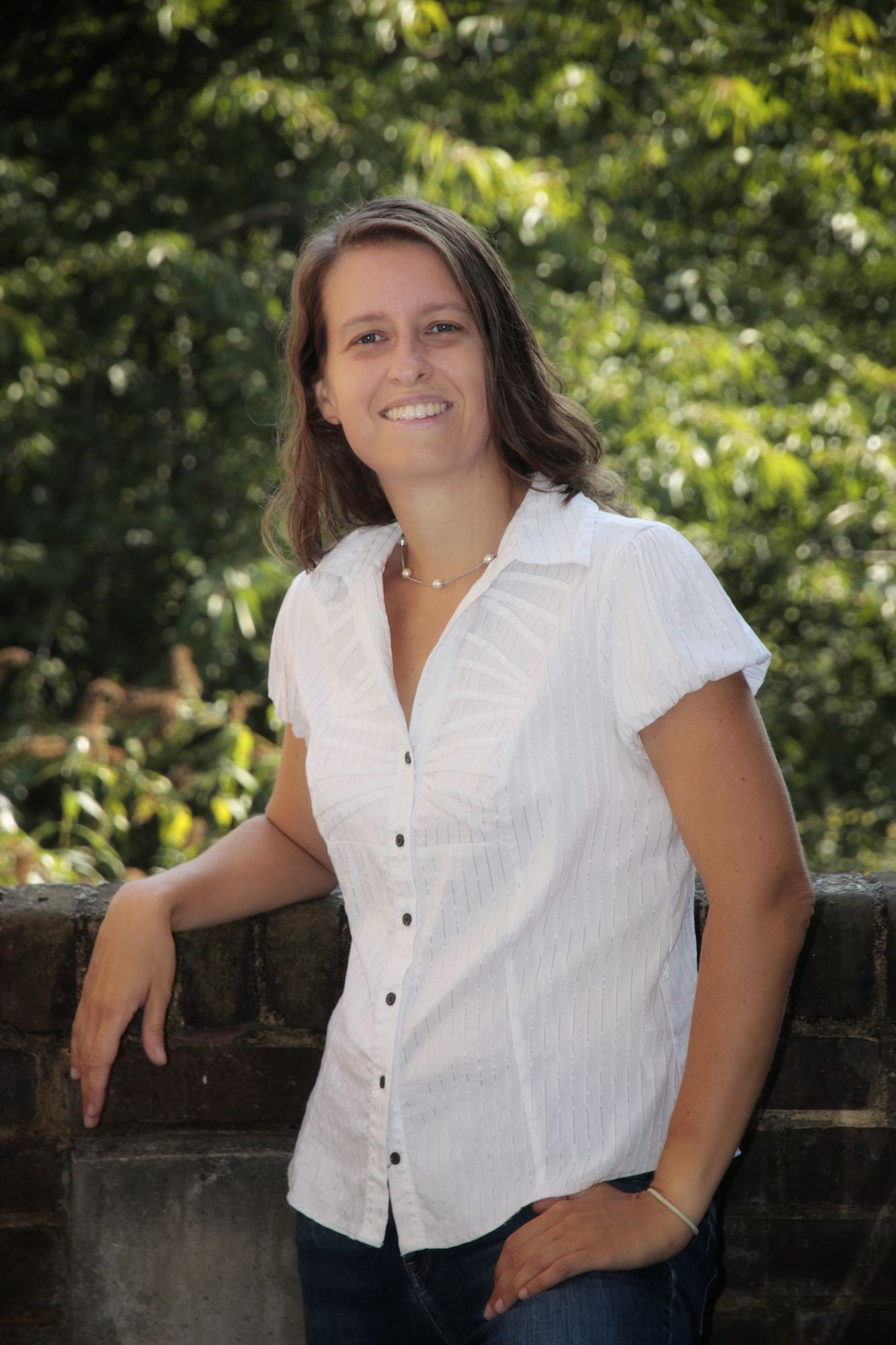
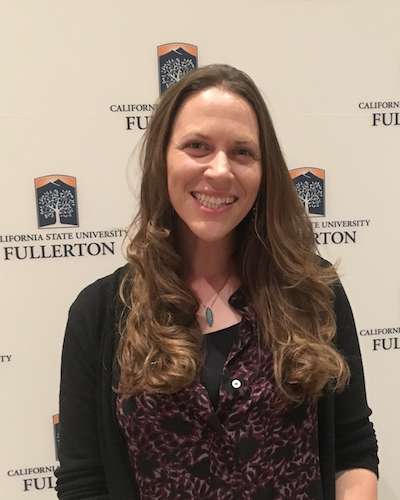
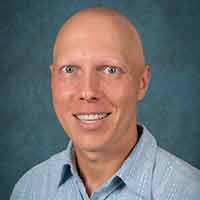
Katharina Proksch is a researcher specializing in advanced statistical methodologies and their applications across diverse scientific domains. Her work focuses on regression models, simultaneous inference, and transforms, with notable contributions to nonparametric testing, inverse problems, and quantitative imaging techniques. She explores interdisciplinary applications in biomedical imaging, astrophysics, and biomechanical analysis, emphasizing rigorous statistical frameworks to ensure methodological robustness. Her research interests include developing statistical tools for super-resolution microscopy, fatigue detection through biomechanical data, and analyzing complex datasets from fluorescence microscopy and X-ray astronomy. Proksch's methodologies often address challenges in handling measurement errors, outliers, and multiscale data structures. Key contributions include a two-sample test using Wilcoxon rank sums, quantitative super-resolution microscopy techniques with statistical guarantees, and fatigue detection algorithms leveraging sequential testing. Her work bridges theoretical statistics with practical applications in health monitoring and astrophysical phenomena modeling.
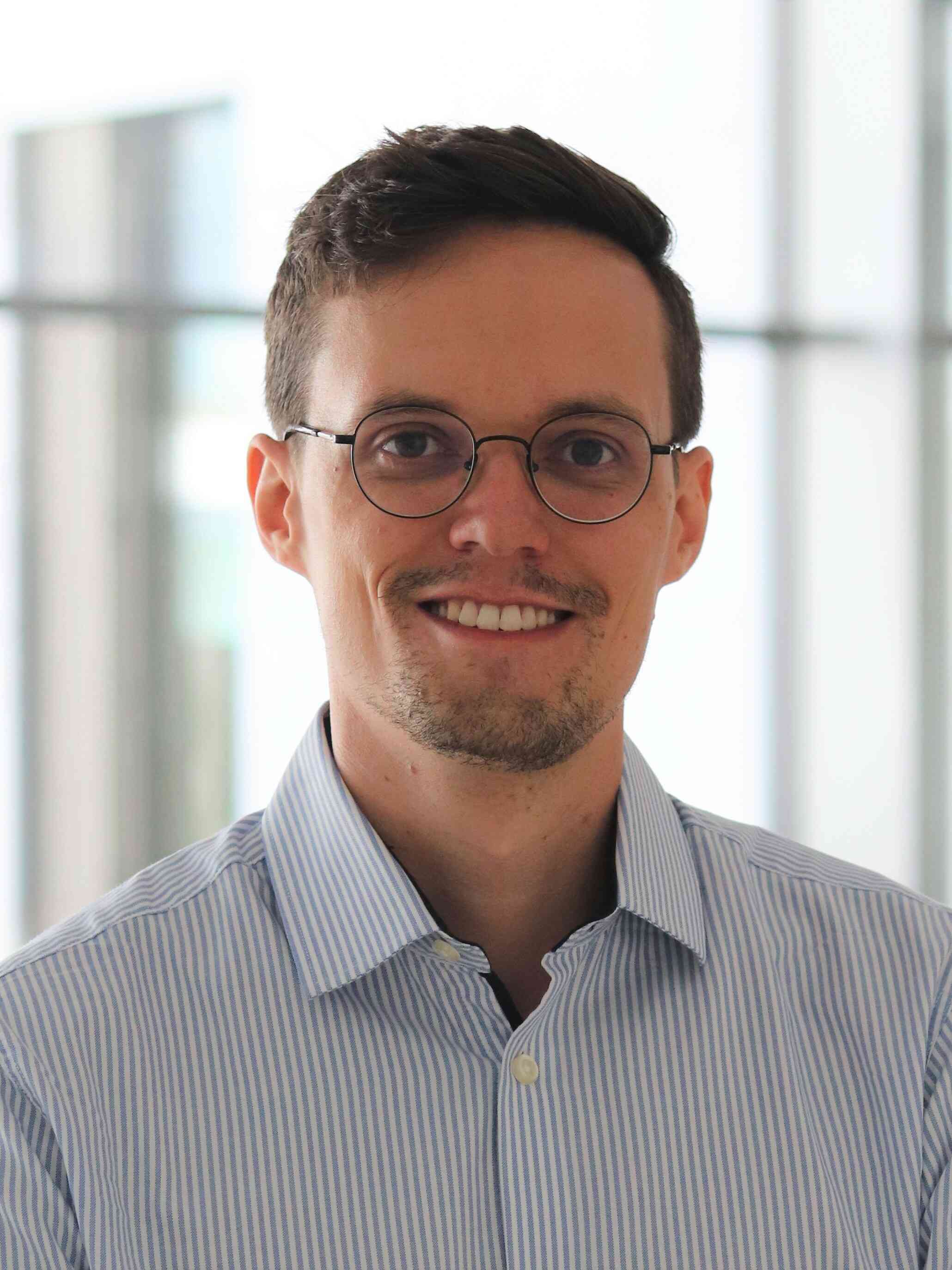
Frank Werner is a Professor of Mathematics at the Chair of Scientific Computing, University of Würzburg, specializing in statistical inverse problems and regularization theory. His research bridges statistics and inverse problems, with applications in biophysics, particularly fluorescence microscopy and non-Gaussian noise modeling. Education: Diplom in Mathematics (2009) and PhD (2012) from Georg-August-Universität Göttingen. Werner's research focuses on uncertainty quantification via minimax tests, nonlinear inverse problems, and photonic imaging. His recent work includes adaptive regularization methods and multiscale scanning techniques. He leads the Inverse Problems team and collaborates internationally, including at Fudan University, Technical University of Chemnitz, and the Max-Planck-Institut für biophysikalische Chemie (2014–2020). His publications span journals like Inverse Problems , Annals of Statistics , and SIAM Journal on Numerical Analysis , with trends emphasizing Poisson data, impulsive noise, and computational algorithms for microscopy. Scientific Awards: Diplomprüfung with Distinction (2009) Erskine Fellowship (2023) Werner is actively involved in academic service, organizing conferences (e.g., AIP2025 in Rio), and mentoring collaborations. He is married with two sons and maintains affiliations with societies like the EMS-TAG Inverse Problems and the Society for Inverse Problems.
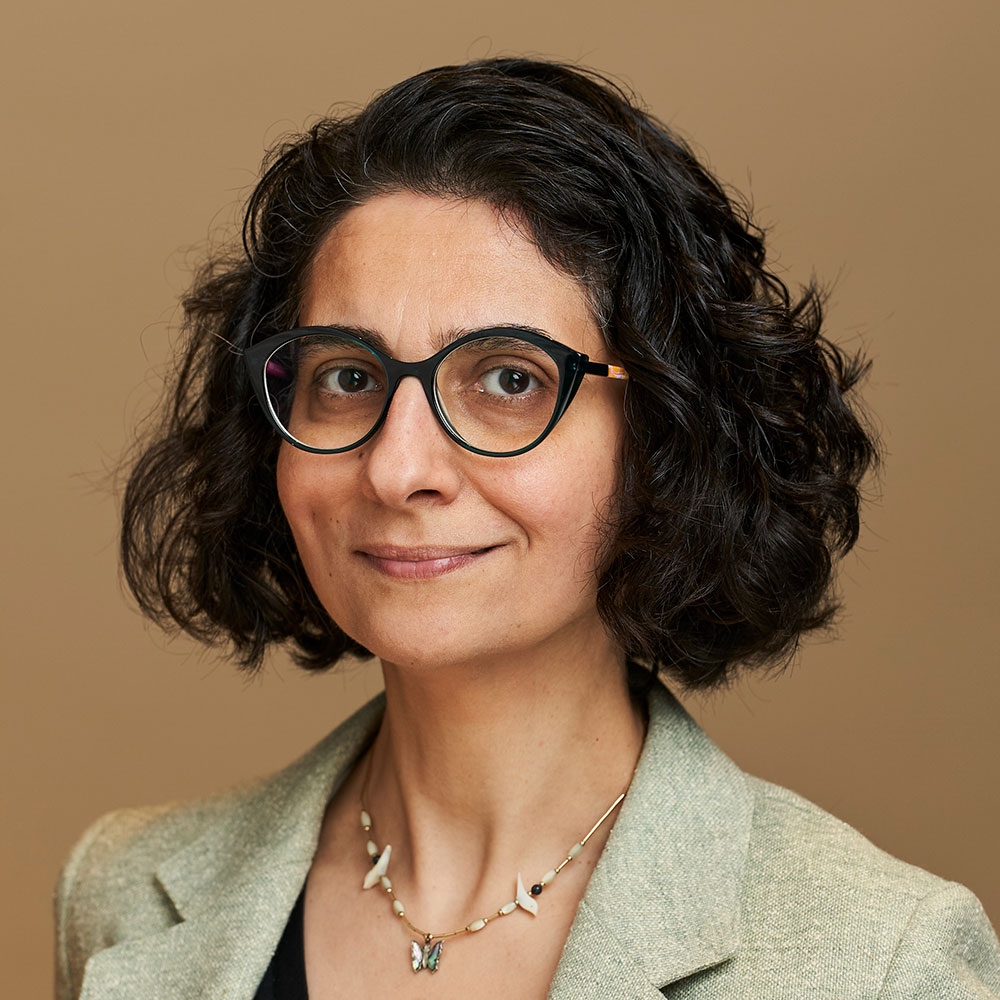
Silvia Liverani is a Reader in Statistics and Head of the Centre in Data Science, Statistics and Probability at Queen Mary University of London (School of Mathematical Sciences). Her research focuses on Bayesian methods, spatial-temporal modeling, and computational statistics, with applications in epidemiology, environmental health, and genetics. She leads projects on biodiversity analysis and spatial health data, collaborating with institutions like the Royal Botanical Gardens, Kew and the Alan Turing Institute. Education: PhD in Bayesian Clustering from the University of Warwick (2009). Grants & Initiatives: Awarded £1,000 (2025) for an LGBTQ+ Mathematics Open Day; led a Data Study Group at the Alan Turing Institute (2023). Labs/Teams: Director of the Centre in Data Science, developer of R packages PReMiuM and CARME for Bayesian clustering and spatial modeling. Key Research Themes: Dirichlet process mixture models, spatial misalignment correction, and interdisciplinary collaborations in health and environment. Current work includes predicting biodiversity loss under climate change and analyzing socio-economic health disparities through spatio-temporal frameworks.
Bodhisattva Sen is a Professor of Statistics at Columbia University, New York. His research focuses on nonparametric statistics, large sample theory, optimal transportation, and statistical applications in astronomy. He completed his Ph.D. in Statistics at the University of Michigan (2008) and holds degrees from the Indian Statistical Institute, Kolkata (B.Stat., M.Stat.). His work spans shape-constrained estimation, bootstrap inference, and interdisciplinary projects in astronomy. Sen’s research emphasizes distribution-free testing, high-dimensional models, and computational methods. Education: Ph.D. in Statistics, University of Michigan, Ann Arbor (2008) M.Stat., Indian Statistical Institute, Kolkata B.Stat., Indian Statistical Institute, Kolkata Research Interests: Nonparametric function estimation Optimal transport applications in statistics Empirical Bayes and multiple testing High-dimensional statistical inference Statistical methods in astronomy Key Contributions: Developed multivariate distribution-free tests using optimal transport Advanced convex regression methods in multidimensions Contributed to nonparametric maximum likelihood estimation in mixture models Explored statistical applications in stellar abundance clustering His work bridges theoretical statistics with practical applications, emphasizing robust and computationally efficient methods. Sen has also contributed to methodological advancements in astronomy through statistical modeling of stellar data.
Jakob Zech is a Professor at the Interdisciplinary Center for Scientific Computing (IWR) at Heidelberg University since April 2020. Before this, he held postdoctoral positions at MIT (2019-2020) and ETH Zürich (2018-2019). He earned his PhD in Mathematics from ETH Zürich in 2018, focusing on Sparse-Grid Approximation of High-Dimensional Parametric PDEs, followed by a Master’s (2014) and Bachelor’s (2012) in Applied Mathematics from ETH Zürich and TU Wien, respectively. Research Interests : Zech’s work bridges Uncertainty Quantification (UQ), high-dimensional approximation, and computational mathematics. Key areas include sparse-grid techniques, neural networks, transport methods, Bayesian inverse problems, and the theoretical foundations of deep learning. His research emphasizes developing algorithms for stochastic modeling and analyzing their mathematical properties. Teaching : He has taught advanced courses such as High Dimensional Approximation, Theory of Deep Learning, and Numerical Methods for Bayesian Inverse Problems at Heidelberg University. He also served as a teaching assistant for numerous courses at ETH Zürich, covering numerical analysis, partial differential equations, and linear algebra. Publications : His recent work explores quantum computing applications in polynomial chaos expansions, statistical learning theory for neural operators, and multilevel optimization strategies. His articles reflect a strong focus on combining classical numerical methods with modern machine learning techniques. Labs/Teams : While no specific lab is mentioned, his research group is active in computational UQ and deep learning, collaborating internationally with institutions like MIT and ETH Zürich.
Damek Davis is an Assistant Professor in the Department of Mathematics at Cornell University, affiliated with both the College of Engineering and the College of Arts and Sciences. He holds a Ph.D. in Mathematics from the University of California, Los Angeles (2015). His research focuses on developing and analyzing optimization algorithms for large-scale, nonconvex, and nonsmooth problems arising in machine learning and signal processing. He emphasizes theoretical guarantees on algorithm performance and practical implementations that leverage modern computing architectures. His work spans stochastic optimization, subgradient methods, and convergence analysis, with applications to computational microscopy, phase retrieval, and decentralized systems. Recent contributions include advancements in adaptive stepsize methods, sharpness-aware optimization, and global optimality conditions for mixture models. Davis collaborates on theoretical foundations and algorithmic innovations in high-dimensional statistics, nonlinear optimization, and parallel computing. His scholarly output includes over 50 peer-reviewed articles, with recent highlights in top venues such as SIAM Journal on Optimization, Mathematical Programming, and IEEE Transactions on Signal Processing. His research is supported by grants from NSF and AFOSR, focusing on topics like robust statistical estimation and algorithmic scalability.
Melody Ghahramani is a Professor in the Department of Mathematics and Statistics at the University of Winnipeg. Her research focuses on time series analysis, environmetrics, and biostatistics with applications in finance and infectious disease modeling. She holds a Ph.D. in Statistics from the University of Manitoba and has held academic positions in Winnipeg since completing her postgraduate studies. Education: Ph.D. in Statistics, University of Manitoba M.Sc. in Statistics, Simon Fraser University Bachelor's Degree in Mathematics and Statistics, University of Manitoba Research interests emphasize statistical methodologies for zero-inflated and overdispersed data, environmental modeling of temporary streams in Canadian prairies, and biostatistical applications in healthcare and epidemiology. Her work bridges theoretical statistics with practical applications in finance and ecological systems. Publications highlight advancements in time series regression, volatility modeling, and cryptocurrency trading strategies. She has contributed to statistical frameworks for analyzing count data and financial market dynamics. Her applied research includes modeling long-term survival outcomes in healthcare and environmental water resource systems. No formal awards are listed, though her extensive publication record reflects sustained academic contribution. She advises courses in statistics and supervises student research in mathematical and statistical methodologies. Contact details: Office 6L25, Lockhart Hall, reachable at m.ghahramani@uwinnipeg.ca or 204.789.1414.
Laura Smith Chowdhury is a Professor in the Department of Mathematics at California State University, Fullerton (CSUF). She holds a PhD from the University of California, Los Angeles (UCLA), and MS and BS degrees from Western Washington University. Her research focuses on applied mathematics, crime modeling, complex networks, dynamical systems, image processing, and computational science. She has contributed to agent-based models for social dynamics, territorial gang patterns, and public health interventions. Notable works include stochastic models for political conflict forecasting and network partitioning algorithms. Her research spans diverse applications, including crime prevention strategies for resource-limited police departments, social media analysis for controversial topics, and migration patterns in population dynamics. She has developed methodologies like spectral clustering with epidemic diffusion and variational methods for density estimation. Her work integrates computational tools with real-world problems in policy, epidemiology, and urban planning. Prof. Chowdhury’s publications appear in journals like the Bulletin of Mathematical Biology, European Journal of Applied Mathematics, and ACM Transactions on Knowledge Discovery from Data. She co-authored a patent (US 8,938,115 B2) on data fusion mapping techniques. Her research often bridges mathematical theory with practical societal challenges, emphasizing interdisciplinary collaboration.
Dr. Galen Papkov is a Professor of Mathematics and Program Coordinator at Florida Gulf Coast University (FGCU), where he has served since 2009. He holds a Ph.D. in Statistics from Rice University, an M.A. in Applied Mathematics from Hunter College (CUNY), and a B.A. in Mathematics and Psychology from SUNY Geneseo. His research focuses on statistical methodologies, including nonparametric inference, density estimation, and applications in healthcare and agriculture. Dr. Papkov has expanded FGCU's Honors Program into an Honors College, serving as Procedural Chair of the Honors Executive Board and Interim Associate Director. His teaching spans undergraduate and graduate courses in calculus, differential equations, and statistics, including STA 5355 (Applied Mathematical Statistics). Dr. Papkov's research collaborations include analyzing hospital data for Lee Health, survey-based studies in health sciences, and agricultural projects using controlled environment technologies like GREENBOX. His work emphasizes data-driven decision-making, evidenced by his roles in academic administration and interdisciplinary projects. Beyond academia, he advocates for family activities, outdoor pursuits, and fantasy literature.
Clémentine Prieur is a Professor at the University of Grenoble Alpes, affiliated with the Jean Kuntzmann Laboratory (LJK - CNRS / Inria / UGA - Grenoble INP-UGA) and the Inria AIRSEA Project Team. She holds significant leadership positions including Head of the Applied Mathematics specialty at the MSTII Doctoral School, Vice-President of the French Statistical Society, and President of the SAMO (Sensitivity Analysis of Model Output) board. Her educational background includes a Master's degree, teaching qualification, and mathematics thesis. She pursued her academic career after expressing interest in mathematics as early as sixth grade, eventually specializing in probability and statistics after initially being drawn to abstract mathematics. Prieur's research focuses on uncertainty quantification, sensitivity analysis, model and dimension reduction, robust inversion, multivariate risk analysis, and nonparametric estimation for dependent processes. Her work bridges theoretical mathematics with practical applications in climatology, health, energy, and environmental science. She has developed numerous methodologies for analyzing complex systems and extracting meaningful information from data. Her publications demonstrate consistent contributions to uncertainty quantification and sensitivity analysis, with recent work spanning epidemic modeling, climate science, renewable energy systems, and machine learning. Her research shows increasing interdisciplinary applications while maintaining strong mathematical foundations, particularly in developing computational methods for high-dimensional problems. Vice-President of the French Statistical Society President of SAMO (Sensitivity Analysis of Model Output) board Local coordinator of MATH-AmSud project SMILE Coordinator of Inria associate team UNQUESTIONABLE Member of CNRS thematic networks for Uncertainty Quantification and Earth and Energies Prieur actively supervises doctoral students and postdocs, guiding them from master's internships through thesis completion. Her research is supported through multiple national and international projects including CIROQUO (Research and Industry Consortium), MIAI chair BALTEEC, and various CNRS networks. She frequently travels internationally for research collaborations, with recent visits to institutions in Uruguay, Italy, and Chile. She leads the Inria AIRSEA project team and participates in several research groups focusing on uncertainty quantification, including the CNRS thematic network Quantification of Uncertainties RT2172 and the thematic network Earth and Energies RT2166. Her work with CIROQUO connects academic research with industrial applications in uncertainty quantification for expensive data.
Edoardo Mainini is an Associate Professor at the University of Genova, specializing in mathematical analysis and applied mathematics. His research focuses on calculus of variations, partial differential equations, elasticity theory, optimal transport, and nonlinear dynamics. He has contributed to studies on fractional equations, material science, and stochastic processes. His work often bridges pure and applied mathematics, addressing problems in mechanics, probability, and geometric analysis. Mainini has collaborated extensively with researchers such as M. Kružík, D. Percivale, and U. Stefanelli, producing influential papers in journals like Calc. Var. Partial Differential Equations and Arch. Ration. Mech. Anal. . His recent articles (2020–2025) address topics ranging from fractional linear equations to Bayesian nonparametric models. Education includes a PhD in Mathematical Analysis from the University of Genova (2010) and a thesis on Infinite-dimensional porous media equations and optimal transportation . He has organized international conferences and seminars on variational methods and geometric structures. His research emphasizes rigorous mathematical frameworks for physical phenomena, including the linearization of elasticity models and the study of ground states in diffusion-dominated systems. Mainini’s contributions to carbon nanotube geometries and optimal transport theory have been recognized through invited talks at major events, such as the International School of Mathematics “Guido Stampacchia” . His work often explores the interplay between discrete and continuous models, with applications to materials science and geometric optimization.
Aiping Xu serves as Assistant Professor Academic at Coventry University's Mathematics Support Centre (LIB), actively supervising PhD students while leading institutional mathematics education initiatives. Her research bridges advanced statistical methodology with practical educational applications across engineering, data science, and higher education contexts. Her academic foundation includes: Doctorate in Signal Processing and Telecommunication from Research Institute of Computer Science and Random Systems (awarded 2002) MSc in Operational Research and Control Theory from Shandong University (awarded 1998) Bachelor's degree in Mathematics from Shandong University (awarded 1995) Dr. Xu's research program demonstrates significant evolution from early work on nonlinear system fault diagnosis using adaptive observers (2001-2004) to contemporary expertise in functional data analysis, where she develops principal curve clustering methods and Gaussian process regression frameworks. Her fingerprint analysis confirms dominant specialization in Functional Data Mathematics (100%), Principal Curve Mathematics (100%), and Forecasting (100%), with strong contributions to mathematics education through support centre evaluations and mathematical modeling competitions. Recent publications (2017-2022) reveal a strategic pivot toward applying statistical learning in educational contexts, particularly through her leadership in Coventry University's Mathematics Support Centre. This work integrates machine learning techniques with pedagogical innovation to address student challenges in mathematical comprehension and application. As an active PhD supervisor, Dr. Xu contributes to academic development through the Mathematical Contest in Modelling and institutional support services. Her research outputs show consistent international collaboration, particularly with Newcastle University, spanning statistical methodology, educational practice, and interdisciplinary applications. The Mathematics Support Centre under her involvement operates as a critical academic infrastructure unit, providing cross-disciplinary mathematical assistance to students across Coventry University through structured tutoring, resource development, and pedagogical research initiatives.
Wei Wu is a Professor in the Department of Statistics and an Associate Graduate Faculty member in the Program in Neuroscience at Florida State University (FSU). He holds a Ph.D. in Applied Mathematics from Brown University (2004). His research focuses on interdisciplinary statistical methods for neuroscience, functional data analysis, and computational statistics. Key contributions include frameworks for spike train analysis, statistical depth in point processes, and registration of functional data using Fisher-Rao metrics. Affiliations: Department of Statistics, Program in Neuroscience Education: Ph.D. in Applied Mathematics, Brown University (2004) Research Interests: Functional data registration, nonparametric methods for point processes, neural spike train modeling, statistical depth analysis, and applications in birdsong production and computational neuroscience. He develops tools for analyzing complex data structures in neuroscience and biostatistics, emphasizing geometric and Bayesian approaches. His work spans statistical modeling of neural coding, protein structure comparison, and signal processing under compositional noise. Recent publications include advancements in stochastic models for time warping and depth-based statistical inference in point processes. Collaborations: Active with researchers in neuroscience, mathematics, and bioinformatics at FSU and other institutions.
Marepalli B. Rao is a Professor in the Department of Environmental Health at the University of Cincinnati's College of Medicine. He holds an Emeritus Professor title at North Dakota State University (NDSU), where he served from 1987–2003. His academic journey includes roles as Visiting Professor at the University of Pittsburgh and Lecturer at the University of Sheffield. Rao earned his B.S. and M.S. in Statistics from Madras University and a Ph.D. in Statistics from the Indian Statistical Institute. His research focuses on statistical methodologies with applications in bioinformatics, biostatistics, epidemiology, and genetic studies. Notable areas include damage models, survival analysis, and statistical genetics. Rao has contributed to over 200 peer-reviewed publications and serves on several editorial boards. His work often intersects with clinical and public health challenges, such as asthma epidemiology and environmental exposure analysis. Rao has led or collaborated on numerous grants, including NIH-funded studies on statistical genomics, tissue engineering, and pediatric allergy research. He has held leadership roles in academic committees and has mentored numerous Ph.D. students. His expertise in statistical design and analysis is applied across disciplines, from biomedical engineering to environmental health.
Luca LA ROCCA is an Associate Professor in the Department of Education and Humanities at the University of Modena and Reggio Emilia. His research focuses on Bayesian statistics, graphical models, complex systems analysis, and statistical applications in education and social sciences. He teaches courses such as Applied Mathematics and Social Statistics for engineering and pedagogy programs. His research spans topics including Bayesian inference for directed acyclic graphs, non-local priors, and statistical methods for analyzing complex systems. Notable contributions include work on detecting pairwise interactions in biological networks and assessing skewness in financial markets. He has also developed methodologies for structural learning in heterogeneous data and seismic hazard assessment. LA ROCCA has published extensively in top journals and conferences, with recent works emphasizing the interplay between statistical theory and real-world applications. His teaching responsibilities include courses on applied statistics, probability, and regression analysis.