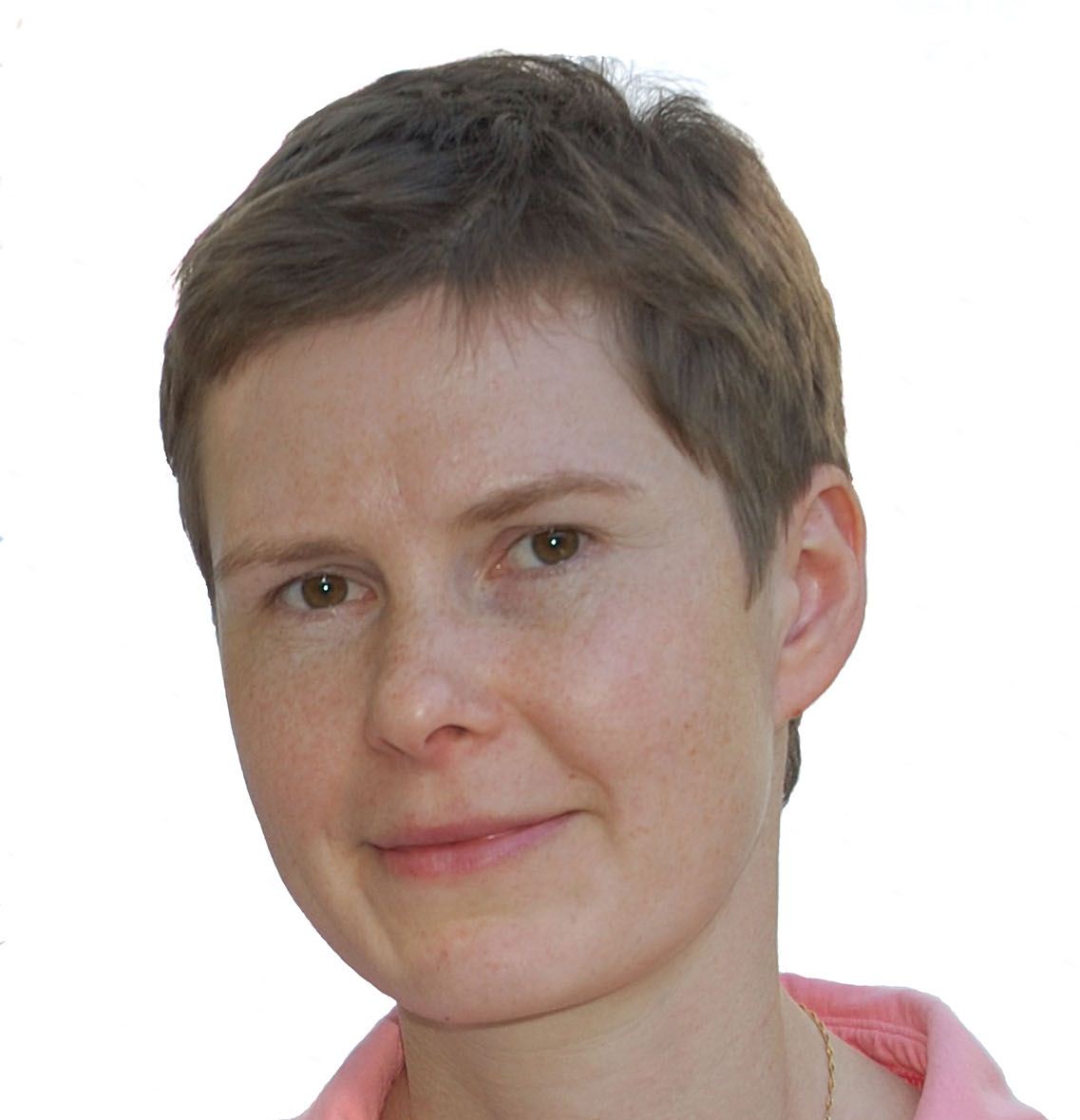
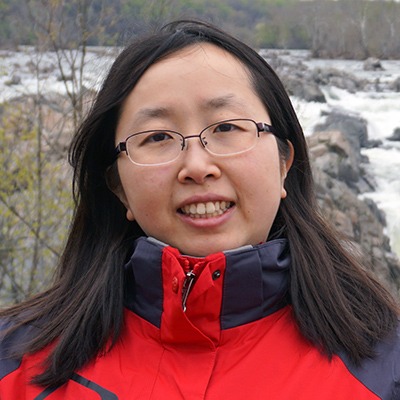
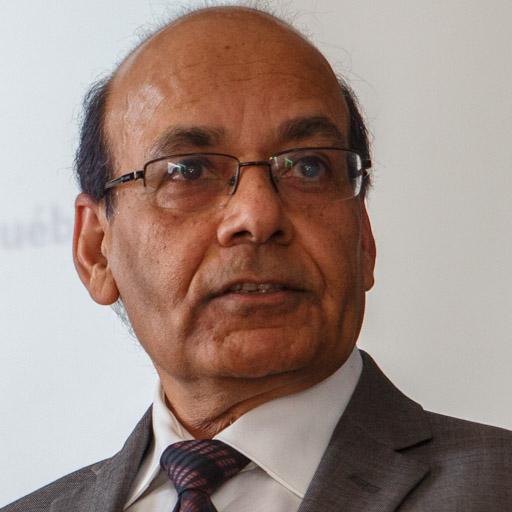
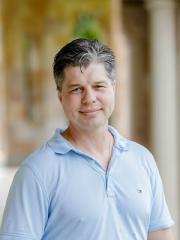
Natalia Stepanova is a Professor in the School of Mathematics and Statistics at Carleton University. Her research focuses on high-dimensional statistical inference, nonparametric estimation, and hypothesis testing. She holds an office in Herzberg Laboratories (5229HP) and can be reached via email at nstep@math.carleton.ca . Her research interests emphasize modern challenges in statistical theory, particularly in developing adaptive methods for sparse data analysis, nonparametric models, and signal recovery. Recent work includes advancements in sup-functional analysis for empirical processes and efficient kernel-based density estimation. Stepanova’s publications (2010–2025) consistently address themes in nonparametric methods, high-dimensional data, and statistical efficiency. Key contributions include variable selection techniques, goodness-of-fit testing, and adaptive algorithms for sparse additive models. No scientific awards are explicitly listed in the provided materials. Her academic contributions span graduate advising and collaborative research within the Ottawa-Carleton Institute for Mathematics and Statistics (OCIMS). No specific grants or lab affiliations are detailed in the text.
Srinjoy Das is an Assistant Professor in Data Science at the School of Mathematical and Data Sciences, part of the Eberly College of Arts and Sciences at West Virginia University (WVU). He holds a Ph.D. and M.S. in Electrical Engineering and Statistics from the University of California, San Diego (2018), followed by postdoctoral research at UCSD’s Department of Mathematics until 2021. His research focuses on algorithms for predictive inference on time series, generative models, and efficient implementation of deep learning on edge computing devices. Education: Ph.D. in Electrical Engineering, UCSD (2018) M.S. in Statistics, UCSD (2018) Postdoctoral Researcher, UCSD Mathematics (2018–2021) Research Interests: Algorithms for real-time inference on generative neural networks Efficient implementation of deep learning on FPGAs and edge devices Time series analysis and nonparametric prediction Data-efficient learning in additive manufacturing and healthcare Recent Research Trends: His recent work emphasizes machine learning applications in manufacturing defect detection (e.g., melt pool characterization in 3D printing), geospatial analysis, and healthcare prediction systems. He also explores hybrid optimization strategies and bandwidth-efficient video processing techniques. Mentoring & Collaboration: Advised students on projects including FPGA-based neural network design (Xinyu Zhang), generative model evaluation (Ojash Neopane), and statistical inference for random fields (Ivy Zhang). Collaborates with industry partners like Qualcomm and Microsoft Research, focusing on edge computing and hardware optimization. Labs/Teams: His research group focuses on interdisciplinary projects at the intersection of data science, signal processing, and applied mathematics, with active collaborations in both academia and industry.
Xiaojing Wang is an Associate Professor in the Department of Statistics at the University of Connecticut's College of Liberal Arts and Sciences. She holds multiple affiliations including the Institute for Collaboration on Health, Intervention, and Policy (InCHIP), the Connecticut Institute for the Brain and Cognitive Sciences (IBACS), and the Center for Environmental Sciences and Engineering. Education: Ph.D. in Statistics and M.A. in Economics from Duke University (2012) M.S. in Probability and Mathematical Statistics from Chinese Academy of Sciences (2008) B.S. in Information and Computational Science from Hunan University (2005) Her research focuses on Bayesian methodologies with applications spanning neural decoding, environmental science, psychometrics, and computational biology. She develops novel statistical models for high-dimensional data including latent variable frameworks for neural spiking activity and dynamic item response theory for educational testing. Her work integrates machine learning with traditional statistical inference to address complex problems in interdisciplinary domains. Wang's publications demonstrate a consistent focus on Bayesian computation and model development, with significant contributions to Gaussian process methodologies, subgroup analysis in clinical applications, and ecological forecasting. Recent work shows increasing emphasis on neural data science and computationally intensive methods for high-dimensional inference. Awards and Honors: NSF Faculty Early Career Development (CAREER) Award (2019) Elected Member of International Statistical Institute (ISI) (2017) Jeffrey’s Excellence Prize for Best Methodological Poster (2013) As a statistical consultant, she advises through UConn's Statistical Consulting Services. Her methodological innovations support applications across health interventions, cognitive science, and environmental research through interdisciplinary collaborations.
Athanasios (Thanasis) Kottas is a Professor in the Department of Statistics at the University of California, Santa Cruz (UCSC), part of the Baskin School of Engineering. He holds a Ph.D. in Statistics from the University of Connecticut (2000) and a M.Sc./B.Sc. in Mathematics from the University of Ioannina, Greece. His research focuses on Bayesian nonparametric methods, mixture models, point processes, and their applications in biometrics, ecology, and environmental science. He has served as an editor for Bayesian Analysis and has authored numerous influential papers in top statistical journals. Education : Ph.D. in Statistics, University of Connecticut, 2000 M.Sc. in Statistics and Operations Research, University of Ioannina, 1996 B.Sc. in Mathematics, University of Ioannina, 1994 Research Interests : Kottas specializes in Bayesian nonparametric modeling, including mixture models, ordinal regression, and applications in environmental and ecological statistics. His work emphasizes flexible statistical frameworks for complex data structures, such as point processes, survival analysis, and spatial-temporal dynamics. Recent projects include developing methods for risk assessment in developmental toxicity and quantile regression. Publications : His 60+ publications span journals like Bayesian Analysis , Journal of the American Statistical Association , and Environmetrics , reflecting contributions to both methodology and interdisciplinary applications. Key themes include nonparametric density regression, spatio-temporal modeling, and Bayesian quantile analysis. Awards & Honors : ISBA Savage Award (via student Maria DeYoreo, 2015) Honorable Mention for Savage Award (via student Matthew Taddy, 2009) Editor of Bayesian Analysis (2018–2024) Students & Advising : Kottas has mentored over 20 Ph.D. and M.Sc. students, many of whom have won prestigious awards. His advising emphasizes methodological innovation and interdisciplinary impact. Labs & Collaborations : He collaborates actively with researchers in ecology, environmental science, and astrophysics, leveraging Bayesian nonparametric tools to address real-world challenges.
Dr. Yogendra P. Chaubey is a Professor in the Department of Mathematics and Statistics at Concordia University, Montréal, Canada. Holding a Ph.D. from the University of Rochester (1977), his research focuses on statistical methodology with emphasis on sampling theory, distribution modeling, and survival analysis. Education: Ph.D., University of Rochester (1977) His work spans nonparametric density estimation for circular and non-negative data, wavelet-based noise reduction in biological imaging, entropy estimation, left-censored spatial modeling (e.g., arsenic contamination), and inverse Gaussian distributions. Recent collaborations include applications in protein classification and public health. Dr. Chaubey has published extensively on statistical theory and methodology, including corrections and extensions to classical estimators. His teaching includes advanced courses in sample survey theory and applications.
Jun Yu is a Full Professor in Mathematical Statistics at the Department of Mathematics and Mathematical Statistics, Umeå University, Sweden, where he also serves as Director of Doctoral Studies. His research focuses on Statistical Learning and Inference for Spatiotemporal Data, with applications in artificial intelligence and various scientific domains. Professor Yu leads a research group dedicated to tackling theoretical data science problems and developing statistical learning methods for solving real-world challenges across multiple disciplines. Professor Yu's primary research interests include statistical learning with sparsity, compressive sensing, mathematics of data science, hierarchical spatiotemporal modeling, nonparametric density/intensity estimation, statistical inference for hidden Markov models, and wavelet theory applied to signal and image analysis. His work spans numerous application areas including atmospheric icing, automobile industry, biomedical engineering, climate research, epidemiology, forestry, geochemistry, hydrology, radiation oncology, spatial ecology, sports science, and transportation. Professor Yu's recent publications demonstrate a strong trend toward interdisciplinary research at the intersection of statistical methodology and environmental science, medical imaging, and transportation systems. His work on tree-ring isotope analysis for climate reconstruction, compressive sensing for medical imaging, and statistical models for train delay prediction shows his ability to develop sophisticated statistical methods that address complex real-world problems across diverse domains. As Director of Doctoral Studies, Professor Yu oversees doctoral education in Mathematical Statistics and has supervised numerous PhD students. His teaching spans mathematical statistics at all levels, from basic education to postgraduate courses, for students in mathematics, statistics, biology, engineering, and forestry, delivered in English, Swedish, or Chinese. Professor Yu leads the research group on statistical learning and inference for spatiotemporal data at Umeå University. This group develops innovative approaches for analyzing complex spatiotemporal datasets using tools such as intelligent data sampling, large-scale environmental data modeling, multimodal image processing, and tree growth models, with applications across multiple scientific fields.
Cristina Tortora is an Associate Professor in the Department of Mathematics and Statistics at San Jose State University (SJSU), part of the College of Science. Prior to her position at SJSU since 2016, she held post-doctoral fellowships at McMaster University (2014-2015), the University of Guelph (2013), and Stazione Zoologica Anton Dohrn in Naples (2012). She has also been a visiting professor at the University of Naples Catania (Summer 2022 and Fall 2024), University of Naples Federico II (Summers 2021 and 2017), and McEwan University in Alberta, Canada (2019). Additionally, she was a visiting student at CEREMADE Paris Dauphine during her PhD. Her education includes a Ph.D. in Statistics from the University of Naples Federico II (2012), a Master's degree in Statistics (Statistica per le decisione e l’analisi dei sistemi complessi) from the same university (2008), and a Master 2 in Applied Mathematics (Economie quantitative des comportements et des marchés) from Université Lumière Lyon II, France (2009). Cristina’s research interests are centered around cluster analysis , classification , and model-based clustering . She specializes in developing methods for handling mixed-type data , missing values , and outlier detection using advanced statistical models such as generalized hyperbolic distributions and asymmetric Laplace regressions. Her work extends to applied domains, including environmental science (e.g., phytoplankton associations), transportation studies (e.g., cyclist waiting times), and psychology (e.g., emotional reactivity subtypes). She also contributes to software development, notably with the R packages FPDclustering and MixGHD , which implement her clustering algorithms. Her recent publications (2022–2025) reflect a focus on probabilistic distance clustering, mixture models, and algorithm evaluation. These studies explore techniques for addressing data asymmetry, improving outlier detection, and analyzing complex datasets across disciplines. Cristina Tortora has received several notable awards, including the Chikio Hayashi Award for young researchers in 2019 and the SJSU College of Science Award for research and mentoring students in 2024. She has held leadership roles in professional societies, such as serving as President of the San Francisco Bay Area ASA Chapter (2022) and currently as Communication Director . She was also elected as a Director of the Classification Society from 2022 to 2026. In terms of grants and advising, Cristina has collaborated on projects funded by Caltrans, including the evaluation of coordinated ramp metering systems. She leads the RUI-funded research on versatile mixture models for mixed-type data. While specific student names are not listed, her work emphasizes mentoring, as highlighted by the 2024 SJSU award. She advises interdisciplinary teams in environmental science, engineering, and agroecology through collaborative research initiatives. Cristina collaborates with multidisciplinary teams, including psychologists, environmental scientists, engineers, and agroecology experts, but her work is primarily conducted within the Department of Mathematics and Statistics at SJSU. She also maintains active engagement with international academic networks through her visiting roles and professional service.
Shuoyang Wang is an Assistant Professor in the Department of Bioinformatics and Biostatistics at the University of Louisville's School of Public Health and Information Sciences (SPHIS). He holds a PhD in Mathematics and Statistics from Auburn University (2022), an MS in Statistics from the University of Wisconsin-Madison (2017), and a BS from Shandong University's Mathematics School (2016). His postdoctoral training (2022-2023) was at Yale University's Department of Biostatistics. His research focuses on advancing statistical methodologies for functional data analysis, deep learning applications in biostatistics, high-dimensional data classification, and causal inference in public health contexts. Key areas include integration of deep neural networks with functional data frameworks, mediation effect estimation with complex mediators, and spatial epidemiology models addressing health disparities. Recent work emphasizes classification challenges in functional data, particularly through innovative neural network architectures and robust statistical learning techniques. His 2024 reviews and 2025 multi-class classification studies highlight methodological contributions to this growing field. Publications span prestigious journals like Biostatistics , Statistica Sinica , and Electronic Journal of Statistics , with applied work addressing obesity disparities and upper airway thermoregulation. His research bridges theoretical advancements with practical healthcare applications.
K. Krishnamoorthy is a Professor of Statistics and holds the Philip and Jean Piccione Endowed Chair in Statistics at the University of Louisiana at Lafayette's Department of Mathematics. His expertise spans multivariate statistics, statistical tolerance regions, censored data analysis, and occupational exposure assessment. He has contributed extensively to methodologies for lognormal distributions, small sample inference, and calibration techniques. His research addresses challenges in environmental and occupational health data analysis, including exposure monitoring and statistical validation of sampling devices. Education: Ph.D. in Statistics from Indian Institute of Technology-Kanpur (1985). He has supervised over 25 Ph.D. students, many now in academic and industry roles. Notable contributions include the development of statistical tolerance regions, methodologies for data with non-detects, and software tools like StatCalc for distributional computations. Grants and Projects: Principal investigator on multiple NIOSH-funded projects (R01-OH03628 series) totaling over $2.6M, focusing on statistical methodologies for occupational exposure assessment. These include studies on lognormal distributions, equivalence testing of sampling devices, and imputation techniques for non-detect data. Publications: Over 200 peer-reviewed articles in journals like *Journal of Statistical Planning and Inference*, *Technometrics*, and *Annals of Occupational Hygiene*. Authored/co-authored three books, including *Handbook of Statistical Distributions with Applications* (CRC Press) and *Statistical Tolerance Regions* (Wiley). Labs/Teams: Leads the statistical methodologies group at UL Lafayette, collaborating with occupational hygienists and environmental scientists. Developed open-source Fortran/R programs for statistical inference in specialized distributions.
Shakeel Gavioli-Akilagun is a Research Fellow in the Department of Statistics at the London School of Economics and Political Science (LSE), part of the Time Series and Statistical Learning research group. He holds a BSc in Economics and Econometrics from the University of York and an MSc in Statistics (Research) from LSE, where he completed an ESRC studentship. His primary research focuses on changepoints, feature detection, multiscale statistics, and causal inference, with applications in time series analysis and machine learning. His academic contributions include developing algorithms for non-standard change point problems and has published in journals like Electronic Journal of Statistics and Journal of the Royal Statistical Society Series B . He teaches courses such as Distributed Computing for Big Data and Graph Data Analytics at LSE. Recent invited talks include presentations at the Institute of Mathematical Statistics Asia Pacific Rim Meeting (2026) and the EcoSta conference on change point detection (2025).
Irene Botosaru serves as an Associate Professor in the Department of Economics at McMaster University, specializing in advanced econometric methodologies with applications in microeconomic theory and labor economics. Her scholarly profile demonstrates sustained contributions to panel data analysis, causal inference, and the economics of household resource allocation. Her academic credentials include: BA in Mathematics from the University of Washington BA (Honours) in Economics from the University of Washington MA in Economics from Yale University PhD in Economics from Yale University (2011) Professor Botosaru's research program centers on developing and applying innovative econometric techniques to address identification challenges in nonlinear panel models, particularly regarding time-varying parameters and unobserved heterogeneity. Her work bridges theoretical econometrics with empirical applications in earnings dynamics, household economics, and causal policy evaluation. Key methodological contributions include novel approaches to transformation models, duration analysis with stochastic heterogeneity, and robust treatment effect estimation in constrained panel settings. Analysis of her publication record reveals a pronounced evolution toward time-varying parameter frameworks and adversarial identification strategies, with increasing emphasis on methodological robustness for short panel data. Her research consistently addresses fundamental identification problems in microeconometrics while maintaining strong connections to substantive economic questions regarding income dynamics and household decision-making. She actively contributes to graduate education through courses including Econometrics I (ECON 761), Economic Policy Analysis I (ECON 773), and specialized Topics in Economics (ECON 700), reflecting her expertise in both theoretical and applied econometrics.
Jonas Latz is a Lecturer in Applied Mathematics at The University of Manchester. His research focuses on Bayesian inference, uncertainty quantification, stochastic processes, and their applications in computational mathematics and inverse problems. He has contributed to areas such as physics-informed neural networks, stochastic gradient methods, and medical imaging modeling. Key research interests include developing robust algorithms for Bayesian inverse problems, analyzing stochastic dynamical systems, and advancing numerical methods for partial differential equations. His work bridges theoretical foundations with practical applications in fields like tumor growth modeling and medical image reconstruction. Recent Achievements : Recipient of the SIAM Activity Group Uncertainty Quantification Early Career Prize (2024) SIAM Student Paper Prize (2020) SIGEST Award (2023) Dr. Latz collaborates internationally on topics such as adversarial machine learning, deep learning methods for PDEs, and stochastic sampling techniques. His research emphasizes rigorous mathematical analysis alongside computational innovation.
Dr. Mehdi Dagdoug is an Assistant Professor in the Department of Mathematics and Statistics at McGill University, Montreal, Canada. His research focuses on the intersection of survey sampling, missing data treatment, and statistical learning. He holds a Ph.D. from the Université de Bourgogne Franche-Comté, supervised by Camelia Goga and David Haziza. Education: Ph.D. in Mathematics, 2022, Université de Bourgogne Franche-Comté Postdoctoral Fellow, 2022-2023, University of Ottawa Research Interests: Dr. Dagdoug develops rigorous inference methods for survey sampling, particularly addressing nonresponse challenges through statistical learning tools. His work emphasizes high-dimensional settings where auxiliary variables exceed sample sizes. Key areas include model-assisted estimation, variance estimation for imputed survey data, and random forest applications in finite population sampling. Teaching: Currently teaches MATH 533 (Linear Regression & ANOVA) and MATH 525 (Sampling Theory) at McGill. Previously instructed courses in survey sampling, statistical learning, and programming at undergraduate and graduate levels. Awards: 2022 Jean-Claude Deville Prize (French Statistical Society) Grants: NSERC Discovery Grant, Mitacs Accelerate Proposal. Previously supported by Region Franche-Comté and Médiamétrie. Administrative Roles: Committee Member, Student Travel Grants (Statistical Society of Canada) Organizer, McGill Statistics Seminar Series (2023-2025) Board Member, BFC-Maths Federation (2020-2022) Popularization: Engages in science outreach through workshops and conferences for high school students, including a popular 'Titanic and Random Forests' workshop.
Amanda Coston is an Assistant Professor in the Department of Statistics at the University of California, Berkeley. Her research focuses on addressing challenges in algorithmic decision support systems and data-driven policy-making, emphasizing equity, validity, and reliability. She earned her PhD in Machine Learning and Public Policy from Carnegie Mellon University, advised by Alexandra Chouldechova and Edward H. Kennedy, and completed a postdoc at Microsoft Research's Machine Learning and Statistics Team. Her work spans causal inference, machine learning, and nonparametric statistics, with applications in criminal justice, healthcare, and public policy. Education: PhD in Machine Learning and Public Policy, Carnegie Mellon University (2019-2022) MS in Machine Learning, Carnegie Mellon University (2019) Bachelor of Science in Computer Science, Princeton University (2013) Research Interests: Her research investigates how algorithms and data systems can perpetuate or mitigate disparities in high-stakes domains. Key areas include counterfactual audits of racial bias in policing, fairness in predictive models, and validity in algorithmic decision-making. She develops methodologies to ensure equitable outcomes in applications like healthcare resource allocation and criminal justice risk assessments. Awards & Honors: 2024 Schmidt Sciences AI 2050 Early Career Fellowship 2023 FAccT Best Paper Award (Counterfactual Prediction Under Outcome Measurement Error) 2023 SaTML Best Paper Award (A Validity Perspective on Evaluating the Justified Use of Algorithms) 2022 Meta Research PhD Fellowship Teaching & Mentorship: She teaches Causal Inference (STAT 156/256) at Berkeley and has mentored students through programs like AI4ALL. Her teaching emphasizes ethics, fairness, and societal impacts of AI. Service: Referee for journals including Nature Human Behaviour, JASA, and Transactions on Machine Learning Research Steering Committee Member for ML4D Workshop (NeurIPS) Program Committee Member for FAccT and AAAI Labs & Collaborations: Amanda collaborates with interdisciplinary teams on projects involving policy design, algorithmic fairness, and healthcare equity. She co-organized the ML4D workshops at NeurIPS 2018-2019 and leads the FEAT reading group at CMU.
Professor Valentin Zelenyuk is a Professor at the University of Queensland's School of Economics and holds an ARC Future Fellowship. He is affiliated with the Centre for Efficiency and Productivity Analysis. His research focuses on applied economics, econometrics, productivity analysis, and health economics. He leads major projects like 'Improving Productivity: Theory and Application to Australian Hospitals' (2017–2025) and 'Improving Likelihood Estimators: Theory and Applications to Analyzing Productivity' (2013–2018). Education: Masters (Coursework) and PhD from Oregon State University. Research interests include applied health economics, econometric modeling, and efficiency measurement. He has published extensively on topics such as data envelopment analysis (DEA), stochastic frontiers, and productivity indices. His work explores methodologies for assessing hospital performance, bank efficiency, and economic productivity, with a focus on statistical inference and aggregation techniques. Supervised multiple PhD students on efficiency analysis and productivity dynamics. Active in policy-relevant research, such as funding reforms in healthcare systems.