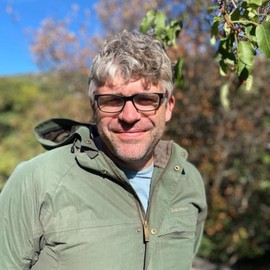
Angela Carollo is a Researcher at the Max Planck Institute for Demographic Research (MPIDR) in Rostock, Germany, affiliated with the Laboratory of Fertility and Well-Being. Her work focuses on developing advanced statistical methodologies for demographic analysis, particularly in survival and event-history models with multiple time scales. Her research interests span demography, statistics, and population health, with emphasis on: Survival analysis and competing risks modeling Event-history frameworks with multidimensional time Fertility dynamics and family transitions Mortality patterns and health outcomes Statistical software development for demographic applications Carollo's publication record demonstrates consistent innovation in handling complex demographic data structures. Her recent work shows strong trends toward interdisciplinary collaboration (spanning statistics, gerontology, and public health) and methodological rigor in modeling time-dependent phenomena. Key contributions include the TwoTimeScales R package and novel approaches to hazard smoothing across multiple temporal dimensions, applied to critical demographic questions like partnership transitions and mortality prediction. No scientific awards were documented in the source material. Her collaborative research involves extensive work with international teams across Europe, though no formal student advising or grant management details were provided. Current projects include dissertation work on "Multiple Time Scales in Survival and Event-History Models" within the Laboratory of Fertility and Well-Being. Carollo operates within MPIDR's Laboratory of Fertility and Well-Being, which investigates how demographic processes like fertility and partnership transitions interact with individual well-being across the life course, leveraging advanced statistical techniques for population-level insights.
Grant Morgan is a Professor in the Department of Educational Psychology at Baylor University's School of Education, where he also serves as Associate Dean for Research and Outreach and Program Director for the Quantitative Methods graduate program. He holds a Ph.D. in Educational Research & Measurement from the University of South Carolina and has been a faculty member at Baylor since 2012. Educational Background: Ph.D. in Educational Research & Measurement, 2012, University of South Carolina, Columbia M.S. in Human Resources Management (Organization Performance track), 2005, Western Carolina University, Cullowhee B.S. in Psychology, 2003, Clemson University Dr. Morgan's research focuses on latent variable models , psychometrics , classification , and nonparametric statistics . He conducts methodological investigations using Monte Carlo simulations and applies advanced quantitative models in interdisciplinary contexts. His work emphasizes validity in psychological measurement and accurate estimation in latent variable frameworks. His recent publications reflect a strong trend in Bayesian factor analysis, latent class modeling, robust estimation for ordinal data, and the generation of nonnormal distributions using mixture models. These works span top-tier journals such as Psychological Methods , Structural Equation Modeling , and Language Assessment Quarterly , highlighting his contributions to both theoretical and applied psychometrics. Scientific Awards and Recognition: Three-time recipient of Distinguished Paper Awards from AERA-affiliated organizations Nominated for Cornelia Marschall Smith Professor of the Year Nominated for Division D Early Career Award Dr. Morgan is actively involved in academic leadership and service. He has served as Chair of the Structural Equation Modeling SIG at AERA, is a board member of a regional AERA-affiliated organization, and regularly serves as a panelist for the National Science Foundation and U.S. Department of Education. He advises on externally funded research projects totaling over $20 million and mentors graduate students in quantitative methods. He serves on the editorial board of the Journal of Psychoeducational Assessment and reviews for leading methodological journals including Structural Equation Modeling , Psychometrika , and Multivariate Behavioral Research . He leads the Quantitative Methods specialization, teaching courses such as Psychometric Theory, Item Response Theory, Latent Variable Models, and Nonparametric Statistics. His lab and research team focus on advancing methodological rigor in educational and psychological measurement through simulation studies and real-world applications.
Jack B. Muir is a Marie Skłodowska-Curie Fellow at the University of Oxford's Department of Earth Sciences and Junior Research Fellow at Wolfson College. His research integrates advanced mathematics with seismology to address inverse problems in Earth imaging and hazard assessment. Education: PhD in Geophysics, Caltech Seismolab (2021) Research focuses on physics-informed neural networks for seismic wavefield simulation (TerraPINN project), nonparametric seismicity rate modeling using deep Gaussian processes, geologically-constrained tomography, and Bayesian methods for wavefield reconstruction. His work targets applications from near-surface structures to Earth's core, emphasizing machine learning acceleration and uncertainty quantification in inverse problems. Recent projects include Distributed Acoustic Sensing (DAS) optimization and seismic swarm analysis. Publication trends (2022-2025) reveal strong emphasis on machine learning integration (PINNs, Gaussian processes) with geophysical inverse problems, particularly for DAS data processing, deep Earth imaging, and probabilistic hazard assessment. Key themes include multi-scale analysis, instrument response calibration, and computational efficiency. Scientific Awards: Marie Skłodowska-Curie Fellowship John Monash Scholarship Junior Research Fellowship at Wolfson College, Oxford Grant-funded projects include TerraPINN for physics-based seismic hazard assessment and collaborations leveraging Caltech's Community Seismic Network. He actively develops open-source tools for core-mantle boundary modeling and DAS data processing. Labs and teams involve Oxford's Seismology group (Tarje Nissen-Meyer), Caltech (Zach Ross), Australian National University (Hrvoje Tkalčić), and JAMSTEC (Satoru Tanaka), with fieldwork utilizing ocean-bottom seismometers and urban sensor networks.
Rimantas Rudzkis is an Affiliated Professor at Vilnius University's Institute of Mathematics and Informatics, specifically within the Interdisciplinary Statistical Research Group. He serves as the Head of the Applied Statistics Department and has been working at the Institute since 1978. His academic credentials include a Doctor of Mathematics from Vilnius University (1978), a Habilitation Doctor from the Institute of Mathematics and Informatics (1993), and Professor title from Vytautas Magnus University (1996). Dr. Rudzkis has extensive educational background, having graduated from Kaunas Polytechnic Institute in 1973 with a specialization in computing technology and engineering mathematics. His professional journey began as an assistant at KPI (1973-1974), followed by postgraduate studies at the Institute of Mathematics and Informatics (1974-1977). His research primarily focuses on probability theory , mathematical statistics , and econometric modeling . He has developed methods for data clustering, nonparametric density estimation, and created mathematical models of Lithuanian macroeconomic indicators using VAR methodology. His work spans theoretical developments in statistical decision algorithms and practical applications in economic forecasting. Analysis of his recent publications reveals a consistent focus on statistical methodology development, particularly in goodness-of-fit testing, multivariate analysis, and applications to economic and financial data. His research shows a clear progression from theoretical probability work toward increasingly applied econometric modeling, with significant emphasis on Baltic region economic analysis in recent years. Dr. Rudzkis maintains significant professional engagement through multiple editorial roles, including membership on the editorial boards of 'Lithuanian Mathematical Collection' (since 1999), 'Lithuanian Statistical Works' (since 2000), and 'Money Studies' (since 2000). He has also served as Editor for proceedings of the '8th International Conference on Probability Theory and Mathematical Statistics'. His academic service includes leadership as Head of the Applied Statistics Department Seminar, membership on the program committee for international conferences, and serving as an Expert member of the Lithuanian Academy of Sciences since 1994. He has also been actively involved with professional societies, serving on the boards of both the Lithuanian Mathematical Society and Lithuanian Statistical Union since 1998. Dr. Rudzkis teaches probability theory, mathematical statistics, and specialized courses including multivariate statistics, time series analysis, correlation-regression analysis, and econometrics at multiple universities including VDU, KTU, and VGTU.
Athanasios H. Rakitzis is an Associate Professor at the Department of Statistics and Actuarial Science of the University of Piraeus. He has held academic positions at multiple institutions including the University of the Aegean and the University of Cyprus, and conducted postdoctoral research at the University of Nantes, France, as a Marie Curie Fellow. His educational background includes a Bachelor's degree in Mathematics from the National and Kapodistrian University of Athens (1998-2002), a Postgraduate Diploma in Applied Statistics from the University of Piraeus (2002-2004), and a PhD in Statistics from the University of Piraeus (2004-2008) with a thesis on "Statistical Quality Control and Theory of Flows and Formations". Rakitzis specializes in Statistical Quality Control and Processes, with particular expertise in statistical flow and sweep functions. His research has resulted in over 50 publications in international journals, collective volumes, and conference proceedings, with more than 450 citations. He has served as a reviewer for 27 international scientific journals. His recent research focuses on control charts for monitoring various statistical processes including zero-inflated models, BINARCH processes, and exponential distributions. His work spans both theoretical developments in statistical process control and practical applications in fields like healthcare. Marie Curie Fellow (2013-2015) Dr. Rakitzis teaches courses in Reliability Theory, Data Science, Statistics (Estimation), and Statistical Quality Control. He has also contributed to postgraduate programs at the Hellenic Open University. He is actively involved in research collaborations and has contributed to the advancement of statistical process control methodologies through innovative chart designs and monitoring techniques.
Markos Koutras is a Professor in the Department of Statistics and Actuarial Science at the University of Piraeus, where he has been serving since September 2000. He previously held academic positions at the University of Athens, including Scientific Associate (1981-1983, 1985-1986), Lecturer (1986-1989), Assistant Professor (1989-1993), and Associate Professor (1993-2000). He has also served as Visiting Researcher at several international institutions including the University of Manitoba (Canada), Queen Mary and Westfield College (London), and McMaster University (Canada). His educational background includes: 1979: Degree from the University of Athens, Department of Mathematics (Grade: 9 and 6/20) 1981: MSc from the University of Athens, Department of Mathematics, in Computer Science and Operations Research (Grade: 9 and 7/16) 1983: PhD from the University of Athens, Department of Mathematics, with thesis 'Contribution to the theory of Spherical Distributions and related Taxonomic Problems' (Grade: Excellent) Professor Koutras specializes in several key areas of statistics and probability theory. His primary research interests focus on Reliability Theory, where he has made significant contributions to the understanding of system reliability, failure models, and maintenance policies. He has extensively researched Scan Statistics and Run Theory, developing methodologies for pattern recognition in sequences of trials and applications in quality control. His work in Multivariate Analysis has advanced techniques for analyzing complex data structures, while his contributions to Statistical Quality Control have provided new methodologies for process monitoring and improvement. He has also made notable contributions to Combinatorial Distributions, exploring the theoretical properties and applications of specialized probability distributions. With over 70 publications in international peer-reviewed journals (h-index: 16 as of January 2014) and 13 publications in international peer-reviewed volumes totaling more than 700 citations, Professor Koutras has established himself as a leading researcher in his fields. His work shows a clear progression from theoretical foundations in probability and reliability to practical applications in quality control, medical statistics, and risk management. A significant portion of his recent work focuses on scan statistics, run theory, and their applications in statistical process monitoring, demonstrating his continued contribution to advancing methodological frameworks in these areas. Professor Koutras has received significant recognition for his scholarly work: Associate Editor for 8 international journals including Methodology and Computing in Applied Probability and Journal of Statistical Planning and Inference Referee for papers submitted to more than 30 different journals President of the local organizing committee for 3 major international conferences Co-Chair of the International Organizing Committee for 7 International Workshops in Applied Probability Member of the Scientific Committee for 10 international conferences Elected member of the European Regional Committee of the Bernoulli Society (2013-present) Scientific responsible for more than 10 Research and Educational projects, including MarieCurie (2013-2016) and Aristeia (2014-2015) Professor Koutras has supervised 6 doctoral theses (5 completed, 1 in progress) and has been actively involved in research grant management. His leadership extends to administrative roles, having served as Director of Studies for the Postgraduate Program in Applied Statistics (2001-2004, 2007-2011), Chairman of the Department of Statistics and Actuarial Science (2003-2007, 2011-2013), and Dean of the School of Finance and Statistics (2013-2017). He has also been President of the Interdepartmental Committee for the Interuniversity Postgraduate Program in Biostatistics at the University of Athens. Professor Koutras leads a research group focused on reliability theory, scan statistics, and their applications. His team collaborates internationally, particularly through the International Workshops in Applied Probability that he has helped organize since 2002. His research has practical applications in quality control, medical statistics, and risk assessment, contributing to both theoretical advances and real-world problem solving.
Cristina Butucea is a Full Professor of Statistics at ENSAE, Institut Polytechnique de Paris (IP Paris), and a Permanent Member of CREST (Center for Research in Economics and Statistics). She specializes in nonparametric and high-dimensional mathematical statistics, with research interests spanning inverse problems, quantum statistics, privacy of data, and machine learning. Her academic career includes faculty positions at several prestigious French institutions including Université Paris-Est Marne-la-Vallée and Université des Sciences et Technologies de Lille. Her educational background includes a post-doc at Humboldt University, Berlin (1998-1999), followed by an Assistant Professor position at Université Paris Nanterre (1999-2007). She was promoted to Professor at Université des Sciences et Technologies de Lille 1 (2007-2010), then at Université Paris-Est Marne-la-Vallée (2010-2016), and currently holds her position at ENSAE, IP Paris (2016-present). Professor Butucea's research focuses on theoretical statistics with applications in modern data science challenges. Her work on differential privacy has established fundamental limits and optimal procedures for statistical estimation under privacy constraints. She has made significant contributions to quantum statistics, particularly in quantum state estimation. Her research on high-dimensional statistics addresses variable selection, sparse structures, and nonparametric estimation in complex settings. She has also contributed to the theory of inverse problems and the analysis of locally stationary processes. Her recent publications demonstrate a strong focus on the intersection of statistics with privacy concerns, quantum information, and high-dimensional data analysis. She has published in top statistical journals including Annals of Statistics, Bernoulli, and Electronic Journal of Statistics. Her work often addresses fundamental questions about optimal rates of convergence, phase transitions in estimation problems, and the theoretical limits of statistical procedures under various constraints. Nominated IMS Fellow in 2019 CO-organizer of the Seminar of Statistics CREST-CMAP Associate Editor of ALEA (Latin American Journal of Probability and Mathematical Statistics) Organizer of several conferences in mathematical statistics and machine learning (Fréjus 2018, Luminy 2019, 2020, Oberwolfach 2021) Professor Butucea has received multiple research grants including ANR HIDITSA (2017-2021), ANR SPADRO (2013-2017), and ANR DIONISOS (2012-2016). She was the Principal Investigator of an ANR project on "Statistics for quantum physics" (2007-2008). She has also been awarded research stays at CIRM Luminy and MFO Oberwolfach. She is actively involved in the academic community as a member of the IMS (Institute of Mathematical Statistics) and the Bernoulli Society. She is also a member of the Institut des Actuaires as an Actuary ISUP.
Piyush Rai is an Associate Professor in the Department of Computer Science and Engineering at the Indian Institute of Technology Kanpur. He also holds an Adjunct Assistant Professor position in Electrical and Computer Engineering at Duke University. His academic journey includes postdoctoral research at Duke University and the University of Texas at Austin, following his PhD from the University of Utah. His research interests focus on Machine Learning and Bayesian Statistics, with specializations in Latent Variable Models, Probabilistic Modeling, Approximate Inference, and Nonparametric Bayesian Methods. His work bridges theoretical foundations with practical applications in artificial intelligence and data science. Dr. Rai's publication record shows a consistent focus on tensor factorization, Bayesian nonparametrics, and scalable algorithms for large datasets. His work spans conferences including NIPS, ICML, UAI, and AISTATS, demonstrating strong contributions to both theoretical and applied machine learning. Best Student Paper Award at ECML-PKDD (2015) National Science Foundation (USA) EAGER Award (2015) Dr. Deep Singh and Daljeet Kaur Faculty Fellowship at IIT Kanpur (2015) NIPS 2013 Reviewer Award Sheldon Ekland-Olson Postdoctoral Fellowship (2012) He teaches advanced courses in Machine Learning and Probabilistic Machine Learning at IIT Kanpur, mentoring the next generation of researchers in statistical machine learning techniques. His collaborative work with Lawrence Carin and other researchers demonstrates strong interdisciplinary connections between institutions.
Prof. Dr. Steffen Goebbels is a Professor of Mathematics and Computer Science at Niederrhein University of Applied Sciences, Faculty of Electrical Engineering and Computer Science in Krefeld, Germany. He maintains an office in room F 202 and is actively involved in teaching and research. His academic work spans multiple disciplines with a strong focus on applied mathematics and computer science. His research interests center around 3D city modeling, mathematical optimization, and computer graphics. He has made significant contributions to the field of CityGML data processing and has developed algorithms for calculating 3D building models from land registry data and laser scan data. His work with the iPattern Institute has led to practical applications in cities like Krefeld, Leverkusen, and Dortmund. He has also contributed to neural network approximation theory and various optimization problems. Prof. Goebbels has published extensively in recent years, with publications spanning computer graphics, mathematical optimization, and machine learning. His research shows a consistent pattern of applying mathematical techniques to solve practical problems in 3D modeling and computer vision. He has also co-authored several influential textbooks on mathematics for computer science students. He has received recognition for his work through publications in reputable journals and conference proceedings, though specific awards are not mentioned in the available information. His research has practical applications in urban planning, architectural visualization, and manufacturing processes. Prof. Goebbels is actively involved in teaching mathematics courses (Mathematics 1-3), Numerical Analysis, Logic Programming, Functional Programming, and Scientific Computing. He has developed teaching materials including online courses and textbooks that are widely used in his institution.
Jim Griffin is a Professor of Statistics at the University of Kent's School of Mathematics, Statistics and Actuarial Science. His research focuses on Bayesian nonparametric methods, computational statistics, and applications in financial and economic data analysis. He has collaborated extensively with researchers such as M. Kalli, F. Leisen, and M.F.J. Steel, producing influential work on nonparametric priors, volatility modeling, and sparse regression techniques. Griffin's research interests include developing novel Bayesian methodologies for high-dimensional data, time series analysis, and stochastic volatility modeling. His contributions to computational methods, such as adaptive MCMC and sequential Monte Carlo algorithms, have advanced efficient inference in complex statistical models. He has supervised numerous PhD students, including Alex Diana, Mark Sinclair-McGarvie, and Su Wang, whose work spans Bayesian nonparametrics, computational methods, and financial econometrics. Griffin has published widely in top-tier journals like the Journal of the Royal Statistical Society , Journal of Econometrics , and Bayesian Analysis . His recent work emphasizes integrating computational efficiency with theoretical rigor, addressing challenges in modern statistical applications across finance, ecology, and bioinformatics.
Thomas Verdebout is a Full Professor of Statistics at Université libre de Bruxelles (ULB), Belgium. He received his PhD in Statistics from ULB in 2008 and served as an Assistant Professor at Université de Lille, France (2009–2014). His research focuses on directional statistics, high-dimensional statistics, nonparametric methods, and dimension reduction techniques. He has contributed significantly to the development of rank-based tests and optimal transport-based approaches in statistical inference. Verdebout’s work emphasizes asymptotic theory, with notable contributions to hypothesis testing on hyperspheres, rotational symmetry analysis, and multivariate sign-based methodologies. He has held editorial roles at journals like Bernoulli and Electronic Journal of Statistics . His recent research explores the intersection of high-dimensional data analysis and nonparametric techniques, addressing challenges in spherical uniformity testing and eigenvalue-based hypothesis testing under elliptical models. Key themes in his publications include robust statistical testing, optimality properties of directional methods, and applications of optimal transport in directional data analysis. Despite the breadth of his work, Verdebout maintains a strong focus on foundational statistical theory with practical implications for modern data analysis challenges.
Samuel Norris is an Assistant Professor at the University of British Columbia, specializing in economics with a focus on education, crime, and labor economics. His research examines the societal impacts of criminal justice policies, incarceration effects, and public policy outcomes. He collaborates frequently with institutions like CAHOOTS and has contributed to high-impact studies on topics such as school start times and refugee decision consistency. His work bridges empirical analysis with real-world policy implications, addressing issues like tax filing behavior, mortality rates among incarcerated populations, and consumption inequality. Notable research includes analyzing the effectiveness of mobile crisis intervention teams in policing and investigating how parental incarceration affects children. His methodologies span econometrics, causal inference, and policy evaluation. Media coverage of his work has appeared in outlets like The Economist and The Atlantic . Norris’s publications span leading journals such as American Economic Review , Review of Economic Studies , and Econometrica . His research portfolio reflects a commitment to understanding systemic social and economic challenges through rigorous quantitative analysis.
Zhaoyang Shi is a Postdoctoral Research Fellow in the Department of Statistics at Harvard University. His research develops statistical methods for geometric and topological data analysis. Research interests include network analysis, manifold learning, nonparametric methods, and kernel-based approaches. Current work focuses on normal approximation techniques for machine learning algorithms and nonparametric regression using spectral graph methods. Publications demonstrate strong theoretical focus, with recent work establishing minimax rates for Laplacian-based regression and Gaussian approximation methods for random forests.
Sami Helander is a University Lecturer at the Department of Information and Service Management, Aalto University. His research focuses on functional data analysis, statistical methodologies, and shape analysis, with applications in multivariate and applied statistics. He has contributed to advancing techniques such as integrated shape-sensitive metrics, functional depths, and Pareto depth analysis. His recent work emphasizes developing flexible approaches for analyzing functional data, particularly addressing shape-related challenges. Key contributions include methodologies published in journals like the Journal of Multivariate Analysis and Bernoulli. No scientific awards or grants are explicitly mentioned. He has not listed advisees or lab affiliations in the provided data.
Dr. Maria Kalli is a Senior Lecturer in Statistics at the Department of Mathematics, King's College London, since August 2021. Previously, she held the position of Senior Lecturer in Statistics at the University of Kent and worked as an investment banker at Goldman Sachs in New York. She holds a BSc in Econometrics and Mathematical Economics (LSE), an MBA in Financial Engineering (NYU Stern), an MSc in Mathematical Statistics (University of Michigan), and a PhD in Statistics (University of Kent). She is a Fulbright Scholar and Senior Fellow of the UK Higher Education Academy. Her research focuses on Bayesian Nonparametric Methods, Bayesian Regression, and Time Series Modelling in Macroeconomics and Finance, with applications in financial econometrics and high-dimensional data analysis. She serves as the PhD Admissions Tutor for the Statistics group. Her work emphasizes methodological advances in Bayesian statistics, including MCMC techniques, shrinkage priors, and volatility models. Notable contributions include the development of Bayesian nonparametric vector autoregressive models and flexible dependence frameworks for financial time series. Recent research explores market liquidity effects and predictive distributions in financial markets. Education: BSc Econometrics and Mathematical Economics, London School of Economics MBA Financial Engineering, New York University Stern School of Business MSc Mathematical Statistics, University of Michigan PhD Statistics, University of Kent Scientific Awards: Fulbright Scholar Senior Fellow of the UK Higher Education Academy Advising & Grants: While specific grants are not detailed, her research has been supported through institutional funding and collaborative projects. She actively mentors PhD candidates in Bayesian statistical methodologies and time series analysis. Labs/Teams: She contributes to King's Statistics group, focusing on time series analysis, Bayesian computation, and econometric modelling.