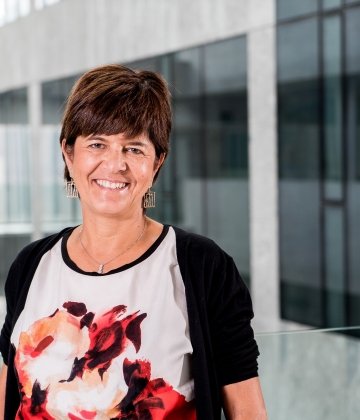
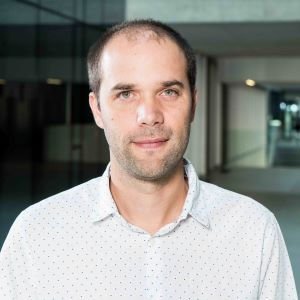
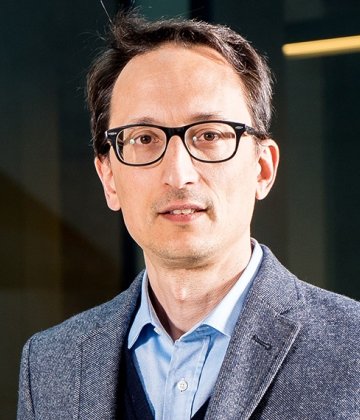
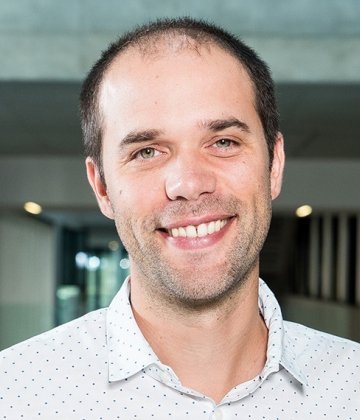
Luca De Benedictis is a Professor of International Economics and Network Analysis at the University of Macerata's Department of Economics and Law. His research focuses on international trade empirics, including trade specialization measurement, network analysis, and causal models. He has authored numerous articles on topics like gravity models, migration impacts, and historical trade networks. His work spans journals such as the Journal of the Royal Statistical Society and Network Science . He teaches courses in International Economics and Network Analysis. His research interests include economic geography, policy evaluation, and applied econometrics. Notable projects include analyzing the Erasmus Program's inclusivity, Roman road networks' legacy, and immigration's effect on trade. De Benedictis has secured funding from EU initiatives like COSTNET and GeComplexity, focusing on network data science and economic systems. He serves on editorial boards of journals like Italian Economic Journal and Journal of Historical Network Research . His work bridges theoretical models with empirical applications in trade, migration, and policy.
Dr. Sonia Petrone is a Full Professor of Statistics at Bocconi University's Department of Decision Sciences. She earned her PhD in Statistics from Bocconi University and has held academic positions at the University of Pavia and University of Insubria before joining Bocconi. Her extensive international experience includes research visits across North America, Latin America, Europe, India, and Russia. Her research specializes in Bayesian statistics, with contributions to foundational theory, predictive modeling, Bayesian nonparametrics, and stochastic processes. She currently directs the Bocconi Summer School in Advanced Statistics and Probability and previously led the PhD program in Statistics (2011-2018). Her research portfolio demonstrates consistent focus on Bayesian nonparametric methods, predictive modeling, and applications to complex data structures. Recent work explores urn processes, time series analysis, and network modeling using innovative Bayesian approaches. Awards & Honors: IMS Medallion Lecture Award (2018) ISBA Foundational Lecture Award (2016) Fellow of International Society for Bayesian Analysis Fellow of Institute of Mathematical Statistics Fellow of European Laboratory for Intelligent Systems Fellow of Bocconi Institute of Data Science She has held editorial leadership positions as Editor of Statistical Science (2020-2022) and Bayesian Analysis (2010-2014), and served as President of the International Society for Bayesian Analysis (2014).
Thomas Le Barbanchon is a Full Professor of Economics at Bocconi University since 2025 and holds the Rodolfo Debenedetti Chair in Labor Economics. He received his PhD from Ecole Polytechnique (CREST-ENSAE) in 2012 and has been affiliated with institutions like CEPR, CREST, J-PAL, LEAP, BIDSA, IGIER, IZA, and IFS. His research focuses on labor economics, particularly job search mechanisms, unemployment insurance effects, gender disparities, and labor market policy evaluation. Educational background: PhD in Economics (Ecole Polytechnique), MSc in Economics (Universitat Pompeu Fabra), Diplôme d'ingénieur statisticien-économiste (ENSAE), and Diplôme d'ingénieur (Ecole Polytechnique) Research highlights include: Quantifying the impact of unemployment insurance reforms in France Analyzing gender differences in job search behavior Studying the effectiveness of hiring credits during economic crises Investigating how traditional AI improves job matching Examining migrant-native job search segregation patterns Scientific contributions appear in top journals like American Economic Journal: Applied Economics , Quarterly Journal of Economics , and Review of Economic Studies . Awards include two ERC grants (2017 & 2024) and the Bocconi Impact Award (2022). He mentors PhD students in economics and labor policy, currently serves as Director of IGIER research center, and maintains active editorial roles at Review of Economic Studies and Journal of the European Economic Association .
Hugo Georges Victor Lavenant serves as Assistant Professor in the Department of Decision Sciences at Bocconi University, Milan, where he has held a faculty position since 2020. Previously, he completed a postdoctoral fellowship at the University of British Columbia (2019-2020) under the Pacific Institute of Mathematical Sciences and earned his PhD in Mathematics from Université Paris-Sud (2016-2019) under Filippo Santambrogio's supervision. His academic foundation includes: PhD in Mathematics, Université Paris-Sud (2016-2019) Studies at École Normale Supérieure (2012-2016) covering mathematics, physics, history, and philosophy of science Classes préparatoires in mathematics and physics (2010-2012) Lavenant's research centers on optimal transport theory and its applications across mathematical disciplines. He investigates geometric structures in Wasserstein spaces, develops numerical methods for dynamical optimal transport, and bridges theoretical advances with Bayesian statistics. His work demonstrates particular innovation in trajectory inference for biological data and dependence measures for random measures, connecting pure mathematics with computational statistics. Recent publications reveal accelerating interdisciplinary impact, with 2024-2025 works extending optimal transport to machine learning (kernel methods, variational inference) and data science (opinion dynamics, single-cell analysis). This trajectory shows increasing methodological sophistication in handling measure-valued mappings and non-smooth geometries while maintaining computational tractability. Award recognition includes: Pacific Institute of Mathematical Sciences Postdoctoral Fellowship Lavenant actively mentors early-career researchers through formal advising relationships and collaborative projects. He currently supervises two PhD candidates (George Kanchaveli and Francesco Mascari, co-advised with Marta Catalano) and has guided Master's students including Mathis Hardion and Niccolò Bargellini. His teaching portfolio spans advanced analysis, optimization, and real analysis courses at Bocconi, reflecting his commitment to mathematical rigor in education. He operates within Bocconi's Decision Sciences ecosystem while maintaining international collaborations with researchers at UBC, Université Paris-Sud, and statistical groups worldwide. Current projects focus on entropy-based transport methods and geometric approaches to nonparametric statistics, positioning his work at the intersection of theoretical mathematics and data-driven applications.
Silvia Polettini is an Associate Professor in Statistics at the Department of Social and Economic Sciences, University of Rome "La Sapienza". She has been with the university since 2011, achieving the rank of Associate Professor in 2020. Prior to this, she served as a Researcher at the University of Naples Federico II from 2005 to 2011, and worked at the National Institute of Statistics (ISTAT) from 2000 to 2005. Her academic journey began with a Statistical Officer position at the Italian Ministry of Health from 1998 to 2000. Her educational background includes: 1994: Bachelor's Degree with honors in Statistical and Demographic Sciences, University of Rome "La Sapienza" 1999: Ph.D. in Methodological Statistics, University of Rome "La Sapienza" Silvia Polettini's research spans several critical areas in modern statistics. Her work in Bayesian Statistical inference has produced innovative approaches for handling complex data structures. She has made significant contributions to Official Statistics , particularly in methodologies for data protection and disclosure risk assessment. Her expertise in Statistical Disclosure Risk Estimation and Microdata Protection has positioned her as a leading researcher in data privacy. The development of Bayesian Semi-parametric Modeling for Small Area Estimation represents another major strand of her work, with applications across social and economic domains. Her research on Measurement Error Models addresses fundamental challenges in data quality, while her work on Latent Variable Models and Survival Analysis extends into demographic and health applications. An analysis of her recent publications reveals a clear trajectory focusing on addressing underreporting issues in sensitive social phenomena, particularly violence against women, using sophisticated Bayesian methods. Her work bridges theoretical statistical innovation with practical applications in social policy. The integration of small area estimation techniques with measurement error models represents another significant theme, enabling more accurate regional and demographic analyses despite data limitations. Professor Polettini has been actively involved in numerous research projects, including several PRIN (Progetti di Rilevante Interesse Nazionale) initiatives and international collaborations. Her leadership in projects like "ESSnet on Statistical Disclosure Control" funded by Eurostat and "Data Linkage and Anonymisation" supported by the Isaac Newton Institute demonstrates her standing in the international statistical community. She has served as principal investigator for multiple research projects focused on disclosure risk estimation, small area modeling, and addressing underreporting in social data. Her teaching responsibilities include Statistics for Political Science and International Relations students, as well as Statistics for Economic Applications for International Economic and Financial Relations students. Office hours are held on Thursdays from 10am to 12pm, available both in person and online by appointment.
Antonio Lijoi is Professor of Statistics and Director of the PhD program in Statistics and Computer Science at Bocconi University. His research focuses on Bayesian nonparametrics, completely random measures, mixture models, and predictive inference. A Fellow of both the Institute of Mathematical Statistics and International Society for Bayesian Analysis, he serves on editorial boards for Bayesian Analysis and Electronic Journal of Statistics. Lijoi's recent publications examine network strategies within organizations, moral influence dynamics, and social network applications ranging from corporate misconduct analysis to the papal conclave selection process. His methodological contributions include developing frameworks for understanding how social networks create competitive advantages through brokerage and trust mechanisms.
Aldo Solari is a Full Professor at the Department of Economics of Ca' Foscari University of Venice. His research focuses on statistical inference, conformal prediction, and biostatistics, with applications in genomics, medical decision-making, and neuroscience. He teaches courses in statistics for economics, probability, and data science. Recent publications include advancements in false discovery rate control and hybrid human-AI collaboration in medical diagnostics. Solari co-edits the Proceedings of Machine Learning Research (PMLR) and serves as a referee for the US-Israel Binational Science Foundation. His work integrates theoretical developments with practical software tools for statistical analysis. Teaching: STATISTICA, INTRODUCTION TO PROBABILITY FOR ECONOMICS, DATA ANALYTICS FOR BUSINESS AND SOCIETY Research Themes: Multiple Testing, Conformal Prediction, Biomedical Applications, Neuroimaging Analysis Publications span peer-reviewed journals like Biometrika and Journal of the Royal Statistical Society , emphasizing methodological contributions with real-world impact. Solari’s projects include funding from Italy-Israel collaborations on high-dimensional inference in neuroscience and genomics.
Daniela Marella is a Professor at the Department of Social and Economic Sciences, Sapienza University of Rome. She teaches Statistics and holds office hours on Tuesdays from 10:00 AM to 12:00 PM. Her email address is daniela.marella@uniroma1.it . Teaching: Statistics (Sociology, Economics, Development Studies) Research: Statistical matching, Bayesian networks, survey sampling, uncertainty quantification Publications: 15+ articles on non-probability sampling, measurement error, and interrater agreement Her research focuses on statistical matching methodologies, Bayesian network applications in survey data, and handling selection bias in non-probability samples. She explores measurement error modeling, empirical likelihood approaches, and resampling techniques for complex survey designs. Recent publications emphasize uncertainty analysis in statistical matching, graphical models for data integration, and Bayesian structural learning. Key areas include non-ignorable sampling, ordinal categorical data agreement, and pseudo-population resampling frameworks.
Antonio Cosma is a faculty member at the Department of Business Sciences, University of Bergamo. He holds a Doctorate in Economics and a Master’s in Financial Economics from Université catholique de Louvain. His research focuses on microeconometrics, financial econometrics, and semi/non-parametric statistical methods. Doctorate: Economics, Université catholique de Louvain Master’s: Financial Economics, Université catholique de Louvain His work analyzes conditional moment restrictions, tail dependence in global markets, and wavelet-based estimation techniques. Publications appear in journals like Journal of Financial and Quantitative Analysis and Bernoulli , with a focus on computational finance and statistical modeling for economic data. Recent articles investigate stochastic volatility in American options, stratification effects in econometric inference, and diversification risks in hedge fund markets. He teaches Elementi di Matematica and Strumenti per la Misurazione del Rischio at the University of Bergamo.
Raffaele Argiento is a Full Professor of Statistics at the Department of Economics, University of Bergamo since September 2021. His academic career focuses on advanced statistical methodologies with applications across various domains including environmental science, public health, and data analysis. His research is prominently featured in high-impact statistical journals and conference proceedings. Argiento's research interests center around Bayesian statistical methods, particularly in functional data analysis, nonparametric Bayesian modeling, and clustering techniques. His work demonstrates expertise in developing innovative statistical approaches for complex data structures, including spatio-temporal data, categorical variables, and high-dimensional datasets. His research has significant applications in environmental monitoring (particularly air pollution analysis), public health (obesity rate modeling), and seismic monitoring through crowdsourced data. His methodological contributions include advancements in mixture models, partition models, and computational algorithms for statistical inference. His recent publication record shows a strong trend toward developing computationally efficient Bayesian methods for real-world applications. The research spans from theoretical developments in nonparametric Bayesian statistics to practical implementations for environmental monitoring, health data analysis, and functional data processing. His work demonstrates a consistent focus on bridging theoretical statistical advancements with practical applications across multiple scientific domains. Professor Argiento teaches several advanced statistical courses at the University of Bergamo, including Applied Statistical Modelling , Probability and Statistics , and Statistical Models for both undergraduate and graduate programs in Economics and Data Analysis. His teaching reflects his research expertise, emphasizing modern statistical methodologies and computational approaches.
Gianluca Mastrantonio is an Associate Professor at the Department of Mathematical Sciences (DISMA) of the Polytechnic University of Turin , Italy. He is a member of the Interdepartmental Center SmartData@PoliTO and actively contributes to the Statistics and Data Science research group. His academic roles include teaching in PhD programs (Mathematical Sciences, 2023-2025) and master's courses such as Statistical Methods in Data Science and Statistical Models/Statistical Learning . His research focuses on Bayesian Statistics and Hierarchical Models , with applications spanning Biostatistics , Environmental Monitoring , Machine Learning , and Computational Statistics . Key keywords include RNA Velocity , Sea Climate Analysis , Animal Movement Modeling , and Bayesian Software Development . Selected Scientific Awards Steering Committee Member, Royal Statistical Society (Emerging Applications, 2021-) Effective Member, International Statistical Institute (ISI, 2019-) Effective Member, Graspa (Italy, 2017-) Associate Editor, Journal of Statistical Computation and Simulation (2020-) Key Research Themes Bayesian Modeling of RNA Dynamics Environmental and Wildlife Behavior Analysis Statistical Software Development (Julia/R packages) Climatic Change-Point Detection Integration of Linear/Circular Data in Ecology Applications in Prostate Cancer Diagnostics
Gianluigi Pillonetto is an Assistant Professor at the Department of Information Engineering , University of Padova , where he has been employed since 2005. His academic career focuses on system identification, stochastic systems, and nonparametric regularization techniques. Born: January 21, 1975 in Montebelluna, Italy Education: Doctoral degree (1998) and PhD (2002) in Computer Science/Engineering Research roles: Visiting scholar (2000), Visiting scientist (2002), Research Associate (2002-2005) His research spans system identification, stochastic processes, and deconvolution problems, with a particular emphasis on Bayesian methods and kernel-based regularization. He has contributed to areas like distributed Gaussian regression, sparse system identification, and nonlinear stochastic modeling in physiological systems. Recent publications (2016-2021) examine Gaussian regression techniques for distributed systems, entropy-based kernel design, and nonlinear stochastic deconvolution. These works incorporate machine learning principles into control theory, focusing on applications in wireless communications, robotics, and biomedical engineering.
Mattia Zorzi is an Associate Professor in the Department of Information Engineering at the University of Padova, Italy. He has held academic positions since 2014, transitioning from Assistant Professor to Associate Professor in 2020. His research focuses on system identification, machine learning, and robust control, with applications in dynamic brain networks, robotic systems, and quantum information processing. Education: Ph.D. and M.S. in Information Engineering from University of Padova International Experience: Visiting Scientist at University of Cambridge (2013-2014), Research Associate at University of Liege (2013-2014) Zorzi's research integrates robust and distributed filtering, inverse dynamics learning, and nonparametric identification of Kronecker networks. His work bridges theoretical advancements in spectral estimation with practical applications in neuroscience (e.g., effective connectivity analysis) and control systems (e.g., robust Kalman filtering under uncertainty). Recent publications (2024-2023) demonstrate expertise in ARMA graphical models, kernel-based estimation, and optimal transport for Gaussian processes. He has contributed to the IEEE and IFAC communities as Associate Editor and actively participates in editorial roles for leading journals. Scientific Awards: IEEE Senior Member (2021) Member of IFAC Technical Committee TC 1.1 (2018) Associate Editor roles in Automatica, IEEE Control Systems Letters, and major conferences Grants & Collaborations: Collaborated on projects involving quantum channel estimation, free-space quantum communication, and biomedical signal processing.
Edoardo Zanelli is a Research Fellow and 5th-year PhD student in Economics at the University of Bologna's Department of Economics. He also serves as a Teaching Tutor and has held roles as a Teaching Assistant for courses like Mathematical Economics and Advanced Time Series Econometrics. His research focuses on econometric methodologies, particularly bootstrap inference, nonparametric techniques, and boundary parameter analysis. In Fall 2025, he will assume a postdoctoral position at Aarhus University's Aarhus Center for Econometrics (ACE). Education includes a BSc and MSc in Economics (both summa cum laude) from the Catholic University of Milan and University of Bologna respectively, followed by PhD studies at the University of Bologna under Prof. Giuseppe Cavaliere. Research interests include bootstrap methods for nonlinear models, bias correction in estimators, boundary parameter inference, instrumental variable (IV) specification testing, and Phillips Curve instability estimation.
Thomas Emile Robert Le Barbanchon is a Full Professor of Economics at Bocconi University since 2025 and holds the Rodolfo Debenedetti Chair in Labor Economics. He earned his PhD in Economics from Ecole Polytechnique (CREST-ENSAE) in 2012, following earlier studies at Universitat Pompeu Fabra and Ecole Polytechnique. His research focuses on labor economics, particularly job search behavior, unemployment insurance design, gender wage gaps, and search-and-matching models, with significant contributions to policy evaluation in public finance and econometric methodology. PhD in Economics, Ecole Polytechnique (2012) M.Sc. Economics, Universitat Pompeu Fabra (2005) Diplôme d'ingénieur statisticien-économiste, ENSAE (2004) Diplôme d'ingénieur, Ecole Polytechnique (2003) Research trends across his 15 most recent articles reveal expertise in: Unemployment insurance reforms using quasi-experimental designs Gender disparities in job search and wage determination AI applications for labor market matching efficiency Dynamic effects of hiring subsidies on firm behavior Econometric innovations for measurement error correction Long-term impacts of work-study programs Scientific accolades include: ERC Consolidator Grant (2024) Bocconi Impact Award (2022) ERC Starting Grant (2017) Multiple institutional affiliations (CEPR, CREST, J-PAL, IGIER, IZA) His academic leadership includes directing IGIER research center, serving on editorial boards of top journals, and extensive PhD student mentorship placing advisees at leading institutions. The 2019 UI reform evaluation and upcoming WeSET project (2025-2029) highlight his policy influence.