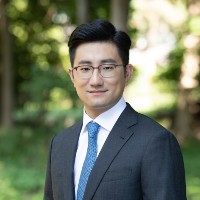
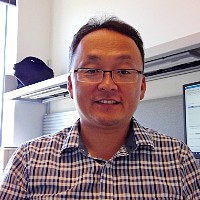
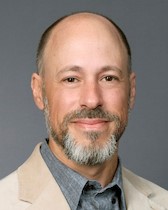
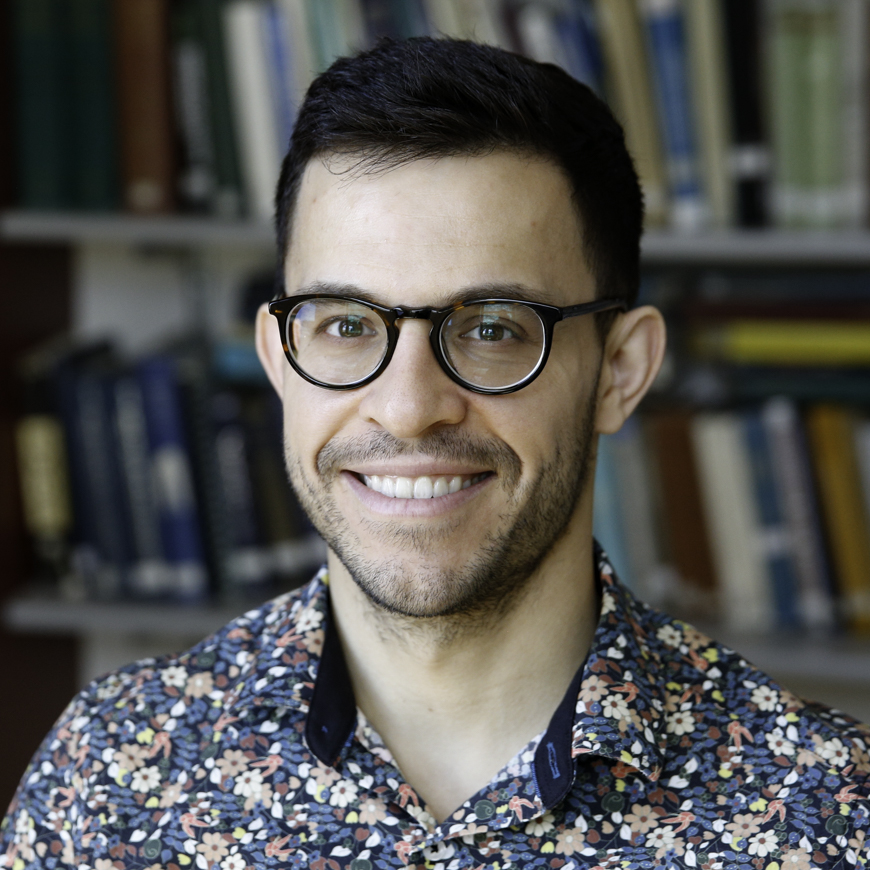
Sung Hoon Choi is an Assistant Professor in the Department of Economics at the University of Connecticut, part of the College of Liberal Arts and Sciences. His research focuses on developing econometric tools for analyzing big data, machine learning applications, and forecasting using high-dimensional panel datasets. He holds a Ph.D. in Economics from Rutgers University (2021), an M.A. in Applied Statistics from Yonsei University (2016), and a B.A. in Statistics from the University of California, Berkeley (2013). His research interests include econometric theory, financial econometrics, and high-frequency data analysis. Notable areas of concentration are large panel data and factor models, high-dimensional data techniques, and volatility matrix analysis. He teaches courses such as Econometrics I and III for Ph.D. students, and Python programming for economists at undergraduate and master's levels. Recent publications focus on volatility modeling using factor structures, high-frequency financial data, and panel data econometrics. His work addresses challenges in structural information analysis, standard errors for clustered panels, and feasible generalized least squares methods. He collaborates with researchers like Donggyu Kim and Jushan Bai, contributing to leading journals like the Journal of Econometrics and Econometric Theory .
Ben Bloem-Reddy is an Assistant Professor in the Department of Statistics at the University of British Columbia (UBC), Vancouver Campus. His research focuses on statistical theory and applications in machine learning, particularly in causal inference, Bayesian methods, neural networks, and probabilistic models. He advises current students Quanhan (Johnny) Xi, Kenny Chiu, and Gian Carlo Diluvi. His work bridges foundational statistical theory with practical machine learning challenges, including causal discovery, model identifiability, and uncertainty quantification. Recent research explores topics such as latent variable models, generative processes, and symmetry in data and algorithms. His contributions span interdisciplinary areas like particle physics applications and information theory-based compression techniques. Ben’s research trends emphasize advancing theoretical guarantees for modern machine learning systems while addressing real-world problems. His publications frequently intersect with algebraic topology (e.g., cocycles in causal inference) and nonparametric methods. He maintains an active lab within the Department of Statistics, fostering collaborations across UBC’s academic ecosystem. No scientific awards are explicitly listed in the provided information. His advising and grant activities focus on statistical methodology development, as evidenced by his student supervision and published work. His office is located in ESB 3168, and he can be reached at benbr@stat.ubc.ca.
Joseph P. Romano is a distinguished Professor of Statistics and Economics at Stanford University, where he has been on the faculty since 1986. He holds joint appointments in both the Department of Statistics and the Department of Economics, reflecting his interdisciplinary research that bridges statistical theory with economic applications. Romano has established himself as a leading scholar in mathematical statistics with significant contributions to econometrics, climate science, and multiple testing methodologies. Ph.D. in Statistics, University of California, Berkeley (1986) M.S. in Statistics, University of California, Berkeley (1983) A.B. in Statistics, Princeton University (1982), Summa Cum Laude Romano's research focuses on the theoretical foundations and practical applications of statistical methods, particularly in nonparametric statistics, bootstrap and resampling techniques, and multiple testing procedures. His work addresses the challenges of analyzing massive datasets with complex structures, such as those found in biotechnology, clinical trials, and econometrics. He has developed universal statistical tools applicable across diverse fields including climate science, genetics, finance, and education. His recent work emphasizes methods for multiple testing and multivariate inference driven by the availability of massive datasets, where he tackles issues like unknown dependence structures, heterogeneity, and high dimensionality. Analysis of Romano's recent publications reveals a consistent focus on developing robust statistical methodologies for complex data structures. His work spans theoretical advances in U-statistics with growing dimensions, practical applications in seroprevalence studies, and innovative approaches to ranking inference across various domains. The interdisciplinary nature of his research is evident in publications spanning economics journals, statistics journals, and even behavioral science preprints, demonstrating the broad applicability of his methodological contributions. 2021 LGBTQ+ Scientist of the Year, Out to Innovate Fellow, International Association of Applied Econometrics (2020) Fellow, Institute of Mathematical Statistics Presidential Young Investigator Award, National Science Foundation The Canadian Journal of Statistics Award Romano has mentored dozens of doctoral students throughout his career at Stanford, serving as dissertation advisor, co-advisor, and committee member for numerous PhD candidates in Statistics. His research has been consistently supported by National Science Foundation grants, including recent funding for computer-intensive inference with applications to social sciences (2020-2023) and randomization inference for contemporary statistical problems (2013-2016). He has served in various administrative roles at Stanford including Associate Chairman and Chair of Committee on Faculty Affairs. Beyond his academic pursuits, Romano is actively involved in the 500 Queer Scientists visibility campaign and maintains a balanced life with passions in music (having performed at Carnegie Hall), competitive tennis (ranked nationally in his age group), cooking, and architecture.
Associate Professor LIN Zhenhua serves as a Presidential Young Professor in the Department of Statistics and Data Science at the National University of Singapore (NUS), with additional affiliation at the Institute of Data Science since 2021. His research develops cutting-edge statistical methodologies for complex data structures across multiple domains. Dr. LIN completed his Ph.D. at the University of Toronto in 2017 under Fang Yao's supervision, following M.Sc. degrees from Simon Fraser University (2013, 2010) and a B.Sc. from Fudan University (2008). Ph.D., University of Toronto, 2017 (Advisor: Fang Yao) M.Sc., Simon Fraser University, 2013, 2010 B.Sc., Fudan University, 2008 His research program spans functional data analysis (developing techniques for curves and surfaces), non-Euclidean data analysis (statistical methods on manifolds), high-dimensional statistics (p > n problems), and constrained statistical modeling. LIN's work bridges theoretical statistics with practical applications through rigorous mathematical frameworks and computational implementations. Recent publications reveal strong emphasis on bootstrap methods for high-dimensional inference, Riemannian geometry approaches for manifold-valued data, and innovative functional data techniques. His research shows consistent output with multiple 2025 publications in top journals including Biometrika, Bernoulli, and Journal of the American Statistical Association. Professional Recognition Presidential Young Professor, NUS (2019-present) Associate Editor, Bernoulli (2022-2024) Associate Editor, Statistics (2023-present) Young Researchers Committee, Bernoulli Society (2020-2024) Professor LIN actively mentors graduate students as evidenced by numerous collaborative publications with trainees. He teaches advanced courses including ST5215 Advanced Statistical Theory, DSA4211 High-dimensional Statistical Analysis, and ST5223 Statistical Models across multiple academic years. His research group develops specialized software packages including hdanova, matrix-manifold, synfd, mcfda, and iRFDA, making advanced statistical methods accessible to practitioners.
Johanna Ziegel is a Professor of Statistics at ETH Zurich, Switzerland, since 2024, and a Visiting Scientist at the Heidelberg Institute for Theoretical Studies (HITS). Previously, she held positions at the University of Bern, where she was promoted to Full Professor in 2023. Her research focuses on decision-theoretically sound methods for forecast evaluation, probabilistic forecasting, risk measures in finance, and applications in meteorology, medicine, and climate science. She is actively involved in editorial roles for journals like Bernoulli , JASA: Theory & Methods , and SIAM Journal on Financial Mathematics . Education: PhD in Stereological Analysis of Spatial Structures from ETH Zurich (2010), supervised by Paul Embrechts and Eva B. Vedel Jensen. Postdoctoral research at the University of Melbourne and Heidelberg University. Research Interests: Forecast evaluation, elicitable functionals, risk measures, isotonic regression, statistical calibration, and applications in finance, climate science, and biostatistics. Her work bridges theoretical statistics with practical challenges in uncertainty quantification and decision-making under uncertainty. Advising & Collaborations: Supervised 7 PhD students and mentored several postdocs. Collaborates with the Computational Statistics group at HITS and the Oeschger Centre for Climate Change Research. Her group explores distributional regression under order constraints and novel methods for forecast comparison. Recognition: Credit Suisse Award for Best Teaching (2022), H.I.T. Program for Academic Leadership (2021–2022). Active in professional service, including the Bernoulli Society Council and editorial boards.
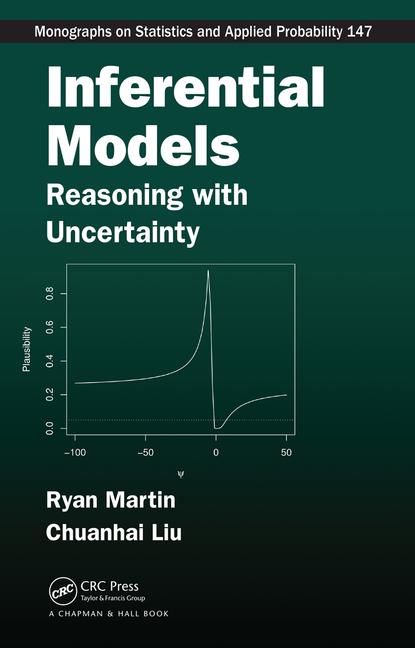
Chuanhai Liu is an Associate Head and Professor of Statistics at Purdue University’s Department of Statistics. He specializes in computational methods for statistical inference, Bayesian analysis, and big data computing systems. His research emphasizes robust algorithms, inferential models, and probabilistic methods. Education: M.S., Wuhan University, Probability and Statistics (1987) M.A., Harvard University, Statistics (1990) Ph.D., Harvard University, Statistics (1994) Research Interests: Computational methods (EM algorithms, MCMC), statistical software systems for big data, theoretical foundations of inference, and prior-free probabilistic modeling. His work bridges computational efficiency and statistical validity, with applications in network analysis, environmental data, and machine learning. Awards: Fellow of the American Statistical Association (2007) Elected Member of the International Statistical Institute (2006) Frank Wilcoxon Prize (2000) Advising & Grants: Supervised 9 Ph.D. students, including interdisciplinary collaborations. His grants focus on distributed statistical computing and inferential frameworks. Active in software development for large-scale data analysis. Labs/Teams: Leads statistical computing initiatives at Purdue, contributing to scalable algorithms and probabilistic inference systems.
Daniel Wilhelm is a Professor of Statistics and Econometrics at LMU Munich, with a courtesy appointment in the Department of Economics. His research focuses on econometric theory, nonparametric methods, measurement error modeling, and statistical inference. He leads the Statistics and Econometrics Group at LMU and holds affiliations with the Centre for Microdata Methods and Practice (CeMMAP), Institute for Fiscal Studies (IFS), and the Centre for Research and Analysis of Migration (CReAM). Wilhelm’s work includes groundbreaking contributions to NPIV estimation, robust statistical testing, and the development of R and Stata packages for rank inference and econometric analysis. His recent publications address topics like rank-based inference, measurement error detection, and high-dimensional independence testing. He organizes academic events such as the Munich Econometrics Seminar and the LMU-Todai Econometrics Workshop. His research emphasizes methodological rigor and practical applications, with a focus on improving statistical techniques for social science and policy analysis.
Min Seong Kim is an Associate Professor in the Department of Economics at the University of Connecticut, affiliated with the College of Liberal Arts and Sciences. His research focuses on econometrics, particularly panel data analysis, bootstrap methods, and cross-sectional dependence. He earned his Ph.D. in Economics from UC San Diego in 2011. His contact information includes email: min_seong.kim@uconn.edu , and office location Oak Hall 330. Education: Ph.D., Economics, UC San Diego, 2011 Research Interests: Econometric theory and applications Bootstrap methods and robust inference Panel data models with cross-sectional dependence Time series analysis and spatial econometrics Publications highlight his contributions to econometric methodology, including robust inference techniques for panel data models, bootstrap methods, and policy analysis. Recent work addresses cross-sectional dependence in large panel models and diffusion index forecasts. No scientific awards are explicitly listed. Advising and grant details are not provided in the text. His research is supported through standard academic channels, and he maintains a professional website at http://minseongkim.weebly.com .
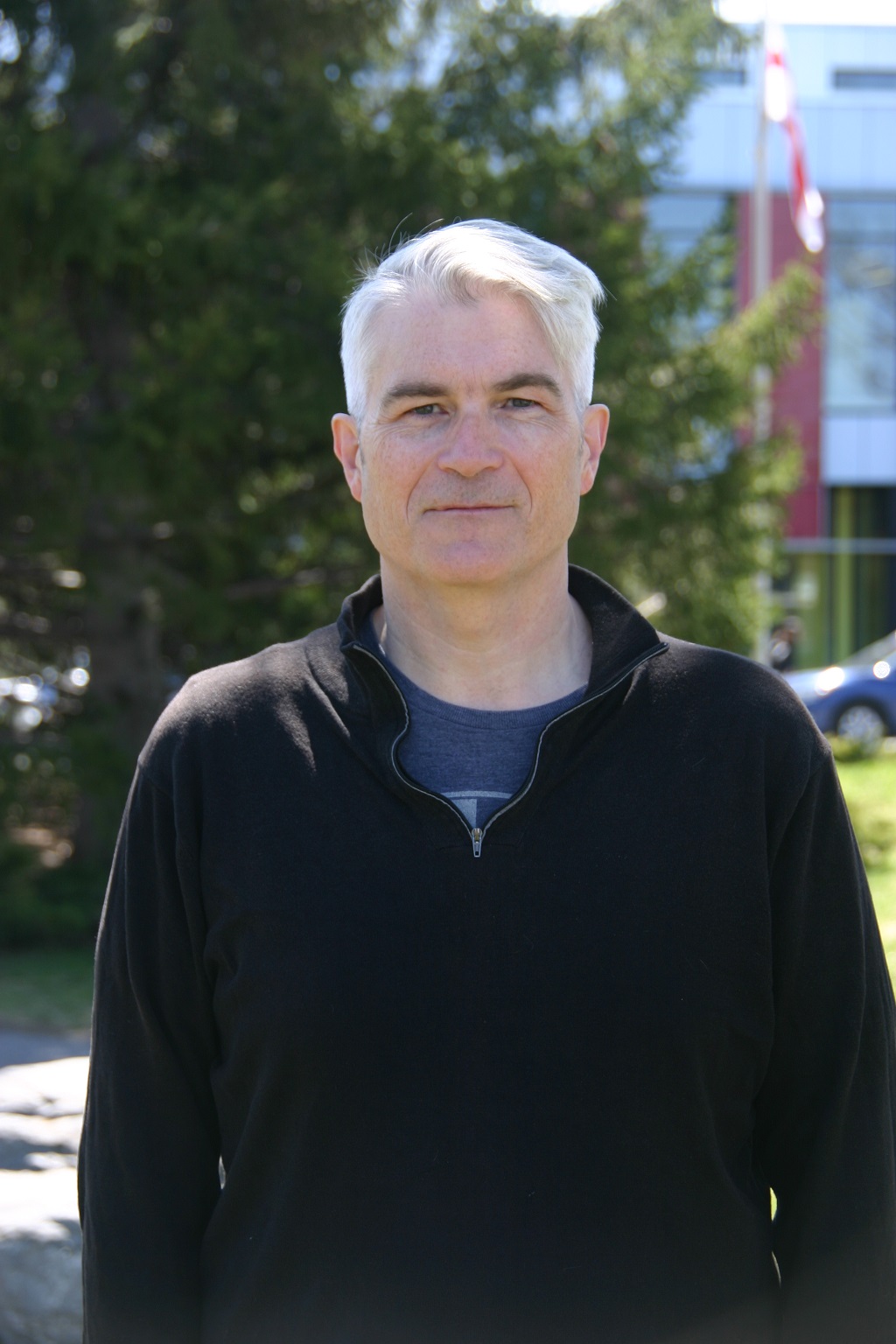
David A. Stephens is a Professor in the Department of Mathematics and Statistics at McGill University, Montreal. He served as Chair of the Department from 2015 to 2019 and as Vice-Dean in the Faculty of Science from 2019 to 2025. His research focuses on Bayesian inference, biostatistics, causal inference, bioinformatics, and statistical genetics. He holds prestigious fellowships: International Statistical Institute (2015), American Statistical Association (2019), and Royal Society of Canada (2024). His work addresses challenges in epidemiology, HIV transmission dynamics, and clinical trial design. Key research themes include: Bayesian hierarchical modeling for infectious diseases (e.g., SARS-CoV-2, HIV) Causal inference in dynamic treatment regimes Survival analysis and censored data methods Statistical genomics and epigenetics His publications analyze public health trends, such as HIV transmission clusters in Quebec and SARS-CoV-2 seroprevalence in Canada. Methodologically, he develops novel techniques for time-series analysis, recruitment forecasting in clinical trials, and computational statistics. Notable contributions include: Advancing phylogenetic cluster inference in HIV studies Optimizing warfarin dosing strategies via SMART trials Modeling gut microbiota impacts on growth faltering in infants His academic leadership includes roles at McGill and prior experience at Imperial College London. His work bridges statistical theory and practical healthcare applications, emphasizing interdisciplinary collaboration.
Sivaraman Balakrishnan is a Professor at Carnegie Mellon University with joint appointments in the Department of Statistics and Data Science and the Machine Learning Department. His research bridges statistical machine learning, algorithmic statistics, and robust inference. Education: Ph.D. in Computer Science from Carnegie Mellon University (Language Technologies Institute, advised by Jaime Carbonell); postdoctoral work at UC Berkeley (Department of Statistics, advised by Martin Wainwright and Bin Yu). Research Interests: Spanning robust statistics, domain adaptation, minimax hypothesis testing, assumption-light inference, causal inference, statistical optimal transport, non-parametric statistics, ranking, crowdsourcing, optimization, and topological data analysis. Key Research Trends: Recent work focuses on domain adaptation under label/misingness shifts, robust gradient estimation, smooth optimal transport maps, and conditional independence testing. He explores minimax optimal methods, univariate mean estimation, and high-dimensional regression with missing data. Scientific Awards: IMS Lawrence D. Brown Student Award (2021, 2020) NVIDIA Pioneer Award (2018) Franklin V. Taylor Memorial Best Paper Award (2018) Grants and Editorial Roles: NSF grants (CCF-1763734, DMS-1713003, DMS-2113684, DMS-2310632), Amazon Research Award (2021), Google Research Scholar Award (2021). Associate Editor for JASA and JRSSB ; Editorial Board member for Foundations and Trends in Statistics . Collaborative Groups: Co-organizes the Statistics and Machine Learning Reading Group and participates in the Causal Inference Working Group at CMU.
Bin Nan serves as Chancellor's Professor in the Department of Statistics at the University of California, Irvine, where he develops statistical and machine learning methodologies to advance biomedical research and improve human health outcomes through rigorous data analysis. His educational credentials demonstrate a strong quantitative foundation: Ph.D. in Biostatistics, University of Washington (2001) M.S. in Biostatistics, University of Washington (1999) M.S. in Statistics, Virginia Commonwealth University (1997) M.S. in Aerospace Engineering, Beijing University of Aeronautics & Astronautics (1987) B.S. in Aerospace Engineering, Beijing University of Aeronautics & Astronautics (1984) Nan's research program focuses on developing cutting-edge statistical methods for survival analysis, longitudinal data, high-dimensional inference, and machine learning, with direct applications to epidemiology, bioinformatics, and brain imaging. His work addresses critical challenges in biomedical data such as temporal dependence in neuroimaging sequences, estimation of large correlation matrices, and analysis of disease onset with terminal events, all aimed at identifying biomarkers for earlier disease diagnosis. Analysis of his recent publications (2015-2023) reveals a consistent trajectory toward methodological innovation in handling complex biomedical data structures, particularly through de-biased lasso techniques for survival models, neural network applications to censored data, and specialized approaches for longitudinal data with terminal events. These advances predominantly support Alzheimer's disease research and transplant outcome studies. No specific scientific awards were documented in the source material. His research program maintains continuous funding through National Science Foundation and National Institutes of Health grants, including a recent $1.8 million award for Alzheimer's disease methodology development. Nan actively collaborates with the UCI Alzheimer's Disease Research Center and UCI Center for the Neurobiology of Learning and Memory, though student advising details were not provided. His teaching portfolio includes advanced graduate courses in probability theory, survival analysis, and high-dimensional inference. Nan operates within interdisciplinary biomedical research teams focused on translating statistical innovation into clinical applications, particularly through brain imaging analysis and biomarker identification for neurodegenerative diseases.
Niels Richard Hansen is a Professor at the Department of Mathematical Sciences , University of Copenhagen, leading research at the intersection of Artificial Intelligence and Statistics . He co-founded the Copenhagen Causality Lab and focuses on automating causal explanation discovery from data using Bayesian networks, stochastic processes, predictive models, and machine learning. His work emphasizes creating interpretable and robust AI systems capable of generalizing across domains. His research has produced over 56 publications spanning causal inference , graphical modeling , stochastic processes , and machine learning . Recent work includes: Predictive and causal learning (2018 keynote) High-dimensional regression solutions (2016 lecture) Interdisciplinary applications in actuarial science , environmental statistics , and neuroscience He actively contributes to scientific communication through media appearances and public explanations of statistical concepts, including analyses of: Gaussian correlation inequality proofs Daylight saving time and blood clots Mathematical approaches to lotteries Climate change vs lunar effects
Ivan Canay is a Professor of Economics and Director of the Mathematical Methods in the Social Sciences Program at Northwestern University’s Weinberg College of Arts & Sciences. He holds a PhD from the University of Wisconsin, Madison (2008). His research focuses on econometric theory, particularly developing statistical methods for assessing partially identified models, including tests for moment inequalities and randomization-based inference techniques. Recent work addresses challenges in clustered data analysis, covariate-adaptive randomization, and regression discontinuity designs. Canay’s academic contributions include advancing methodologies for handling non-ignorable cluster sizes and improving the robustness of inference in settings with limited data. He serves as an associate editor for the Journal of Econometrics , Journal of Business and Economic Statistics , and Econometrics Journal . His work bridges theoretical econometrics with practical applications in policy evaluation and causal inference. Key research themes include: Partially identified models and moment inequality frameworks Bootstrap methods for clustered data Covariate-adaptive randomization in clinical trials Statistical software development (e.g., Stata modules) His publications emphasize methodological rigor while addressing real-world complexities in economic data. Current projects likely expand his work on inference under structural constraints and improving accessibility of econometric tools for applied researchers.
Dr. Sudhir R. Paul is a Professor in the Department of Mathematics and Statistics at the University of Windsor, Faculty of Science. He holds a Ph.D. from Wales and has received prestigious awards including Fellowships from the American Statistical Association (2006) and the Royal Statistical Society (1982). His research focuses on Biostatistics and Statistical Inference, with expertise in areas such as Generalized Linear Models, Clustered/Longitudinal Data Analysis, and Categorical Data Analysis. He has supervised numerous graduate students and maintains an active research program addressing topics like risk difference estimation, bias correction in statistical models, and applications in environmental and medical contexts. Education: Ph.D. (Wales). Research interests span advanced statistical methodologies, including zero-inflated models, measurement error correction, and dose-response modeling. His work bridges theoretical development and practical applications in epidemiology, clinical trials, and environmental studies. His publications reflect contributions to clustered data analysis, interval estimation, and generalized estimating equations. Awards highlight his impact in advancing statistical science through teaching, research, and service. Advising: Over 30 M.Sc. and Ph.D. students have been supervised, with current students engaged in doctoral and master’s research. Postdoctoral fellows include experts in statistical theory and applications.
Charles Doss is an Associate Professor in the School of Statistics at the University of Minnesota. He earned his PhD from the University of Washington in 2013 under Jon Wellner and holds a B.S. in Mathematics from the University of Chicago. His research focuses on empirical process theory, nonparametric estimation/inference for functions with shape constraints (e.g., concavity, log-concavity), and applications to causal inference, birth-death processes, and unlinked regression. His recent publications address problems such as doubly robust estimation for continuous treatments, heteroscedasticity detection, and convex stochastic optimization. He has received significant funding, including NSF grants DMS-2210312 and DMS-1712664, as well as institutional awards. Warwick Mid-Career Faculty Research Award (2022–2023) NSF DMS-2210312 Grant NSF DMS-1712664 Grant He has served as an Associate Editor for The Electronic Journal of Statistics (2022–present) and The American Statistician (2020–2024). He mentors students such as Guangwei Weng, Daeyoung Ham, and Oliver VandenBerg and contributes to outreach programs like Run the World, a Machine Learning summer camp for high school students.