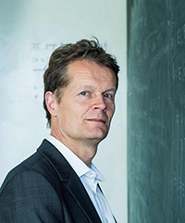
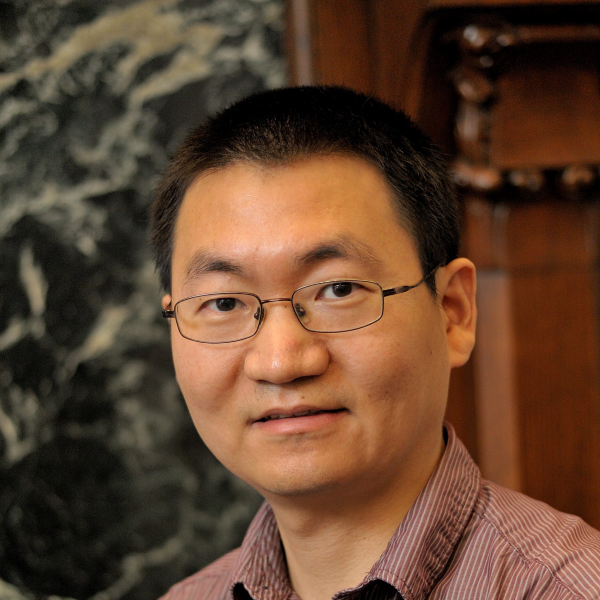
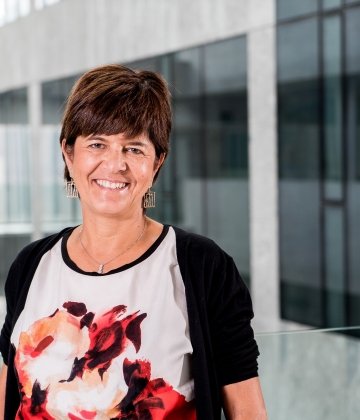
Aad van der Vaart is a Professor of Stochastics at Leiden University's Mathematical Institute. He was awarded the prestigious NWO Spinoza Prize in 2015 for groundbreaking work in mathematical statistics, particularly Bayesian methods applied to medical imaging, genetic data, and complex models. His research bridges pure mathematical theory with applied domains like neuroscience and astronomy. Research Interests : Van der Vaart focuses on infinite-dimensional Bayesian statistics, nonparametric models, and statistical genetics. His work emphasizes rigorous mathematical analysis of prior distributions and their impact on data-driven conclusions. Applications include gene network modeling and PET scan image reconstruction. Key Contributions : Authored influential books on estimation theory; pioneered modern Bayesian approaches to high-dimensional data. His Spinoza Prize funds will support interdisciplinary research and hiring new talent in statistical methods. Awards : NWO Spinoza Prize (2015), recognized as a global leader in statistical theory. Future Directions : Expanding into astronomical data analysis and medical applications, leveraging Bayesian frameworks for big datasets.
Carlos Cinelli is an Assistant Professor in the Department of Statistics at the University of Washington, where he conducts research at the intersection of causal inference, statistical methodology, machine learning, and artificial intelligence. He is also a data science fellow at the eScience Institute and affiliate faculty of the Center for Statistics and the Social Sciences, demonstrating his interdisciplinary approach to causal methodology. Dr. Cinelli received his Ph.D. in Statistics from the University of California, Los Angeles, advised by Chad Hazlett and Judea Pearl, two prominent figures in causal inference. His research focuses on developing new causal and statistical methods for transparent and robust causal claims in empirical sciences, with particular attention to challenges faced by social and health scientists. His work spans theoretical developments in causal identification, sensitivity analysis frameworks, and practical software implementations that enable researchers to assess the robustness of their causal conclusions. Cinelli's research program addresses fundamental questions about how unobserved confounding affects causal estimates and develops tools to quantify how sensitive findings are to potential violations of causal assumptions. His work on omitted variable bias frameworks has been particularly influential across multiple disciplines. Through his publications, Cinelli has established himself as a leading researcher in causal inference methodology, with papers appearing in top journals across statistics, machine learning, epidemiology, and social sciences. His work demonstrates both theoretical rigor and practical relevance, often accompanied by open-source software implementations that make his methods accessible to applied researchers. Best paper award at SBE 2024 in Econometrics Royalty Research Fund (RRF) Award recipient NSF/MMS research support As an advisor, Cinelli has successfully guided PhD students like Nick Irons to dissertation completion. He actively seeks new students with strong interests in causal inference. His research is supported by multiple funding sources including the National Science Foundation and the University of Washington's Royalty Research Fund. Cinelli contributes to the academic community through editorial work for the Journal of Causal Inference and by developing widely used software packages like sensemakr for sensitivity analysis.
Zhiling Gu is a Research Fellow at Yale School of Public Health, having earned her Ph.D. in Statistics at Iowa State University. Her work integrates statistical theory with applications in public health and medicine. Her research spans Functional Data Analysis Network Analysis Spatiotemporal Modeling Statistical AI Foundations Nonparametric Learning applied to neuroimaging, electronic health records, and environmental health studies. Recent publications focus on Adaptive spatiotemporal models Neuroimaging data processing Pandemic forecasting frameworks Environmental exposure modeling with methodological rigor and practical implementation. Scientific achievements include Runner-up in SMI 2023 Student Paper Competition She has taught STAT 305: Engineering Statistics (ISU) STAT 226: Business Statistics Statistical Computing Statistical Learning and actively engages in academic presentations at conferences like SMI 2024 and CMStatistics 2022.
Professor Jiti Gao is a Donald Cochrane Chair in Econometrics & Business Statistics at Monash University's Faculty of Business and Economics. He leads the Department of Econometrics and Business Statistics, specializing in non- and semi-parametric econometrics, time-series analysis, and panel data methodologies. His research focuses on developing statistical models for climate change, energy demand, and financial forecasting. Affiliations: Monash University, Impact Labs Grants: Multiple ARC Discovery Projects (e.g., 2020–2025 on climate-energy time series, 2017–2020 on econometric model building) Collaborations: CSIRO, Yale University, and international partners from China, Norway, and Singapore Research interests include climate econometrics, financial time series, and policy evaluation. Over 136 publications span econometric theory and applications, with recent work on nonlinear trending models and quantile regression. His grants emphasize methodological advancements in time series and panel data analysis. Awards: Not explicitly mentioned, but recognition includes Australian Professorial Fellow status and international research leadership roles. Advising/Grants: Primary Investigator on multiple ARC-funded projects, focusing on climate modeling and financial econometrics Labs/Teams: Part of Monash's Impact Labs and collaborates with global institutions on climate and econometric initiatives
Scientia Professor Robert Kohn is a distinguished academic at the University of New South Wales, holding a position in the School of Economics within the UNSW Business School. With a career spanning several decades, Professor Kohn has established himself as a leading expert in statistical methodology and econometric modeling. His research has significantly contributed to Bayesian statistics and computational methods for complex data analysis. Professor Kohn's research focuses on advanced statistical methodologies including Bayesian methodology, variable selection and model averaging, nonparametric regression models, time series modeling, multivariate Gaussian and non-Gaussian regression, and Markov chain Monte Carlo simulation algorithms. His work bridges theoretical statistics with practical applications across economics, finance, and cognitive science. His research demonstrates a consistent trajectory toward developing more efficient computational methods for complex statistical models, with recent work emphasizing variational Bayesian methods, particle filtering techniques, and applications to time series analysis. Analysis of his recent publications (2022-2025) reveals a strong focus on advancing computational statistical methods, particularly in Bayesian inference for complex models. His work shows increasing integration of machine learning techniques with traditional statistical methods, especially in handling high-dimensional data and complex time series structures. Professor Kohn has made significant contributions to variational inference methods, particle-based computational techniques, and applications to financial time series and cognitive modeling. Professor Kohn has maintained an exceptionally productive research career with continuous publication output since the 1970s, demonstrating remarkable longevity and adaptability in his research focus as statistical methodologies have evolved. His work shows strong international collaboration, particularly with researchers in Australia, the United States, and Europe, reflecting his standing in the global statistical community.
Yiping Lu is an Assistant Professor in the Department of Industrial Engineering and Management Sciences at Northwestern University's McCormick School of Engineering. His research focuses on developing interdisciplinary approaches combining domain knowledge (differential equations, stochastic processes), machine learning, and experiments. Key interests include scientific machine learning (AI4Science), stochastic simulation, and robust machine learning. Education: Ph.D. in Applied and Computational Mathematics, Stanford University (2023) B.S. in Computational Mathematics, Peking University (2019) Research Highlights: Hybrid research integrating ML with scientific domains like PDEs and inverse problems Development of Physics-Informed Learning frameworks Contributions to deep learning theory (ResNets, neural collapse) Advances in kernel operator learning and adversarial robustness Awards: CPAL Rising Star Award (2024) University of Chicago Data Science Rising Star (2022) Stanford Interdisciplinary Graduate Fellowship (2021) Labs/Teams: SCALE Lab (Scientific Computation and Learning at Northwestern) Collaborations with NYU's Courant Institute and Stanford
Matthias Parey is a Professor in the Department of Economics at the University of Surrey. He holds additional roles as a Research Fellow at the Institute for Fiscal Studies (IFS) and the Institute for the Study of Labor (IZA), a Researcher at the ESRC Research Centre on Micro-Social Change (MiSoC), and a Research Associate at ZEW. His research spans Labour economics Economics of education Micro-econometrics Inequality Economics of innovation . His recent publications analyze high-skilled migration selection, trade shocks, cannabis market size estimation, and gasoline demand elasticity. He has contributed to journals like Review of Economics and Statistics , Economica , and Journal of the European Economic Association . Scientific awards include fellowships at IFS and IZA. His work on trade shocks examines gender-specific labor supply responses to Chinese import competition, while his cannabis market research introduces a forensic economics approach using legal inputs. Earlier studies focus on maternal education impacts on child development and the long-term labor market effects of Erasmus student exchanges.
Vladimir Spokoiny is a Professor at the Departments of Mathematics and Economics of the Humboldt University of Berlin and Head of the Research Group "Stochastic Algorithms and Nonparametric Statistics" at the Weierstrass Institute for Applied Analysis and Stochastics (WIAS) in Berlin, Germany. His research spans multiple areas of statistics, machine learning, and financial mathematics, with significant contributions to nonparametric statistics, high-dimensional data analysis, and statistical methods in finance. Spokoiny received his M.Sc. in applied mathematics from the Moscow Institute of Railway Engineering in 1981 and his Ph.D. in mathematics from Lomonosov Moscow State University in 1988. He completed his Habilitation at Humboldt University in 1996. His academic career includes positions at the All-Union Institute of Railway Transport in Moscow, the Institute for Information Transmission Problems in Moscow, and the Institute for Applied Analysis and Statistics in Berlin before joining the Weierstrass Institute and Humboldt University where he has been a professor since 2002. Spokoiny's research focuses on adaptive nonparametric smoothing and hypothesis testing, high dimensional data analysis, statistical methods in finance, image analysis with applications to medicine, classification, and nonlinear time series. His work often addresses the challenges of nonstationarity in time series data and develops innovative methods for volatility estimation and risk management. He has made significant contributions to the development of adaptive weights smoothing procedures, which have applications in image processing, community detection, and manifold learning. His recent work has expanded into high-dimensional statistics, Bayesian inference, and optimization methods for machine learning, with publications demonstrating novel approaches to Gaussian approximation, Laplace methods, and statistical inference in non-Euclidean spaces. Spokoiny has supervised numerous PhD students including Oliver Reiss, Danilo Mercurio, Ying Chen, Elmar Diederichs, and Mstislav Elagin, whose research has focused on mathematical finance, time series analysis, and statistical methods. He serves as an Associate Editor for The Annals of Statistics (since 2004) and Statistics and Decisions (since 2002), and has previously served on the editorial board of the Journal of Statistical Planning and Inference. His professional activities include reviewing for major statistical journals including Annals of Statistics, Bernoulli, Econometrica, and Journal of American Statistical Association, as well as reviewing grant proposals for the National Science Foundation (USA), German Research Foundation, and Netherlands Organisation for Scientific Research. Spokoiny is a member of several professional societies including the International Statistical Institute, American Statistical Association, Institute of Mathematical Statistics, and Bernoulli Society. He is fluent in Russian (mother tongue), English, and German, and has good knowledge of French. His research group at WIAS focuses on developing novel statistical methodologies with applications across various scientific domains, particularly emphasizing adaptivity and robustness in complex data environments. The group's work has significant implications for financial risk management, medical imaging, and machine learning applications, with recent publications addressing fundamental questions in high-dimensional statistics and nonparametric inference.
S. Yaser Samadi is an Associate Professor in the Department of Mathematics at the School of Mathematical and Statistical Sciences, Southern Illinois University Carbondale. He holds a Ph.D. in Statistics from the University of Georgia (2014) and maintains an active research program in advanced statistical methodologies. Education: Ph.D. in Statistics, University of Georgia, 2014 Research Interests: Dr. Samadi specializes in multivariate time series analysis, high-dimensional statistical inference, and tensor data analysis. His work addresses critical challenges in big data, symbolic data, and dimension reduction for time series through Bayesian analysis and sequential methods for dependent and independent data, yielding robust models for complex data structures. Publication Trends: His recent publications (2014-2023) emphasize time series analysis, dimension reduction, and innovative approaches for interval-valued and matrix-valued data. Key contributions include envelope models for vector autoregression, copula-based count data modeling, and sequential analysis techniques, bridging theoretical statistics with econometrics and data science applications. Scientific Awards: Outstanding Teacher of the Year, School of Mathematical and Statistical Sciences (2021) Advising: Dr. Samadi has mentored four Ph.D. students to completion: Rukayya Ibrahim (Assistant Professor, Penn State Harrisburg), Wiranthe Herath (Assistant Professor, Drake University), Tharindu De Alwis (Postdoctoral Fellow, WPI), and Hadi Safari Katesari (Teaching Assistant Professor, Stevens Institute of Technology). His Master's students Samira Zaroudi (CUNY) and Reginald Ziedzor (Amplify) have also achieved notable career placements.
Professor Carl Edward Rasmussen is affiliated with the University of Cambridge , where he focuses on Machine Learning , Probabilistic Inference , Decision Making , and Reasoning Under Uncertainty . His work bridges theoretical advancements with practical applications in robotics, control systems, and computational biology. Academic Affiliation: University of Cambridge Academic Role: Professor His research emphasizes scalable Gaussian process methods, Bayesian system identification, and reinforcement learning. Recent projects include transfer learning for antibacterial discovery , graph neural processes for molecular functions , and efficient variational inference techniques . Key themes in his publications highlight uncertainty quantification , model generalization , and nonparametric approaches . Notable Scientific Contributions Advancements in sparse Gaussian process hyperparameter estimation Framework for Bayesian system identification in dynamic systems Hybrid models combining transformers and Gaussian processes
Masoud Asgharian is a Professor in the Department of Mathematics and Statistics at McGill University. His research focuses on survival analysis, changepoint problems, nonparametric Bayesian methods, and data envelopment analysis. He has contributed to influential studies on dementia survival rates, censored data methodologies, and statistical efficiency measures. His work bridges biostatistics and operations research, with applications in public health and medical sciences. Key contributions include methodologies for prevalent cohort survival analysis, input relaxation efficiency measures in stochastic DEA, and causal inference techniques. Asgharian has collaborated extensively with researchers in epidemiology and biomedical engineering, as evidenced by his co-authored publications on topics ranging from tooth enamel properties to low-precision neural network quantization. His research has been published in high-impact journals such as New England Journal of Medicine , Journal of the American Statistical Association , and Biometrics . Current affiliations include leadership roles in statistical research at McGill, with ongoing projects in computational statistics and healthcare analytics.
Ismael Castillo is a Professor of Statistics at Sorbonne Université , affiliated with the Laboratoire de Probabilités, Statistique et Modélisation (LPSM) and its Statistics, Data, Algorithms team. He serves as Associate Editor for Annals of Statistics , Bernoulli , and co-Editor for Bayesian Analysis . Research Interests : Mathematical statistics with emphasis on Bayesian nonparametrics , inference in high-dimensional structures , uncertainty quantification , and applications in signal processing and life sciences . Recent Work spans deep neural networks with heavy-tailed weights , posterior and variational inference , fractional posteriors in semiparametric models , and deep Gaussian processes . His publications demonstrate expertise in multiple testing procedures , Spike and Slab priors , and nonparametric Bayesian methods . Awards : IMS Fellow , Honorary Fellow of Institut Universitaire de France , and Best Paper Prize (2021) for research on Pólya tree posterior distributions. Students : Supervised PhD candidates Paul Egels , Thibault Randrianarisoa , and co-supervised Bo Ning (FSMP postdoc) and Kweku Abraham (Hadamard postdoc). Grants : ANR BACKUP (2023-2027, coordinator) and ANR GAP (2021-2025, member).
Xiaofeng Shao is a Professor of Statistics & Data Science at Washington University in St. Louis, with a joint appointment in the Department of Economics. He holds a PhD from the University of Chicago and previously served at the University of Illinois at Urbana-Champaign for 18 years. He is a Fellow of the Institute of Mathematical Statistics and the American Statistical Association. His research focuses on econometrics, time series analysis, change-point detection, high-dimensional statistics, nonparametric methods, and functional data analysis. Recent work emphasizes object-valued time series modeling and machine learning applications in high-dimensional and imaging data. Notable contributions include the dependent wild bootstrap method and self-normalization techniques for time series inference. Key awards include Fellowships from leading statistical societies. His publications span over 20 years, addressing topics like change-point detection in climate projections, statistical methods for COVID-19 infection trends, and high-dimensional dependence testing.
Tengyao Wang is a Professor in the Department of Statistics at the London School of Economics and Political Science (LSE), serving as the MSc Statistics (Financial Statistics) Programme Director. Prior to LSE, he held positions as a Lecturer at University College London and a Research Fellow at the Cantab Capital Institute for the Mathematics of Information, University of Cambridge. His research focuses on high-dimensional statistics, computational efficiency, and statistical limitations imposed by computational constraints. Education: PhD in Statistics under Prof Richard Samworth at the University of Cambridge, with earlier studies including a Part III Essay in Empirical Process Theory. Research interests include sparse signal detection, change-point analysis, dimension reduction, robust statistics, and applications in medical statistics, financial data analysis, and material discovery. Key contributions include methodologies for handling missing data, high-dimensional change-point detection algorithms, and statistical learning techniques. Publications span theoretical advancements and applied innovations, with recent work emphasizing deep learning with missing data, residual permutation tests, and semi-supervised learning via random projections. His work has been recognized with awards such as the Royal Statistical Society Research Prize (2019) and the Guy Medal in Bronze (2023). He is an Associate Editor of the Journal of the Royal Statistical Society, Series B (JRSS B), and actively contributes to open-source tools like the 'ocd' and 'MissInspect' R packages for changepoint detection and missing data analysis.
Dr. Sonia Petrone is a Full Professor of Statistics at Bocconi University's Department of Decision Sciences. She earned her PhD in Statistics from Bocconi University and has held academic positions at the University of Pavia and University of Insubria before joining Bocconi. Her extensive international experience includes research visits across North America, Latin America, Europe, India, and Russia. Her research specializes in Bayesian statistics, with contributions to foundational theory, predictive modeling, Bayesian nonparametrics, and stochastic processes. She currently directs the Bocconi Summer School in Advanced Statistics and Probability and previously led the PhD program in Statistics (2011-2018). Her research portfolio demonstrates consistent focus on Bayesian nonparametric methods, predictive modeling, and applications to complex data structures. Recent work explores urn processes, time series analysis, and network modeling using innovative Bayesian approaches. Awards & Honors: IMS Medallion Lecture Award (2018) ISBA Foundational Lecture Award (2016) Fellow of International Society for Bayesian Analysis Fellow of Institute of Mathematical Statistics Fellow of European Laboratory for Intelligent Systems Fellow of Bocconi Institute of Data Science She has held editorial leadership positions as Editor of Statistical Science (2020-2022) and Bayesian Analysis (2010-2014), and served as President of the International Society for Bayesian Analysis (2014).