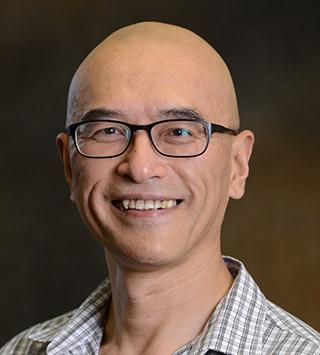
Chun Liu is Chair and Professor of Applied Mathematics at the Department of Applied Mathematics, Illinois Institute of Technology (IIT), within the College of Computing. His research focuses on Nonlinear Partial Differential Equations , Complex Fluids , and Multiscale Modeling , with applications in electrophysiology and materials science. He earned a Ph.D. from New York University’s Courant Institute, an M.S. from Duke University, and a B.S. from Fudan University. Prof. Liu leads projects on General Diffusion Systems , Ion Channel Dynamics , and Viscoelastic Fluids . He has secured grants from NSF, BSF, and DAAD for research in energetic variational approaches, multiscale materials modeling, and biomolecular systems. Key contributions include the development of Poisson-Boltzmann models , coarse-grained dynamics , and energetically stable numerical methods . He serves on editorial boards for Communications in Mathematical Sciences , SIAM Journal on Mathematical Analysis , and others. His work bridges applied mathematics with engineering and biophysics, addressing challenges in fluid mechanics, ion transport, and nonlinear systems.
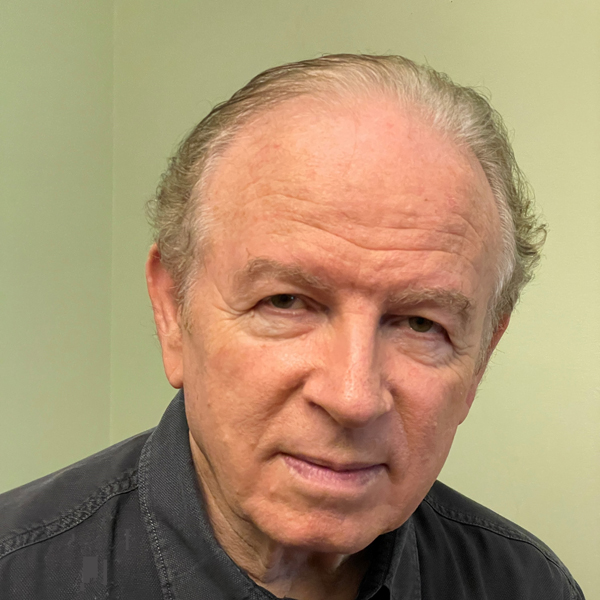
Alex Dunlap is an Assistant Professor in the Department of Mathematics at Duke University. His research focuses on probability theory, partial differential equations (PDEs), and applied mathematics, particularly the asymptotic behavior of stochastic PDEs. Before joining Duke in 2023, he was an NSF postdoctoral fellow at NYU Courant, sponsored by Jean-Christophe Mourrat and Yuri Bakhtin. He earned his Ph.D. from Stanford University in 2020 under the supervision of Lenya Ryzhik. His work involves studying nonlinear stochastic PDEs such as the KPZ equation, stochastic Burgers equation, and stochastic heat equations. He is particularly interested in universality phenomena, fluctuation scaling, and invariant measures. Dunlap co-organizes the Duke Probability Seminar and has published extensively in top journals including Annals of Probability , Communications on Pure and Applied Mathematics , and Archive for Rational Mechanics and Analysis . His research is supported by NSF grant DMS-2346915. Notable contributions include work on viscous shock fluctuations, Edwards-Wilkinson universality in 2D systems, and stationary solutions of stochastic Burgers equations. He has collaborated with leading researchers such as Cole Graham, Yu Gu, and Lenya Ryzhik.
Jonathan Barrett is a Professor of Quantum Information Science at the University of Oxford, affiliated with Wolfson College. He holds roles as Director of Graduate Studies and Governing Body Fellow. His research focuses on quantum foundations, quantum information science, and interdisciplinary work spanning computer science and physics. He explores quantum systems' applications in computation, cryptography, and addressing conceptual problems in quantum theory through information science tools. Recent publications include foundational work on quantum states, thermodynamics in quantum theory, and causal models. His contributions to quantum cryptography include device-independent protocols and security analysis. Notable collaborations involve experimental tests of quantum state ontology and theoretical explorations of generalized probabilistic theories. Barrett advises numerous graduate students and has mentored researchers in quantum information and foundational studies. His work bridges theoretical insights with practical implications in quantum technologies. He is a co-author of the influential book *Many Worlds? Everett, Quantum Theory, and Reality* (2010), reflecting his engagement with philosophical aspects of quantum mechanics.
Sebastian Pokutta is a Professor at Technische Universität Berlin, Vice President at the Zuse Institute Berlin (ZIB), and Chair of the Cluster of Excellence MATH+ and MODAL. His research lies at the intersection of Artificial Intelligence, Optimization, and Machine Learning, with applications in sustainability, quantum computing, and mathematical discovery. Research Interests: Development of novel optimization algorithms, particularly Frank-Wolfe and Conditional Gradient methods. Integration of machine learning with decision-making and combinatorial optimization. AI for Science (AI4Science), including applications in quantum mechanics and ecology. AI and creativity, human-AI co-creativity, and social science modeling using multi-agent LLMs. His recent publications (2025) demonstrate a strong focus on scalable optimization, interpretability, and algorithmic foundations. The work spans theoretical advances in convergence analysis, practical implementations in Julia (FrankWolfe.jl), and real-world deployments in biomass estimation and quantum certification. Scientific Awards: Gödel Prize (2023) STOC Test of Time Award (2022) Science Prize of the Association for Pediatric Orthopedics (2025) Google Research Awards (2021, 2020) NSF CAREER Award (2015) He advises a vibrant research group, with former students and postdocs securing faculty positions at institutions like Inria, Carlos III University, and James Madison University. His group has received funding from Google, DFG, and Math+, and he leads major collaborative efforts such as the Thematic Einstein Semester on Mathematical Optimization for Machine Learning. Labs and Teams: Interactive Optimization and Learning Lab at TU Berlin and ZIB. Leadership in MODAL and MATH+ research clusters, fostering interdisciplinary collaboration in mathematical optimization and AI.
Eitan Tadmor is a Distinguished University Professor at the Department of Mathematics and Institute for Physical Science & Technology at the University of Maryland. He holds the 2024 Chaire d'excellence at Sorbonne University's Fondation Sciences Mathématiques de Paris, and has served as Director of multiple research centers including the Center for Scientific Computation and Mathematical Modeling (2002-2016) and The Sackler Institute of Scientific Computation (1993-1996). Current: University of Maryland (2005-present) Previous: UCLA (1995-2002), Tel-Aviv University (1989-1995), CalTech (1980-1982) His research spans nonlinear conservation laws , entropy-stable schemes , collective dynamics , spectral methods , and multiscale modeling . He pioneered the spectral viscosity method and developed stability criteria for numerical schemes. Recent publications focus on swarm-based optimization , Euler-Poisson equations , and hydrodynamic alignment with over 15000 citations. His work on kinetic formulations and regularizing effects in PDEs has become foundational in computational mathematics. 2022 Norbert Wiener Prize (AMS-SIAM) 2022 Gibbs Lecturer (AMS) 2015 Peter Henrici Prize (SIAM-ETH) 2013-2021 Fellow of AMS/SIAM NSF grants (1999, 2008-2012, 2012-2020) He developed CentPack software for hyperbolic conservation laws and co-authored influential review papers on numerical methods and mathematical modeling. His collaborative work with institutions like IPAM, KI-Net, and ETH-ITS demonstrates international scientific leadership.
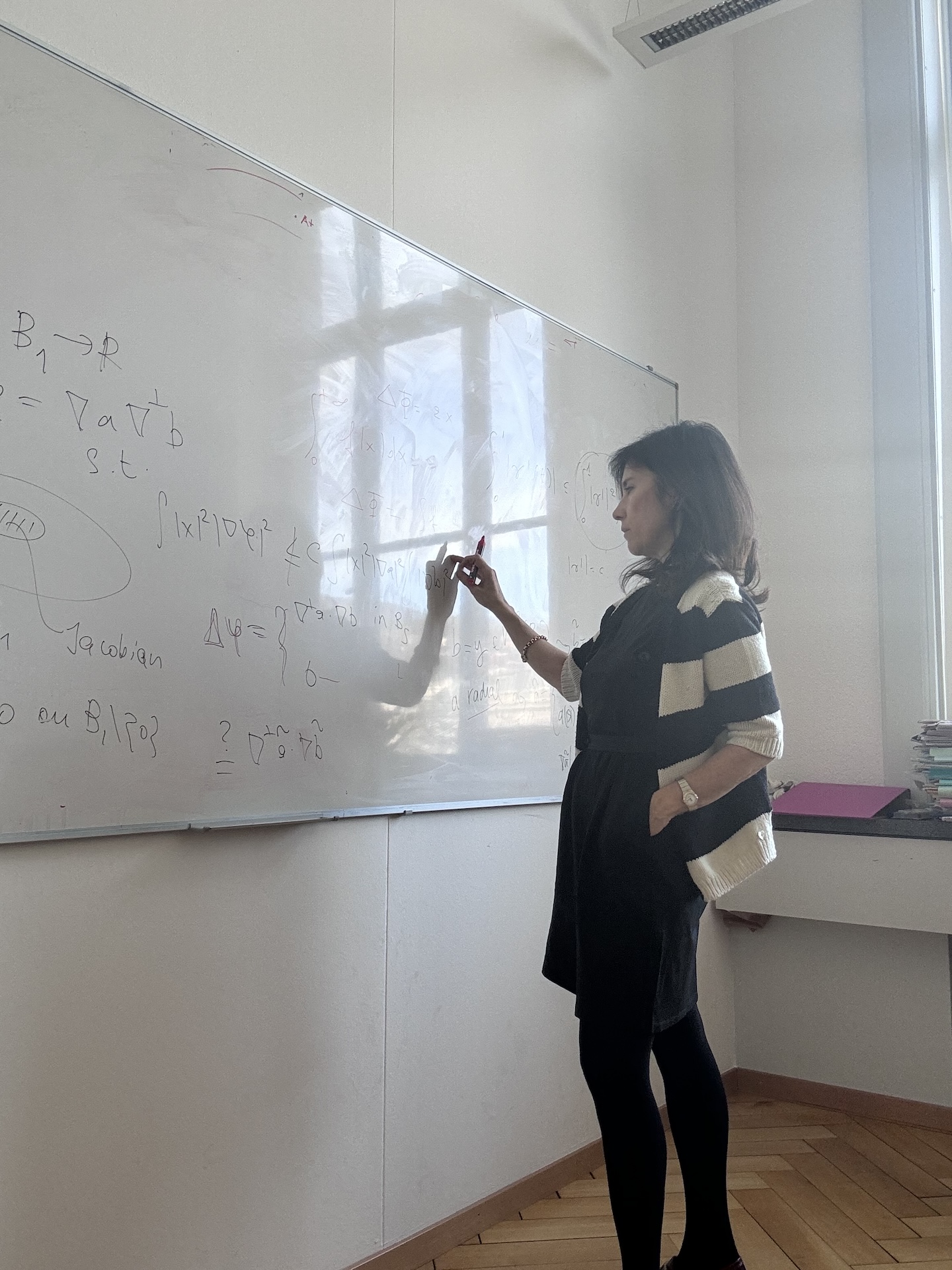
Francesca Da Lio is a Professor at the Department of Mathematics, ETH Zurich, where she has held a titular professorship since 2014. Her research focuses on nonlinear elliptic and parabolic partial differential equations (PDEs), with applications in stochastic and deterministic optimal control, homogenization, front propagation, and geometric analysis. She has pioneered work on conformally invariant variational problems and nonlocal PDEs, including fractional harmonic maps and stability analysis for critical points. PhD in Mathematics (1998) and Summa Cum Laude Degree in Mathematics (1994) from University of Padova. Her research explores the interplay between nonlinearity and non-locality, particularly in problems arising from geometry, mathematical finance, and physics. She has led major Swiss National Fund (SNF) projects, including grants for geometric analysis and conformally invariant variational theory. Her work on 3-commutators, integrability by compensation, and Morse index stability has advanced the understanding of harmonic maps and elliptic systems. Francesca Da Lio has mentored numerous PhD, postdoctoral, and Master/Bachelor students, including Dominik Schlagenhauf, Jerome Wettstein, and Ali Hyder. She has served on hiring committees for full professorships at ETH Zurich and co-organized international conferences such as 'Recent Advances in Nonlocal and Nonlinear Analysis' and 'Topics in Sub-Elliptic PDEs.' Scientific Awards: Italian Scientific Qualification as Full Professor in Mathematical Analysis (2013). She contributes to editorial boards, including Advances in Calculus of Variations , and participates in academic services like refereeing for SNF projects and international journals.
Kelvin McQueen is an Assistant Professor of Philosophy at Chapman University's Schmid College of Science and Technology , with affiliations to the Institute for Quantum Studies . His academic journey includes a Bachelor of Arts and Master of Philosophy from the University of Otago , and a Ph.D. in Philosophy from the Australian National University (2013). Dr. McQueen's research bridges quantum mechanics and philosophy of mind , focusing on topics like the integrated information theory (IIT) of consciousness, Orch OR theory , and many-worlds interpretation . He explores how quantum collapse might relate to consciousness, mereological composition, and the philosophical implications of quantum theories. His recent publications analyze the empirical challenges to IIT , the quantum Zeno effect in measurement-collapse interpretations, and local causal explanations in many-worlds scenarios. Collaborations with prominent figures like David Chalmers and Lev Vaidman highlight his interdisciplinary approach. Dr. McQueen teaches courses in philosophy of science , quantum physics , metaphysics , and symbolic logic , emphasizing the intersection of philosophy and emerging technologies like virtual reality .
Giuseppe Mingione is a Full Professor in the Department of Mathematical, Physical and Computer Sciences at the University of Parma, Italy. His research spans Calculus of Variations , Elliptic and Parabolic PDEs , and Nonlinear Potential Theory . He has delivered over 25 lecture series and 180+ invited talks globally. PhD in Mathematics, University of Naples Federico II (1999) Degree in Mathematics, University of Naples Federico II (1994) His work focuses on regularity theory for nonlinear PDEs, nonuniform ellipticity, and geometric analysis. Publications include breakthroughs in Schauder estimates, double phase problems, and nonlocal systems. He has received the Amerio Prize (2016) , Caccioppoli Prize (2010) , and Stampacchia Medal (2006) . Recent articles address nonuniform ellipticity, nonlocal PDEs, and gradient regularity. Awards include the Order of the Merit of the Italian Republic (2017) and Von Staudt Chair (2004) . He serves on editorial boards for international journals.
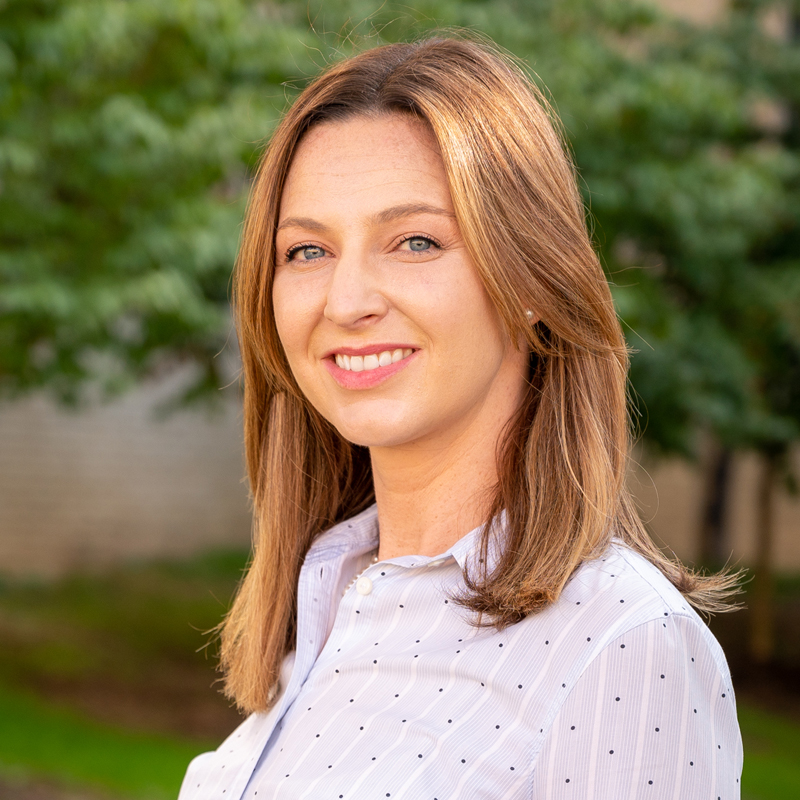
Cristiana De Filippis serves as Associate Professor in the Department of Mathematical, Physical and Computer Sciences at the University of Parma. Her academic journey includes a Bachelor's degree from the University of Torino (2014), Master's from University of Milano-Bicocca (2016), and PhD from the University of Oxford (2020), followed by a tenure-track position at Parma since 2021 and habilitation to full professorship in 2023. Her research focuses on Mathematical Analysis , particularly Regularity Theory for elliptic and parabolic partial differential equations and the Calculus of Variations . She investigates fundamental properties of solutions to nonlinear PDEs, including sharp growth conditions, nonuniform ellipticity, and double-phase functionals. Her work bridges abstract mathematical theory with applications in physics and engineering through rigorous analysis of solution behavior. Analysis of her 15 most recent publications reveals a concentrated research program in nonuniformly elliptic systems (2022-2025), double-phase variational problems (2023-2024), and gradient regularity under irregular coefficients (2020-2024). Key contributions include establishing sharp growth rates in Schauder theory and developing novel techniques for nearly linear growth conditions. European Mathematical Society Prize 2024 Bartolozzi Prize 2023 (Italian Mathematical Union) Iapichino Prize 2020 (Accademia dei Lincei) Premio per la Cultura Mediterranea 2023 G-Research Prize 2019 Forbes 100 Most Successful Italian Women 2023 European Mathematical Society Young Academy (inaugural cohort) Professor De Filippis has delivered invited lectures at prestigious institutions including Erwin Schrödinger Institute (2025), Charles University Prague (2024), and Accademia Nazionale dei Lincei (2022). She teaches Mathematical Analysis courses for Computer Science, Geological Sciences, and Management Engineering programs at undergraduate level. Her research is supported through multiple international collaborations, particularly with Giuseppe Mingione at Parma and researchers at European institutions.
Robin Neumayer is an Assistant Professor in the Department of Mathematical Sciences at Carnegie Mellon University. Her research focuses on the intersection of calculus of variations, partial differential equations (PDE), and geometric analysis, with a particular emphasis on stability and regularity in geometric inequalities. Education: Ph.D. in Mathematics, University of Texas at Austin, supervised by Alessio Figalli and Francesco Maggi. Her work explores problems related to Sobolev inequalities, isoperimetric problems, scalar curvature, and free boundary phenomena. Recent publications highlight collaborations with leading researchers and address topics such as quantitative stability, anisotropic geometries, and nonlinear PDE. Scientific Awards and Fellowships: NSF Grant DMS-2155054 (2022-2025) RTG Postdoctoral Fellow at Northwestern University (2017-18, 2019-21) Institute for Advanced Study member (2018-19) She teaches courses such as Introduction to Differential Equations and maintains active research collaborations with institutions like the Center for Nonlinear Analysis.
Anand Natarajan is an Assistant Professor at the Massachusetts Institute of Technology (MIT), affiliated with the Theory of Computation research group. His work focuses on quantum computing, complexity theory, and theoretical computer science, particularly exploring quantum verification, nonlocal games, and the intersection of quantum information with computational complexity. He is a key contributor to foundational results like the MIP*=RE theorem, which resolved longstanding questions in quantum complexity theory. Research Interests: Quantum Verification and Cryptography Quantum Complexity Classes (QMA, MIP*) Nonlocal Games and Tsirelson's Theorem Quantum Error-Correcting Codes Oracle Separations in Complexity Theory Recent Work Trends: His publications from 2020-2024 emphasize advancing our understanding of quantum advantage, noise resilience in quantum protocols, and bridging quantum computing with classical complexity theory. Notable contributions include resolving the quantum PCP conjecture via game-theoretic frameworks and analyzing the computational limits of interactive proof systems involving entangled provers. Lab/Team Affiliation: Core member of MIT's Theory of Computation group under Vinod Vaikuntanathan, collaborating on algorithms, security, and programming languages research.
Andrea Pinamonti is an Associate Professor at the University of Trento. His research focuses on geometric analysis, partial differential equations, calculus of variations, and functional analysis in metric measure spaces, particularly in sub-Riemannian and Carnot group settings. He frequently collaborates with researchers from institutions such as the Universities of Pisa, Jyväskylä, and others, addressing topics like geometric measure theory, regularity of solutions, and nonlocal functionals. His recent work examines structures in Heisenberg groups, such as perimeter minimization, CR geometry, and differentiability theorems. He has also explored equations involving the p-Laplacian, fractional operators, and universal differentiability sets in non-Euclidean spaces. These studies reflect a sustained engagement with the interplay between geometry and analysis in sub-Riemannian frameworks. Events and Contributions: Speaker at Warsaw Analysis Days Event WADE25 (2025), Summer school in fluid dynamics (2024), and Workshop on Synthetic Curvature Bounds (2024). Organizer of Three days between Analysis and Geometry in Trento (2025, 2024) and EUregio School on Control Theory and Applications (2024). He has maintained a prolific publication record across high-impact journals such as Journal of Geometric Analysis , Advances in Mathematics , and Communications in Contemporary Mathematics . His academic activities include promoting collaborative research through workshops and open positions at his institution.
Isaac Goldbring is a Professor in the Department of Mathematics at the University of California, Irvine (UCI), where he is a leading member of the Logic and Foundations group. He also holds a courtesy appointment in the Department of Logic and Philosophy of Science. His research lies at the intersection of model theory, operator algebras, and nonstandard analysis, with significant contributions to combinatorial number theory and quantum complexity theory. His research interests include: Model theory, particularly continuous and metric model theory Applications of nonstandard analysis to algebra, analysis, and combinatorics Tracial von Neumann algebras and the Connes Embedding Problem Operator algebras and their logical properties Combinatorial number theory and ultrafilters Lie theory and geometric group theory Goldbring’s recent publications reflect a strong trend in applying model-theoretic tools to deep problems in operator algebras and quantum information. His work on the Connes Embedding Problem, especially in connection with the MIP*=RE result, has provided simpler, more direct model-theoretic proofs and stronger refutations. He has also contributed to the logical undecidability of operator algebraic properties and the model theory of C*-algebras and W*-probability spaces. His notable scientific contributions include editing the volume Model Theory of Operator Algebras and authoring influential books such as Ultrafilters throughout Mathematics and Nonstandard Methods in Ramsey Theory and Combinatorial Number Theory . He is the Editor-in-Chief of the Journal of Logic and Analysis . Goldbring currently holds an NSF grant on model theory, quantum complexity, and embedding problems in operator algebras. He has mentored several graduate students, including Ryan Burkhart, Alec Fox, Michael Hehmann, Jennifer Pi, and Jessica Schirle. He has organized major conferences, such as the 2023 North American Annual Meeting of the Association for Symbolic Logic at UCI, and frequently gives invited lectures worldwide. He is actively involved in collaborative research with prominent mathematicians such as Bradd Hart, Ilijas Farah, and Lou van den Dries, and has delivered lecture series at institutions like Yonsei University and the National University of Singapore.
Katya Krupchyk is a Professor in the Department of Mathematics at the University of California, Irvine (UCI). Her research focuses on inverse problems, partial differential equations (PDEs), microlocal analysis, and spectral theory. She holds a position in the Analysis and Partial Differential Equations group at UCI. Her work often involves collaborations with leading institutions and researchers globally, addressing challenges in mathematical physics, geometric inverse problems, and nonlinear analysis. Dr. Krupchyk teaches advanced courses in real analysis, functional analysis, and partial differential equations. She has contributed to editorial boards for journals such as Journal of Spectral Theory , SIAM Journal on Mathematical Analysis , and Inverse Problems and Imaging . Her research spans theoretical and applied aspects of inverse problems, including studies on fractional operators, magnetic Schrödinger equations, and anisotropic media. Recent work emphasizes high-frequency analysis, nonlinear perturbations, and reconstruction algorithms for geometric inverse problems.
Peter Miller is a Professor in the Department of Mathematics at the University of Michigan, Ann Arbor. He holds a Ph.D. in Applied Mathematics from the University of Arizona (1994) and has held academic positions at institutions such as Monash University (Australia) and SAMSI (USA). His research focuses on applied analysis, integrable systems, nonlinear waves, and asymptotic methods. Key areas include the study of Painlevé equations, dispersive shock waves, and Riemann-Hilbert problems. Miller has led the Applied and Interdisciplinary Mathematics graduate program and is an active mentor, overseeing numerous Ph.D. students and postdoctoral researchers. Education: Ph.D., University of Arizona (1994); M.S., University of Arizona (1991); B.S. (Summa Cum Laude), Southern Methodist University (Mathematical Sciences and Computer Science, 1989). Research interests span asymptotics of nonlinear waves, random matrix theory, and special functions. His work emphasizes multiscale phenomena and modulation theory in integrable systems. Notable contributions include studies on the semiclassical limit of the nonlinear Schrödinger equation and universality in dispersive hydrodynamics. Awards include NSF grants (2022, 2018, 2015), a Simons Fellowship (2013), and a Sloan Fellowship (2002). He has delivered plenary lectures at international conferences and authored the textbook Applied Asymptotic Analysis (AMS, 2006). Teaching responsibilities include graduate courses in applied analysis, integrable systems, and partial differential equations. He has coordinated large undergraduate programs and mentored over 30 students and postdocs. Miller serves on editorial boards for journals like Journal of Nonlinear Science and organizes conferences on dispersive equations and inverse scattering.