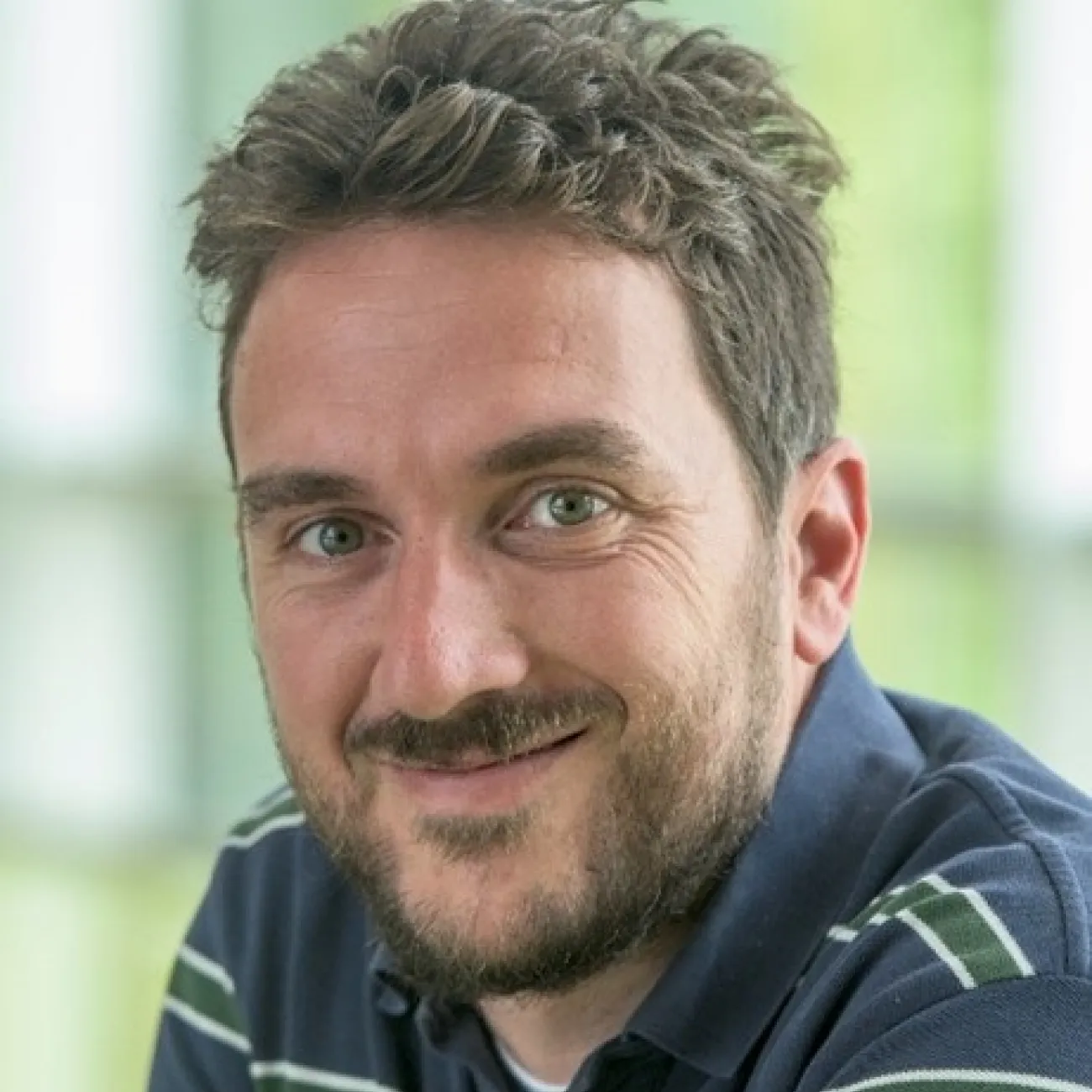
Susanne Ditlevsen is a Professor at the Department of Mathematical Sciences , University of Copenhagen. Her research focuses on statistical inference for stochastic processes , mathematical modeling of physiological systems , nonlinear dynamics , neuroscience , and biomathematics . Research : She develops statistical methods for diffusion processes, hidden Markov models, and stochastic differential equations, with applications in biomedical data and marine mammal behavior. Teaching : Covers basic statistics, probability, stochastic processes, regression, and generalized linear models. Publications highlight her work on climate tipping points (2023, Nature Communications ), nonlinear neuronal systems (2017), and statistical ecology (2020). Her collaborations span Denmark, France, and international institutions.
Professor Francesco Poletti is a Professorial Fellow-Research at the University of Southampton's Optoelectronics Research Centre (ORC), specializing in advanced optical fiber technologies. He leads multiple high-impact research projects funded by prestigious organizations including EPSRC, the European Union, Royal Society, and industry partners like Microsoft Corporation. His research focuses on: Hollow Core Optical Fibres design and fabrication Optical Communications for high capacity and low latency systems Novel active and passive optical fibres Applications of hollow core optical fibres Optical fibre guidance mechanisms Professor Poletti's recent publications demonstrate leadership in hollow core fiber technology, with significant advancements in manufacturing techniques, optical performance, and practical applications. His 2024-2025 publications show particular emphasis on improving fiber compatibility with existing infrastructure, developing mid-infrared capabilities, enhancing laser integration, and creating novel sensing applications. His scientific recognition includes a prestigious Royal Society Fellowship. Current major projects include FASTNET (revolutionary hollow core low-latency fibres), research contracts with Microsoft, and EU-funded initiatives like WISDOM and EMPRESS. Professor Poletti actively supervises PhD students and accepts new applications, currently mentoring Rene Andres Reynolds Hamel, Mahmudur Rahman, Amalie Gjelsvik, and Chiang Ping Saw. His research group is a core component of the Hollow Core Fibre and Fibres and Communications research teams at the ORC.
Professor Matthew Simpson is a leading figure in applied mathematics at the School of Mathematical Sciences, Faculty of Science, Queensland University of Technology (QUT). He holds the position of Professor of Applied Mathematics and is an Australian Research Council (ARC) Future Fellow, reflecting his sustained research excellence. His work bridges mathematical theory and biological applications, particularly in cell migration, tissue invasion, and multiscale modeling. BE (Environmental) Honours 1, University of Newcastle (1995–1998) PhD (with Distinction), Environmental Engineering, University of Western Australia (2000–2003) Research Fellow, Department of Mathematics and Statistics, University of Melbourne (2003–2006) ARC Postdoctoral Fellow, University of Melbourne (2006–2009) Lecturer (2010–2011) and Senior Lecturer (2011–2013), QUT Associate Professor (2013–2014), QUT Professor and ARC Future Fellow (2014–present), QUT Matthew Simpson’s research focuses on mathematical and computational modeling of biological systems , particularly collective cell motion, diffusion processes, and reaction-diffusion dynamics. His interests span multiscale modeling , random walk processes , cell biology , and numerical and computational mathematics . He develops and analyzes models to understand phenomena such as wound healing, cancer progression, and tissue engineering. His recent publications (2023–2025) demonstrate a strong trend toward integrating data-driven modeling , likelihood-based inference , and equation learning with traditional mechanistic models. These works emphasize parameter identifiability , uncertainty quantification , and prediction robustness in biological contexts. Themes include sharp-fronted wave propagation, mechanical cell interactions, tumor spheroid formation, and generalized diffusivity in food drying, showcasing the breadth and depth of his modeling expertise. Among his key accolades are: J.H. Michell Medal (2012) – Awarded by ANZIAM for distinguished research by an early-career applied mathematician in Australia and New Zealand. ARC Future Fellowship (2013–2017) – For the project 'New data-driven mathematical models of collective cell motion' (FT130100148). Professor Simpson has also played significant editorial and leadership roles, including: Executive Associate Editor, Journal of Engineering Mathematics Academic Editor, PLoS ONE Editorial Board Member, ANZIAM Journal Co-chair of the 2015 ANZIAM meeting He has supervised PhD students on topics such as moving boundary problems, first-passage times, stochastic simulations, and curvature-dependent growth in biological systems. His research projects have been funded by competitive Australian grants (ARC DP and FT schemes), including studies on 3D cell migration, ghrelin’s role in cell invasion, and epithelial-to-mesenchymal transition in cancer and wound healing. He is actively involved in developing computational tools for biological modeling and promoting best practices in scientific publishing.
Sandra Keiper is a Lecturer at the Institute of Mathematics within Faculty II - Mathematics and Natural Sciences at Technical University of Berlin. She has held academic positions since at least 2011, including roles as Tutor, Assistant, and Lecturer, with teaching responsibilities in Analysis, Linear Algebra, and Partial Differential Equations for both mathematicians and engineers. Research interests include: Compressed Sensing and Sparse Signal Recovery Numerical Linear Algebra with applications to high-dimensional data Wavelet and curvelet transforms for geometric multiscale analysis Approximation theory for finite-valued and cartoon-like functions Deep learning and graph approximation techniques Professional activities : Active in teaching since 2011 (Analysis I-III, Functional Analysis, Integral Transforms) Supervising theses since 2015 on topics like Compressed Sensing and Deep Learning Invited lectures at Caltech, ETH Zurich, and Alan Turing Institute Research stays at Hausdorff Institute, ETH Zurich, and Duke University
Rupert Klein is a Professor at Freie Universität Berlin in the Department of Mathematics and Computer Science , specializing in Geophysical Fluid Dynamics . His research spans atmospheric dynamics, numerical methods, and gas dynamics of combustion. Research Interests : Geophysical Fluid Dynamics and Atmospheric Modeling Multiscale Asymptotic Analysis Wave Propagation and Turbulence Combustion and Pressure Gain Combustion Climate Dynamics and Data Assimilation Scientific Awards : DRS Award for Excellent Supervision (2014) ECMWF Fellowship (renewed 2017) His recent work includes multiscale models for atmospheric flows, vortex dynamics, and combustion processes. Key collaborations involve DFG SPP 1276, CRC 1029 (TurbIn), and CRC 1114 (SCCS) projects. He contributes to numerical methods for low-Mach-number flows and geophysical simulations.
Thorsten Schmidt is Professor of Mathematical Stochastics at the University of Freiburg, succeeding Prof. Ernst Eberlein in the summer semester of 2015. He also serves as Senior Financial Engineer at MathFinance. Previously, he held professorships at Chemnitz University of Technology (2008-2015), Technical University Munich (2008), and University of Leipzig (2004 onwards). From 2017-2019, he was a Research Fellow at the Freiburg Institute for Advanced Studies (FRIAS) in a joint research group with the University of Strasbourg and USIAS on the topic of Linking Finance and Insurance. His research focuses primarily on financial and actuarial mathematics, stochastic processes, and statistics, with recent work on machine learning methods and their applications in financial mathematics and AI regulation. In Freiburg, his goal with his young team is to tackle complex challenges with improved mathematical models and apply these methodologies to various fields. Key Research Areas: Financial mathematics and credit risks Pricing and hedging of derivative financial products Statistics of stochastic processes Energy markets and nonlinear filter theory Machine learning applications in finance and insurance His recent publications show a strong trend toward integrating machine learning with traditional mathematical finance, particularly in risk management, insurance-finance arbitrage, and robust financial modeling. His work increasingly addresses ethical considerations in AI applications within finance, reflecting his broader interest in responsible AI development. Notable Awards: IDA Award Finance (2015) FRIAS-USIAS Research Fellow (2017/2018) IDA Award Machine Learning and AI (2020) MAPFRE Research Grant (2020) Luis Bachelier Fellow (2021) As Editor-in-Chief of Statistics and Risk Modeling and Associate Editor for Mathematical Finance and International Journal of Theoretical and Applied Finance, Schmidt plays a significant role in academic publishing. He leads the CRC 'Small Data' research center with Harald Binder, focusing on medical problems where disease progression must be estimated with few data points per patient. His LeanAI project, funded by the Vector Foundation, explores the connection between machine learning and theorem-proving software LEAN, aiming to develop AI that can translate between mathematics and formal proof systems. His laboratory work centers around the application of stochastic methods combined with machine learning to solve problems in finance and insurance where data is limited ('Small Data' initiative), with significant funding from DFG (€12 million for CRC Small Data) and the Carl Zeiss Foundation.
Elliot Hawkes is an Associate Professor in the Department of Mechanical Engineering at the University of California, Santa Barbara (UCSB). His research bridges design, mechanics, and non-traditional materials to develop robust, adaptable, human-safe robots for uncertain environments. He leads the Hawkes Lab, focusing on bio-inspired microstructured adhesives, nonlinear compliant mechanisms, soft actuators, exoskeletons, and growing robots. PhD from Stanford University, 2015 Postdoctoral Scholar at Stanford's CHARM Lab, 2015-2016 Assistant Professor at UCSB since 2016 Current projects include: Material-like robotic collectives with spatiotemporal control Variable friction shoe for locomotor therapy High-force soft actuators for industrial applications Vine-inspired robots for search and rescue Growing robots for biomedical and environmental use Recent publications in Science and Nature highlight breakthroughs in soft robotics and human-safe actuation. His team has received multiple NSF GRFP awards and a UCSB Regents Fellowship. The lab holds patents in adhesive gripping, soft actuation, and reconfigurable robotics.
Marco Pirola is a Full Professor at the Department of Electronics and Telecommunications (DET) of the Polytechnic University of Turin, Italy. He is a member of the Interdepartmental Center 'CleanWaterCenter@PoliTo' and actively contributes to research in high-frequency electronics and microwave engineering. His work focuses on power amplifiers, device characterization, and advanced microwave circuit design. Research Interests: Microwave power devices, GaN technology, 5G/mm-Wave applications, space communications, and smart pipeline monitoring systems. Awards: IEEE Fellow (since 2019), IEEE Senior Member. Recent Publications address topics like Ka-band MMIC amplifiers for SAR systems, broadband Doherty amplifiers using GaN, and harmonic analysis of current-mode power stages. His projects include STARGATE (European GaAs power architectures) and Millimetre-Wave GaN Radar for UAV detection. Teaching: He leads courses on 'Radio Frequency Integrated Circuits' and 'Advanced Devices for High Frequency Applications' at the Polytechnic University of Turin. Supervised PhD students include Wenjun Zhang and Abbas Nasri, who worked on III-V HEMT circuits and GaN power amplifiers.
Keith LeGrand is an Assistant Professor in the School of Aeronautics and Astronautics at Purdue University, part of the Cislunar Space Initiative. He holds a Ph.D. in Aerospace Engineering from Cornell University (2022), an M.S. (2015), and a B.S. (2014) in Aerospace Engineering from Missouri University of Science and Technology. His research focuses on multi-object tracking, spacecraft navigation, space domain awareness, and intelligent sensor control. Key projects include developing probabilistic filters for cislunar space object tracking and information-driven autonomy systems. LeGrand leads the Sensing, Controls, and Probabilistic Estimation (SCOPE) Group, which advances space surveillance and autonomous systems. Notable awards include the 2025 AFOSR and ISIF Young Investigator Awards, 2023 AMOS Best Paper Award, and the E.F. Bruhn Teaching Award for excellence in undergraduate instruction. LeGrand advises a diverse group of graduate and undergraduate students in astrodynamics and space applications. His work is supported by grants from AFOSR, ISIF, and partnerships with institutions like Sandia National Laboratories and Draper Labs. The SCOPE lab collaborates on projects such as lunar landing navigation, satellite proximity operations, and multi-sensor fusion for space surveillance.
Professor Rob Poole holds the Harrison Chair in Mechanical Engineering at the University of Liverpool’s School of Engineering, part of the Faculty of Science and Engineering. Previously Head of Department (2017–2021), he co-edits the Journal of Non-Newtonian Fluid Mechanics . His research focuses on rheology, fluid mechanics, and turbulence, with recent work on polymeric drag reduction, superhydrophobic surfaces, and viscoelastic instabilities. Education: BEng (Hons) and PhD in Mechanical/Aerospace Engineering. Research Interests: Non-Newtonian fluid mechanics Elastic turbulence and viscoelastic instabilities Polymer solutions and additive effects Heat transfer in porous media Constitutive equation development Awards & Fellowships: EPSRC Complex Fluids and Rheology Fellowship (2015–2021) British Society of Rheology Annual Award (2018) 2015 Best Paper Award (Theoretical and Applied Mechanics Letters) Grants & Projects: Funded projects include Flexible Heat Pump development (£1.5M), Instabilities in Complex Fluid Flows (£1.2M), and Superhydrophobic Surface Drag Reduction (£0.8M) Industry collaborations: Schlumberger, Procter & Gamble, National Nuclear Laboratory Professional Activities: Editorial roles: Journal of Non-Newtonian Fluid Mechanics (Co-Editor-in-Chief), Physics of Fluids External examiner at Warwick, Strathclyde, and multiple Indian Institutes of Technology
Daniel Holz is a Professor of Physics and Astronomy & Astrophysics at the University of Chicago, affiliated with the Enrico Fermi Institute, Kavli Institute for Cosmological Physics, and the College. His research focuses on gravitational wave astrophysics, cosmology, and black hole dynamics, contributing to major discoveries like GW150914 and GW170817 as part of the LIGO collaboration. He holds a BA from Princeton and a PhD from the University of Chicago, with postdoctoral fellowships at the Albert Einstein Institute (Germany), Kavli Institutes in Santa Barbara and Chicago, and a Richard Feynman Fellowship at Los Alamos National Laboratory. Research interests include gravitational-wave standard sirens for cosmology, black hole-neutron star mergers, and testing general relativity. Awards include the NSF CAREER Award, Quantrell Teaching Award, and Breakthrough/Gruber Prizes (via LIGO). He chairs the Bulletin of the Atomic Scientists' Science and Security Board, guiding the Doomsday Clock, and directs the UChicago Existential Risk Laboratory (XLab), addressing nuclear, climate, and AI risks. His lab and collaborations leverage multi-messenger astronomy and advanced data analysis techniques. Notable contributions include pioneering gravitational-wave cosmology methods and advancing understanding of cosmic expansion tensions.
Md Sakib Hasan is an Assistant Professor in the Department of Electrical and Computer Engineering at the University of Mississippi. He holds a Ph.D. in Electrical Engineering from the University of Tennessee-Knoxville (2017). His research focuses on hardware acceleration, neuromorphic computing, and memristor-based systems. Research interests span: AI hardware accelerators and energy-efficient computing Biomimetic systems and bio-inspired electronics Hardware security through chaotic systems and PUFs Recent publications demonstrate strong emphasis on: Neuromorphic architectures for computer vision and temporal processing Biomembrane-based computing systems Chaotic cryptography and secure hardware design
Dr. Hamed Rahimian is an Assistant Professor in the Department of Industrial Engineering at Clemson University. He holds a Ph.D. in Industrial and Systems Engineering from The Ohio State University (2018), an M.Sc. from The University of Arizona (2012), and B.Sc./M.Sc. degrees from Sharif University of Technology (2008/2011). Prior to Clemson, he was a Postdoctoral Research Fellow at Northwestern University under Prof. Sanjay Mehrotra. His research focuses on data-driven decision-making under uncertainty, including stochastic optimization, distributionally robust optimization, and risk-averse methodologies. He has published in top journals such as Mathematical Programming , SIAM Journal on Optimization , and Operations Research . Education: Ph.D. Industrial and Systems Engineering, The Ohio State University (2018) M.Sc. Industrial Engineering, The University of Arizona (2012) B.Sc./M.Sc. Industrial Engineering, Sharif University of Technology (2008/2011) His research has been recognized with awards including the Harold W. Kuhn Award (2022), Runner-Up INFORMS Computing Society Student Paper Award (2017), and 2nd Place IISE Pristker Dissertation Award (2019). He serves as an Associate Editor for INFORMS Journal on Computing and Sharif Journal of Industrial Engineering & Management . Grants & Advising: He secured an Air Force grant (2024) on multistage stochastic programming. His research group focuses on advancing optimization under uncertainty with applications in healthcare, energy, and supply chains. Labs/Teams: Leads a research group in Clemson’s Industrial Engineering department, collaborating on projects in distributionally robust optimization and data-driven decision-making.
Konstantin Vodopyanov is a Professor and 21st Century Scholar Chair in Optics & Photonics at the University of Central Florida (UCF), affiliated with CREOL, the College of Optics and Photonics, and the Department of Electrical & Computer Engineering. He holds academic appointments in both Optics and Physics. His career includes roles as a Royal Society postdoctoral fellow at Imperial College London, industry leadership at Inrad, Inc., and technical guidance for multiple companies. He is a Fellow of APS, OSA, SPIE, and the UK Institute of Physics. Education: MS from Moscow Institute of Physics and Technology, PhD and DSc (Habilitation) from Lebedev Physical Institute (Moscow). Research focuses on mid-IR and terahertz photonics, frequency combs, nonlinear optics, and their applications in spectroscopy and biomedical diagnostics. His group develops ultra-broadband mid-IR combs, trace gas sensors, and nano-IR technologies. He has authored over 350 publications and chairs major conferences like CLEO. Research Interests: Nonlinear optics, mid-IR/THz generation, frequency combs, biomedical sensing, supercontinuum generation, and spectroscopic applications. Awards: 2023 CREOL Teaching Award, multiple fellowships in optics societies. Lab Team: Includes postdocs (Dmitrii Konnov), research scientists (Andrey Muraviev), graduate students (Woraprach Kusolthossakul), and undergraduates in CREOL labs. Publications emphasize dual-comb spectroscopy, electro-optic sampling, and novel mid-IR sources. His work bridges academia and industry, with innovations in laser systems and biomedical diagnostics. Current projects include real-time spectral analysis and high-resolution molecular sensing across 2–200 µm wavelengths.
Dr. Fengyan Li is a Professor in the Department of Mathematical Sciences at Rensselaer Polytechnic Institute (RPI). She holds a PhD in Applied Mathematics from Brown University (2004) and previously held a postdoc at the University of South Carolina. Her research focuses on numerical analysis and scientific computing, particularly discontinuous Galerkin methods for applications in wave propagation, fluid dynamics, plasma physics, and nonlinear optics. She has received prestigious awards including the NSF-CAREER Award (2009) and Alfred P. Sloan Fellowship (2008). Dr. Li serves on editorial boards of journals like SIAM Journal of Numerical Analysis and IMA Journal of Numerical Analysis. Education: PhD in Applied Mathematics (Brown University, 2004); MS & BS in Computational Mathematics (Peking University, 2000 & 1997). Research interests emphasize multi-scale simulations, reduced-order modeling, and high-order methods. Her work addresses challenges in kinetic transport, nonlinear optics, and plasma dynamics. She has delivered plenary talks at major conferences, including ICOSAHOM (2018) and NAHOMCon (2022). Professional service includes leadership roles in the Association for Women in Mathematics (AWM), co-organizing symposiums, and mentoring. She is a 2025 AWM Fellow and advises RPI's AWM Student Chapter.