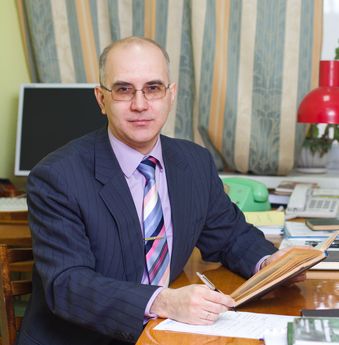
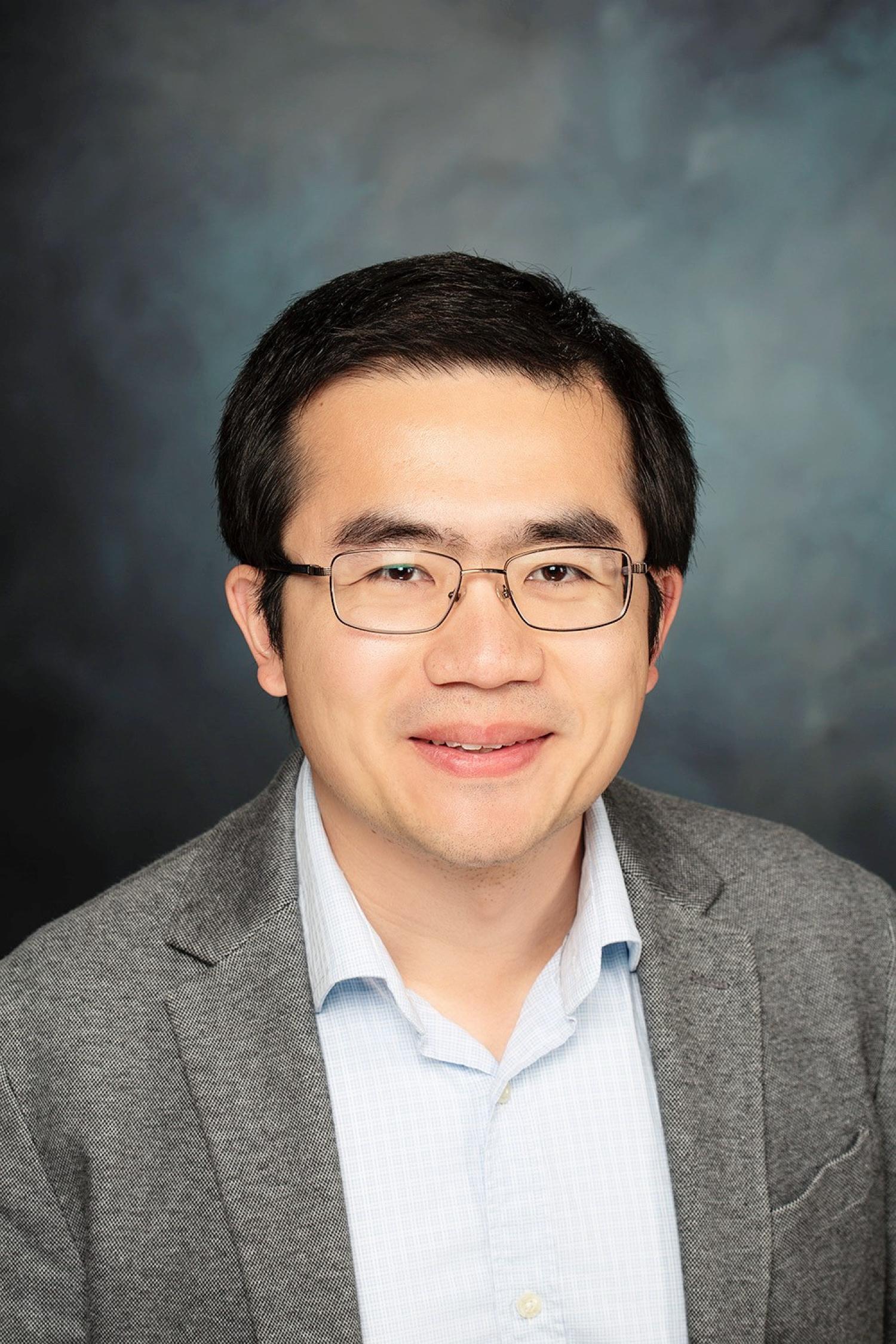
Prof. Dr.Sci. Yaroslav Zhuk is the Head of the Department of Theoretical and Applied Mechanics at the Mechanics and Mathematics Faculty of Taras Shevchenko National University of Kyiv, Ukraine. With a career spanning over two decades, he has held positions at prestigious institutions such as the S.P. Timoshenko Institute of Mechanics, Imperial College London, and the University of Aberdeen. His expertise lies in structural dynamics , coupled thermomechanics , and nanocomposite materials , supported by international grants from the Royal Society, EPSRC, and American Physical Society.
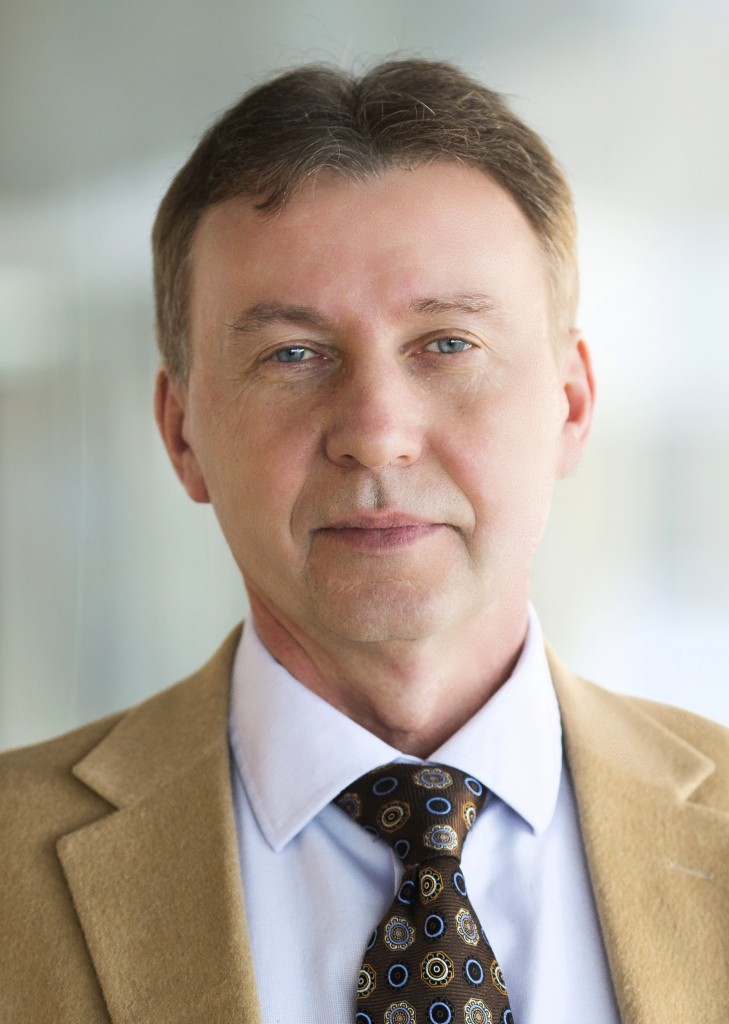
Dr. Yuriy Rapoport is a Leading Research Fellow at the Space Physics Laboratory of the Physical Faculty, Taras Shevchenko National University of Kyiv, Ukraine. With a career spanning over three decades, he has held positions as Senior Research Fellow (1991-2003; 2006-2018) and Junior/Senior Researcher at Research Institute "Saturn" (1985-1991). His affiliations include collaborations with institutions in the UK, Japan, Finland, Denmark, Mexico, Poland, and USA. MSc (1978) from Taras Shevchenko National University of Kyiv PhD (1986) from Taras Shevchenko National University of Kyiv Doctor of Physical-Mathematical Sciences (2017) from Taras Shevchenko National University of Kyiv Dr. Rapoport’s research focuses on nonlinear wave processes in plasma and metamaterials, electromagnetic wave propagation in layered media, and space-terrestrial physics. Key areas include soliton control, quantum wave resonances in graphene-based systems, hot spot formation in hyperbolic metamaterials, and seismo-ionospheric coupling mechanisms. His publications demonstrate expertise in plasma physics , nonlinear optics , metamaterial design , and Earth-Ionosphere waveguides . Trends include modeling of VLF electromagnetic waves, acoustic-gravity wave interactions, and applications to space weather and disaster monitoring. Grant of National Science Foundation of the USA (1999-2000) Individual Grant of International Science Foundation (1994) Grant of American Physical Society (1993) He has led international projects on resonant wave phenomena in plasma and metamaterials and contributed to studies on ionospheric responses to earthquakes, hurricanes, and magnetic storms. His collaborative work involves teams from Aalto University, University of Sheffield, and Hayakawa Institute of Seismo Electromagnetics.
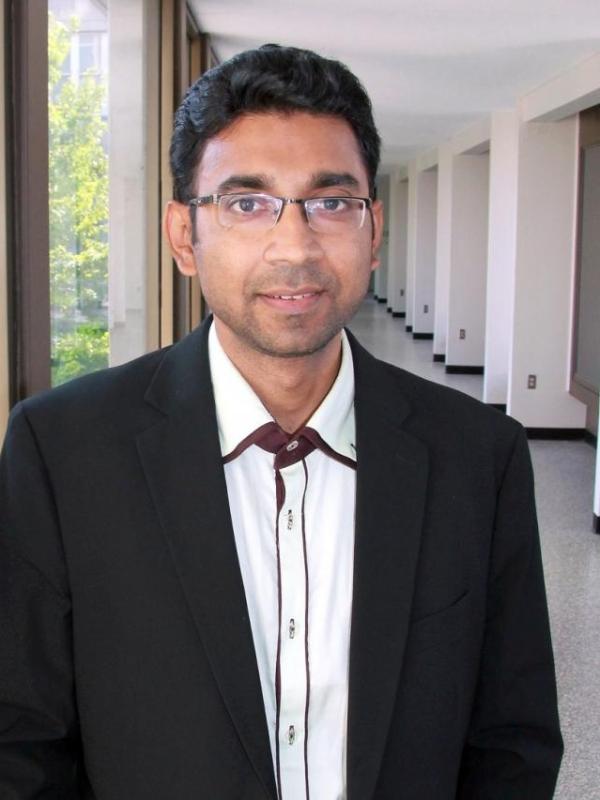
Dr. Shamsul Arafin is an Associate Professor in the Department of Electrical and Computer Engineering at The Ohio State University, where he leads the Optics and Photonics Research Lab (OPREL). His research focuses on photonic integrated circuits, semiconductor lasers, and quantum materials for applications in communications, sensing, and biomedical technologies. Dr. Arafin received his B.Sc. in Electrical and Electronics Engineering from Bangladesh University of Engineering and Technology (2005), M.Sc. in Communication Technology from Universität Ulm, Germany (2008), and Ph.D. from Technische Universität München, Walter Schottky Institut, Germany (2012). He completed postdoctoral research at McGill University and UCLA before joining UCSB as a Project Scientist. His research spans multiple areas of photonics and optoelectronics, with particular expertise in photonic integrated circuits operating across various wavelengths from visible to mid-infrared. He investigates novel materials systems including III-V semiconductors, hexagonal boron nitride, and hybrid material platforms for next-generation photonic devices. His work has significant applications in optical communications, sensing, biomedical imaging, and quantum information processing. Analysis of Dr. Arafin's recent publications (2023-2025) reveals a strong focus on advancing photonic integrated circuit technologies, particularly in three key areas: quantum photonics with 2D materials, heterogeneous integration of III-V semiconductors with silicon, and nonlinear optical processes for visible light generation. His research increasingly bridges fundamental material science with practical device applications, demonstrating a clear trajectory toward real-world implementation of advanced photonic technologies. Literaturpreis der ITG 2014 Award from im VDE, Germany Nominee for the UCLA Chancellor's Award for Postdoctoral Research Extreme Science and Engineering Discovery Environment (XSEDE) Computational Allocation Award IEEE Photonic Society Graduate Fellowship Best Student Paper Award Dr. Arafin actively mentors graduate students through research theses (ECE 6999, ECE 8999) and undergraduate researchers (ECE 4998.01). His research has been supported by various grants including an NSF CAREER award "GaSb-based Photonic Integrated Circuits for Short- and Mid-Wave Infrared Applications" (2022) and EAGER funding for "Monolithic Optically-Pumped Single-Photon Sources Based on Deterministic InGaN Quantum Dots in GaN Nanowires" (2020). His collaborative work spans multiple institutions and industry partners, reflecting the interdisciplinary nature of modern photonics research. As Principal Investigator of the Optics and Photonics Research Lab (OPREL) at OSU, Dr. Arafin leads a multidisciplinary team focused on advancing photonic integrated circuit technologies. The lab maintains state-of-the-art facilities for semiconductor device fabrication, optical characterization, and materials analysis, enabling comprehensive research from materials growth through device testing and system integration.
Xuejun Lu is a Professor in the Department of Electrical and Computer Engineering at the University of Massachusetts Lowell (UML), affiliated with the Francis College of Engineering. He earned his Ph.D. in Electrical Engineering from the University of Texas at Austin (2001), an M.S. from Peking University (1995), and a B.S. in Chemistry from Peking University (1992). His research focuses on Surface plasmonics and optical antennas for infrared photodetectors Quantum dot-based infrared and visible sensors Flexible and printed electronics for advanced optoelectronic devices His work spans theoretical modeling, material growth, and device fabrication for infrared imaging and sensing applications. Recent publications highlight plasmonic resonance for infrared detection, ultrafast optical responses in quantum dots, and advanced nanostructure fabrication techniques. His team has published extensively on photodetector design and electromagnetic measurements. Scientific awards include IDTechEx Academic Research and Development Award (2009) IDTechEx Scholarship (2007) Air Force Summer Faculty Awards (2007, 2020, 2021) Major grants include "Drone-based Wireless Sensor Network for Multimodal Sensing" (2020-2023, PI) "Wireless High Temperature Sensor Network for Smart Boiler Systems" (2020-2022, PI) His lab develops advanced photodetection systems and printable electronics for diverse applications including infrared imaging and sensor networks.
Dr. Anatoly Maksimchuk is a Research Scientist in the Electrical Engineering and Computer Science Department at the University of Michigan's College of Engineering. He plays a pivotal role in the Center for Ultrafast Optical Science (CUOS) and serves on the Executive Committee of the Michigan Institute for Plasma Science and Engineering (MIPSE). As co-PI of the $20M ZEUS facility, he oversees laser beam delivery systems and manages experimental areas. Laser-Matter Interaction at Relativistic Intensities Table-Top Plasma Accelerators High-Power Short Pulse Lasers Medical Applications (Cancer Therapy, Imaging) Nuclear Physics (Isotope Production) Quantum Electrodynamics Regime Studies Dr. Maksimchuk's research includes groundbreaking work on electron/ion acceleration, nonlinear Thomson scattering, and relativistic harmonics generation. Recent publications focus on ZEUS facility development and extreme laser-plasma interactions. 2021 University of Michigan Research Faculty Achievement Award 2013 Fellow of the American Physical Society 2009 & 2014 College of Engineering Outstanding Research Scientist Awards His work has appeared in 200+ publications with 4000+ citations, including in Nature , Science , and Physical Review Letters . He mentors doctoral committees and supervises student researchers, collaborating with Nobel laureate Gérard Mourou.
Dr. Manuel Alberto Matias Muriel is a CSIC Scientific Researcher at the Institute of Interdisciplinary Physics and Complex Systems (IFISC), a joint center between the Spanish National Research Council (CSIC) and the University of the Balearic Islands (UIB) in Palma de Mallorca, Spain. He has held previous positions as Assistant Doctor at the University of Salamanca, CSIC Senior Scientist at IMEDEA (CSIC-UIB), and Visiting Assistant Professor at Arizona State University. Dr. Matias earned his Master's degree in Chemistry (1985) and PhD in Chemistry (1990) from the University of Salamanca, followed by a PhD in Physics (1997) from the same institution. His academic journey reflects a strong interdisciplinary foundation spanning chemistry and physics. His primary research focuses on Nonlinear Dynamics and Complex Systems , with specific interests in deterministic chaos, synchronization phenomena, localized structures in extended systems, excitability, and biological modeling. His work bridges theoretical physics with practical applications, particularly in nonlinear electronics and optical systems. Dr. Matias has made significant contributions to understanding noise-induced transitions in chaotic systems and the dynamics of coupled nonlinear oscillators. Analysis of his recent publications reveals a strong emphasis on optical applications of nonlinear dynamics, particularly cavity solitons and pattern formation in nonlinear optical systems. His work increasingly incorporates interdisciplinary approaches, connecting physics with biological modeling as seen in his research on genetic diversity networks. The trajectory shows a progression from fundamental chaos theory to applied research with practical implications in optical technologies. Dr. Matias has been actively involved in teaching graduate courses including "Biologia de Sistemes" and "Sistemes Dinàmics, Caos i Patrons" for Master's programs in Advanced Physics and Applied Mathematics, as well as Complex Systems Physics at the University of the Balearic Islands. His research is conducted within the "Sistemes complexos en vida i medi ambient (CILIA)" research group, where he contributes to interdisciplinary projects examining complex systems in life and environmental contexts. Dr. Matias has collaborated with numerous international researchers and has co-organized scientific workshops, including the DYONET06 Workshop in Dresden (2006).
Prof. Dominik Schillinger (Technische Universität Darmstadt) is a leading expert in numerical mechanics, with 15+ years of academic leadership in computational methods, multiscale modeling, and biomedical applications. His career spans prestigious institutions including Leibniz Universität Hannover and University of Minnesota. W3-Professur für Numerische Mechanik (2021–present) W2-Professur für Numerische Mechanik (2019–2021) Assistant/Associate Professor (2013–2019) Postdoc & PhD (2008–2012) His research focuses on isogeometric analysis , discontinuous Galerkin methods , and multiscale biomedical modeling , with applications in vascular networks, bone mechanics, and additive manufacturing. He pioneered phase-field methods for fracture analysis and physics-informed neural networks for material modeling. Recent publications highlight matrix-free algorithms for compressible flows, physics-augmented lattice optimization , and thermodynamically consistent phase-field models . Awards include the PECASE , ERC Starting Grant , and NSF CAREER award. Presidential Early Career Award (2019) ERC Starting Grant (2017) NSF CAREER Award (2017) ICE Zienkiewicz Medal (2015) He teaches core courses in numerical methods , finite element analysis , and computational mechanics at TU Darmstadt and Leibniz Universität Hannover, with international collaborations in Bethlehem and Austin.
Carmen Perugia is an Associate Professor in the Department of Science and Technology (DST) at the University of Sannio . Her academic career spans both Mathematical Analysis and Earth Sciences , with a focus on homogenization , control theory , and paleoclimatic reconstruction using coccolithophore assemblages . Teaching: Mathematics and Computer Science for Biology, Geology, and Biotechnology students. Research: Combines partial differential equations with marine paleoceanography , linking mathematical modeling to climate change analysis. Publication Trends reveal dual expertise: 1) mathematical analysis of degenerate elliptic equations , Bingham flows , and Ginzburg-Landau models , and 2) paleoclimatic studies using coccolithophore proxies to analyze North Atlantic and Mediterranean Sea dynamics over the last 30 ka. Her homogenization research addresses imperfect interfaces and oscillating boundaries , while her control theory work derives observability inequalities for hyperbolic equations . Collaborations include international researchers from Finland , Germany , India , and Portugal . Her teaching emphasizes mathematical foundations for biological and geological applications , with office hours by appointment on Tuesdays and Thursdays .
Thibaut Devaux is a Researcher at the Department of Networks and Telecommunications (RT) within the University of Tours. He is affiliated with the CNRS UMR 7347 GREMAN (Materials, Microelectronics, Acoustics, Nanotechnologies) and works at the University Institute of Technology of Blois (IUT Blois). His research spans acoustics, materials science, and ultrasonic instrumentation. University: University of Tours Department: Networks and Telecommunications (RT) Laboratory: GREMAN (CNRS UMR 7347) Devaux's work focuses on advanced acoustic phenomena, including acoustic radiation pressure, extraordinary wave transmission, and subwavelength imaging. His recent publications highlight collaborations blending ultrasonics with rheology and nanotechnology. Key trends in his research include contactless fluid interface manipulation, polymer viscosity monitoring, and metamaterial design for acoustic applications. His work bridges fundamental physics and practical engineering solutions. Email: thibaut.devaux@univ-tours.fr Phone: +33 254 552182
Professor Wolfgang Schief is a faculty member at the University of New South Wales (UNSW), affiliated with the School of Mathematics & Statistics . His research bridges integrable systems , nonlinear physics , and geometric analysis , with a focus on differential and discrete differential geometry and their applications in continuum mechanics , general relativity , and soliton theory . Research Interests His work centers on the interplay between integrable systems and geometric structures , particularly in nonlinear partial differential equations and their discrete analogs. Key areas include: Integrable discretizations of classical and modern geometric problems Backlund and Darboux transformations for physical systems Nonlinear elasticity and magnetohydrodynamics Self-dual Einstein spaces and heavenly equations Log-aesthetic curves and geometric design Recent Publications Recent studies highlight multi-dimensional integrability in affine manifolds, canonical reductions of TED equations, and geometric frameworks for fiber-reinforced fluids and relativistic systems. His work often reveals connections between soliton theory , Lagrangian mechanics , and discrete geometry . Scientific Awards Queen Elizabeth II Research Fellow (UNSW, 1999–2004) Academic Leadership Currently Professor at UNSW (since 2010), Schief has held roles including Senior Lecturer , Associate Professor (2005–2006), and Professor at TU Berlin (2006–2010). His career spans 2+1-dimensional integrable systems and geometric applications in physics and mechanics.
Julien Lequeurre is an Associate Professor at the University of Lorraine, affiliated with the IECL (Institut Élie Cartan de Lorraine) and the UFR Mathématiques Informatique Mécanique. His research focuses on partial differential equations, fluid dynamics, and control theory, particularly in fluid-structure interaction systems. Research Areas: Partial Differential Equations, Fluid Dynamics, Control Theory Affiliation: University of Lorraine, IECL, SIMBA and SPHINX teams His work includes modeling viscous compressible gas dynamics, analyzing Navier-Stokes equations in bounded domains, and studying controllability in coupled fluid-structure systems. Recent publications emphasize mathematical modeling of piston problems and fluid-beam interactions. Julien's research is conducted within the Équations aux dérivées partielles team at IECL. He has contributed to both theoretical and applied aspects of fluid mechanics and control systems.
Alireza Qaiumzadeh is a Research Professor at the Department of Physics, Faculty of Natural Sciences, Norwegian University of Science and Technology (NTNU). His research spans theoretical condensed matter physics with a focus on emergent phenomena in quantum materials and technologies. Quantum Magnetism Spintronics (Topological, Superconducting, Neuromorphic) Topological Phases of Matter Ultrafast Nonequilibrium Phenomena Quantum Field Theory of Many-Body Systems He has secured significant grants including the FRIPRO grant (€1.02M, 2025-2029) and EEA/Norway GRIEG grant (€1.4M, 2020-2024). His recent articles explore topological magnon gaps, spin Nernst effects, and hybrid quantum systems. Martin Landrø’s award for outstanding master’s thesis (2025, 2023) He supervises PhD and Master students in projects ranging from magnon condensation to quantum transport. His team collaborates internationally and utilizes advanced theoretical and computational methods.
Maxime Vassaux is a CNRS Research Officer at the Department of Mechanics and Glasses , University of Rennes, France. His work bridges experimental data with molecular dynamics and multi-scale simulations to understand how material properties emerge from atomic-level interactions, focusing on systems ranging from concrete to biological tissues. Primary Research Areas: Multi-scale material modeling, molecular dynamics, machine learning for materials science, hydration effects on mechanical properties Collaborations: Centre for Computational Science (University College London), Scientific Computing Group (Centrum Wiskunde & Informatica Amsterdam) Key Tools: High-performance computing, Gaussian process regression, deep learning frameworks Recent projects include a 2024 PhD initiative on mechanochemistry of hydrated oxide glasses, aiming to improve material durability through atomic-scale analysis. His automated variance-based sensitivity analysis reveals that only a few critical parameters (often Selected Scientific Contributions: Developed VECMAtk for uncertainty quantification in multi-scale simulations Pioneered curvature-dependent cell migration models linking microstructural mechanics to biological behavior Engineered graphene nanocomposites with optimized interfacial stress distribution for NEMS applications Contact & Affiliation: Email: maxime.vassaux@univ-rennes.fr Office: Room 031, Beaulieu Campus, Building 10B, Rennes, France
Dr. Zhangxian Deng is an Assistant Professor at Boise State University's Department of Mechanical and Biomedical Engineering. He holds a Ph.D. in Mechanical Engineering from Ohio State University and a B.E. in Mechatronics Engineering from Zhejiang University. His research focuses on smart materials, structural health monitoring, vibration control, and energy harvesting, with applications in aerospace, nuclear, and biomedical systems. Education: Ph.D., Mechanical Engineering, Ohio State University B.E., Mechatronics Engineering, Zhejiang University Dr. Deng's work integrates multiphysics modeling and additive manufacturing to develop advanced sensors and actuators. Key areas include: Magnetostrictive and piezoelectric materials for vibration control Triboelectric nanogenerators for energy harvesting Flexible electronics for structural health monitoring 3D printing of multifunctional sensors Wireless sensing systems for harsh environments Nanosynthesis of magnetic alloys via ball milling Recent publications highlight his efforts in printing MXene-based nanogenerators, modeling surface acoustic wave thermometers, and developing nuclear reactor monitoring systems. His research aligns with UN Sustainable Development Goals related to clean energy and resilient infrastructure. Dr. Deng collaborates with NASA Glenn Research Center and the NSF I/UCRC Smart Vehicle Concepts Center, focusing on: High-temperature microelectronics Graphene patterning Adaptive magnetoelastic metamaterials Coaxial magnetic gears Ultrasonic waveguides Biomimetic tactile arrays Projects include NEUP-funded nuclear reactor monitoring transducers and NSF MRI grants for optical measurement workstations.
Yuan Shi is an Assistant Professor in the Department of Physics at the University of Colorado. He is affiliated with the Center for Integrated Plasma Studies (CIPS) and serves as a Faculty Mentor for students with last names starting with E-G. His research focuses on the intersection of plasma physics and quantum physics, particularly exploring how magnetic fields influence laser-plasma interactions for fusion and photonics applications. He also develops quantum algorithms for plasma-related problems and investigates relativistic and quantum plasma regimes using field-theory models. Education: PhD in Astrophysical Sciences (2018), MA in Astrophysical Sciences (2014), both from Princeton University’s Program in Plasma Physics; BS in Mathematics and Physics from the University of Hong Kong (2012). Research interests include magnetized laser-plasma interactions, quantum computing for high-energy-density systems, and plasma dynamics in extreme regimes. His teaching includes courses such as PHYS 1115 (General Physics 1), PHYS 3320 (Electricity and Magnetism 2), and graduate-level electromagnetic theory (PHYS 7310/7320). Notable awards include the Marshall N. Rosenbluth Outstanding Doctoral Thesis Award (2020), Lawrence Postdoctoral Fellowship (2018), and Carl Oberman Fellowship (2012). His group, the Plasma and Quantum Group, emphasizes collaborative exploration of fundamental physics and technological applications. Key projects involve quantum walk simulations for angular momentum states, plasma-based laser amplification/compression, and lattice QED modeling. Experimental work includes characterizing magnetized plasma jets via interferometry and proton radiography. The group also explores pulsar magnetosphere polarimetry and non-perturbative field theory phase diagrams.